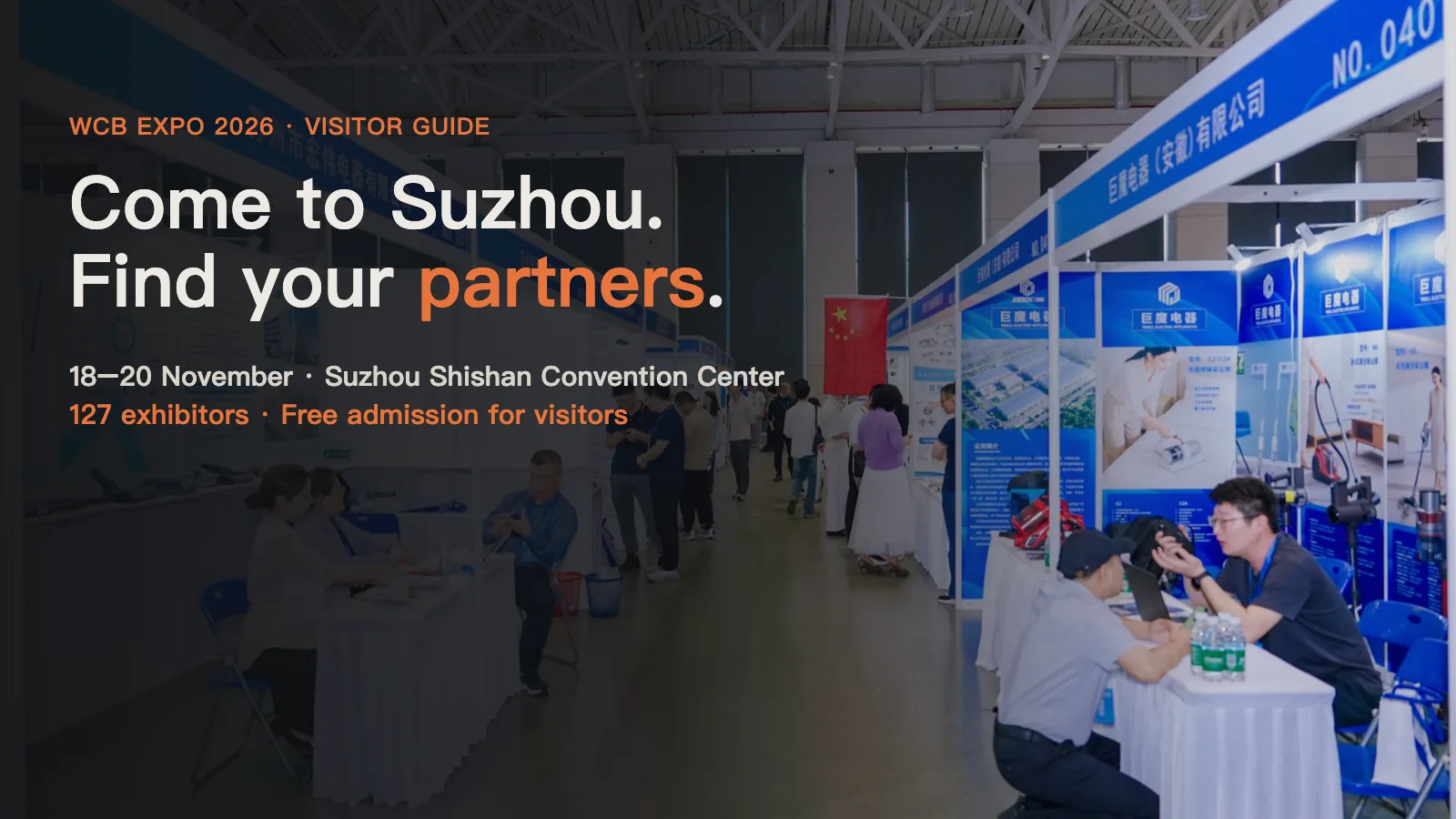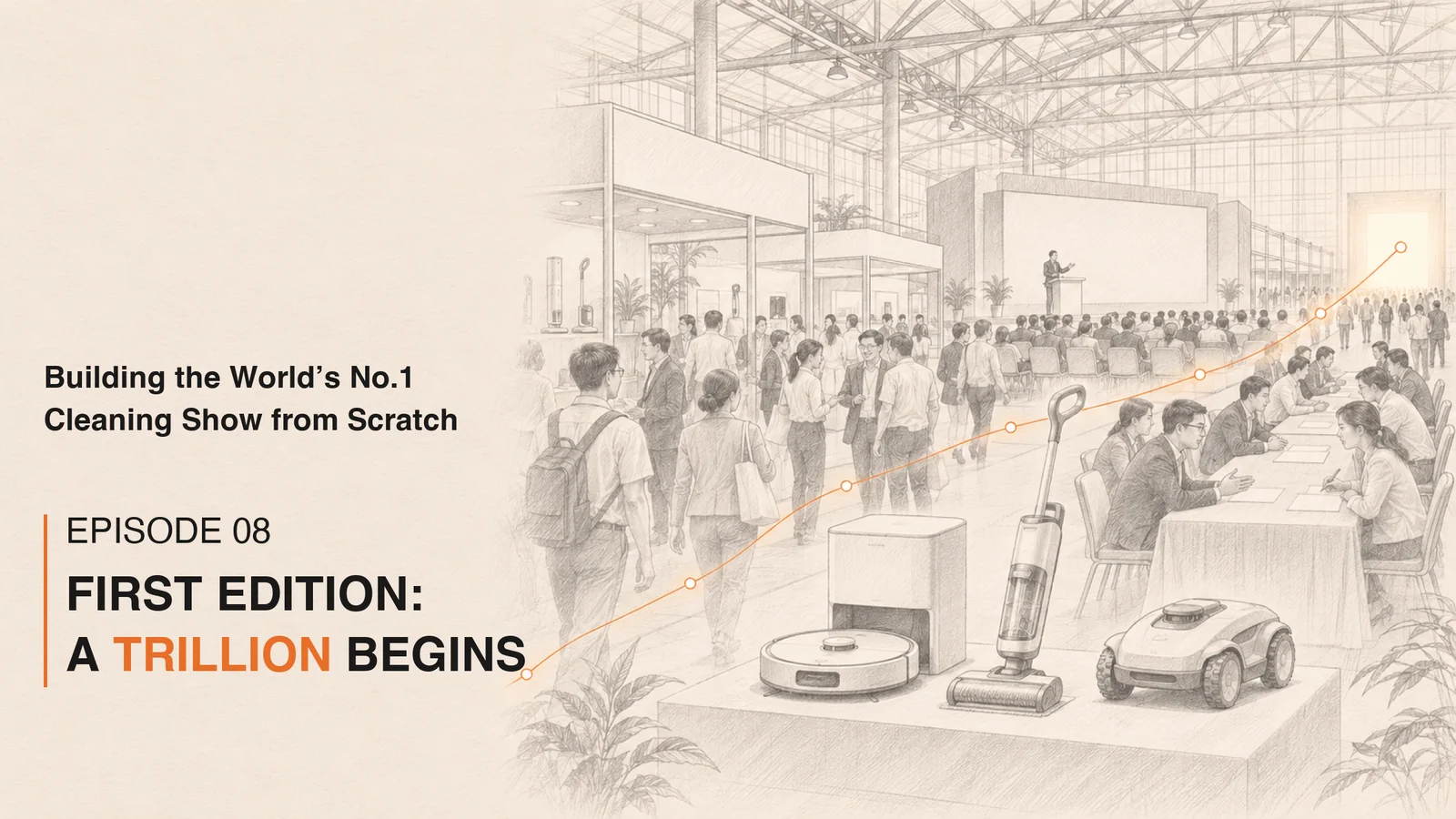
- The first WCB Expo, held in Suzhou on 18–20 November 2026, drew more than 4,000 exhibitors and visitors from more than a thousand companies, with 126 exhibitors on over 8,000 m².
- Buyers from ten leading companies, including Roborock, Narwal, Kärcher, STIHL, Midea and Navimow, met exhibitors at a free procurement matchmaking session.
- For 2027, Denny aims for 400–500 exhibitors, three to four times the space and 30–50 buying companies, and is considering dates seven to ten days after the Canton Fair.
Previous episode: Episode 07 | A First Edition Built to a World No.1 Standard.
Complete series: Building the World’s No.1 Cleaning Show from Scratch.
What if nobody comes?
In the week before the show opened, I was anxious every single day.
The forums I had run before, and the two supply-chain exhibitions last November and this March, could all be explained as tests. They were small, the preparation time was short, and people understood when something went wrong. This time was different. This was the first official edition of WCB. In all, 126 exhibitors had confirmed, the show covered more than 8,000 m², and I had put almost all my energy of the past few months into it. Right up to opening day, I was still the only person working on WCB full time. Selling booths, inviting visitors, bringing in buyers and booking forum speakers: almost all of it I negotiated myself, one company at a time.
Exhibitors had shipped their sample machines all the way to Suzhou. They had paid for booths and stand building, and given up staff and time. If no one walked past their booths, that money would be wasted. What I feared even more was losing their trust. Many companies came because of me personally. If the first edition fell flat, would they come back the next time I asked?
Plenty of people had registered through our WeChat mini program, “WCB会展通”. But how many of them would actually walk into the hall, nobody could say.
The show opened at nine o’clock on the morning of 18 November. In the first two hours, several hundred visitors scanned in at the entrance.
I opened the forum with a talk called “The Road to a Trillion”, which was also the theme of this year’s show. My view is that the cleaning industry has a chance to reach CNY 1 trillion within ten years, and that there is a great deal to build along the way. To many people, a trillion sounds very far away. I spent thirty minutes taking the road apart, one stretch at a time. I will write up the full talk separately, together with the video.
I designed the forum around several dimensions: data, industry judgment, different business lines, China and overseas markets, and companies talking about their own practice. Tian Yali, a business unit general manager at the market-data firm AVC, presented the development trends of China’s cleaning-appliance industry in 2026. Shi Jinxing, chief analyst at China Merchants Securities, analysed robotic mowers, robot vacuums and physical AI. Dan Xiaoguang, deputy general manager of WYBOT, spoke about the global expansion of cordless pool-cleaning robots in the age of AI, and Ke Yuxuan, assistant to the chairman of Changyao Innovation, spoke about robotic mowers in 2026. Chen Qingbao, general manager of Yiwu Xiaoke Import & Export, covered new opportunities in Middle East e-commerce, and Xu Xinfeng, general manager of Suzhou Ruijin Information Technology, talked about how AI is used inside a company. Wang Jian, general manager of Xige Transmission, came from the component side and spoke about applications and innovation in gear transmission. Anyone who sat through the whole day could see the industry from the big picture down to the details.
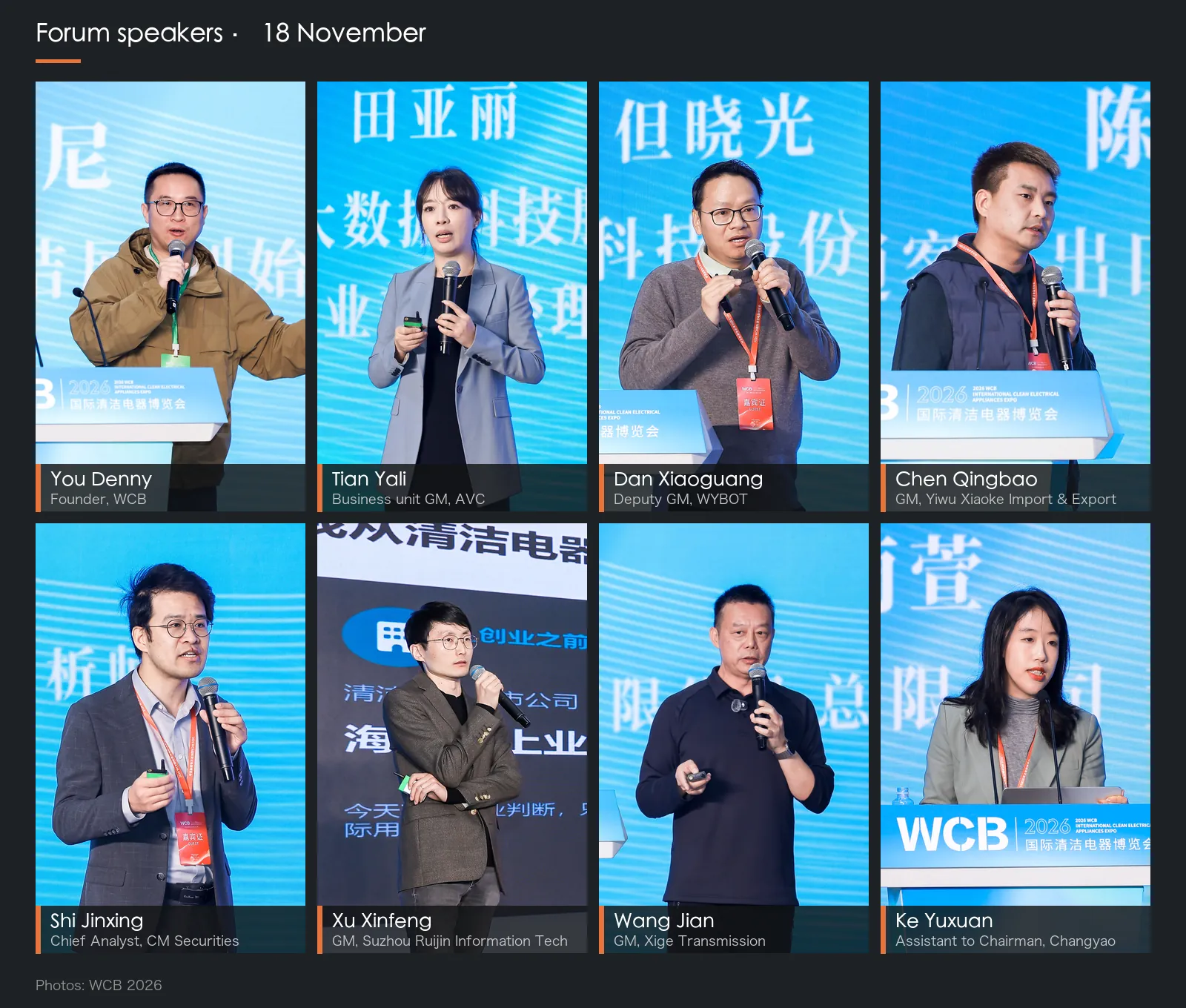
After the forum, several friends from partner companies messaged me. At other forums they had attended, they said, most of the audience sat looking at their phones. This time almost everyone was listening carefully, and many were taking photos. They asked me how I had done it.
In the hall, the stands of Roborock, ECOVACS, Midea cleaning, Segway-Ninebot’s Navimow, BISSELL and WYBOT stood in the same hall as more than ten finished-product factories and dozens of component suppliers. The friends I had invited almost all said the same thing when they saw me: “Denny, I had no idea you’d made it this big.” They had not expected that one person could put together something on this scale.
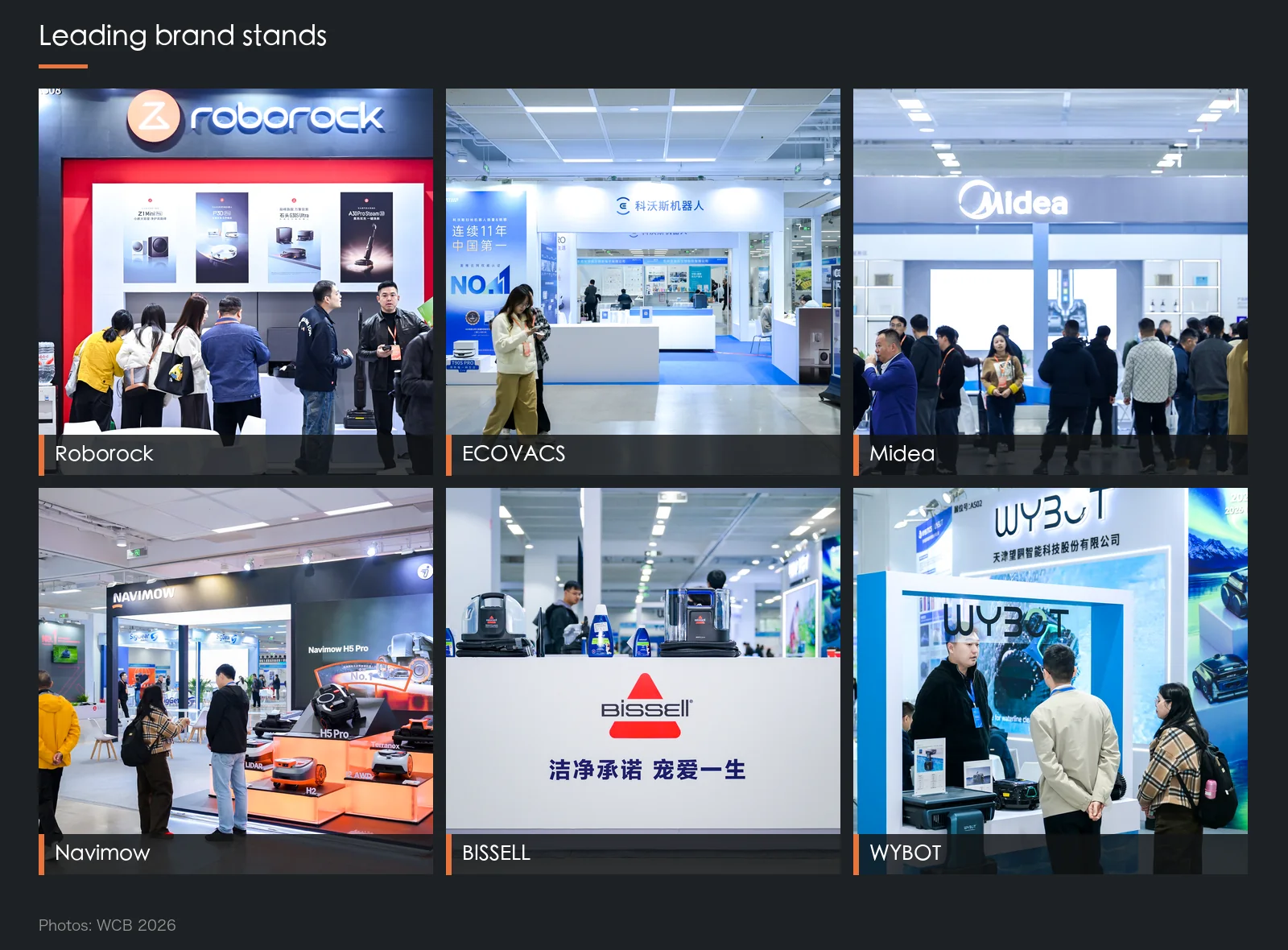
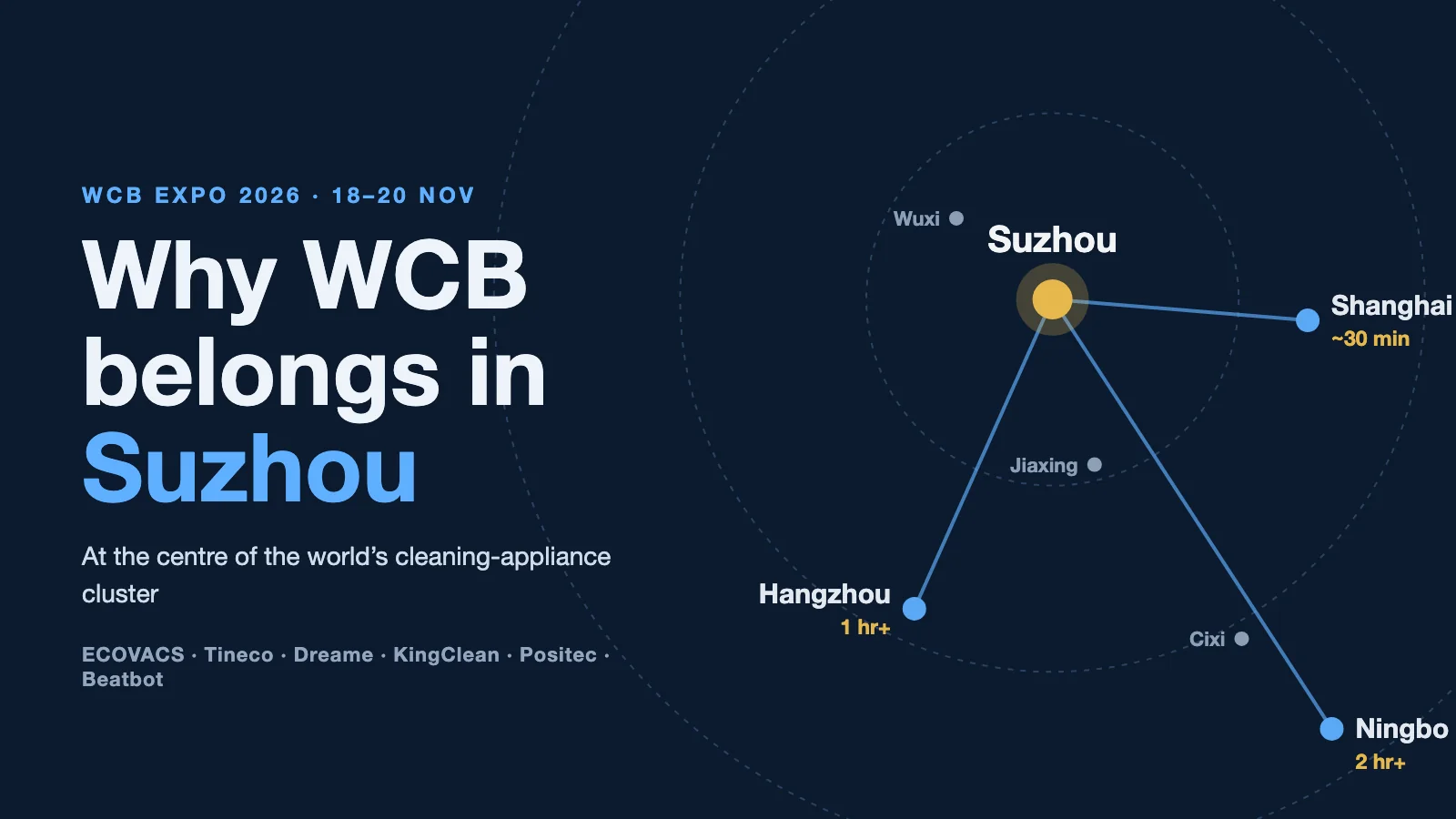
The turnout was also more complete than I had imagined. Professional visitors from more than a thousand companies came, and nearly every company in the industry had someone there. This is also why I hold WCB in Suzhou. Suzhou is the hub of the cleaning-appliance industry, with tens of thousands of people working in it, so bringing in a few thousand professional visitors is far easier here. (I explained the choice in more detail in why WCB has to be in Suzhou.)
That evening, I hosted a networking dinner of about 30 tables for exhibitors and guests, with Suzhou’s famous hairy crabs on the menu. On the show floor, many conversations last only a few minutes. Over dinner, people could sit down and talk properly: you introduce me to a customer, I introduce you to one.
The main event of the second day was the procurement matchmaking session on the morning of 19 November. An exhibitor at an earlier event had complained to me: “Denny, I know you invited lots of customers, but none of them connected with me.” Customers had come, but exhibitors had not reached them. That was a problem I had to solve. This time, buyers from ten leading companies took part: Segway-Ninebot’s Navimow, Roborock, Narwal, Kärcher, STIHL, WYBOT, Aipu Group, Lianzhou Group, Midea cleaning and Haoya Group. I opened the session, each company described what it wanted to buy, and then the buyers met exhibitors face to face. Many component suppliers normally have to go through contacts and wait for a chance to meet buyers at these companies. This time, they could sit down right in front of them.
On the afternoon of 19 November and the morning of 20 November, two supplier launch sessions gave about eight suppliers the stage to present new products and technologies. Many suppliers in this industry have strong technology that is valuable to professionals, but they rarely get the chance to present it in public. I wanted to give them a stage: if you have a good product, present it here, and the people who are interested will come and find you. The forum, the procurement matchmaking and the launch sessions were all free.
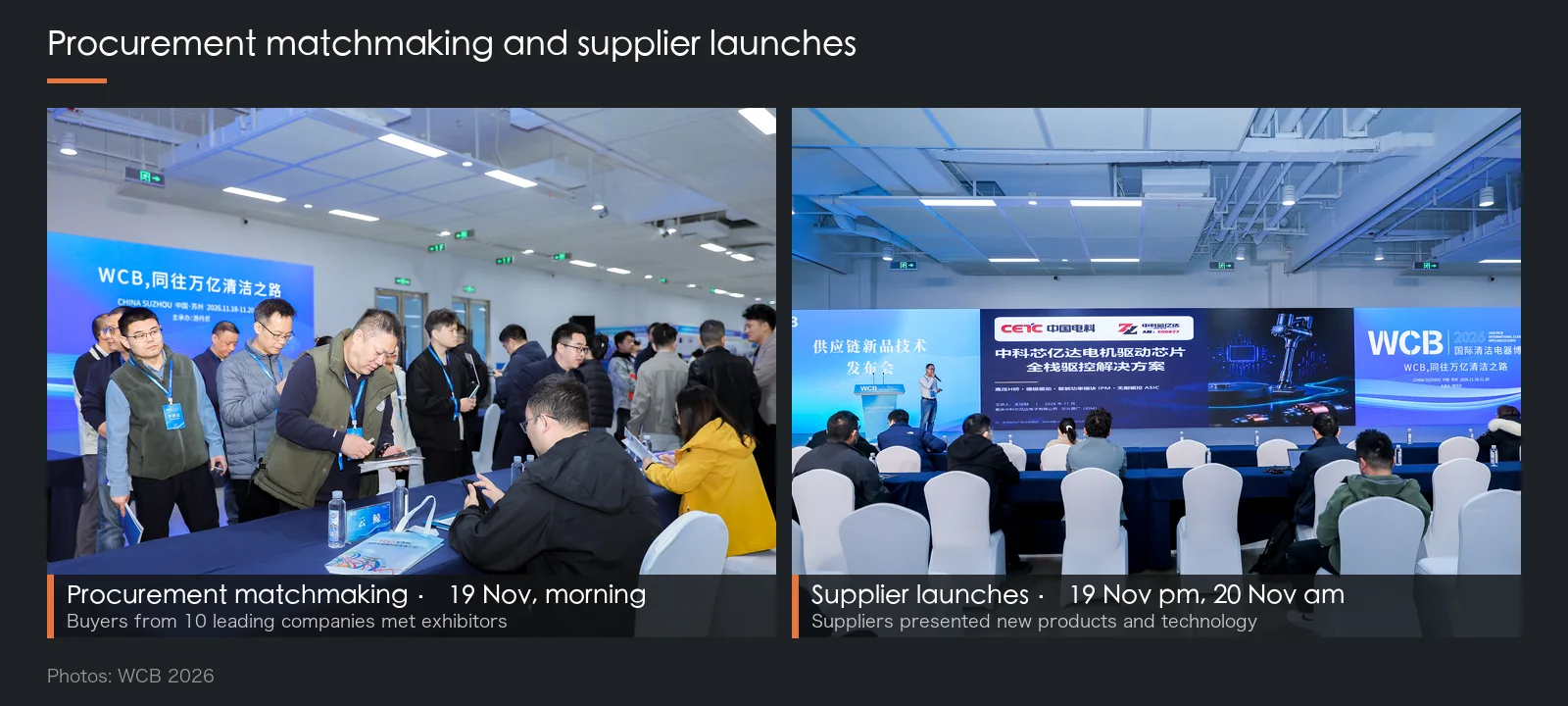
Over the three days, more than 4,000 exhibitors and visitors attended. That is more than all my previous events combined, and more than I had expected. Many suppliers told me this show was far better than our Shenzhen show in March. Many companies added a good number of new customers, some were ready to place orders on the spot, and some of the business has already turned into partnerships.
Something else surprised me. Many friends helped me invite overseas buyers. About a dozen people from overseas came, from Germany, Japan, Singapore, Canada and Taiwan, China, among others, including visitors from STIHL in Germany. That is not many, but in my view WCB was already an international show from its very first edition.
Of course, this edition fell short in many places. Because I did the early work alone, many details were not followed through properly. Without a team, some parts could not be made bigger or more polished.
Looking back, everything I did for this edition came down to one word: sincerity. I invited visitors myself, one phone call and one message at a time. For the procurement session, I went to friends one company at a time and asked for help: “The industry is having a hard time. Could you send your purchasing team to help the exhibitors find more business and get through this together?” The forum, the launch sessions and the dinner all had the same purpose: to make as much business happen as I possibly could. I believe I did the best I could.
This edition is also a new starting point in my life. Having run it, I am much clearer about what to do next: to make WCB truly the world’s No.1.
This edition already had brands, contract manufacturers and component suppliers, but not enough of any of them. Next time, I plan to reach 400 to 500 exhibitors and expand the exhibition space to three or four times this year’s size. Only when a show reaches real scale can it create a Matthew effect, where the biggest gets bigger. I will hire a few people and build a team, so I am no longer carrying it alone. My own resources are not enough either. This time I invited some friends from the local government to the show, and they thought it was well done. I had not approached the government before, partly for lack of time. An industry show does a lot for local industry, and I hope that next year we can put more resources in together and make it a win for both sides.
The procurement matchmaking needs an upgrade too. This time, some leading companies told me there was not enough time to talk to suppliers in depth. Everyone comes to a show to do business, so I believe procurement matchmaking will become the centrepiece of WCB. Next year, I hope to grow the number of buying companies from ten to between 30 and 50. I will also run dedicated sessions for leading companies in their own meeting rooms, so that each supplier gets at least 20 to 30 minutes of detailed conversation with them.
About a dozen overseas visitors came this year; next year there should be many more. After the show, my focus will turn overseas. WCB’s overseas social media traffic has started to grow, and the next step is to bring many more people from the global industry to Suzhou. The 2027 show will most likely still be in November, but I am considering moving it to seven to ten days after the Canton Fair. Many overseas buyers in the cleaning industry come to China for the fair anyway. If they can stop in Suzhou on the way, and we consider helping with accommodation, they are much more likely to visit. Inviting this many overseas buyers to come at any other time would be much harder.
The show only happens once a year. In between, I will make more videos and help friends in the industry sell their products.
The theme of WCB will always be “The Road to a Trillion”. Getting there will probably take about ten years. If, by then, we can see new cleaning brands reach CNY 100 billion, contract manufacturers tens of billions of yuan, and component makers several billion, we will have witnessed history.
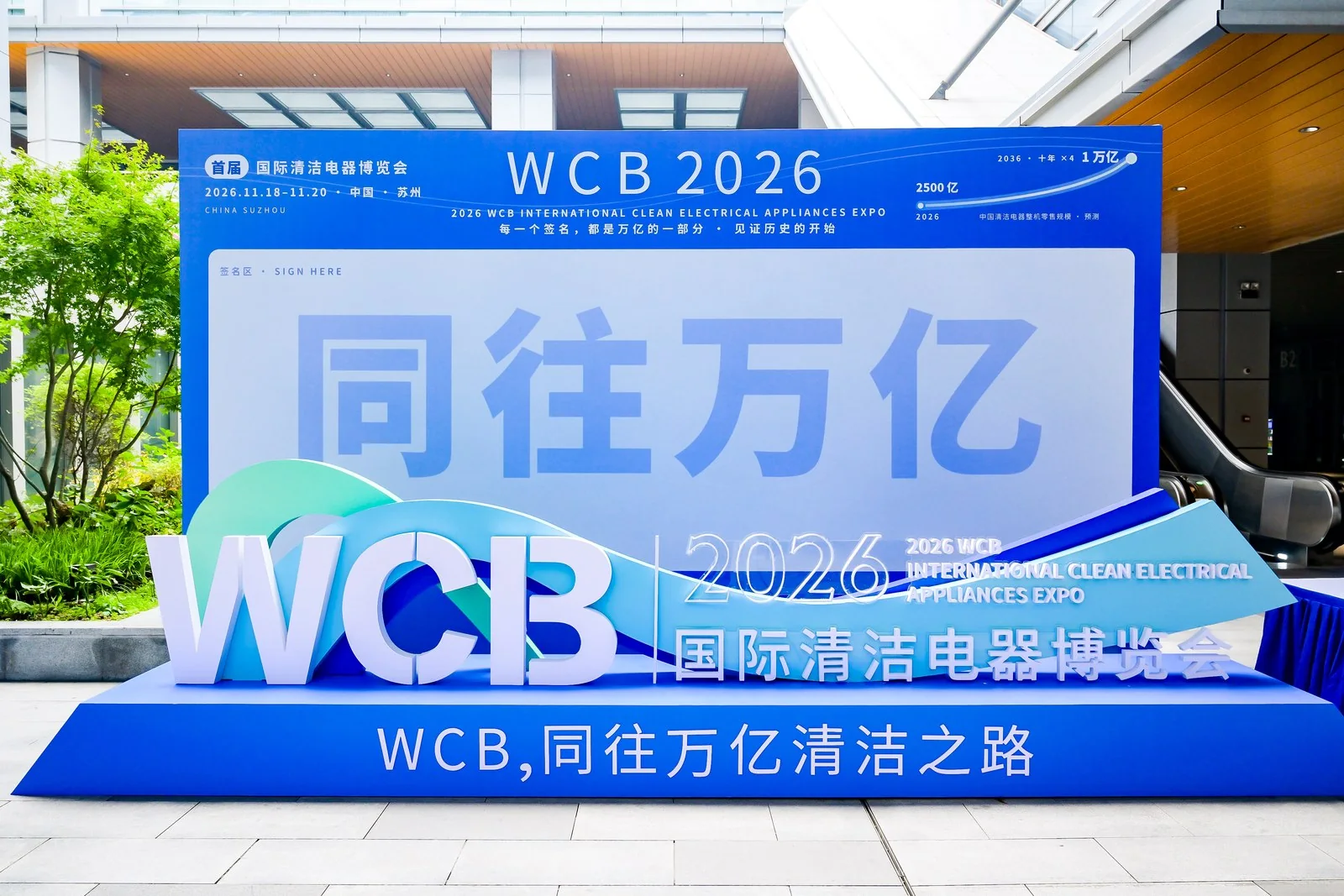
What I really want to build is a festival for people across the global cleaning industry. Whether you have just started your first job, or you work for a brand, a finished-product factory, a component supplier, a buyer or a distributor, you should be able to find the technology you need, the answers to your problems and your future partners here. I do not want people to come because their boss made them. I want them to come happily, and to leave with more friends and more knowledge, not only business.
This series is called “Building the World’s No.1 Cleaning Show from Scratch”, and in Chinese its title begins with “one person”. Having run the first edition, I think that title is only half right. I really am the only person working on WCB full time, but the first WCB was built by the whole industry: 126 exhibitors who brought their stands to Suzhou, seven speakers who shared what they know best, buyers from ten companies who came to help suppliers find opportunities, people from more than a thousand companies who took time to come, and many friends who made calls for me, brought customers and invited their contacts from overseas.
The truth is, I was never really one person on my own. The road to a trillion is one the whole industry has to walk together.
Next episode: coming soon.
Complete series: Building the World’s No.1 Cleaning Show from Scratch.