- Reel, rotary, ride-on and robotic mowers developed for different lawn-care jobs.
- Batteries and wire-free navigation opened the market to new entrants.
- Navimow's growth puts Husqvarna's long-standing leadership under pressure.
In this article 4 sections
In 1830, the English engineer Edwin Budding saw a machine in a textile mill trimming the nap of cloth. A rotating cutter passed over the fabric, shearing its uneven surface. He wondered whether the same mechanism could cut a lawn.
Over the next two centuries, people fitted mowers with engines, seats and batteries, then began removing the person from the machine. Today's robotic mowers still address Budding's original problem: how to cut a lawn neatly with less human labor.
1830–1945: The lawn mower takes shape
In 1830, Budding patented his mower and partnered with John Ferrabee to manufacture it. A ground roller drove helical blades against a fixed bottom blade, cutting grass much as scissors do. The reel-mower principle survives on golf courses where the quality of the cut matters especially. The Science Museum's early example preserves that design.
Before the mower, maintaining large areas of grass relied on scythes, grazing animals and manual labor. Machinery made lawn cutting a repeatable, standardized job.
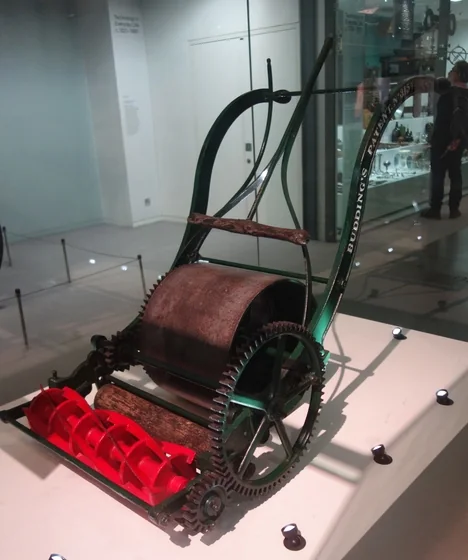
*An early mower based on Budding's 1830 patent; this museum specimen dates to about 1849. Image: Daderot / Wikimedia Commons, CC0.*
From the 1830s through the later nineteenth century, British companies including Ransomes, Shanks and Thomas Green entered the business. Human-powered machines were joined by horse-drawn mowers. Some horses wore special leather shoes to protect the turf. Wider machines served estates, parks and sports grounds.
In 1893, British engineer James Sumner built a steam-powered mower. It dispensed with human or animal propulsion, but its boiler was heavy and operation complicated. In 1902, Ransomes introduced a commercial petrol-powered mower, bringing the internal-combustion engine into turf maintenance. Operators subsequently gained a seat, and ride-on mowing equipment developed.
In 1919, Toro developed powered mowing equipment for the Minikahda golf club in Minnesota, using a tractor to pull multiple cutting units. Golf courses needed frequent mowing over large areas and were prepared to pay for productivity. They became important customers for professional mowing machinery. Toro company history
In 1921, Jacobsen introduced its “4-Acre” power mower, emphasizing how much ground one operator could cover in a day. That year, Britain's Atco began selling powered mowers, bringing the equipment to more private gardens.
Electric mowers also appeared during the 1920s. Motors were quieter than petrol engines and did not need refueling, but cables limited their reach. For many years, electric machines primarily served small lawns near houses, while large-area work remained dependent on fuel-powered equipment.
1946–1989: From walking behind to riding aboard
In 1948, Toro brought the Whirlwind rotary mower into its business. Rather than shearing grass between a reel and a bottom blade, a rotary mower cuts with a blade spinning horizontally at high speed. The format suited ordinary domestic lawns that were uneven or not cut as frequently. Toro's historical timeline
In 1952, Australian inventor Mervyn Victor Richardson built a rotary mower prototype at home, even using a jam jar as its fuel tank. The machine became Victa. He sold dozens in the first few months, turning a garage experiment into a prominent Australian brand.
In 1953, Briggs & Stratton introduced a lightweight aluminum engine. A lighter, mass-producible power source helped rotary mowers reach more households. Equipment brands could buy engines and components and design their own chassis without having to develop the power unit themselves.
In 1961, Cub Cadet introduced a compact tractor for homes and estates. In 1963, John Deere launched the 110 lawn and garden tractor. A cutting deck could sit beneath the chassis, while other attachments allowed the machine to haul loads or clear snow. For American households with large yards, the mower was becoming a small agricultural machine. Cub Cadet history; John Deere's 110 retrospective
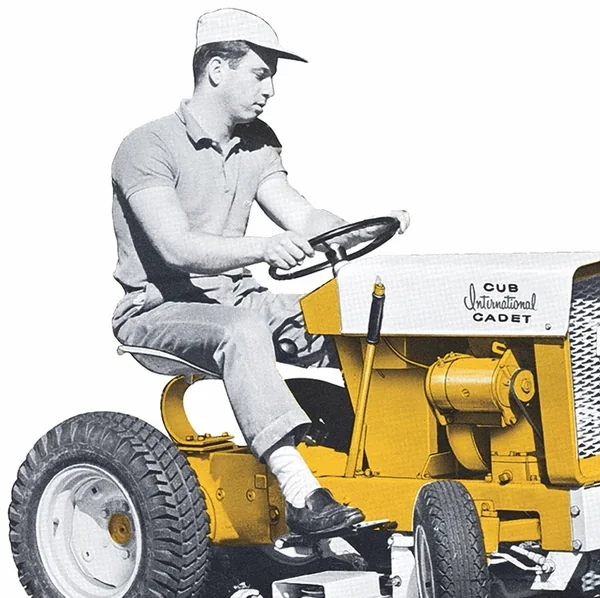
*Cub Cadet's original 1961 garden tractor. Image: Cub Cadet.*
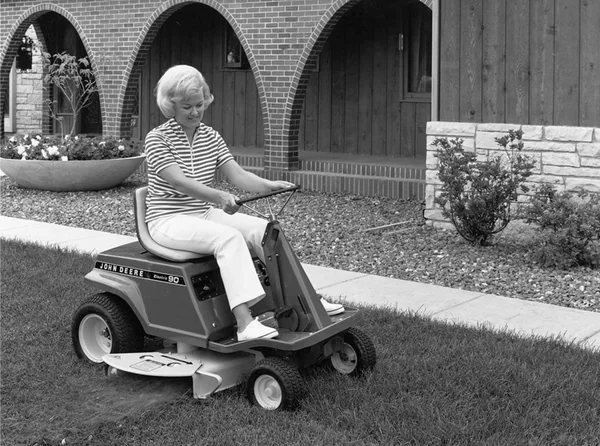
*The John Deere 110 lawn and garden tractor, introduced in 1963. Image: John Deere / The Furrow.*
In 1964, the zero-turn mower designed by John Regier entered commercial production under the Hustler brand, with Roy Mullet and his business driving its development. Independent control of the left and right drive wheels let it turn in a confined space, reducing time spent circling trees, turning and retracing ground. Zero-turn machines later became a major format in American professional lawn care. Hustler's history
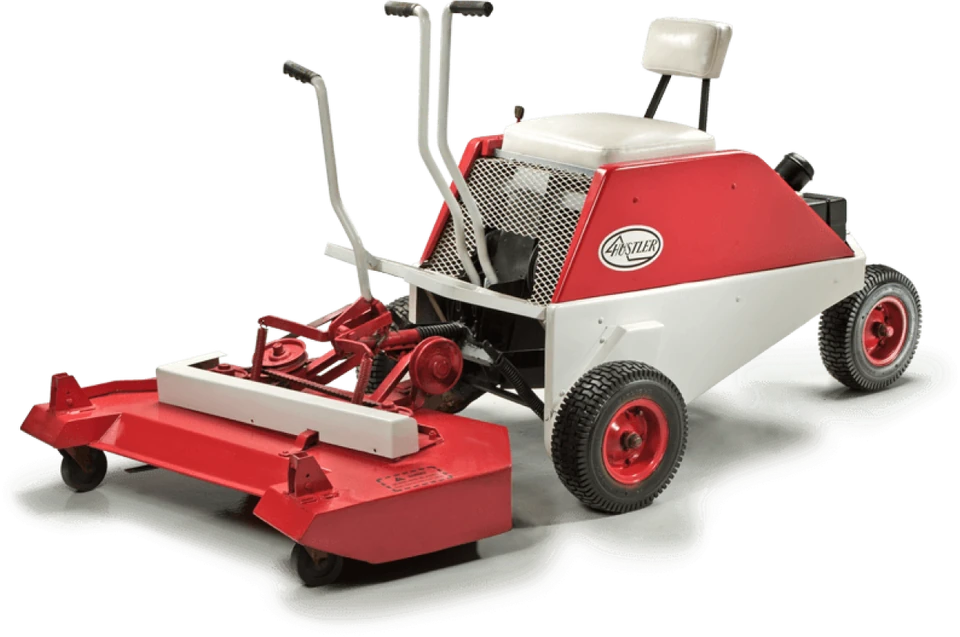
*The original Hustler zero-turn mower, commercialized in 1964. Image: Hustler Turf.*
That same year, S. Lawrence Bellinger filed an automatic-mower patent application that was granted in 1970. This early approach, associated with Mowbot, already used a perimeter wire to restrict where the machine could travel. The idea of a mower working by itself long predates today's enthusiasm for artificial intelligence.
In 1965, the Flymo hover mower went on sale. Inspired by the hovercraft, Swedish inventor Karl Dahlman used airflow to lift the machine above the grass, making it easy to move in different directions. The format never dominated every market, but retained a place on slopes and in some European gardens. Flymo's history of the hover mower
In 1966, Cub Cadet brought hydrostatic transmission to its lawn tractors. Drivers could adjust speed and direction without repeatedly changing gears. Ride-on equipment was becoming easier to operate for extended periods.
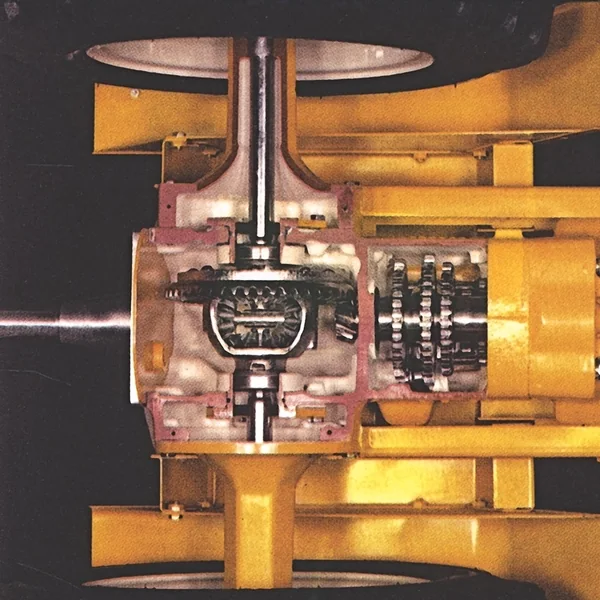
*A hydrostatic transmission cutaway from Cub Cadet's 1966 archive. Image: Cub Cadet.*
In 1970, General Electric introduced the Elec-Trak electric garden tractor, with batteries powering both movement and attachments. Electric ride-ons are therefore far older than the current battery boom. Heavy, expensive batteries limited the proposition, however, and the business passed to Wheel Horse in 1974 without developing into a steadily expanding mainstream market.
In 1978, Honda introduced the HR21, entering the walk-behind mower market. Small-engine expertise developed in cars and motorcycles was finding another outlet in European and American gardens. Honda's HR21 development story
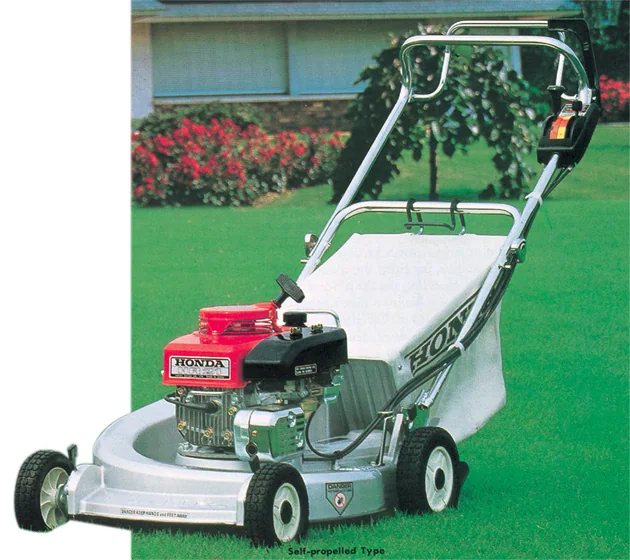
*Honda's HR21 mower, launched in 1978. Image: Honda.*
In 1982, the United States' federal safety standard for walk-behind power mowers took effect, setting requirements for protection against blade contact and operator controls. Releasing the control had to bring the blade to a rapid stop. Safety mechanisms became integral to mower design alongside power and productivity.
1990–2018: Robots reach the lawn
In the early 1990s, inventor André Colens explored solar-powered automatic mowing. In 1995, Husqvarna introduced the Solar Mower. It cut frequently, removing only a little grass each time and leaving the fine clippings on the lawn. Husqvarna's historical timeline
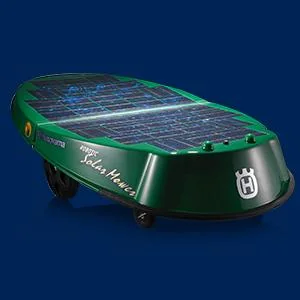
*Husqvarna's 1995 Solar Mower. Image: Husqvarna Group.*
Also in 1995, Israeli entrepreneurs Udi Peless and Shai Abramson founded Friendly Robotics, the business that became Robomow. Several independent commercial approaches to robotic mowing were emerging.
In 1997, Wright introduced the Stander. Its operator stood on a rear platform, with quick access on and off the machine and good maneuverability. While robots were still getting started, professional operator-controlled equipment continued to evolve. Stand-on, ride-on and walk-behind formats served different jobs.
In 1998, Husqvarna introduced a robotic mower that returned automatically to its charging station. Going back to charge and then resuming work became the basic operating cycle of domestic robotic mowing. Robomow also brought products to market during this period.
Around 2000, Italy's Zucchetti Centro Sistemi began developing Ambrogio robotic mowers. In 2002, Belgium's Belrobotics introduced Bigmow for larger grassed areas. Robots were beginning to serve sports grounds and extensive green spaces as well as domestic gardens.
In 2004, Czech manufacturer DVOŘÁK introduced SPIDER remote-controlled mowing equipment. Operators could stand safely away while cutting steep slopes that were unsuitable for conventional ride-ons. Remote control did not mean autonomous operation, but it removed the person from a hazardous driving position. SPIDER's ILD01 history
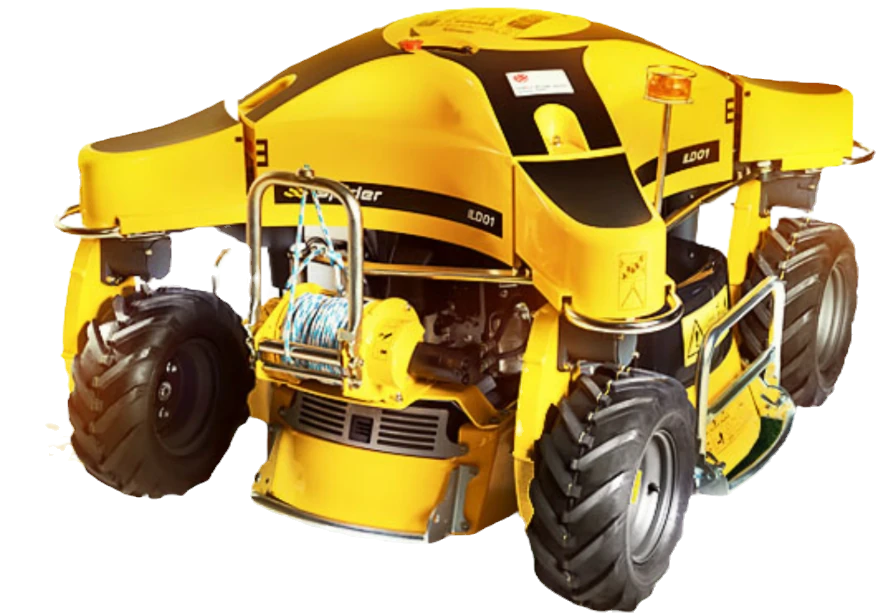
*SPIDER ILD01 remote-controlled mower, shown in a current manufacturer image. The product line launched in 2004. Image: SPIDER / DVOŘÁK.*
The early robotic-mower business was difficult. A historical presentation bearing Husqvarna branding recalls that its robot project came close to being abandoned and only became profitable in 2005. From the 1995 solar-powered machine, that amounted to roughly a decade of investment. This account comes from the retrospective presentation.
In 2007, Husqvarna acquired Gardena. The group now had distinct brands reaching professional dealers and domestic gardening retailers, providing a broader distribution base for later robot sales.
Around 2012, Worx Landroid, Honda Miimo, Bosch Indego and Gardena robotic mowers entered or expanded their markets. Bosch's Indego used systematic mowing paths to reduce repeated travel. Most machines still needed a boundary wire, but their behavior inside that boundary was beginning to differ substantially. Honda's 2012 Miimo announcement
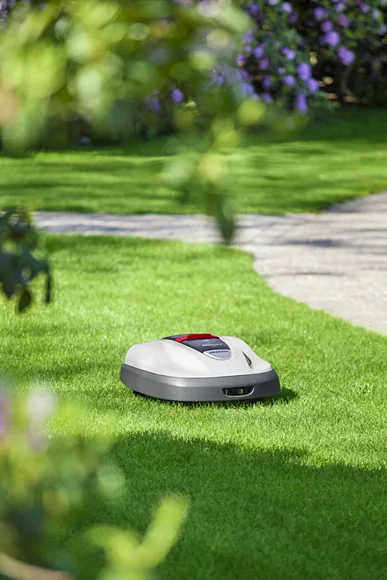
*Honda Miimo in the manufacturer's 2012 launch material. Image: Honda.*
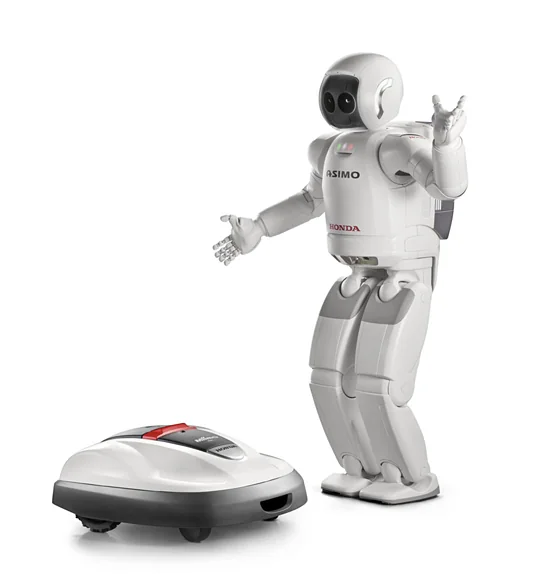
*Honda pictured Miimo alongside ASIMO in its 2012 launch material. Image: Honda.*
In 2014, Chervon's EGO launched its 56V lithium-ion outdoor power-equipment platform, with mowers among its important products. Higher-output batteries, motors and controls let battery equipment undertake jobs previously handled by petrol engines. A mower buyer could then add blowers, string trimmers and other tools using the same battery platform.
In 2017, Husqvarna announced cumulative sales of one million robotic mowers, roughly 22 years after its first product. That year, established outdoor-equipment group MTD acquired Friendly Robotics, Robomow's parent. Traditional machinery companies were using acquisitions to add robotics capabilities.
By then, robotic mowing was an established business, but installation remained awkward. Owners generally needed a wire around the lawn, with adjustments when the garden changed. Installation and maintenance helped keep dealers central to the sales process.
Since 2019: Wire-free technology and Chinese entrants
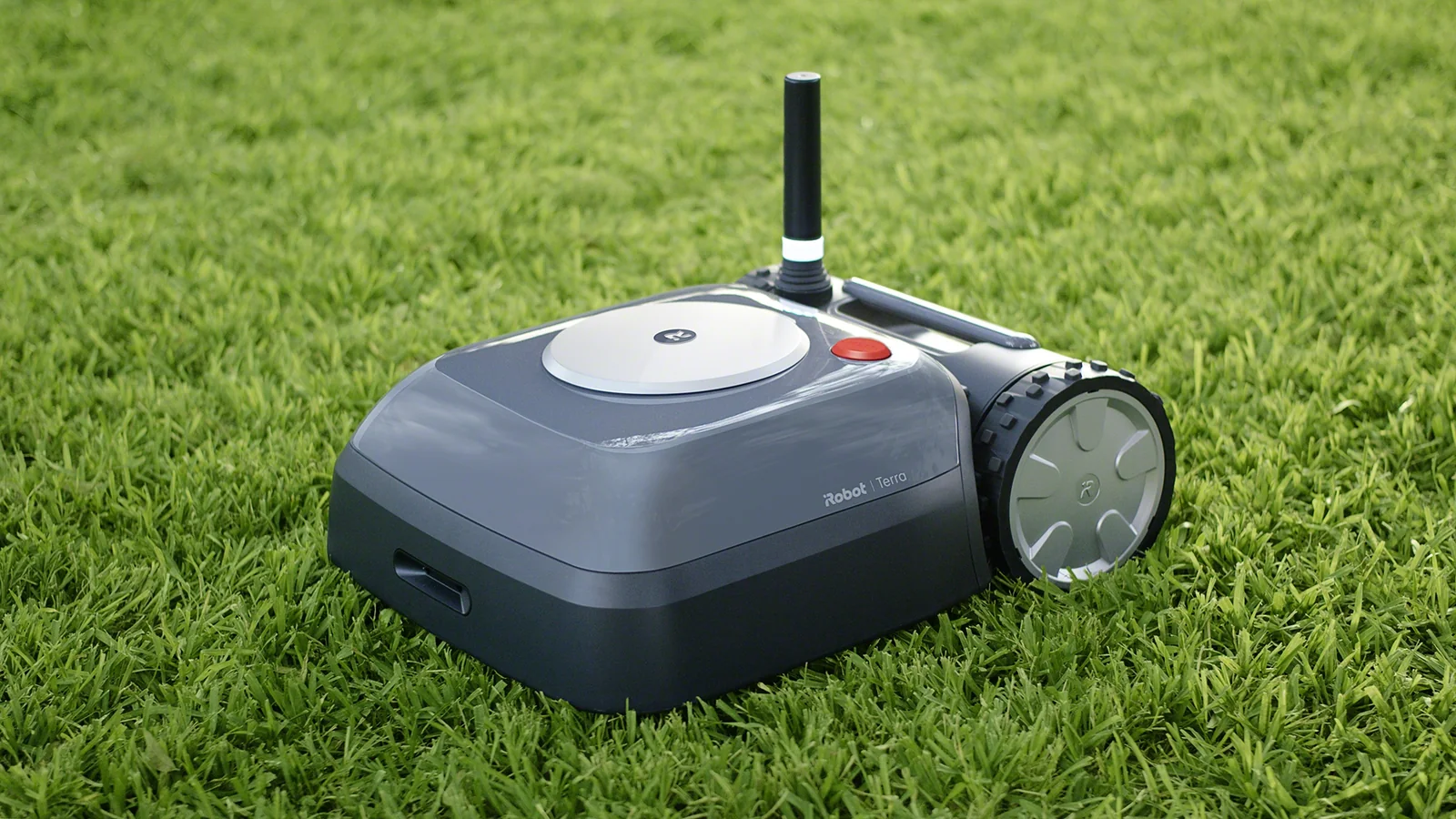
In 2019, iRobot unveiled Terra, using wireless beacons to avoid burying a wire around the lawn. The Roomba company's move into the garden attracted considerable attention. In 2020, however, iRobot paused the project, and Terra did not achieve the planned large-scale commercial launch. iRobot's Terra media kit
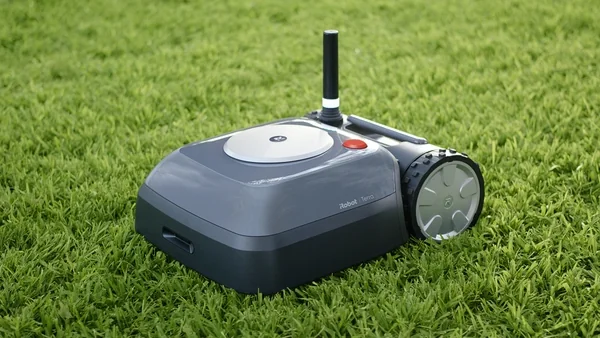
*Terra in iRobot's 2019 media kit. The project was paused the following year. Image: iRobot.*
In 2019, Husqvarna demonstrated EPOS satellite-positioning technology and subsequently brought it into professional markets. High-precision positioning enabled virtual boundaries that groundskeepers could adjust in software instead of digging up and relocating wires.
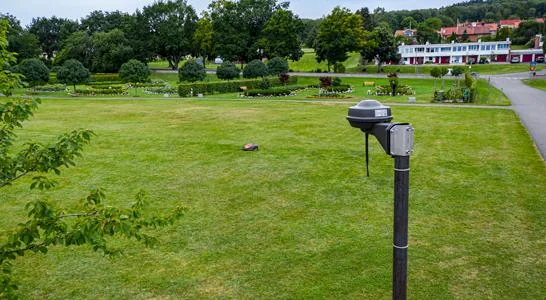
*Husqvarna's official historical image for the introduction of EPOS. Image: Husqvarna Group.*
In 2020, small-engine giant Briggs & Stratton filed for bankruptcy protection and subsequently restructured through an asset sale. Fuel-powered equipment still had an enormous market, but its engine suppliers faced both business pressures and competition from electrification.
Around 2020–2021, traditional manufacturers such as Cub Cadet expanded their electric ride-on ranges, while EGO introduced the Z6 electric zero-turn mower. Battery platforms extended beyond walk-behind equipment into larger, more demanding mowing jobs. EGO's Z6 ZT4204L
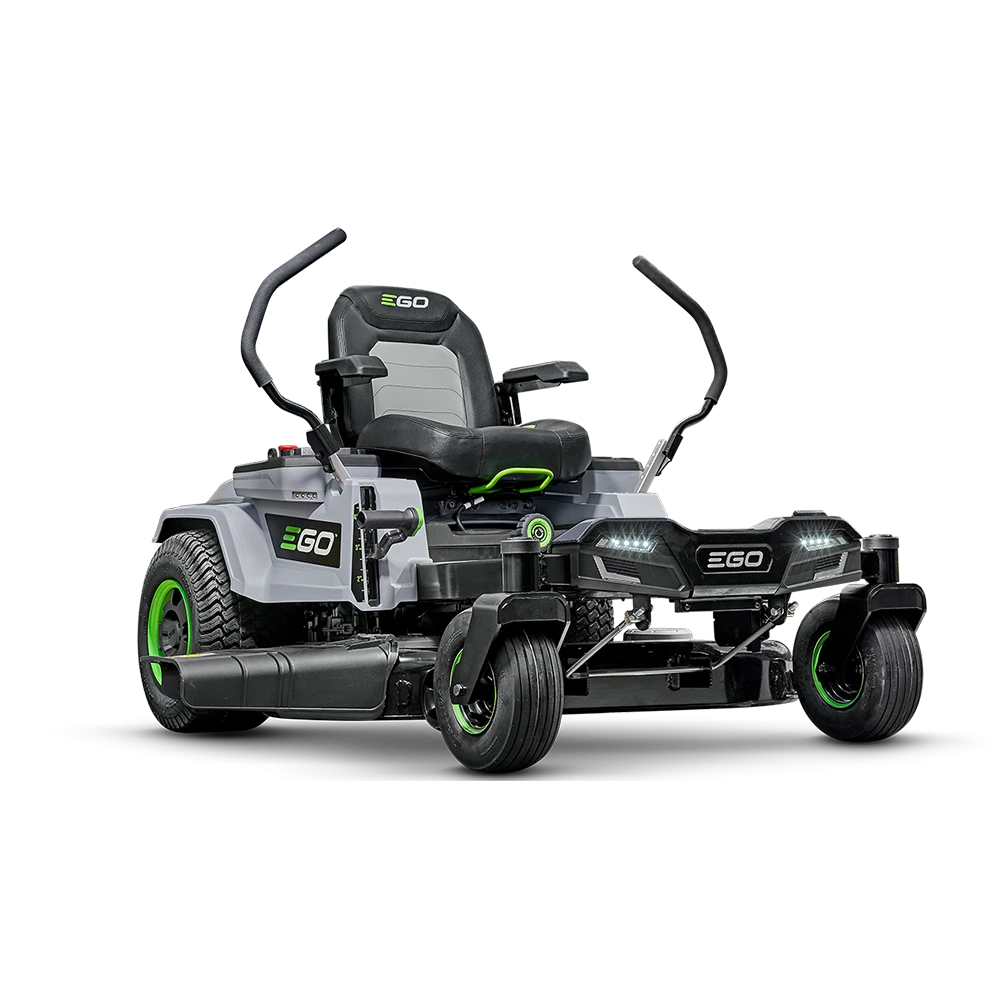
*The EGO Z6 ZT4204L electric zero-turn mower uses the EGO 56V battery platform. Image: EGO.*
In 2021, Ninebot unveiled its first Segway Navimow mower, using RTK high-precision satellite positioning and related technologies to establish virtual boundaries. Removing the need for a perimeter wire also made it easier to sell robots without an installation visit, opening a route through e-commerce and more retail channels.
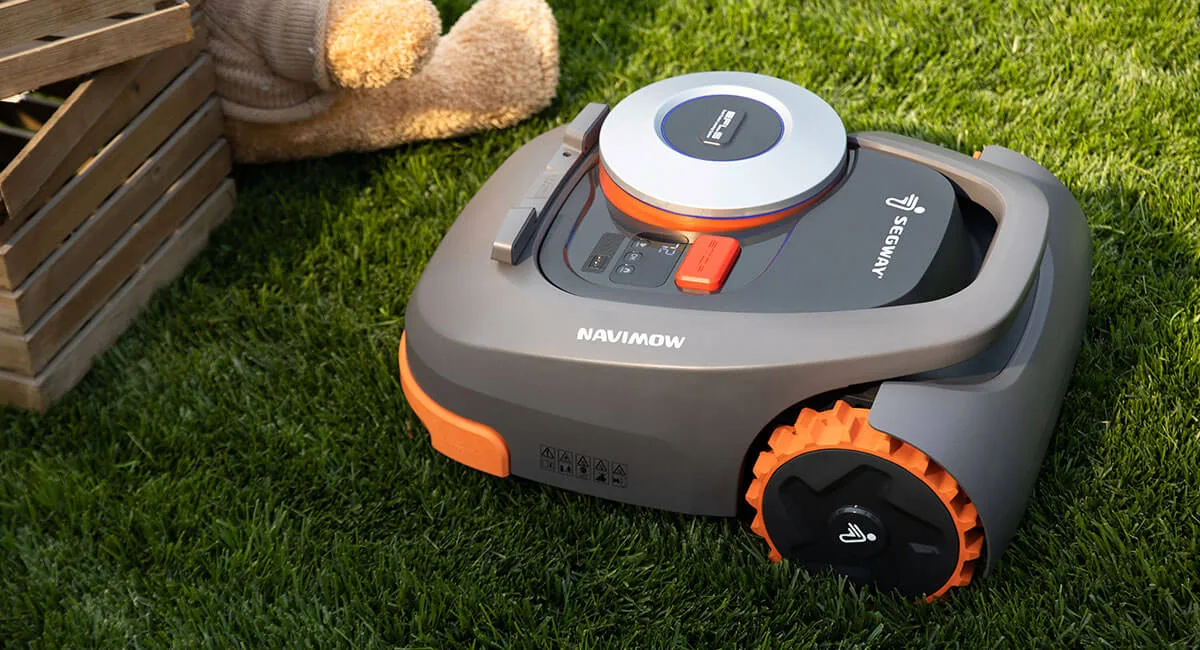
*The original Segway Navimow in a manufacturer image published in 2021. Image: Segway, via New Atlas.*
That year, Stanley Black & Decker completed its purchases of the remaining stake in MTD and of Excel Industries, bringing brands including Cub Cadet and Hustler into a larger tools and outdoor-equipment group. Power-tool companies were competing for the lawn-care business, with batteries, brands and distribution available to support multiple categories.
In 2021, American company Scythe unveiled the M.52 autonomous mower for professional landscaping contractors. It retained the working capacity of a large commercial mower, aiming to free crews for edging and other tasks. Husqvarna's CEORA began deliveries in 2022, also targeting large green spaces. Commercial robots needed to sustain longer working hours and demonstrate labor savings.
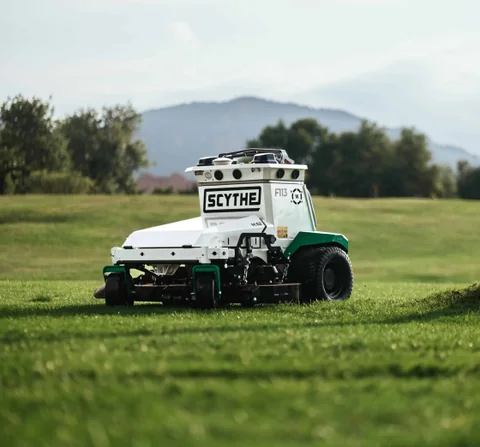
*The Scythe M.52 commercial autonomous mower. Current manufacturer image, not the 2021 launch photograph. Image: Scythe Robotics.*

*Husqvarna CEORA, which began deliveries in 2022 for large-area turf care. Image: Husqvarna Group.*
In 2022, Mammotion introduced the all-wheel-drive LUBA, combining wire-free navigation with the ability to traverse difficult terrain. Lawns have slopes, ruts and slippery ground. Knowing where to go was only useful if the machine could actually get there. Mammotion's original LUBA announcement
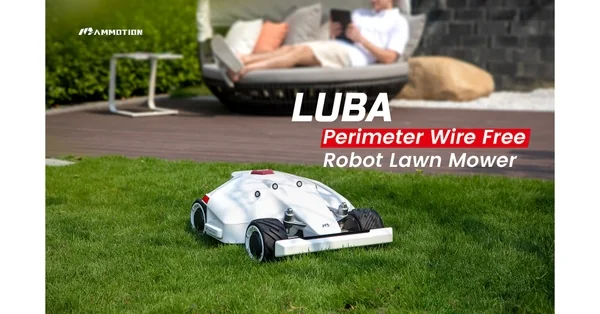
*The original all-wheel-drive Mammotion LUBA in its 2022 launch materials. Image: Mammotion / PR Newswire.*
That year, ECOVACS announced its GOAT robotic mower, extending its domestic-robotics business into the garden. Robot-vacuum companies were bringing their sensing, navigation and consumer-brand experience outdoors.
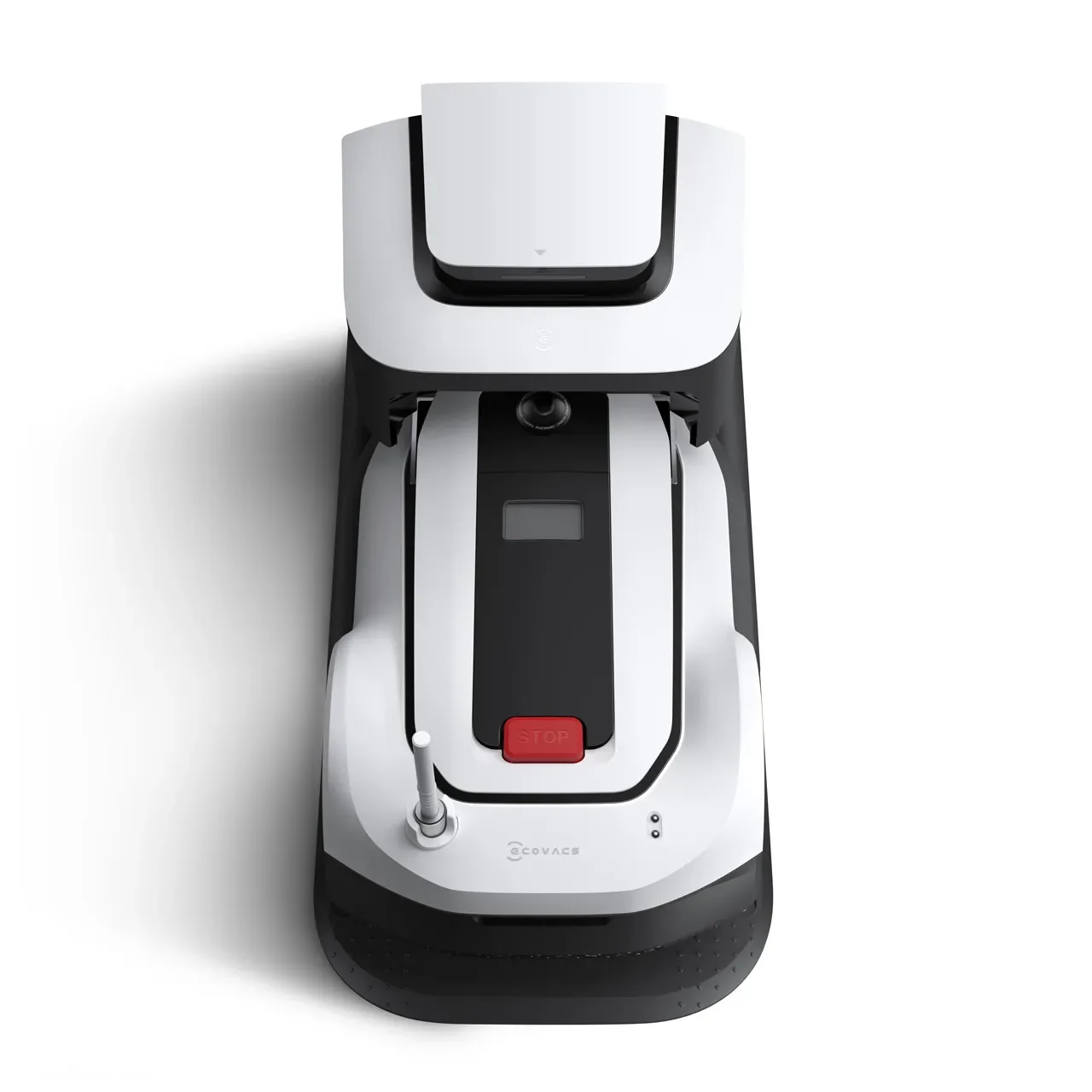
*The first-generation ECOVACS GOAT G1 with its charging station. Image: ECOVACS.*
In 2023, Worx introduced Landroid Vision, using cameras to recognize grass and its boundaries. Vision became another important approach alongside satellite positioning, offering a different option for gardens without ideal satellite reception.
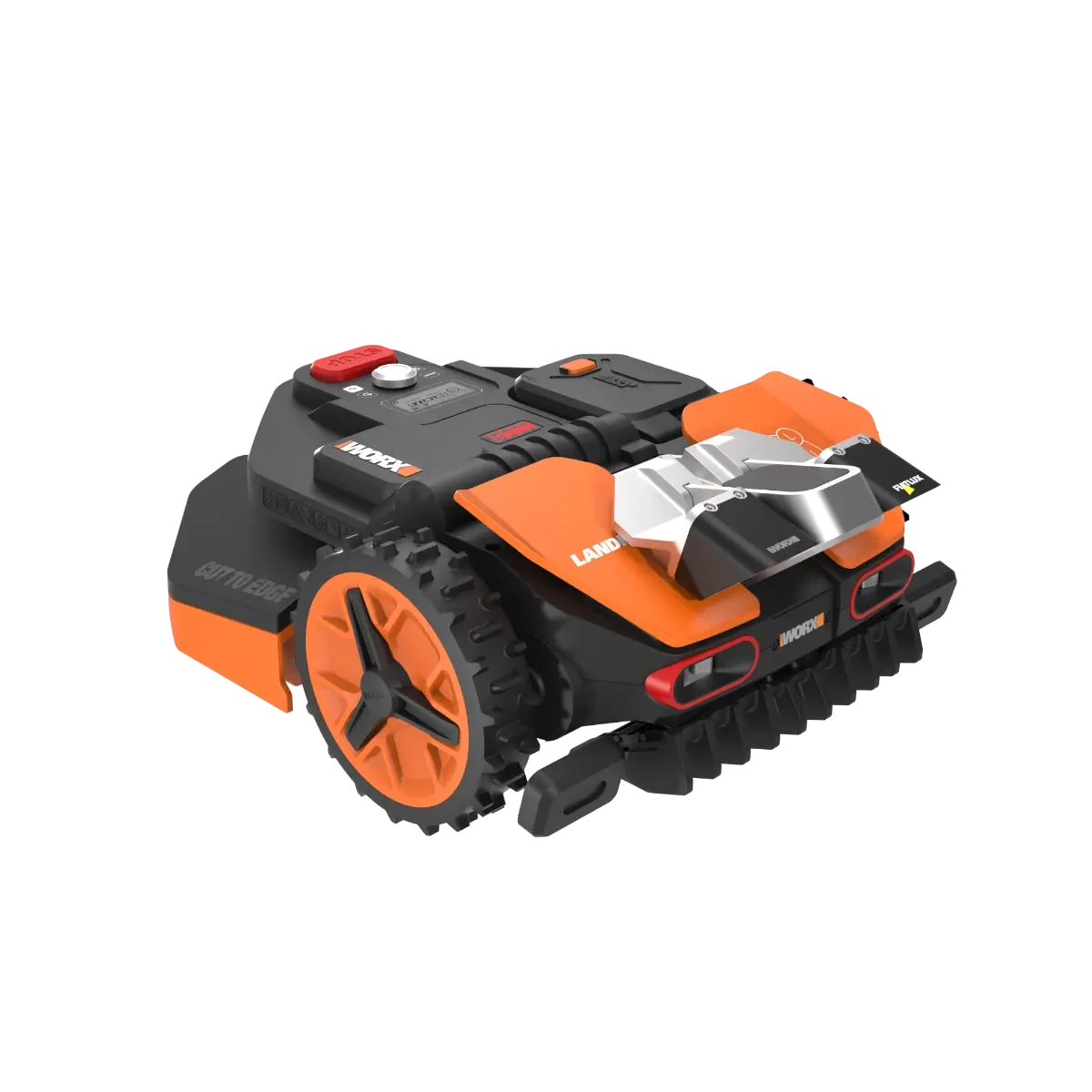
*WORX Landroid Vision, representing the camera-based route to lawn-boundary recognition. Image: WORX.*
In 2023, Dreame announced the Roboticmower A1, bringing it to market in 2024 with LiDAR-based environmental sensing. In 2024, Sunseeker introduced products including the Orion X7. RTK, vision and LiDAR were being combined in different ways as manufacturers competed for lawns beneath trees, beside buildings and in more complicated gardens. Dreame A1; Sunseeker's Orion X7 announcement
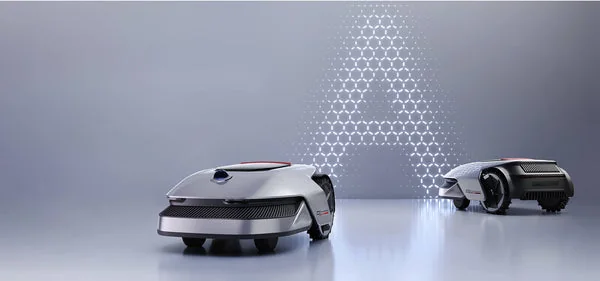
*Dreame Roboticmower A1, announced in 2023 and brought to market in 2024. Image: Dreame.*
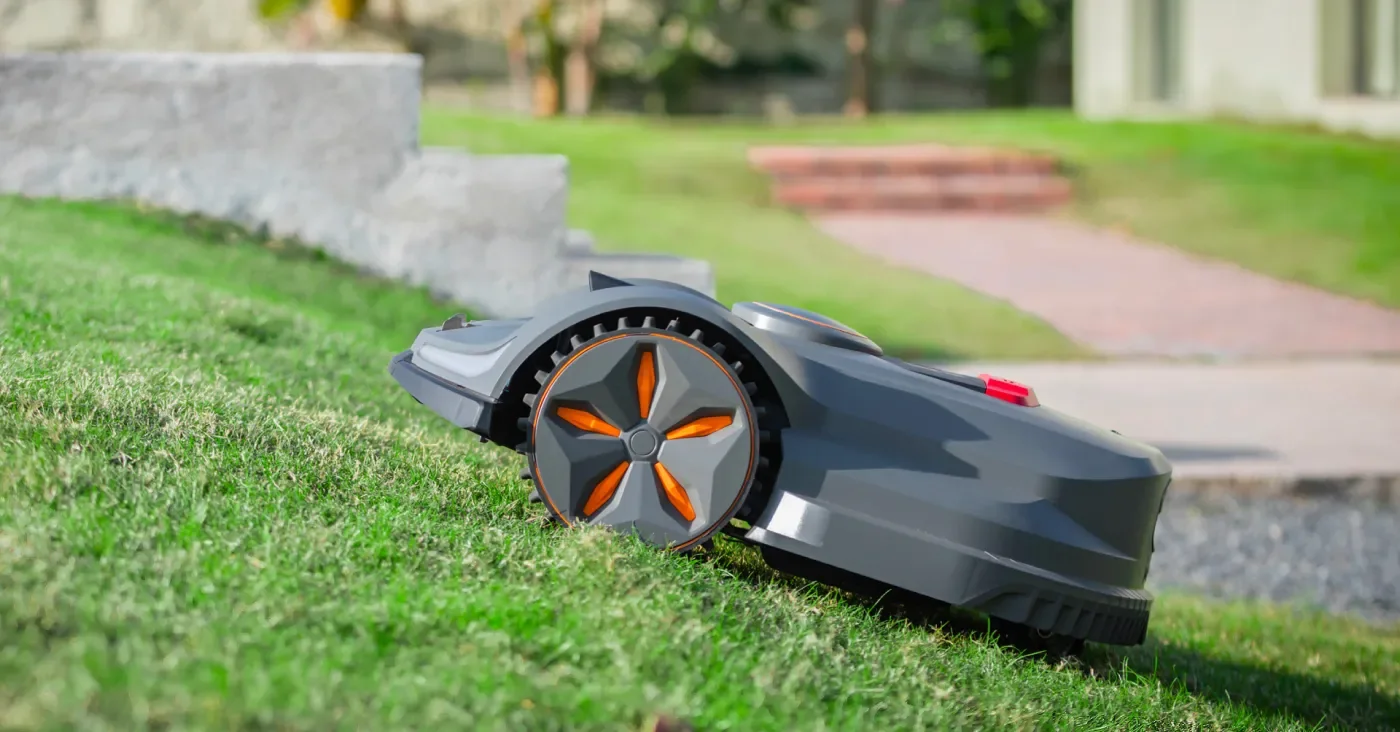
*Sunseeker Orion X7 in the company's 2024 launch material. Image: Sunseeker.*
In 2024, California introduced new zero-emission requirements for newly manufactured small off-road engines, including those used in many petrol mowers. The rules did not require consumers to stop using their existing machines immediately, but gave brands and retailers another reason to expand battery-powered ranges.
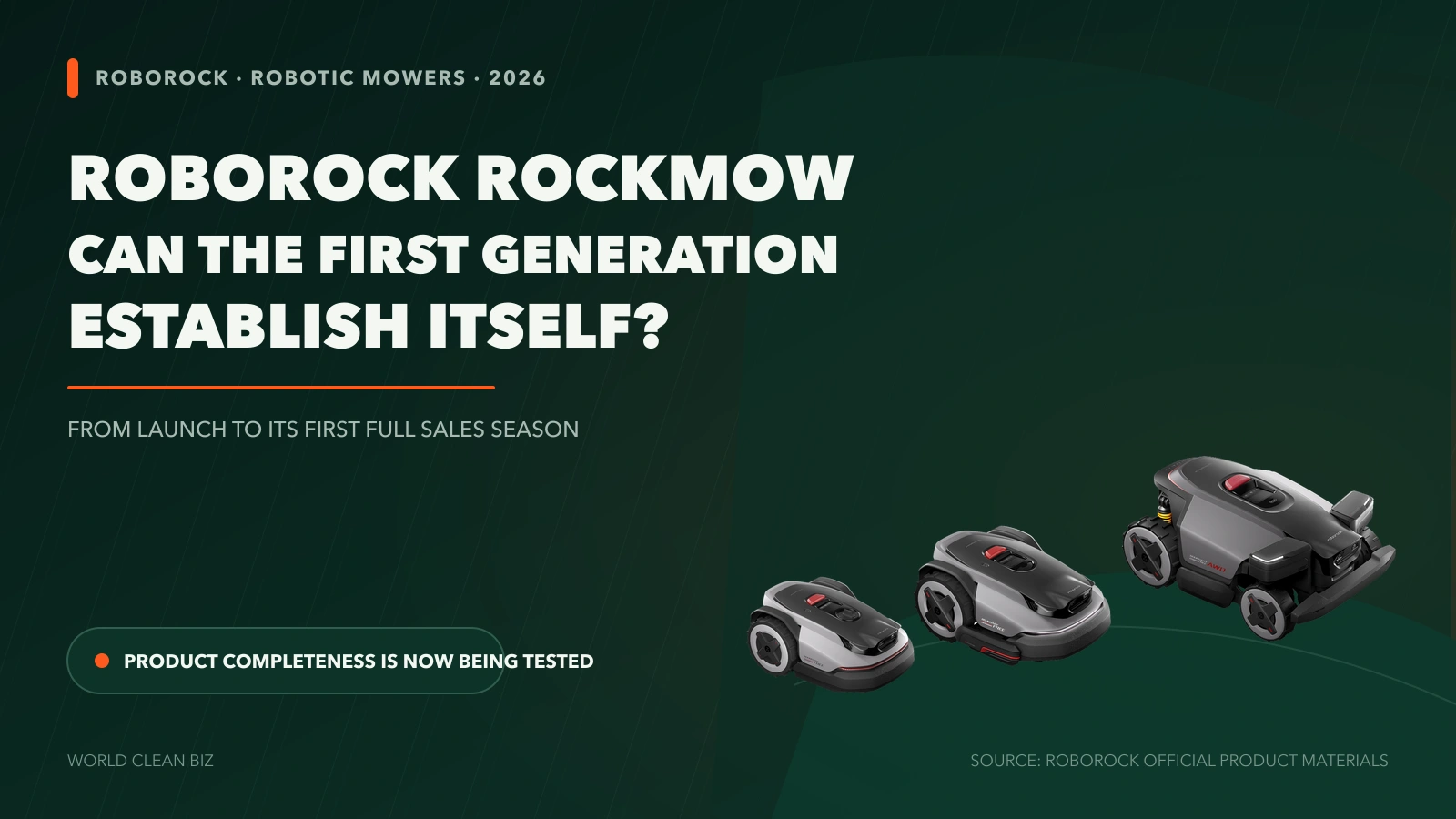
In 2025, MOVA introduced robotic mowers including the 600 and 1000, while Roborock unveiled its RockMow and RockNeo lines. More cleaning-appliance brands followed ECOVACS and Dreame into the market. Robotic mowing was drawing on the development resources and supply chains of China's consumer-robotics industry. Roborock's first-generation lineup
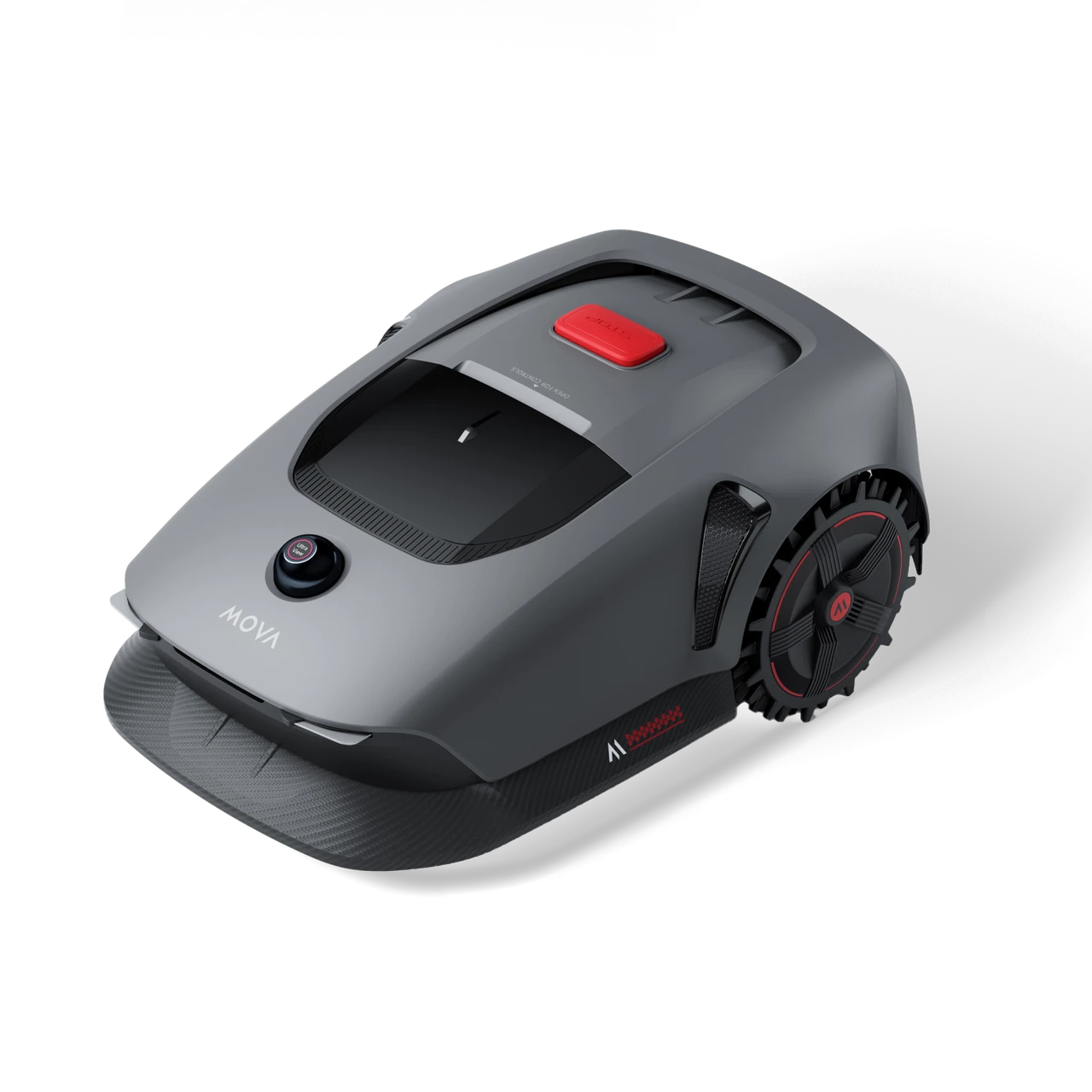
*The MOVA 1000 robotic mower. Image: MOVA.*
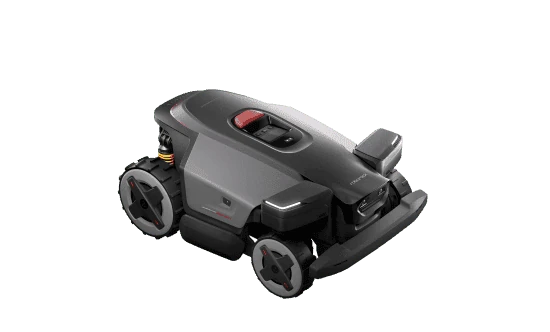
*Roborock's RockMow Z1 robotic mower. Image: Roborock.*
That year, John Deere demonstrated an autonomous electric commercial-mowing concept at CES. Wright continued working with Greenzie on autonomous commercial mowing. Automation and electrification were not proceeding in lockstep: some autonomous machines still used combustion engines. Small domestic robots and large commercial equipment were approaching unmanned operation from different starting points. John Deere's CES 2025 announcement
In November 2025, the European Union opened an anti-dumping investigation into robotic lawn mowers originating in China, following a complaint by Husqvarna's Czech manufacturing subsidiary. Imports began being registered in January 2026. In June, no provisional anti-dumping measures were imposed at that stage, and the investigation continued. As Chinese companies expanded European sales, competition had moved into trade policy. European Commission case record
In 2026, companies including Navimow expanded commercial products and multi-machine management systems. Their customers increasingly included landscaping contractors, sports grounds and large property operators, whose questions centered on how much labor a fleet could replace and whether it could work reliably throughout a mowing season. Navimow Terranox
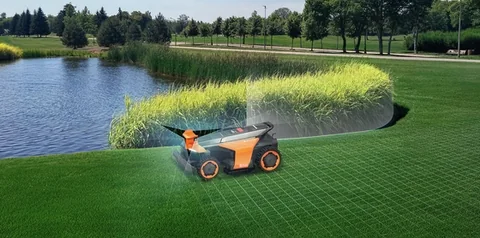
*Navimow Terranox, the brand's commercial robotic mower. Image: Segway Navimow.*
In September 2026, four Husqvarna robotic platforms received conditional FCC approval in the United States. The company planned to introduce the related products there in 2027. Market access and manufacturing-localization arrangements were beginning to shape launch schedules. Husqvarna's announcement
Meanwhile, Ninebot reported first-half 2026 revenue of RMB 2.539 billion for its Willand subsidiary group, the business behind Navimow. That exceeded approximately RMB 1.98 billion for the whole of 2025. Robotic mowers represented about 17% of Husqvarna's 2025 group revenue, implying approximately SEK 7.9 billion on the figures in its annual report. Ninebot's interim report; Husqvarna's annual report
Husqvarna started in robotic mowing in 1995. Ninebot did not unveil Navimow until 2021. If Willand's full-year 2026 revenue approaches RMB 5 billion, Ninebot will be in contention for the industry's top position by robotic-mower revenue.
The lead Husqvarna spent thirty years building is facing a direct challenge from a Chinese company.
Will the world's number-one robotic-mower company change in 2026?
 Dreame
 ECOVACS
 Husqvarna
 iRobot
 Mammotion
 MOVA
MOVA Roborock