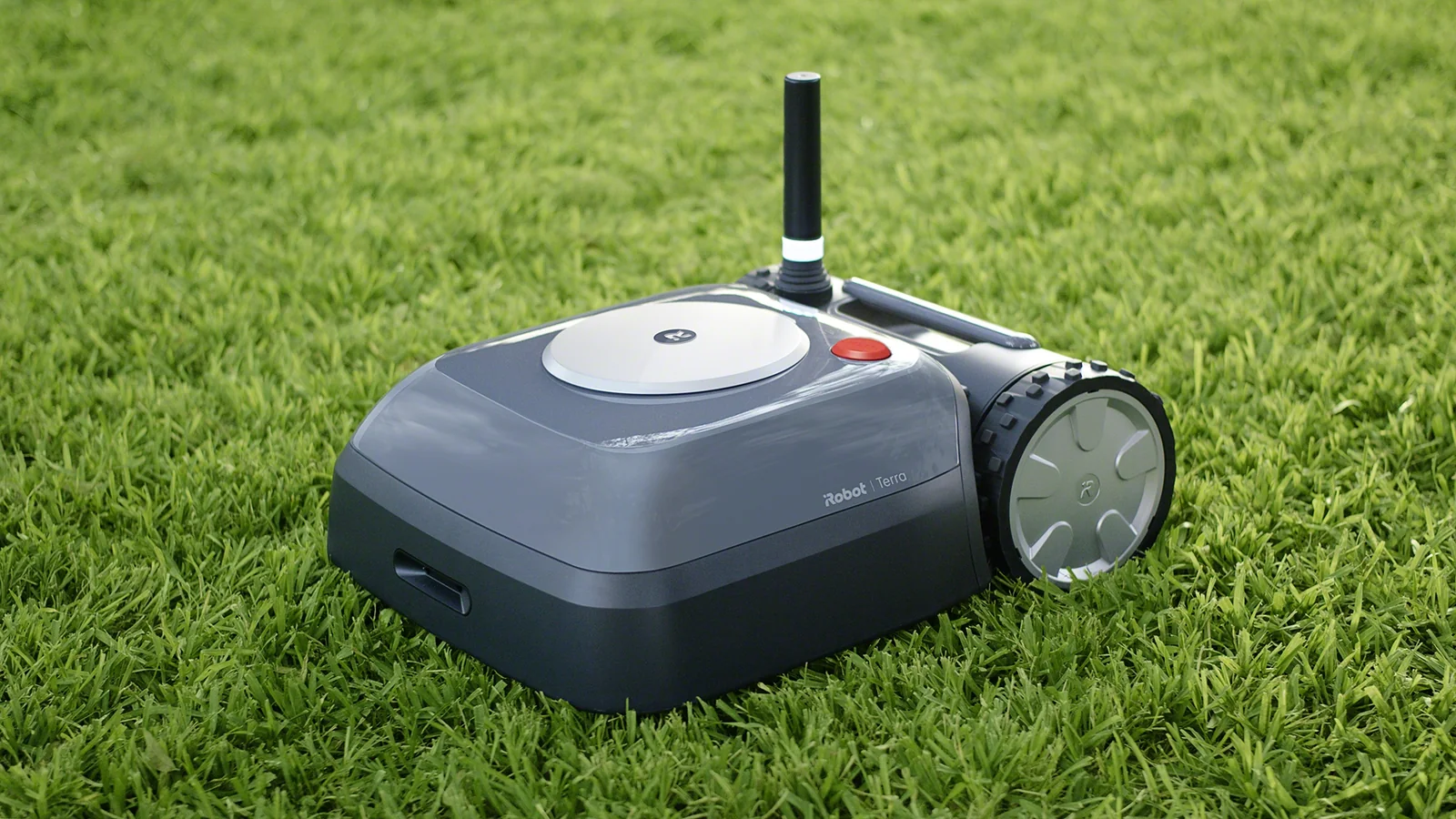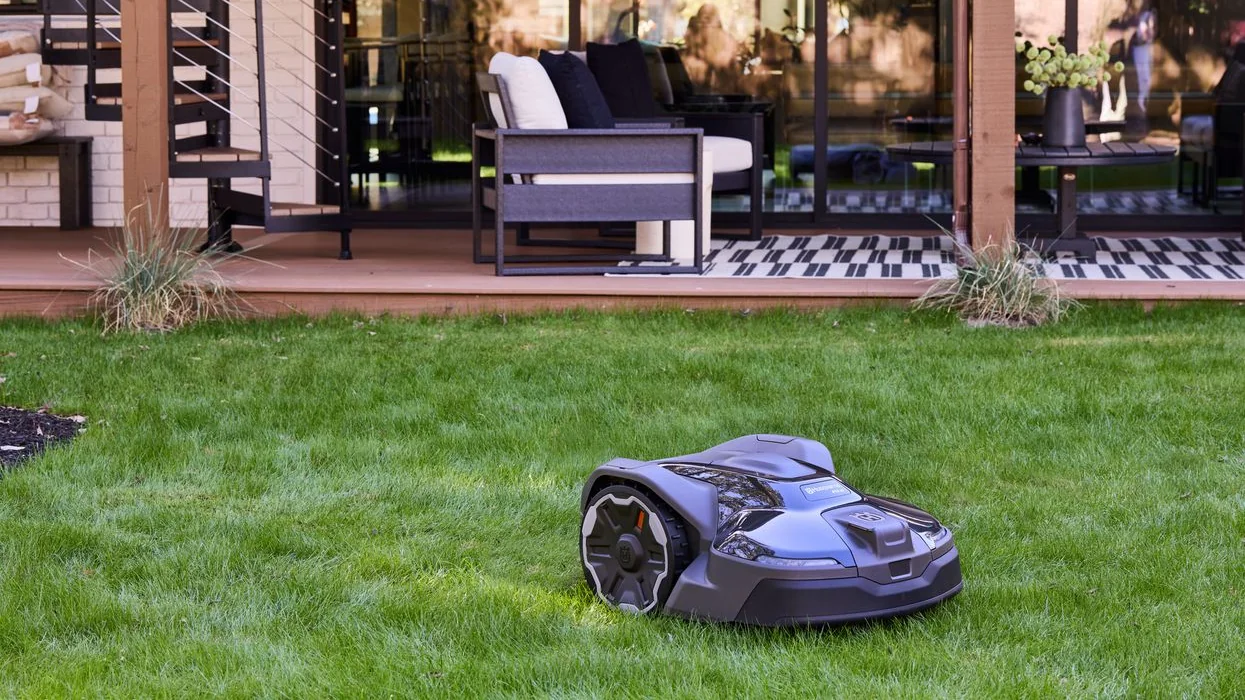
*Cover photograph: Husqvarna's existing Automower iQ range, via its official product page. The photograph does not depict the four conditionally approved 2027 platforms.*
On October 21, Husqvarna announced that it had received the European Commission's disclosure of essential facts in the anti-dumping investigation into Chinese robotic lawn mowers. For the Swedish company, long a dominant force in robotic mowing, the outcome will shape its next round of competition with Chinese rivals in Europe.
I have previously written about the investigation, numbered AD745. A circulated account of the disclosure lists proposed anti-dumping rates of 45.6% for Mammotion, 53.3% for Positec, 47.0% for other cooperating Chinese companies and 53.3% for remaining Chinese-origin products. Those rates await confirmation in an official published document. The statutory deadline for a decision on definitive measures is January 19, 2027. Husqvarna's announcement, secondary account of the proposed rates.
More than a month earlier, Husqvarna had also received conditional approval under the US Federal Communications Commission's restrictions. While Chinese companies faced barriers to bringing new models into the United States, the established outdoor-equipment manufacturer had secured a route forward for some of its forthcoming products.
China's supply chain has been changing too. Some companies arranged Southeast Asian production in advance, preparing for European duties. Others had only just started investing in molds when the US restrictions on new models forced them to rethink their sales plans.
These changes have arrived during a year of rapid growth in robotic mowing. In the first half of 2026, Ninebot's service robots and accessories business generated RMB 2.558 billion in revenue. Segway Navimow and Mammotion kept updating their products, while more brands and startup teams entered the market with fresh funding. Ninebot's interim report.
I doubt this round of policy changes will restore the product advantage that traditional manufacturers have lost. It is more likely to widen the gap between companies that already have scale and those still trying to enter the market.
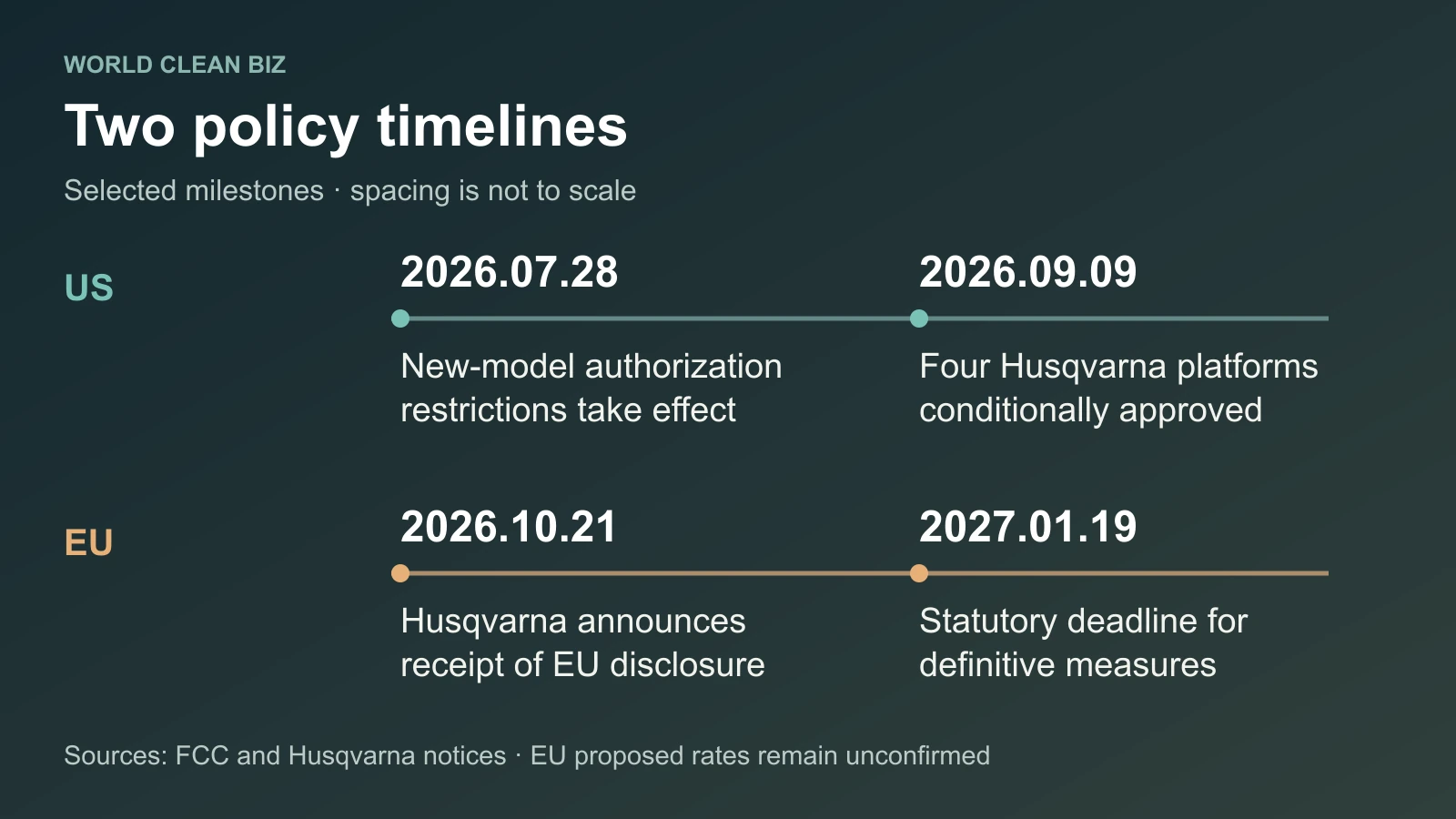
*US authorization restrictions and the EU anti-dumping investigation operate differently. The European rates discussed above are proposed, not duties already in force.*
From what I have seen through my supply-chain contacts, companies in the industry have been establishing production arrangements in Southeast Asia since last year. Some are building their own factories; others are finding local manufacturing partners. As the European investigation progressed, they were looking for places to produce the following season's orders.
By the time proposed duties approaching 50% began circulating, some companies were already working out how to transfer orders. Facilities and equipment require investment, and local teams have to be assembled. With sufficient sales behind them, those costs can be spread across continuing orders.
Overseas production still has to meet rules of origin. Simple transshipment or limited assembly can face anti-circumvention scrutiny. Companies need to establish actual manufacturing and reorganize the supporting supply chain. EU guidance on anti-circumvention.
That adds cost, but it need not drive the leading Chinese brands out of Europe. Navimow and Mammotion continue to launch products and improve how their machines handle difficult gardens. Duties can narrow the price gap; to win back orders, Husqvarna still needs a compelling machine at a comparable price.
Chinese companies that have already arranged overseas capacity can keep competing in Europe, even as production and delivery become more complicated. Traditional brands may gain some price protection. The pressure to improve their products remains.
A newcomer may not have enough orders to support an overseas factory. It could still be paying to develop its first machine when it has to consider a different production location and the investment that entails. Before it has sold a single unit, its original cost budget may already be inadequate.
The FCC restrictions directly affect equipment authorization for new models in the United States.
Under the current arrangements, models with the relevant authorization before July 28, 2026, can generally continue to be imported and sold. Subsequent new models covered by the restrictions need a route such as conditional approval to proceed toward market access. Explanation of the FCC rules.
Before the policy took effect, brands including Husqvarna, Segway Navimow, Mammotion, Sunseeker, Positec's Worx, Anker's eufy and Yarbo already had robotic mowers aimed at the US market. Those products included Navimow's i, H and X3 series, Mammotion's LUBA and YUKA families, and eufy's E15 and E18. Companies can continue selling specific previously authorized models; later products still need their own route through authorization.
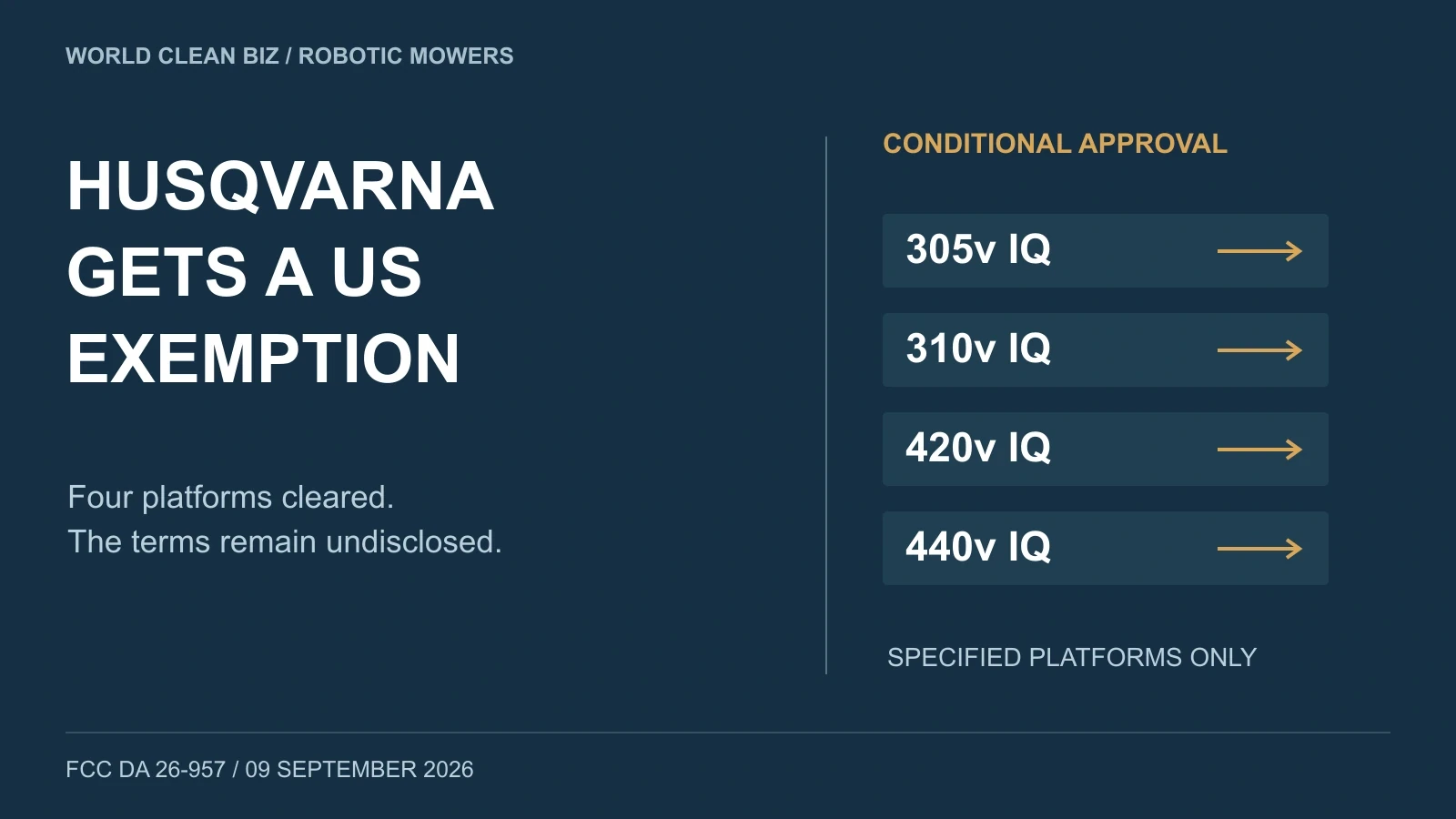
Husqvarna's conditional approval covers the 305v IQ, 310v IQ, 420v IQ and 440v IQ platforms. They appeared in the September 9 approval notice, and the company plans to introduce them in the United States in 2027. The specific manufacturing arrangements have not been made public. How those plans translate into deliveries will become clear in 2027. FCC notice, Husqvarna's launch plans.
That gives Husqvarna an opportunity to keep introducing new products. Chinese brands need to keep selling existing models while finding a path for new ones to enter the United States. Projects without the relevant authorization may already be unable to hold to their original launch dates.
According to information reaching me from the supply chain, some projects originally developed for the United States are being redirected toward Europe. Some have already reached the tooling stage. Development and mold costs have been incurred, but the market plan now has to be reworked.
Machines designed for American yards need their specifications reassessed for Europe, and companies have to find new distribution. Sales receipts are pushed back, while payroll and supplier payments continue. Every month spent adjusting the product consumes more cash.
For a small company that has committed most of its money to its first product, the delay could put it out of business. Its next funding round was supposed to be supported by a launch and sales. Instead, before the machine has even reached customers, it has to explain to investors why it is delayed and how much more money it needs.
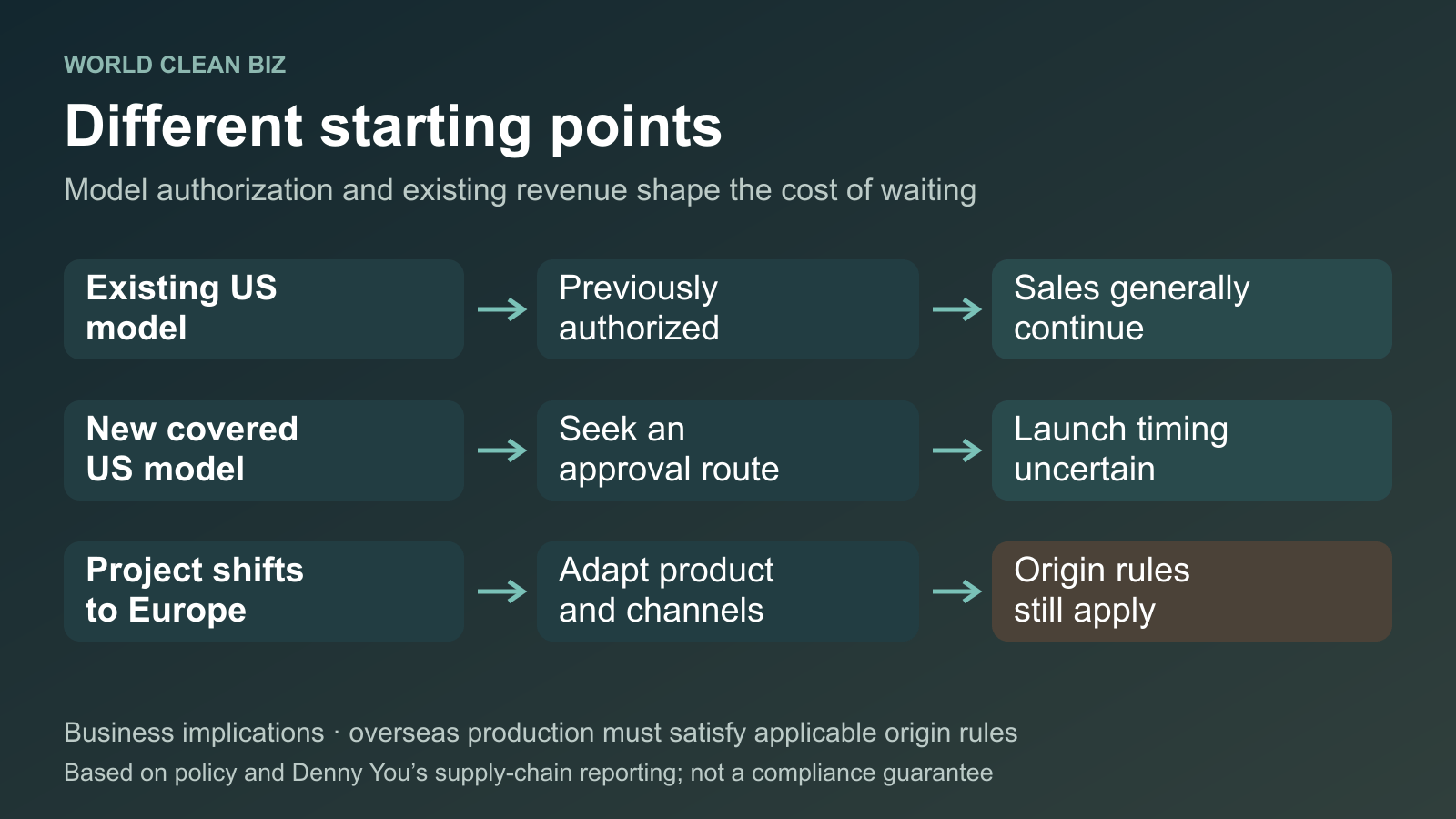
*The supply-chain consequences described here combine the published policy distinctions with Denny You's industry reporting and analysis.*
Europe offers these projects no easy refuge. Navimow, Mammotion and others are already building their distribution there. New brands that had hoped to establish a foothold in the United States now need to win European dealers while addressing production problems that anti-dumping measures may create. Both policies end up bearing down on the same project.
Teams with robot-vacuum experience are also developing robotic mowers. Suppliers have encountered some of those projects, but it remains unclear how many will reach volume production. Their engineering experience can help them build machines. Launch timing and the markets in which they can sell have become less predictable.
Navimow and Mammotion already have products generating sales, allowing them to support next-generation development and overseas production with their existing businesses. If one new model is delayed, others can still bring in revenue. Teams that have not yet built meaningful sales have to survive the wait on the cash they have.
I expect the industry's leading positions to be largely settled by 2027. Navimow and Mammotion are ahead for now. Whether traditional outdoor-equipment manufacturers can recover ground will depend on the products they bring out next season.
 Husqvarna
 Mammotion
 Segway Navimow