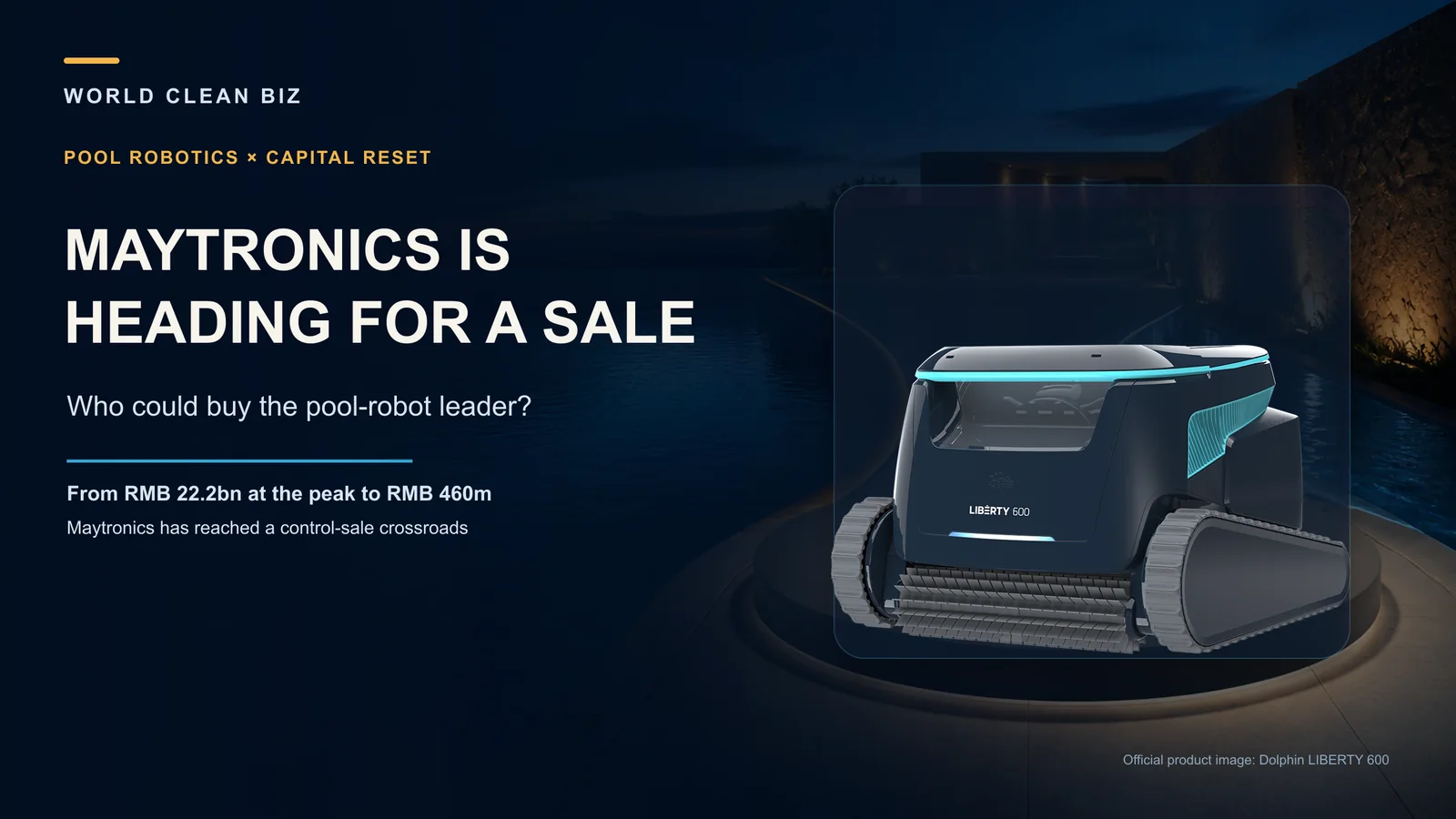
- Maytronics has confirmed preliminary contact with FIMI and a short exclusivity period while considering a NIS 300 million capital raise.
- The company still has Dolphin, patents, specialist channels and RMB 3.42 billion in annual revenue even though its market value has fallen to about RMB 460 million.
- A later sale could attract Chinese cleaning-robot leaders, pool-equipment groups, yard-robotics companies, cross-border dealmakers and listed embodied-AI companies.
I previously wrote an article asking whether Maytronics would become the next iRobot.
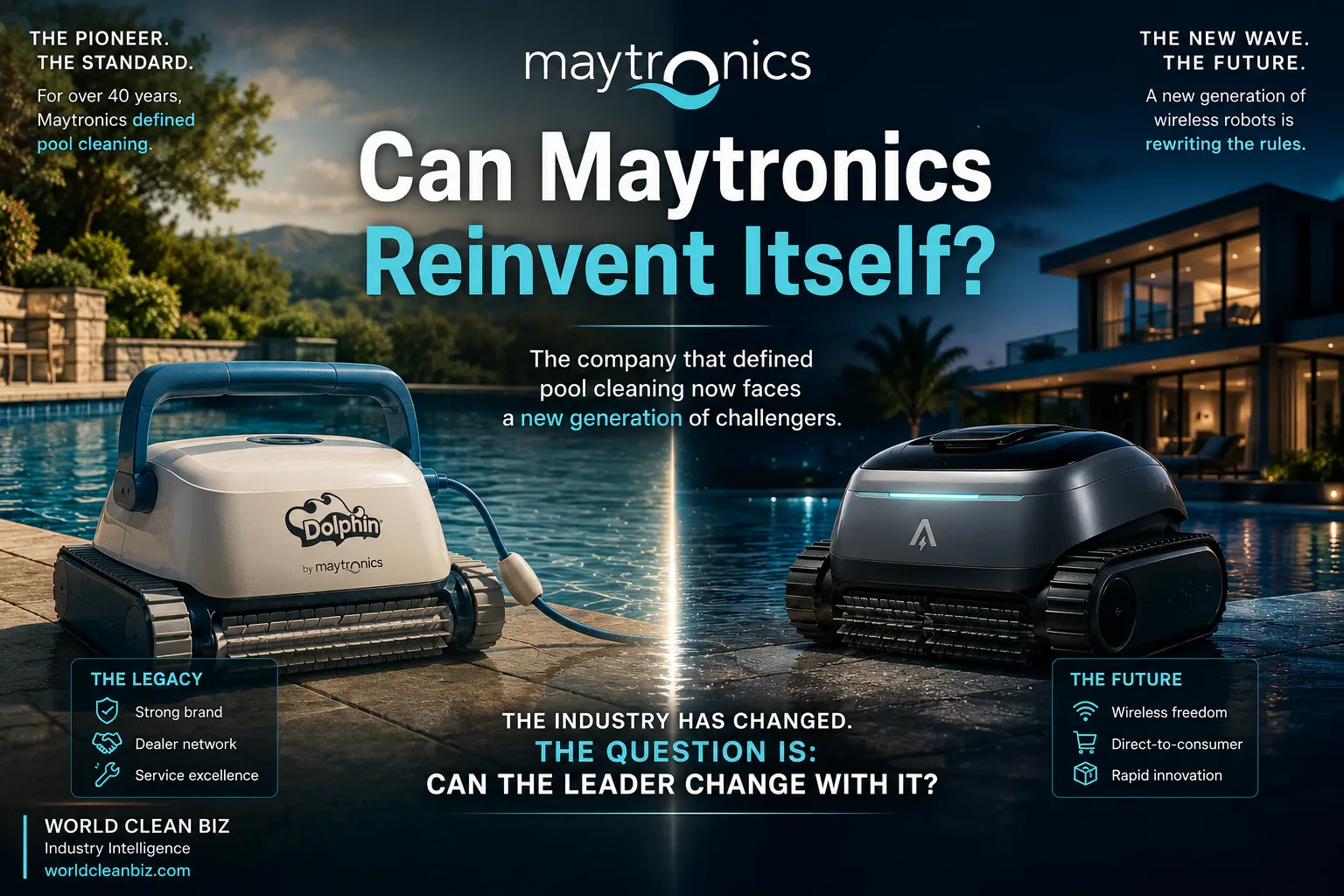
By then, Maytronics was already dealing with falling revenue, excess inventory, continuing losses and a product roadmap that had fallen behind the market. Once Chinese cordless pool robots entered Europe and the United States, the resemblance to iRobot became difficult to ignore: the brand and channels were still there, but the company no longer led the product.
At the time, it was still a question that needed watching. I did not expect the answer to arrive this quickly.
Maytronics, the world's largest pool-robot company by revenue, has reached the point where a change of control is being discussed.
The company has confirmed preliminary contact with Israeli private-equity firm FIMI and granted it a short period of exclusivity. No final agreement has been signed. Even so, this is no longer a conversation about an ordinary minority investment. It is a negotiation that could change who controls the company.
Maytronics is also considering raising NIS 300 million, about RMB 730 million. That proposed financing is larger than its current market value of roughly RMB 460 million.
Bank debt has reached about RMB 1.46 billion. In 2025, revenue fell from roughly RMB 3.95 billion to RMB 3.42 billion, and the company recorded a net loss of about RMB 540 million. Revenue continued to decline in early 2026, and Maytronics had not returned to profit.
A few years ago, the company was worth about RMB 22.2 billion. Today, its market value is around 2% of that peak.
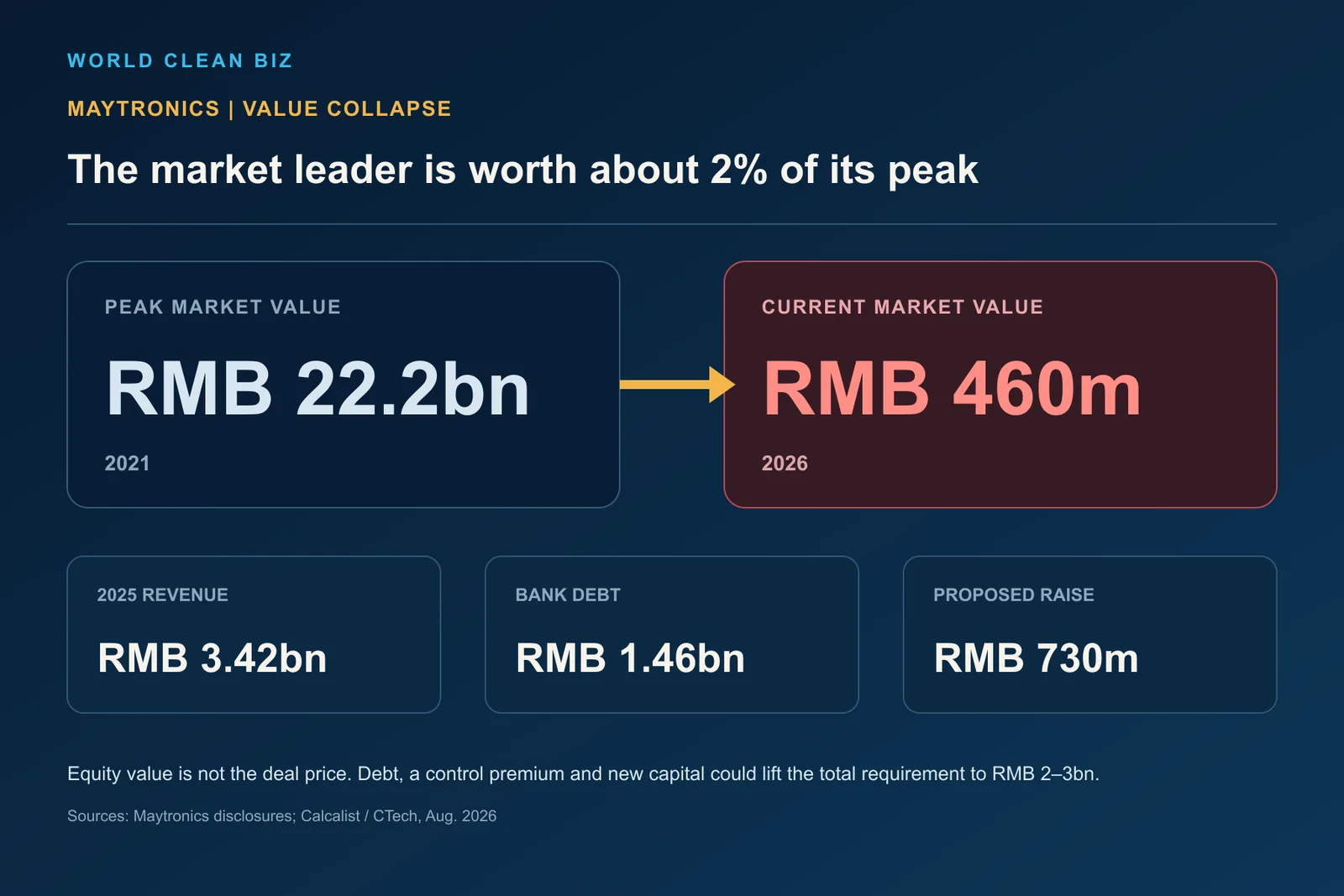
This is still a company with RMB 3.42 billion in annual revenue, yet the equity is worth only RMB 460 million. Any buyer able to deal with the debt and losses could use one acquisition to take the number-one position in global pool robotics by revenue.
The problem is not simply how much Maytronics owes, and it cannot be solved by injecting RMB 730 million. Over the past several years, the pool-robot market has changed at its foundations. Maytronics missed almost every important turn.
During the pandemic, European and American households bought large quantities of pool equipment. Maytronics and its distributors raised inventory. When demand returned to normal, the channel began destocking, and both revenue and profit fell.
If inventory had been the only problem, Maytronics could have waited for the market to recover. The arrival of Aiper, Beatbot and a long list of Chinese pool-robot companies removed that option.
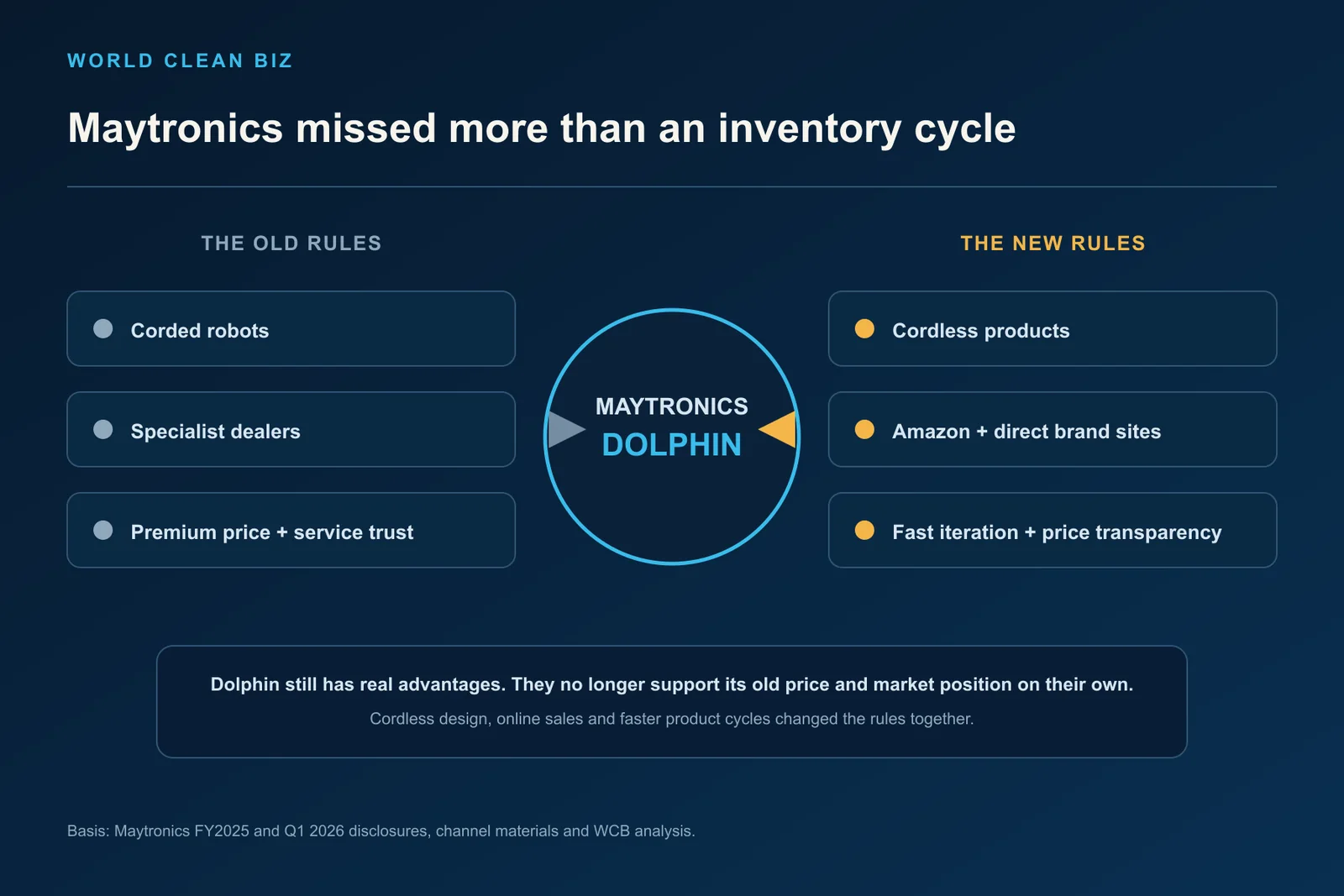
They brought cordless products into Europe and the United States. Consumers became accustomed to dropping a robot into the water and lifting it out after the cycle, without managing a floating cable, power supply and control box.
The early cordless machines were not always mature. Cleaning ability, runtime and reliability were not necessarily better than Maytronics. But the products were cheaper, easier to use and much better suited to Amazon, direct brand websites and new retail channels.
Maytronics still owns Dolphin and still controls one of the most valuable specialist dealer networks in the pool industry. What it did not do quickly enough was adapt to cordless design, online selling and much faster product cycles. The Chinese products remain imperfect, and Maytronics' old strengths did not suddenly disappear. Those strengths simply stopped being enough to support Dolphin's former price and market position.
FIMI has arrived at precisely this moment.
Founded in 1996, the Israeli private-equity firm manages more than RMB 50 billion and has completed close to 100 investments. It has spent years looking for Israeli industrial companies that still have technology, factories and global customers but have become inefficient or fallen into temporary difficulty.
FIMI normally takes control, changes management, cuts costs and adds investment. It then exits once profit and growth have returned.
In 2016, FIMI took control of jet-engine component company Bet Shemesh Engines. Management changed, production efficiency improved and new acquisitions followed. Sales grew from roughly RMB 550 million before the acquisition to about RMB 1.5 billion in 2023. Long-term framework orders expanded from around RMB 1.2 billion to about RMB 14.4 billion.
Rivulis is an even closer example. After acquiring the relevant irrigation assets, FIMI assembled them into Rivulis, rebuilt the brand and global sales system, and eventually sold the business to Singapore's Temasek at a valuation of roughly RMB 3.2 billion.
Those two cases are enough to explain what FIMI sees. It is not looking only at Maytronics' current losses. It is looking at how much value Dolphin and the professional pool channel could produce after a restructuring.
If the transaction goes ahead, debt, inventory and fixed costs will probably come first. Maytronics has already discussed building production capacity in a lower-cost country, and more manufacturing could move to Asia.
The portfolio also needs to be simplified. Maytronics has many models but few recent launches that have generated meaningful growth. Repetitive products may be cut, with more resources going to cordless robots, lower price points and online sales.
FIMI can address finance and organisation. It may not be able to solve the product problem. It is an excellent corporate turnround investor, not a pool-robot product company.
In my view, even if FIMI takes control, it is more likely to become a transitional owner. It can first deal with debt, factories and the portfolio, then sell Maytronics to an industrial buyer once the company is profitable again.
That is the part I am most interested in. If Maytronics is sold again after FIMI completes the restructuring, who could buy it?
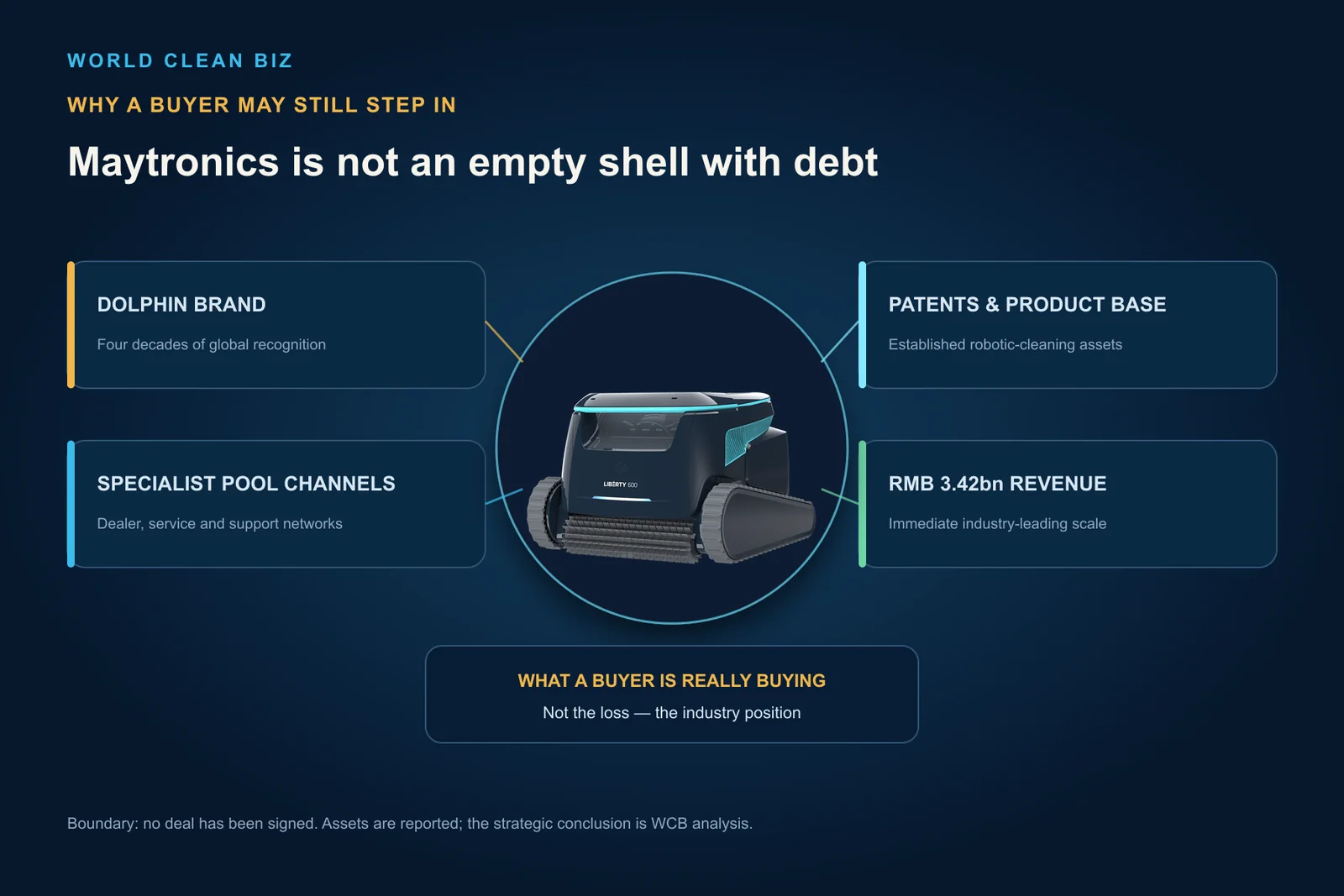
Maytronics is not an empty shell with debt. It still has Dolphin and other brands, patents, and sales and service channels across the specialist pool market in Europe and the United States. Any company that acquires the full group would immediately become the world's largest pool-robot business by revenue.
RMB 460 million is only the present equity value. Add RMB 1.46 billion of debt, a control premium and further capital, and the full transaction could require RMB 2 billion to RMB 3 billion.
That is not cheap, but it is within reach of several potential buyers.
So let us examine the companies that could, in theory, acquire Maytronics.
There is no public evidence that any of the following companies has joined the talks. This is a scenario analysis based on sales, current pool-robot activity, funding capacity and what each buyer would gain.
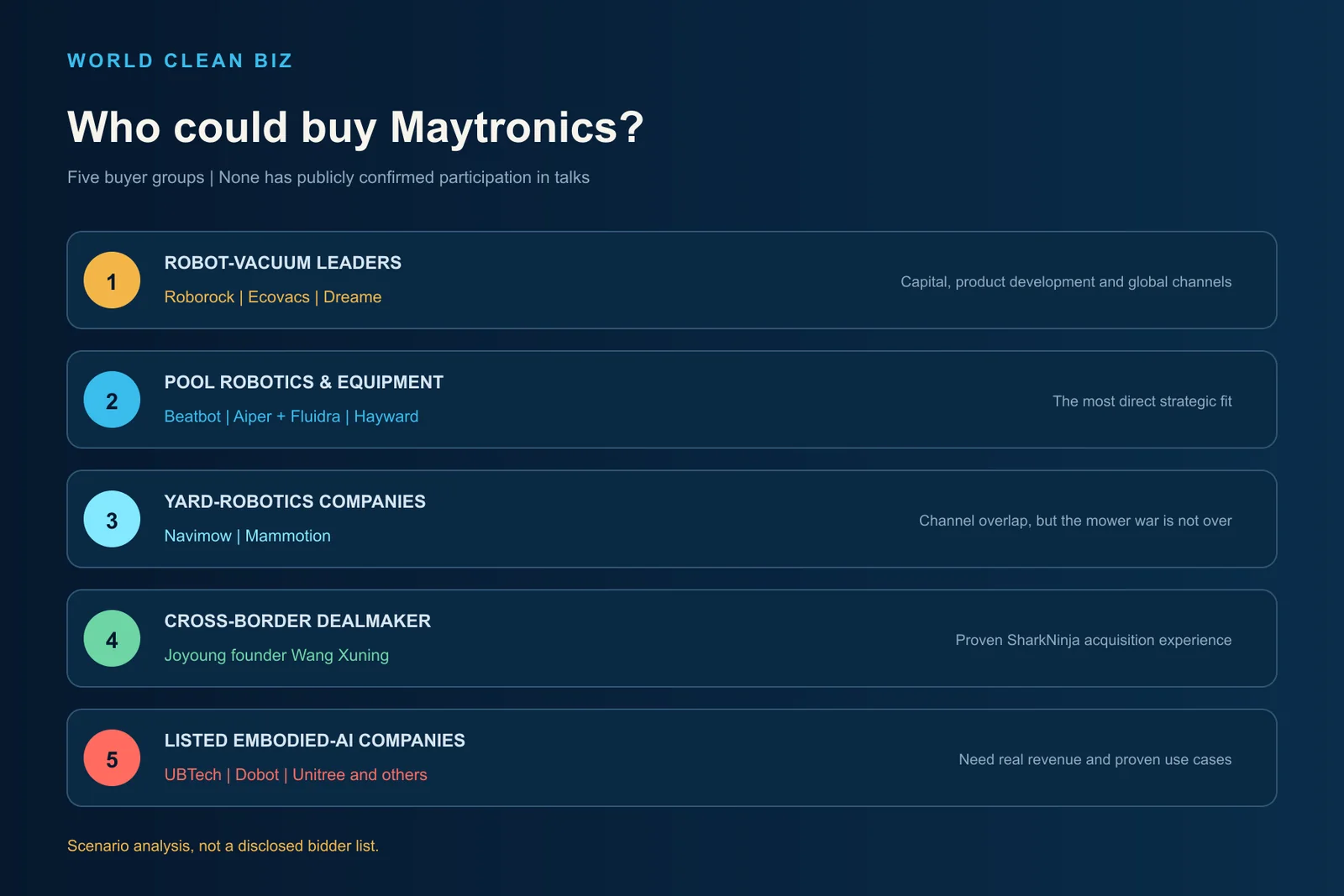
1. Robot-vacuum companies: Roborock, Ecovacs and Dreame
Roborock, Ecovacs and Dreame now occupy leading positions in the global robot-vacuum market. At their present growth rates, I expect all three companies to exceed RMB 20 billion in annual sales this year.
In pool robotics, the position is almost the reverse.
Roborock has announced the RockAqua P1. Ecovacs has launched the ULTRAMARINE P1. Dreame has released the Z1, Z1 Pro and J1. All three have entered the category, yet their products and sales still sit well behind Aiper, Beatbot and Maytronics.
Roborock generated about RMB 18.7 billion in 2025 revenue. It has cash, product-development capability and global consumer-electronics channels, but its pool-robot business is only beginning. Acquiring Maytronics would let Roborock skip the long process of building a new brand and specialist channel from zero. Pool robotics could become its next business after robot vacuums.
Ecovacs generated about RMB 19 billion in 2025. It previously invested RMB 25 million in pool-robot company Zhicheng Power, hoping to enter the market through an outside team.
According to my industry information, Zhicheng Power has declared bankruptcy this year, while Ecovacs is accelerating its own retreat from pool-robot products. The attempt did not work, but Ecovacs does know how to run more than one robotic and cleaning brand. It already operates Ecovacs and Tineco. If management decides the long-term pool opportunity is still important, buying Maytronics could be more effective than incubating another new brand.
Dreame's 2025 sales should already have exceeded RMB 20 billion. It entered pool robotics before Roborock and Ecovacs, but its current products have not produced a clear market result.
Dreame's strengths are rapid product development and aggressive expansion across categories. With Maytronics, it could use its own R&D and supply chain to close Dolphin's product gaps while immediately taking the number-one industry position.
All three companies have proved they can operate more than RMB 20 billion of global robotics business. None has solved its pool-robot weakness. Rather than spending several years trying to catch up, acquiring the existing number one would be an attractive option.
Maytronics is also not the same as iRobot. iRobot's early history included military robotics, which makes a cross-border transaction more likely to attract geopolitical scrutiny. Maytronics is mainly a pool-robot company, and its assets and operating relationships are simpler. If the price is right, a Chinese acquisition is not impossible.
2. Pool-robot and pool-equipment companies: Beatbot, Aiper with Fluidra, and Hayward
Beatbot and Aiper need Maytronics more directly than Roborock, Ecovacs or Dreame. They would not be buying their way into pool robotics. They would be buying the chance to change the competitive order almost overnight.
Beatbot completed a new funding round of more than RMB 1 billion in 2025, taking cumulative funding to roughly RMB 1.5 billion. According to industry information, 2025 sales reached several hundred million renminbi.
If Beatbot acquired all of Maytronics, combined sales would exceed RMB 4 billion. Beatbot would no longer be only a leading premium cordless brand. It would become the world's largest pool-robot company by revenue.
The situation resembles Ninebot's acquisition of Segway.
Ninebot was once another Chinese startup. With support from Xiaomi-related and other investors, it swallowed the much larger Segway and gained a global brand, patents and overseas channels. Ninebot is now a technology company with more than RMB 20 billion in annual revenue.
Beatbot faces a remarkably similar opportunity.
Could Wang Shengle—better known in the industry as Dale—again bring together Shunwei, Xiaomi-ecosystem capital and other investors to acquire Maytronics and go directly to number one?
The idea looks bold, but I believe the possibility is real. If financial backers are willing to help manage the debt and restructuring, Beatbot may be the Chinese company with the strongest motivation to complete the deal.
Aiper, owned by Yuanding Intelligence, has been growing faster. According to industry information, it sold more than 1.8 million pool robots in 2025 and could pass 2 million units in 2026. That growth has already won strong recognition from Fluidra.
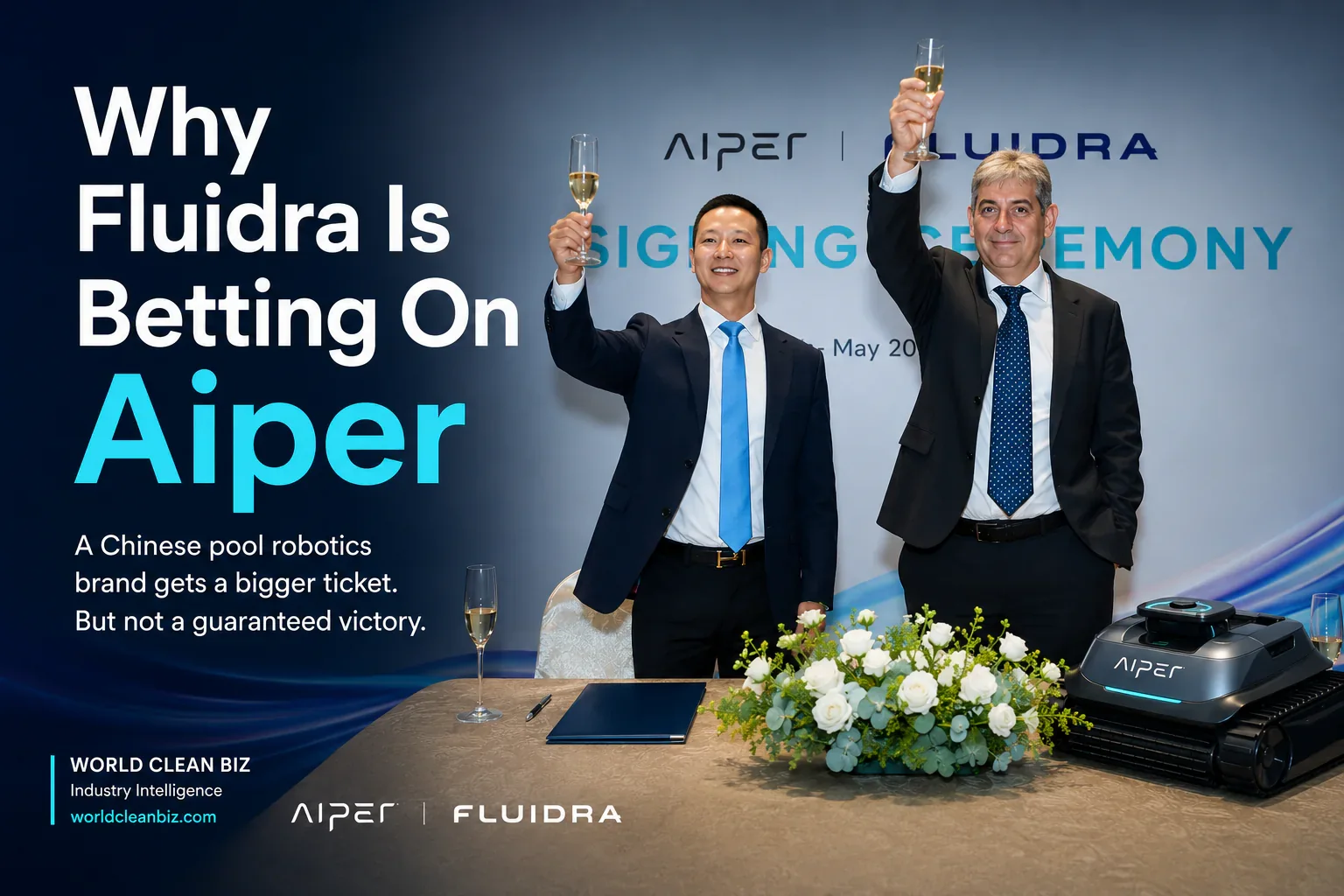
Aiper's latest publicly available annual revenue was about RMB 1.4 billion. Fluidra has invested roughly RMB 720 million for a 27% stake and plans to move above 51% if Aiper reaches agreed revenue and profit targets. The full ownership and investment structure is explained in our Aiper–Fluidra analysis.
Aiper is therefore unlikely to acquire Maytronics alone. A joint transaction with Fluidra would be more realistic. Fluidra could handle financing and transaction structure, while the Aiper team could integrate and operate the pool-robot business after the acquisition.
Fluidra generated about RMB 18 billion in 2025 revenue and already owns Zodiac, Jandy and Polaris. It could continue to act as investor and industry consolidator, taking a position in Maytronics and allowing Aiper—a team more familiar with cordless products and the Chinese supply chain—to lead the product reset.
The combination would be formidable in capital, products and channels. It would also face competition scrutiny. Fluidra already owns Polaris and holds 27% of Aiper. Control of Maytronics would concentrate the global pool-robot market even further.
Hayward is a different kind of industrial buyer.
It generated about RMB 8.1 billion in 2025 revenue and ended the year with close to RMB 2.9 billion in cash and short-term investments. Hayward has pumps, filters, heaters, sanitisation, automation and pool-cleaning products, but cleaners remain a small part of the group.
It already sells TigerShark and AquaVac robots, yet it has not created a pool-robot position comparable to its strength in pumps and automation.
Maytronics would immediately add a much stronger robotics portfolio and European channels. Both companies have spent decades serving the professional pool market, which should make integration easier than it would be for a buyer with no pool-industry experience.
Even so, Maytronics' revenue is more than 40% of Hayward's. This would not be the purchase of a small product line. It would change Hayward's business structure. Hayward may be more likely to wait until FIMI has dealt with the debt and organisation.
3. Yard-robotics companies: Ninebot's Navimow and Mammotion
Ninebot's Navimow business and Mammotion are among the leaders in robotic lawn mowing. Both are also moving into pool robotics.
Robot mowers and pool robots address many of the same European and American households. The categories can share warehousing, service and parts of the sales channel. A company that owns both lawn and pool robotics moves closer to becoming a complete intelligent-yard robotics group.
Ninebot generated about RMB 21.28 billion in 2025, including roughly RMB 2 billion from intelligent service robots led by Navimow. Mammotion does not publish revenue, but it has introduced the SPINO E1 pool robot and is expanding from lawns into pools.
Their main problem is that the mower war is not over.
Ninebot and Mammotion have established strong positions, but neither has yet become an unchallengeable global leader. Even if they want Maytronics, it would be difficult in the short term to carry the debt and restructuring of another global company while continuing to fund the mower battle.
Their product and channel fit may be direct, but the timing and ability to execute are more limited.
4. Joyoung founder Wang Xuning
In 2017, Joyoung founder Wang Xuning used JS Global Lifestyle, together with CDH Investments, to buy SharkNinja for about RMB 10 billion.
SharkNinja was already a recognised North American appliance business, but it was far smaller than it is today. Wang kept the US team and product system, then connected the company to Chinese supply-chain and group resources.
SharkNinja separated from JS Global and listed on the New York Stock Exchange in 2023. Wang still controlled about 38.6% of SharkNinja's voting power in its 2026 proxy. At the current market value, his interest is worth close to RMB 50 billion on paper.
Buying SharkNinja for around RMB 10 billion and ending up with a stake worth close to RMB 50 billion proves that Wang can complete a cross-border brand acquisition. It also proves that he knows how to use the Chinese supply chain to restart growth at an overseas company.
A Maytronics transaction could require RMB 2 billion to RMB 3 billion. That scale should not place serious pressure on Wang.
After buying Maytronics, he could add robot-vacuum, mower or service-robot companies to the platform. Maytronics already has about RMB 3.4 billion in revenue. Add several Chinese robotics companies, and the result could quickly become an embodied-AI robotics group with RMB 6 billion to RMB 7 billion in annual sales.
Against current capital-market valuations for embodied-AI companies, a group with real products, global channels and RMB 6 billion to RMB 7 billion in sales could plausibly be worth tens of billions. It might even approach RMB 100 billion.
From a capital-markets perspective, paying RMB 2 billion to RMB 3 billion for the global pool-robot leader and turning it into a listed robotics platform looks, on paper, like a deal that is very difficult not to make money from.
5. Listed embodied-AI companies
Hong Kong now has listed robotics companies including UBTech and Dobot, while Unitree has arrived on Shanghai's STAR Market. They share one characteristic: market valuations are high, while current sales remain relatively small.
Unitree generated about RMB 1.7 billion in 2025 and has carried a market value above RMB 230 billion. UBTech generated about RMB 2 billion, and Dobot is smaller. Capital markets are willing to pay a great deal for the future of embodied intelligence. What these companies lack is a large, proven application that already produces recurring revenue at scale.
Maytronics generated about RMB 3.4 billion in 2025, more than the annual sales of many listed embodied-AI companies. Pool robotics is also one of the most mature examples of robots operating at scale in real household environments.
For these companies, acquiring Maytronics would consume only a small portion of their market value but add more than RMB 3 billion in revenue immediately, together with a globally proven robotics business.
They could then add humanoid robots, quadrupeds, mowers and other service robots to Maytronics, and reframe the company as a global embodied-AI robotics group.
Maytronics may attract more than cleaning-robot and pool-equipment companies. It could also become a very tempting target for listed embodied-AI groups. They would not be buying only Dolphin. They would be buying revenue, channels and a mature robotics application.
The pool-robot market is still growing quickly in 2026. Beatbot and Aiper are taking share that once belonged to Maytronics.
The script is almost identical to what happened in robot vacuums. A new generation of Chinese companies enters with cordless products, faster development and supply-chain advantages. The old leader still has the brand and channels but steadily loses volume and pricing power.
The difference this time is that Maytronics has been put on the block early.
Whoever buys it will not have to wait for market share to move slowly. The buyer will become number one immediately.
This is an opportunity that could genuinely change the structure of the global pool-robot industry.
Sources
- Maytronics preliminary FIMI talks, exclusivity, financing, debt and financial history: https://www.calcalistech.com/ctechnews/article/q1auo3lip
- Maytronics statement and current control context: https://en.globes.co.il/en/article-maytronics-share-price-soars-as-fimi-mulls-investment-1001552519
- Maytronics FY2025 results: https://brand.maytronics.com/asset/f5b0e7aa-1f93-4e9d-8350-66a8b064b47e/Maytronics-2025-FY-PR-EN.pdf
- Maytronics Q1 2026 results: https://brand.maytronics.com/asset/5cad6645-d2ba-4ff1-8026-16d51d39ad7e/Q1-2026-PR-EN.pdf
- FIMI portfolio and investment record: https://fimi.co.il/
- Bet Shemesh Engines restructuring record: https://en.globes.co.il/en/article-fimi-cashes-in-on-bet-shemesh-engines-revival-1001487510
- Rivulis transaction history: https://www.rivulis.com/rivulis-announces-completion-of-acquisition-by-temasek/
- Fluidra investment in Aiper: https://www.fluidra.com/press-room/press-release/fluidra-to-invest-in-27-of-robotic-cleaner-player-aiper-and-form-strategic-alliance/
- Hayward 2025 Form 10-K: https://www.sec.gov/Archives/edgar/data/1834622/000183462226000008/hayw-20251231.htm
- SharkNinja 2026 proxy and Wang Xuning beneficial ownership: https://www.sec.gov/Archives/edgar/data/1957132/000195713226000022/sharkninja-20260427.htm
- Unitree listing and 2025 revenue: https://english.news.cn/20260818/9a5428390120473883d825a3030ec41b/c.html
Companies evaluating this category can explore World Clean Biz robotic pool cleaner sourcing support for product direction, supplier assessment and execution risk.
 Aiper
Aiper Beatbot
 Dreame
 ECOVACS
 Fluidra
 Hayward
 Mammotion
 Maytronics
 Roborock
 Segway Navimow