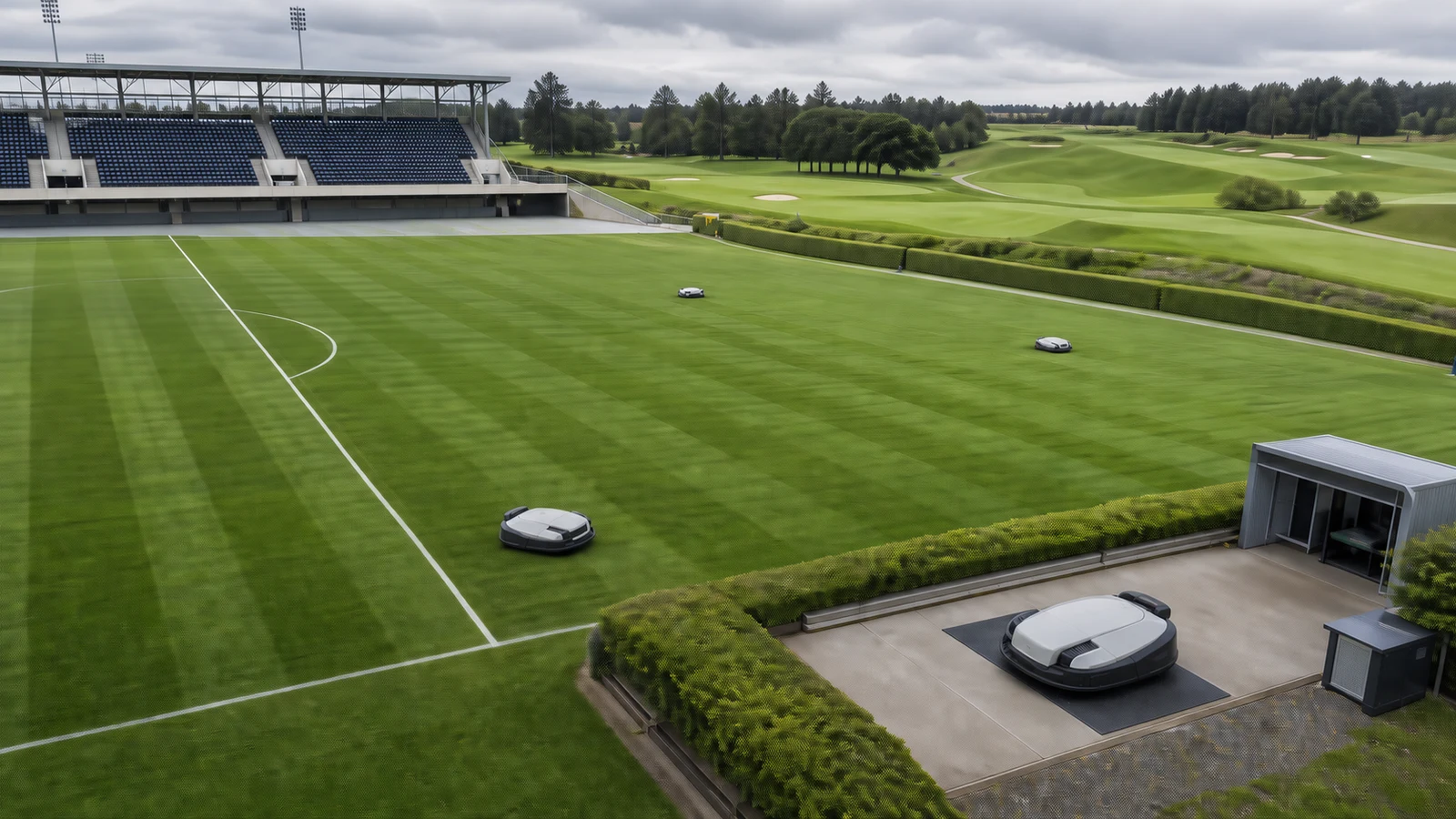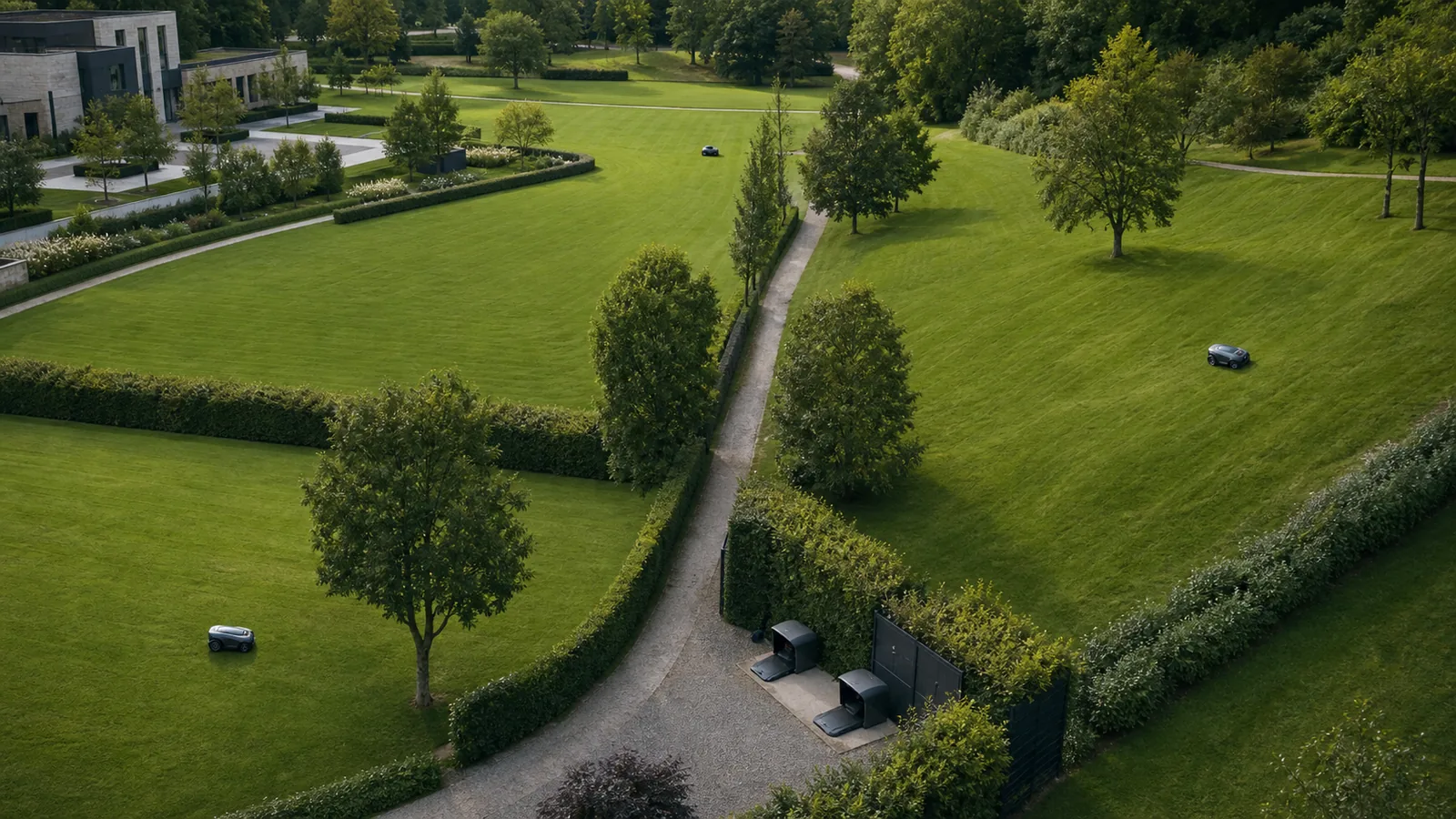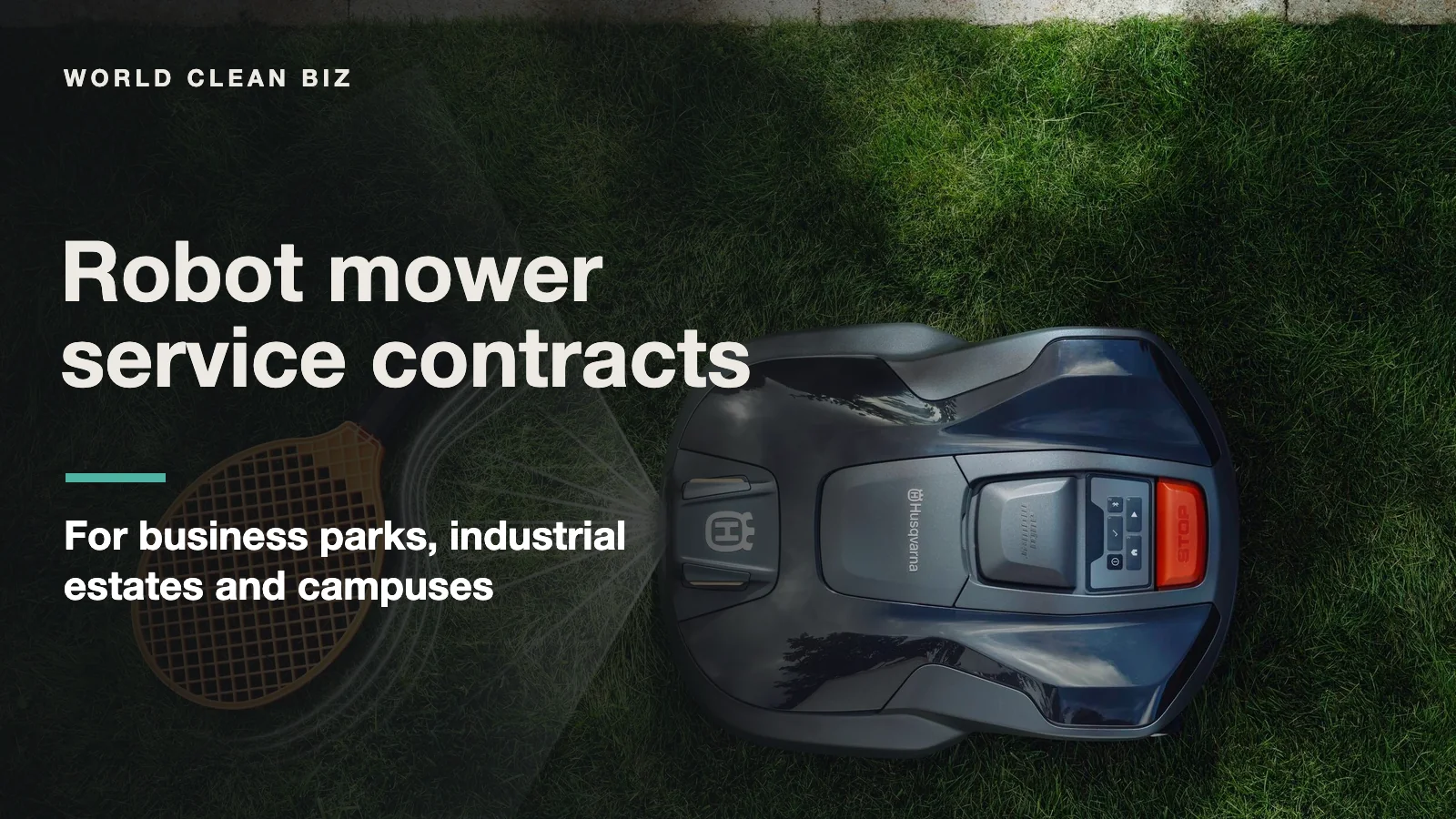
- For business parks, industrial estates and campuses, the contract matters more than the mower: it decides who installs, maintains, monitors and repairs the fleet.
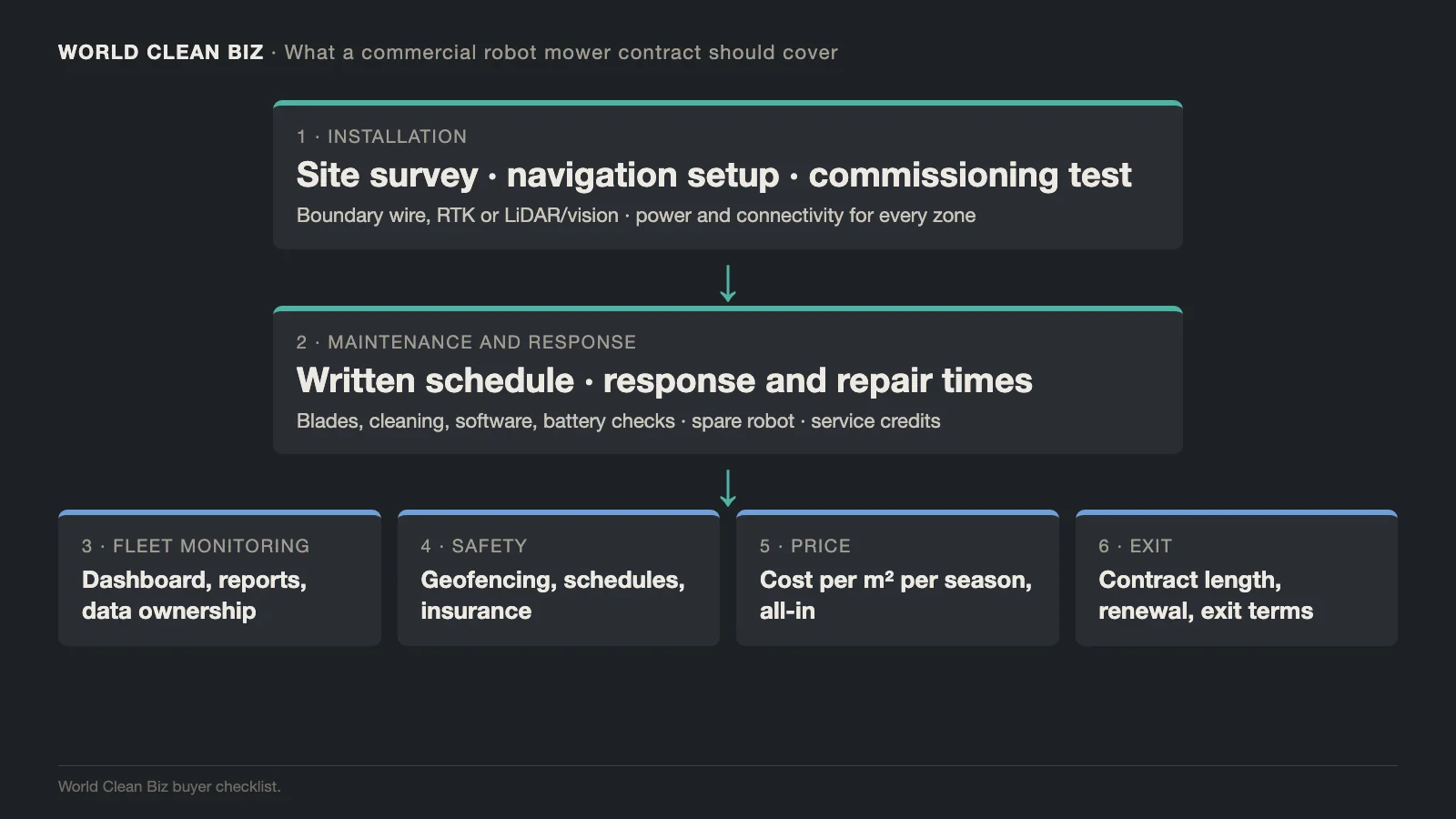
- A good contract defines the site survey, commissioning test, maintenance schedule, response and repair times, spare robots, software updates and data access.
- Price models range from buying with a service plan to all-in monthly mowing-as-a-service; compare them per square metre per season, including blades, batteries and downtime.
In this article 8 sections
For a business park, industrial estate or campus, choosing a robot mower is only half the decision. The other half is the service contract: who installs the robots, who maintains and monitors them, how fast they respond when a mower stops, and what you pay per season. A strong contract turns a fleet of robots into a predictable grounds service. A weak one leaves facility staff chasing a stuck mower.
This guide lists what the contract should cover. For the equipment itself, see commercial robotic lawn mowers; for the technical setup, see robot lawn mower installation.
Who provides the service?
There are three common arrangements:
| Model | Who owns the robots | Who services them | Best for |
|---|---|---|---|
| Buy plus service plan | The site owner | Dealer or manufacturer service partner | Owners who want control and have a facilities team |
| Lease with managed support | Leasing company or dealer | Dealer | Spreading cost over 3–5 years |
| Mowing-as-a-service | Grounds contractor | Contractor, with its own robots and staff | Sites that want a fixed monthly price and no equipment risk |
Some grounds-care contractors and specialist robot-mowing firms offer the third model. If you are on the service side, see how to start a robotic lawn mowing business.
1. Installation and site survey
The contract should state what the installer does before the first cut:
- Site survey: lawn areas, slopes, narrow passages, trees, car parks and public paths. Note where the public can reach the mowing area.
- Navigation setup: boundary wire, RTK base station or network RTK, LiDAR or vision mapping. Each needs different work; see RTK vs LiDAR robot mowers.
- Charging stations and power: location, outdoor power supply, theft and vandalism protection.
- Connectivity: mobile data or site Wi-Fi coverage for every mowing zone, needed for monitoring.
- Commissioning test: an agreed test cut of every zone, with a signed acceptance before the service period starts.
2. Maintenance schedule
Ask for a written schedule rather than "regular maintenance":
| Task | Typical frequency | Who pays |
|---|---|---|
| Blade replacement | Every few weeks to two months in season, depending on grass and debris | Usually included |
| Cleaning chassis and sensors | Monthly in season | Included |
| Software and firmware updates | When released | Included |
| Battery health check | Each season | Included; replacement often extra |
| Winter service and storage | Once a year | Often extra |
Blades and batteries are the main consumables. Confirm which are included and the replacement price of each.
3. Response and repair times
This is where contracts differ most. Define:
- Response time after a fault alert, for example next working day.
- Repair or replacement time, and whether a spare robot is kept on site or at the dealer.
- Who checks alerts: the service provider's monitoring team or your staff.
- Service credits if mowing stops for longer than agreed.
4. Fleet monitoring and data
Commercial sites usually run several robots. The contract should give you:
- Access to the fleet dashboard or regular reports: area mowed, running hours, faults and downtime.
- Clear rules on who owns site maps and data, and where data is stored. Security teams increasingly ask this, and in the US new foreign-produced robots now need FCC approval; see the FCC robot restrictions tracker.
- Geofencing and schedules that keep robots away from busy areas at set times.
5. Choosing robots for large sites
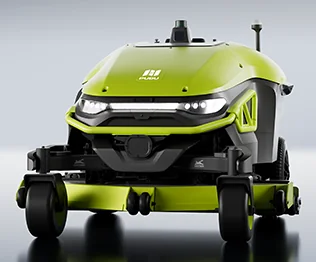
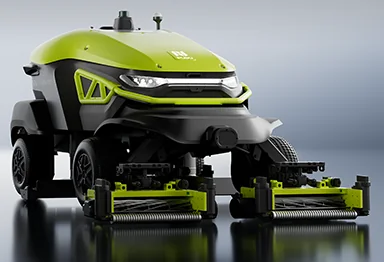
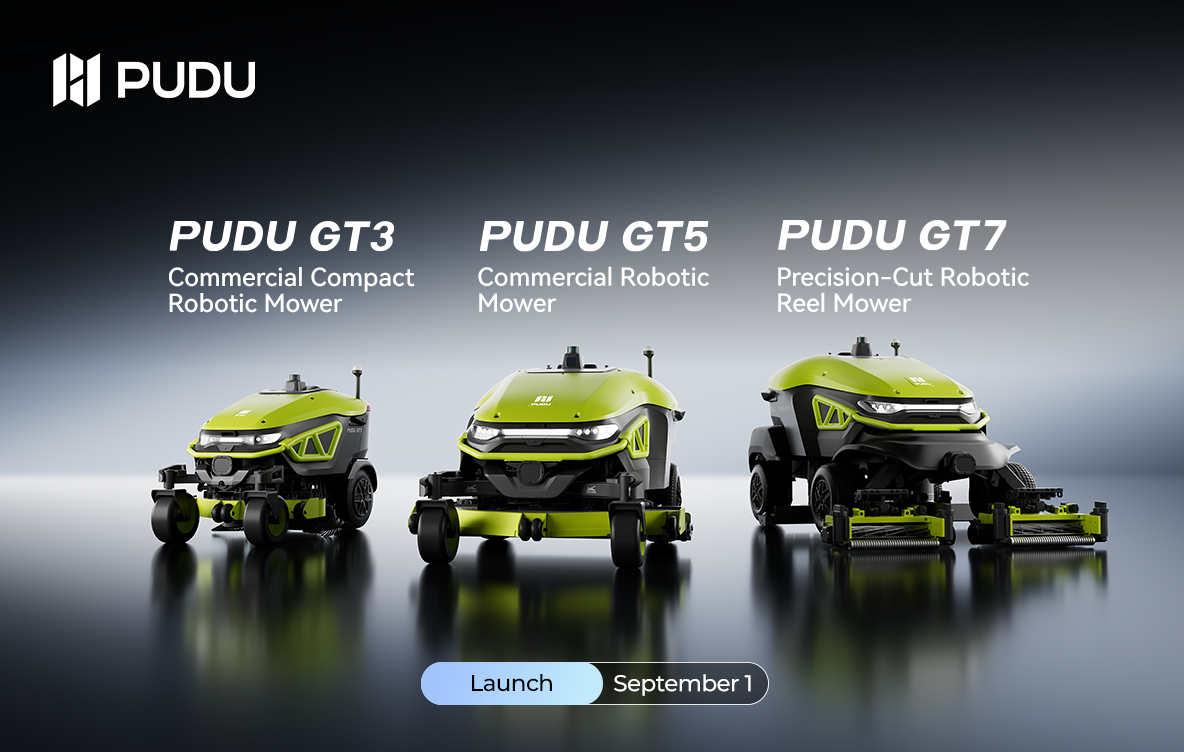
Capacity claims vary widely. Consumer-grade AWD robots now cover up to about 12,000 m² per map, such as the Mammotion LUBA 4 12000F. Purpose-built commercial machines are much larger: PUDU's GT5 has a 60-inch rotary deck rated at about 2 acres per hour, and the GT7 is a triplex reel mower for golf and sports turf. For very large areas, compare one large machine with a fleet of smaller robots; see robot lawn mowers for large lawns and robot mowers for golf courses and sports fields.
6. Price and how to compare offers
Compare offers on the same basis: cost per square metre per mowing season, including installation, maintenance, blades, batteries, monitoring and the cost of downtime. A low equipment price with expensive call-outs can cost more than an all-in monthly fee. Ask each provider for the same site plan and service levels before comparing.
Contract checklist
- Site survey and commissioning acceptance test included.
- Navigation and connectivity set up for every zone.
- Written maintenance schedule, with consumables listed.
- Response time, repair time and spare-robot arrangement.
- Fleet reporting, data ownership and security.
- Insurance and liability for damage or injury.
- Price per season, contract length and exit terms.
- Named local service team, not just a national hotline. See robot mower dealer networks.
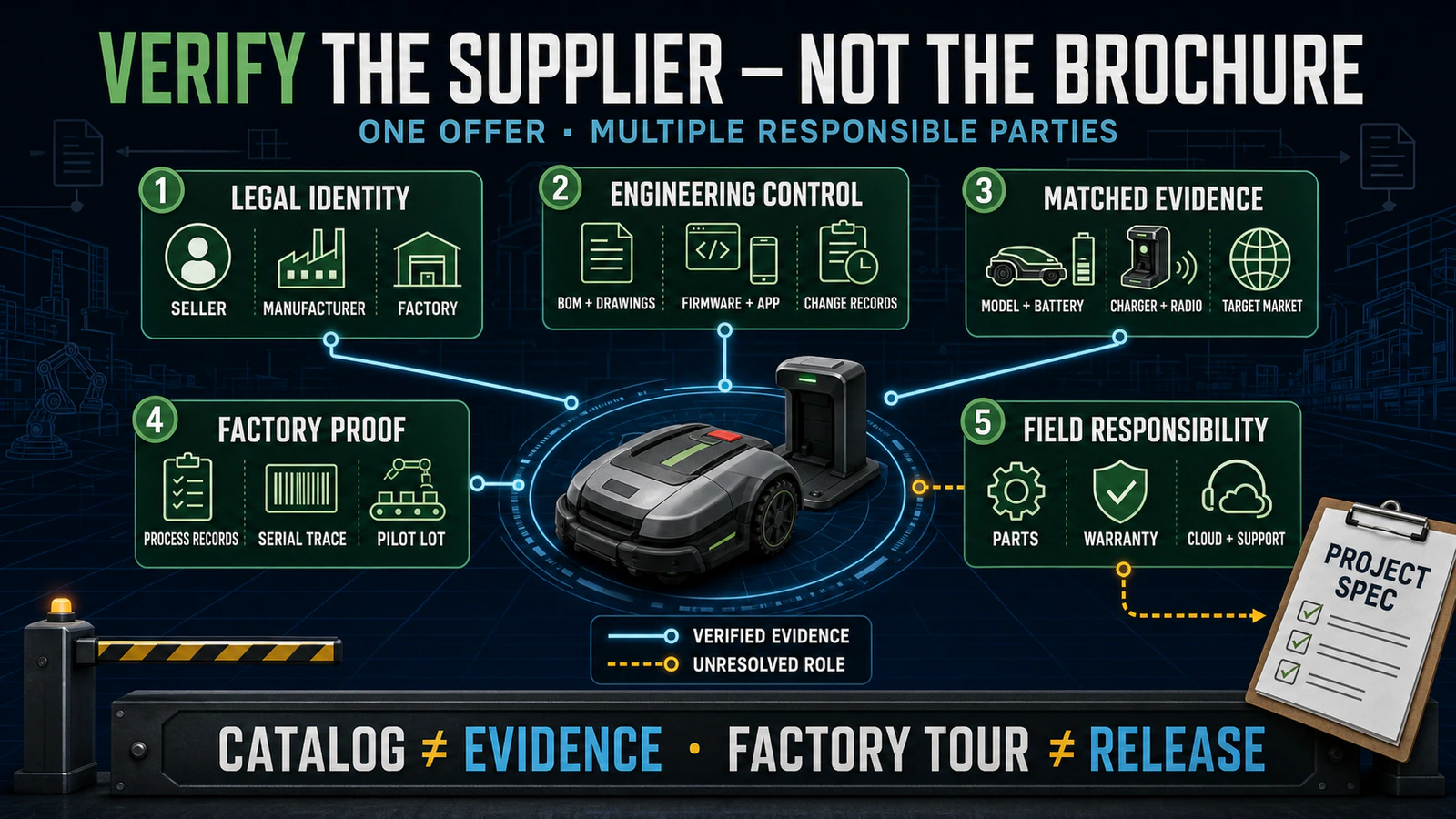
For sourcing robots directly from manufacturers, see the commercial robot mower supplier evaluation guide.