
Beatbot / Pool robots
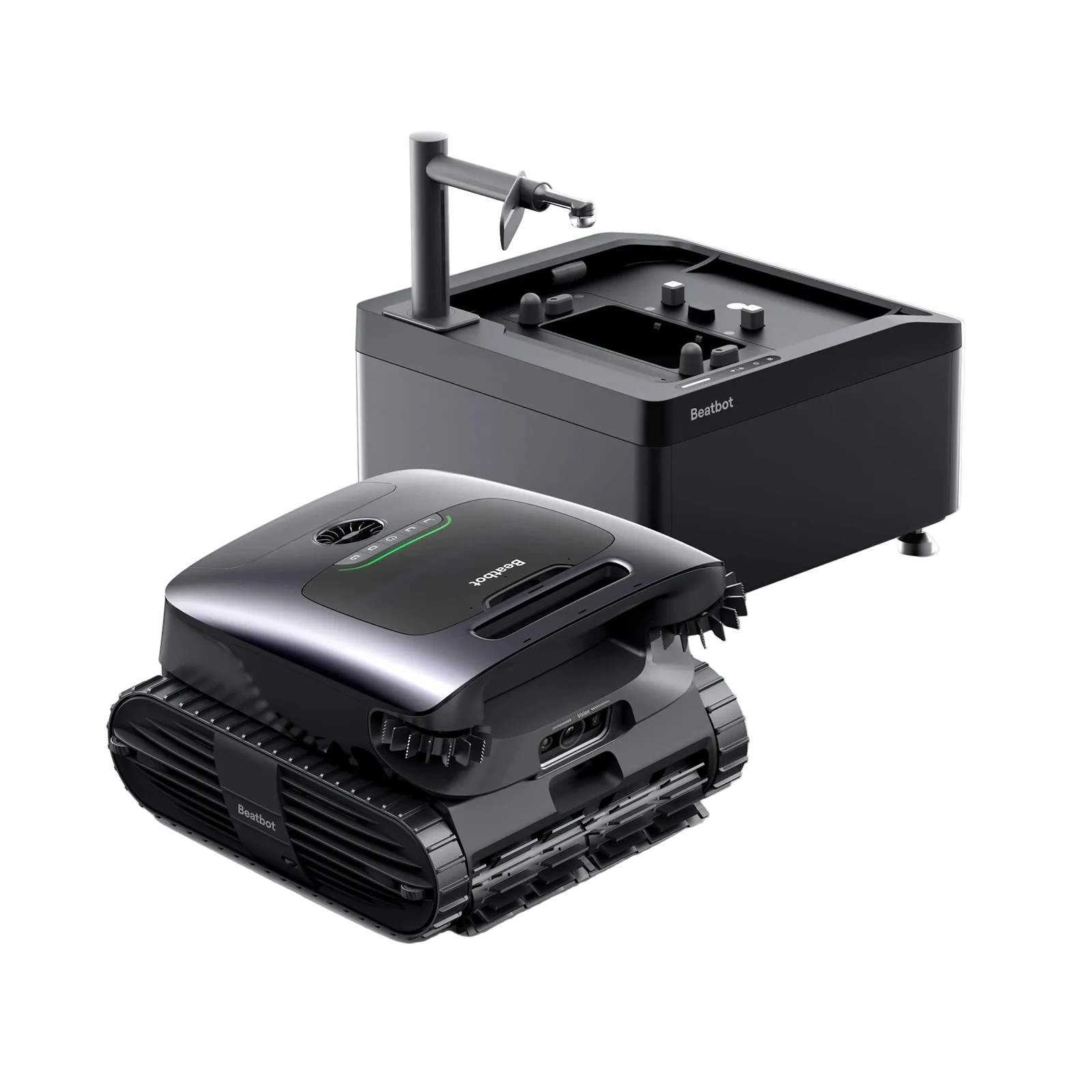
Beatbot AquaSense X
A pool robot and cleaning-station system aimed at reducing routine filter-rinsing work.
Sources checked Sep 6, 2026 · Announced Jan 5, 2026
Beatbot unveiled the AquaSense X ecosystem on 5 January 2026, ahead of CES. Regional packages and availability vary. Launch source ↗
- Service station
- AstroRinse
- Navigation
- HybridSense AI
- Battery claim
- 13,400 mAh
- Coverage modes
- Floor to surface
Worth considering for
Where it makes sense
A premium system for pool owners whose biggest inconvenience is rinsing dirty filters after every run. Its strongest distinction is the AstroRinse workflow, provided you have a suitable station site and can retrieve the robot yourself.
Before you commit
When to look elsewhere
Anyone needing a robot that leaves the pool and docks without being lifted, or a deck without an appropriate water supply, drainage and power arrangement.
Beyond the headline number
Specifications, with context
Values below are manufacturer claims for the stated reference market. WCB has not independently bench-tested this model. Check the official specifications and conditions ↗
| Specification | Official claim | What it means for you |
|---|---|---|
| Service station | AstroRinse | Station placement, water management and access need planning. Source ↗ |
| Navigation | HybridSense AI | Pool geometry still determines reachable cleaning zones. Source ↗ |
| Battery claim | 13,400 mAh | Capacity alone does not predict a completed cleaning cycle. Source ↗ |
| Coverage modes | Floor to surface | Compare runtime in the same cleaning mode, not mixed maximums. Source ↗ |
| Surface / floor runtime | Up to 10 hours / up to 5 hours | Mode-specific maximums, not one combined 15-hour session. Source ↗ |
| Walls and waterline runtime | Up to 5 hours | Wall geometry and traction can change practical coverage. Source ↗ |
| Rated coverage | Up to 3,875 ft² | Do not confuse the area rating with a verified pool-by-pool cleaning time. Source ↗ |
| Charging | About 4.5 hours · 88 W | Official system overview; check the local adapter and station package. Source ↗ |
| Shallow platforms | At least 35 cm water depth | A shelf must also be reachable and large enough to manoeuvre. Source ↗ |
| Filter rating | 150 microns | From the US product FAQ; clarification is a separate process. Source ↗ |
| Station waste capacity | 22 L | This belongs to the station, not the robot’s onboard filter. Source ↗ |
| Station filter wash | About 3 minutes | Requires placing the retrieved robot on AstroRinse. Source ↗ |
| Salt concentration | Up to 5,000 ppm | Check actual water conditions and the manufacturer’s operating limits. Source ↗ |
| Station connections | 12 ft inlet hose / 6 ft drain hose / 4 m power cord | US listing; confirm layout before ordering. Source ↗ |
| Robot dimensions / weight | 17.4 × 17.3 × 11.2 in / 28.9 lb | Plan the lift from the pool and the transfer to the station. Source ↗ |
| Station dimensions / weight | 25.1 × 21.1 × 22.0 in / 41.9 lb | Leave additional access room for hoses and waste removal. Source ↗ |
What changes from AquaSense 2
AquaSense X adds a different post-cleaning workflow to Beatbot’s premium robot range. The central change is the AstroRinse station: after retrieval and placement on the station, filter washing and debris transfer can be automated. That is a practical upgrade if washing filters is the task that makes you reluctant to run a cleaner frequently.
Beatbot’s launch release also describes changes to debris recognition and platform sensing. However, the US product FAQ states that the station is not compatible with the AquaSense 2 series. This is a complete-system decision, not an accessory-only upgrade for an existing AquaSense 2.
WCB assessment: estimate how much filter handling the station could remove from your routine, then weigh that against its price, footprint and installation. A well-performing existing robot may remain the better choice if manual rinsing is already easy.
Core features in everyday use
Automatic filter washing after manual retrieval
The owner still gets the robot out of the water and positions it on AstroRinse. The station then changes the dirty part of the routine by washing the filter and collecting debris. Separate these two stages when evaluating “hands-free” claims. If lifting is your main difficulty, an automated rinse does not solve the whole problem.
A service station that needs a suitable site
Water supply, drainage, power and access all affect placement. Visualise carrying the robot from the pool to the station without stepping over hoses, and removing collected debris without blocking a walkway. Check the supplied connection lengths against the real route. A station that fits on paper can still be inconvenient if it occupies the only clear space beside the pool.
Navigation and platform cleaning
The camera and sensor arrangement is intended to help map the pool and target debris. A platform-depth claim does not establish that every bench is reachable. Watch a full circuit around stairs, ledges and tight corners, and inspect those areas after cleaning. The pool’s usable geometry is more informative than a count of recognisable objects.
Long runtimes for distinct tasks
Surface, floor and wall modes are different workloads. A ten-hour skimming figure should be compared with another skimmer’s figure, not with a rival’s floor-cleaning time. Decide whether your main problem is floating leaves, settled dirt or the waterline, then evaluate coverage and retrieval frequency for that task.
Where it fits — and where to look elsewhere
- Frequent cleaning with unpleasant filter rinsing: the strongest case for AstroRinse, provided retrieval and station placement are manageable.
- A suitable deck service area: verify water, drainage, power and unobstructed access before paying for the system.
- Shallow platforms: assess the stated depth requirement and the route onto each platform. Aiper’s lower advertised depth is a reason to investigate, not proof of universal access.
- Pools with continual falling leaves: consider whether a separate skimmer should handle the surface while the robot works below. An all-in-one machine still allocates time between modes.
Versions and market differences
The European launch announcement priced the AquaSense X ecosystem in euros. The US store snapshot below is a separate dollar-denominated offer. Do not convert the currency symbol while quoting the launch, and do not assume that every listing uses the same bundle description.
The US page also offers combinations with iSkim. Confirm the contents of the order, especially AstroRinse, water connections, filter elements and optional clarifier supplies. A “standalone” marketing label is not enough to establish which system parts arrive in the box. Request a written packing list when buying through a dealer.
Maintenance and ownership
Automatic backwashing moves debris into station storage; it does not make waste disappear. Inspect the filter, station waste path and hoses, and follow the prescribed cleaning and storage routine. The long advertised waste-storage interval depends on debris load and cleaning frequency. Observe the first weeks of use before adopting the longest interval.
Include station waste bags, filters, optional clarification supplies and possible installation work in the ownership budget. Compare those purchases with the time saved washing filters manually. The US store advertises three-year warranty coverage for AquaSense X; confirm the terms for both robot and station, the seller’s eligibility and the process for a repair involving more than one component.
For a dated US cost reference, the official product listing showed a four-pack of station debris bags at USD 39.99 on 6 September 2026. Replacement frequency depends on debris loading and cleaning schedule. Optional clarifier supplies are a separate recurring purchase, not a requirement inferred from the robot price.
WCB buying view
AquaSense X is most persuasive as a maintenance-workflow purchase. Its premium is harder to justify if you cannot accommodate the station or still find retrieval too difficult. Compare the complete end-of-run routine with Aiper and Rover X10, not just the time each robot can remain active in surface mode.
The package behind the price
Price, market & availability
Launch prices are historical. Store snapshots are dated reference points, not live offers; taxes, discounts, stock and included accessories vary.
Europe · AquaSense X ecosystem
EUR 4,250
Launch MSRP · Jan 5, 2026
The announcement was in euros. It should not be quoted as a USD launch MSRP.
Check official price source ↗United States · AquaSense X listing
USD 3,999; displayed reference USD 4,250
Official-store snapshot · Sep 6, 2026
Confirm that the intended order includes the AstroRinse system. An iSkim combination is a separate bundle.
Check official price source ↗Questions about Beatbot AquaSense X
Does AquaSense X climb out of the pool into AstroRinse?
No. The owner retrieves the robot and places it on the station. Filter washing, debris transfer and charging then happen at the station.
Can I buy AstroRinse for an AquaSense 2 robot?
Beatbot’s cited FAQ says the station is designed for AquaSense X and is not compatible with the AquaSense 2 series.
Is the 22 L capacity inside the robot?
No. It refers to station waste storage. It must not be compared directly with another robot’s onboard filter-basket capacity.
Does the ten-hour runtime apply to all cleaning?
No. The official overview lists up to ten hours for surface cleaning and up to five hours for floor cleaning or walls and waterline. These are separate mode ratings.
What should I check before installing the station?
A level, ventilated site with suitable Wi-Fi, power, water supply and drainage. The US FAQ lists a 12 ft inlet hose, 6 ft drain hose and 4 m power cord; confirm the supplied regional kit.
Can it clean shallow shelves and saltwater pools?
The US listing describes platforms at least 35 cm deep and saltwater concentration up to 5,000 ppm. Shelf shape and access still need checking against the actual pool.
Was the launch MSRP USD 4,250?
The 5 January 2026 launch release quoted EUR 4,250 for the European ecosystem. A separate US store price in dollars should not be substituted for that historical announcement.
Manuals, setup & demonstrations
The product FAQ covers station placement and links to its installation video.
Opens the manufacturer’s overview or tutorial. External media loads only when you follow the link.
Build your shortlist
Compare models. Understand the tradeoffs.
Manufacturer specifications for the stated reference markets. Rows compare features and workflows, not results from a shared WCB test. Different runtime modes and storage locations are not interchangeable.
| Decision point | Aiper Scuba V3 Ultra ↗United States | Beatbot AquaSense X ↗United States | MOVA Rover X10 ↗United States |
|---|---|---|---|
| Daily handling | Retrieve and manually rinse the filter | Retrieve; AstroRinse washes filter after docking | Retrieve; wireless charging dock and manual filter care |
| Shallow platform claim | Down to 20 cm, geometry-dependent | At least 35 cm, geometry-dependent | Verify shelf access on the specific pool |
| Surface runtime claim | Up to 8 hours | Up to 10 hours | Up to 12 hours; separate from floor runtime |
| Debris capacity reference | 3.5 L onboard basket | 22 L station waste storage; not onboard capacity | 5 L onboard basket |
| System tradeoff | Lower shelf access and lighter listed body | Station-assisted post-cleaning maintenance | 5,400 ft² area claim; 34.8 lb listed robot |
WCB interpretation: AstroRinse is the reason to consider the AquaSense X premium. Aiper avoids that water-connected station workflow and claims shallower platform access. Rover X10 emphasizes larger rated coverage; neither alternative should be judged by a surface-mode runtime alone.
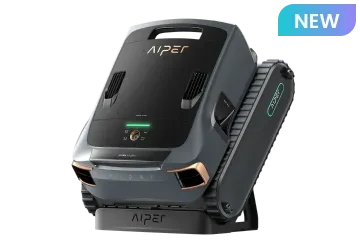
Aiper Scuba V3 Ultra
A cordless pool cleaner emphasizing broad zone coverage, shallow-area cleaning and fine filtration.
View model →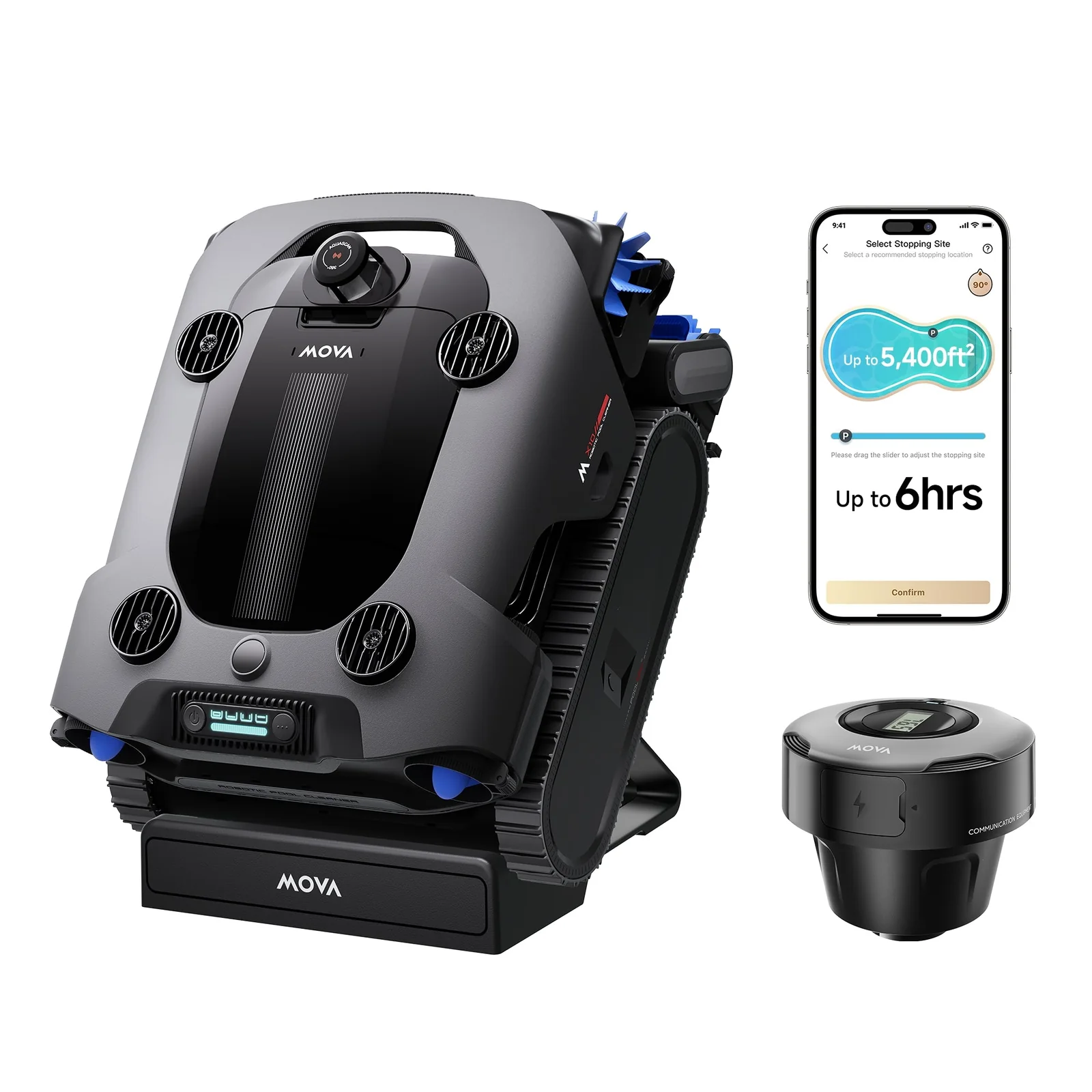
MOVA Rover X10
A large-basket pool robot combining surface skimming, underwater mapping and cordless floor cleaning.
View model →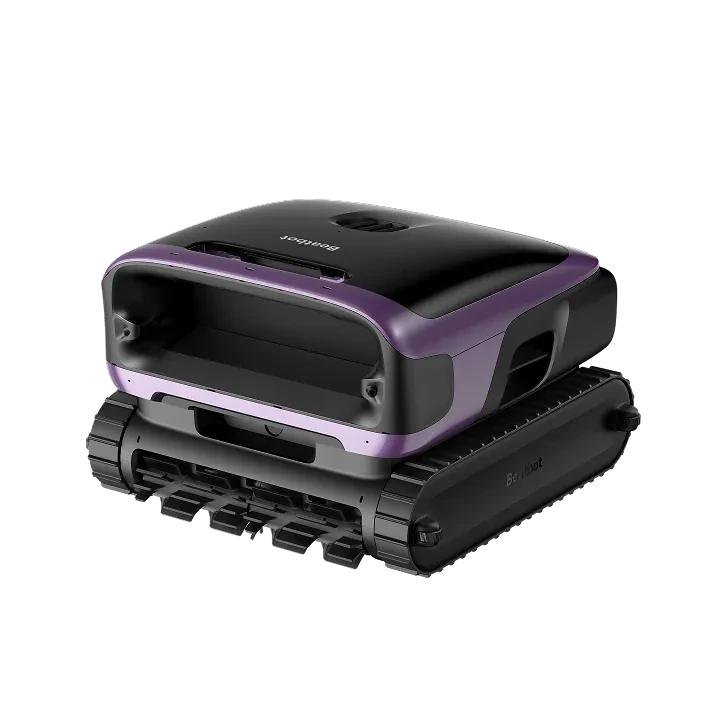
Beatbot Sora 70
A pool robot combining floating-leaf collection, underwater cleaning and surface parking in a manually maintained package.
View model →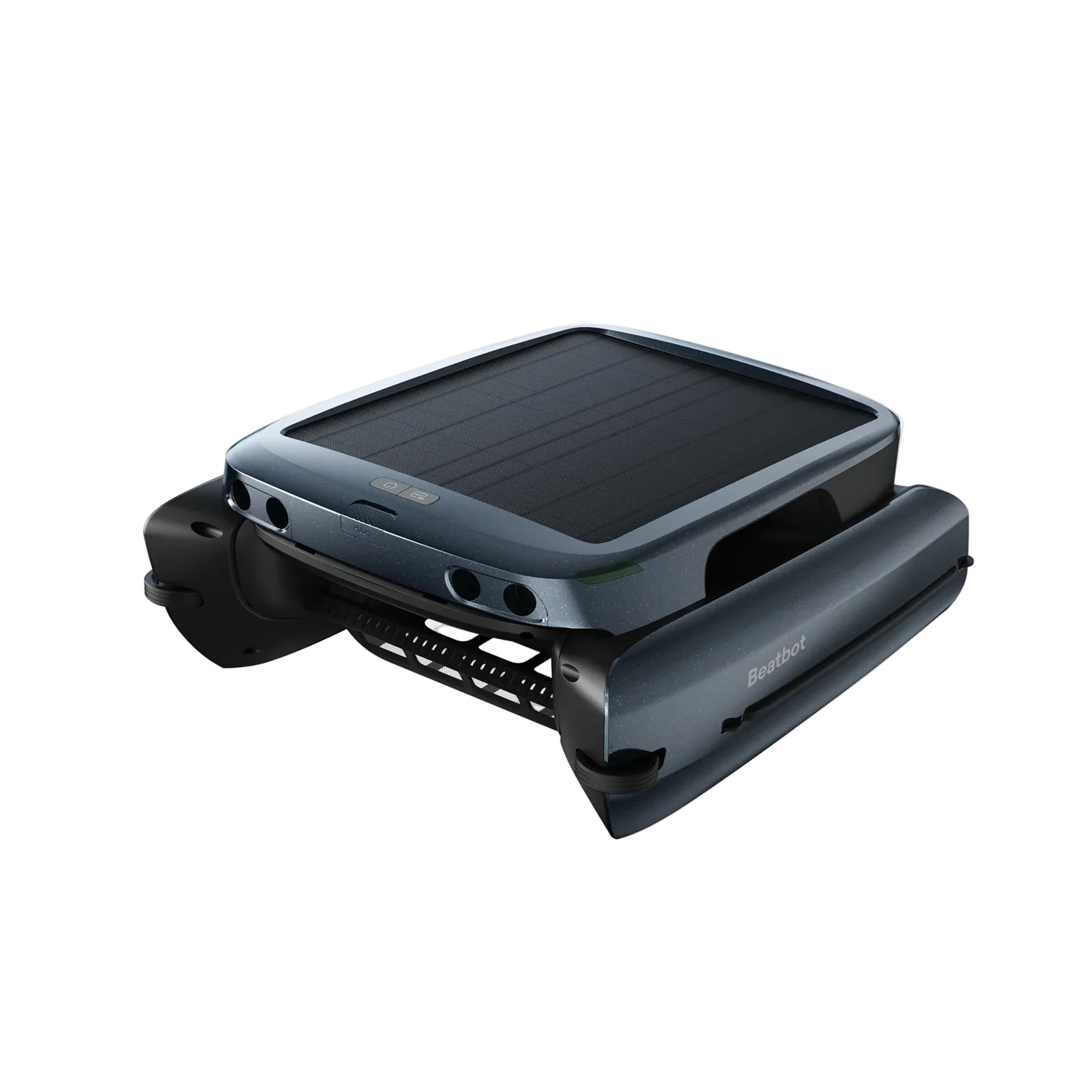
Beatbot iSkim
A 2026 solar-powered surface skimmer with a 9 L basket, distinct from the older iSkim Ultra and from submerged pool-cleaning robots.
View model →Trace every specification
Official sources & support
Checked Sep 6, 2026 · United States
Editorial interpretation by World Clean Biz. Specifications, availability and service terms may change; confirm the exact regional SKU before ordering.