- ROMO 2 fixes the first ROMO's weakest point: it now crosses a 4 cm single threshold and an 8.5 cm double-layer threshold.
- Suction rises from 25,000 Pa to 36,000 Pa and a 123° swinging arm brings edge mopping in line with flagship rivals; continuous fresh-water mopping is still missing.
- At CNY 5,499 to 6,499 for the main models, ROMO 2 sits above the CNY 2,500–3,500 band where China's robot vacuums sell in volume, so its near-term threat is to Narwal rather than the top three.
In this article 5 sections
*This analysis was first published in Chinese on 12 May 2026, the day after DJI launched ROMO 2 in China.*
DJI launched its second-generation robot vacuum, ROMO 2, on 11 May 2026, with sales in China starting on 11 June.
DJI entering robot vacuums was always going to attract attention. In most people's minds DJI stands for drones, imaging, robot control and obstacle sensing, so the question was whether it would remake the category. The first ROMO did not. It had clear strengths, especially obstacle avoidance, an anti-tangle brush and dock self-cleaning, but it also struggled with thresholds, was expensive, and lagged the leading brands on several functions. I would give it 75 to 80 points out of 100: a product with highlights, not one that changed the market.
My first reaction to ROMO 2 was that DJI has started doing its homework.
*Image: DJI.*
What changed
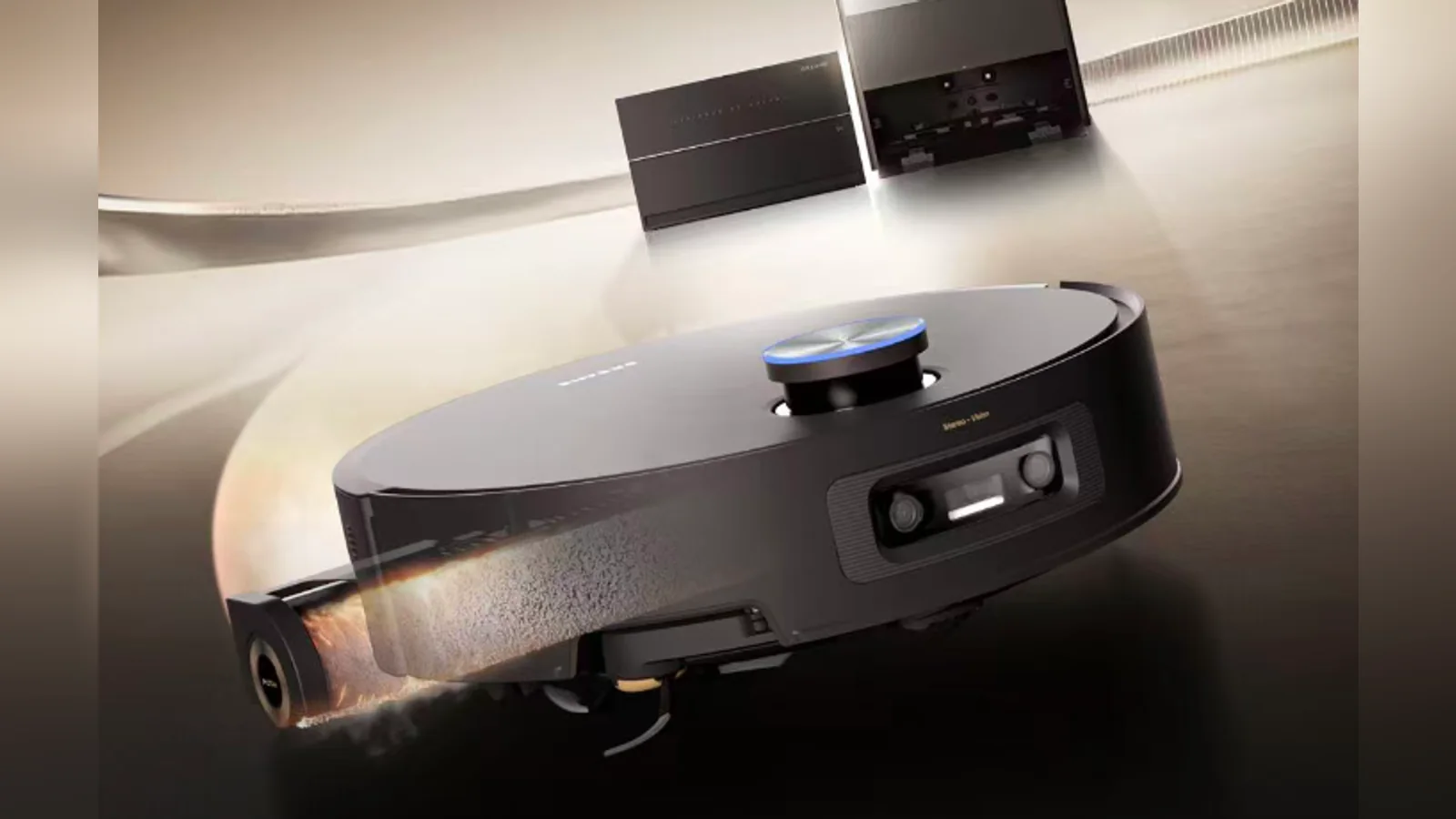
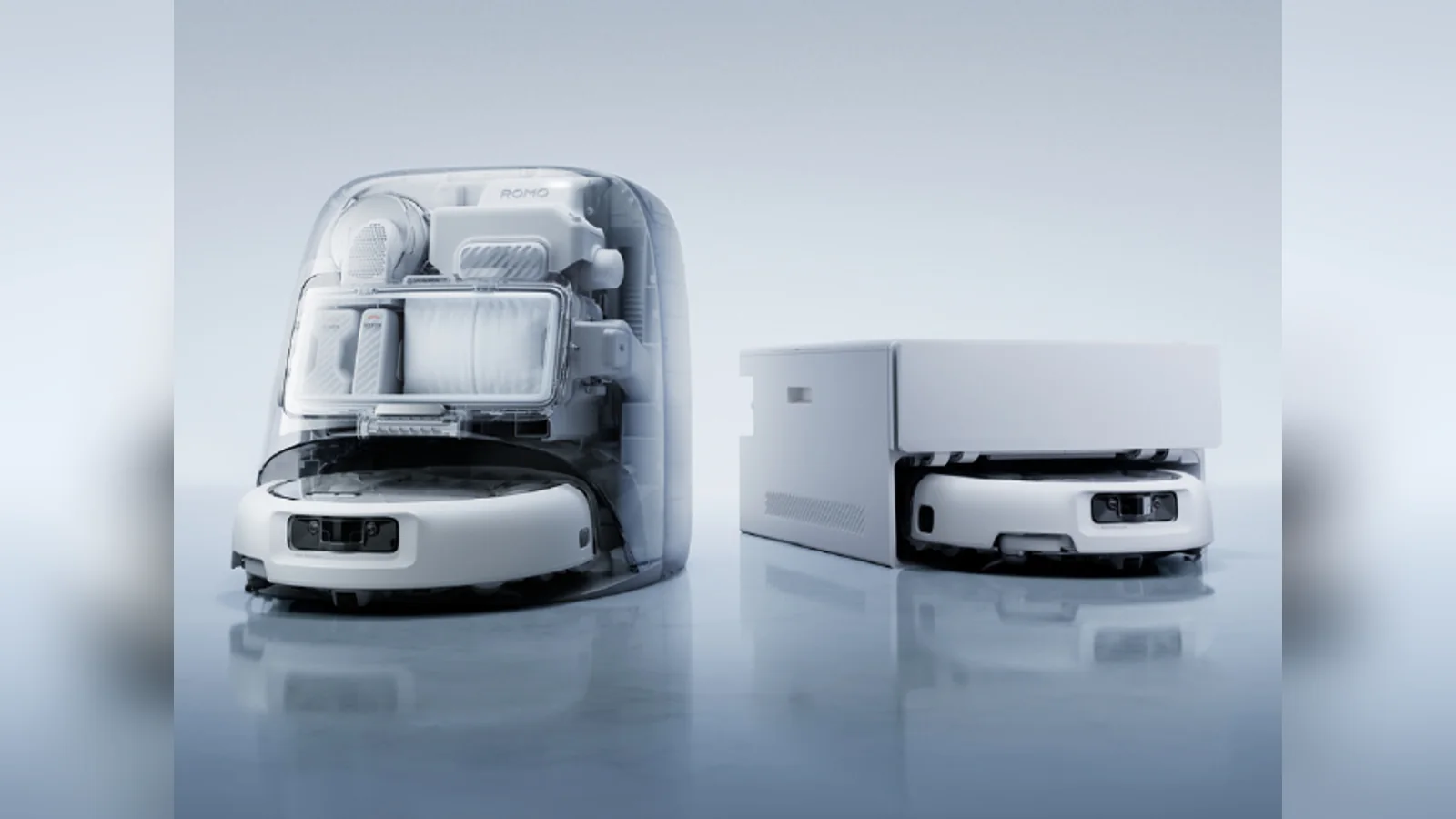
The design is largely unchanged. DJI again offers transparent and opaque versions; the see-through shell remains the series' signature. Some buyers find it distinctly DJI; others find it more showpiece than home appliance.
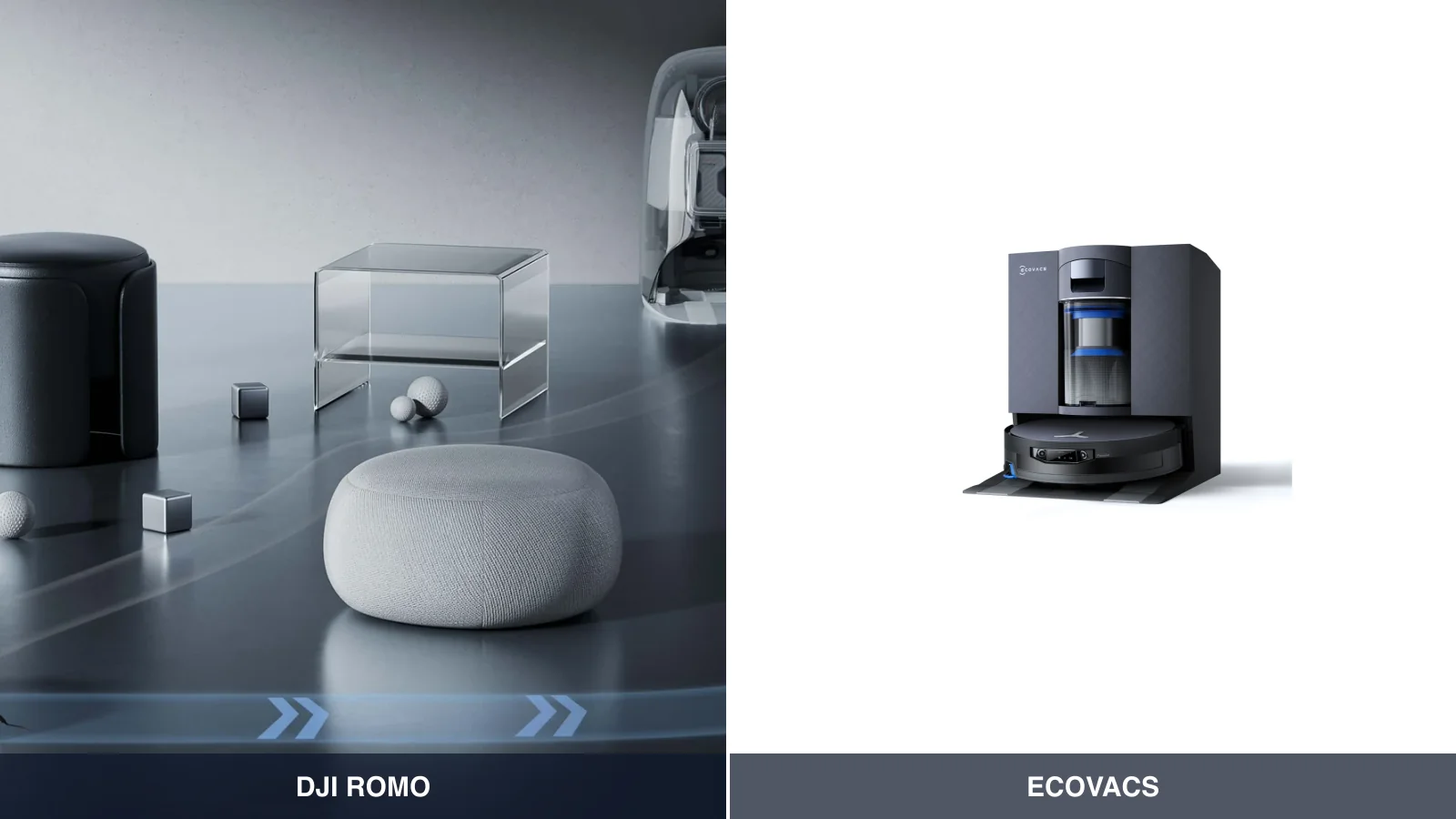
The dock now comes in two versions: a full-size all-in-one dock and a slim dock. That is a practical choice. Not every home wants a large dock in the living room or on the balcony, and many need a model that fits around water and drain connections.
The upgrades are clear:
- Suction rises from 25,000 Pa to 36,000 Pa, which puts ROMO 2 at the level of current flagships on paper.
- Edge cleaning gains a 123° swinging arm that pushes the mop out towards table legs, skirting boards and corners. Extending mops and arms have become standard on flagships. Dreame and MOVA were first with mechanical arms, and whether DJI's design attracts a patent challenge is worth watching.
- Thresholds were the first ROMO's most criticised weakness. ROMO 2 adds an adaptive lifting mechanism and, according to DJI, crosses a 4 cm single-layer obstacle and an 8.5 cm double-layer one, sensing high thresholds in advance and lifting itself over.
- Obstacle avoidance continues to combine drone-derived binocular vision with solid-state LiDAR, with DJI promoting millimetre-level avoidance of thin cables and pet waste.
Thresholds sound trivial next to sensors and algorithms, but they decide the experience in real homes: whether the robot gets into the bathroom, over a sliding-door track, or from one room to the next. The first ROMO lost points here, and the second generation targets that problem directly.
The missing feature: fresh-water mopping
ROMO 2 still lacks continuous fresh-water mopping, which most leading flagships now promote. The idea is simple to explain: the robot keeps adding clean water and recovering dirty water while it mops, so it never wipes the floor with a dirty pad.
There are two likely reasons for the gap. First, reviews of the first ROMO suggest DJI's buyers did not care much about it; they bought for the brand, obstacle avoidance, design and technology. Second, timing. Fresh-water mopping is not a module you bolt on. It involves water paths, dock cleaning, reliability, size, cost and after-sales risk, and DJI may simply not have been ready.
If DJI wants to join the first tier, it will have to add it. My estimate is that ROMO 3, at the earliest, will bring fresh-water mopping together with a more complete self-cleaning system.
Price is the real problem
At launch, ROMO P2, the transparent flagship, cost CNY 5,999 with a water-tank dock and CNY 6,499 with automatic refill and drain. ROMO A2 cost CNY 5,499 and CNY 5,999. The entry ROMO S V2 started at CNY 4,299 with a water-tank dock.
These prices keep DJI at the top of the market. People in the industry joked that the transparent shell must be made of gold, since a few plastic parts added more than CNY 1,000. It is a joke, but it points at the real issue. Robot vacuums are no longer a category where a new function guarantees a high price. Dreame, Roborock and Ecovacs have mature product definition, supply-chain costs, channels, service and price coverage.
On product, ROMO 2 is now close to the leading flagships and may exceed some of them on obstacle sensing. On price, it sits well above many best-selling models. Even ROMO S V2 starts at CNY 4,299, which is still a high entry point for most Chinese households.
How many can it sell?
I have said before that the future of DJI's robot vacuums depends on whether Wang Tao wants to see the project through. If he does, DJI will certainly hold a place in the category. My analysis of Wang Tao's turn towards robot vacuums covers that question in detail. Since that interview, DJI's commitment looks longer-term, and the team is said to have grown to several hundred people. The departure of the robot vacuum business's former head also suggests the first generation fell short of internal expectations.
I estimate the first ROMO sold in the tens of thousands of units in China. That is not the scale DJI wanted, but it is not wasted. Chinese consumers expose a product's weaknesses quickly, and ROMO 2 is the result of that feedback. If ROMO 2 sells around 200,000 units this year, I would call that a solid result: still far from Dreame, Roborock and Ecovacs, but enough to show DJI has a foothold.
Overseas may be the bigger opportunity. DJI's brand is very strong abroad, many DJI fans have been waiting for its robot vacuum, and overseas markets iterate more slowly than China. If ROMO 2 handles certification, channels, service and localisation well, it could do better abroad than at home.
Will DJI reshape the market?
In the short term, I do not expect ROMO 2 to hurt the top three much. Its prices do not reach their core volume band. In China, robot vacuums sell in volume at CNY 2,500 to 3,500, not above CNY 6,000, and Roborock, Dreame and Ecovacs all have mature models there.
Narwal is more exposed. Its prices run from a little over CNY 3,000 to about CNY 6,000, close to ROMO 2, and its buyers also care about design and brand. DJI could take some of those customers this year.
To sell a million units, or to chase the top three, DJI will need to solve its supply-chain costs. That probably means a separate volume model with fewer features at CNY 2,500 to 3,000, aimed directly at the best sellers from Roborock, Dreame and Ecovacs. If ROMO 3 arrives with such a model under CNY 3,000, the market structure could genuinely change.
Robot vacuums will also teach DJI something. Industry return rates commonly run at 20% to 30%, far higher than in DJI's other product lines. Good technology and design do not make this category easy.
ROMO 2 is a far more mature product than the first ROMO. It fixes the threshold problem, strengthens obstacle avoidance and adds a flagship-style swinging arm. Its weaknesses are just as clear: high prices, no fresh-water mopping and supply-chain costs that have not yet come down. It is a product that establishes DJI's foothold rather than one that rewrites the industry. The real question is whether DJI wants to make a robot vacuum with DJI character, or to change the robot vacuum market itself.
 DJI ROMO