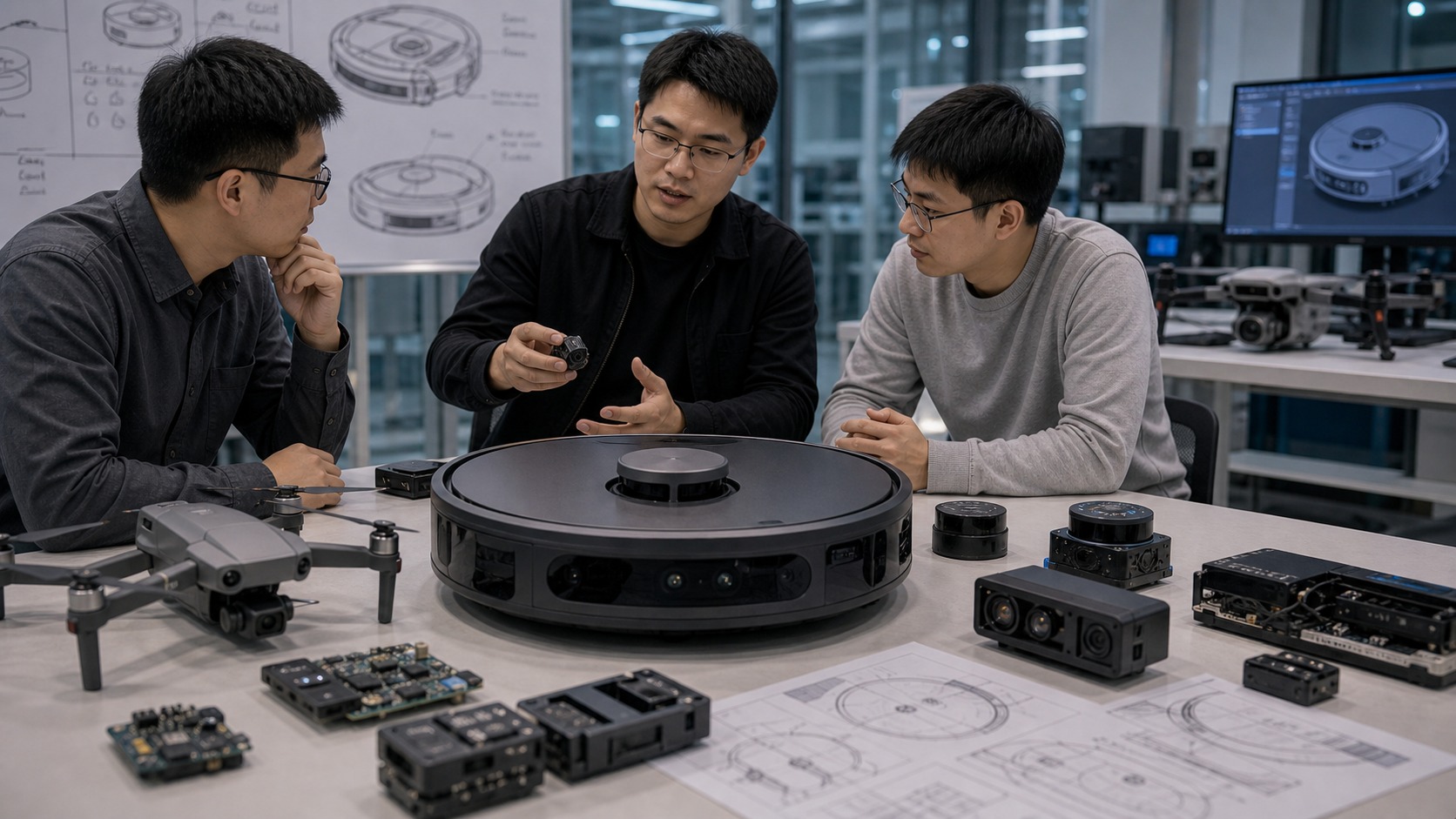
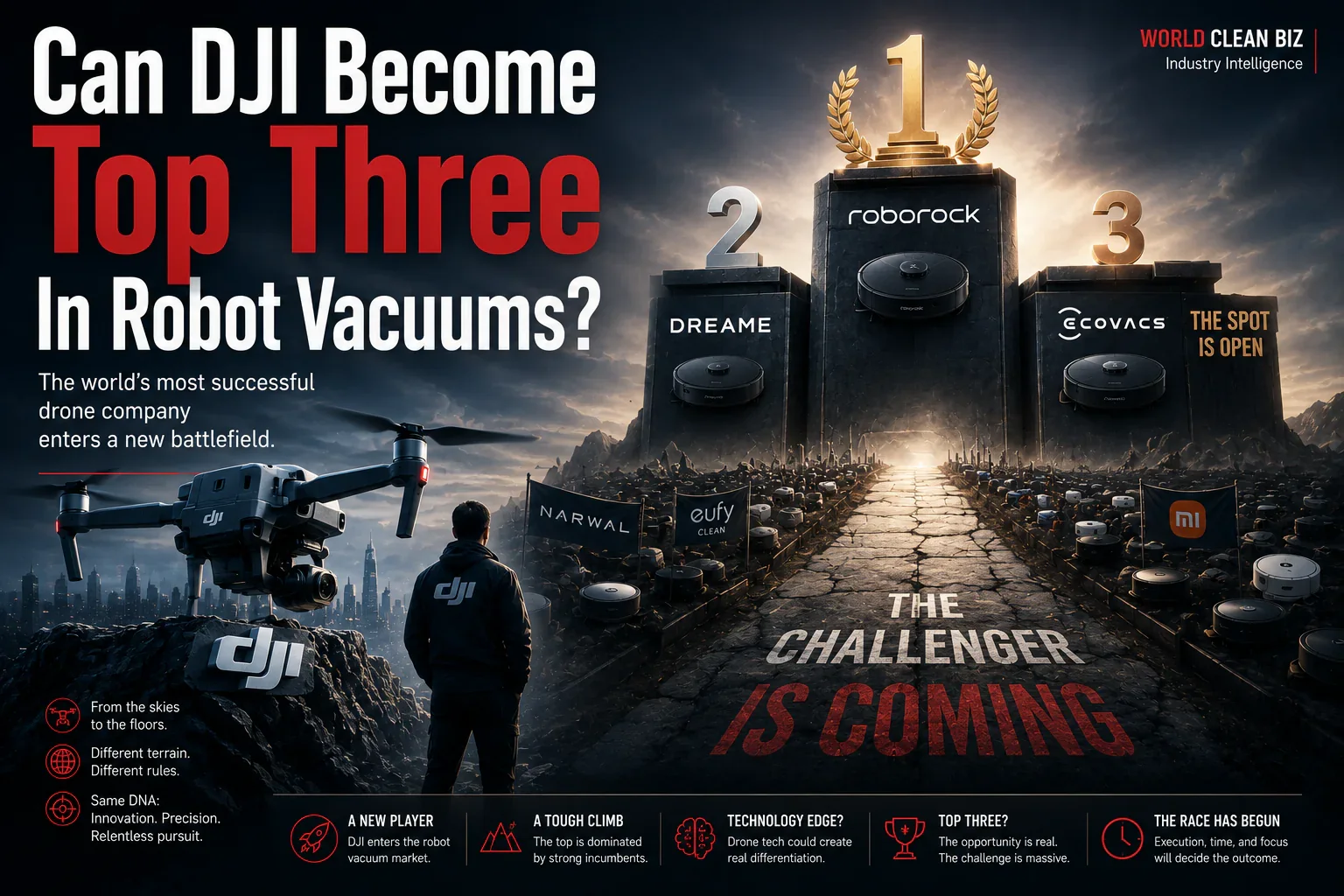
- DJI’s entry matters because founder attention can change resource allocation, product standards and supply-chain execution.
- ROMO should be evaluated as a long-term robotics platform experiment, not just another robot vacuum launch.
- Existing robot vacuum brands need to watch DJI’s product discipline and ecosystem patience.
The robotic vacuum industry is now squarely facing Wang Tao.
Previously, the industry looked at ROMO through the lens of "the DJI team launched a robot vacuum"; now, a more critical variable is whether ROMO has transitioned from being an internal new business project within DJI to falling under Wang Tao's personal product judgment and resource allocation. For a company like DJI, whether a project garners direct attention from the founder can significantly impact team composition, supply chain management, channel development, and R&D resources.
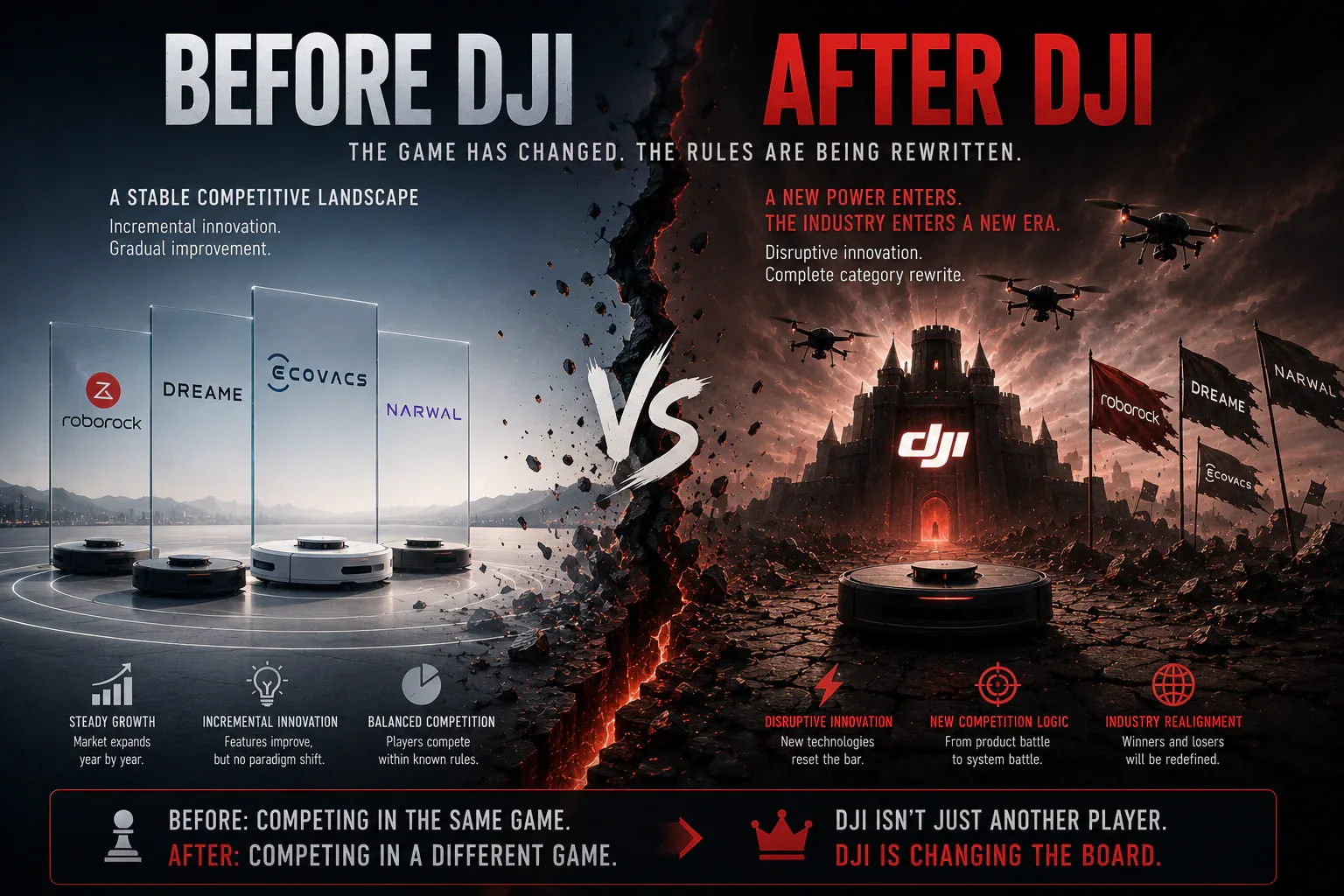
At the launch of ROMO 1, the product stood out significantly. With its transparent casing, visual obstacle avoidance, self-developed blower, innovative base station cleaning, engineering design sensibility, and DJI's brand identity, it was markedly different from traditional cleaning appliance brands. It seemed more like a strong tech company’s first systematic expression of a home cleaning robot.
ROMO 1 cannot be simply defined as a failure. It successfully marked DJI’s entry into the robot vacuum market and confirmed that DJI wasn’t just observing this category from the sidelines.
However, from a commercial standpoint, ROMO 1 did not achieve its intended goals. According to industry insights, ROMO 1 likely sold only around 2-30,000 units. This sales figure is commendable for an ordinary new brand but insufficient for DJI, which boasts strong branding, high attention, and a powerful product halo. The product was in development from 2021 to its release in 2025, and the subsequent departure of the head of the robot vacuum business further underscored the challenges this category posed to DJI.
A robot vacuum is not a product that can be quickly penetrated merely through visual design, algorithms, or engineering. It must contend with cleaning performance, base station maintenance, real-world home environments, after-sales service, return rates, costs, and supply chain issues. The value of ROMO 1 lies in its enabling DJI to truly enter the market and undergo a round of education from this category.
ROMO 2 should be understood within this context. It is not DJI’s first foray into robot vacuums but rather a product refinement after entering the market. Improvements in suction power, obstacle crossing ability, mechanical arms, AI dirt recognition, dirty area heat maps, base station design, fast charging, floor drying speed, and under-bed cleaning are not merely parameter stacking; they address issues exposed by ROMO 1. Particularly, advancements in threshold-crossing capabilities, corner cleaning abilities, and changes to the base station design indicate that DJI is now more comprehensively understanding the robot vacuum category.
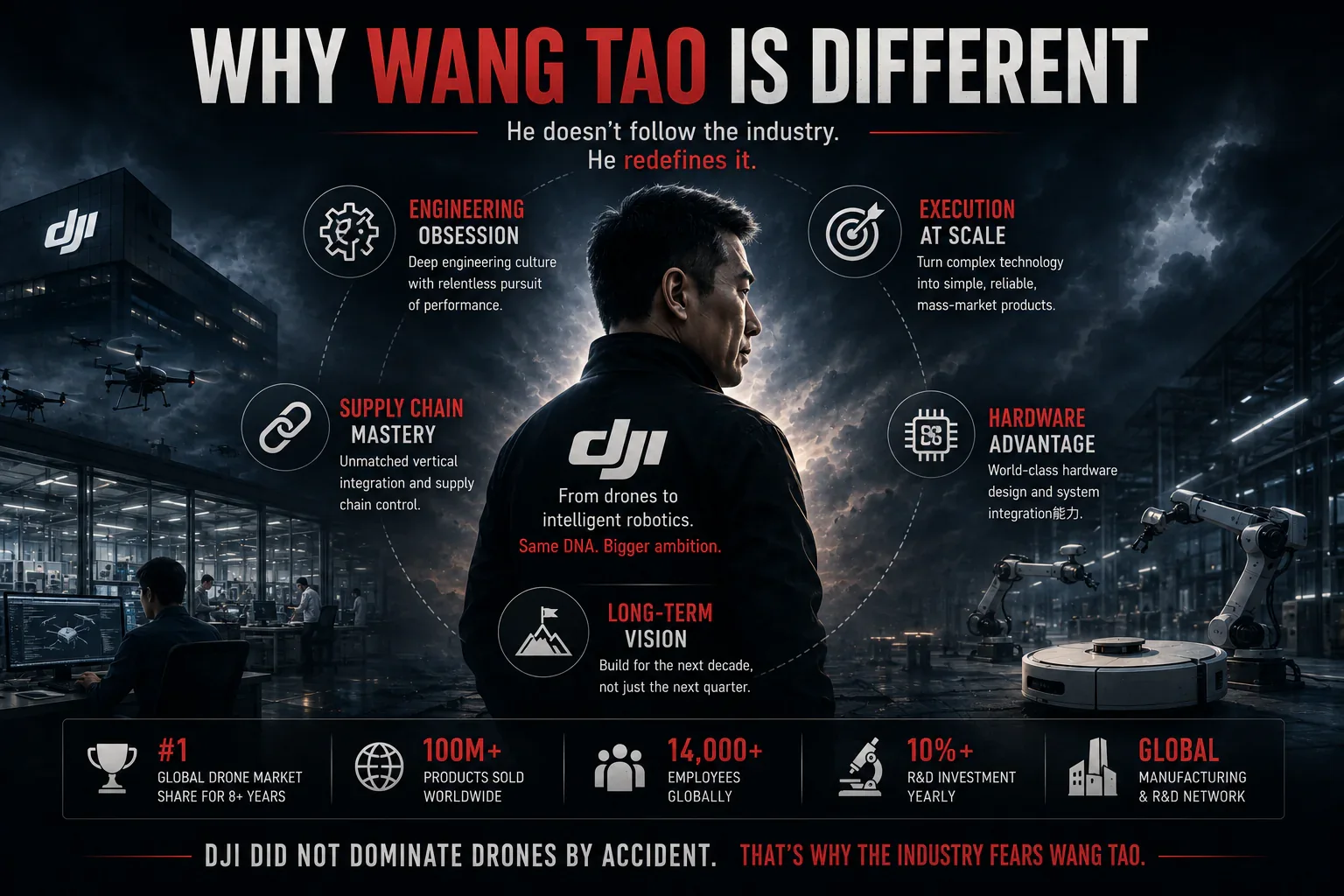
Late-night interviews provided crucial insights into the internal position changes of ROMO. When discussing ROMO, Wang Tao did not speak from an outsider's perspective. He mentioned that robot vacuums could have been released earlier but he "could not bear to see it," constantly pondering how to improve them; the transparent shell design was inspired by his first-generation jellyfish-like iMac; and he also admitted that early competitors had hundreds of people working on it, while DJI initially only sent a few dozen. Later, as the team expanded, their market share in high-end segments began to rise.
These pieces of information collectively point to a change: ROMO has already started entering Wang Tao's personal product judgment and organizational decision-making scope. For the robot vacuum cleaner industry, this is more significant than any single parameter of ROMO 2. The variables for DJI do not come from just one hardware upgrade but from whether Wang Tao will continue to invest in products, engineering, aesthetics, and organizational resources in this category.
Wang Tao has been less vocal in public recently, but in this interview, he spent a lot of time discussing management. He directly stated the current boundaries of DJI: "Our ability boundary is our management boundary." He also mentioned that over the past few years, they did not rush to start many new projects; instead, they focused on doing their existing business well and making appropriate cuts. For him, products are relatively easier, but management is a much more challenging aspect.
This will influence how DJI views robot vacuum cleaners. In the past, it was easier for outsiders to view DJI as an extreme product company, but today, product inspiration and engineering capabilities are not the only variables. Whether a new business can grow depends more on whether the organization has the capability to sustain long-term support. Supply chain, after-sales service, team, and management mechanisms must also keep up.
Robot vacuum cleaners will precisely highlight these issues. They enter complex home environments daily, handling dust, hair, sewage, carpets, pets, and thresholds over time. User experience is determined by numerous details. This category may not be perfect, but the demand is real, frequent, and has moved from single-machine cleaning to all-in-one docks, automatic mopping, water supply and drainage, mechanical arms, and AI obstacle avoidance. For DJI, it does not fit their past habit of pursuing highly completed products, yet it offers a sufficiently large market space.
Note: The term "robot vacuum cleaner" is used as "robot vacuum" in the translation to maintain consistency with the provided terminology.
From the company's development stage, Roborock cannot be viewed merely as a line of robot vacuum products. In a later interview, DJI reported that its sales exceeded 80 billion yuan last year. Wang Tao estimated that by 2026, DJI’s sales are likely to exceed 100 billion yuan. However, drones and imaging solutions cannot grow indefinitely. Even if the existing business can still grow by 50%, DJI will eventually have to face the challenge of finding its next growth curve.
Smartphones were already out of reach for DJI; automotive applications did not see them choose to enter directly; humanoid robots are too early, with unclear technological maturity and commercialization paths. In comparison, home cleaning robots represent one of the more realistic large markets currently facing DJI.
The global market for cleaning appliances is now valued at less than 300 billion yuan and has the potential to grow to 1 trillion yuan over the next ten years. If DJI can achieve a position in this market as a top 20%-30% player, it would represent an income opportunity of 200-300 billion yuan. This growth will not be evenly distributed across all categories; the true incremental core is primarily focused on robot vacuums and hard floor washers.
Currently, global sales of robot vacuums amount to approximately 25 million units per year, while global washing machine sales are around 80 million units annually. There remains a significant gap between these two categories.
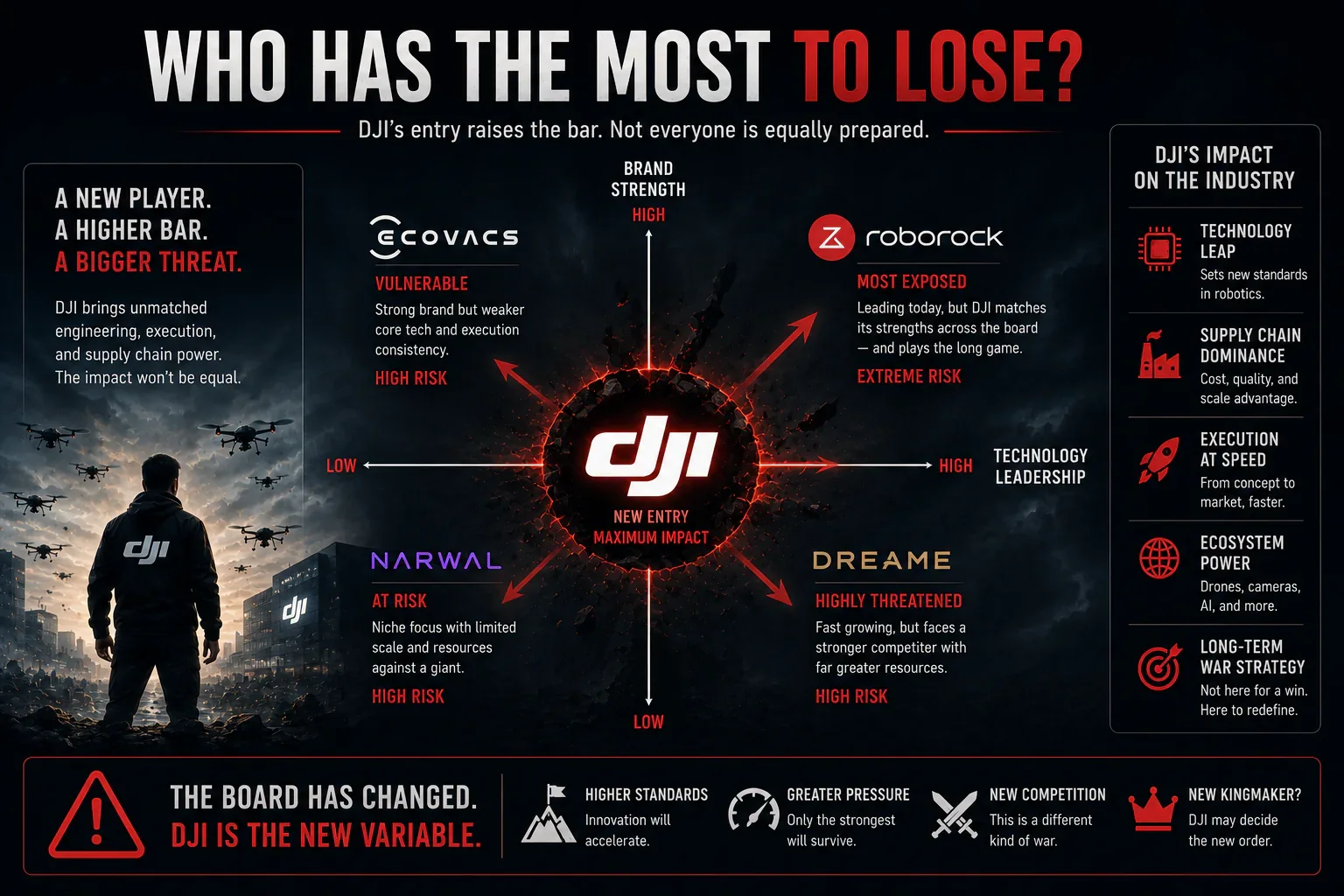
This market is large enough to avoid swallowing up an entire company like the automotive industry, yet it combines both robotic and consumer attributes. It tests not only technical capabilities but also supply chain management, cost control, after-sales service, and global operations. This makes it a long-term business test for DJI as it transitions from a "company of extreme product innovation" to one with complex organizational capabilities.
The robot vacuum industry faces more than just a highly capable founder like Wang Tao. It also faces DJI, a company with more than RMB 80 billion in revenue and a high probability of reaching RMB 100 billion in the future. A successful transition into the cleaning robot sector requires a combination of algorithmic capabilities, sensor technology, motion control, structural engineering, supply chain management, after-sales service, and distribution channels. DJI has accumulated significant transferable capabilities in drones, imaging, gimbals, motion control, and global sales channels.
The key to ROMO's continued success lies in whether DJI can effectively mobilize these capabilities into the cleaning robot business.
Going forward, the industry should focus on observing DJI’s learning speed: whether the team continues to expand, if Wang Tao remains deeply involved in product definition, how ROMO will continue to iterate, and whether price points, supply chains, after-sales service, and overseas markets are adequately addressed.
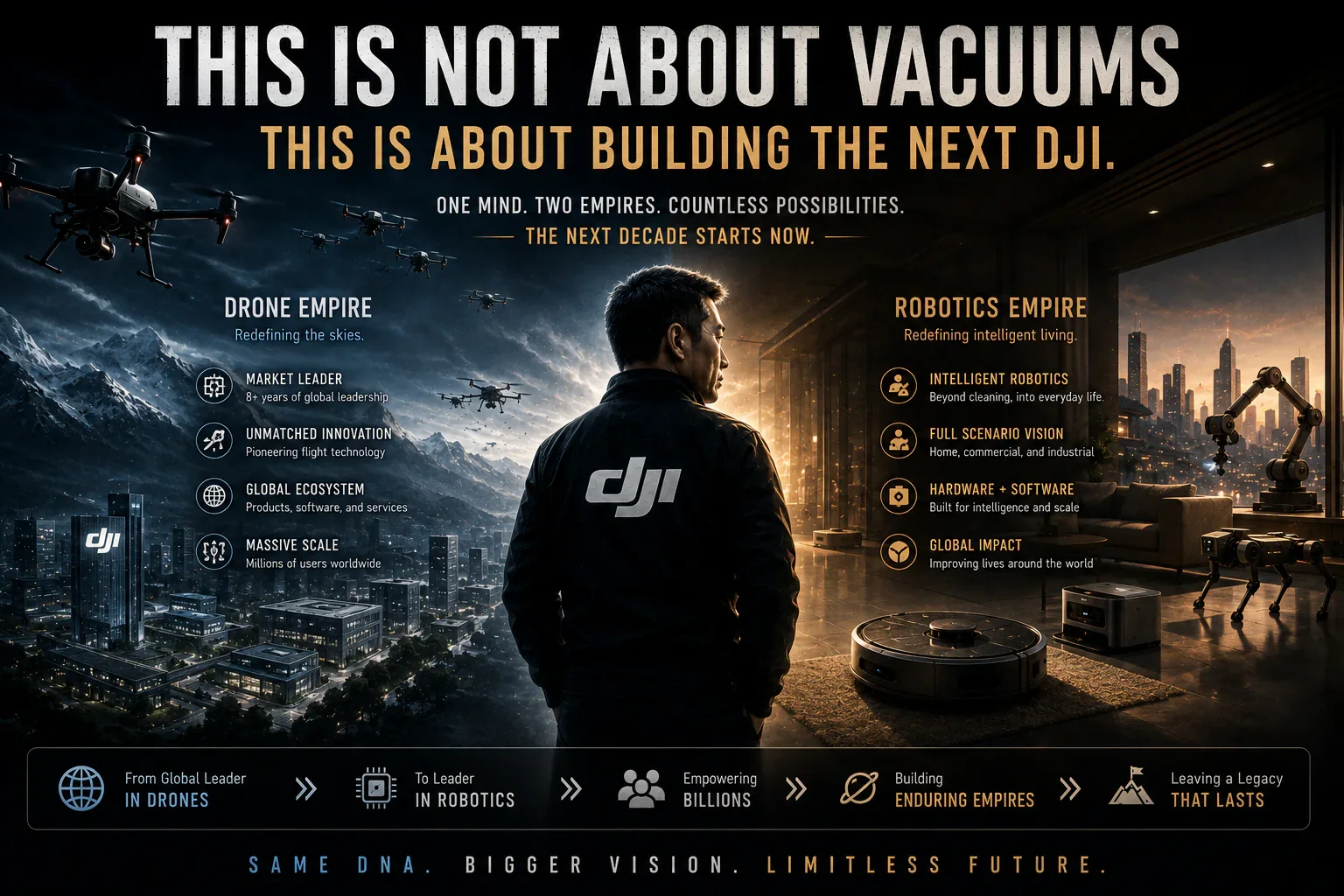
If all these answers are yes, the robotic vacuum industry will face what its competitors fear most—the DJI of this domain.