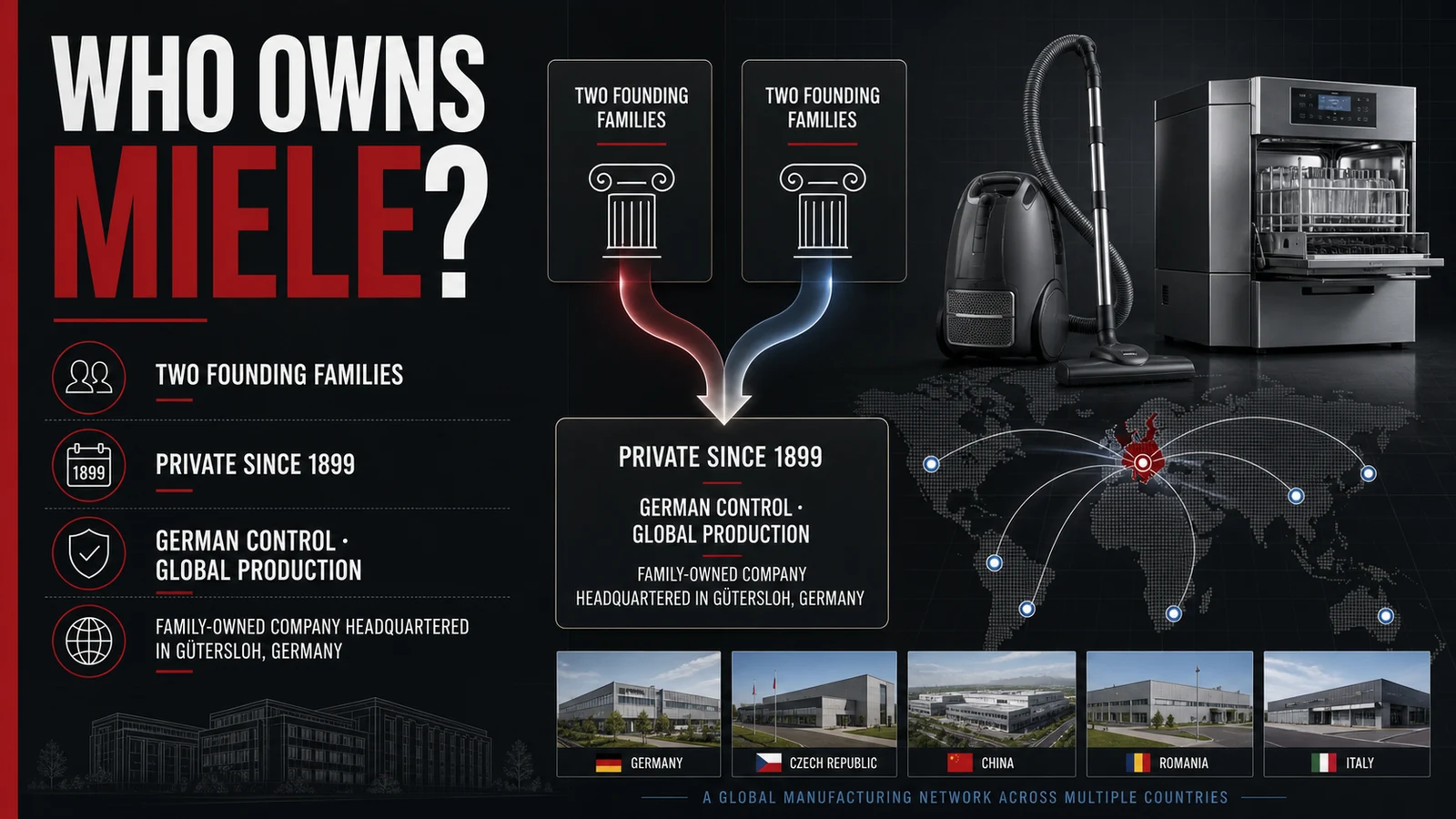
- The Miele and Zinkann families have owned the business since 1899, but family membership does not automatically qualify a descendant to manage it.
- Miele generated €5.16 billion in 2025 revenue, including more than €1 billion from commercial customers.
- The group combines premium domestic appliances and professional equipment with a manufacturing network that extends beyond Germany.
Markus Miele had to submit a job application to join the management of his own family's company.
Along with a résumé, he faced an interview with the family council and an assessment led by outside personnel consultants. Reinhard Zinkann, who would take over alongside him, went through a similar process. Both had worked elsewhere first: Miele at the automotive supplier Hella, Zinkann at BMW.
Their great-grandfathers had founded the business together. By the fourth generation, inheriting an ownership stake and qualifying to run the company were two separate matters. Miele describes the process in its historical career publication.
In 2025, Miele's revenue reached €5.16 billion, up 2.3%. The company, with roughly 23,000 employees, still belonged to the Miele and Zinkann families, according to its annual business announcement.
Consumers see the Miele name on washing machines, dishwashers and vacuum cleaners. The Zinkann name does not appear on those products, but the family has never left the center of the business.
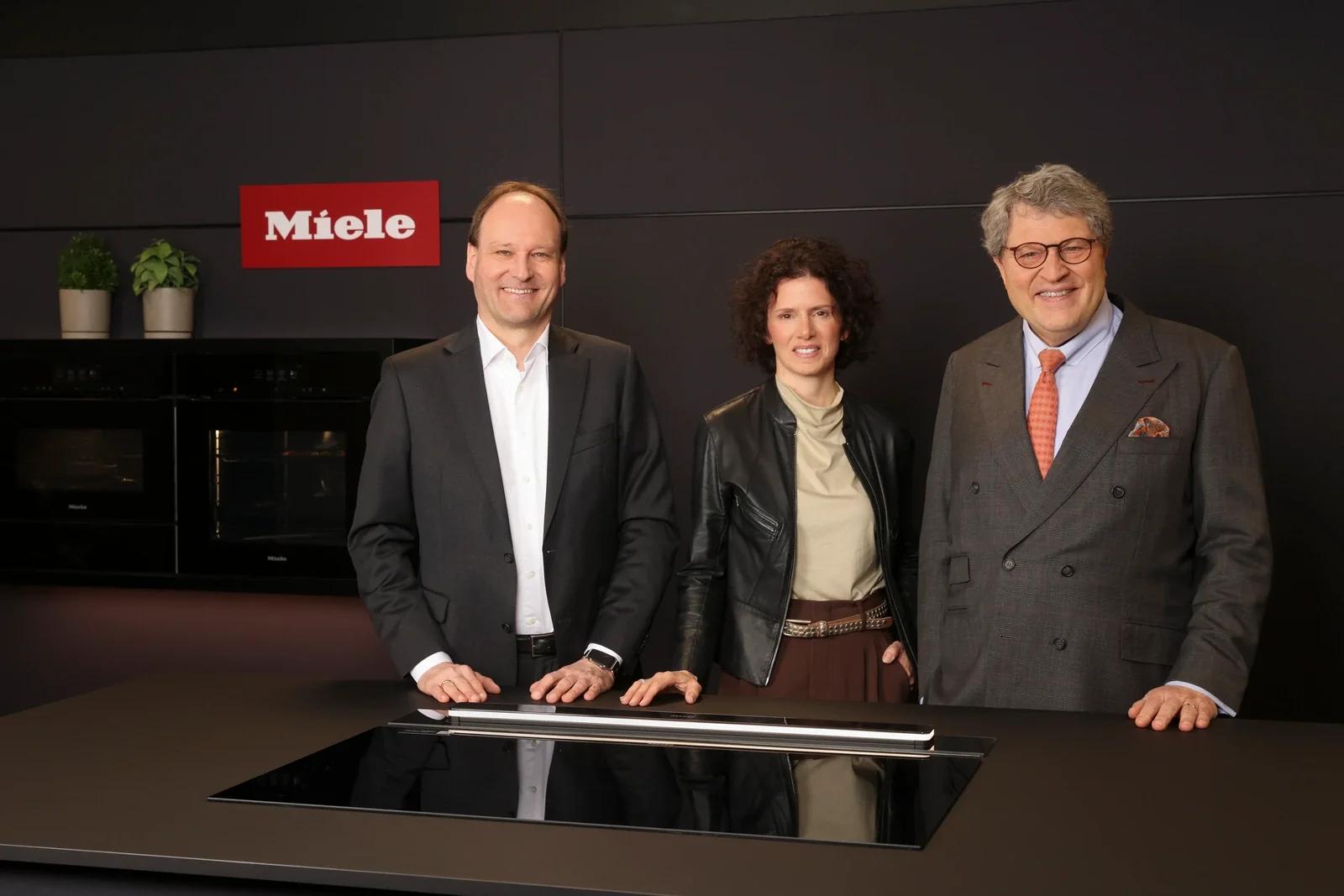
*Markus Miele, left, and Reinhard Zinkann, right, with fellow executive director Rebecca Steinhage at the presentation of the 2025 results. Photo: Miele, 2026 press materials.*
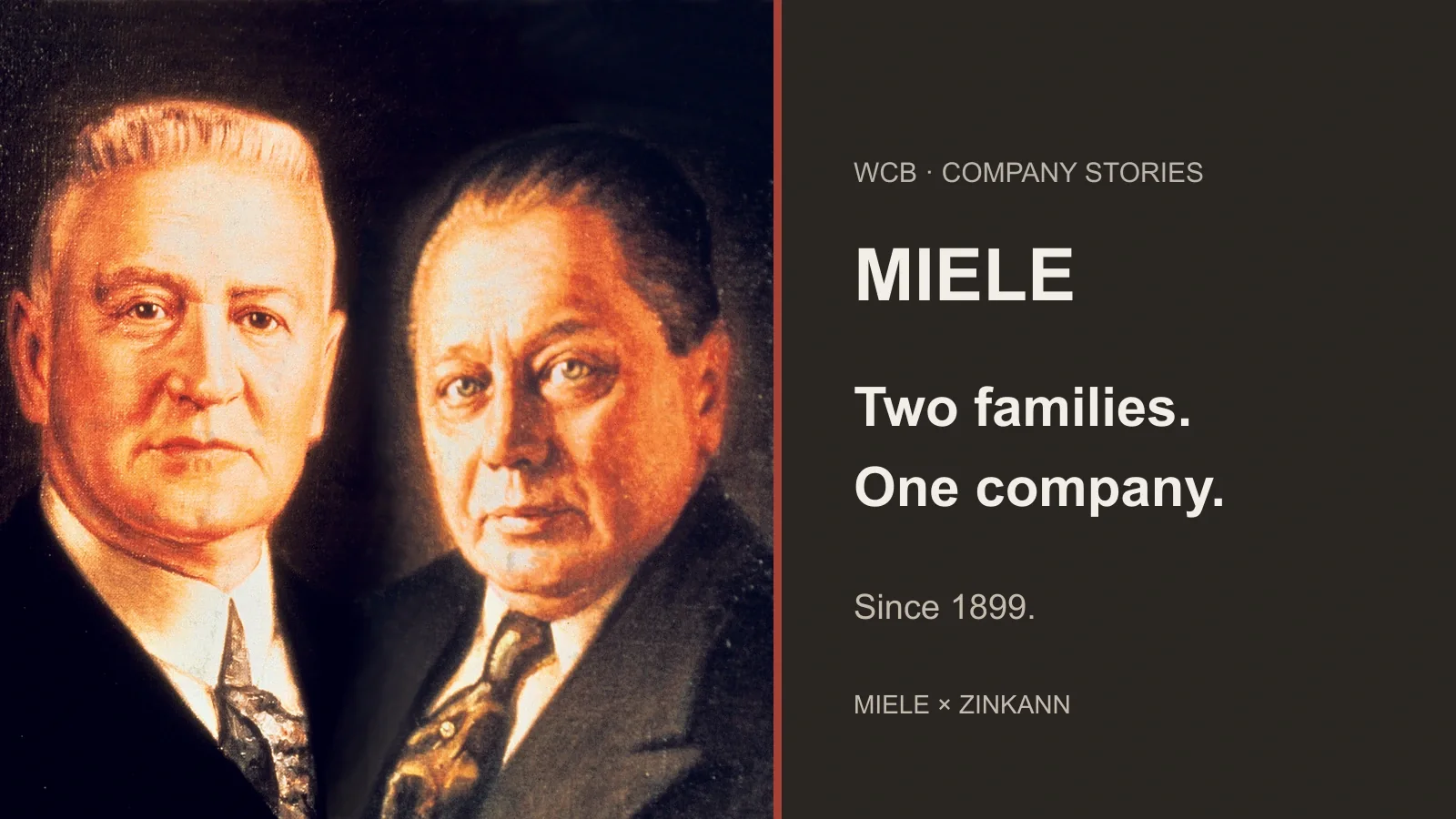
In 1899, the technician Carl Miele and the businessman Reinhard Zinkann founded their company in Herzebrock, Germany. They rented an old mill and began making cream separators with 11 employees, later adding butter churns.
The churn was a wooden tub with an agitator inside. The founders found that a similar mechanism could wash clothes. In 1901, Miele introduced its first washing machine, using the mechanism to move laundry and water around the tub and take on some of the hard physical work of washing by hand.
One of the company's most important businesses grew out of that wooden tub. The sequence is documented in Miele's 125th-anniversary chronology.
The two men were also drawn to automobiles. Between 1912 and 1914, Miele delivered 143 cars before withdrawing from a business that would have required substantial continuing investment.
The company kept developing household equipment. It began making vacuum cleaners in 1927 and introduced an electric domestic dishwasher in 1929. Laundry, dishwashing and floor care gradually became lasting parts of the business. Miele records those developments in its official history and milestones.
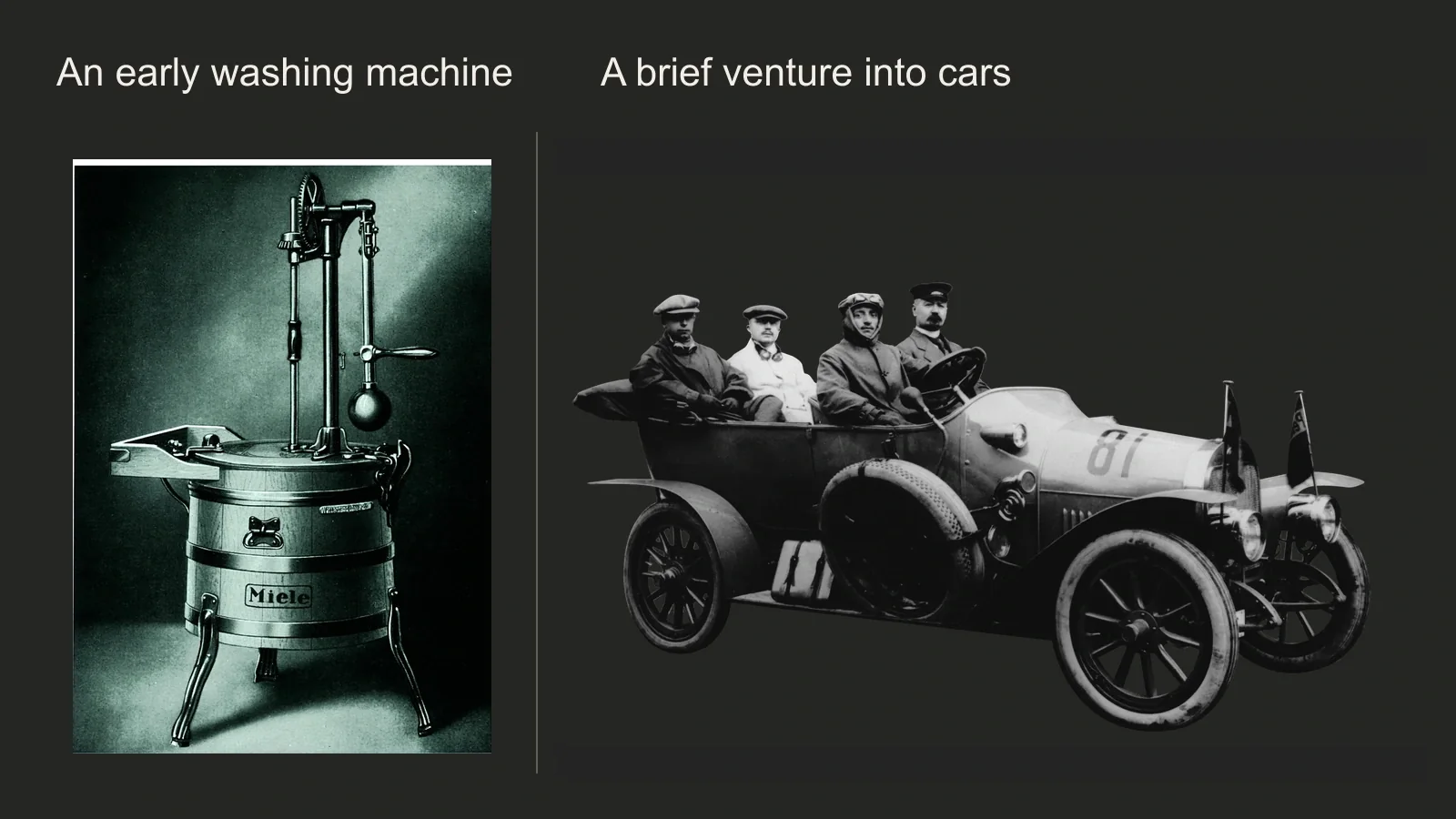
*An early wooden washing machine and a Miele automobile, shown in separate historical images. Source-preserving composite from Miele's archive; the images are not to scale.*
The second generation of both families joined management in the 1930s. They later took responsibility for rebuilding the factories after the war and restoring civilian production. In the 1950s, Rudolf Miele and Peter Zinkann joined the business, bringing in the third generation.
A company historical publication preserves a small detail of their working life: they met every morning at nine. Peter drank rosehip tea; Rudolf drank milk. Then they returned to adjoining glass offices that employees called the “aquarium.”
The partnership had already lasted decades. As the number of descendants grew, however, personal friendships between the fathers could not determine every succession decision. In the 1970s, Miele began establishing a selection process for family members who wanted to join the business, separating management appointments from share ownership.
Markus studied industrial engineering, later earned a doctorate and worked at Hella. Reinhard trained at BMW and gained experience in sales. Both worked outside the family company before returning to be assessed for succession. Their paths are described in Miele's career publication.
Nor did the arrangement permanently assign a particular function to each family.
In a 2016 interview, Markus explained that his father, Rudolf, had concentrated more on international marketing, while Peter Zinkann had driven quality and innovation. In the next generation, the emphasis on technology and the market switched between the families. Responsibilities followed individual abilities and interests; a son did not automatically inherit his father's portfolio.
Having one member of each family in management was not a quota written into the company's statutes. Other family members could apply too. Markus discussed both points in his interview with BILANZ.
As the company expanded, it appointed its first non-family executive directors in 1995. Today, about 80 family shareholders own the business. Markus and Reinhard run it alongside four non-family executives, with all six directors on an equal footing. The families continue to participate in decisions, while professional managers hold clearly defined responsibilities. Miele describes this evolution in its chronology and management profile.
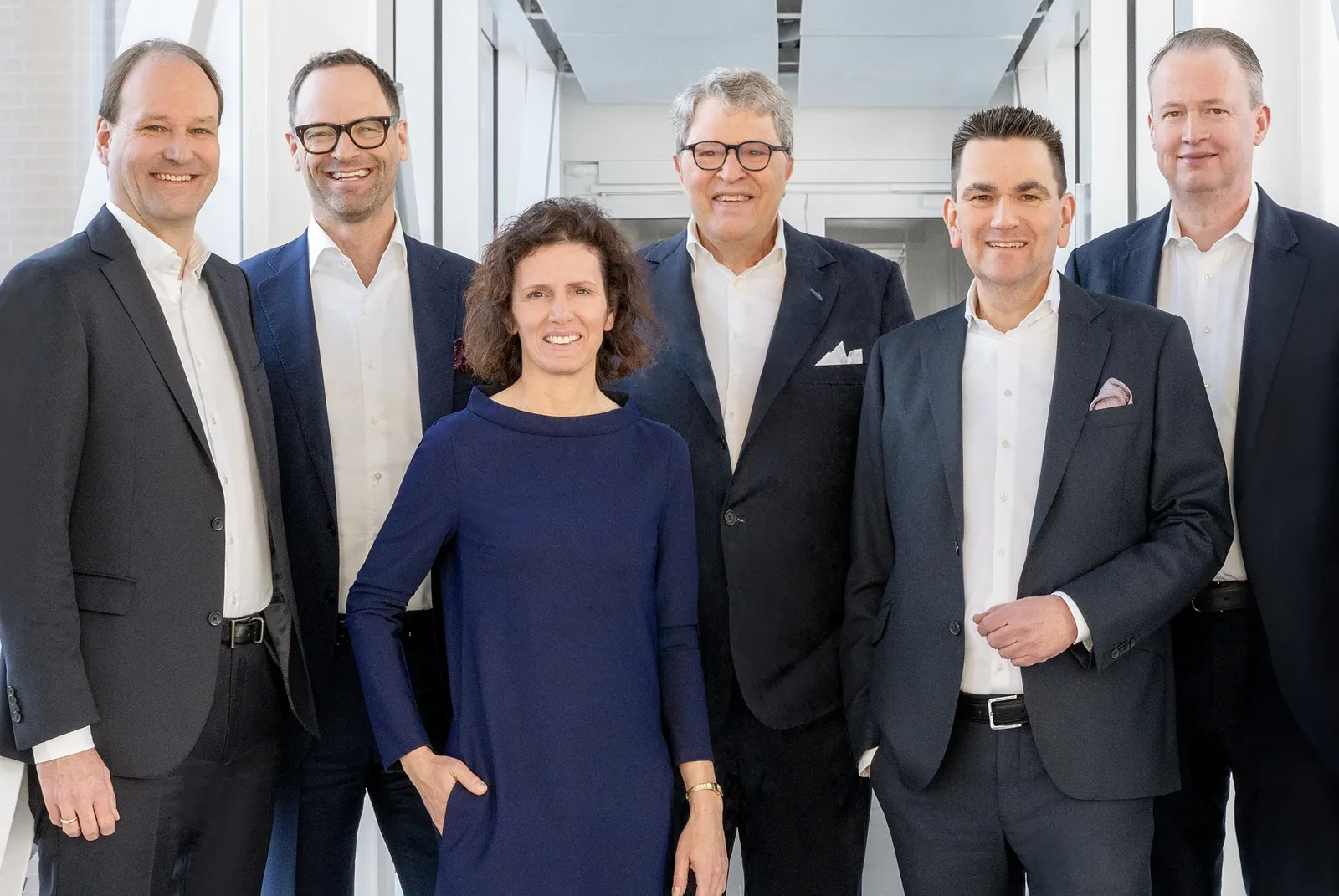
*From left: Markus Miele, Axel Kniehl, Rebecca Steinhage, Reinhard Zinkann, Stefan Breit and Stefan Koss. The two family co-proprietors work alongside four non-family directors. Photo: Miele, March 2026.*
Markus has explained that if a director believes a product under development will be too expensive to sell well at retail, the team revisits its costs and design. That does not mean waiting for everyone to be completely convinced by every project before proceeding. A company that did so would struggle to keep innovating.
On the relationship between the two families, his answer was straightforward: one could not repeatedly overrule a family that owned nearly half the company and expect it to accept that indefinitely. A shareholding percentage could not replace the discussion required to run the business together. Both observations come from the 2016 interview.
Under that management structure, Miele gradually brought its products into homes around the world.
Washing machines and tumble dryers remain among its most recognizable products. But a visit to a Miele showroom also reveals a full range of built-in kitchen appliances. A household can buy ovens, steam ovens, dishwashers and coffee machines from the same brand and integrate them into a coordinated kitchen.
That is a different purchase from picking up a single small appliance. Dimensions and installation positions have to be settled while the kitchen is being designed. Years later, replacement equipment must also fit the existing space. Miele can therefore participate in the purchase of a whole kitchen's appliances rather than sell only one machine at a time.
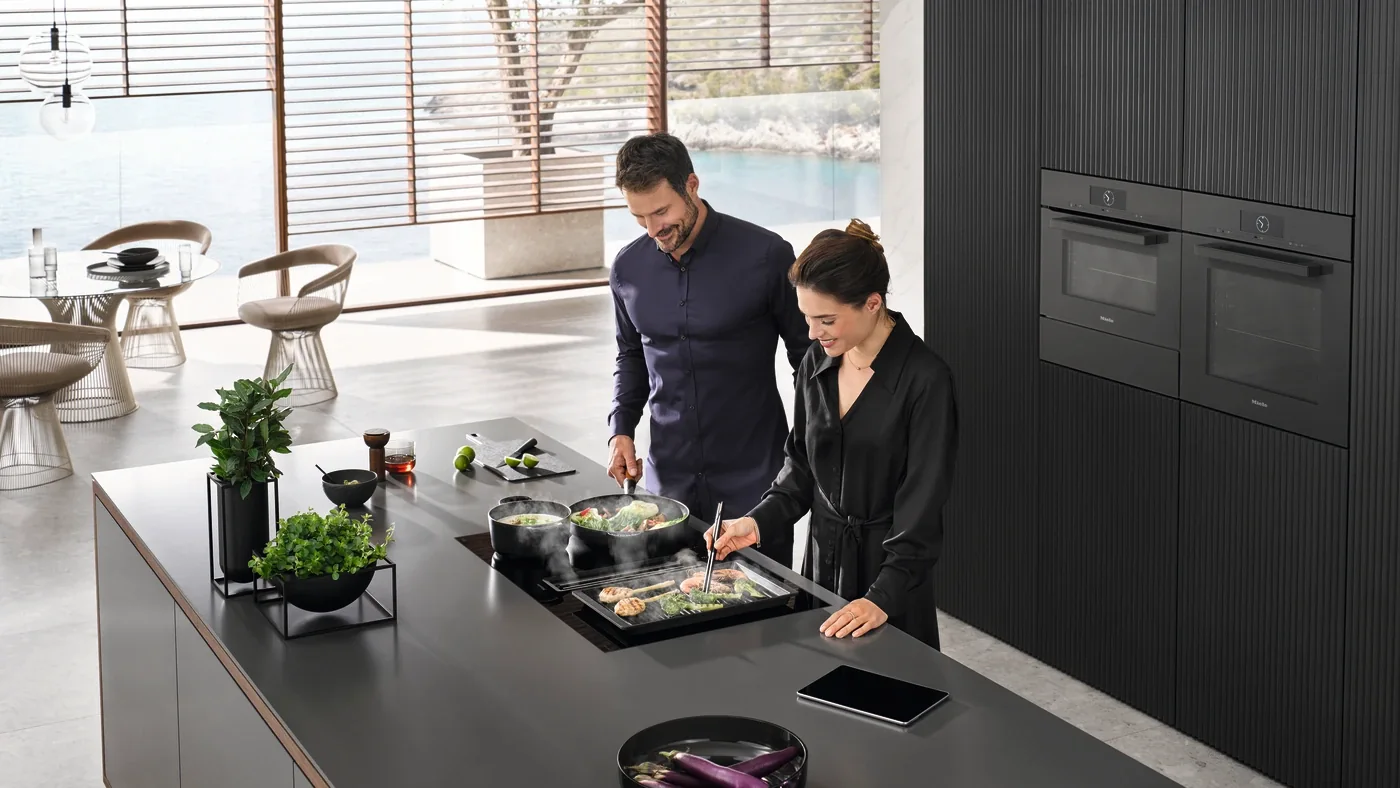
*Miele's Generation 7000 kitchen appliances, including the TwoInOne induction hob with integrated extraction. Official Miele photograph.*
The business also extends into places ordinary consumers rarely see.
Miele Professional serves customers including hotels, care facilities and medical institutions. Its range covers commercial laundry and dishwashing, as well as medical and laboratory cleaning equipment. A hotel processes sheets and dishes every day; a laboratory repeatedly cleans glassware. Those machines face different workloads and cleaning requirements from domestic appliances.
Miele entered these settings early. By the 1920s it was making large-capacity washing equipment for institutions such as hotels and hospitals. In 1961, it introduced a machine specifically for cleaning surgical instruments. These operations developed alongside its household business, rather than being added recently as a sideline. The company's history traces both developments.
By 2025, revenue from commercial customers had exceeded €1 billion, close to a fifth of group revenue. Behind the familiar premium appliance brand was a substantial professional-equipment business, as its 2025 results show.
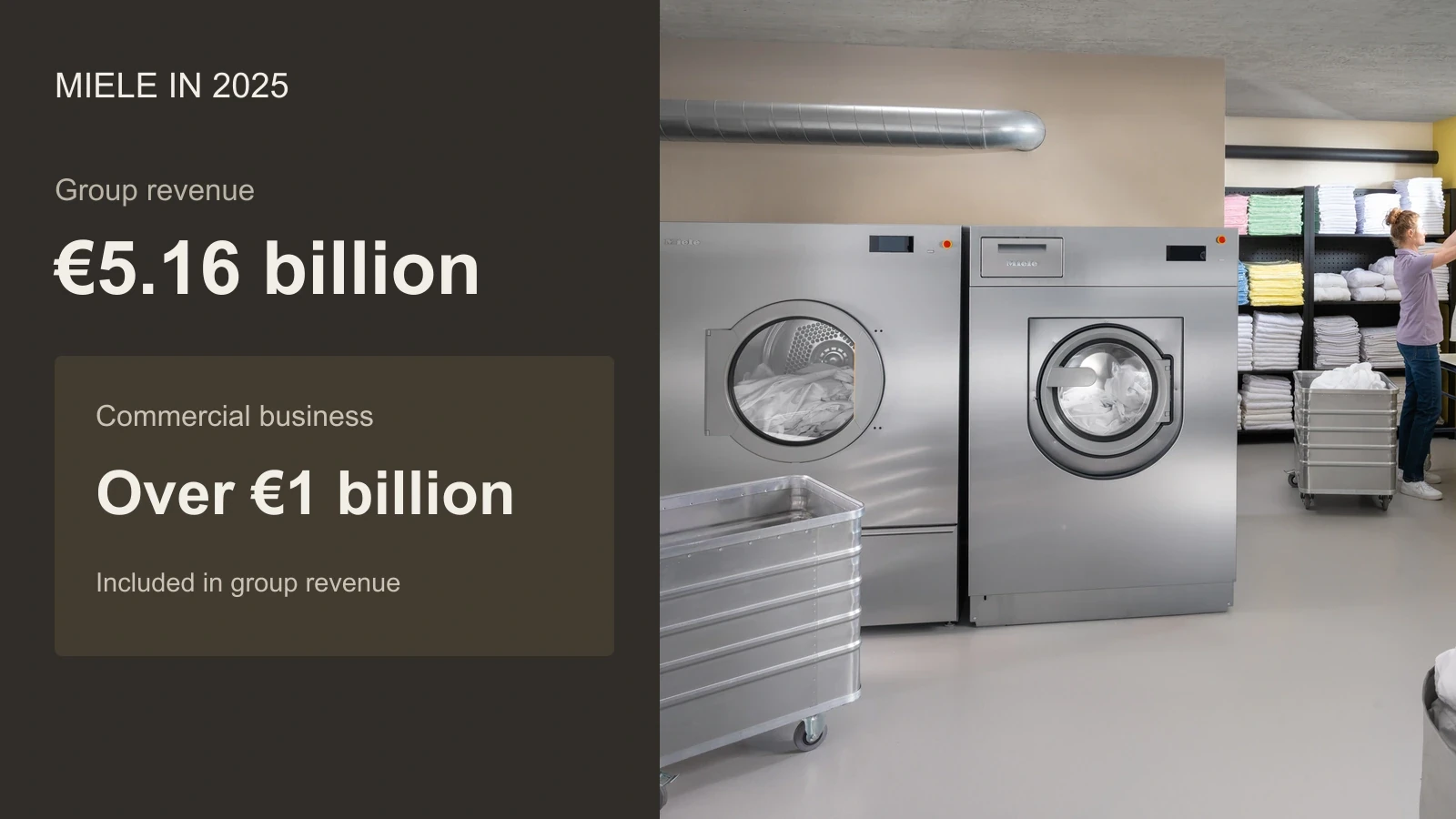
*Group revenue reached €5.16 billion in 2025; the commercial customer business contributed more than €1 billion. Equipment photo: Miele. Figures: Miele's 2025 business announcement.*
Whether selling to households or institutions, Miele has long positioned itself at the higher end of the market. Its investment in long-term use, and the reputation built over many years, help sustain those prices.
Miele says it tests most of its appliance series during development for the equivalent of 20 years of use. For domestic washing machines and tumble dryers, that means 5,000 program cycles. This is a development-testing standard, not a 20-year whole-appliance warranty, but it gives durability a more concrete meaning than an advertising slogan. The company explains the distinction in its product longevity information.
For a household buying a premium appliance, the machine may be expected to work for well over a decade. At the first purchase, the customer pays for the brand and the product. At the next one, the experience of living with the previous machine directly affects the decision. Sustaining a premium price requires customers willing to come back.
Miele also directs product improvements toward small tasks that recur with every use.
A washing machine equipped with TwinDos, for example, dispenses detergent automatically. Once the user installs the detergent containers, the machine doses it according to the wash settings and other relevant conditions. That removes the need to estimate how much liquid detergent to pour in before each wash. The basic form of the washing machine stays the same, but the convenience is felt repeatedly. Miele describes the system on its TwinDos page.
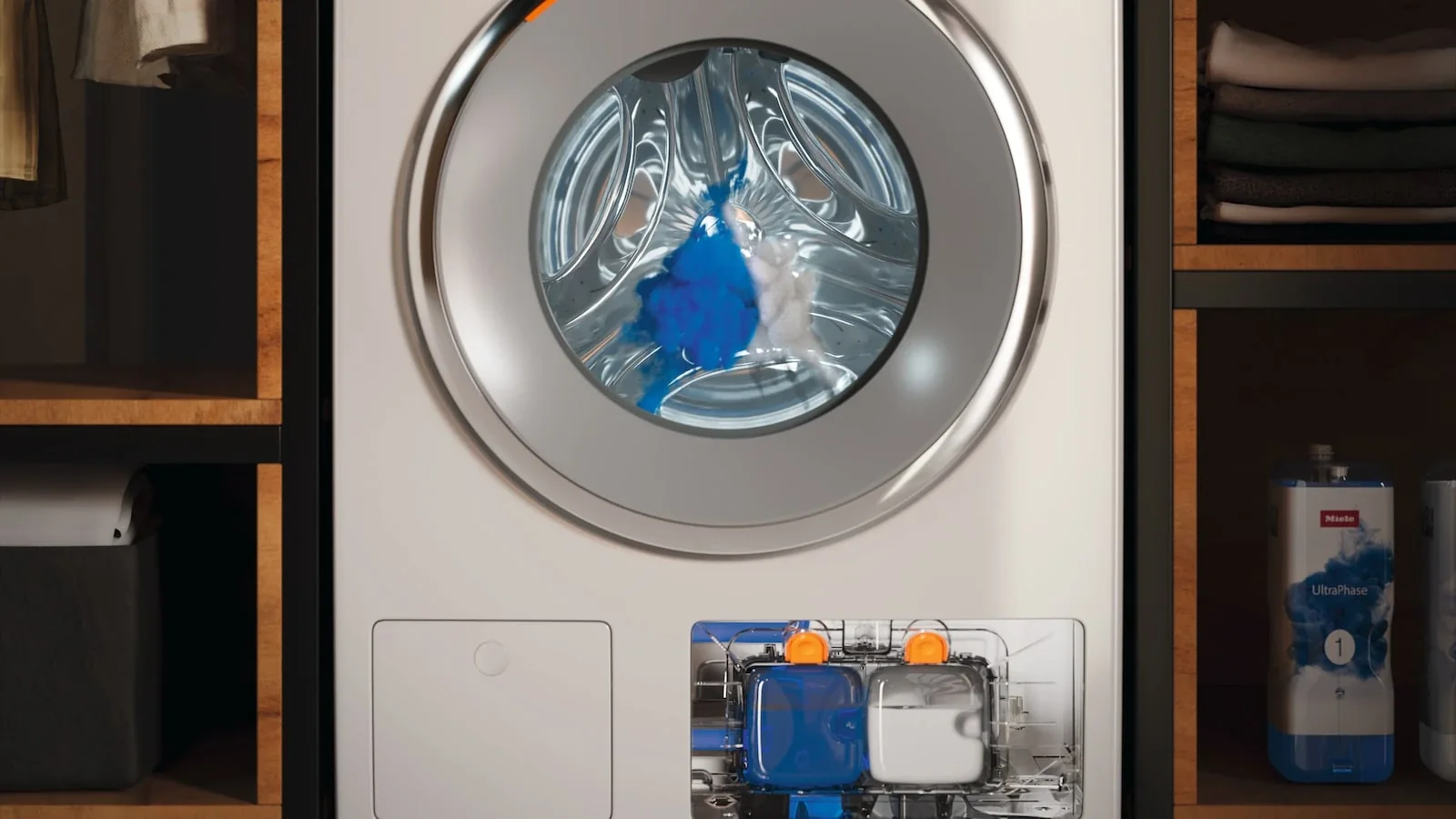
*TwinDos integrates detergent dispensing into the washing machine. Official Miele product illustration.*
Such designs also tie equipment more closely to consumables. After taking the appliance home, customers may continue buying its compatible detergent. For Miele, the relationship with that household continues beyond the sale of the machine.
The company maintains a substantial manufacturing operation to support this business. As of March 2026, it had 19 production plants worldwide and 49 sales and service subsidiaries, according to its group profile.
Germany remains an important development and manufacturing base, but Miele has long produced appliances elsewhere. Its Dongguan plant in China began as a joint venture in 1996 and became wholly owned in 2009. It makes some of the company's vacuum cleaners. Miele products sold around the world do not all come from Germany. The company describes the facility on its Dongguan factory page.
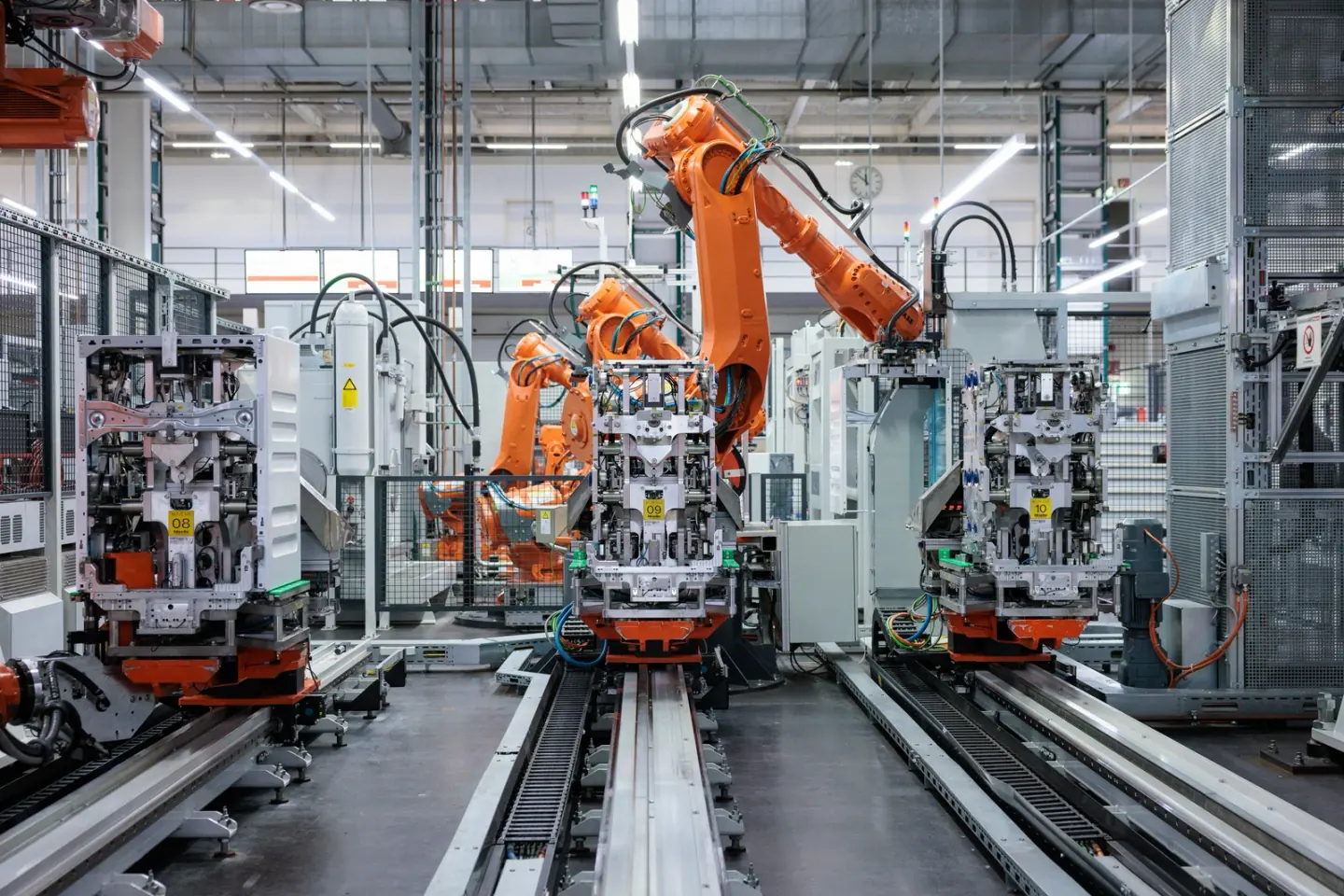
*A robot at Miele's Gütersloh production site in Germany. Photo: Miele, 2026 press materials.*
A global manufacturing network also requires the company to keep reconsidering where it makes its products.
In 2024, Miele proposed transferring more washing-machine production and related work from Gütersloh to its Polish plant. The union opposed the changes. Negotiations followed, producing an agreement on retaining German sites, investment and workforce adjustments. Miele committed €500 million to its German locations by the end of 2028. The sequence is set out in its efficiency-program announcement and agreement with IG Metall.
Even after more than a century under the same two families, the company's factory network could not remain fixed. Ties between the families and local employees made those decisions a matter for negotiation. Costs and investment needs still required management to carry the changes through.
In its 2025 business announcement, Miele said the performance program launched in 2024 had been completed and its €500 million savings target achieved. It also reaffirmed the separate commitment to invest €500 million in Germany. Both figures appear in the 2025 announcement.
From 11 employees to more than €5 billion in annual revenue, Miele has grown far beyond a business whose every function could be handled by either family alone. Their descendants retain ownership while sharing day-to-day management with a broader executive team.
The appliances still carry only the Miele name. More than a century later, the Zinkann family still has its place at the table.
*Cover: archival portraits of Carl Miele and Reinhard Zinkann, from Miele's 125th-anniversary press materials.*
 Miele
Miele