- Home demonstrations gave Kobold a route to market when retail struggled to explain the appliance.
- Thermomix overtook Kobold in 2014, more than four decades after the first heated kitchen machine.
- The family’s succession decisions and advisor network helped turn an unfamiliar kitchen appliance into Vorwerk’s largest business.
Around 1930, an engineer at a German carpet company used a gramophone motor to develop a small vacuum cleaner.
It was an attempt to rescue a business. Radio was entering homes, undermining demand for gramophones. The company needed another use for its motor technology. Engineer Engelbert Gorissen developed the appliance that became Kobold. Building it, however, did not bring customers through the door.
Households had used brooms and carpet beaters for generations. Putting an unfamiliar electrical appliance in a shop did little to explain why anyone should pay for it.
Werner Mittelsten Scheid, a descendant of the founding family, returned from the United States with an idea: salespeople should carry the machine into customers’ homes and clean their carpets in front of them.
Dust lifted from a carpet that had appeared clean could make the case more effectively than a sales pitch. By 1935, 100,000 Kobold machines had been sold through direct sales, according to Vorwerk’s company history.
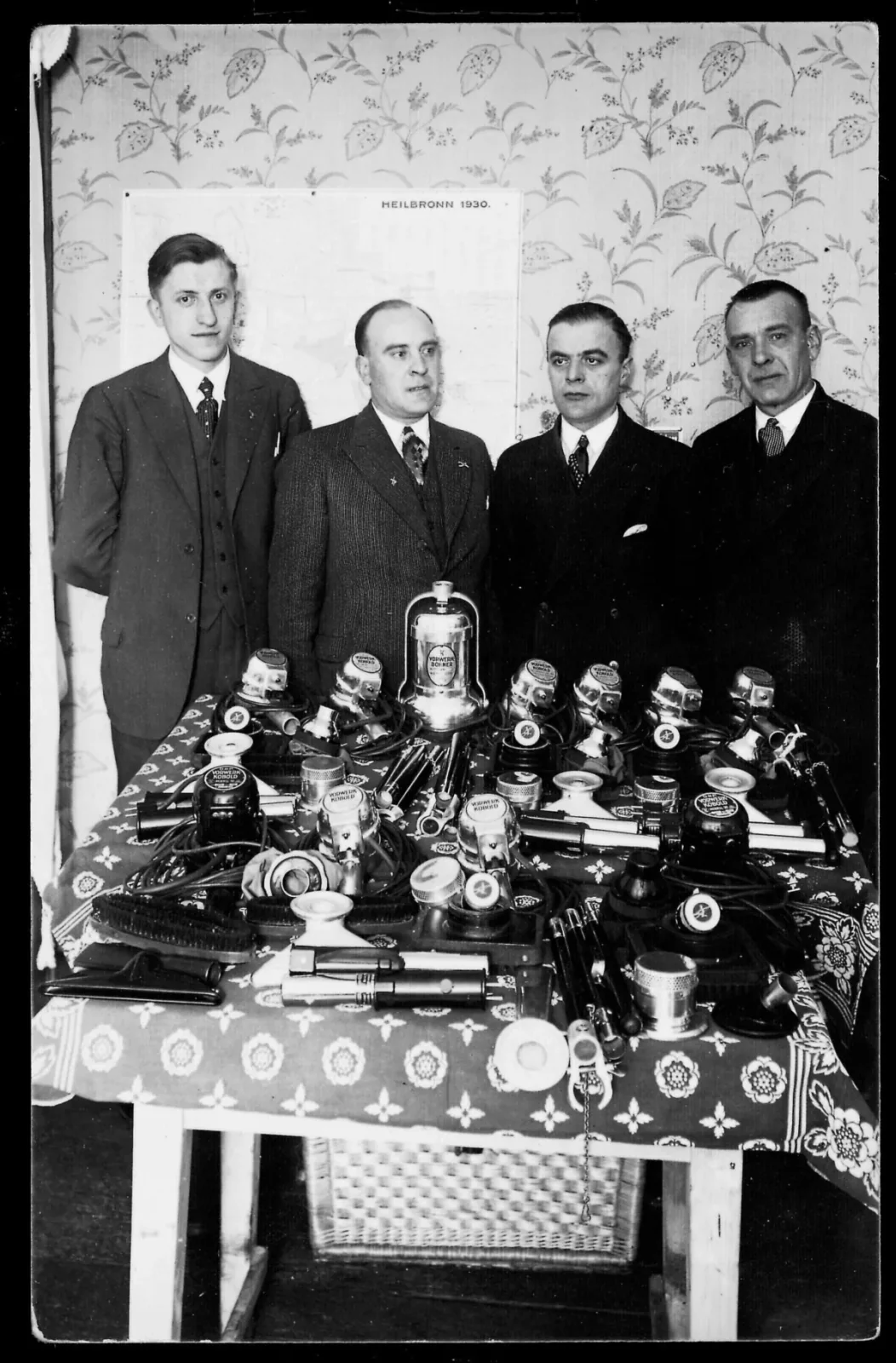
*An early sales team and its machines, around 1930. Vorwerk archive; the original photograph is retained without identifying individual members.*
Decades later, the company’s representatives would carry a different machine into customers’ kitchens. This time, they had to persuade households to spend more than a thousand euros on an appliance that could cook: Thermomix.
Vorwerk began in 1883, when brothers Carl and Adolf Vorwerk founded a carpet factory in Wuppertal. The region had a textile industry, and the company subsequently developed mechanical manufacturing capabilities that helped it move into electrical appliances.
In 1907, August Mittelsten Scheid, Carl Vorwerk’s son-in-law, assumed sole management. His surname became central to the family business. The company retained the Vorwerk name, while control passed through a family whose members did not all bear it.
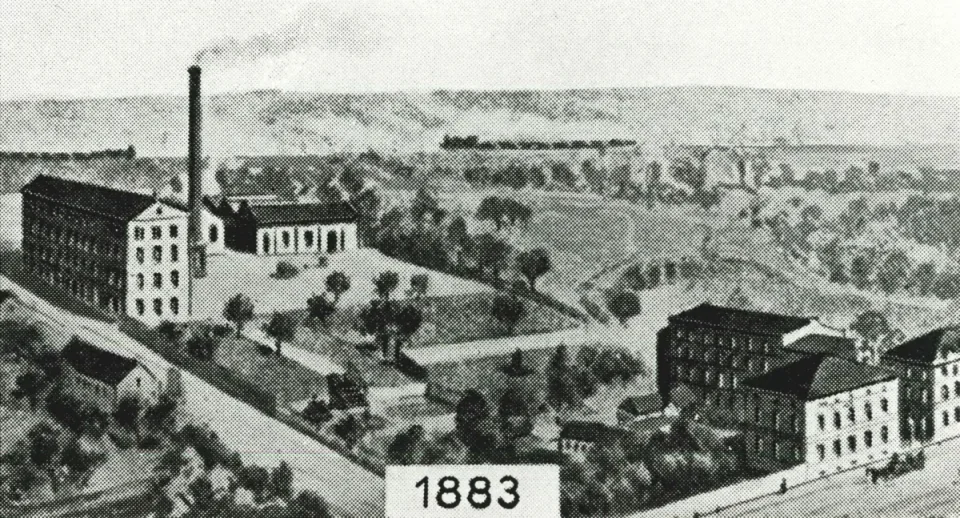
*The Mühlenweg carpet factory in an archival illustration labeled 1883. Source: Vorwerk.*
Two world wars cut across the company’s history. Vorwerk undertook wartime production and employed forced laborers. It later acknowledged that history and participated in compensation efforts. After the war, the family rebuilt the business around vacuum cleaners and the network that sold them in people’s homes.
Werner died in 1953. His brother Erich continued to lead the company. When the time came to find another successor, the relatives expected to join did not want to enter the business.
The family turned to Jörg Mittelsten Scheid.
Jörg had wanted to become a university professor. Trained in law, he had already begun an academic career. The university left open the possibility of his return, which helped persuade him to give the family business a try. The German Founders Award’s account of his career records his unconventional route into management.
He joined in 1966, aged 30, entering the leadership team directly. Other executives were skeptical of the young family successor. Jörg later acknowledged that he knew little about business at the time.
He applied habits learned in academic work: listening, analysis and identifying the central problem. In 1969, he took over leadership. What began as a trial lasted until the end of 2005.
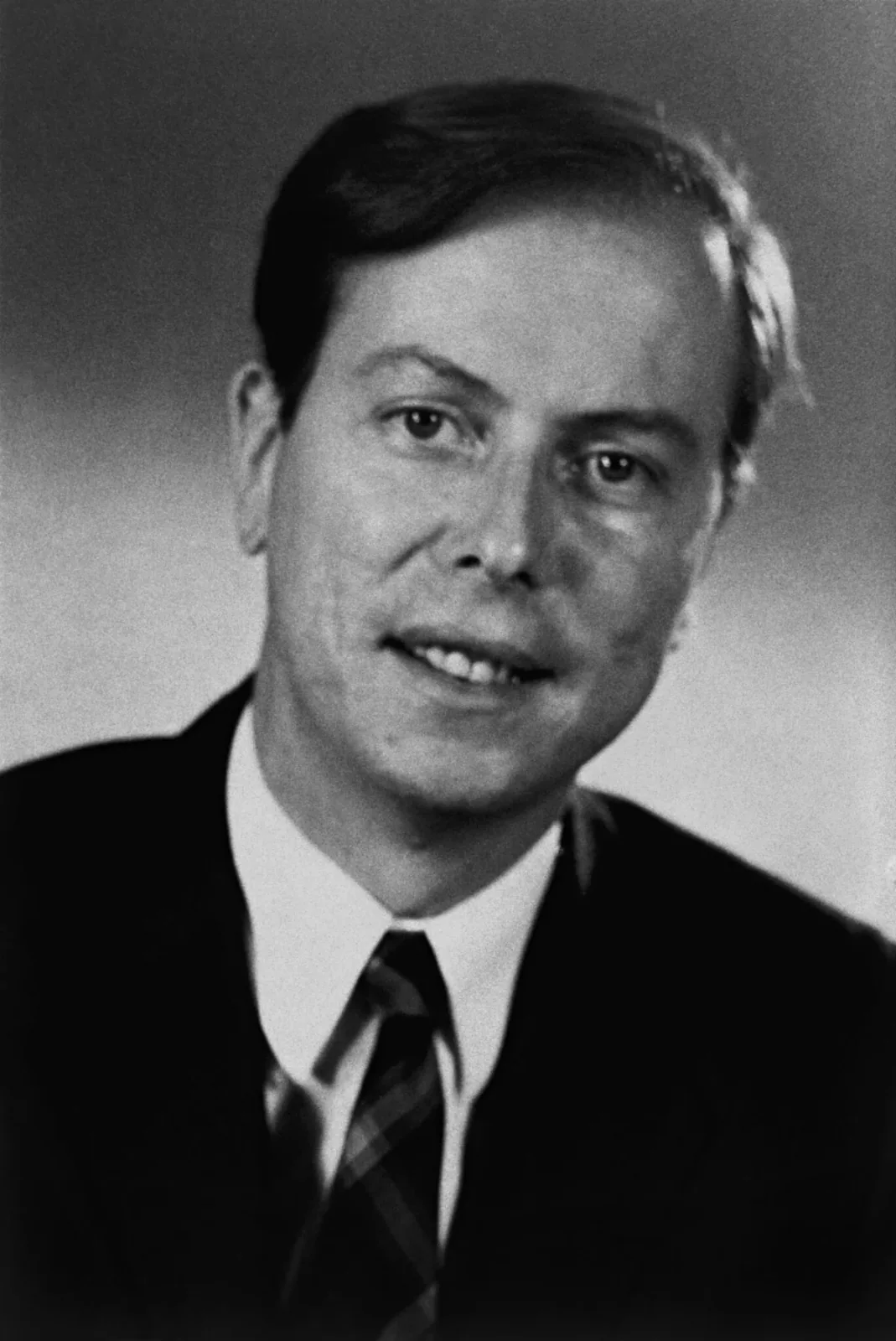
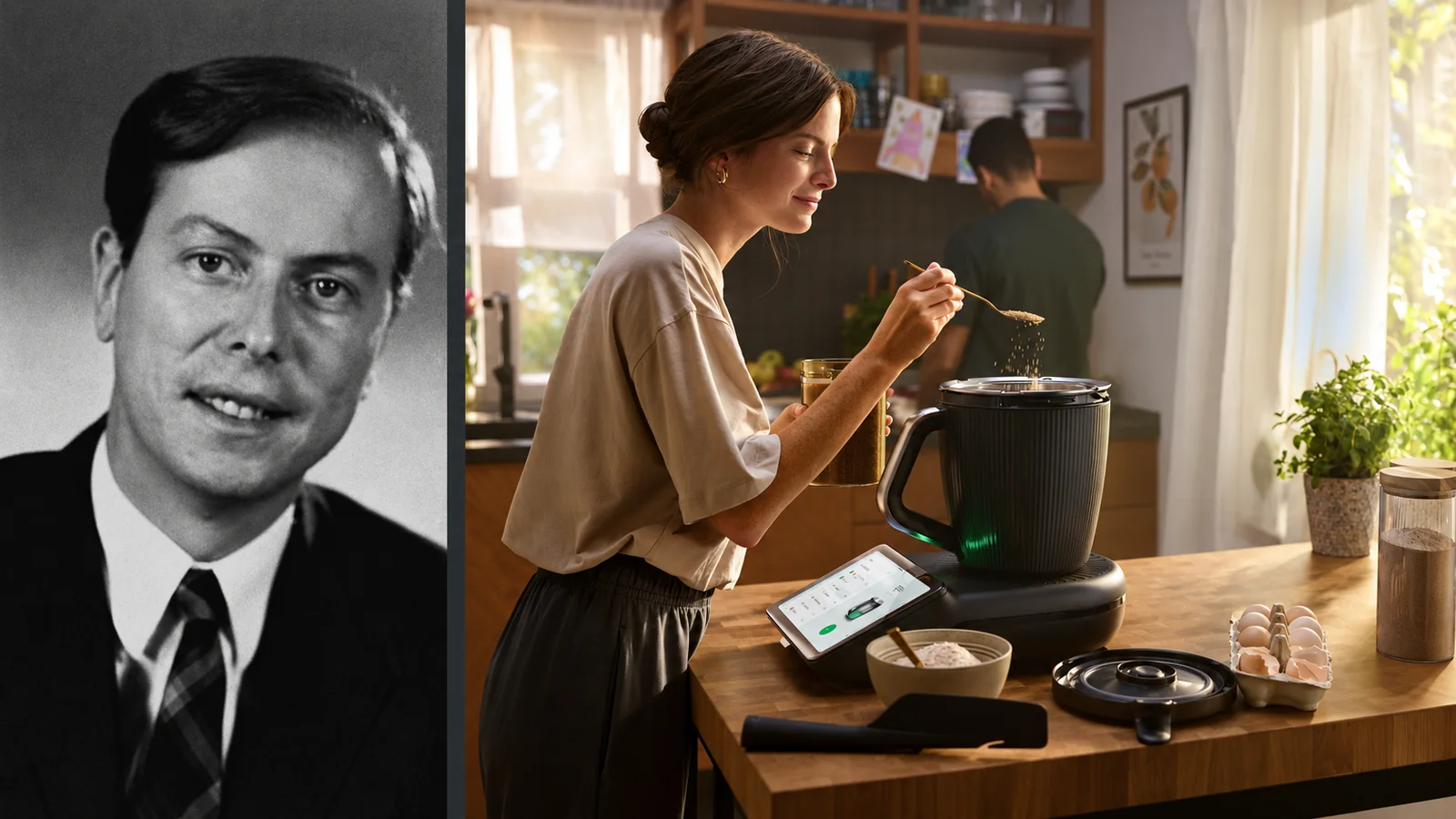
*Jörg Mittelsten Scheid. Official archival portrait; the photograph’s date is not specified.*
His view of direct sales was practical: “Our products need the highest quality, otherwise the advisor can never come back.” The award profile records the remark.
The representative left a name and contact details behind. If the machine disappointed, that person would face the closed door on the next visit. Vorwerk involved its sales team in product development, bringing problems encountered in customers’ homes back into the company.
Thermomix began taking shape during this period.
In 1961, Vorwerk had introduced the VKM5 kitchen machine. It could mix, chop and knead, but it could not heat. The sales team needed a way to distinguish it from other kitchen appliances.
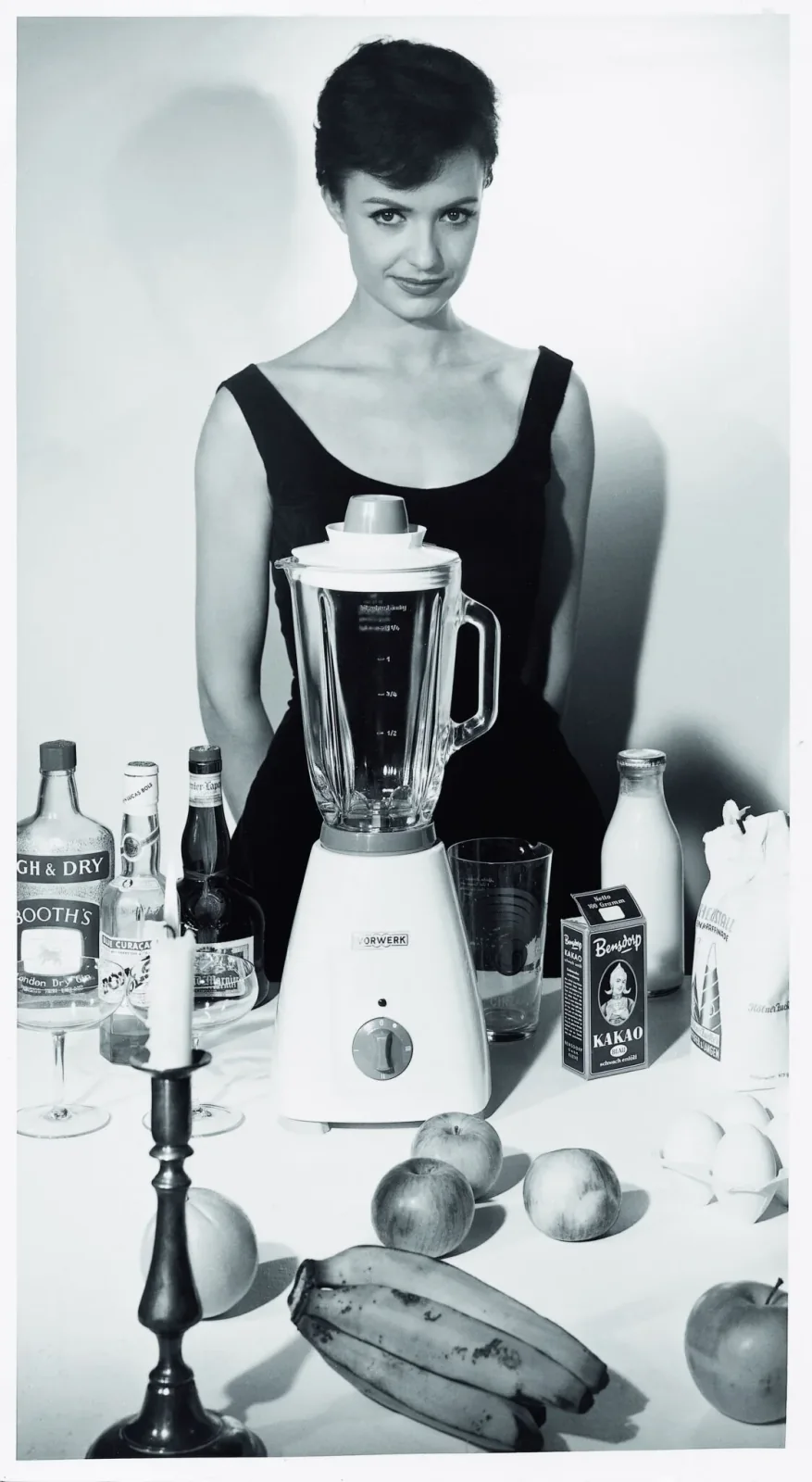
*The VKM5 preceded Thermomix’s heated mixing system. Official archival promotional photograph, preserved in its original format.*
Hansjörg Gerber, a Swiss man working in sales in France, noticed the popularity of thick soups. A mixer could purée the ingredients, but the cook still had to transfer them to a pot to heat them.
In one recollection preserved by Vorwerk, Gerber ran into trouble during a demonstration because he could not find matches to light the gas stove. A mixing vessel that heated its own contents would remove the problem.
In 1971, Vorwerk introduced the heated VM2000, an important starting point in Thermomix’s development.
There was skepticism inside the company, too. At a public discussion in Wuppertal in 2025, Jörg recalled an employee insisting that a kitchen machine could not cook. He let the team continue experimenting. The episode was reported in Cronenberger Woche, page 8.
Thermomix did not quickly become the business it is today. It gradually gained customers in France and parts of southern Europe, while remaining much smaller than the vacuum-cleaner operation for years. The 1971 launch now looks like the beginning of a success story. At the time, it was another business inside the family company still looking for buyers.
Selling in the kitchen was more complicated than cleaning a patch of carpet. People understood what a vacuum cleaner did. They did not necessarily know where a heated mixer belonged in their everyday cooking.
Vorwerk’s advisors cooked with it. Customers could watch, taste and ask whether it could make the food their own households regularly ate. The meal gave an expensive machine a chance of making a sale. It was closer to the buyer’s life than a list of functions.
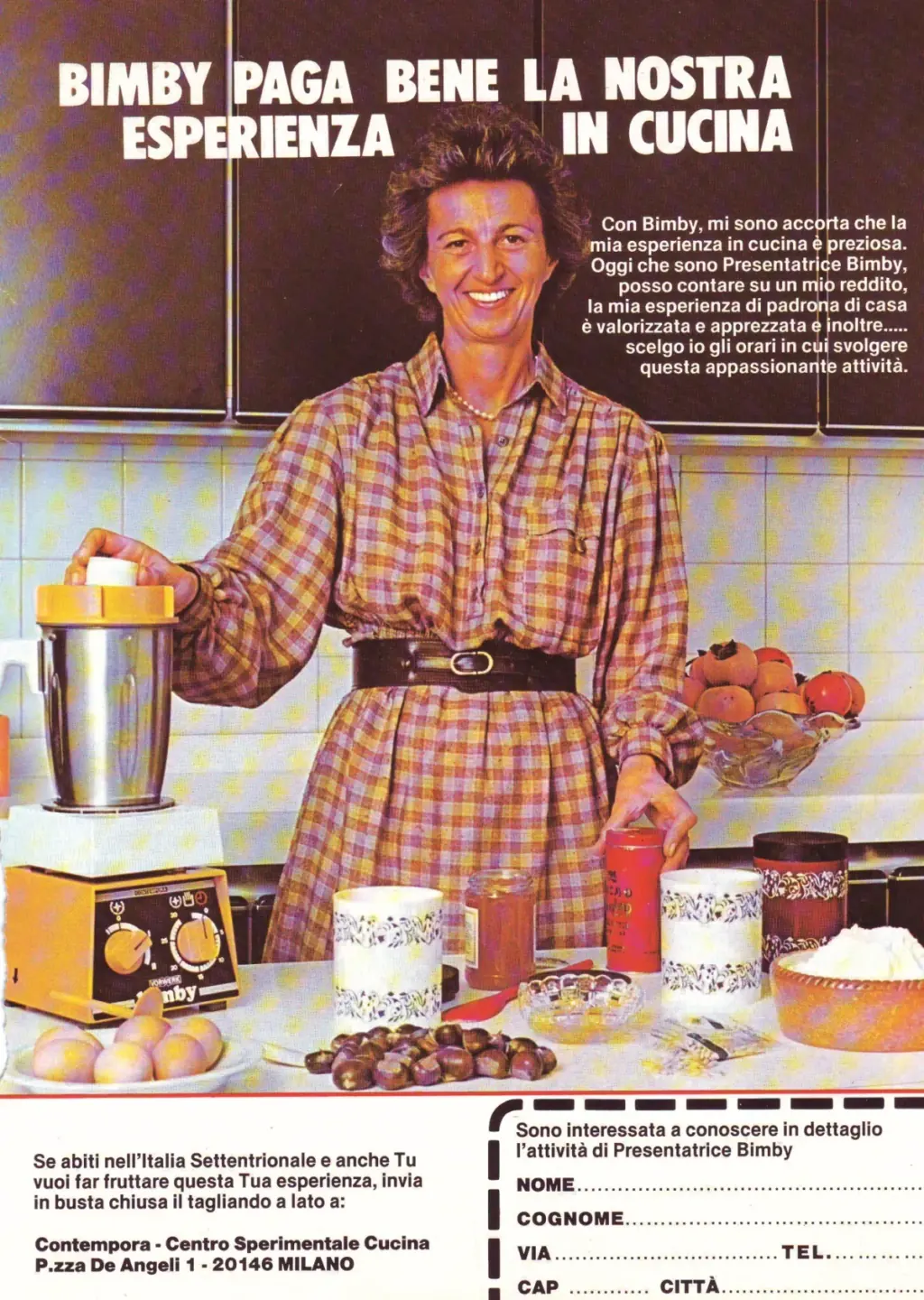
*An archival Bimby advertisement recruiting cooking presenters. Source: Vorwerk. The advertisement’s date is not specified; it is not presented as a photograph of the 1971 launch.*
When Jörg left day-to-day management, Thermomix was not yet the group’s largest division.
At the end of 2005, he moved to the advisory board, and executives from outside the family took over operations. He expected more than professional competence from them: they needed to put the company ahead of personal ambition. The family retained a role in major decisions without requiring relatives to occupy every executive position. His approach to the transition was described in a 2008 profile.
During the next decade, Thermomix grew enough to change the structure of the group.
The TM5, launched in 2014, introduced a touchscreen, digital recipe chips and guided cooking. Users followed the screen’s instructions and added ingredients, with time and temperature settings provided for the relevant steps.
That year, Thermomix sales reached €920 million, overtaking Kobold for the first time to become Vorwerk’s largest direct-sales division. In 2015, sales increased another 49.4%, according to the company’s 2014 and 2015 annual reports.
More than four decades separated the first heated kitchen machine from the moment it overtook the vacuum business that had sustained the family company.
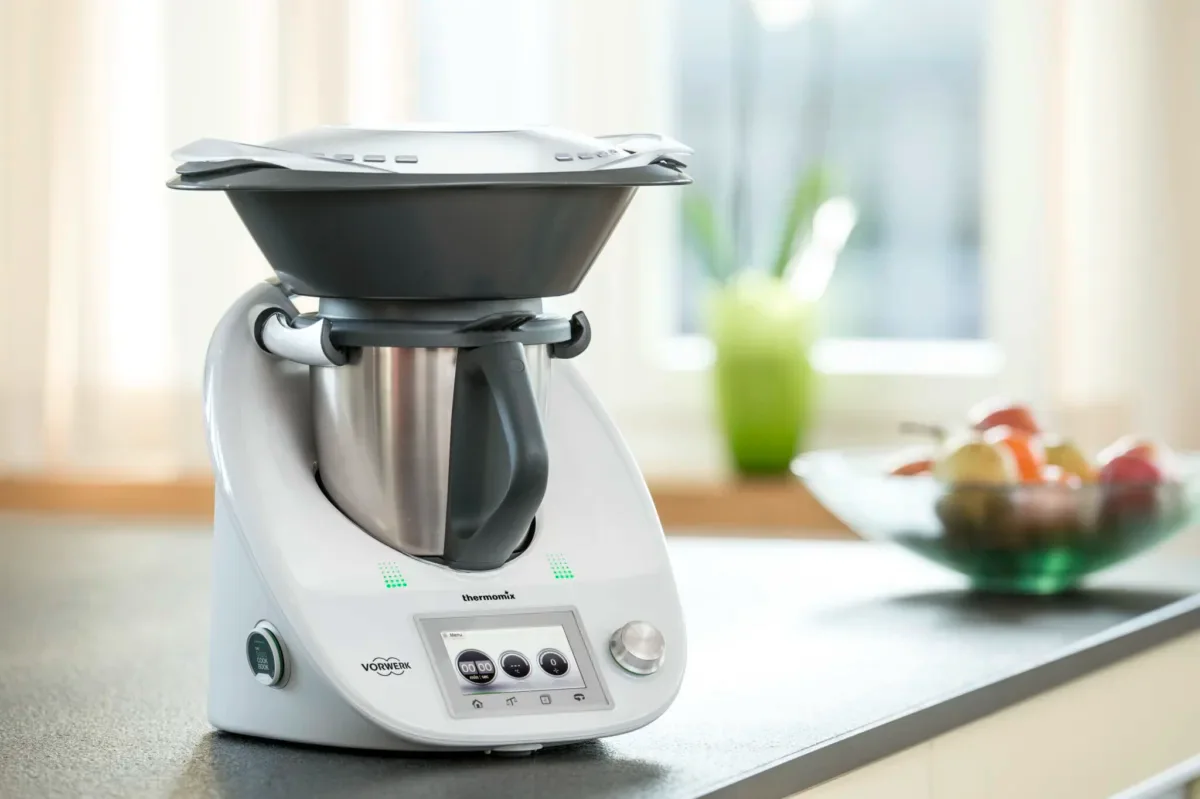
*TM5 brought a touchscreen and guided cooking to the product in 2014. Official Vorwerk photograph.*
In 2016, Cook-Key connected the machine more closely to online recipes. Cookidoo subsequently became an increasingly important part of the business.
Advisors helped customers make the first purchase; recipes gave them more reasons to use the machine afterward. For an expensive kitchen appliance, being left idle is a particularly poor outcome. Continued use helps justify the original purchase and gives owners something to recommend to friends.
Digital recipes also created subscription revenue beyond the hardware sale. By 2025, Cookidoo had more than six million subscribers and over 100,000 recipes, according to Vorwerk’s community figures.
In 2025, Vorwerk generated approximately €3.6 billion in group revenue. Culinary, which includes Thermomix and Cookidoo, contributed around €2.1 billion; Cleaning contributed about €790 million.
The company sold more than 1.4 million Thermomix machines that year, including over one million units of the new TM7. The 2025 results show how a premium kitchen appliance came to underpin more than half of the group’s business. TM7 launched in Europe at €1,549.
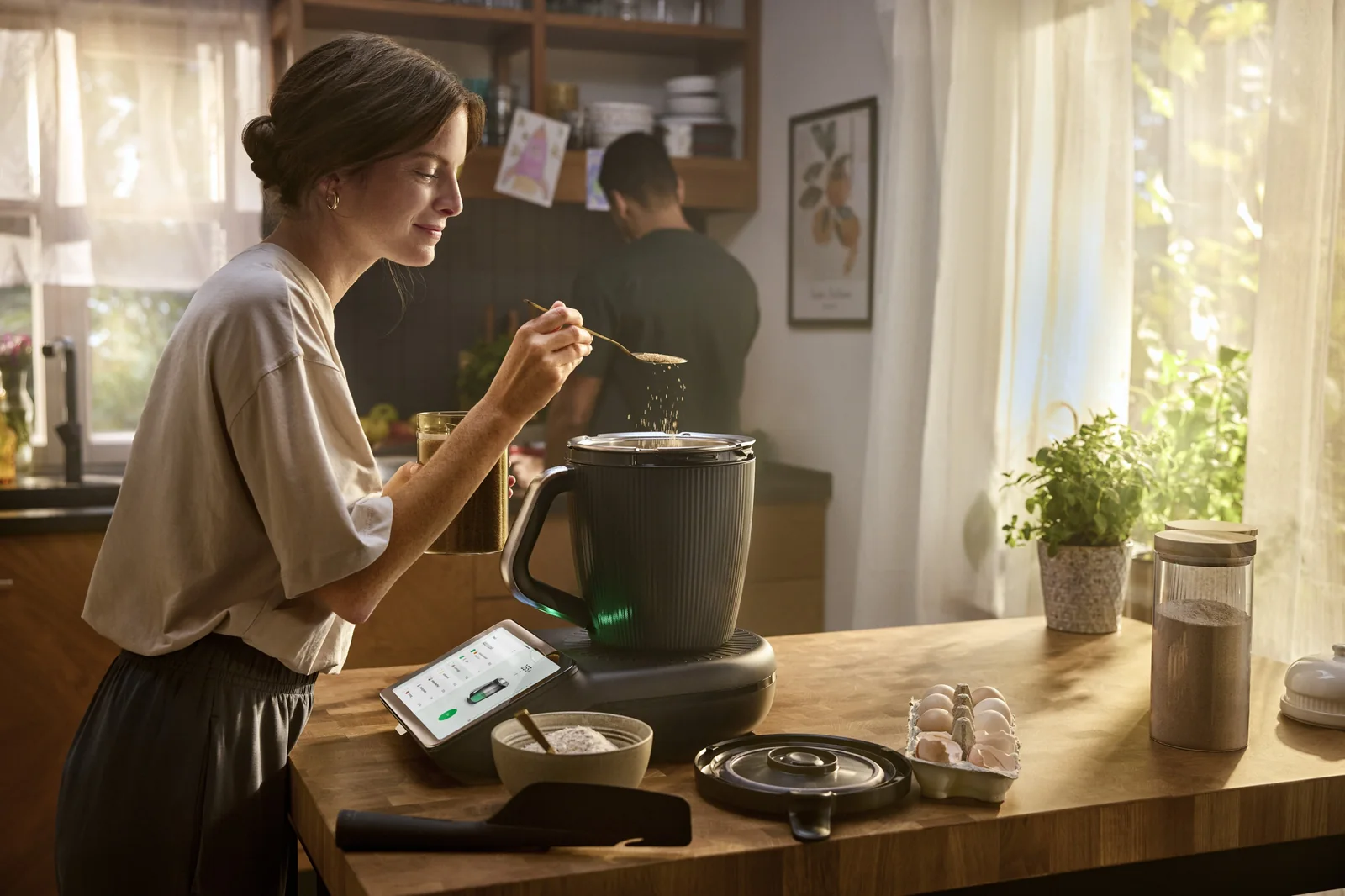
*Thermomix TM7 in a kitchen. Official product-use photograph supplied by Vorwerk.*
Vorwerk retains its own manufacturing capabilities. Important TM7 motors and blade assemblies are produced in Wuppertal, Germany, while the finished appliances are manufactured in France. As the business expanded, the company built another French factory. The production arrangement is described in the TM7 press dossier.
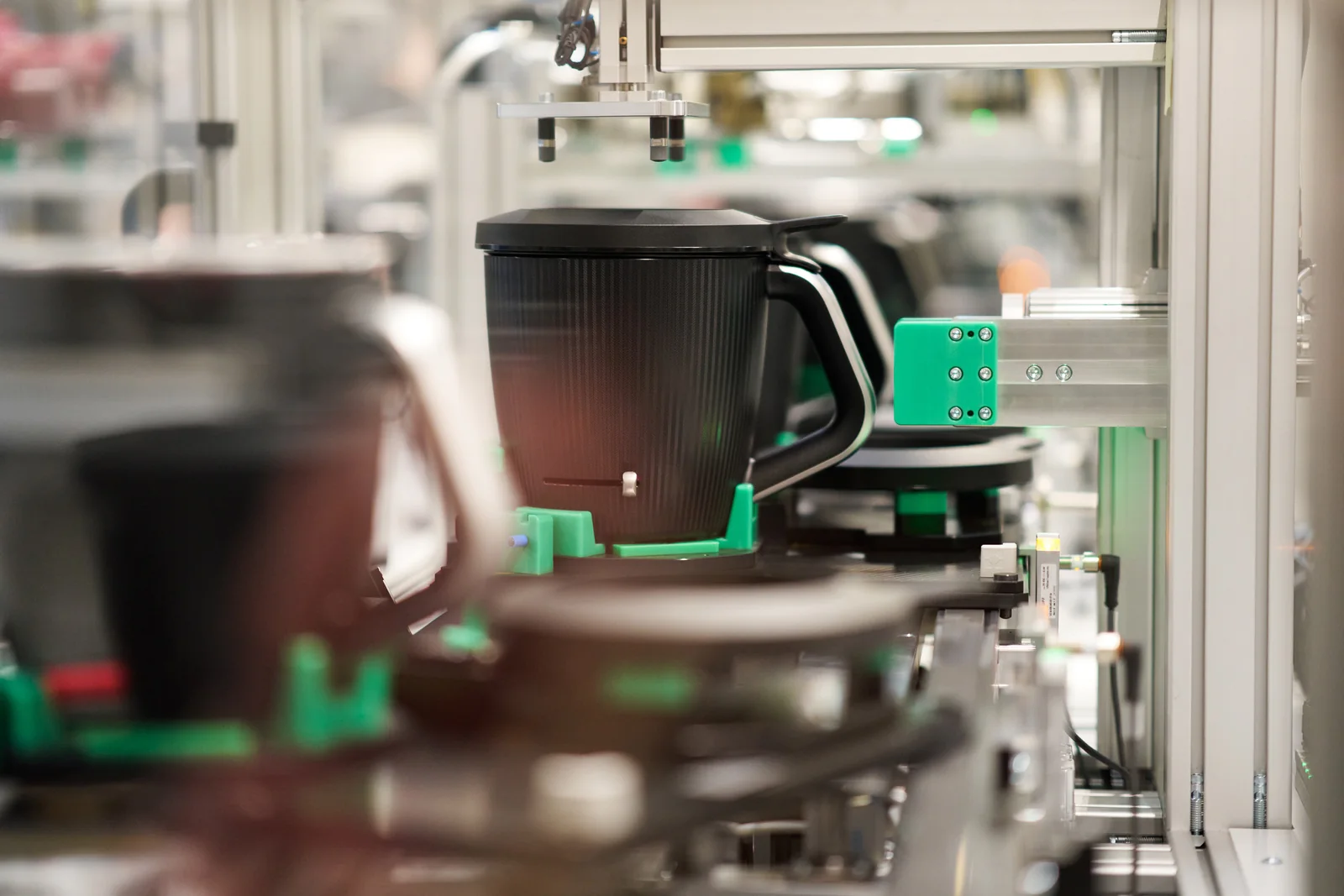
*TM7 production. Official Vorwerk media photograph; the image is not used to identify a particular factory.*
The sales organization is even more extensive, and difficult to manage. At the end of 2025, Vorwerk had more than 129,400 independent advisors worldwide, according to its annual results.
They are not company employees sitting together in an office. Recruiting suitable people, helping them understand the products and keeping them willing to give demonstrations are daily operating challenges. Vorwerk’s 2024 annual report noted that difficulties attracting and retaining advisors in important markets had affected Cleaning.
This helps explain why making a similar kitchen appliance does not reproduce the Thermomix business. Someone still has to take it into a home and spend time preparing a meal for a potential customer. The representative’s earnings have to make that effort worthwhile.

*An advisor arriving for a visit, in an official Vorwerk promotional photograph. This illustrates the sales model rather than documenting a specific reported customer meeting.*
Vorwerk has tried other avenues of growth. It operated Jafra cosmetics before selling the business in stages. The Neato robot-vacuum business it acquired ceased operations in 2023. Those experiences were followed by a greater concentration of resources on Thermomix and Kobold, as reflected in the 2023 annual report.
Today, professional executives run day-to-day operations, while family members remain involved through the advisory board. The business Jörg inherited has shifted from a vacuum-led group to a kitchen-appliance-led one without leaving family control.
Vorwerk deserves attention in the appliance industry. It did not grow by covering every category, and it did not try to make Thermomix the cheapest possible kitchen machine. Over decades, it brought a product that was initially difficult to explain into more households’ daily lives.
That is the hardest part of the business to replicate. Suppliers can provide motors, heating systems and mixing components. Relationships between advisors and households take repeated visits to build.
In 1930, Werner’s adoption of home demonstrations gave an unsold vacuum cleaner a route to market. After taking over, Jörg allowed work on an unproven kitchen machine to continue, then handed daily management to people outside the family when he retired. By the time Thermomix became the principal business, the company had accumulated decades of experience selling in the home.
The family’s consequential choices repeatedly came at a similar moment: before a new product had become a large business, someone was willing to keep developing it, and someone else was willing to carry it to the next customer’s door.
*Cover: AI-assisted editorial composition based on separate official Vorwerk photographs of Jörg Mittelsten Scheid and a TM7 kitchen scene. It does not depict a shared place or time. Body images are original Vorwerk archival or press photographs, with publication-size processing only.*
*More in this family-business series: De’Longhi and the family behind its global coffee business and the family history of Kärcher.*