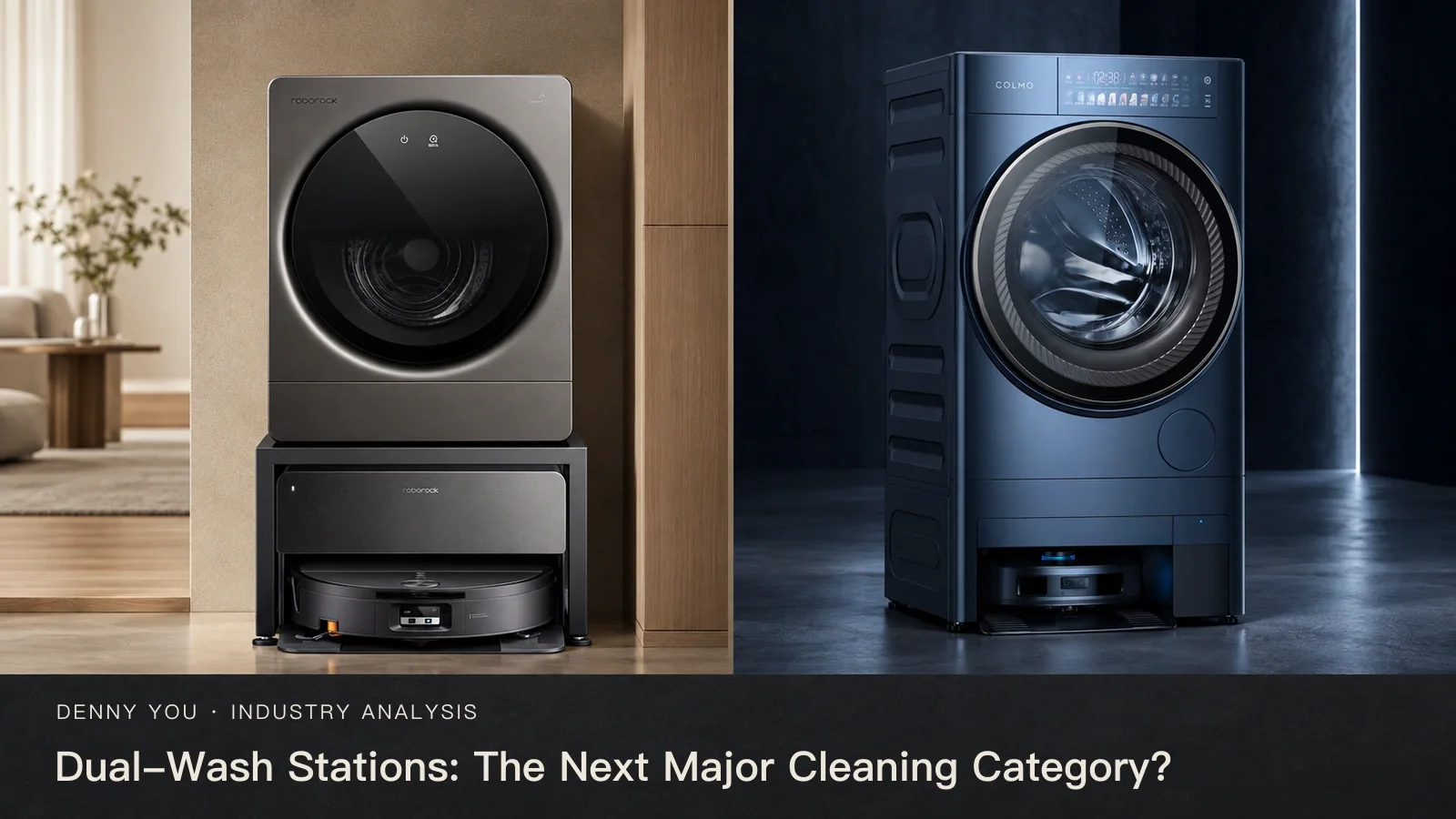
- Dual-wash stations could reach households that lack the space or budget for a separate robot-vacuum installation.
- Denny You proposes two development paths: an affordable full-size system and a compact system designed first for Japan.
- The author's long-term scenario of 10–15 million systems a year is distinct from his three-to-five-year estimate for the category to begin scaling.
The balcony is running out of room.
In many Chinese homes, the washing machine, dryer and utility sink already occupy most of it. A robot vacuum moves in with a dock that needs water, drainage and a clear route out onto the floor. A wet floor washer with automatic water connections may soon demand a place of its own.
Roborock's recently introduced Double Wash Combo places a mini washing machine above a robot-vacuum dock, using a stacking frame to put both appliances on one patch of floor. The machines have not been fully integrated, but the arrangement is a step in that direction.
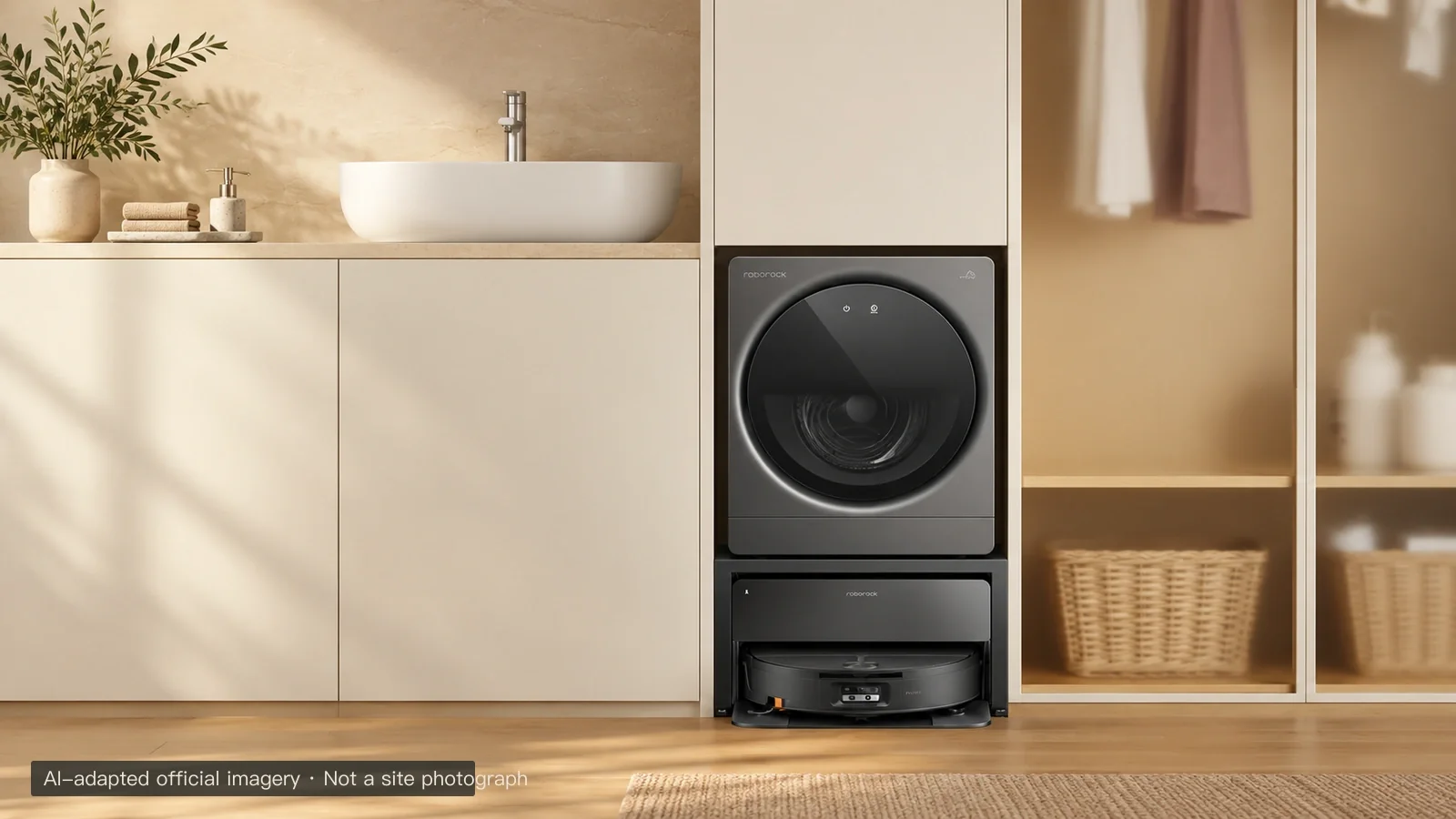
*Roborock's grey Double Wash Combo. Official imagery adapted into a horizontal composition with AI; not a site photograph or an installation drawing.*
I have been following this idea for several years.
In May 2023, Midea's COLMO brand launched a dual-wash station that brought laundry washing, drying and a robot vacuum together. I was not particularly optimistic at the time. Consumers rarely need to replace a washing machine and a robot vacuum simultaneously. The affluent households targeted by a premium product also tend to have enough room to install them separately.
All-in-one robot-vacuum docks were only beginning to take off. Consumers were still getting used to automatic mop washing, dust collection and drying. Integrating all of that with a washing machine looked premature.
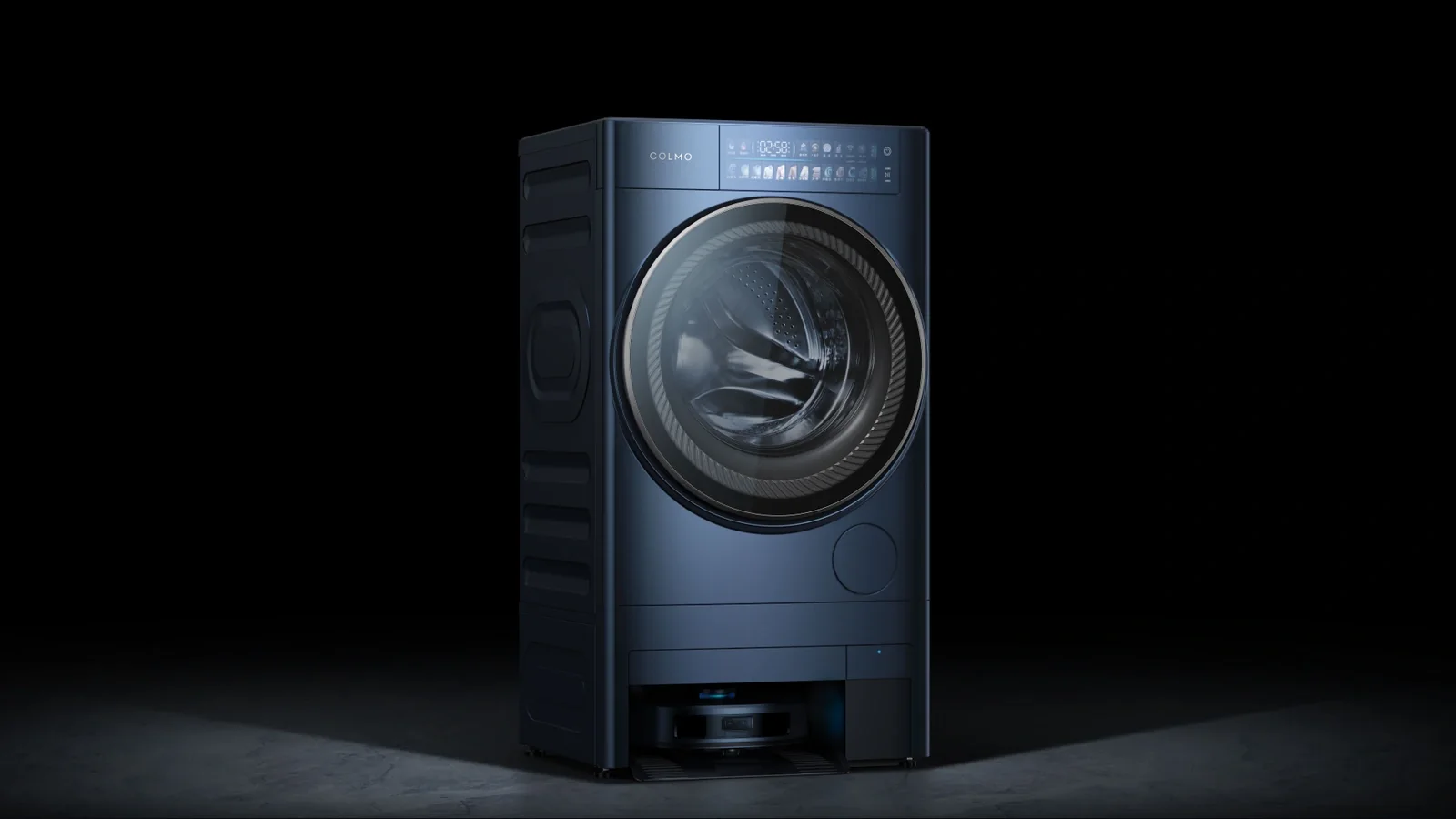
*COLMO's earlier approach combines a washer-dryer with floor-cleaning robotics. Image: Wuxi Little Swan / COLMO, via iF Design.*
Today, all-in-one docks have won broad acceptance in China and overseas. In my view, they have established the robot vacuum's ultimate form. As prices fall and adoption spreads, the category has a path from its earlier scale of roughly 25 million units a year toward 100 million.
That changes how I see the dual-wash station.
The industry has spent years working out how to sell consumers a better robot vacuum. It now also needs to give more households somewhere to put one. As the number of prospective buyers grows, the questions of where to install the dock and how to connect water and drainage become harder to avoid.
Owners of large homes can place separate appliances on different floors. A dual-wash station should be competing for households that want a robot vacuum but are constrained by space or budget.
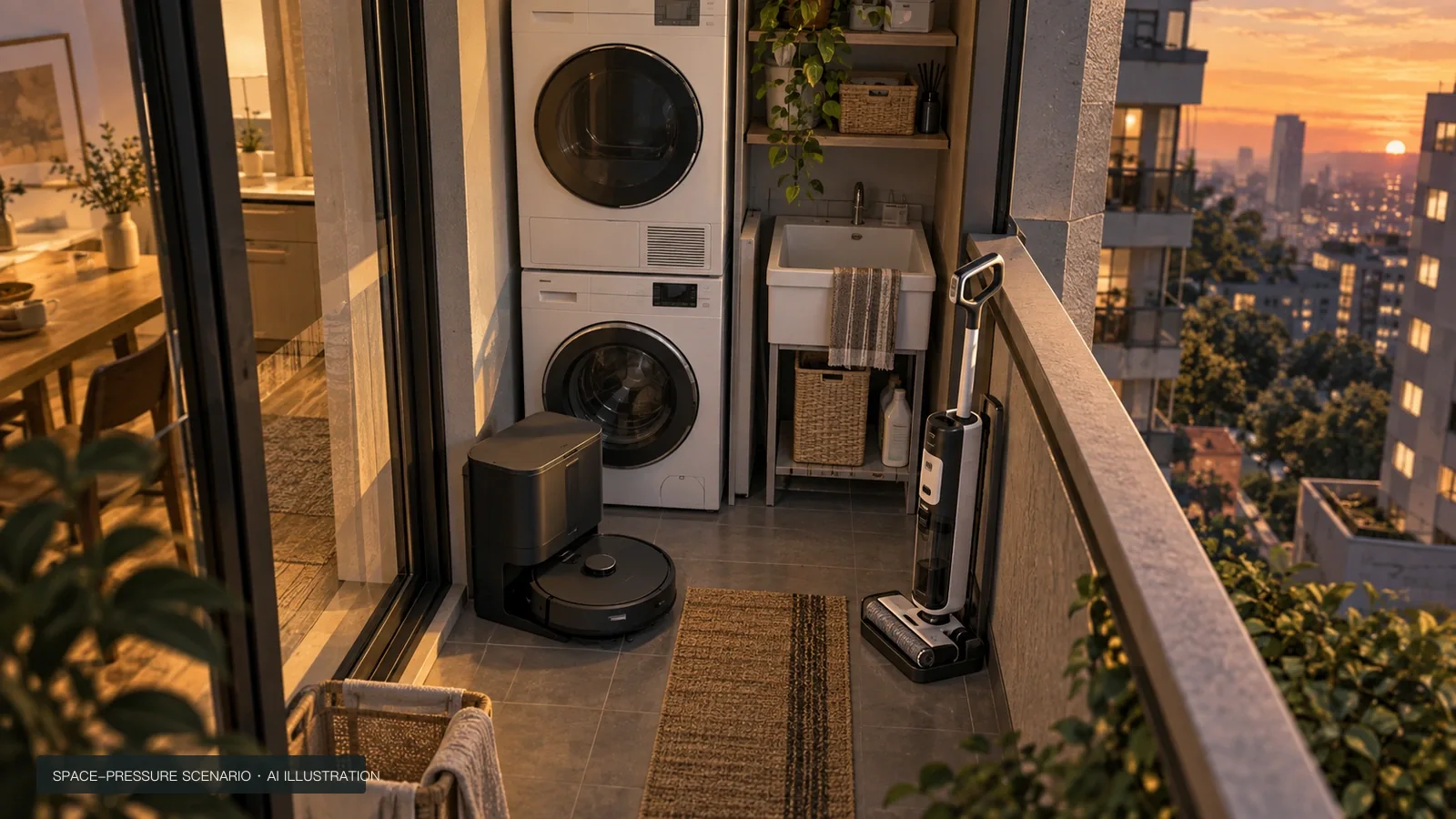
*AI illustration of competing demands on balcony space. Generic appliances; not a measured layout or a photograph of an actual home.*
In China, many young adults rent apartments of 40–60 square meters. They are not necessarily low earners, and they are willing to pay for convenience. Their apartments usually come with a washing machine, but may have no room for another appliance with a full-service robot dock.
The washing machine already occupies the best location for water and drainage. A robot needs its own installation space. Designing both around the existing laundry position offers a chance to save another patch of floor and avoid a separate plumbing job.
Persuading tenants to remove a landlord's washing machine and buy a dual-wash station themselves would be difficult. The opportunity changes when landlords or apartment operators buy the system while fitting out a property or replacing appliances.
A washing machine is already on the procurement list. If an acceptable additional payment brings floor-cleaning robotics with it, the dual-wash station could become a standard apartment fixture. It must be easy to maintain, with failed components that can be replaced independently.
Those needs suggest two product-development paths.
The first is affordability. Keep a conventional washing machine's size and capacity, remove unnecessary features, and pair it with a robot that handles basic cleaning reliably. Minimize the additional price over a washing machine alone. Manufacturers will have to work out, step by step, how much joint design, purchasing and installation can save.
This version could also enter price-sensitive overseas markets. Many households want a robot vacuum but find today's all-in-one-dock models too expensive. A modest extra payment when buying a washing machine could bring a robot into more ordinary homes.
The second path is a smaller footprint. Design a compact washing machine around the daily needs of one or two people, and pair it with a mini robot. It must handle normal laundry; a small underwear washer cannot simply replace the household's main machine. Nor does this version have to chase the lowest possible price at launch.
Japan would be a good starting point for the compact version.
Japan's 2023 Housing and Land Survey put the average floor area of apartments in multi-unit buildings at about 50.3 square meters. Rented dwellings averaged 45.2 square meters, and rented apartments in multi-unit buildings averaged 42.1. Beds, dining tables and storage furniture leave considerably less room for a robot to move.
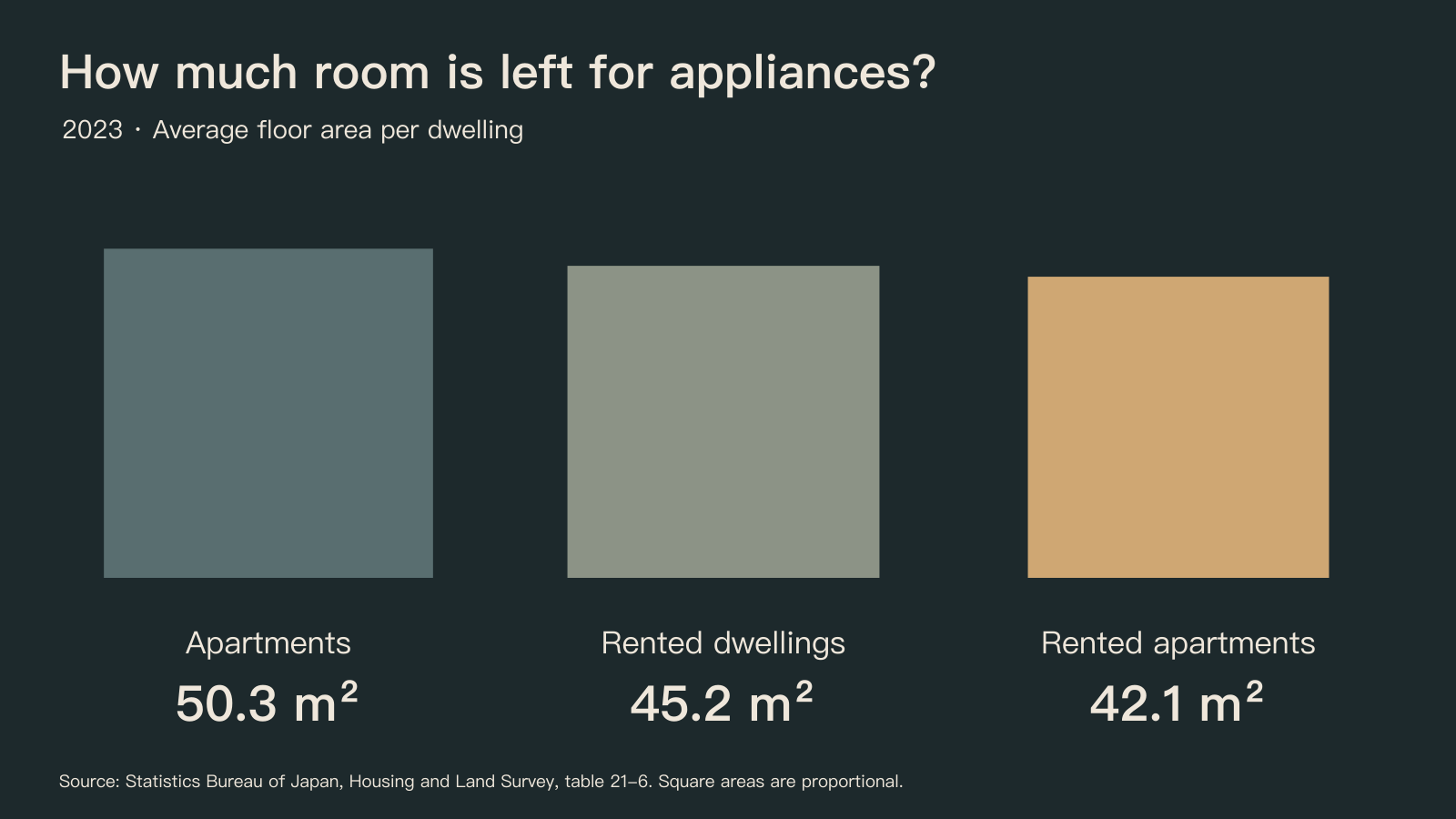
*Square areas are proportional to the reported averages. These overlapping housing categories are not additive. Source: Statistics Bureau of Japan.*
SwitchBot has already demonstrated the appeal of compact robot vacuums there. Its K10+ measures just 24.8 centimeters across. In 2023, its Makuake preorder campaign passed ¥100 million in pledges within three days of launch.
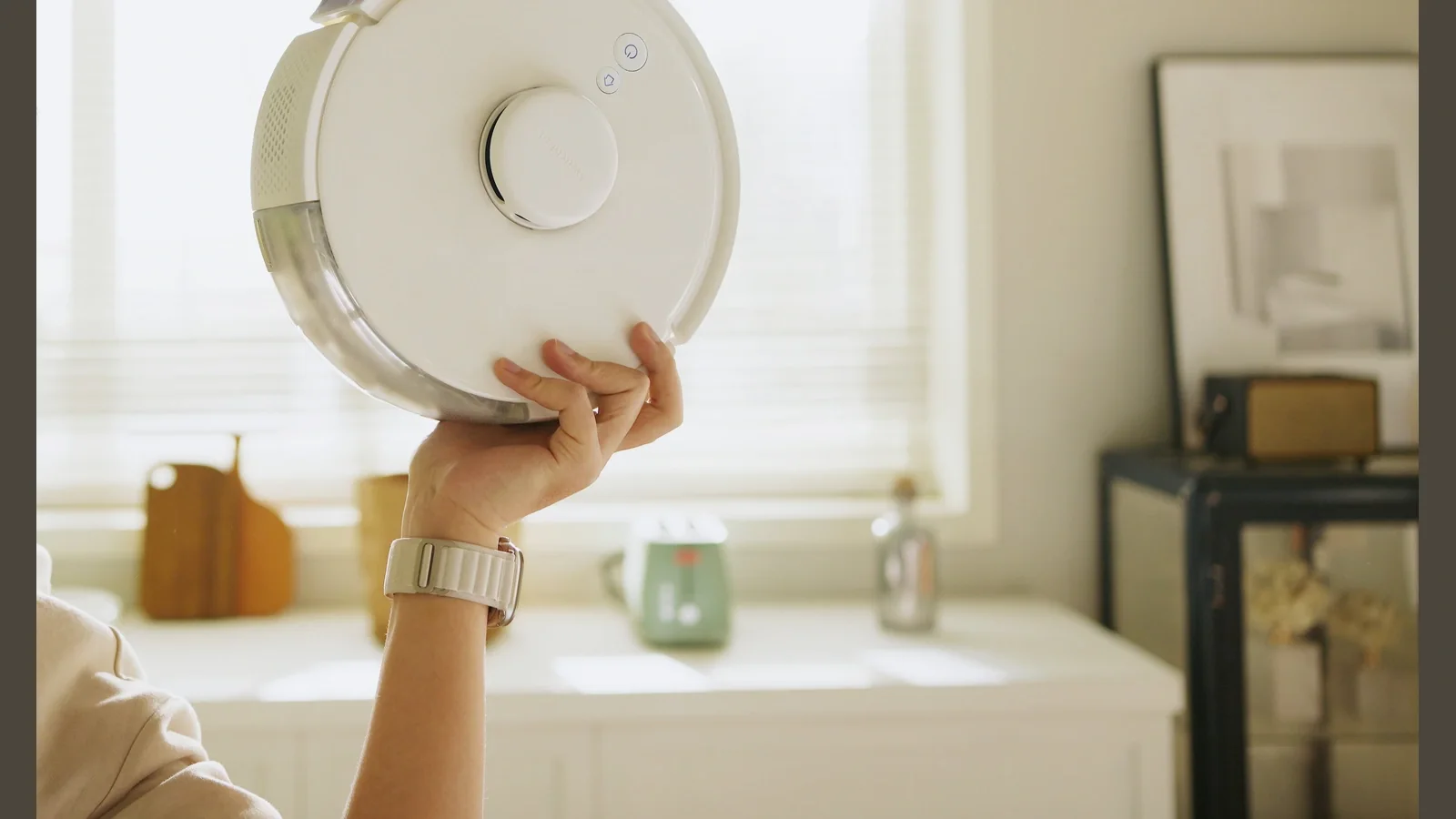
*The original K10+, shown in SwitchBot's 2023 official material.*
The development team surveyed more than 2,500 Japanese users. The machine mops with cleaning wipes and does not automatically wash a mop, but its small body can pass through narrow gaps between furniture, and its dock is easier to accommodate. Its sales performance has given other brands a reason to try compact products.
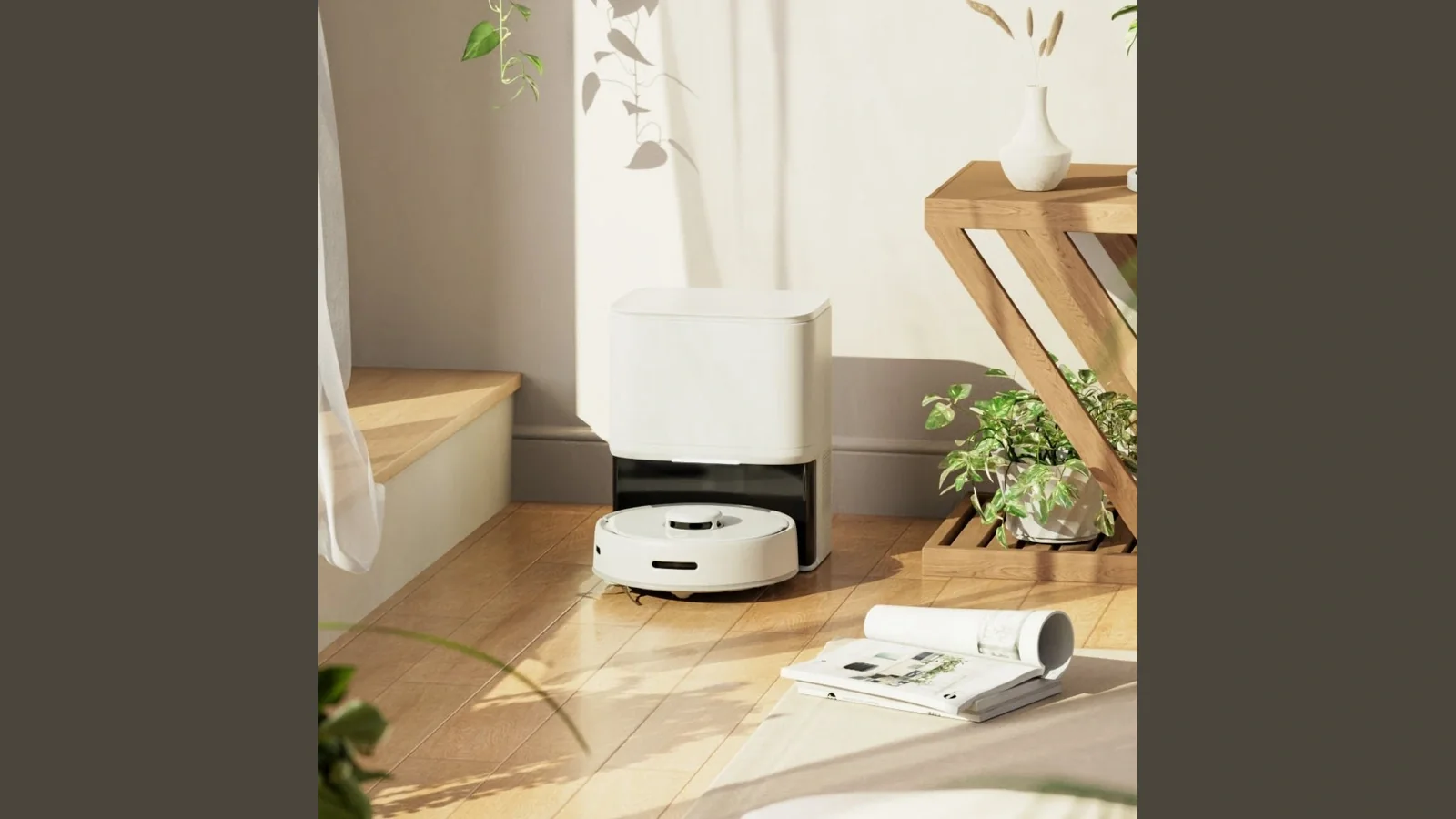
*A household scene from SwitchBot's 2023 official material. The K10+ is not a washer-robot combination and its station does not wash mops.*
For a company preparing to develop a dual-wash station, I would start in Japan and design a small-home product from the ground up.
Study the space Japanese homes reserve for washing machines, then set the laundry capacity and allow for the mini robot's entry and exit. Do not select two finished appliances first and only then ask how to stack them.
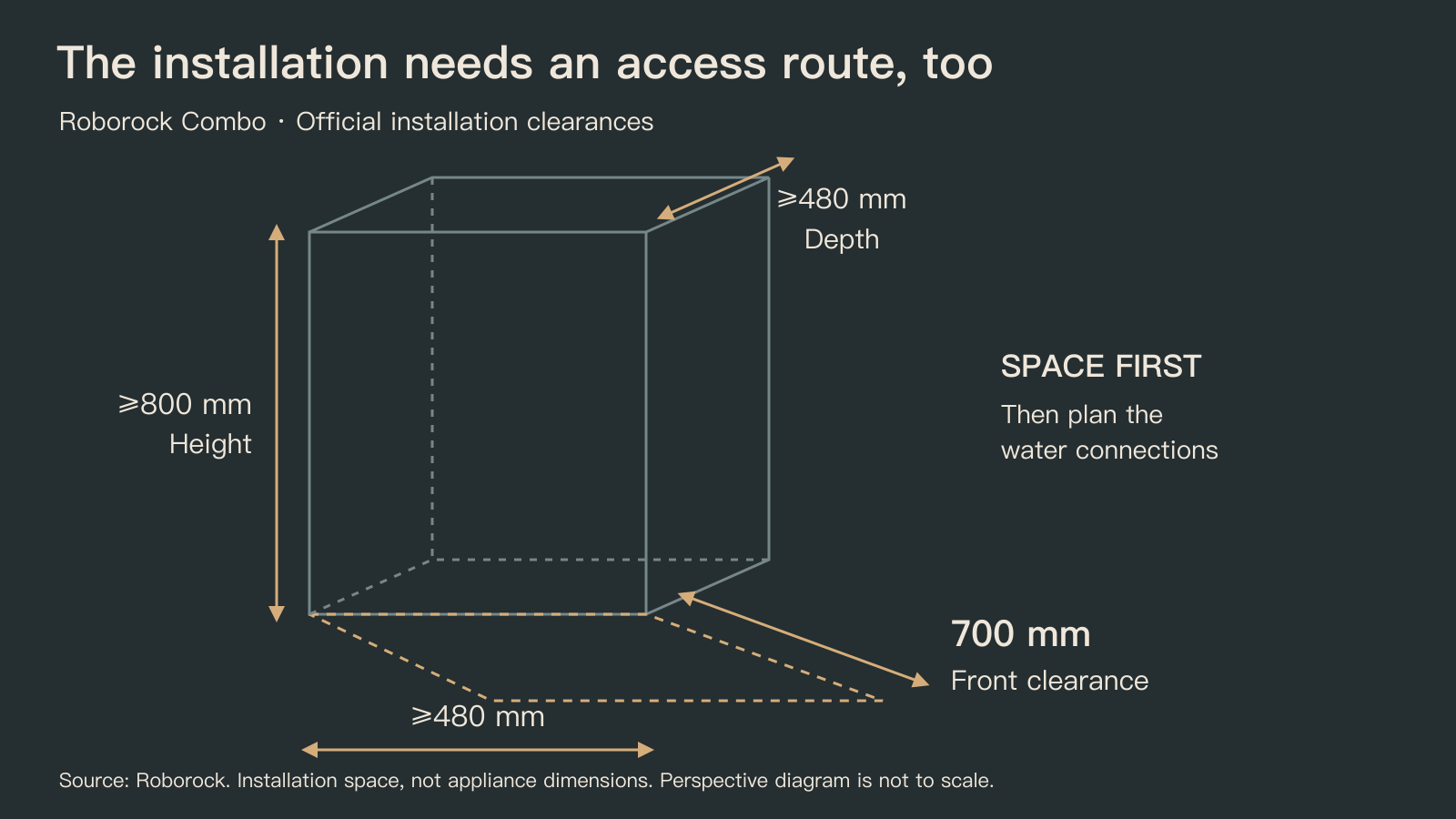
*The existing Roborock Combo's official installation requirements illustrate the need for access space. These are not appliance dimensions or universal dual-wash-station requirements; the perspective drawing is not to scale.*
Roborock's current combination lets consumers keep their main washing machine while adding small-load laundry care and floor cleaning. The next step would be to redesign the main washer and robot together for a small apartment.
Underwear washers, washer-dryers and Xiaomi's three-drum machines are already changing the way households combine laundry appliances. Dual-wash stations can develop alongside those formats. They need not always consist of a standard front-loading washer sitting above a robot.
Establish a compact product and installation service in Japan, then move into China's rental apartments and other small-home markets. That would be a more focused start than launching a premium flagship intended for every household.
There is an engineering conflict that the category cannot easily avoid.
Washing machines are mature products; keeping one for five to ten years is common. Robot vacuums are still evolving rapidly. Their batteries and cleaning parts need maintenance, and consumers may want to replace them earlier. If a robot failure means dealing with the entire laundry system, the repair bill will give buyers pause.
Early products should allow the two appliances to be serviced and replaced independently. Over time, stable interfaces could let a next-generation robot fit into the original laundry installation. Replacing a robot should not require scrapping a washing machine that still works.
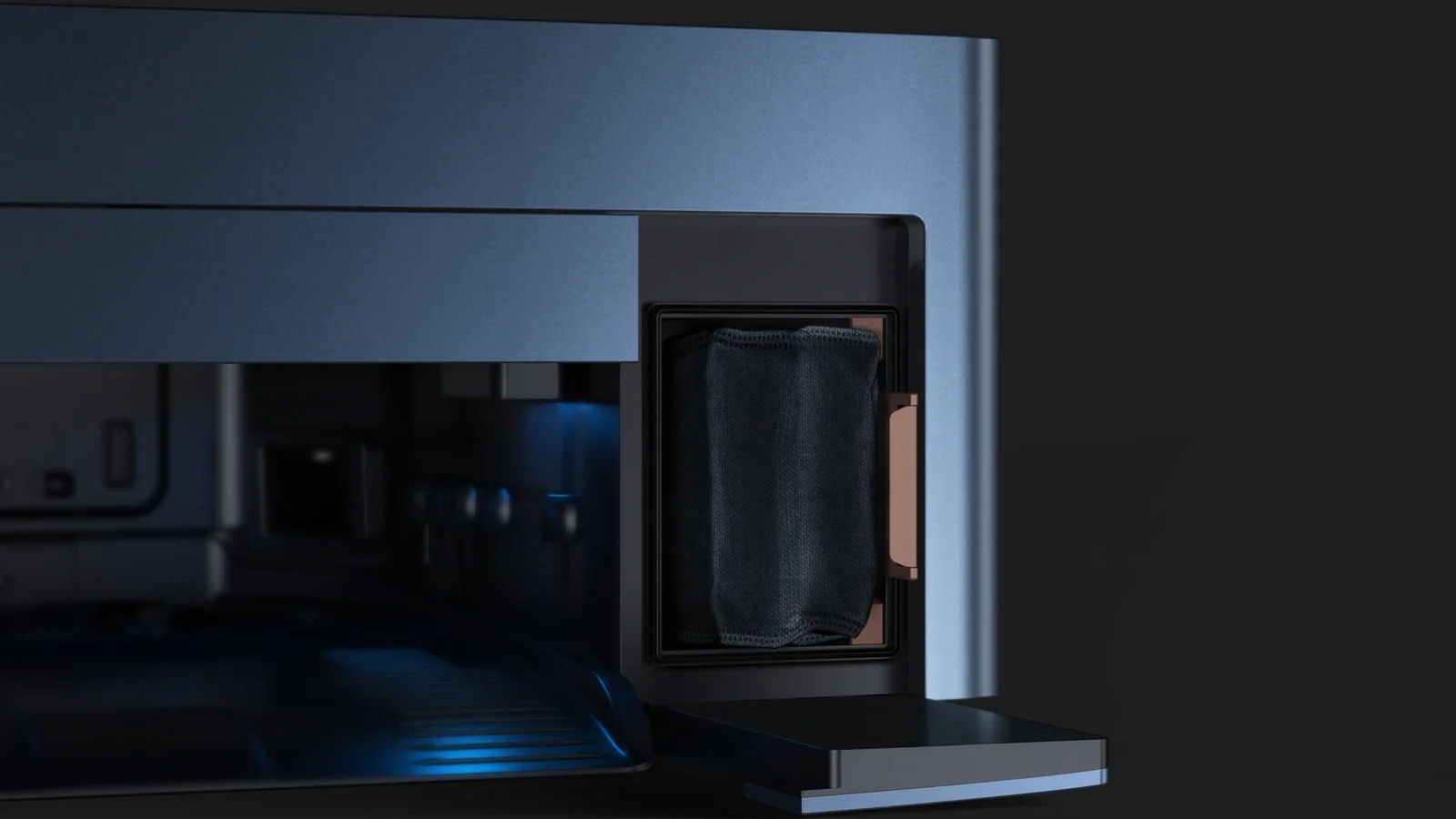
*COLMO's dust-bag access compartment. This photograph shows a maintenance opening, not proof of independently upgradeable robotics. Image: Wuxi Little Swan / COLMO, via iF Design.*
Those difficulties do not make me dismiss dual-wash stations.
Wet floor washers went through a similar phase. Some early products I encountered had return rates as high as 30%. Yet sales were growing quickly and margins were attractive. Manufacturers could fund further development, suppliers were willing to invest, and the products improved while they continued to sell.
The first question for dual-wash stations is whether consumers will buy them. If demand exists, sales and profit can support the engineering improvements. Waiting until every problem has been solved is often a way to miss the opening.
Given the current state of the products, the category may need another three to five years to begin scaling. Companies have to find the right first customers, then improve installation, repair and costs.
It is worth that time.
Using 100 million annual washing-machine sales as a calculation base, a long-term dual-wash share of 10–15% would mean 10–15 million systems a year. That is my judgment of the category's long-term potential, not a sales forecast for the next three to five years.
Midea currently has the strongest opening.
It has already launched an early dual-wash station, and its cleaning business has been brought into its washing-machine division. Based on my understanding of the businesses' scale, Midea's washing-machine operation is around RMB50 billion and its cleaning operation around RMB5 billion. Dual-wash stations can draw on existing manufacturing, procurement and installation services to reach households already buying washing machines.
Roborock is approaching from the other side. It is strong in robot vacuums. Its laundry business is much smaller, but it already has products and development experience. Double Wash Combo gives the two product lines a direct connection.
Haier has a deep laundry-appliance base and a robot-vacuum business. Friends at Haier have previously discussed similar product ideas with me. Samsung and LG also have capabilities in both categories. Dreame has entered laundry appliances, while ECOVACS could fill that side through a partnership.
All of them have an opening. I would also back a new brand dedicated to dual-wash stations.
It could serve homes of just 40–50 square meters, starting with one compact product. Washing machines have a mature supply chain, and robot-development and manufacturing partners are available. A new brand could concentrate its resources on the complete system's design, installation and service, then expand through apartment operators and regional channels.
Today, consumers still have to research, compare and buy a robot vacuum separately. In the future, one may arrive with a washing machine—or already be installed in an apartment before the tenant gets the keys.
I see a substantial new stream of orders there. Enough to make dual-wash stations a major category, and enough to build a new cleaning-appliance brand.
Sources and related reading
- Roborock Double Wash Combo, official Chinese product listing.
- COLMO's May 2023 dual-wash station launch and its iF Design entry.
- Statistics Bureau of Japan, housing statistics, Table 21-6, based on the 2023 Housing and Land Survey.
- SwitchBot's May 2023 K10+ announcement, including campaign results, user research and dimensions.
- SwitchBot's 2023 K10+ development story and official photographs.
- Reporting on Midea's cleaning-business reorganization.
- Related WCB analysis: Midea's cleaning-appliance history and the development of wet floor washers.
*The market scenarios, business-scale estimates and first-hand industry observations are the author's. The cover combines AI-adapted Roborock and COLMO official imagery; it is not a joint product photograph or a scale comparison. The Roborock room scene is also AI-adapted. The balcony illustration is conceptual; COLMO and SwitchBot body photographs retain their official source imagery.*
 Midea
Midea Roborock