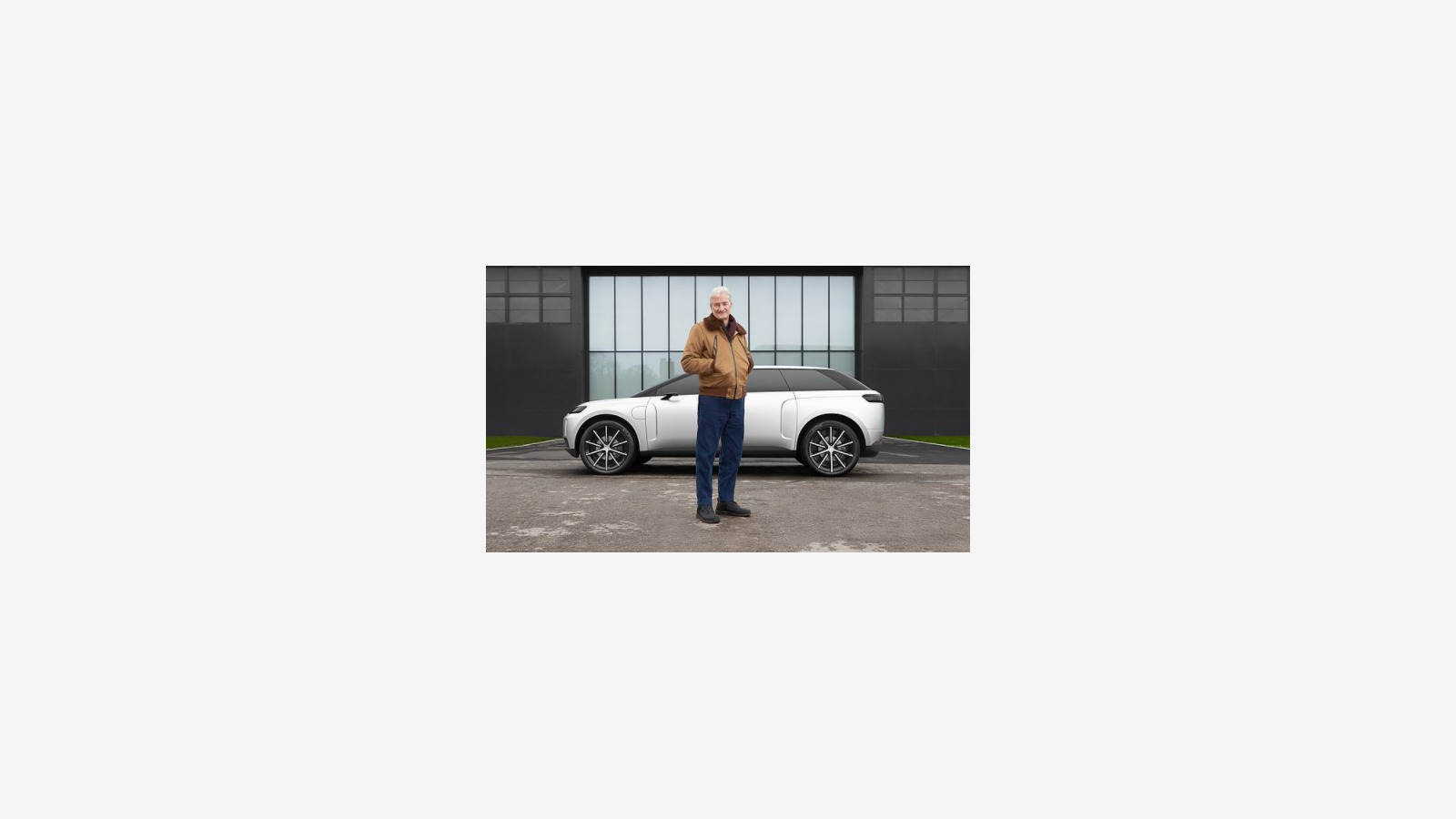
- Sir James Dyson still owns and ultimately controls the privately held Dyson group; current UK filings record him with 75% or more control of Dyson UK Group.
- Dyson is British-founded but has its global headquarters and several holding entities in Singapore, which does not mean Singapore investors own the company.
- Dyson combines its own advanced motor manufacturing in Singapore and the Philippines with development and external manufacturing networks, so factory responsibility must be verified by model.
In this article 11 sections
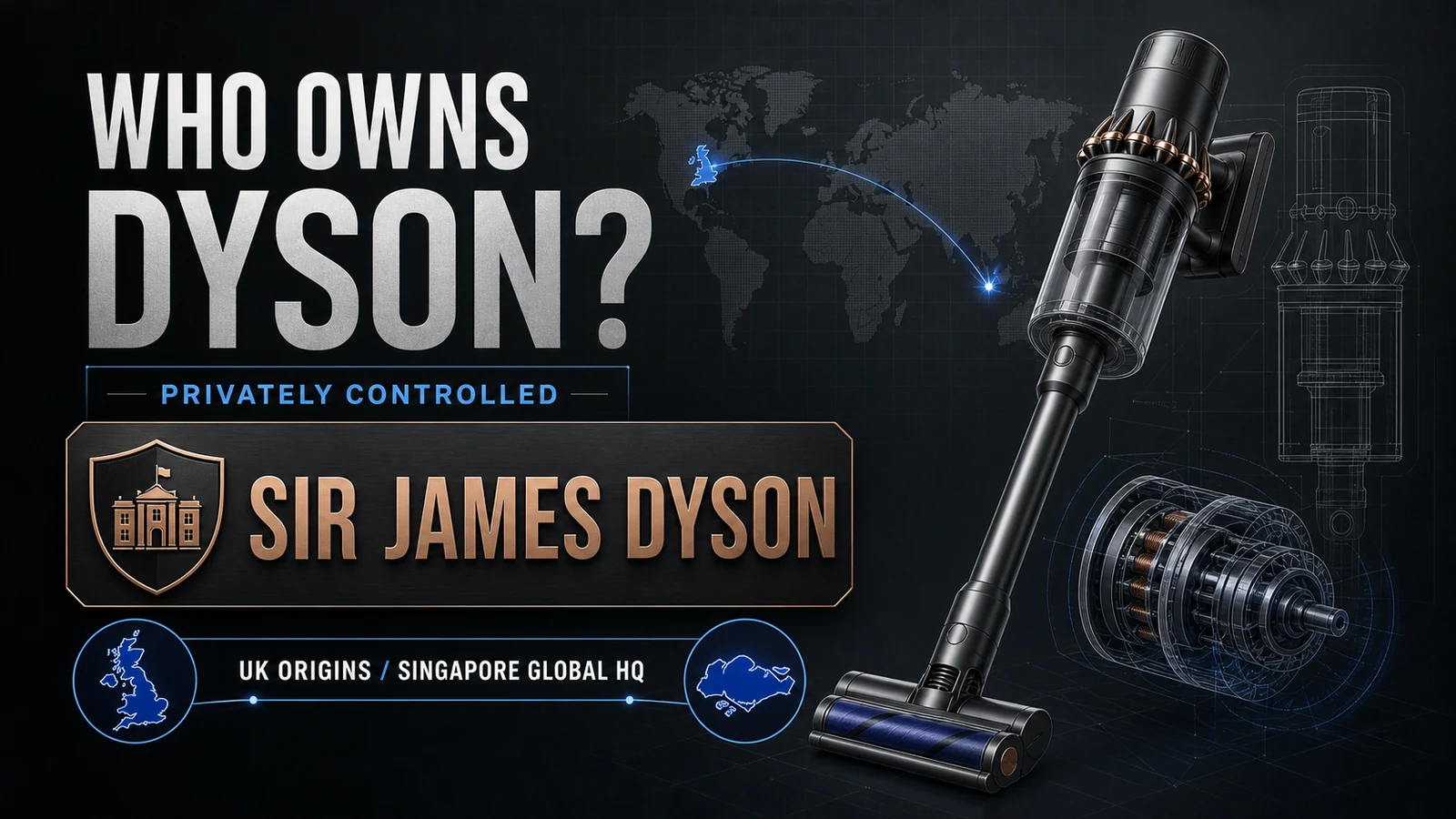
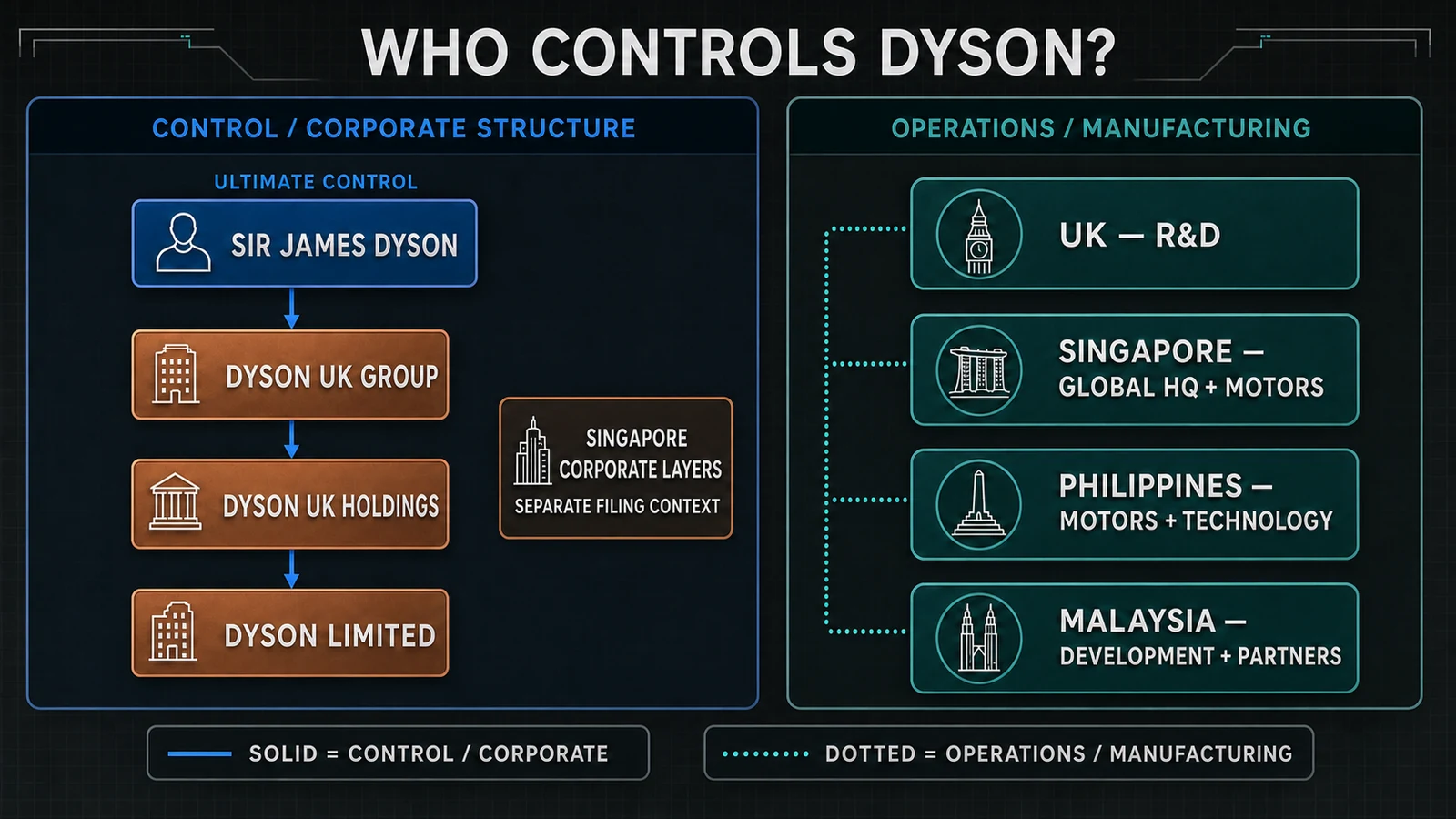
Sir James Dyson still owns and ultimately controls Dyson. The company is British-founded, privately held and globally headquartered in Singapore. Ownership, country of origin, headquarters and manufacturing location describe different parts of the business.
UK company records identify Sir James as the only active person with significant control of Dyson UK Group Limited, with 75% or more of its shares and voting rights and the right to appoint or remove directors. That control band is not an exact ownership percentage for the worldwide group.
Dyson manufactures advanced motors in its own facilities in Singapore and the Philippines and also works with external manufacturers. The country of manufacture for a particular vacuum, hair-care machine or floor cleaner must be checked on that model's label and documentation. The sections below explain the company records behind ownership, British origins and the Singapore headquarters, followed by the manufacturing network and checks for commercial buyers.
Is Dyson British or Singaporean?
Dyson is British-founded and globally headquartered in Singapore. Both descriptions are accurate, but they answer different questions.
James Dyson developed the bagless vacuum business in Britain, and major UK entities remain registered in England. Dyson Limited is an active private limited company incorporated on 8 July 1991, with a registered office in Malmesbury, Wiltshire. The UK remains important for research, design and advanced engineering.
Singapore, meanwhile, is the group's global management center. The Singapore Economic Development Board recorded the opening of Dyson's global headquarters at St James Power Station on 25 March 2022. The site was described as a hub for research and engineering teams as well as commercial, advanced-manufacturing and supply-chain operations.
The move did not turn Dyson into a Singapore-owned company. A company can have British origins, English subsidiaries, Singapore holding entities, a Singapore headquarters and an individual British ultimate controller at the same time.
Dyson Ownership at a Glance
| Entity | Verified role | What it does not mean |
|---|---|---|
| Sir James Dyson | Founder, chairman and ultimate controlling party | The public record does not justify replacing “75% or more” with an exact ownership percentage |
| Dyson UK Group Limited | UK group company in which Sir James is the registered person with significant control | It is not, by itself, a complete diagram of every Dyson entity worldwide |
| Dyson Home Technologies Pte. Ltd. | Singapore-incorporated immediate parent of Dyson UK Group in its 2024 accounts | It is not evidence of an outside Singapore owner |
| Dyson Holdings Pte. Ltd. | Singapore-incorporated group company used as a consolidation or parent entity in Dyson disclosures | It should not be confused with the physical global headquarters |
| Weybourne Holdings Pte. Ltd. | Singapore-incorporated ultimate holding company named in Dyson UK Group's 2024 accounts | A corporate holding layer does not replace Sir James as ultimate controlling party |
| Dyson UK Holdings Limited | UK holding company above Dyson Limited in the UK control records | The PSC threshold is not an exact shareholding statement |
| Dyson Limited | Active UK private company incorporated in 1991 | It is not the only Dyson seller, manufacturer or contracting company worldwide |
| Singapore global headquarters | Leadership and global functions at St James Power Station | Headquarters location does not identify the shareholder |
The important distinction is between personal control, legal ownership layers, headquarters functions and manufacturing responsibility. All four can appear in different countries without contradicting one another.
Does James Dyson Still Own Dyson?
Yes. The clearest current public evidence comes from the UK's register of persons with significant control, or PSC register.
Companies House lists Sir James Dyson as the one active PSC of Dyson UK Group Limited. His registered nature of control is ownership of 75% or more of the shares, ownership of 75% or more of the voting rights, and the right to appoint or remove directors.
Below that company, Dyson UK Group is the active PSC of Dyson UK Holdings Limited, again under the 75%-or-more thresholds. Dyson UK Holdings is the active PSC of Dyson Limited on the same basis.
A simplified UK control path is therefore:
Sir James Dyson → Dyson UK Group Limited → Dyson UK Holdings Limited → Dyson Limited
The 75%-or-more language is a statutory control band, not an exact public percentage for every company in the worldwide Dyson group. It is nevertheless sufficient to answer the search question: Sir James Dyson has not sold control of Dyson to another corporation or public investors.
What Is Dyson's Parent Company?
There is no outside parent company that has acquired Dyson. The answer depends on which Dyson entity and reporting scope is being examined.
Dyson UK Group's accounts for the year ended 31 December 2024 add Singapore-incorporated layers. They name Dyson Home Technologies Pte. Ltd. as the immediate parent, Weybourne Holdings Pte. Ltd. as the ultimate holding company and Sir James Dyson as the ultimate controlling party. The accounts also identify Dyson Holdings Pte. Ltd. as the smallest group preparing consolidated accounts for the company.
Another Dyson disclosure, its 2025 California modern-slavery statement, calls Dyson Holdings Pte. Limited the ultimate parent of the reporting US entities. The descriptions are not necessarily contradictory: company filings can use “parent,” “holding company,” “consolidation group” and “controlling party” for different reporting scopes.
For a buyer or supplier, the safe conclusion is not to invent one perfect global tree from isolated filings. It is to identify the legal entity relevant to the transaction while retaining the central ownership answer: Sir James Dyson remains the ultimate controlling party.
What Does the Singapore Headquarters Do?
St James Power Station is more than a mailing address. At its opening, Dyson and Singapore EDB described 18 research laboratories and global work across robotics, machine learning, artificial intelligence, motors, sensing, connectivity, software, power electronics and energy storage.
A later Singapore EDB statement said Dyson's leadership team was based in Singapore together with global functions including supply chain, manufacturing, finance, IT and direct retail.
This makes Singapore relevant to management, technology and operations. It still does not answer which legal entity signs a particular distributor agreement, owns a local trademark registration, appears on a product declaration or provides a warranty. Those roles can sit with different Dyson companies.
Who Makes Dyson Products?
There is no single factory answer for every Dyson vacuum, hair-care machine, air-treatment product or floor cleaner. Dyson's network combines in-house technology and advanced-motor production with product development, suppliers and contract manufacturers.
Singapore: advanced motor manufacturing and global functions
Dyson says the first generation of its digital motor was manufactured in Singapore in 2004, followed by its first Singapore manufacturing center in 2012. Its digital-motor milestone page describes high-volume automated production at Singapore Advanced Manufacturing.
That evidence supports a precise claim: Singapore is a major Dyson motor-manufacturing location. It does not prove that every complete Dyson machine is assembled there.
Philippines: motors, engineering and a new technology center
Dyson opened a Philippines Advanced Manufacturing facility in 2016. Its current Philippines location page says the company's manufacturing facilities in Singapore and the Philippines had produced 150 million Hyperdymium motors by 2023.
The Philippines Technology Centre in Santo Tomas, Batangas, adds research and development alongside advanced motor-manufacturing capability. Dyson has described work there across software, AI, robotics, fluid dynamics and hardware electronics. Again, this establishes an important technology and motor role, not the final assembly origin of every Dyson product.
Malaysia: development, supply chain and contract manufacturing
Malaysia has a different mixture of roles. Dyson's own company history says production moved to Malaysia in 2002 to be closer to Asian component suppliers and contract manufacturers. Its large development center in Senai, Johor, now supports engineering, testing and business functions.
The ownership of factories must be described carefully. Dyson's 2022 modern-slavery statement said that, in that year, it did not operate its own manufacturing facilities in Malaysia but worked with several contract manufacturers there. This is why “made in Malaysia” should not automatically be translated into “made in a Dyson-owned factory.”
China, Mexico and the wider supplier network
The same 2022 disclosure said Dyson had added contract manufacturers in Mexico and China, while its quality organization describes engineers around manufacturing hubs in Malaysia, Singapore, the Philippines, China and Mexico.
These group-level disclosures show geographic breadth, but they do not identify the current factory for a particular model. Supply arrangements change. A location may make motors, components or complete machines; it may be owned by Dyson or by a manufacturing partner.
For a model-level answer, inspect the product label, packaging, declaration of conformity, importer or manufacturer-of-record field, customs documentation and the approved supplier list. Corporate ownership alone cannot establish factory responsibility.
World Clean Biz examines the historical move to Asian production in Dyson's China OEM history. That article supplies historical context; it should not be used as proof of today's factory for a current model.
For a new product program, the cordless vacuum cleaner OEM/ODM guide turns the factory question into a brief covering motors, batteries, filtration, tooling and supplier audits. A supplier relationship with an established brand is not a substitute for those checks.
Ownership Is Not the Same as Manufacturing
This distinction matters commercially because five separate roles may be involved:
- Ultimate controller: the person or entity with final control of the corporate group.
- Brand or IP entity: the company that owns or licenses trademarks, patents and product technology.
- Contracting entity: the company named on the purchase, distribution or supplier agreement.
- Manufacturer of record: the entity legally identified as responsible for a specific product.
- Physical factory: the Dyson facility or contract manufacturer that performs production or assembly.
A supplier can be approved to make one motor component without being authorized to sell complete Dyson products. A distributor can contract with a regional Dyson company without receiving global trademark rights. A product can be British-engineered, managed through Singapore and assembled by a manufacturing partner in another country.
Do the Foundation, Award or Institute Own Dyson?
No public evidence indicates that these related organizations own the Dyson commercial group.
The James Dyson Foundation is a charity established in 2002 to encourage engineering education and support other charitable work. The James Dyson Award is an international design competition run by the Foundation; it is a program, not a parent company.
The Dyson Institute of Engineering and Technology is an independent higher-education institution and part of the Dyson Group. It operates through the legal entity Dyson Technical Training Limited. Its educational independence and governance role do not make it the owner of the wider commercial group.
Shared names, founders and campuses can indicate affiliation. They do not establish share ownership.
What Distributors, Suppliers and Commercial Buyers Should Verify
The ownership answer is only the beginning of due diligence. Before relying on a Dyson relationship, verify:
- Contracting entity: Obtain the full legal name, registration number and registered address of the company signing the agreement.
- Trademark authority: Confirm the countries, product classes, channels and period covered by any license or appointment.
- Factory scope: Identify the exact site and whether it makes a component, motor, subassembly or finished product.
- Supplier approval: Check that the facility, process and product are covered by Dyson's current approval and the buyer's quality agreement.
- Regulatory responsibility: Match the manufacturer, importer and declaration holder across safety, radio, energy, chemical and environmental files.
- Warranty and recall: Establish who funds claims, holds spare parts, communicates corrective action and bears recall costs.
- Change control: Require notice before a factory, material, component or sub-supplier changes.
These checks are especially important when a trader claims to be a “Dyson supplier.” The phrase may be true only for a particular component, factory, contract period or tier of the supply chain.
For the wider strategic context, see Dyson at a crossroads. For a separate comparison of supplier-change signals, see Dyson and Bissell's supplier shift. Neither page replaces current entity-level verification.
Frequently Asked Questions
Does James Dyson still own Dyson?
Sir James Dyson remains the ultimate controlling party. UK records show him as the active PSC of Dyson UK Group Limited with 75% or more of the shares and voting rights, and the company's 2024 accounts also identify him as the ultimate controlling party.
What is Dyson's parent company?
Dyson has several UK and Singapore holding companies rather than an outside corporate owner. Dyson UK Group's 2024 accounts name Dyson Home Technologies Pte. Ltd. as its immediate parent and Weybourne Holdings Pte. Ltd. as its ultimate holding company, while Sir James Dyson remains the ultimate controlling party.
Is Dyson owned by Apple?
No. There is no official company record showing that Apple owns or controls Dyson. Product comparisons and acquisition rumors do not establish a corporate relationship.
Is Dyson Chinese-owned?
No official evidence supports that claim. Dyson has suppliers, commercial operations and manufacturing relationships in China, but manufacturing geography does not determine ownership. Sir James Dyson remains the ultimate controlling party.
Is Dyson publicly traded?
No. Dyson is privately held and does not have a publicly traded Dyson stock ticker. Dyson Limited is registered as a private limited company in the UK.
What country is Dyson from?
Dyson is British-founded. Its global headquarters is in Singapore, while research, engineering, motor manufacturing, suppliers and product assembly span several countries. Origin for a specific machine must be checked at model level.
Are all Dyson products made in the UK?
No. The UK remains important for research, design and company operations, while official sources place manufacturing and supply-chain activity in Singapore, the Philippines, Malaysia and other countries. The exact origin varies by model.
Why is Dyson headquartered in Singapore?
Dyson positions Singapore as the center of its global leadership, research, engineering, advanced-manufacturing and supply-chain operations. The headquarters location reflects how the global business is managed; it does not mean Singapore investors own Dyson.
Who actually manufactures Dyson products?
The answer varies by component and model. Dyson operates advanced motor manufacturing in Singapore and the Philippines and works with contract manufacturers in its wider supply chain. Check the exact product's label, compliance and supplier documentation for the responsible company and factory.
Final Answer
Dyson is a privately held, family-controlled technology group. Sir James Dyson is its ultimate controlling party, supported by current UK PSC records and the latest filed Dyson UK Group accounts. The group includes UK operating and holding companies as well as Singapore-incorporated corporate layers, and its global headquarters is at St James Power Station in Singapore.
That structure does not make Dyson Singapore-owned, Chinese-owned or publicly traded. It also does not identify the factory behind every product. For commercial decisions, separate the ultimate controller, legal contracting entity, IP owner, manufacturer of record and physical factory—and verify each role for the relevant market and model.