- Dyson faces challenges in maintaining market share against tech-savvy competitors.
- Innovation remains crucial as Dyson explores new product categories like personal care and air purification.
- Sustainability goals could drive future growth but require significant investment in research and development.

In this article 4 sections
2020: A Year of Major Challenges for Dyson
"2020 was one of the most challenging years I can remember," Sir James Dyson reflected. "At the beginning of the year, we had to change all our plans and fundamentally reshape our business."
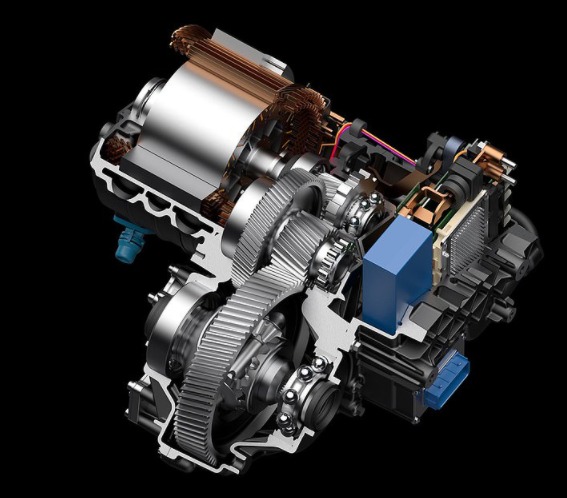
In October 2019, Dyson officially announced the termination of its N526 electric vehicle project, which had been in development since 2017. The project cost Dyson approximately £500 million (around RMB 4.2 billion). This SUV-style car featured two 200kW electric motors with a rated power of 536 brake horsepower and a torque of 480 pound-feet. It boasted an estimated range of 965 kilometers on a single charge, accelerating from zero to 100 km/h in just 4.8 seconds, with a top speed of 201 km/h. Originally scheduled for release in 2021, Dyson officially halted the project shortly before its anticipated launch.
The reason is straightforward: at the calculated price point of at least 150,000 pounds per vehicle, no one can realistically sell cars at this level. Despite Dyson's significant investment in human resources and finances for this project, including hiring talent from the automotive industry, acquiring solid-state battery companies, and even developing high-performance motors, they still underestimated the complexity and challenges of the automotive sector.
For Dyson, the suspension of its automotive project is not just a financial setback but also a significant blow to team morale. Unfortunately, this challenge was far from isolated; 2020 brought additional hardships. The global outbreak of the pandemic in early 2020 saw Dyson's revenue stagnate at £570 million by December, compared to £540 million in the previous year.
The onset of the pandemic sent shockwaves through supply chains worldwide, with most countries experiencing disruptions except for China. Unlike its competitors, Dyson’s manufacturing bases were located primarily in Southeast Asia (Malaysia and Singapore), making them particularly vulnerable during the height of the pandemic.
Meanwhile, Dyson's rivals did not pause to wait out this period. In 2020, Chinese manufacturers of cleaning appliances operated at full capacity. Dyson's key competitors saw significant growth, with year-over-year increases ranging from 50% to 80%.
For instance, in North America, the market leader SharkNinja reported a 65% overall increase, including a 40.7% rise in sales of cleaning appliances.
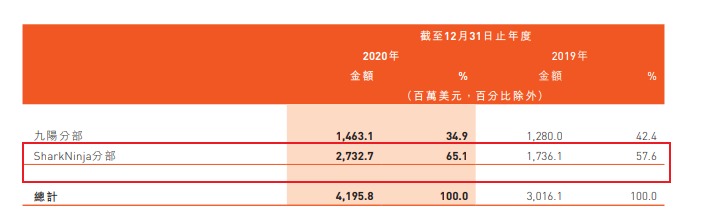
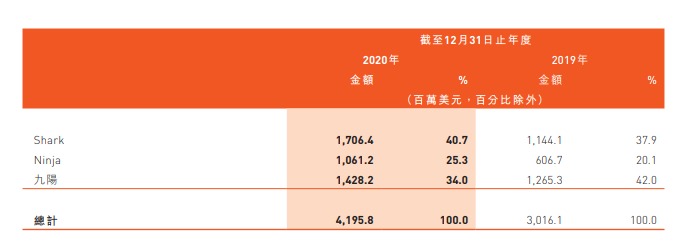
Under such a comparison, Dyson's performance appears particularly poor. As the pandemic continues, Dyson has even changed its long-standing practice of not producing in China by moving some products to be manufactured within Chinese territory at Foxconn.
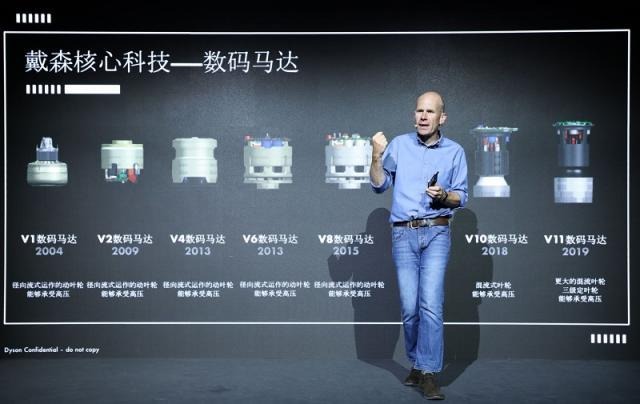
Dyson's Weaknesses Exposed: The Impact of the Pandemic on Supply Chain and Innovation
The pandemic has highlighted Dyson’s shortcomings in its supply chain, but these weaknesses were already becoming apparent several years ago.
Dyson Digital Motor (DDM) is at the heart of Dyson's recent innovations in vacuum cleaners and personal care devices. It was also a key factor enabling early adoption of lithium-ion technology in vacuum cleaners. Dyson has consistently pushed the boundaries of motor performance, from 80,000 RPM to 100,000 RPM, then 120,000 RPM, and finally reaching 150,000 RPM.
Theoretically, there is still room for Dyson's motors to go even faster. We estimate that if Dyson were to push the limits, they could achieve speeds of over 200,000 RPM.
However, a product is more than just its motor; other components must keep up with the increased speed. Currently, two main factors limit Dyson's full motor potential:
- Battery: The faster the motor spins, the quicker the battery drains. In Dyson’s own vacuum cleaners, the Max setting, which corresponds to maximum motor output, only lasts for about 8 minutes of use. Most users switch to a normal mode, extending the runtime to around 30 minutes. No matter how advanced the technology is, if it operates at full capacity, the battery can only support up to 8 minutes. This short runtime is unacceptable to consumers and forces Dyson to compete on an equal footing with its rivals.
- Suction Power: In theory, higher suction power means better cleaning performance. However, once you reach around 200W (equivalent to about 80,000 RPM), the performance of a brushless motor is sufficient for most needs. Dyson's advanced motors come with a significant cost increase; it is reported that a single brushless motor in Dyson products costs nearly 200 yuan, which is almost half the price of an entire ordinary cordless vacuum cleaner.
Due to these various constraints, Dyson’s motor advantages cannot be fully realized, leading to a reduced ability to outperform competitors. As a result, some of Dyson's claimed technological advancements have become somewhat awkward.
Several innovations in recent Dyson products have consistently shown that the company is losing its leadership position:
- The high-torque carpet cleaning brush head introduced with the Dyson V11 was initially marketed as highly intelligent, automatically adjusting the speed of the roller based on the type of floor and carpet. However, this feature requires switching between different brushes for use, which can be cumbersome. Moreover, the necessity to adjust speeds based on material is questionable; a more logical approach would be to adjust the motor's performance based on the level of dirtiness of the surface, making it smarter and potentially extending battery life.
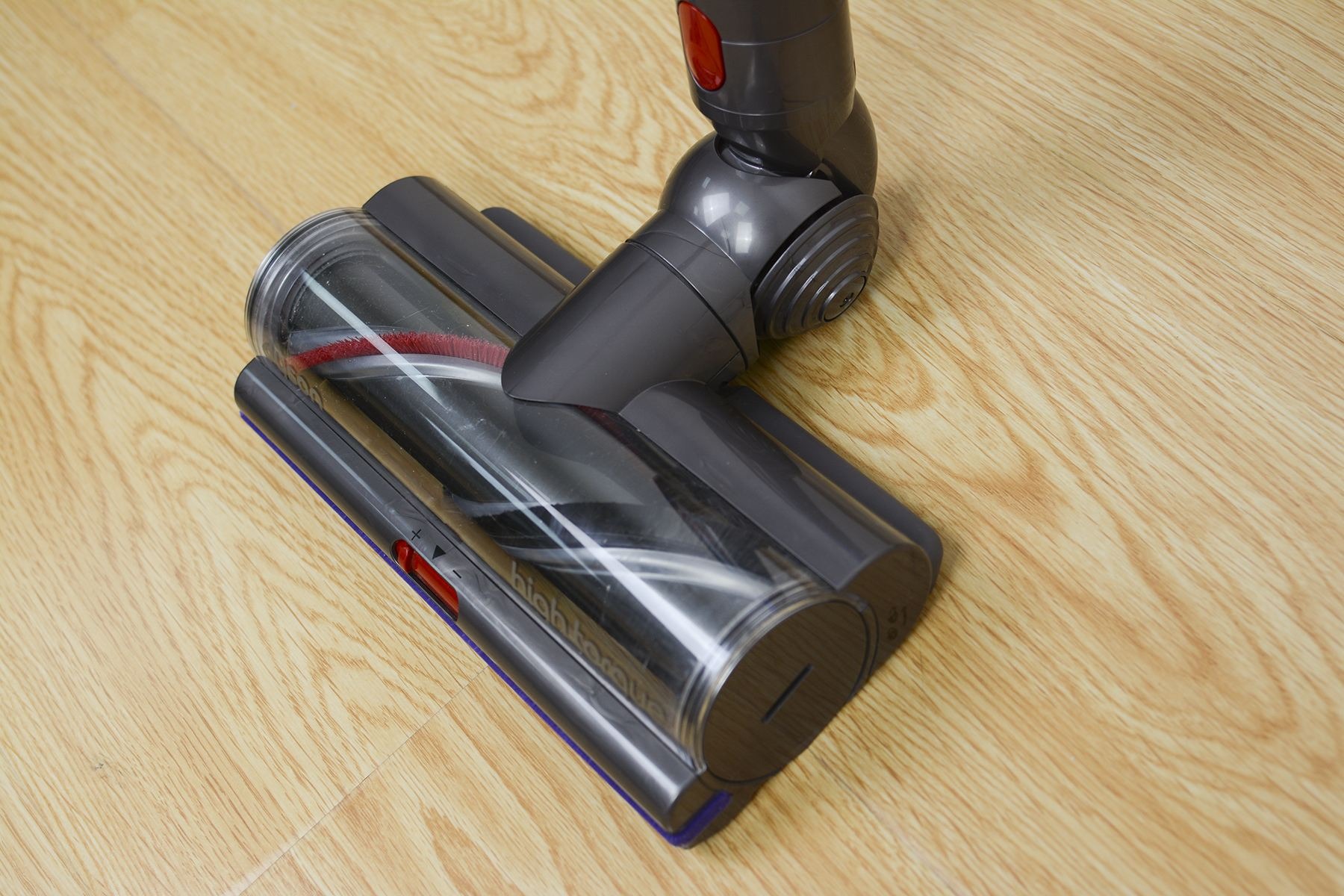
Dyson V12 Laser Detection Technology: A Mysterious Feature with Limited Practicality
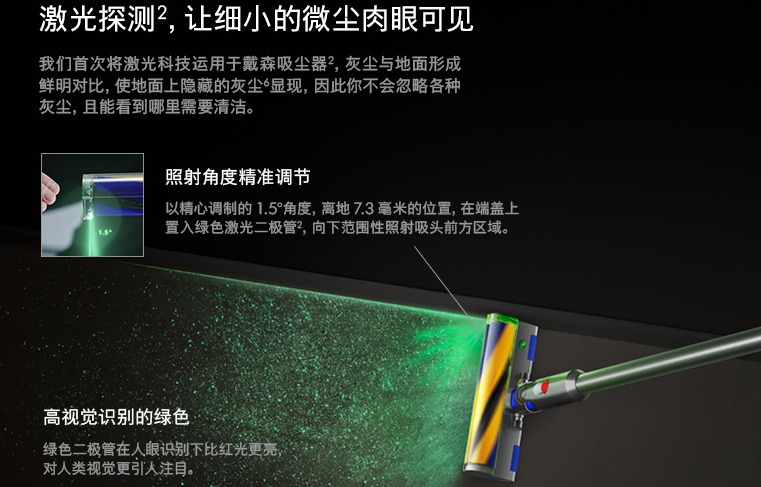
The Dyson V12 features laser detection technology where a green laser is emitted from the brush bar, allowing users to see tiny particles of dust. This innovative feature seems somewhat perplexing and lacks practical utility. Moreover, the use of lasers could potentially pose a risk to pets.
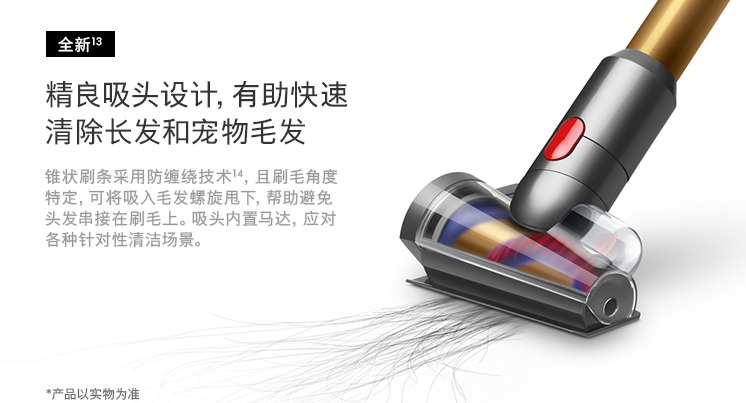
>The Dyson V15 TangleFree Brushhead. The idea and execution are good, but there is one aspect that slightly inconveniences me: every time I see hair on the floor, I need to detach the main brush and attach this TangleFree brushhead. Isn't this a bit cumbersome?
Above these products, each has been heavily promoted as the flagship model of their respective generations. Dyson is pleased that no one in the cleaning appliance industry has followed or mimicked this technology. However, competitors have continuously introduced more affordable and superior alternatives.
More troubling for Dyson is not the loss of innovation direction but the fact that their previously solid market position was suddenly overtaken by others.
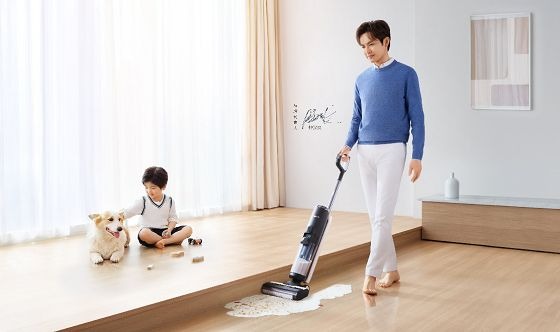
Hard floor washers emerged as a super-product in 2020, capitalizing on the market during the pandemic. The Tineco brand leveraged this super-product to rise from obscurity and become a dominant player in the cleaning appliance industry within just one year.
The Rise of Cleaning Appliances and Dyson's Challenges
Before the pandemic, floor cleaners were a niche category within cleaning appliances, experiencing lukewarm sales. However, with the onset of the pandemic, China’s unique preference for mopping led to a significant surge in demand for floor cleaners.
Dyson was particularly hard hit by this trend. Floor cleaner products are positioned at higher price points—between 3000 and 5000 RMB—which had been Dyson's exclusive domain. Consequently, these products have steadily encroached on Dyson’s market share. The core technology of floor cleaners does not rely on high-speed motors, and most of the supply chain is based in China, making it difficult for Dyson to quickly develop similar products during the pandemic. Even if Dyson did pursue such a product line, they would likely be just another player in the industry.
Beyond the impact of floor cleaner products, Dyson also faces strong competition in the vacuum cleaner market from numerous rivals.
In North America, Shark has become the leading brand in cleaning appliances. In Dyson’s home turf, the UK, after several years of development, Shark achieved a 36% market share and became the top player. Given that the UK is Dyson's stronghold, it was surprising for an outsider like Shark to rapidly penetrate this market and dominate within such a short period.
In Europe, companies from Xiaomi’s ecosystem, led by Dreame, have already become leaders in multiple online markets.
Overall, Dyson now faces unprecedented competition in the cleaning appliances industry.
However, these challenges are far from being the only ones Dyson is facing.
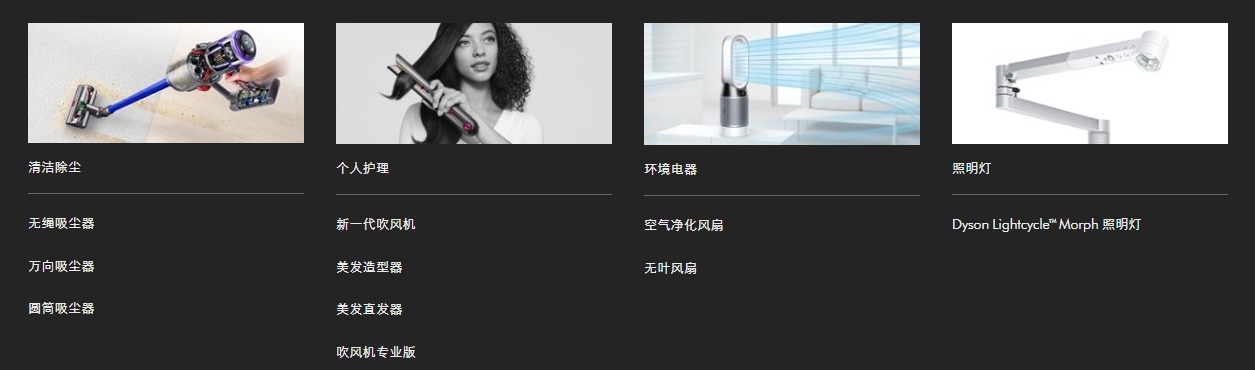
Currently, Dyson's product lineup is divided into four categories: vacuum cleaners, personal care products (hairdryers, curling irons), environmental appliances (fans, air purifiers), and lighting. The lighting segment was pioneered by James Dyson’s son, Jake Dyson, and has since been integrated into the company. From a product highlight and sales perspective, it is largely seen as non-essential.
The environmental appliance category also accounts for a relatively small portion of Dyson's business. Currently, the main focus areas are cleaning appliances and personal care products (hairdryers, curling irons).
Unlike the fierce competition faced by cleaning appliances, Dyson currently faces relatively weaker competitors in the personal care sector. However, this is only temporary.
Dreame Technology, a company from Xiaomi's ecosystem and one of the fastest-growing players in the cleaning appliance industry in recent years, has launched a strong attack on Dyson’s hairdryers. Dreame and other companies have invalidated some of Dyson’s patents related to hairdryers.
The State Intellectual Property Office recently declared that Dyson's patent (application number CN201410321250.5, titled "Handheld Device") for a hairdryer is entirely invalid. This patent was filed in 2014, predating the release of Dyson’s hairdryers in 2016 and thus falls under early patents. Although this is just one of many patents Dyson holds related to hairdryers, it has been crucial for their defense.
Additionally, Dyson's long-time rival Shark has also launched a range of personal care products, which are reportedly performing well in the market.
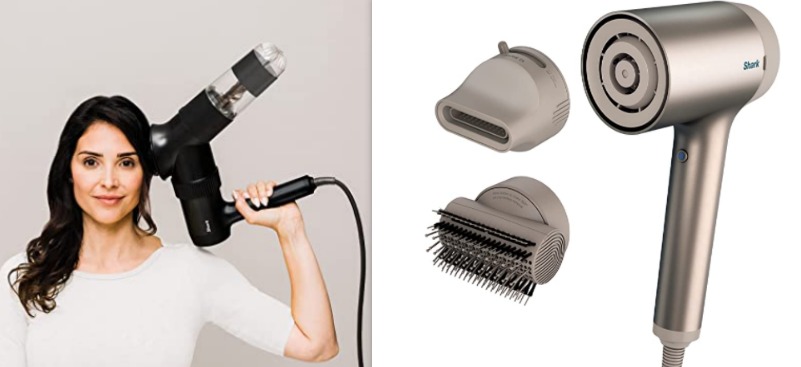
Add-on Growth for Personal Care Products
Tineco, which has amassed significant resources and capital through its hard floor washers, continues to seek substantial development in personal care products. As one of the best product managers in the industry, Qian Dongqi, the company's founder, is looking for the next step in smart home appliance innovation. Can he replicate the success of his previous hits—Ecovacs' robot vacuum and Tineco's hard floor washer—with a groundbreaking personal care product? The industry remains optimistic about this possibility.
Currently, these companies are struggling to challenge Dyson's market dominance in personal care products. But how long can Dyson's lead continue?
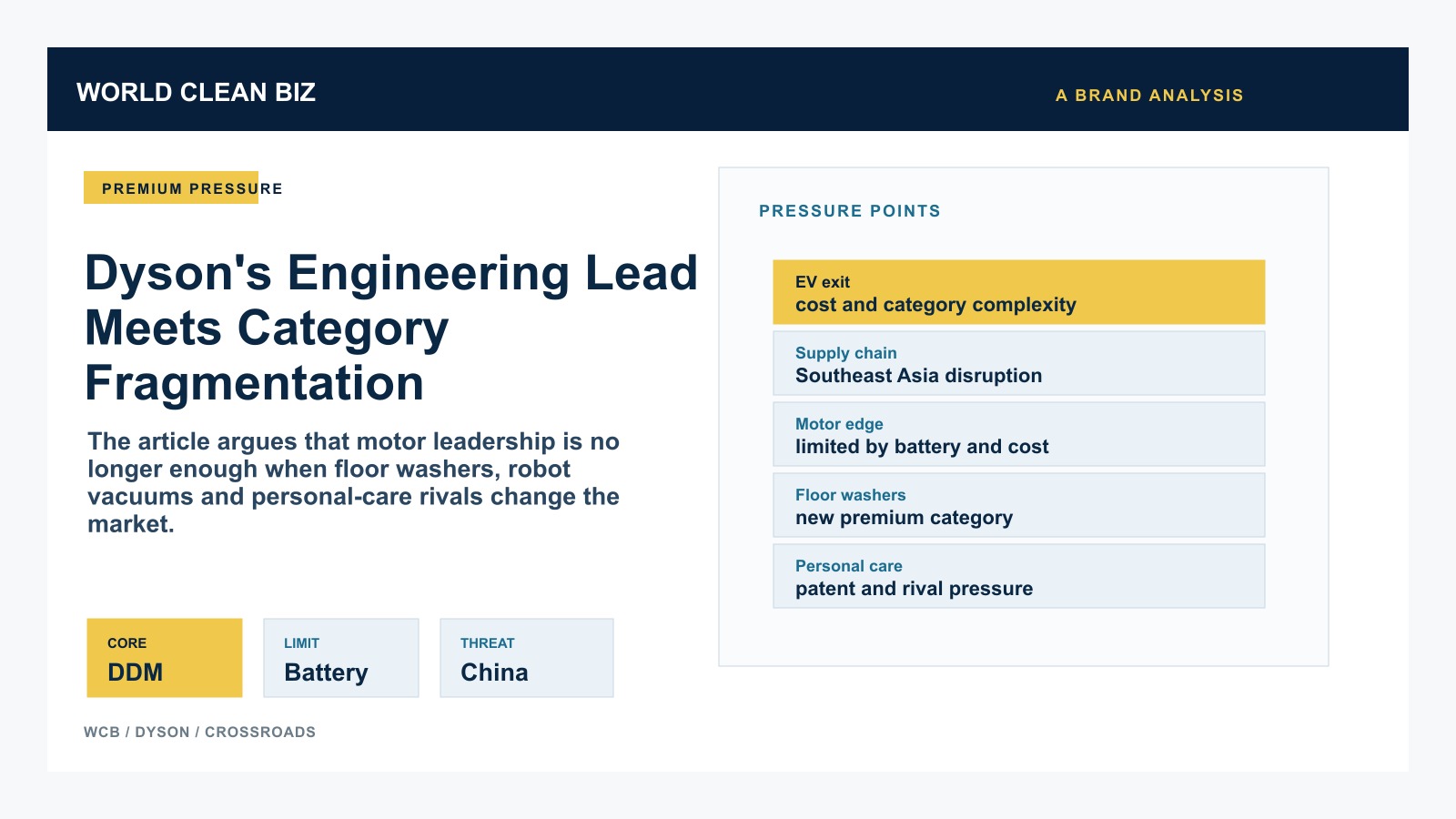
Dyson finds itself at a crossroads.