- Dyson’s early China OEM exploration shows how global appliance brands evaluated Chinese manufacturing partners.
- Midea’s role reflected the scale and reliability large suppliers could offer to an unfamiliar foreign brand.
- The story helps explain how Chinese appliance supply chains became part of Dyson’s broader product and manufacturing history.
In 2006, James Dyson led a team that was not so prosperous at the time to come to China.
The purpose of his trip is to find a suitable OEM for his products such as fans, kettles, and juicers. Dyson has previously negotiated OEM business for washing machines with a company in Nanjing. Dyson's previous business in Malaysia was very successful, and he is also willing to try to find new partners in China.
In the market at that time, in addition to Midea Group, Dongling Group (Xinbao Electric) was also competing for this project, and they finally selected Midea Group as their partner. It is said that the reason for selecting Midea at that time was that they had inspected the scale of Midea Group, and if something went wrong, it would be able to compensate Dyson for its losses. From this aspect, it can also be seen that Dyson did not know much about the Chinese business industry at that time. Similarly, Midea Group did not know much about the vacuum company from the UK. I don’t know much about the cleaner brand. One detail is that it is said that He Xiangjian, chairman of Midea Group, was particularly surprised when he heard that James Dyson came to inspect on a private plane.
The acting general manager of Midea Clean Appliances at the time was Yu Xianming, the current general manager of Eta Electric Appliances. He was responsible for all matters related to the Dyson project at the time.
Midea requested that in addition to several products on the aircraft, Dyson must also transfer some well-selling vacuum cleaners to Midea. After some bargaining, Dyson decided to offer DC14 to Midea. Midea's offer was less than US$50, while the same product was quoted in Malaysia for close to US$100, which surprised James Dyson.
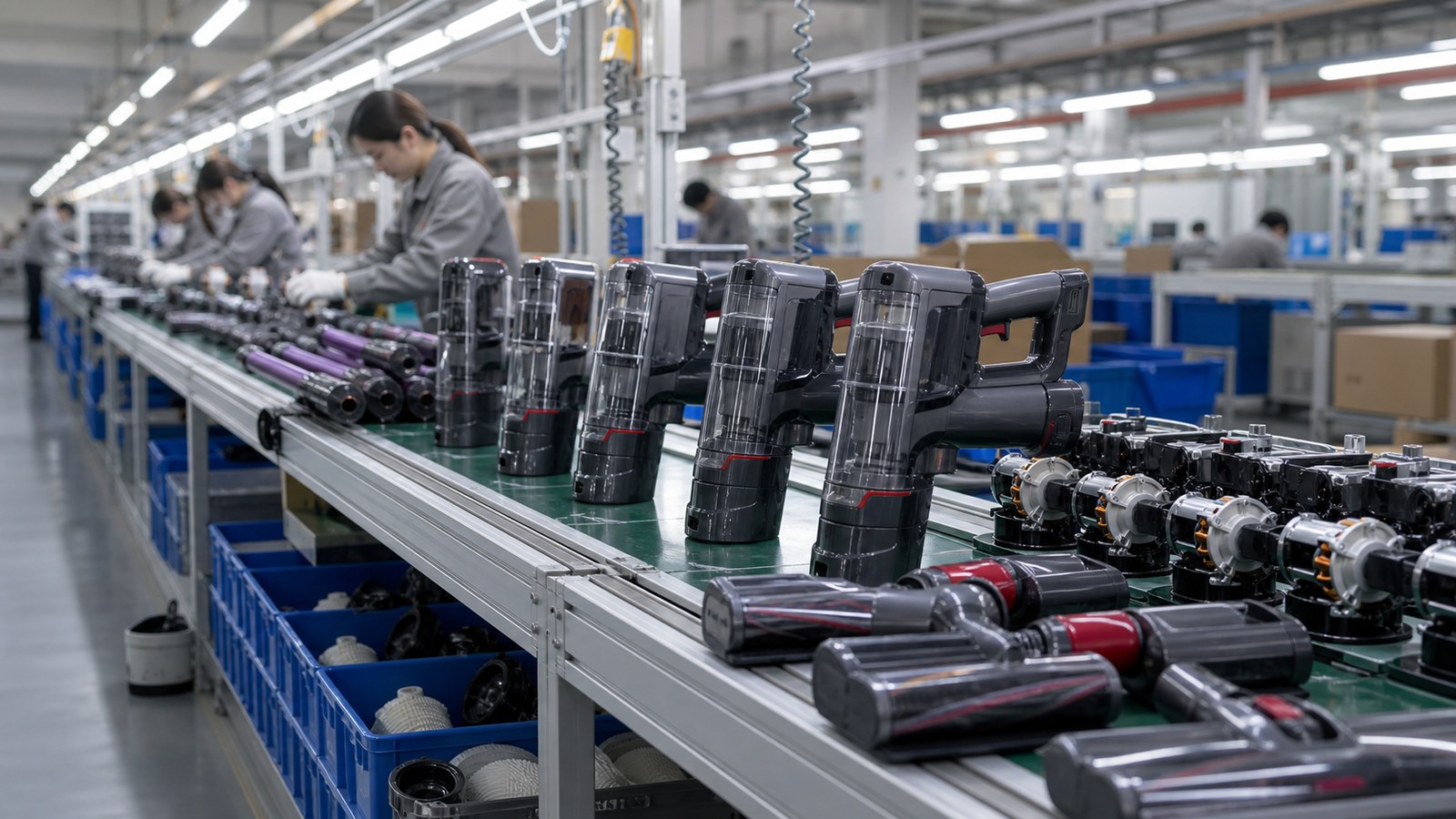
The two parties quickly reached an agreement that Dyson would invest in all the equipment and production lines. The molds were opened in Malaysia and then transferred to China, and the core component manufacturers were all designated by Dyson. Jiangsu Midea Chunhua was responsible for injection molding and assembly. Dyson also sent a large number of British engineers over as supporting equipment, including the engineers' families and children. It is said that Dyson spent more on the engineers' families than the treatment paid to the engineers.
At that time, Midea Chunhua established a separate workshop for Dyson, which was claimed to be the most advanced vacuum cleaner production workshop in China at that time. The cooperation between the two parties quickly progressed, and 100,000 sets of vacuum cleaners were produced.
However, the cooperation between the two parties soon stopped for several reasons:
- The Malaysian government has put pressure on Dyson. If Dyson continues to produce vacuum cleaners in China, they will be required to return the preferential measures previously granted by the government.
- There were some problems with the floor brushes in Midea's first batch of goods, which caused Dyson to need to replace them for customers.
- Wuyeufa from Dyson Company