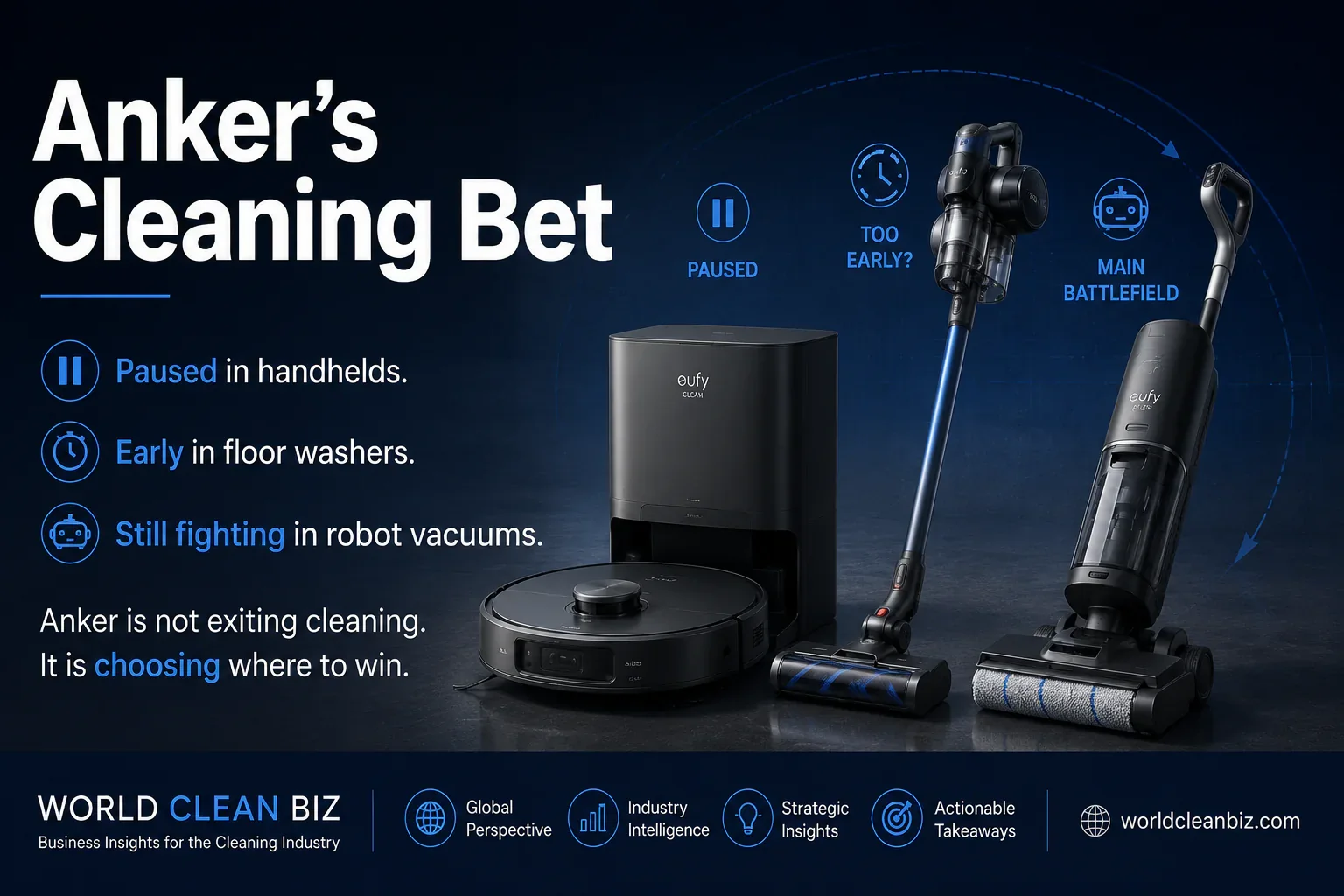
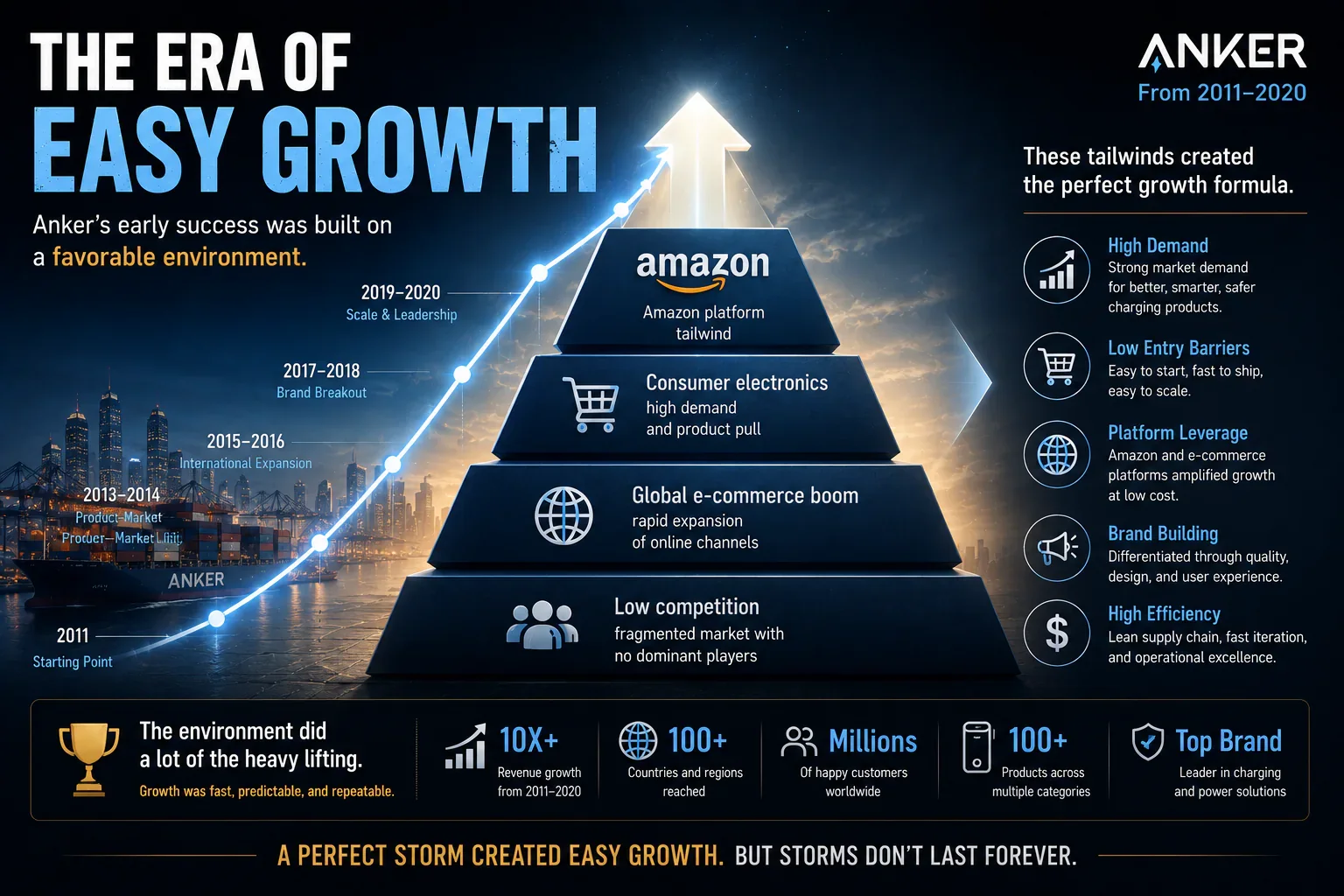
- Anker aims to break external perceptions and compete in complex, long-term industries through its 'Shallow Sea Strategy'.
- Recruiting high-level talent is crucial for Anker's push into challenging markets, as seen with Eufy’s robot vacuum efforts.
- Eufy’s early success in the overseas market has been overtaken by rapid advancements and global expansion of Chinese brands.
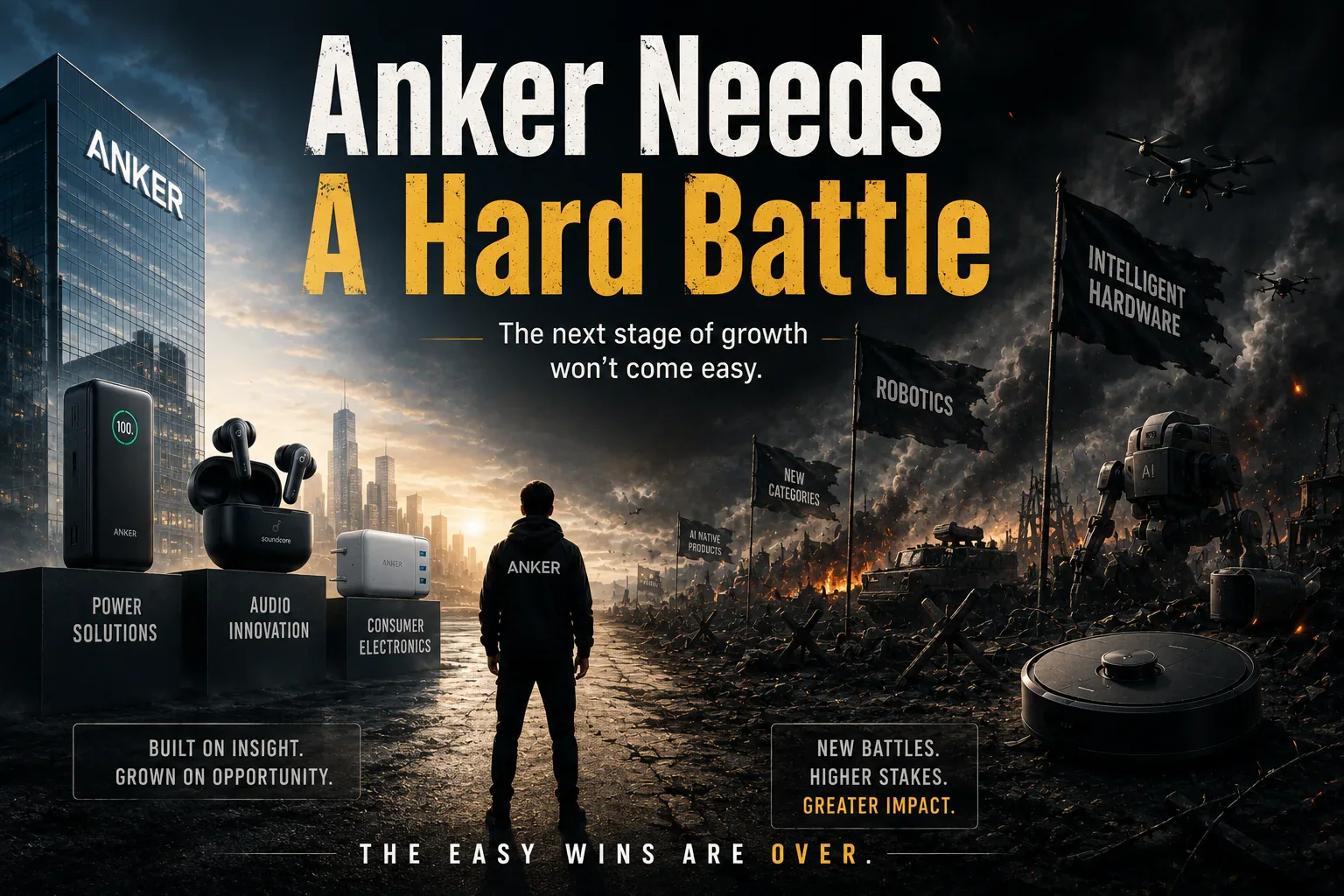
Recently, Anker Innovation's founder, Yang Meng, was interviewed. On the surface, this interview appears to be about Anker’s "Shallow Sea Strategy," organizational methods, and talent issues; but when placed in the context of Anker’s external environment over the past few years, it has two clear implications.
First, it aims to break down external perceptions of Anker. Many people still view Anker through the lens of power banks, chargers, cables, and Amazon-efficient brands. Anker excels at small categories and channel and product efficiency; however, there are also doubts about whether it can compete in truly complex, long-term, and highly competitive industries.
Second, it is about recruiting talent. Yang Meng repeatedly mentioned talent density during the interview and stated that one of his key objectives was to make more people understand what Anker aims to achieve. For a company looking to push its boundaries, attracting high-level talent itself is a strategic move.
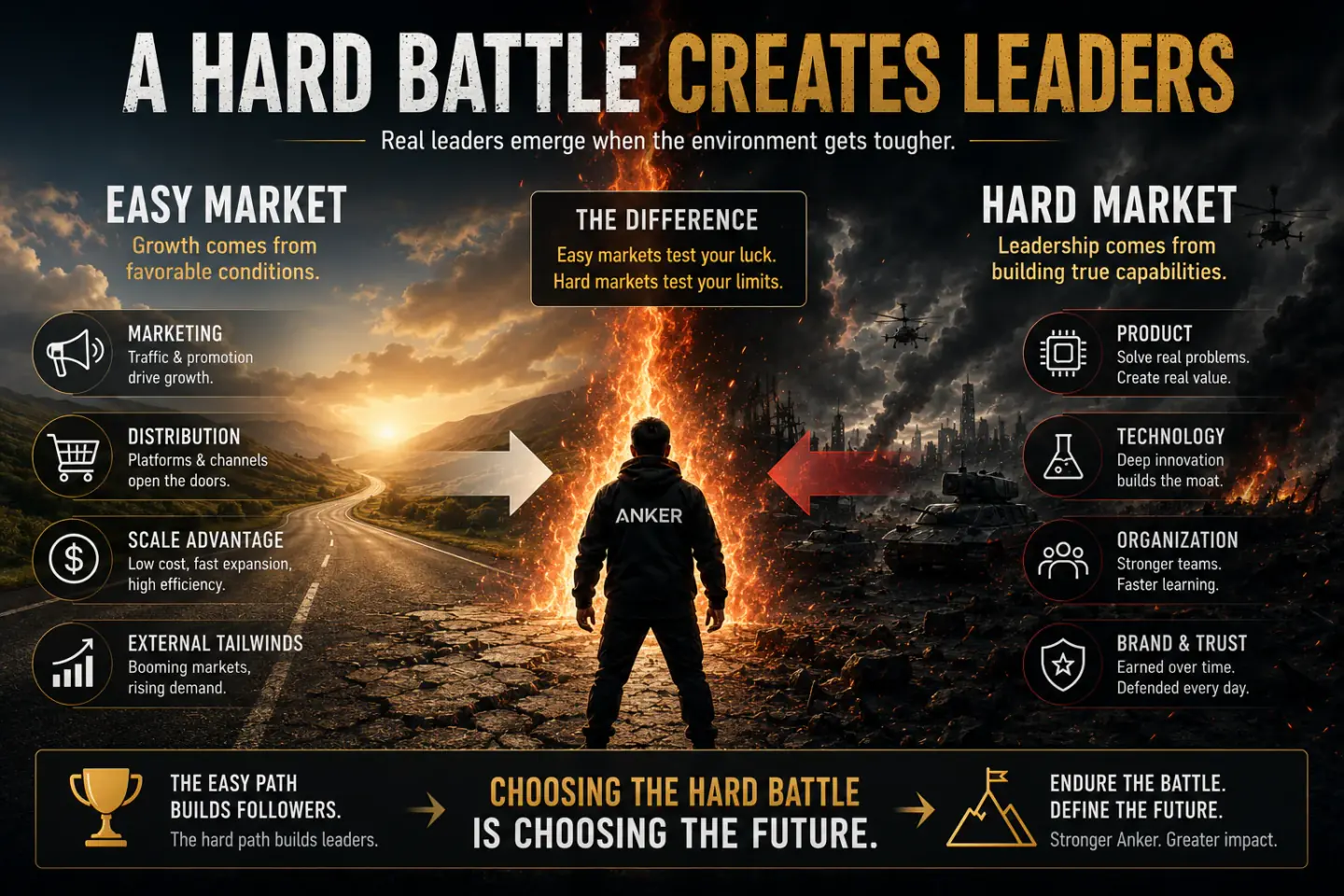
By combining these two goals, the significance of robot vacuums for Anker becomes clearer. They are not Anker’s most comfortable business or the one with the best short-term return on investment; but they are complex, large-scale, and have strong competitors. If Anker can successfully revive Eufy in this industry, it would prove more than just a product line—it would demonstrate Anker's ability to handle tough battles.
During the interview, Yang Meng mentioned that "Shallow Sea" does not mean avoiding complex categories; rather, it refers to markets with annual sizes under $50 billion. Robot vacuums and security are categorized as shallow seas according to his definition. This statement indicates that Anker internally does not view robot vacuums as marginal products. However, a category's importance in the company’s strategy is different from its competitive advantage in the market.
Eufy is not a newcomer to the robot vacuum market. In an interview, Yang Meng mentioned that Anker began producing robot vacuums and security products in 2017. Actually, Eufy had been making waves in the overseas robot vacuum market from early on.
At that time, Eufy's success was driven by several real-world conditions. Anker already enjoyed brand trust among overseas consumers, Amazon offered a strong channel capability, iRobot's pricing strategy left room for more affordable brands, and many Chinese robot vacuum brands had yet to enter North America in large numbers. Additionally, the patent litigation between iRobot and some Chinese companies made them more cautious about entering the North American market.
Thus, Eufy's early success was not surprising; it capitalized on a window where overseas supply was insufficient, iRobot's pricing was high, and leading Chinese players had yet to fully expand globally. Previously, Eufy's strategy was clear: cheaper than iRobot, more reliable than white-label products, and better branded than many cross-border brands.
However, this window has passed.
Today’s overseas robot vacuum market is far from the one of old. The pace at which Chinese brands are going global has accelerated significantly, with their product capabilities rapidly improving. Amazon is no longer a channel that Anker excels in exclusively. The tactics Anker once mastered have been learned and surpassed by numerous other Chinese brands.
The core gap Eufy faces today is not about individual features but rather the generational difference in products. In the early days, overseas consumers had relatively simple requirements for robot vacuums: a machine that could automatically clean, was reasonably priced, received good reviews, and came from a reliable brand. However, over the past few years, China has rapidly advanced the category of robot vacuums.
Features such as all-in-one bases, automatic dust collection, self-cleaning mops, hot water cleaning, automatic water supply and drainage, AI obstacle avoidance, hair entanglement prevention, extended side brushes and mops, robotic arms, live water rollers, pet-specific scenarios, base self-cleaning, and more—these capabilities were rolled out through a series of competitive cycles in the Chinese market. Brands like Roborock, Dreame, Ecovacs, and Narwal have brought these advancements to overseas markets, fundamentally changing what users expect.
Eufy's strengths lay in its overseas channels and positive user reviews. However, as product generations diverge, channel advantages can only address reach but not replace the product experience. Eufy is not losing solely to a single brand; it has been outpaced by the overall evolution of China’s robot vacuum supply chain. Particularly in key areas like all-in-one bases, high-end flagships, and cleaning experiences, Eufy lacks a strong leading position.
This is why Anker's re-entry into the robot vacuum market cannot be judged merely by financial resources or channel strength. Yang Meng noted that complex categories such as robot vacuums require significant investment—around 300 million to 500 million yuan annually over many years—to succeed. While Anker understands the need for this category and has the necessary resources, including cash flow, overseas channels, brand foundation, and organizational platforms, it faces a challenge.
The complexity of robot vacuums lies in their systemic engineering. Components such as the main unit, base station, algorithms, sensors, cleaning mechanisms, consumables, apps, cloud services, overseas certifications, customer service, after-sales support, content marketing, local channels—any weak link can impact user experience. Robot vacuums are no longer a category that can be dominated by mere channel and brand strength.
This system competition ultimately manifests in organizational scale. Today’s leading companies have expanded their robot vacuum operations beyond small teams of tens or hundreds of people. According to industry sources, Dreame's robot vacuum business unit has over 4,000 employees, while MOVA has more than 1,000. Ecovacs and Roborock each have team sizes of over 2,000 in related areas. In comparison, Anker’s team for robot vacuums is significantly smaller than these companies.
This data illustrates that the competition in robot vacuum cleaners today is no longer about single-point product innovation, but a systemic competition involving the host machine, base station, algorithms, App, supply chain, after-sales service, overseas channels, and content marketing. Behind an all-in-one base station robot vacuum cleaner lies navigation algorithms, visual recognition, motion control, cleaning mechanisms, water systems, base station systems, mold structures, supply chain procurement, overseas certifications, consumable systems, customer service after-sales, e-commerce operations, content marketing, and user review maintenance.
These elements stacked together make it difficult for a small product team to keep up with leading brands over the long term. Therefore, if Anker truly wants to revive Eufy, the issue is not whether they are willing to invest hundreds of millions annually but rather their willingness to treat robot vacuum cleaners as a long-term battle requiring an organization of thousands.
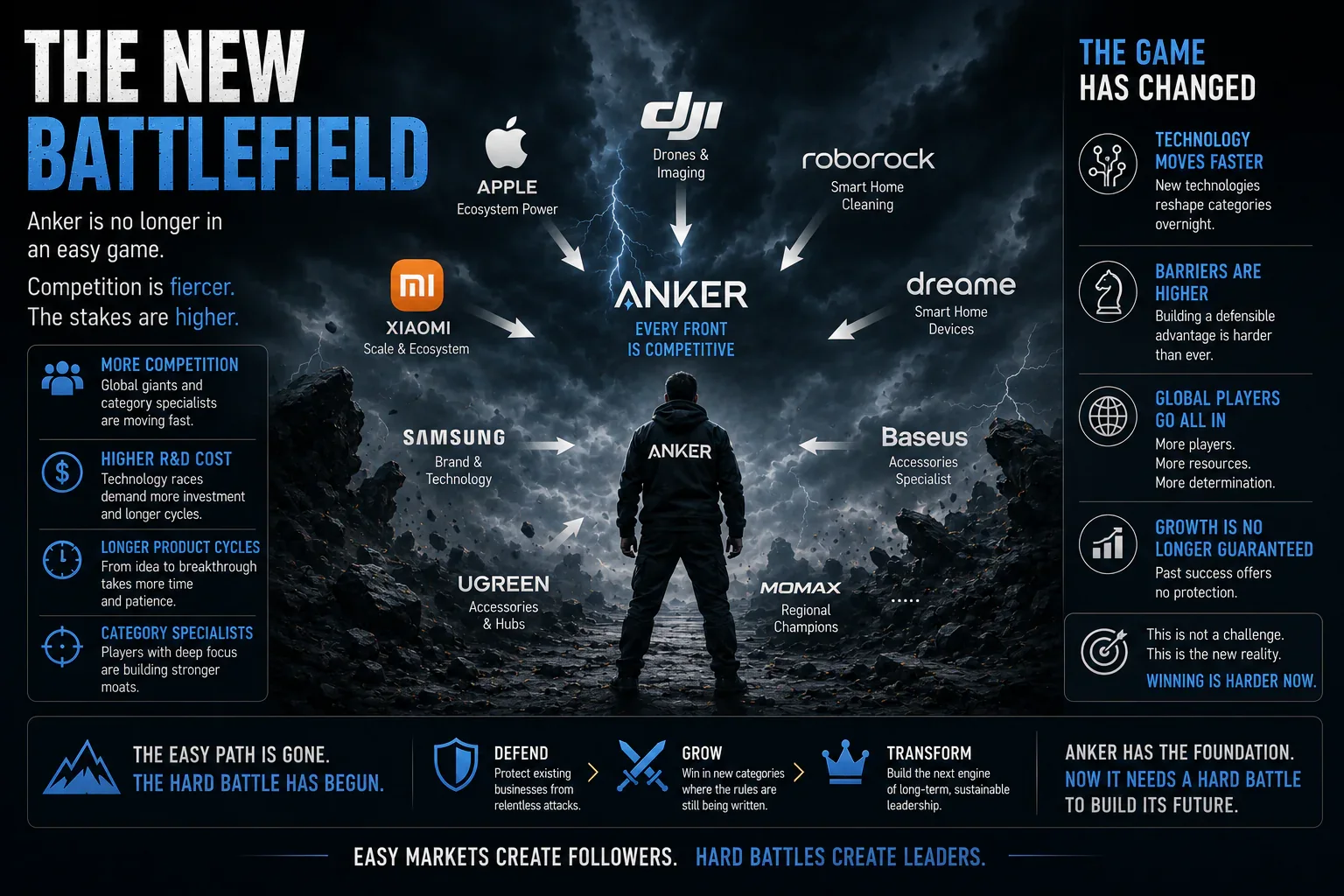
This also indicates that the "Shallow Sea Strategy" does not naturally apply in the cleaning appliance industry.
Yang Meng defined robotic vacuums as "shallow seas," which can be understood from Anker's strategic perspective. Robotic vacuums are not super categories like smartphones, computers, or major appliances with a market value of billions of dollars; theoretically, they will not consume an entire company. However, from the internal perspective of the cleaning appliance industry, robotic vacuums are far from "shallow."
While this category's surface market size may be smaller than that of smartphones, competition is extremely intense. The Chinese market has turned it into a highly complex system engineering: hardware structures are intricate, software algorithms are sophisticated, base station systems are complicated, user scenarios are diverse, after-sales issues are multifaceted, and price band competitions are complex, along with overseas certifications and channels.
Many companies entering the cleaning appliance industry find that their traditional consumer electronics methodologies do not fully apply. A robot vacuum is not just a pure electronic product; it is a long-term family robot operating in dirty environments. It faces daily challenges such as dust, hair, sewage, carpets, pets, furniture, thresholds, maps, consumables, and user maintenance.
Such products are not merely about designing circuit boards, Apps, and aesthetics. They require the accumulation of extensive "dirty work" experience over a long period. Therefore, Anker's perception that robotic vacuums are "shallow seas" does not mean this category is easy to handle. On the contrary, robot vacuum cleaners might be one of the most challenging categories for Anker under its shallow sea strategy.
Due to their complexity, robot vacuums hold another significance for Anker.
The external perception of Anker has always been clear: very good at power banks, Amazon, and small categories; strong in methodology, channels, and risk control. However, this also makes it easy to label them as more adept at fighting weaker opponents within relatively safe categories.
This evaluation may not be entirely fair, but it does exist. Yang Meng repeatedly explained that "shallow seas are not simple categories" during interviews, which itself indicates his awareness of external doubts. Robotic vacuums precisely address these doubts: the market is large enough, technology complex enough, and competitors strong enough, making user experience and after-sales service challenging.
If Anker can win back in robot vacuums, it will gain more than just an Eufy hit; it will redefine its capability boundaries for the outside world. It would no longer be seen merely as a company operating in shallow seas but one capable of winning battles on high-intensity hardware fronts.
The significance of this goes beyond the robot vacuum business itself and relates to Anker's ability to attract higher-level talent.
Yang Meng frequently mentioned talent density during interviews, believing that Anker's unaddressed categories can be attributed mainly to insufficient talent. If Anker remains confined to power banks, chargers, and cables, it will struggle to attract top-tier talents in robotics, AI, mechanical control, perception algorithms, and complex hardware.
True high-caliber talent often does not merely seek a stable profitable company; they look for large battlefields, strong competitors, technological challenges, opportunities to create industry-level products, and sufficient power and resources.
Robotic vacuums are such a battlefield. They involve navigation, algorithms, mechanics, fluid dynamics, cleaning mechanisms, base station systems, AI vision, family space understanding, and global markets. This category presents both technical difficulties and commercial scale while directly facing the global consumer market.
If Eufy can be revived, Anker's claim of being "a paradise for creators" will become more convincing. Otherwise, it remains an organizational vision rather than a fact validated by hard battles.
From this perspective, Anker's recent actions in the robotics direction are worth understanding together.
Eufy has released MarsWalker stair-climbing robots to address multi-story home automation cleaning issues. Anker also launched a lawn mower product line. Lawn mowers and robot vacuums share many similarities in navigation, perception, path planning, motor control, Apps, charging return docking, and after-sales systems. Anker's investment in Beatbot Innovation indicates its continued focus on the broader cleaning robotics market.
Industry insiders report that Anker is researching robotic dogs, not for industrial inspection or research demonstrations but more towards home security, used for patrolling, anomaly detection, and deterring strangers. This information has yet to be publicly validated; it needs cautious evaluation. If true, it would naturally connect with Eufy's existing camera, doorbell, smart lock, and home security systems.
These actions, taken individually, do not prove that Anker has found the answer. But when viewed together, they indicate one thing: Anker knows it needs a more challenging and talent-attracting battlefield than just power banks or chargers—robotics.
The question is whether these explorations will ultimately coalesce into genuine organizational capability rather than remain as disparate SKUs.
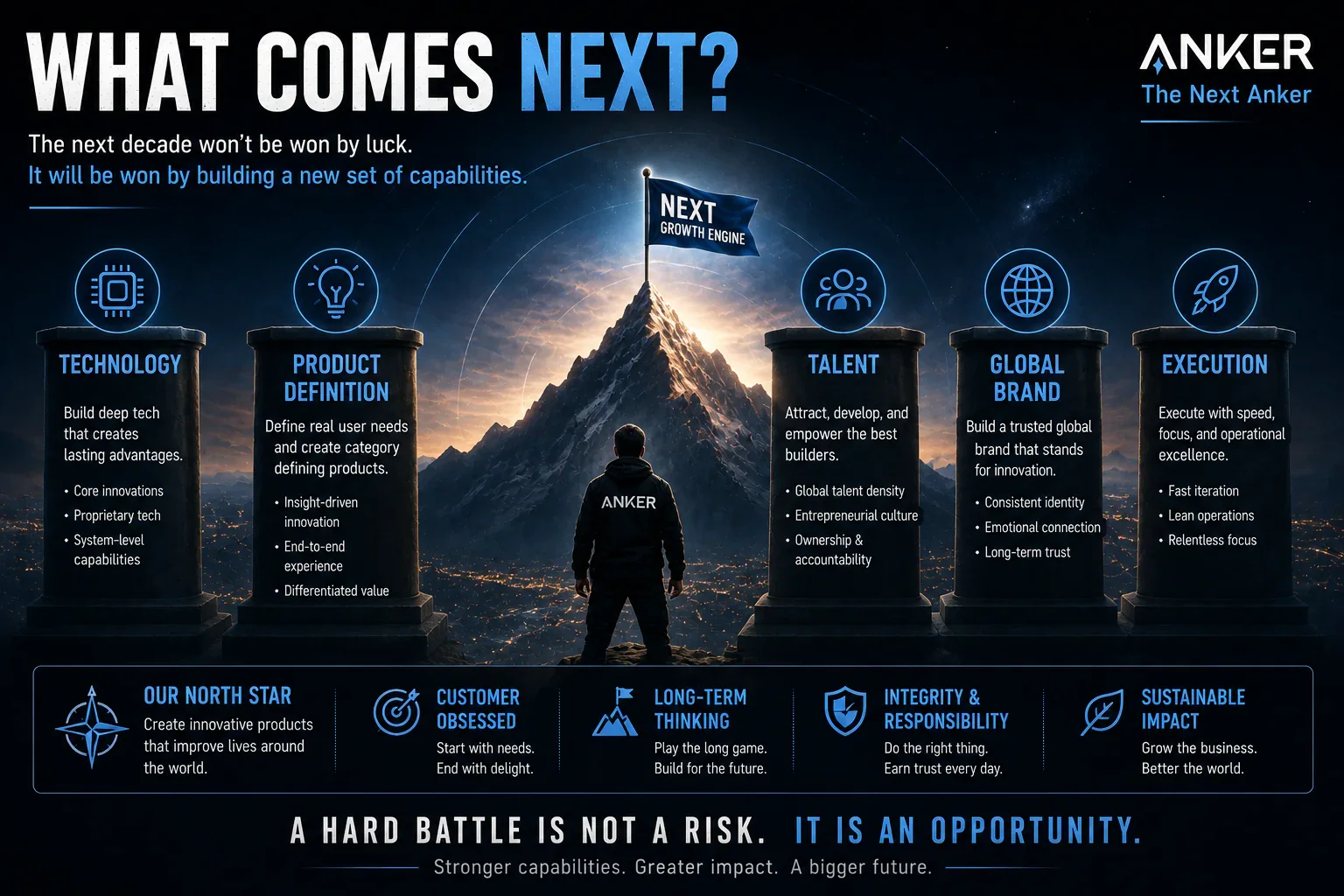
Ultimately, this article is not about whether Eufy's next-generation products will suddenly surge in popularity or if Anker has the resources to continue with robot vacuums. Product iterations are superficial; what truly matters is whether Yang Meng and Anker are willing to accept a battle with short-term ROI that may not be as attractive but offers significant long-term strategic value.
Yang Meng is a highly rational founder. From Late Night Talks, it's clear he excels at calculating probabilities, assessing risks, and making abstract decisions. He does not like betting all his chips on one big gamble or pursuing a single super-category. Instead, he prefers to build through multiple shallow categories, gradually accumulating company capabilities and profits over the long term.
This approach has its advantages. Anker's success today is due in large part to its rationality and restraint. However, some battles are not worth fighting from a short-term financial perspective. The robot vacuum market might be such a battle—strong competition, slow returns, uncertain profitability, high difficulty of success, and potentially embarrassing failure. From a purely financial standpoint, Anker could easily allocate more resources to other more stable categories.
But if they win, the value extends beyond finance. It would bring brand upgrades, company culture enhancements, improved talent attraction, and strengthened robotics platform capabilities. Such victories would also change how the market perceives Anker.
So, Eufy's second chance is essentially not a product issue but whether Yang Meng and Anker are willing to treat the robot vacuum as a strategic priority rather than just a routine shallow-water category.
The robot vacuum may not be the most profitable business for Anker. However, considering the company’s ethos, talent attraction, and robotic platform capabilities, it could be the market where Anker should take the most serious stance.
This is also the true significance of the robot vacuum market for Anker.