- There is no single country of origin for every Dyson vacuum: the answer can change by model, batch and sales market.
- Official sources place advanced motor manufacturing in Singapore and the Philippines and describe final assembly in Malaysia and the Philippines.
- The product rating label and packaging are stronger evidence for a specific unit than headquarters, brand origin or a general factory list.
In this article 14 sections
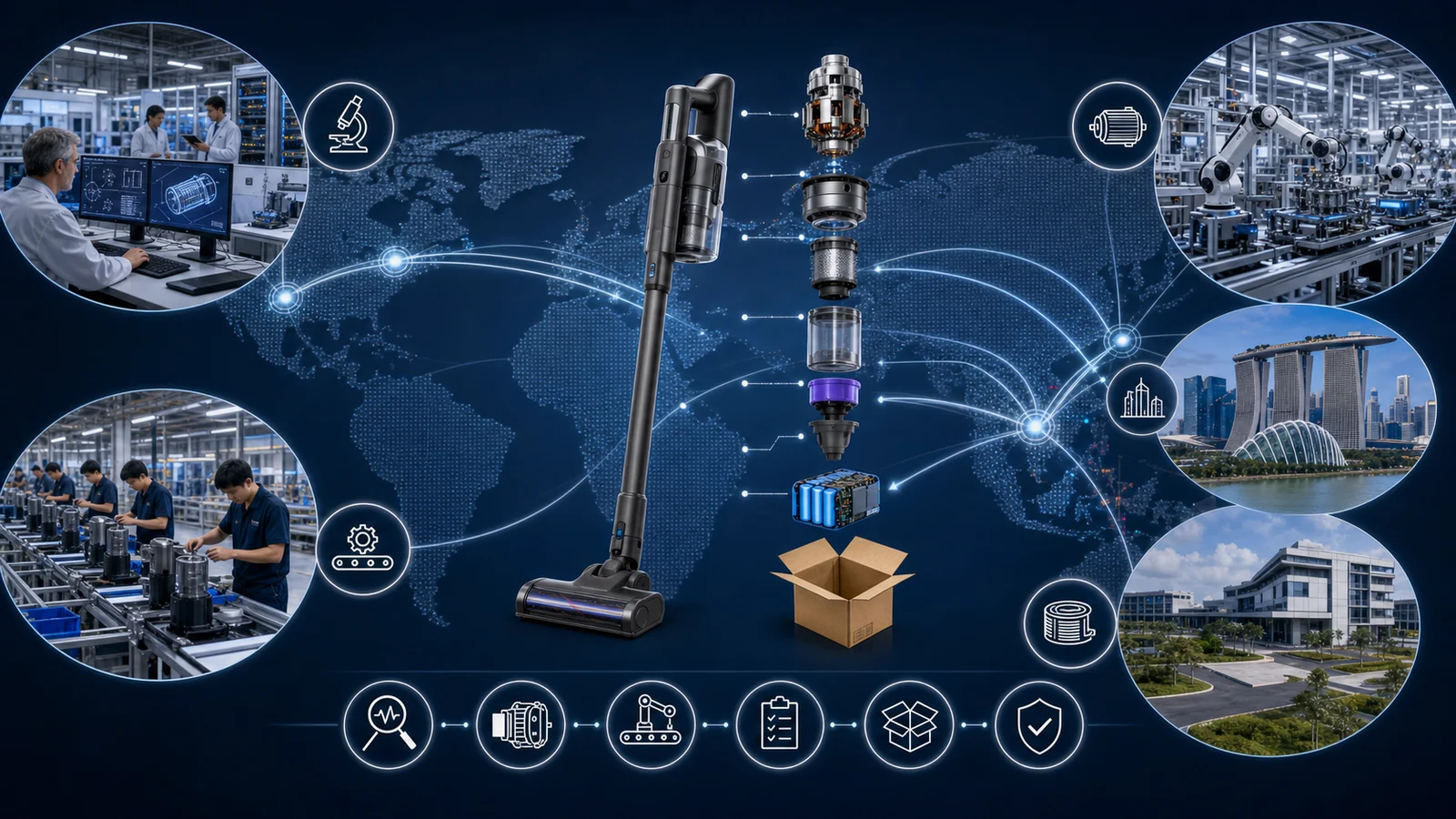
Dyson vacuums are not all made in one country. Official Dyson and Singapore government sources place advanced motor manufacturing in Singapore and the Philippines and describe final assembly in Malaysia and the Philippines. Dyson also operates a wider engineering, supply-chain and manufacturing network.
For a particular V8, V12, V15, Gen5detect, Ball or other machine, the most reliable answer is the country-of-origin statement on that unit and its original packaging. Model, production batch and destination market can change the result.
This distinction matters because five different places can be associated with one vacuum:
- the country where the brand began;
- the global headquarters;
- the research and design center;
- the factory that makes the motor or another major component;
- the plant or contract manufacturer that performs final assembly.
Dyson Manufacturing at a Glance
| Location | Officially documented role | What it does not prove |
|---|---|---|
| United Kingdom | British origin; research, design and advanced engineering | That current mass-market vacuums are assembled in Britain |
| Singapore | Global headquarters; R&D, supply chain and advanced motor manufacturing | That every complete Dyson vacuum is assembled in Singapore |
| Philippines | Engineering, technology development and advanced motor manufacturing; official sources also describe final assembly in the country | That every Philippine Dyson site makes complete vacuums |
| Malaysia | Production move, development center, supplier proximity and contract-manufacturing/final-assembly role | That every Malaysian unit comes from a Dyson-owned factory |
| China, Mexico, Poland and other locations | Parts of Dyson's broader manufacturing, engineering or supplier footprint in group disclosures | The final-assembly country of a specific vacuum SKU |
The Direct Answer by Product
If you are holding a Dyson vacuum, turn it over and inspect the rating plate, battery area or body label. Look for a statement such as “Made in” or “Country of origin.” Check the original carton as well.
Do not answer from the model family alone. Two machines sold under similar names can be produced for different markets, at different times or through different approved manufacturing arrangements. Accessories, batteries, chargers and the main vacuum can also carry different origins.
For a retailer or distributor, record:
- full commercial model name;
- internal model or type code;
- SKU and market;
- serial number;
- country-of-origin label;
- manufacturer or responsible legal entity;
- importer of record;
- plug, voltage and charger code;
- regulatory marks;
- warranty region.
A marketplace listing that says only “Dyson V15” is not enough to establish origin or warranty eligibility.
Why Dyson Is Still Called a British Company
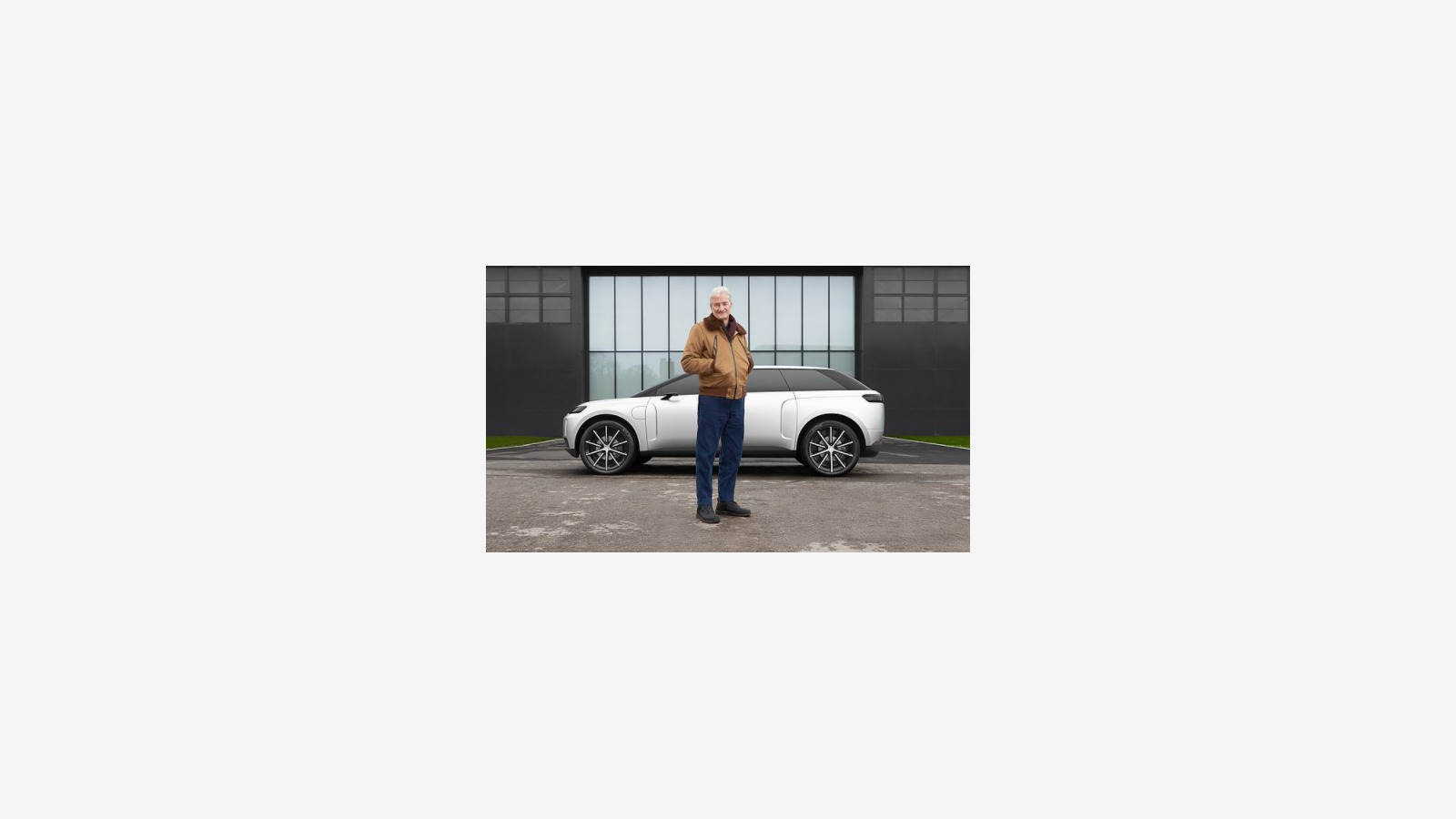
Dyson was founded in Britain, and the UK remains central to its research, design and engineering identity. Dyson's current engineering page describes Malmesbury as its global Research, Design and Development center and a base for advanced engineering teams.
That history explains phrases such as “British technology company” or “engineered in the UK.” It does not mean a current vacuum was finally assembled in the UK.
Brand nationality and product origin answer different questions. The Who Owns Dyson guide explains the ownership and UK–Singapore corporate structure; this article focuses on the physical manufacturing chain.
Why Production Moved to Malaysia
Dyson's official company history says it moved production to Malaysia in 2003 because suppliers of vacuum parts and contract manufacturers were located across Asia. The company also built a Research, Design and Development center at Senai in the Iskandar Malaysia corridor.
The move joined three activities:
- access to component suppliers;
- proximity to contract manufacturers;
- local engineering and product-development capability.
Malaysia therefore became much more than a low-cost assembly address. It developed into an important engineering, supply-chain and manufacturing hub.
But factory ownership needs careful language. A product marked “Made in Malaysia” can be manufactured for Dyson by an approved external partner. Country of origin does not tell the buyer whether Dyson owns the building, who supplied each component or which legal entity employs the assembly workers.
The historical background is covered separately in Dyson's China OEM history. Historical supplier relationships should never be treated as a current approved-factory list.
Singapore: Headquarters, Engineering and Digital Motors
Singapore is Dyson's global headquarters. It is also a center for research, engineering, commercial operations, supply chain and advanced manufacturing.
Dyson's current Singapore location page says the company began its Singapore journey with a motor factory in 2004. Singapore Advanced Manufacturing made its first motor in 2012 and has produced about 100 million Dyson Hyperdymium motors for machines sold worldwide.
Singapore's role is therefore concrete: it manufactures a core technology used inside many Dyson products. It is not simply a corporate address.
However, a motor made in Singapore does not automatically make the complete vacuum “Made in Singapore.” Country-of-origin rules and labels concern the complete product and its qualifying production process, not the most famous component.
Singapore EDB's interview on Dyson's global operations described digital motors being manufactured in Singapore before final assembly in Malaysia and the Philippines. That is a useful description of the network, not a permanent origin statement for every current SKU.
Philippines: Motors, Engineering and Assembly
The Philippines is another important Dyson technology and manufacturing location.
Dyson's Philippines location page says its manufacturing facilities in Singapore and the Philippines had produced 150 million Hyperdymium motors by 2023. The Philippines Technology Centre adds research and development in software, AI, robotics, fluid dynamics and hardware electronics.
A 2023 Dyson and Singapore EDB investment announcement described the new Santo Tomas, Batangas campus as combining R&D and advanced motor-manufacturing capability.
Official sources also place final assembly in the Philippines within Dyson's network. Still, not every Philippine site has the same function, and not every Dyson vacuum is assembled there. Treat the country as a documented production location, then check the exact unit.
What Does “Made in” Actually Cover?
A vacuum is a system of components:
- high-speed motor;
- fan and air path;
- cyclones and seals;
- filter media;
- battery cells, pack and battery-management system;
- charger and power electronics;
- cleaner head, brush motor and gearbox;
- plastics, metal parts and fasteners;
- sensors, display and software;
- accessories and packaging.
Those components can cross several borders before final assembly. One country may make the motor, another may mold housings, and a third may assemble and test the machine.
This is why “Where is the motor made?” and “Where is the vacuum made?” can have different correct answers.
Does Dyson Manufacture Its Own Vacuums?
Dyson manufactures selected high-value technologies in its own advanced facilities, especially motors. It also uses external suppliers and contract manufacturers.
This is a common consumer-electronics model. The brand can own the design, patents, tooling rules, test methods and quality system while an approved partner operates the final-assembly line.
The useful questions are:
- Who designed and specified the product?
- Who manufactured the critical component?
- Who performed final assembly and testing?
- Who is the manufacturer or responsible party on compliance documents?
- Which Dyson entity or authorized seller provides the warranty?
The presence of a contract manufacturer does not make a product fake. Conversely, a seller's claim that a factory “makes for Dyson” does not prove authorization for the product being offered.
What About China, Mexico and Poland?
Dyson has described a global footprint covering Singapore, the United Kingdom, China, Malaysia, the Philippines and Poland. Other group disclosures have also referenced manufacturing relationships in Mexico.
These statements show that Dyson's operations and supplier network extend beyond three Southeast Asian countries. They do not support a blanket claim that a specific current cordless vacuum is finally assembled in China, Mexico or Poland.
For procurement and publishing, use a hierarchy of evidence:
- current label on the exact unit;
- original packaging and regional manual;
- compliance declaration or regulatory filing for the SKU;
- current Dyson statement naming the product and facility;
- broader group manufacturing disclosures;
- historical reports and supplier claims.
The lower levels can provide context, but they should not overrule the product itself.
How to Verify a Dyson Vacuum's Origin
1. Inspect the machine
Photograph the complete rating label before inventory is separated from its carton. Do not record only the serial number.
2. Match the carton
Confirm model, color, tool bundle, market code and serial number where present. Repacked products can pair a genuine machine with a different accessory or charger set.
3. Check the sales market
A unit intended for another country may have a different plug, voltage, radio approval, language set or warranty route. Country of manufacture and intended market are separate fields.
4. Verify the seller
Confirm whether the seller is Dyson, an authorized retailer, an authorized distributor, a marketplace merchant or a parallel importer.
5. Keep documentary evidence
Commercial buyers should retain invoice, packing list, country-of-origin declaration, importer details and compliance documents. If origin affects tariffs, tender eligibility or labeling, obtain advice for the importing jurisdiction.
6. Ask Dyson about the exact serial
For warranty and authenticity questions, use the regional Dyson support channel. Avoid public serial-number databases that claim to decode factories without current manufacturer documentation.
Manufacturing Country Does Not Determine Quality
“Made in the UK” is not automatically better, and “Made in Malaysia” or “Made in the Philippines” is not automatically worse. Quality depends on:
- design tolerance;
- supplier qualification;
- process control;
- incoming inspection;
- assembly error prevention;
- end-of-line testing;
- traceability;
- change management;
- field-failure feedback;
- repair and parts support.
A mature contract manufacturer operating under a strong quality system can outperform an owned plant with weak controls. Buyers should evaluate the process and accountability, not use nationality as a quality score.
Warranty, Grey Imports and Replacement Parts
Manufacturing origin does not guarantee local warranty coverage.
A Malaysian-made unit purchased from an authorized US retailer and a similar-looking unit imported from another region can have different chargers, software features, regulatory approvals and service eligibility. The serial number may be genuine while the sales channel remains unauthorized.
Before buying volume inventory, verify:
- regional model and voltage;
- authorized supply chain;
- warranty provider and duration;
- proof-of-purchase requirements;
- battery-shipping documentation;
- spare batteries, filters and cleaner heads;
- repair turnaround and replacement policy;
- account registration and app availability.
For brands developing their own cordless products, the hidden risks in cordless vacuum development explains why battery, filtration, floor-head and service decisions must be managed together. Buyers evaluating suppliers can also use the China cordless-vacuum manufacturer guide.
Frequently Asked Questions
Are Dyson vacuums made in Malaysia?
Many Dyson products have been associated with Malaysian production and final assembly, and Dyson officially says it moved production there in 2003. Check the exact vacuum's origin label because the answer varies by SKU and batch.
Are Dyson vacuums made in the Philippines?
The Philippines is a documented Dyson motor-manufacturing, engineering and final-assembly location. That does not mean every Dyson vacuum is made there.
Are Dyson vacuums made in Singapore?
Singapore is Dyson's global headquarters and a major advanced-motor manufacturing location. Some complete products or components may carry Singapore-related manufacturing evidence, but a Singapore-made motor does not prove the whole vacuum was assembled there.
Are Dyson vacuums made in China?
Dyson has Chinese engineering, operations and manufacturing-network relationships. Do not infer the origin of a particular vacuum from that group-level fact; use the label and SKU documents.
Are Dyson vacuums made in the UK?
Dyson is British-founded and retains major UK research and engineering operations. Current mass-market vacuum origin should be checked on the unit rather than inferred from the brand's British identity.
Does Dyson use OEM or contract manufacturers?
Dyson combines internal advanced manufacturing with external suppliers and contract manufacturers. The arrangement can vary by product and time.
Is a Malaysian- or Philippine-made Dyson genuine?
Yes, those are legitimate Dyson manufacturing locations. Authenticity depends on the exact product, serial, documents and sales channel—not on rejecting those countries.
Can the serial number reveal the factory?
Only use a factory interpretation if Dyson provides a current official decoding method for that model and market. The rating label and carton are safer evidence.
The Bottom Line
There is no one-country answer for every Dyson vacuum. The most defensible summary is:
- Britain explains Dyson's origin and important research and engineering work.
- Singapore is the global headquarters and a major advanced-motor manufacturing center.
- The Philippines combines engineering, advanced motor manufacturing and documented assembly activity.
- Malaysia is a longstanding development, supplier and contract-manufacturing/final-assembly hub.
For a specific machine, the product label wins. For a commercial shipment, match that label to the carton, invoice, compliance documents, importer and warranty market. That is more reliable than turning Dyson's global manufacturing network into one permanent country claim.