- Switch off and disconnect power immediately if a vacuum smells burnt; smoke, sparks, melting, severe heat or an electrical odor are service conditions, not reasons for another test.
- A hot-rubber smell on a belt-driven vacuum can come from a jammed brush, trapped debris or belt friction, while a dusty or musty odor may involve damp debris or an incompletely dried washable filter.
- Inspect only user-accessible parts, follow the exact model manual for belts and filters, and never open a sealed motor, battery pack or electrical housing as a household test.
In this article 13 sections
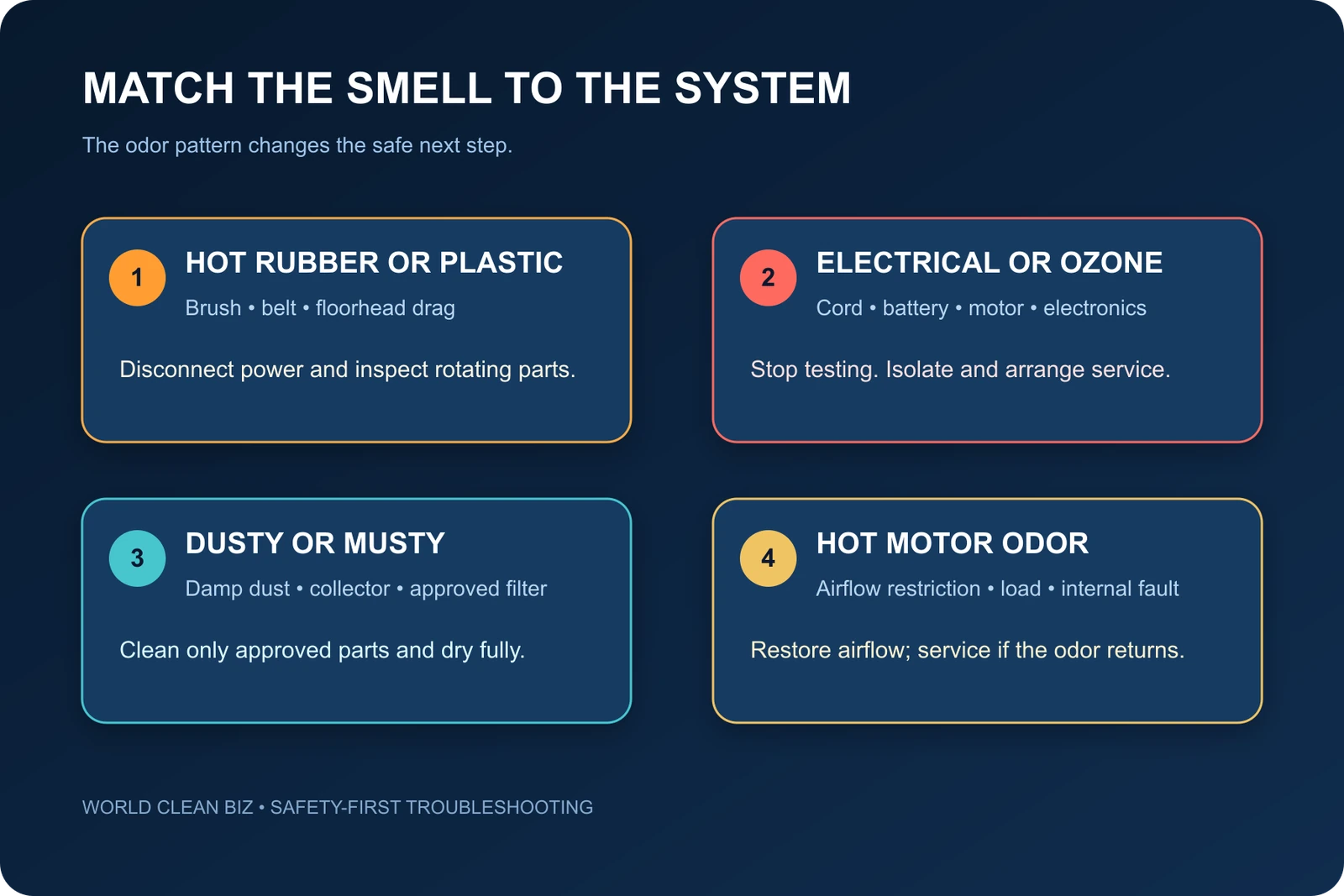
If your vacuum cleaner smells burnt, switch it off and disconnect power before checking anything. A hot-rubber odor can come from a jammed brush or slipping belt on models that use one. A hot dusty smell can develop when airflow is restricted. An electrical, ozone-like or melting-plastic odor can indicate a cord, battery, electronics or motor fault and should not be tested repeatedly.
The smell itself is diagnostic evidence. Note whether it came from the floorhead, exhaust, power cord, charger, battery or main body, and whether it began when the brush engaged. Do not keep running the vacuum to make the odor easier to locate.
Burning Vacuum Smells at a Glance
| Smell or condition | Leading area | Safe first action |
|---|---|---|
| Hot rubber, strongest at floorhead | Wrapped brush, trapped object, belt friction or excessive floor contact | Disconnect power and inspect the complete floorhead |
| Melting plastic or electrical/ozone odor | Cord, plug, switch, battery, controller, motor or connector | Stop use and arrange qualified service |
| Hot dusty odor with weak airflow | Full collector, loaded filter or blocked airway | Inspect only approved, user-accessible airflow points |
| Damp or musty odor after filter cleaning | Damp filter, wet debris or contaminated collector | Remove approved parts and let them dry completely |
| Odor with smoke, sparks or severe heat | Electrical, motor, battery or high-friction fault | Move away from combustibles if safe and do not restart |
| Odor returns after one correct repair | Internal damage or an unresolved load | Stop testing and use authorized service |
Stop Before You Troubleshoot
For a corded vacuum, switch it off and unplug it from the wall. For a cordless vacuum, switch it off and remove the battery only when the manufacturer permits user removal. Leave a hot machine on a stable, noncombustible surface away from children and pets while it cools naturally.
Do not touch a swollen battery, exposed wire or melted connector. Do not pour water into a dry vacuum, spray electrical parts, bypass a switch, run the product with guards removed or open a battery or motor housing. If there is active smoke, fire or a battery event, move to personal safety and local emergency guidance instead of troubleshooting the appliance.
BISSELL's official unusual-odor procedures separate damp or musty odors from burning smells and direct users to disconnect the machine before inspecting the brush and belt areas. That distinction matters because odor control and electrical safety are not the same repair.
1. Record the Odor Location and Trigger
Before parts are disturbed, note:
- the exact point where the odor is strongest;
- whether it began at startup or only when the brush turned;
- the floor type and height or power setting;
- whether suction fell, the motor pitch changed or the vacuum stopped;
- whether the bin, filter, belt or brush was recently serviced;
- whether hair, string, fine dust or a hard object was picked up;
- whether the cord, plug, charger or battery felt unusually hot.
A smell strongest at the floorhead during brush operation points in a different direction from an odor at the plug or exhaust. Keep those paths separate.
2. Inspect the Brush and Floorhead
On upright and powered-floorhead vacuums, hair and thread can wrap around the brush and its end caps. A coin, toy part, cable tie or carpet fringe can also stop or heavily load the roller. Friction then heats the trapped material, brush, belt or surrounding plastic.
With power disconnected, open only the user-accessible brush area described in the manual. Remove wrapped material from the full brush length and both ends. Check for a seized end cap, warped roller, scorched debris, damaged bristles, melted plastic or a foreign object rubbing the housing.
If the brush is not rotating normally, use the WCB vacuum brush-roll troubleshooting guide. Do not hold a powered brush, test it with the guard removed or use a hand near a roller that may restart.
3. Check the Belt Only If the Model Has One
Not every vacuum uses a user-serviceable belt. Some cordless floorheads use a dedicated brush motor and sealed drive. On a belt-driven model, a jammed brush can make the belt slip, stretch, glaze or overheat and produce a hot-rubber odor.
Follow the exact belt-access procedure. Replace a belt that is cracked, stretched, partly torn, melted or polished from slipping. Use the specified part and reinstall every guard and fastener before any test. A belt should not be lubricated, improvised or substituted by size alone.
BISSELL support for several upright families routes visible smoking at the foot to brush-not-turning checks. That is useful evidence for belt-driven designs, but it is not proof that every burning smell comes from a belt.
4. Restore the Approved Airflow Path
A full bin or bag, loaded filter or blocked hose can reduce cooling airflow and raise motor temperature. The odor may be described as hot dust, hot plastic or a warm motor smell rather than rubber.
Inspect the accessible chain:
- floorhead intake and neck;
- wand or extension tube;
- flexible hose and both cuffs;
- collector inlet, bag or bin;
- separator or screen;
- approved pre-motor and exhaust filters.
Empty the collector and remove obstructions without sharp tools that could puncture a hose. Service each filter exactly as the manual requires. Filters differ: some are washable, some are tapped clean, and others must be replaced. Never wash an element unless the manufacturer says it is washable, and never reinstall a washable filter until it is completely dry.
Dyson support identifies filter and blockage checks when a vacuum overheats or activates thermal protection. If suction is also weak, follow the complete WCB vacuum losing suction guide rather than assuming the odor proves motor failure.
5. Separate a Damp Odor from a Burnt Odor
A musty or damp smell after maintenance can result from slightly wet debris, a dirty collector or a washable filter reinstalled before it dried. BISSELL and Dyson both include damp-filter or moisture-related explanations in official unusual-smell support.
Remove only the approved washable components, clean them as directed and allow them to air-dry fully for the model's specified time. Do not accelerate drying with an oven, microwave, open flame or direct high heat. Clean non-washable parts only by their approved method.
A damp odor does not cancel a simultaneous electrical warning. If the product also sparks, overheats, changes speed or smells like melting insulation, stop and use service.
6. Treat Electrical and Battery Odors as Service Conditions
An acrid electrical smell, ozone-like odor, melted connector, discolored plug, sparking switch or unusually hot cord is not a normal maintenance symptom. Neither is a swollen, leaking, cracked or abnormally hot lithium-ion battery.
Do not test another outlet merely to see whether the smell returns. Do not open a plug, switch, charger, controller, motor or battery pack. Record the model and serial number, where the odor originated, how long the product ran, which mode was selected and whether any warning light appeared.
For cordless products, use only the approved charger and battery. Stop charging if the charger, connector or pack has a new electrical odor or visible damage. Battery and charging faults require the manufacturer's support or qualified service route.
7. Make One Controlled Test Only When It Is Safe
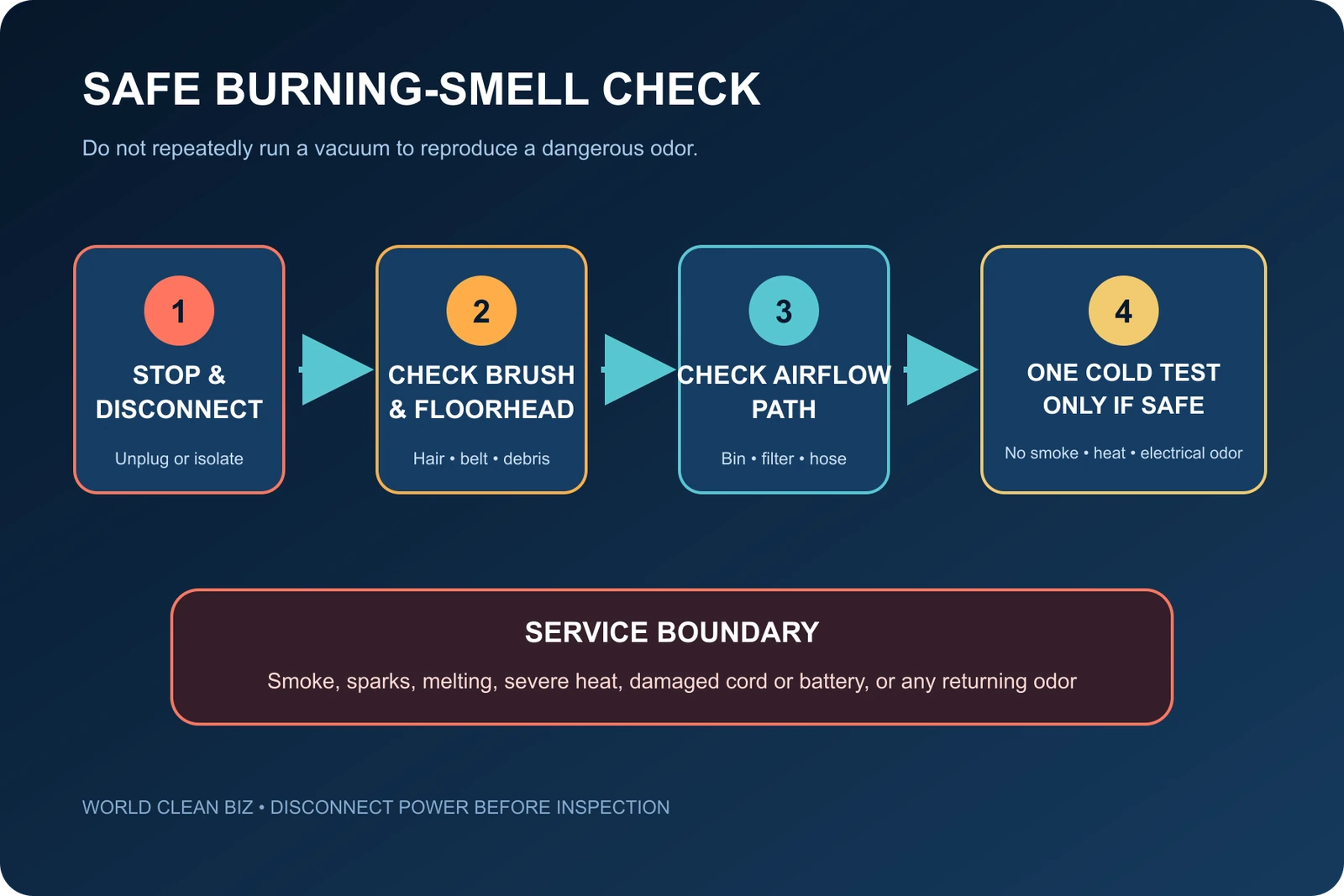
A short test is reasonable only when all of these are true:
- there was no smoke, spark, melting, electrical smell or battery warning;
- the cause was visible and user-serviceable, such as wrapped hair;
- the brush, belt, filter, bin, hose and guards are correctly installed;
- every washable part is completely dry;
- the cord, plug, battery and housing are undamaged;
- the machine is cool and the manual permits restart.
Test for only long enough to confirm normal brush movement, airflow, sound and odor. Use the same attachment on a clear, appropriate surface. If the smell returns, switch off immediately. Repeated testing can turn a small friction or insulation fault into greater damage.
When to Use Authorized Service
Arrange qualified service when:
- there is smoke, sparking, melting or an electrical/ozone odor;
- the cord, plug, switch, charger, battery or connector is hot or damaged;
- a burning odor comes from the main motor body;
- the brush, belt or floorhead remains hot after an approved correction;
- the vacuum repeatedly overheats or shuts down;
- liquid entered a dry-only motor or electrical compartment;
- the odor returns after one fully reassembled, cold controlled test;
- reaching the suspected part requires prohibited disassembly.
If heat is the main symptom, use the separate WCB vacuum overheating guide. For a new abnormal sound, follow the vacuum loud-noise guide.
FAQ
Why does my vacuum smell like burnt rubber?
On a belt-driven model, a jammed brush or excessive floor contact can make the belt slip and heat. Wrapped debris or a damaged roller can create similar friction. Disconnect power and inspect only the user-serviceable floorhead.
Can a clogged filter cause a burning smell?
A loaded filter can restrict airflow and contribute to overheating or a hot-dust odor. It does not explain every electrical or rubber smell. Service the exact filter correctly and stop if heat or odor returns.
Is it safe to use a vacuum after removing hair from the brush?
Only if there was no smoke, electrical odor, melting, battery damage or severe heat; all guards and filters are correctly reinstalled; and the model manual permits restart. Make one short controlled test.
Why does my vacuum smell after washing the filter?
The filter may still be damp, or wet dust may remain in the collector. Remove the approved parts and let them dry fully. Not every filter is washable.
Can I replace a vacuum belt myself?
Only when the exact model treats the belt as user-serviceable. Use the specified part and follow its guard-removal and tensioning instructions. Many cordless floorheads do not use a user-replaceable belt.
When should I stop using the vacuum completely?
Stop for smoke, sparks, melting, an electrical smell, severe or returning heat, battery swelling, a damaged cord or plug, or a burning odor that returns after a safe external correction.
Final Answer
When a vacuum cleaner smells burnt, disconnect power first and identify whether the odor is hot rubber, hot dust, damp/musty material or an electrical warning. Safely inspect the brush, belt where applicable, bin, filter, hose and accessible airway. Follow the exact model instructions and dry washable parts completely.
Do not restart a vacuum that smoked, sparked, melted, developed an electrical smell or has cord, battery or motor symptoms. Those are service conditions, and repeating the test can increase the damage.