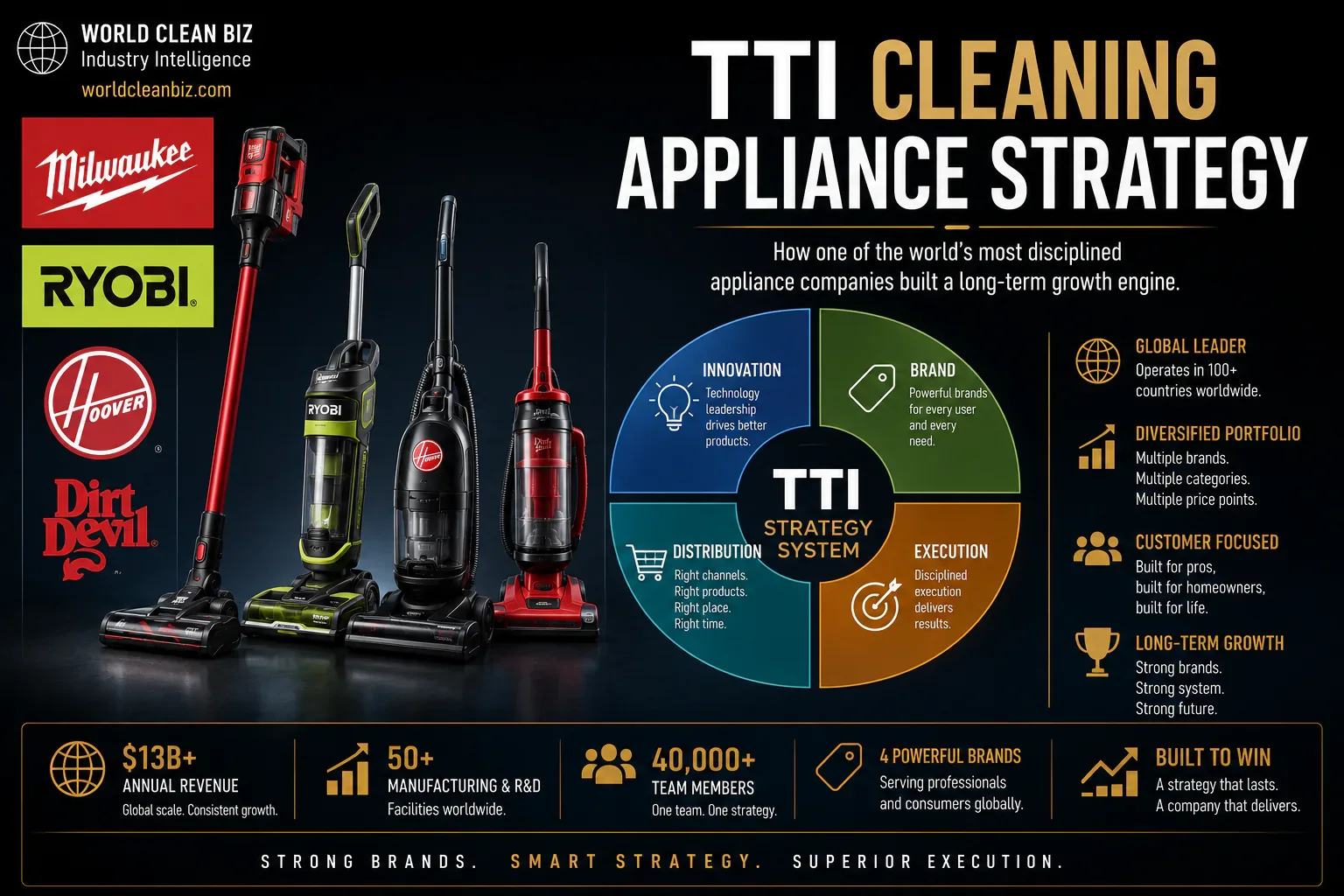
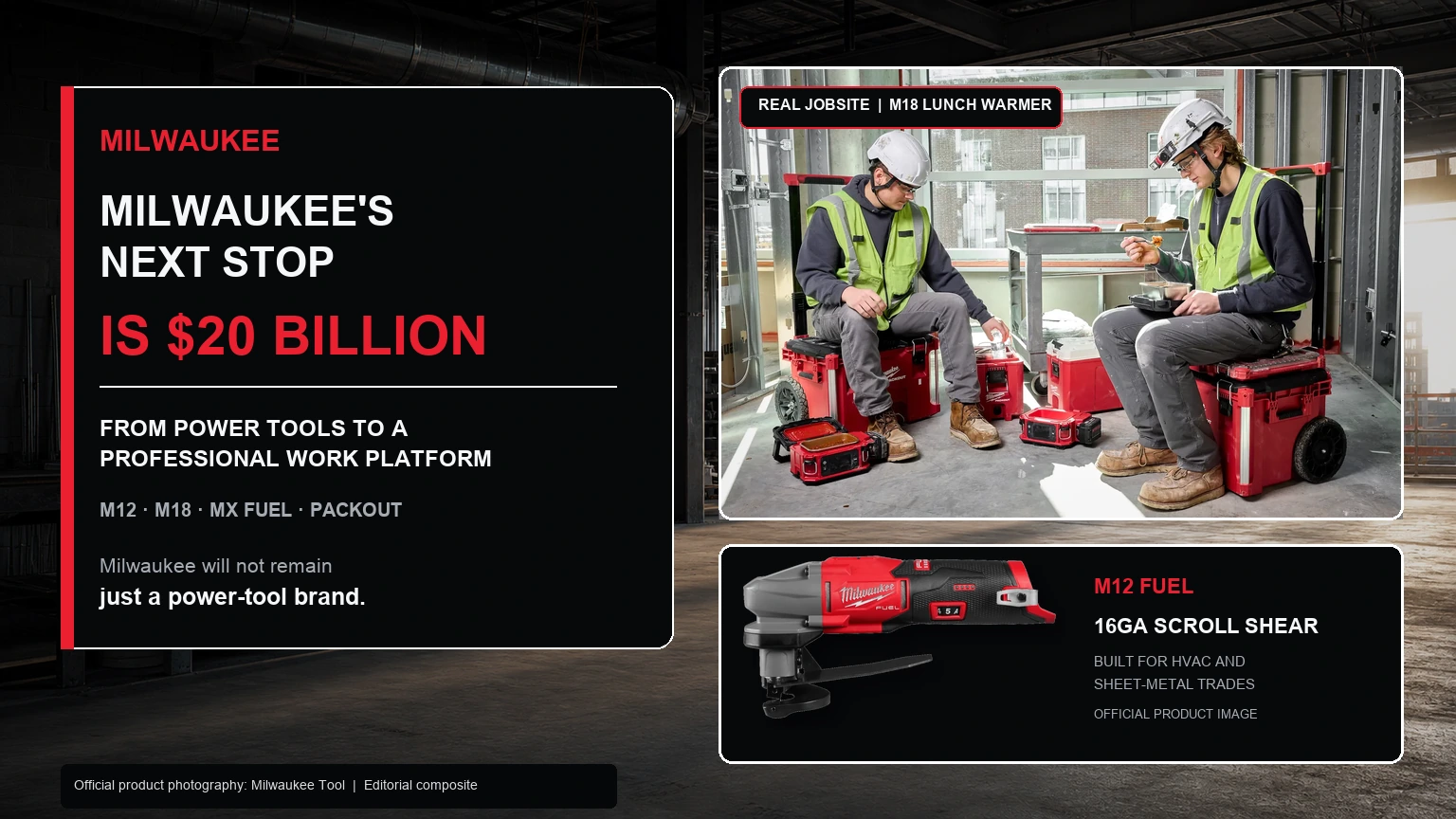
- TTI used vacuum cleaners and a series of brand acquisitions to move from contract manufacturing into branded consumer products.
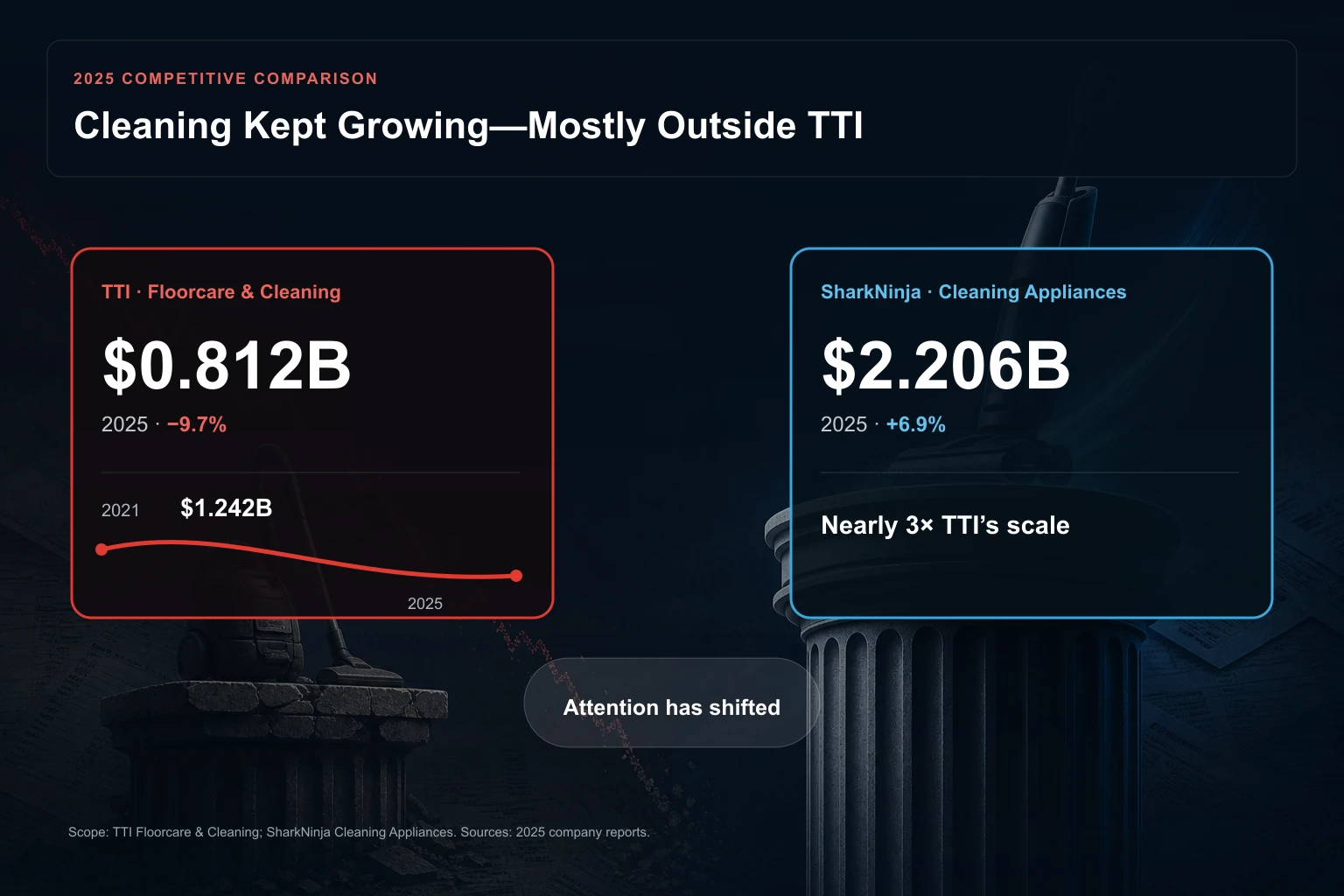
- Floorcare sales fell from $1.242 billion in 2021 to $811.8 million in 2025 while SharkNinja and Chinese cleaning brands captured the industry’s new growth.
- In 2026, TTI stopped reporting Floorcare & Cleaning as a separate segment, raising the question of how long Hoover, Dirt Devil, Vax and Oreck will remain in the group.
In 2026, Techtronic Industries changed the way it had reported its businesses for years.
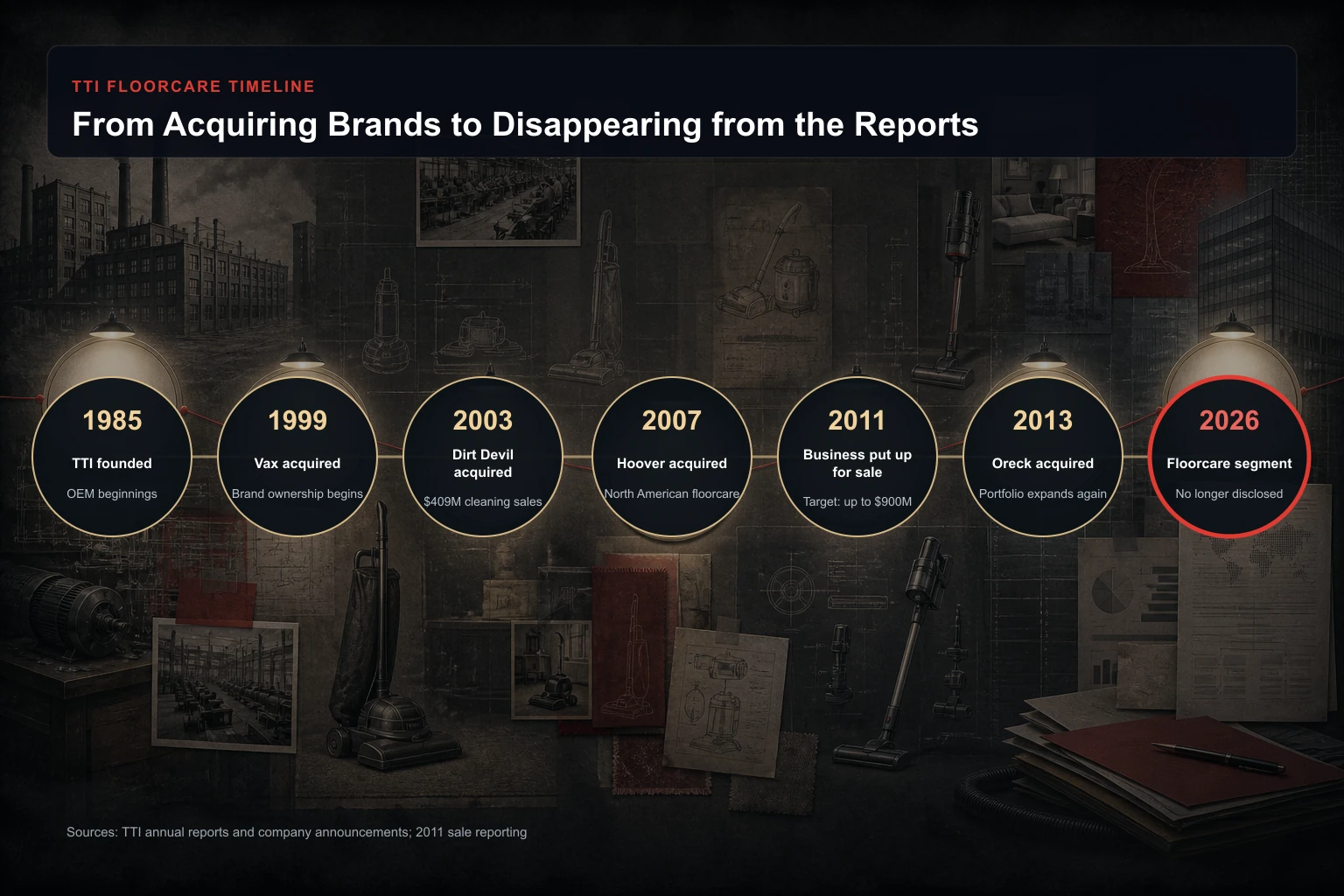
Investors used to find a separate Floorcare & Cleaning segment in TTI’s financial statements. Hoover, Dirt Devil, Vax and Oreck all sat inside it, with their sales, profit and year-to-year changes visible as a distinct business. TTI now reports two divisions—Professional and Consumer—and floorcare has been folded into the latter.
The brands are still on sale and the products are still being made. But a business that once generated more than $1 billion a year and had been part of TTI for nearly four decades has disappeared from the financial statements.
Milwaukee is now the company’s most important brand. It was not, however, the business on which TTI was originally built.
Horst Julius Pudwill and Roy Chi Ping Chung founded TTI in Hong Kong in 1985. The company began with only a few hundred thousand dollars in sales, manufacturing power tools and small appliances for Western customers. In 1987, TTI began supplying cordless tools to a major US distributor. A year later, it opened a factory in Dongguan.
At that point, TTI looked much like many Chinese contract manufacturers that followed it. It had manufacturing know-how, cost control and the ability to build to a customer’s specification. The brand, distribution and most of the profit still belonged to the customer. Early accounts describe TTI making Craftsman cordless tools for Sears and handheld vacuums for Bissell.
TTI acquired the British vacuum brand Vax in 1999. In 2003, it bought Royal Appliance and gained Dirt Devil and Royal. By then, floorcare sales had reached about $409 million, nearly a quarter of group revenue.
Those deals took TTI beyond manufacturing and into ownership of brands and distribution. It acquired Milwaukee in 2005, then bought Hoover’s North American floorcare business from Whirlpool two years later. Hoover was one of the best-known vacuum names in the United States. For decades, “Hoover” was widely used as another word for vacuuming.
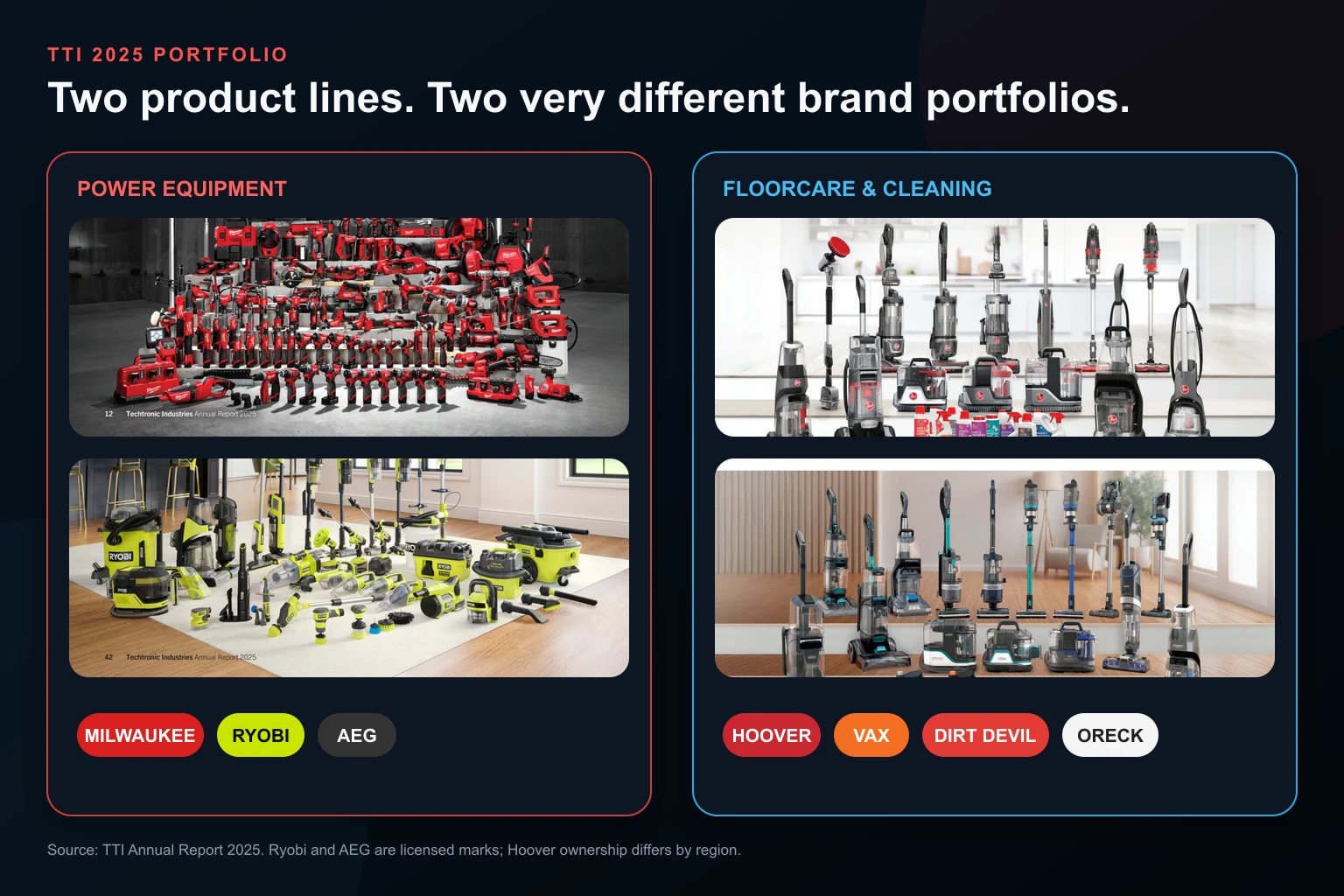
TTI now had two very different groups of assets. On one side were power-tool brands such as Milwaukee and Ryobi. On the other were Hoover, Dirt Devil, Vax and, later, Oreck.
One of the executives responsible for bringing those businesses together was Joseph Galli Jr.
Galli had spent 19 years at Black & Decker and played an important role in the relaunch of DeWalt in the 1990s. He later served as Amazon’s president and chief operating officer and as chief executive of Newell Rubbermaid. He joined TTI in 2006 to run the appliance business and became group CEO in 2008.
During his tenure, Milwaukee built a vast cordless ecosystem around M12 and M18. The same batteries spread from drills and impact wrenches into saws, lighting, outdoor equipment and hundreds of other products. One tool purchase could turn into a relationship lasting many years.
Hoover later tried something similar with ONEPWR, using one battery across vacuums, floor-washing products and other cleaning equipment. But household buyers do not keep adding cleaning appliances simply because they already own several batteries. They are more willing to switch for better cleaning, a better user experience or a new product form.
ONEPWR never reproduced the effect that M12 and M18 had for Milwaukee. TTI had brands, manufacturing and retail distribution, but it never found a product system that could keep its floorcare business growing.
By 2011, the company was already considering a sale. Hoover, Dirt Devil and Vax were placed on the table, and contemporary reports said TTI was seeking as much as $900 million.
My understanding is that Midea was among the companies approached. TTI’s asking price was around $600 million. Midea considered it too expensive and did not proceed.
The deal never happened. Two years later, TTI went in the opposite direction and acquired Oreck, the premium US vacuum brand. It still believed that adding brands and combining distribution and manufacturing could restore growth.
What followed was more consolidation of factories and organizations than renewal of the product portfolio.
After acquiring Royal and Hoover, TTI moved more engineering, purchasing and production to Asia. Hoover’s main plant in North Canton, Ohio, was closed and manufacturing shifted to lower-cost locations. Outside OEM and ODM suppliers handled a meaningful share of production for a time. When TTI needed to raise utilization at its own factories, orders moved back inside the group.
Around 2018, TTI cut staff at its floorcare office in Suzhou and moved some cordless-vacuum orders from outside suppliers back to its Dongguan factory. As Vietnam became another production center, the group continued to redistribute work among China, Vietnam and the United States. Today, according to my industry information, most of TTI’s floorcare products are manufactured in Vietnam by Ningbo Dechang Electrical Machinery, or YDC.
Those moves could lower costs. They did not solve the product problem. While TTI kept reorganizing factories and offices, Shark was attacking Hoover, Dirt Devil and Vax directly in North America and the UK.
Shark launched products faster and was more willing to redesign them around a specific consumer frustration. Anti-hair-wrap brush rolls, flexible wands, vacuum-and-mop systems and floor washers kept reaching retail shelves. Hoover still had recognition. Shark increasingly controlled the pace of new products and the attention around them.
In 2025, SharkNinja’s Cleaning Appliances sales reached $2.206 billion, up 6.9%. TTI’s Floorcare & Cleaning sales fell 9.7% to $811.8 million. SharkNinja’s cleaning business was already close to three times the size of TTI’s.
Chinese brands were also entering the global market through new product forms. Ecovacs helped turn the robot vacuum into a major home-cleaning category. Roborock pushed navigation, algorithms, multifunction docks and premium user experience forward. Dreame expanded from high-speed motors and cordless vacuums into floor washers and robot vacuums. Tineco turned the floor washer into an overseas category capable of selling at million-unit scale.
These companies did not merely take sales from one traditional Hoover vacuum. The industry’s incremental revenue, retail resources and consumer attention were moving toward robot vacuums, floor washers and rapidly evolving cordless products.
Hoover did launch robot vacuums and was once involved in iRobot’s patent litigation. TTI already had motors, batteries, manufacturing and North American distribution—most of what it needed to enter the new categories. But it never built a competitive robotics and software position, and it did not become a product leader in floor washers.
As another growth cycle began, TTI’s floorcare business still depended mainly on Hoover, Vax, Oreck and Dirt Devil. The brands operated across different countries, channels and historical product lines, without a system that could concentrate product development, marketing and investment behind them. The focus and speed that TTI sustained at Milwaukee never appeared across the floorcare portfolio.
Some newer Dirt Devil products were eventually handed to ePro, also known in Chinese as Yibao, to develop, sell and support under licence. The products continued to use the Dirt Devil trademark, but the licensee ran the business. TTI had not sold the brand; it had stopped operating every part of its product range itself.
For a group with TTI’s manufacturing scale, this was more than ordinary outsourcing. When a brand relies on a licensee to enter new categories, it also shows how little internal product-development capacity the brand is receiving.
The pandemic briefly obscured the weakness. TTI floorcare sales reached $1.242 billion in 2021. They then declined for four consecutive years, falling by more than $400 million to $811.8 million in 2025. Segment operating profit was only $18.2 million that year, a margin of roughly 2.2%.
Milwaukee kept growing. In the first half of 2026, TTI’s Professional division generated $5.891 billion and Milwaukee maintained double-digit growth. Consumer sales were $2.401 billion. Floorcare was now one component inside that division rather than a business shown on its own.
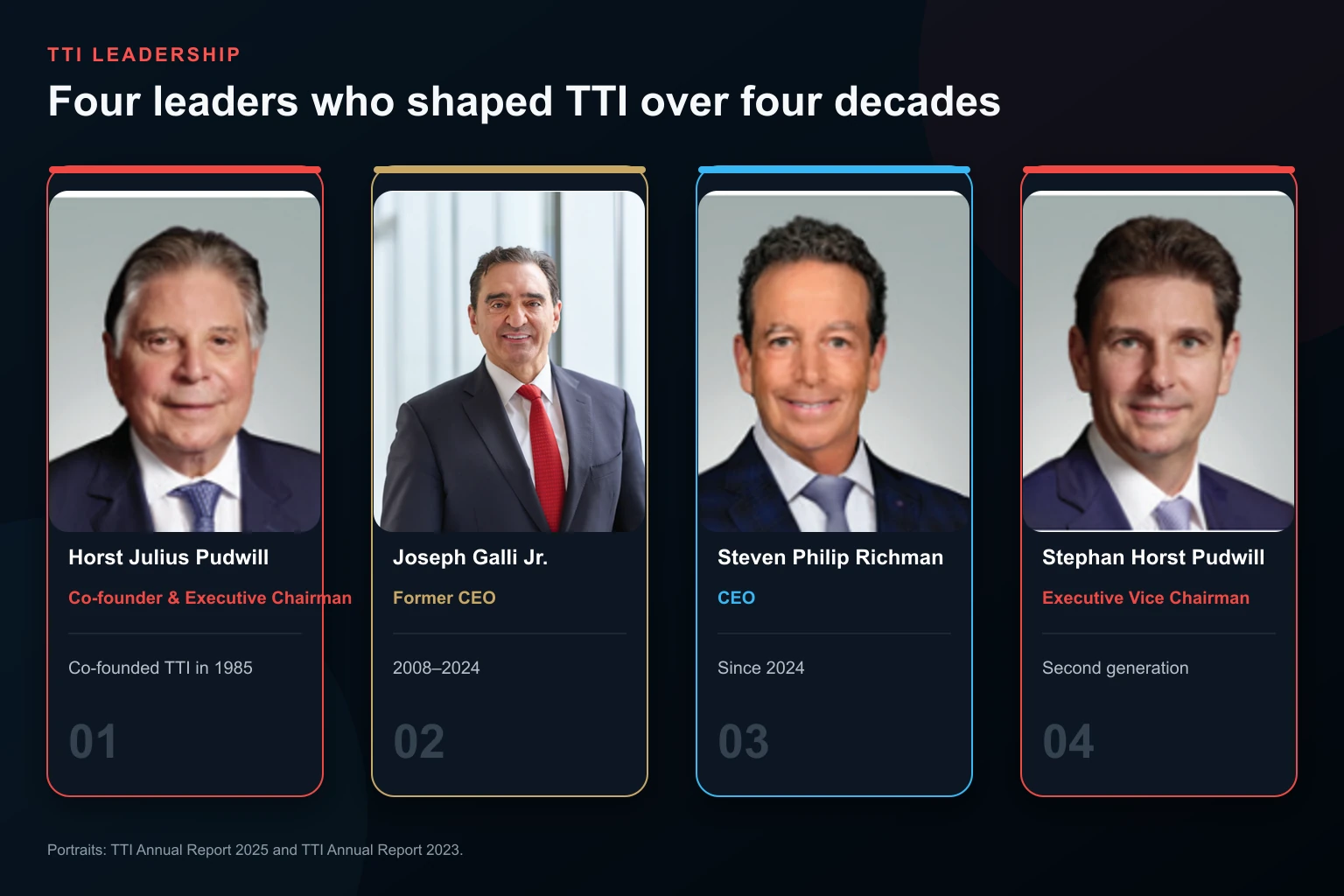
Joseph Galli retired in May 2024 after nearly 20 years at TTI. His successor as CEO was Steven Richman, who had spent about 17 years leading Milwaukee—not the founder’s son.
Stephan Horst Pudwill serves as TTI’s executive vice chairman and continues the family’s role in the company’s long-term direction. Family influence has passed from Horst Pudwill to Stephan Pudwill, while operating leadership moved from Galli to the executive who had taken Milwaukee into its next stage.
In 2025, TTI combined floorcare product development, marketing, manufacturing and engineering into one global organization. It closed the Charlotte facility and folded the operation into its Consumer business in Anderson, South Carolina. The following year, Floorcare & Cleaning ceased to appear as a separately reported segment.
From Vax to Dirt Devil, and from Hoover to Oreck, TTI spent more than a decade assembling a floorcare portfolio across the United States and Europe. Vacuums helped it move from contract manufacturing into brand ownership. Milwaukee later carried the company to an entirely different level.
Shark overtook Hoover in the traditional market. Dreame, Roborock and Ecovacs captured the growth created by new products. The cleaning industry continued to expand, but more and more of that expansion happened outside TTI.
For now, only the segment name has disappeared from the financial statements. Perhaps, before long, these historic cleaning brands will disappear from TTI as well.