- Husqvarna is still the global robotic mower leader, but Chinese brands now challenge its premium on wire-free navigation, RTK, vision, all-wheel drive and price.
- Every company still at the table has at least one strong capability: Husqvarna its brand and dealers, Positec its European base, Mammotion its products, Segway Navimow its global hardware operations, MOVA its group resources, Sunseeker its yard expertise.
- The next phase is harsher: falling prices, channel battles, service pressure, reliability and cash flow will narrow the table further.
In this article 9 sections
Part of the WCB topic:EU Anti-Dumping Case on Chinese Robotic Mowers
*This analysis was first written in Chinese in July 2026, after SPOGA+GAFA.*
By SPOGA+GAFA 2026, robotic mowers were no longer a lively but vague new category. The direction was clear from the products on show: wire-free operation, RTK, vision, all-wheel drive, larger lawns, commercial use and modular platforms had become the common language of the main players. The difference is that some companies are filling gaps in their ranges, some are betting on the next platform, and some are simply proving they are present.
This round is no longer about who builds a robotic mower first. It is about who can deliver products, channels, service and cash flow overseas for years. Here is how I see the companies at the table.
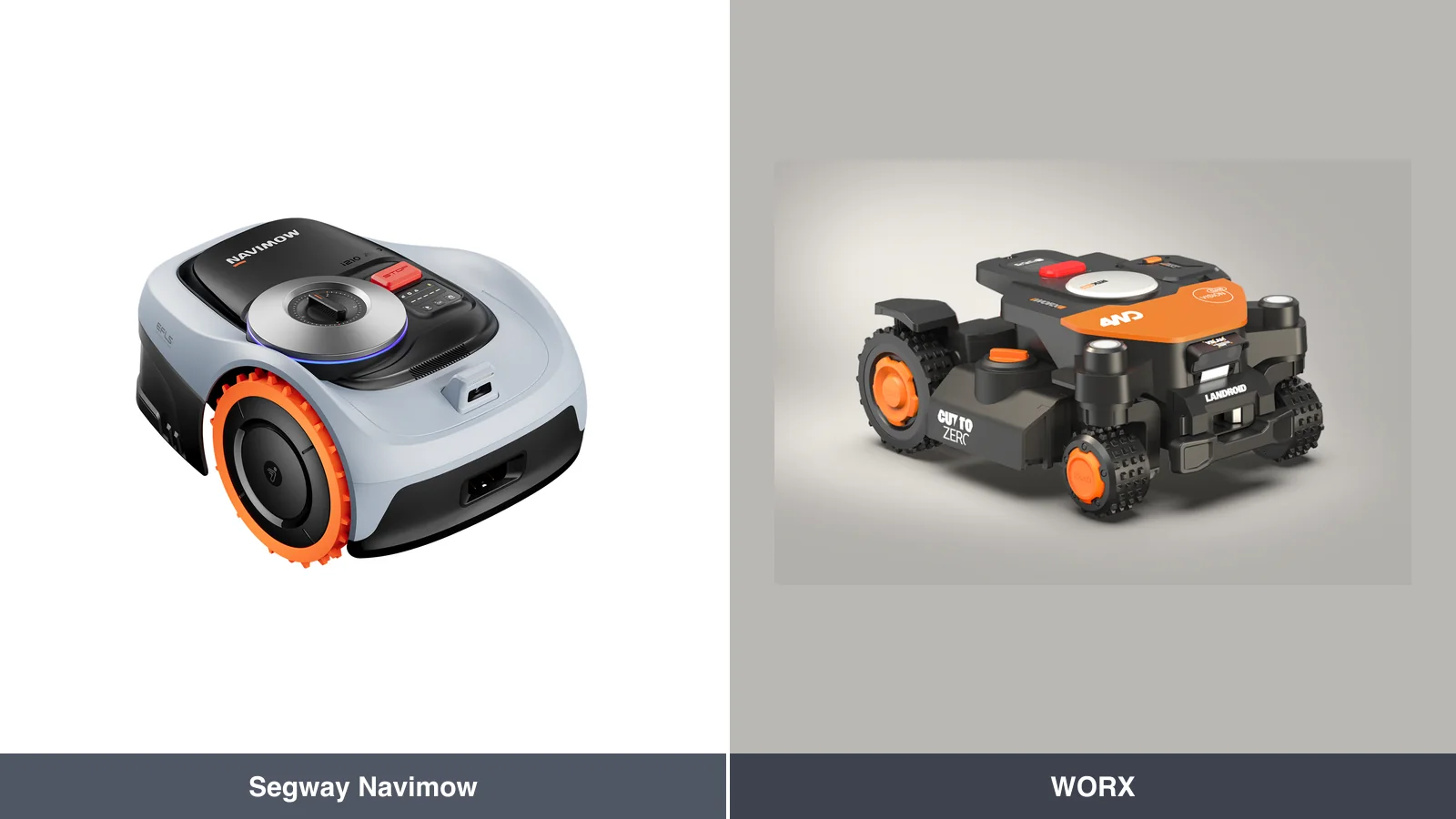
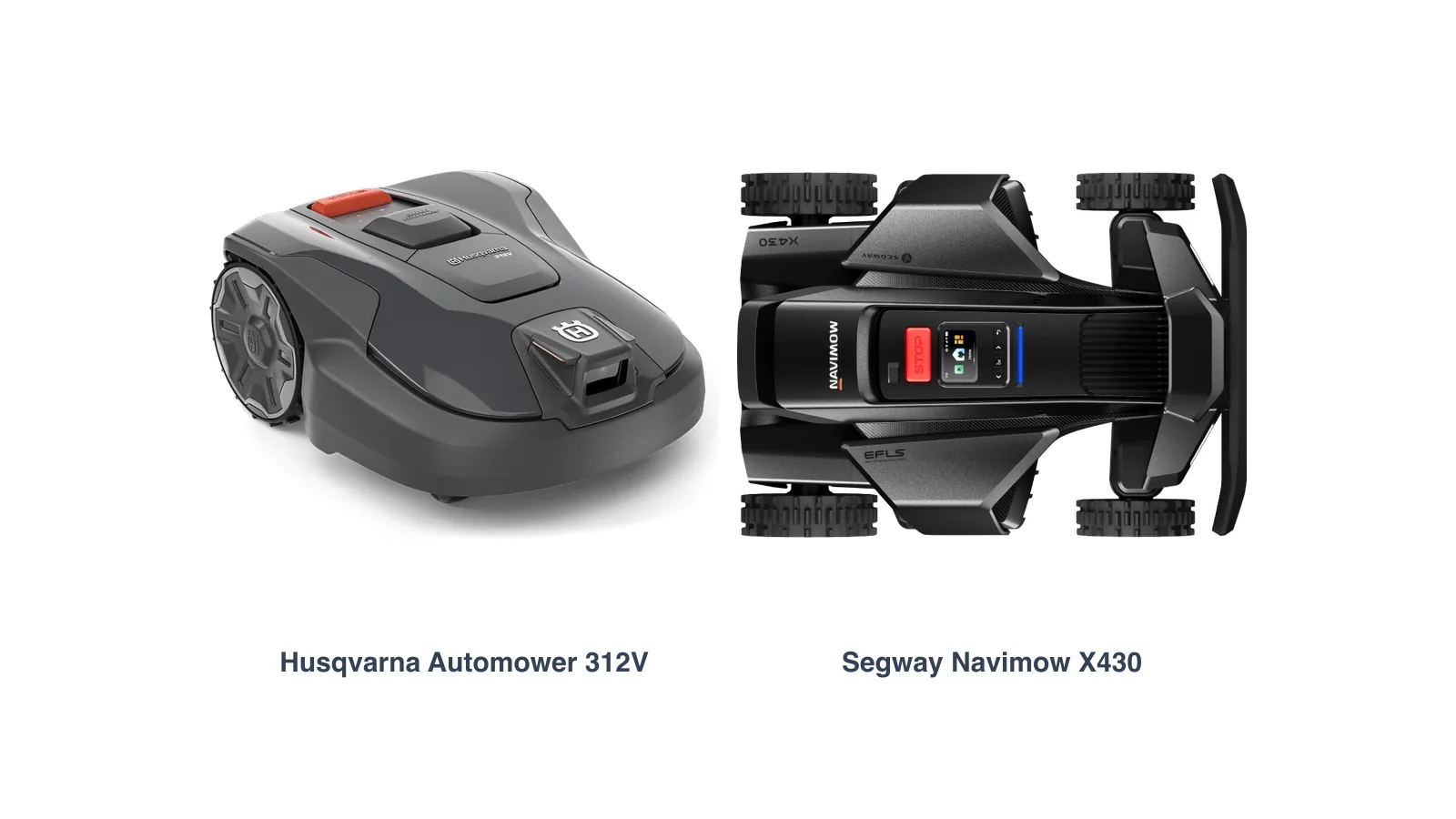
*Product photos: Husqvarna and Segway Navimow.*
Husqvarna: still the king, losing control of the premium
Husqvarna remains impossible to ignore. Its strengths are Automower's long history, Europe's garden dealers, professional users, a service network and long-built brand trust. For many European buyers, Husqvarna was the default premium robotic mower.
The group reported net sales of SEK 46.6 billion in 2025. Robotic mowers are not its only business, but they sit at the centre of its shift to smarter garden products. A CITIC Securities report estimated Husqvarna's 2023 robotic mower revenue at about RMB 5.6 billion and put boundary-wire-free models at 33% of its unit sales in the first half of 2024.
Husqvarna has been reorganising. Glen Instone, previously head of its Forest & Garden division and earlier its CFO, became chief executive on 11 August 2025. According to industry sources, Husqvarna has also begun building R&D capacity in China and working with Chinese contract manufacturers. And in November 2025 the European Commission opened an anti-dumping investigation into Chinese robotic mowers, with Husqvarna-related entities among the complainants. That is part of the old king's defence of Europe.
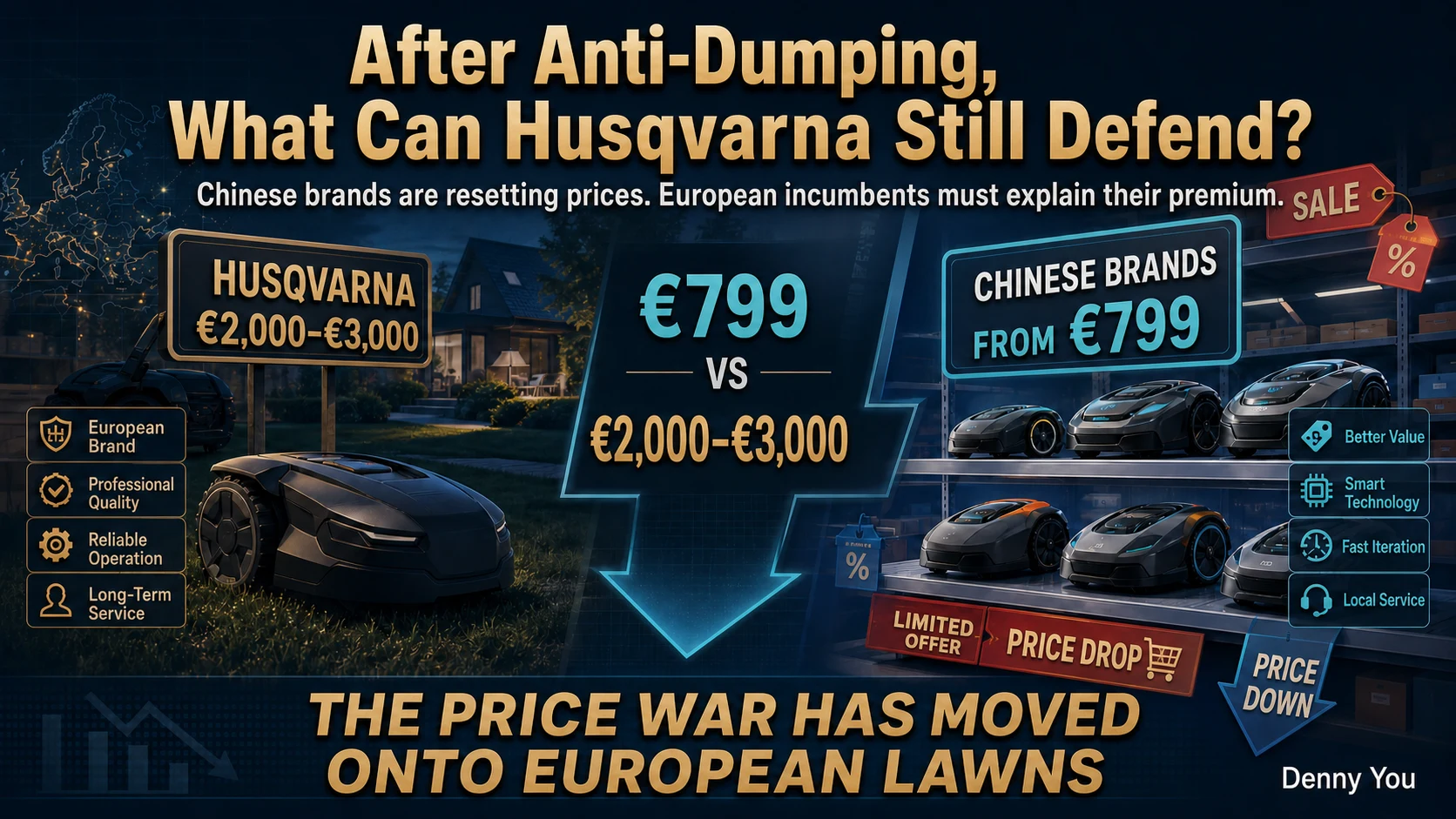
Chinese brands are attacking with a different story: wire-free navigation, RTK, vision, all-wheel drive, difficult terrain, lower prices and faster iteration. Husqvarna's price premium used to rest on brand, dealers and reliability. Now buyers compare it feature by feature and price by price with Segway Navimow, Mammotion, MOVA and Sunseeker.
Husqvarna is still the global number one, with a service system many Chinese brands cannot match quickly. A new chief executive, Chinese R&D and manufacturing links, and the anti-dumping complaint show it has not chosen passive defence. The question is whether Instone can keep it on top in this round.
Worx and Positec: the Chinese brand closest to Husqvarna
Positec deserves its own section. It is one of the most successful own-brand companies in China's power-tool industry and opened the way for Chinese tool brands abroad. While most Chinese tool makers were still contract manufacturers, Positec bet on its own brands, gradually gave up OEM work and built WORX and Kress directly in overseas markets.
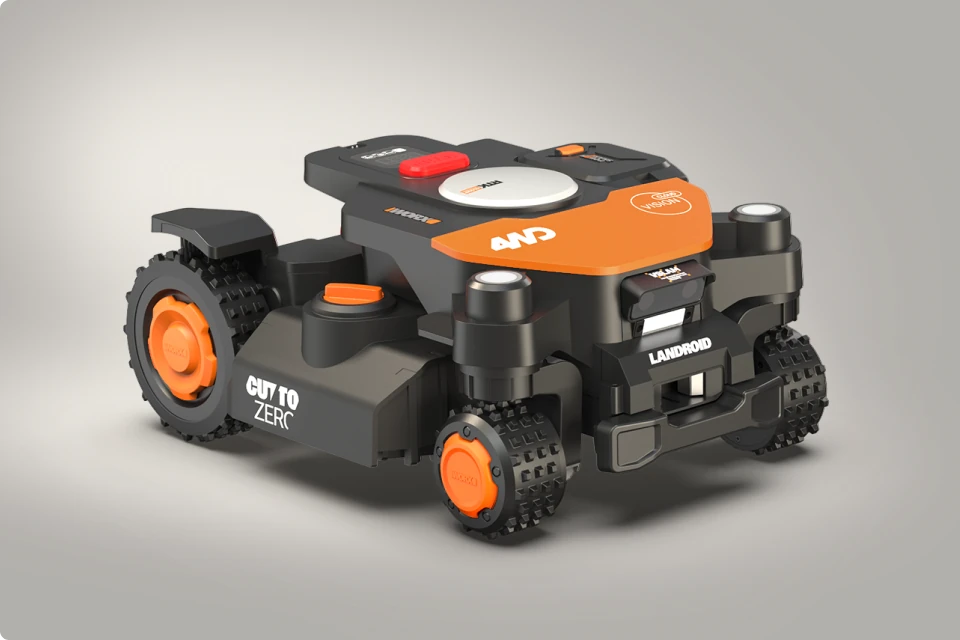
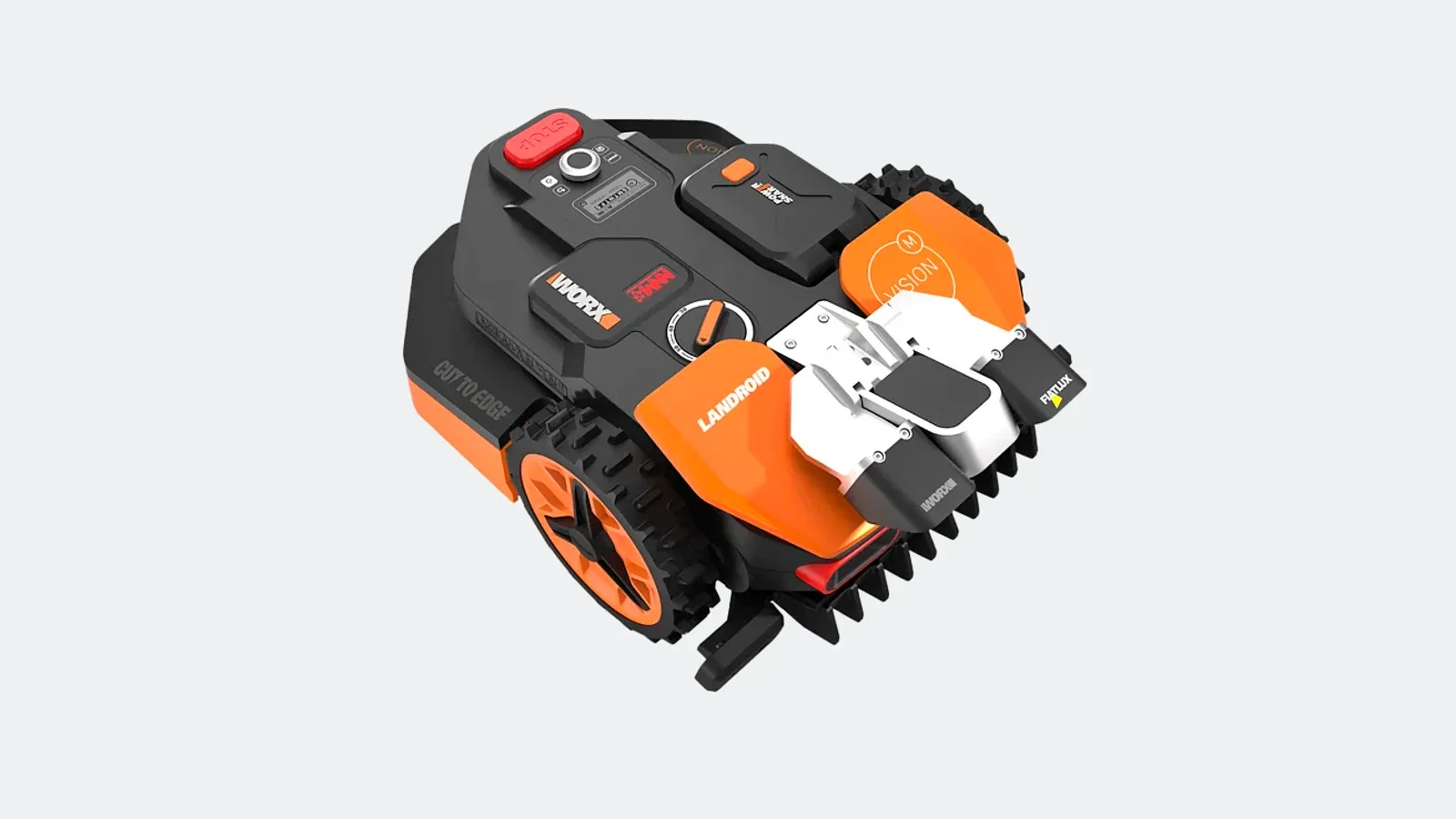
Before the current wave, Positec was almost the only Chinese brand able to challenge Husqvarna head-on in Europe. The Landroid range has a strong presence in European gardens, backed by Positec's tools, dealers and brand experience. In the industry, Positec is regarded as one of the first Chinese brands to sell robotic mowers at million-unit scale, which shows it has completed the full cycle of product definition, mass production, distribution and consumer education.
In this round, WORX is betting on Landroid Vision and its newer Vision Cloud platform, while Kress targets professional grounds care. The business has faced some decline as pressure comes from tool giants, Chinese robotics companies and new yard-robot brands. In January 2025 Positec announced about USD 250 million in its first round of equity financing.
Positec's wider influence is in people. Many robotic mower teams today include former Positec staff. It trained a generation of product, channel, supply-chain and overseas talent who later spread through the industry. Whether it can keep its position through the shift to wire-free, RTK, vision and all-terrain mowers is one of the key questions of the next few years.
Mammotion: a product-led start-up
Mammotion is one of the most important Chinese mower brands overseas. LUBA gave it strong recognition: all-wheel drive, large gardens and difficult terrain. It entered the market with a strong product, not a low price. The first LUBA campaign on Kickstarter in 2022 raised more than USD 3.3 million, and shipments have grown quickly since. Its parent, AgileX Robotics, brings robotics and motion-control background.
Founder Wei Jidong previously worked at DJI, and people close to him describe him as an exceptionally strong product manager. That founder-led speed, judgement and aggressiveness helped Mammotion build global attention fast. It is now moving beyond homes with its Maston commercial series.
Mammotion has proved that a Chinese start-up can build a global robotic mower brand. Its next challenge is to move from founder-driven speed to a global organisation: service, spare parts, channels, inventory and reliability are all harder than crowdfunding and a hit product.
Segway Navimow: built to stay
Segway-Ninebot is not a pure mower start-up. It already runs a global consumer-hardware business in e-scooters, two-wheelers and robotics, with overseas channels, apps, IoT, supply chain and brand operations behind it. Navimow is its main entry into the garden.
Navimow bets on wire-free navigation, positioning, vision and home-user experience, and its millionth mower has already rolled off the line. Segway-Ninebot's 2024 revenue of about RMB 14.2 billion gives it funding, organisation and channel strength that most mower start-ups lack.
Segway Navimow has a real chance to stay at the final table. A mower is heavier than a scooter, its use more complicated and its service more demanding, but Segway-Ninebot has already shown it can run a global hardware business. The task now is turning Navimow from a fast-growing category into a stable, long-term yard-robot business.
MOVA and Dreame: the most aggressive variable
MOVA is part of the Dreame group, which has expanded rapidly across vacuums, floor washers and robot vacuums with fast product cycles, strong marketing and overseas channels. Its move into mowers extends cleaning-robot capabilities outdoors. In Cologne, MOVA showed riding mowers alongside its robots, aiming at larger gardens and more demanding terrain. The Dreame group is also willing to put advanced hardware such as LiDAR into products early and absorb the cost through scale.
MOVA is one of the most aggressive players at the table, with group resources, cleaning-robot experience and a fast product rhythm. The risk is that gardens do not reward speed alone. Mowers work outdoors in rain, mud and slopes, around children and pets, with real service and safety demands.
Sunseeker: less noise, more of a specialist
Sunseeker has deeper roots in mowers and garden equipment than many newcomers. It did not arrive because mowers became fashionable; it has long built products around the yard and OPE. Its Elite and Orion ranges continue to push wire-free navigation, vision and positioning.
Sunseeker's public profile is smaller than Navimow's, Mammotion's or MOVA's, but on expertise, yard understanding and product continuity it belongs in the first group. Its opportunity is focus; its pressure is resources, as brand, channels, service and global operations become more expensive.
The newcomers with distinct routes
- TerraMow bets on vision, with the X for larger gardens and mini500 for small and mid-sized ones. Vision can lower installation effort and make boundaries feel natural, but light, shade, rain, changing grass, leaves, pets and toys all affect it. Stability in real gardens, not in demos, will decide its place.
- Airseekers stands out for structural innovation, with multiple motors, sideways movement and all-wheel drive. It raised an A+ round worth tens of millions of yuan in 2026 with industrial investor Infore Environment. The more complex the structure, the more it must prove reliability under wet grass, slopes, mud and vibration.
- Yarbo is building a modular yard robot that mows, clears snow, blows leaves and tows. It raised about USD 27 million in a Series B in April 2025. Its ambition is the largest and its path the hardest: higher prices, more user education, heavier service and more sensitive safety.
- Anthbot, LDROBOT's brand, attacks on price, bringing wire-free navigation, RTK and AI cameras to lower price bands. Brands like it push the whole price structure down and force leaders to justify their premium.
- Lymow uses tracks for difficult terrain and large lawns. It is a premium niche player; volume production, cost and service will test it.
- RoboUP draws on TOPBAND's controller, motor and battery-management background and targets steep, complex gardens with the Rhino Pro AWD. Its challenge is turning engineering capability into a consumer brand.
- Beatbot is known for pool robots and raised RMB 1 billion in September 2025, led by Meituan Longzhu, while announcing plans for robotic mowers. It is a potential variable, not yet a mature mower player.
- Hookii, Neomow and iGarden have products and market activity but thinner hands. As the leaders cut prices, later entrants need a clear price advantage, a niche or strong supply-chain backing.
Traditional OPE brands
STIHL, Gardena, Stiga, Honda, Greenworks, Toro, John Deere, AL-KO, Einhell and others still have garden tools, dealers and professional users. Many Western buyers do not compare garden tools online; they rely on local dealers, service and parts.
But robotic mowers are becoming outdoor robots that need positioning, vision, algorithms, apps, cloud services, over-the-air updates, safety logic and an electronics supply chain. Traditional OPE companies that treat them as mowers with a smart module will move slowly. They will not disappear, but the consumer market will look more and more like robotics and consumer electronics, where Chinese brands' iteration speed, supply-chain cost and feature integration keep up the pressure.
The table is getting smaller
The first stage was about who could build a wire-free mower. The second was about completing RTK, vision, all-wheel drive, path planning and the app. The next stage is harsher: falling prices, channel battles, service pressure, reliability and cash flow.
Every company that stays needs at least one strong capability. Husqvarna has brand and dealers; Positec has Europe and its tool base; Mammotion has products and global attention; Segway Navimow has global hardware operations; MOVA has group resources and speed; Sunseeker has yard expertise. Yarbo, Airseekers, TerraMow and Lymow are fighting for places with distinctive product routes. Others still have chances, but those chances are narrowing.
A robotic mower has to work for years on lawns, in rain and on slopes. A show can display features; the market checks reliability. Launches create attention; service decides repeat purchases. Low prices win the first orders; cash flow decides who reaches the next round. The main characters of this round have largely appeared. The question now is who lasts.