- Ecovacs showed X5 Hybrid in January 2025, xLean debuted TR1 in September 2025, and Dreame showed TriForm in September 2026.
- Denny estimates manual takeover could account for just 1–5% of everyday cleaning situations; this is personal judgment, not survey data.
- A lower combined purchase price may appeal, but added complexity and compromises in everyday robot use could limit mass-market demand.
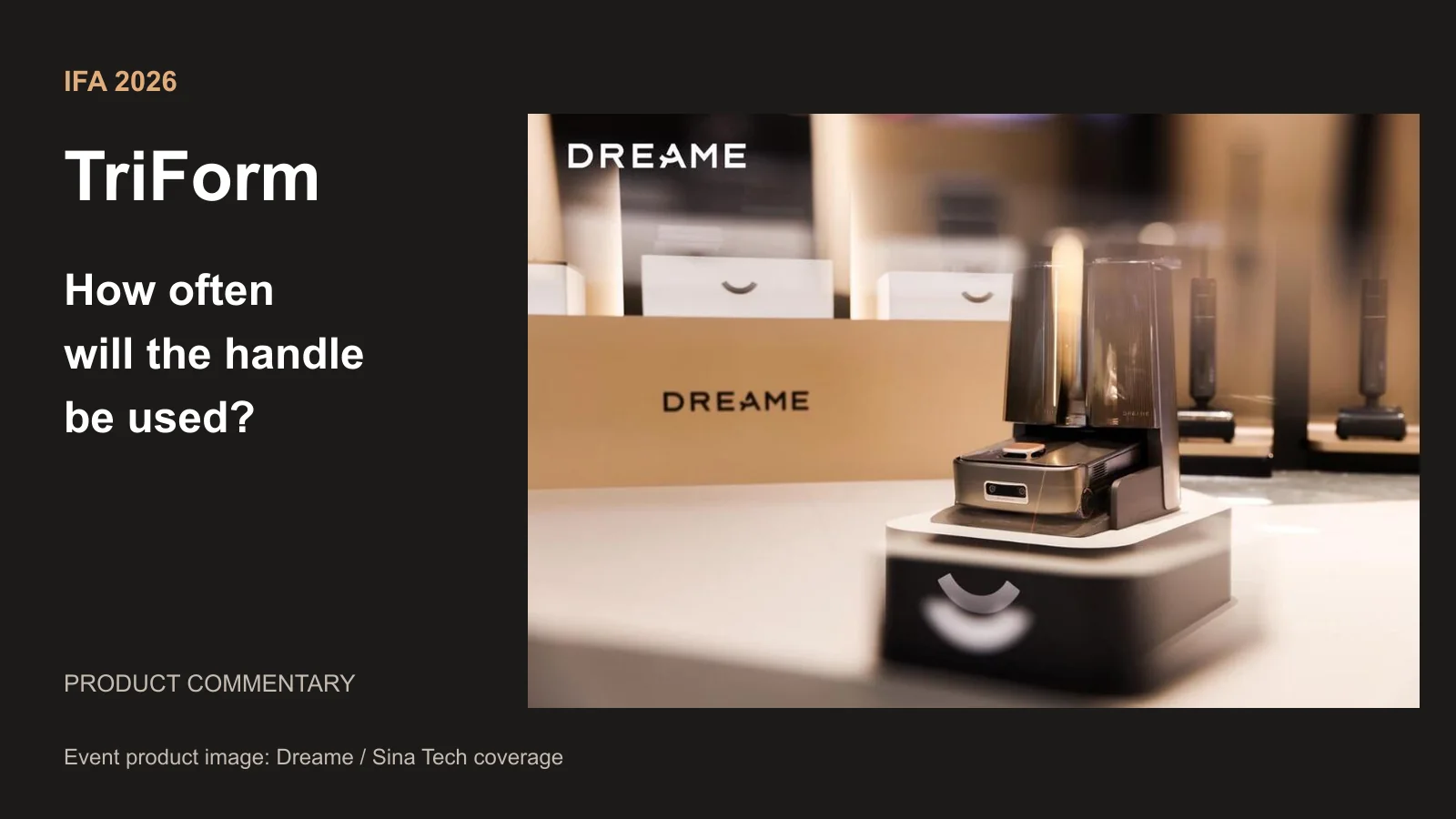
In September 2026, Dreame showed TriForm at IFA. The device switches between autonomous cleaning, manually operated floor washing and vacuuming. It can clean on its own during the day, let the user take over for a stubborn spot, and extend its uses through a vacuuming configuration. Its main attraction is the attempt to put the jobs of a robot cleaner, a floor washer and a vacuum cleaner into one system. IFA coverage
I think Dreame deserves credit for continuing to explore new product forms. Combining autonomous cleaning with manual operation and connecting several cleaning functions requires substantial engineering resources. If they work smoothly together, consumers could buy fewer machines and keep fewer appliances at home. That kind of innovation draws attention at a trade show, but I do not expect this format to become a mass-market hit.
Ecovacs had already shown the X5 Hybrid at CES in January 2025. A handle attaches directly to the robot body, allowing users to push it around and switch between autonomous cleaning and manual control. Ecovacs' official CES presentation
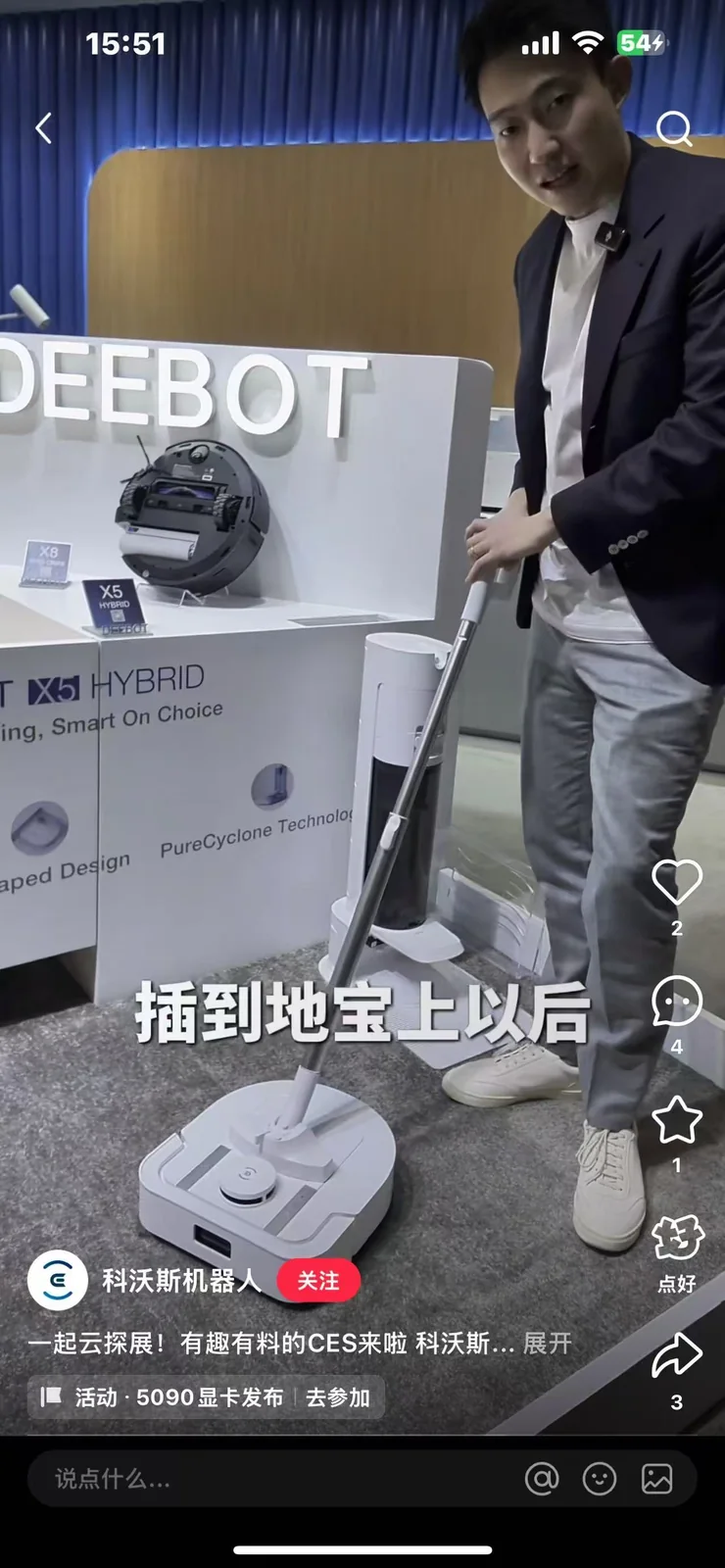
*Ecovacs X5 Hybrid, CES January 2025. Screenshot supplied by Denny from Ecovacs' video.*
In September 2025, xLean Robotics showed TR1 at IFA in Germany. It combines autonomous robot cleaning with manually operated floor washing, using dual rollers and a clean- and dirty-water system to tackle floor messes. It normally cleans on its own; when a spot needs hands-on attention, the user can attach the handle and switch to manual floor washing. xLean's debut announcement
At this year's IFA, xLean returned with an upgraded TR1 and its updated EvoMate OS. According to the company, users can describe a cleaning task in a single natural-language request and let the system interpret and carry it out, rather than selecting areas and modes step by step. The presentation also included visual assistance features, such as finding everyday objects, and a new silver finish. While retaining the dual-form design, xLean is using software to make the robot easier to interact with and direct. xLean's IFA 2026 announcement
At the same IFA, Dreame's TriForm added a vacuuming form. Over a little more than a year, several companies have explored using autonomous cleaning devices for manual cleaning as well. Judging by the product form, I consider Dreame's TriForm more mature than both the Ecovacs X5 Hybrid and the xLean TR1.
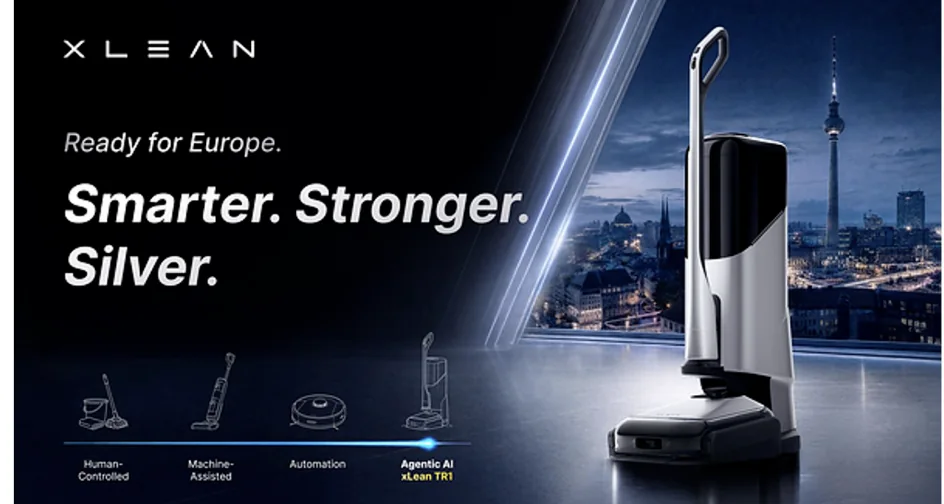
*xLean TR1 in the new silver finish shown at IFA 2026. Promotional image: xLean, supplied by Denny.*
The commercial logic is straightforward. If a consumer plans to buy both a robot cleaner and a floor washer, a multifunction machine could win that sale by costing less than the two separate purchases. Sharing some hardware and the station leaves room to reduce the combined purchase price. For a household that has yet to buy either appliance, “one machine does both” is an easy proposition to understand.
Yet from what I have observed over the years, these all-in-one combinations have largely failed to take off. Companies have repeatedly tried pairing robot cleaners with vacuum cleaners or floor washers, but the combinations have struggled to become formats that consumers broadly embrace.
In my view, one straightforward reason is that they are complicated and awkward to use. Two separate appliances cost money, but each has a clear purpose and is ready to use. Integration can make operation more complicated and less convenient. People buy cleaning appliances to save effort. Saving some money at purchase may be a poor trade if it makes everyday use more troublesome.
For a robot that accepts a handle and switches to manual cleaning, I see one especially useful situation: the robot leaves a stubborn spot behind, and the user takes over to finish it. That is a useful function. My personal estimate, however, is that this need may account for only 1–5% of everyday cleaning situations.
Even when one of those situations occurs, it does not follow that the user will choose the transformation feature. A small mark of sauce on the floor can be wiped away in seconds with a damp tissue or cloth. That may be faster than attaching the handle, cleaning, and then dealing with the machine's self-cleaning and maintenance. Consumers want the spot removed; they will not deliberately choose a more cumbersome method just to use a feature.
Manual floor washing is more valuable for a large spill. But how often does that happen in an ordinary household, and does it justify buying a transformable robot? A carefully arranged trade-show demonstration can show a feature at its best. Everyday life may rarely provide the same opportunity to use it.
The robot itself also has to accommodate this infrequent function. Attaching a handle and supporting manual pushing and pulling affect the body shape, internal layout and control design. Compared with building a robot cleaner alone, they also add structural and development costs. Even if the combination costs less than two separate appliances, the added function has a cost of its own.
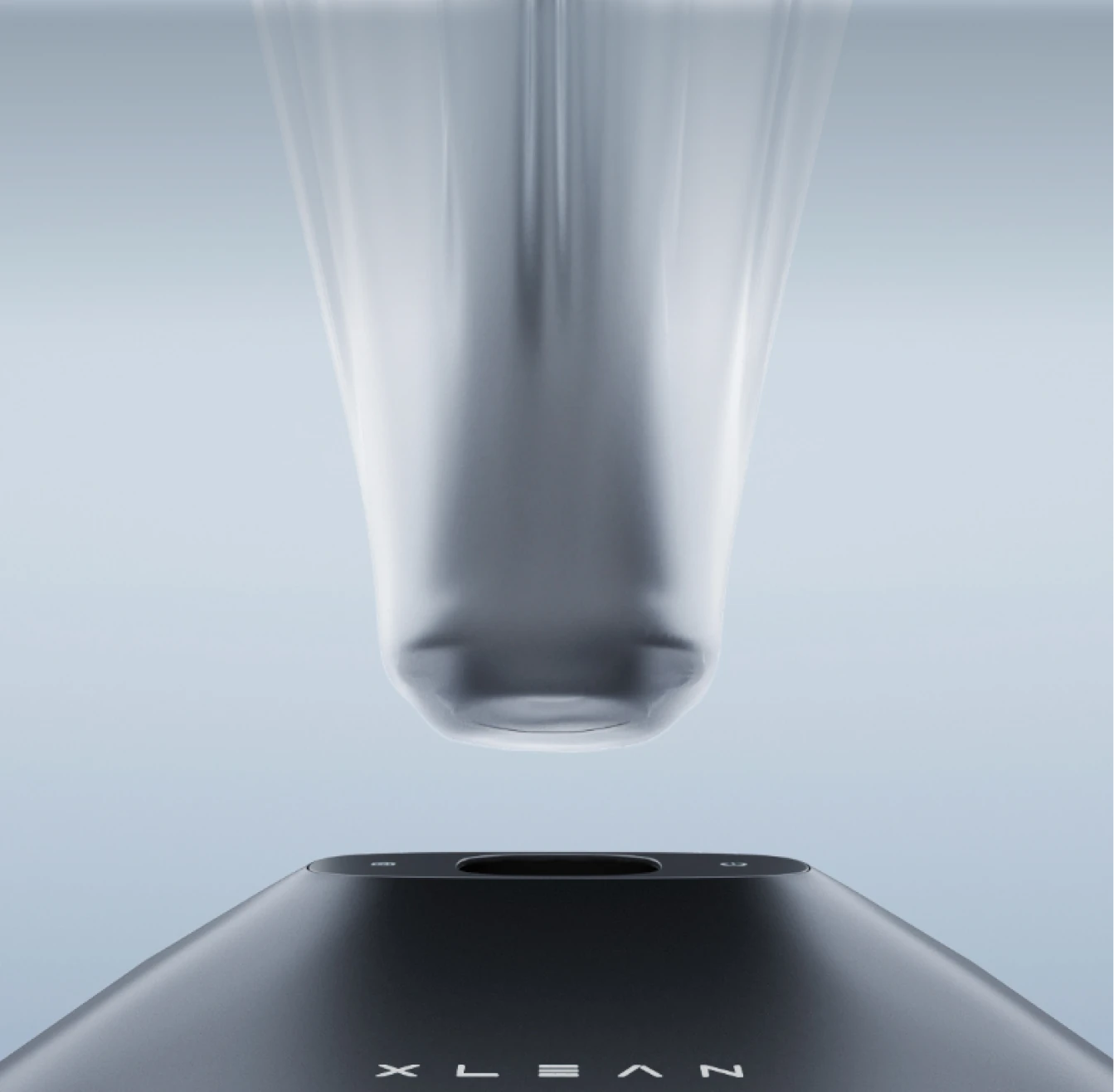
*xLean's official illustration of the handle connection. It shows the TR1 design, not TriForm's internal structure.*
A robot cleaner spends most of its working time cleaning autonomously. A low profile, maneuverability and the ability to get around the home matter every day. If accommodating manual operation compromises those qualities, users accept a persistent loss in everyday performance for a function they rarely use. The handle can stay unused; the design compromises made for it stay in the machine.
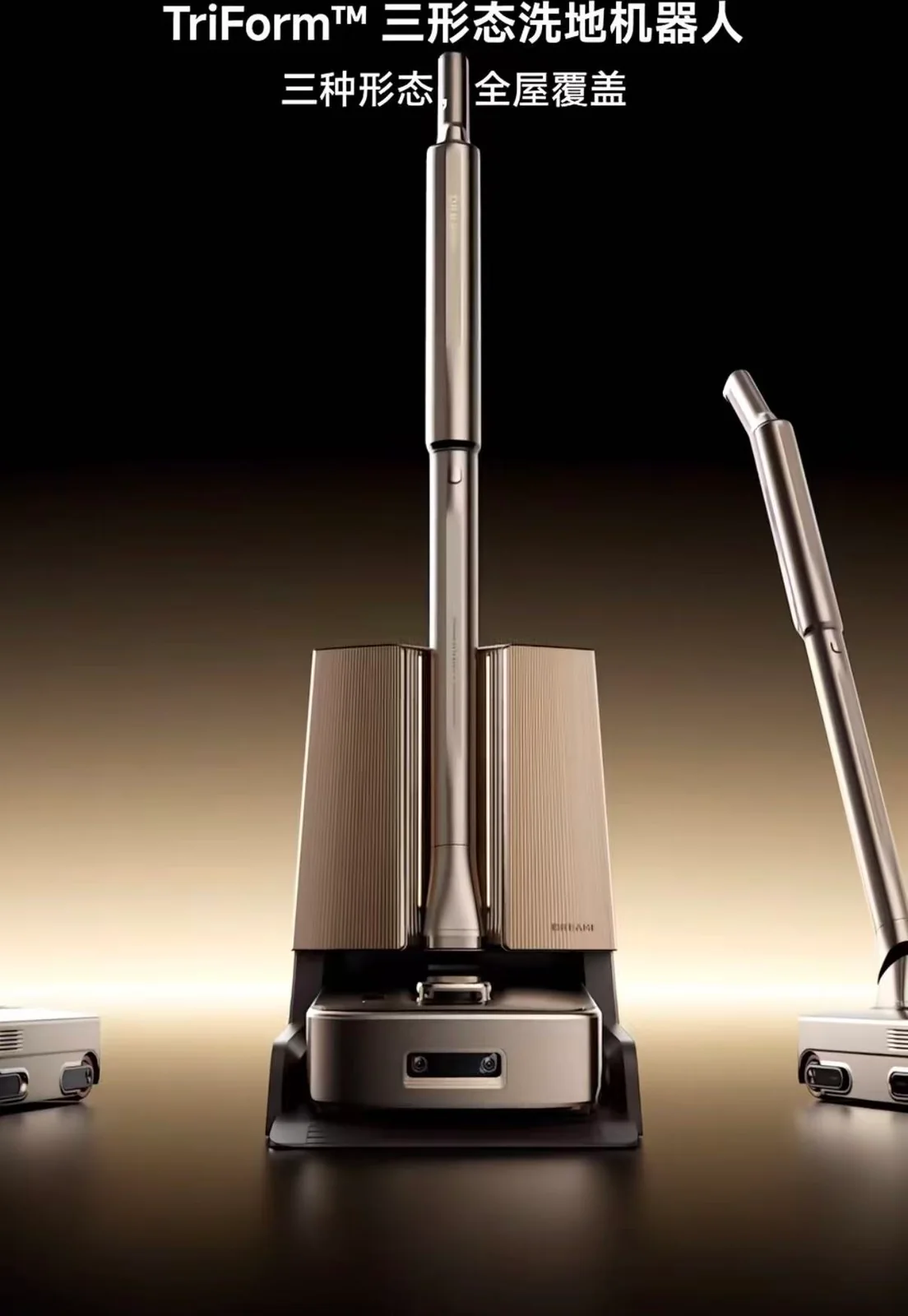
*Dreame TriForm promotional image supplied by Denny. The original Chinese heading describes a three-form floor-washing robot.*
I do not think it is worthwhile to sacrifice a robot's more frequently used capabilities, and ask consumers to bear extra cost, for a use case that I estimate represents just 1–5% of cleaning situations. Especially when a tissue, cloth or mop already offers a simple alternative, the extra convenience the feature can deliver is limited.
“One machine replaces several” only holds if users genuinely no longer need the other appliances. If the integrated product is awkward to use and the household keeps a separate floor washer or vacuum, the savings in money and space are diminished. The more functions a product integrates, the more it asks of the experience in each form. Any weak part may send the customer back to a separate appliance.
The fact that Ecovacs, xLean and Dreame have explored this direction shows its appeal to product developers. Whether consumers pay for it depends on whether it makes cleaning simpler. I am not optimistic about the market prospects of this category. What I would most like to know is how often the handle is still picked up after six months of ownership.