Where Commercial Cleaning Automation Can Create Real Value
Choose the Facility Opportunity Before You Choose the Robot
Commercial cleaning robots are separating into facility-specific platforms—from retail scrubbers and office robots to warehouse sweepers, healthcare systems and docked service fleets. The opportunity depends on workflow, deployment conditions and service economics.
For equipment brands, dealers, facility service companies and project buyers deciding where commercial cleaning automation can scale.
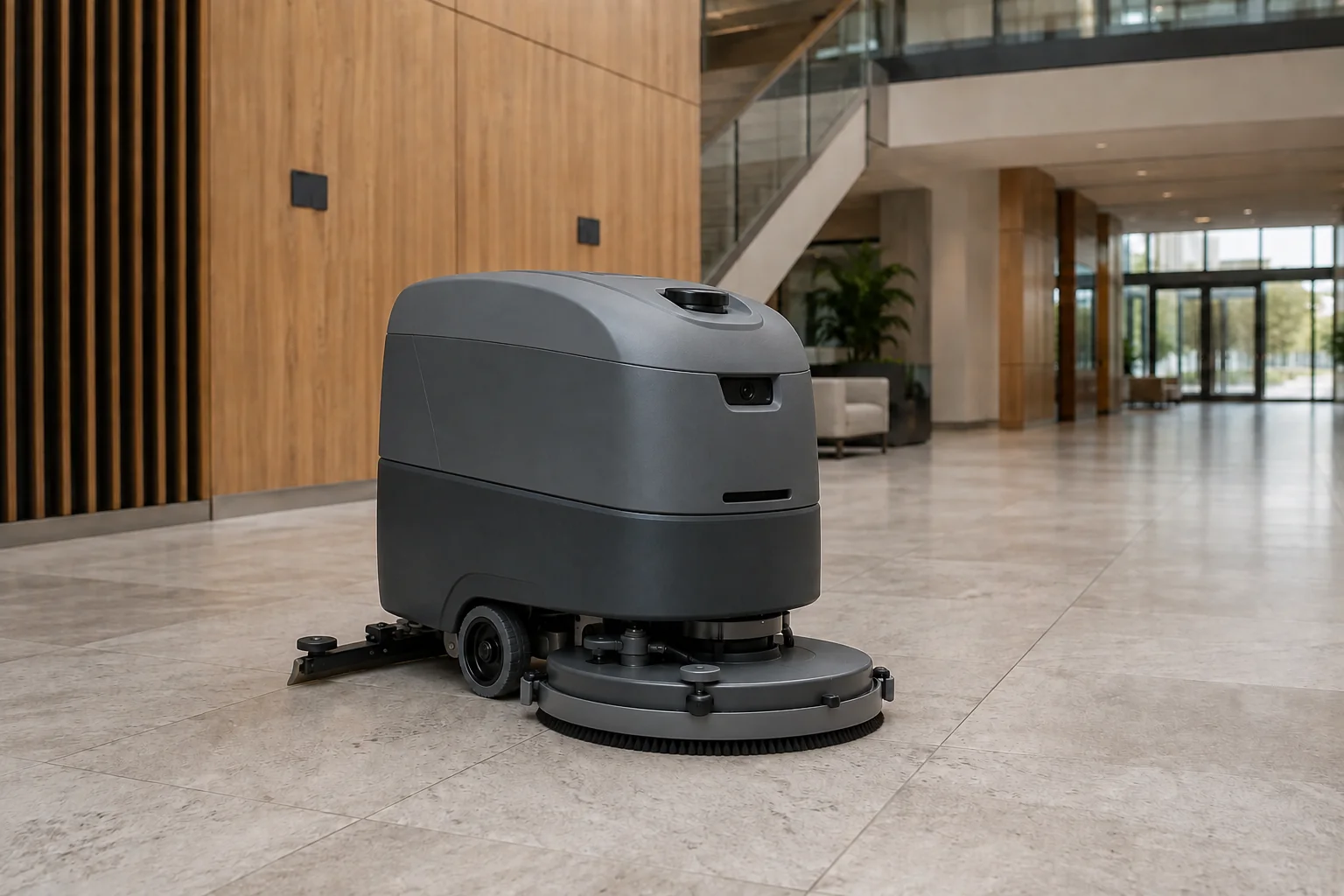
The Decisions Buyers Are Facing
Built for Buyers Deciding Where to Deploy Commercial Cleaning Robots
Add a platform for a new facility, service or operating model
Build a deployment and service advantage beyond hardware
Replace a weak pilot or unsupported platform before scaling
Compare the Opportunity
Six Product Platforms. Six Different Market Opportunities.
Each direction targets a different customer, channel and reason to buy. Final supplier models and claims require verification.
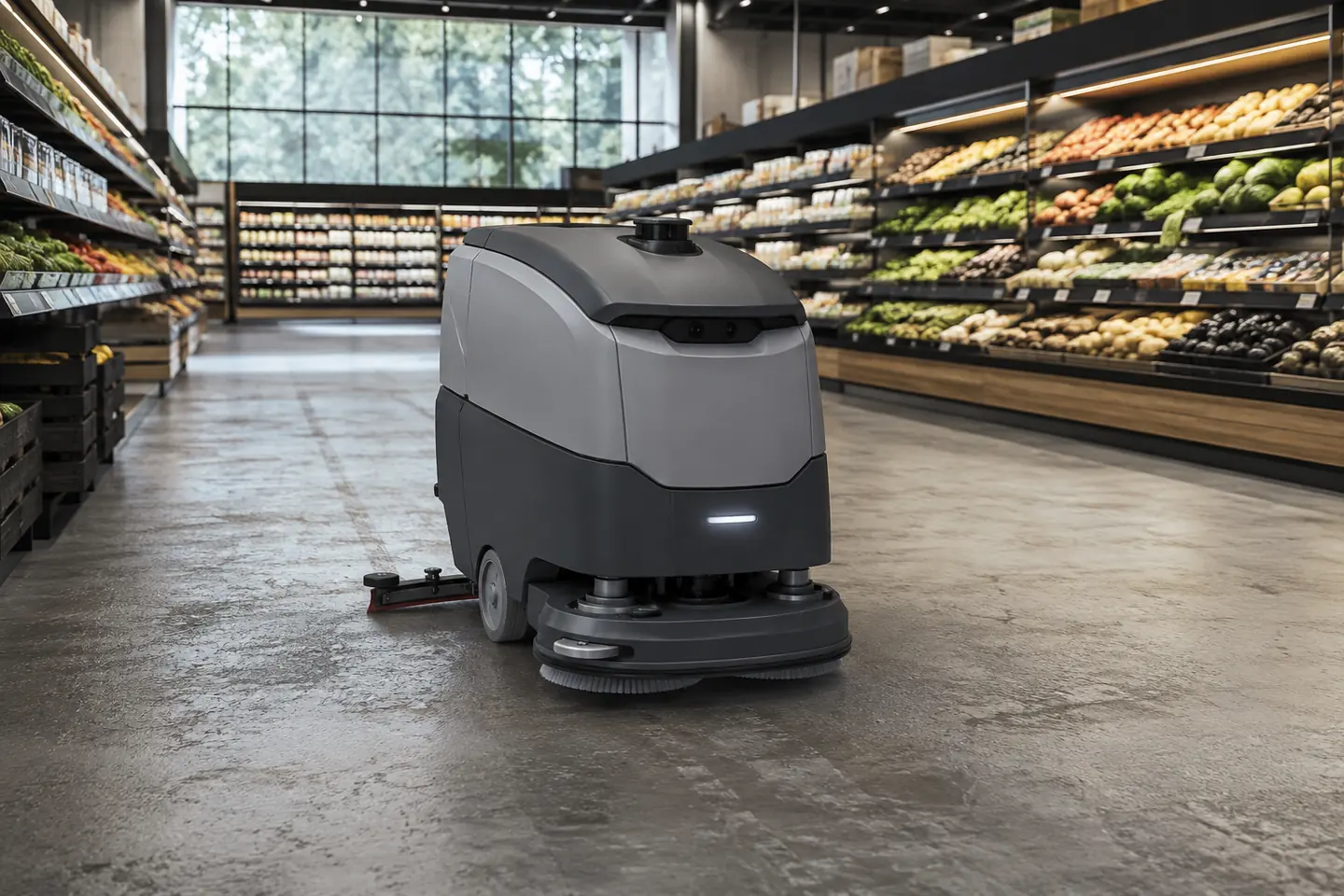 CC-01
CC-01Product 1 of 6
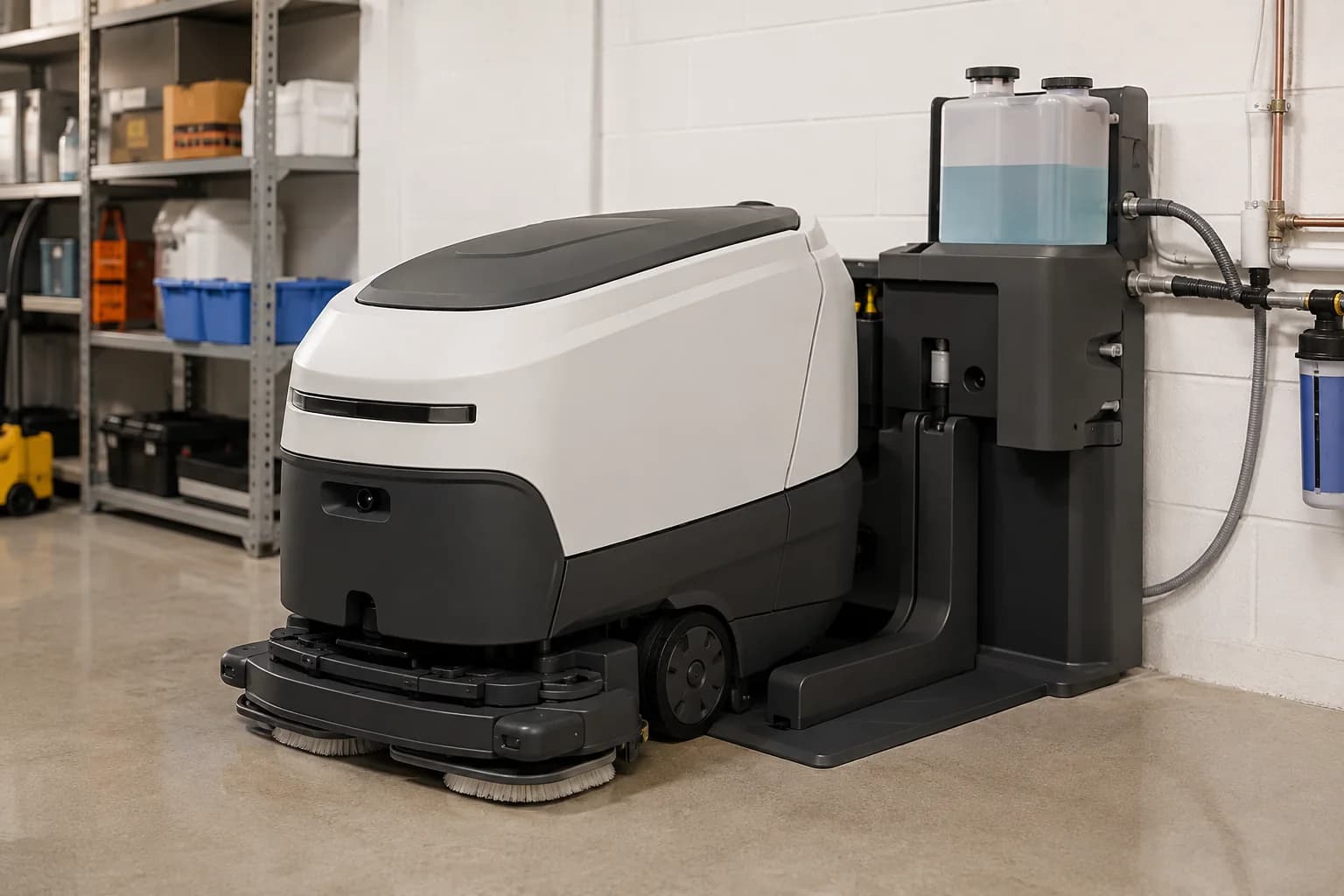
CC-01 · Compact autonomous scrubber platform
Retail Autonomous Scrubber
Market opportunity
A compact autonomous platform for supermarkets and large-format retail with repeatable open-floor routes.
Why it can win
Retail creates visible labor and consistency problems that can support automation when routes and operating windows are clear.
Critical proof points
Verify aisle navigation, edge recovery, wet-floor safety, changing obstacles, operator handoff and daily maintenance.
Swipe to compare more product directions →
Six-Platform Opportunity Landscape
Where the Six Commercial Platforms Compete
Different platforms create value through different facility complexity, deployment depth and service requirements.
Complex public and specialist facilitiesRepeatable controlled environments
CC-01Retail Autonomous Scrubber
CC-02Large-Facility Hybrid Platform
CC-03Office Service Platform
CC-04Warehouse Sweeping Platform
CC-05Healthcare Hygiene Platform
CC-06Docked Fleet Service Platform
Machine-led saleDeployment and service-led value
Platform × Route-to-Market Fit
Which Commercial Routes Fit Each Product Platform?
Fit depends on deployment support, operator training, service coverage and the buyer's ability to manage a pilot.
World Clean Biz editorial assessmentStrong fitConditional fit— Not a natural primary route
| Product platform | Direct project sales | Specialist dealer | Facility services | Private label | Equipment rental / leasing |
|---|---|---|---|---|---|
| CC-01Retail Autonomous Scrubber | Conditional fit | Strong fit | Strong fit | — | Strong fit |
| CC-02Large-Facility Hybrid Platform | — | Strong fit | Strong fit | — | Strong fit |
| CC-03Office Service Platform | — | Strong fit | Strong fit | Conditional fit | Strong fit |
| CC-04Warehouse Sweeping Platform | — | Strong fit | Strong fit | — | Strong fit |
| CC-05Healthcare Hygiene Platform | — | Strong fit | Strong fit | — | Strong fit |
| CC-06Docked Fleet Service Platform | — | Strong fit | Strong fit | Conditional fit | Strong fit |
Opportunity Conditions
Three Conditions That Decide Whether a Deployment Can Scale
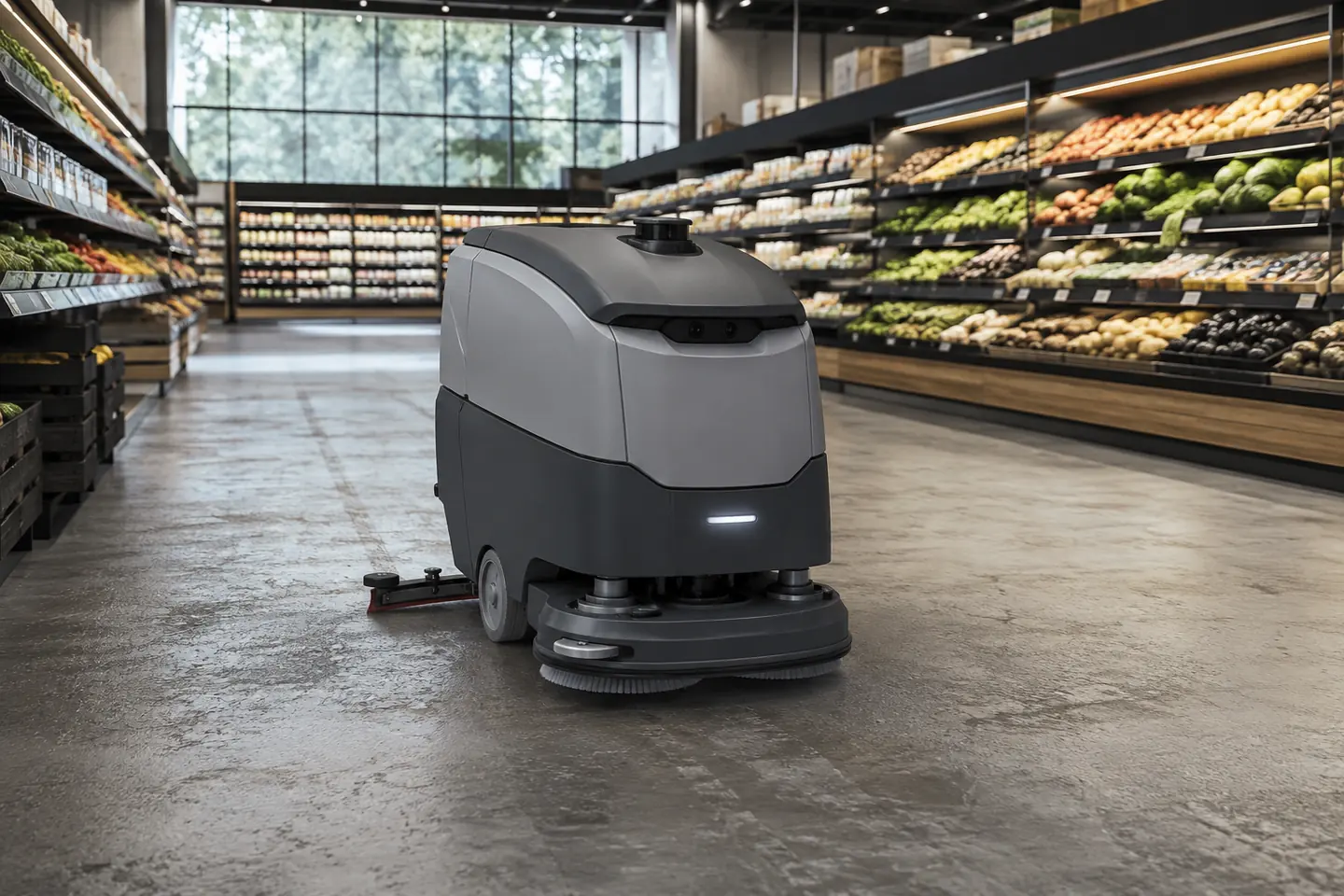 01
01A valuable facility workflow
The platform must solve a measurable labor, consistency, safety or coverage problem in the target site.
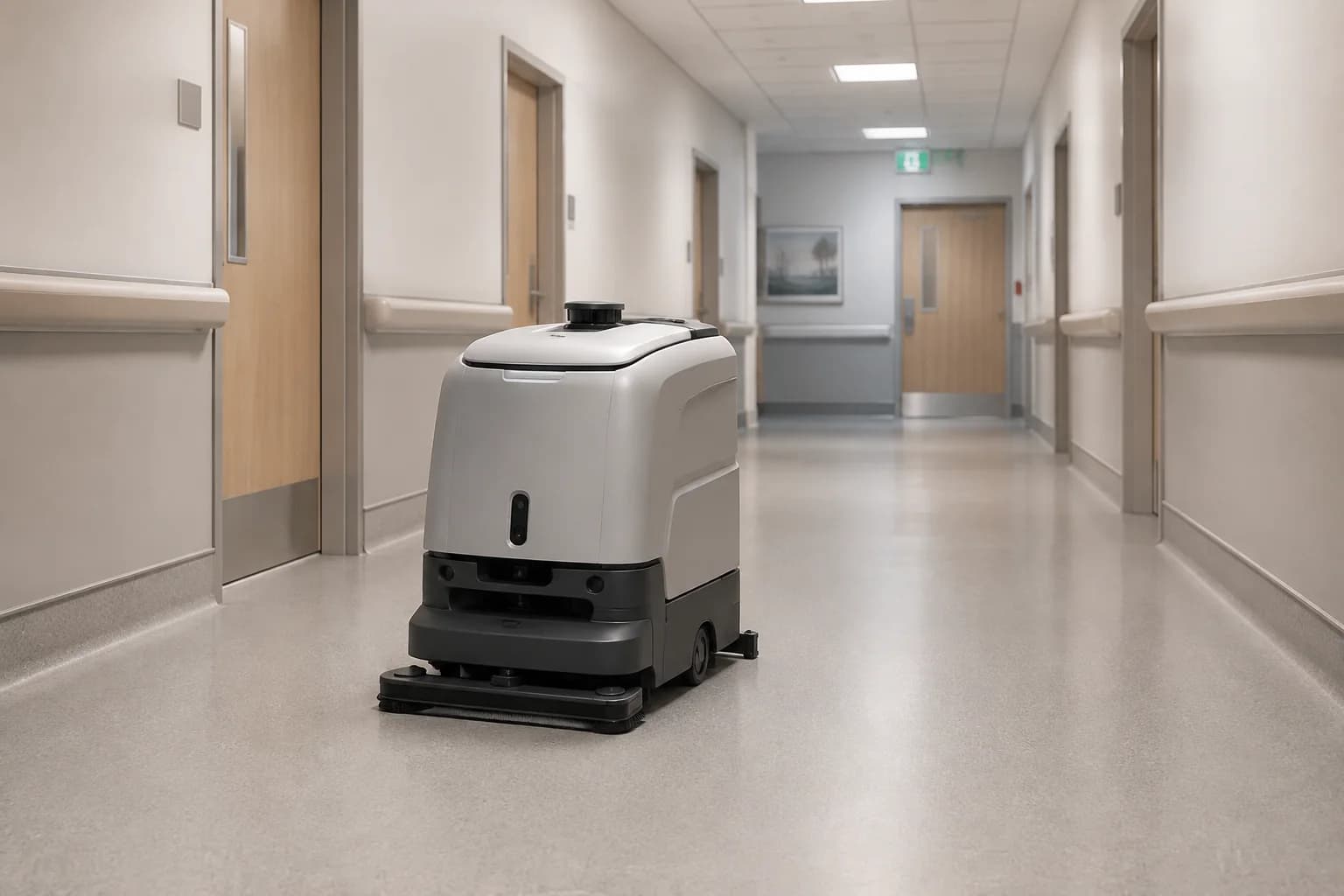 02
02Repeatable real-site performance
Navigation, cleaning and exception recovery must work during the traffic and layout changes the facility actually has.
 03
03Service economics after deployment
Training, downtime, parts, remote support and local service cannot consume the value created by automation.

Industry judgment behind the deployment decision
A successful demonstration is not yet a scalable commercial program
Denny reviews whether facility value, product evidence, supplier capability and the service model reinforce one another strongly enough to justify a pilot and the next deployment.
- Founder, World Clean Biz
- Organizer, WCB Expo
- Inside the cleaning industry since 2006
Commercial Go / No-Go
Four Decisions Before You Back a Commercial Platform
Move forward only when facility value, performance evidence, supplier capability and service economics reinforce one another.
- 01Opportunity
Is the facility problem valuable?
- Labor or consistency value
- Repeatable site type
- Buyer ownership
- 02Platform
Does the real-site pilot prove it?
- Navigation and safety
- Cleaning result
- Exception recovery
- 03Supplier
Can capability survive deployment?
- System control
- Deployment tools
- Parts and training
- 04Economics
Does value survive after launch?
- Utilization and uptime
- Support cost
- Service margin
Industry Opportunity Questions
The Deployment Decisions Buyers Are Debating Now
These commercial, technical and operational choices shape where commercial cleaning automation can scale.
Which commercial cleaning robot direction is most credible for a new entrant?
Begin with one facility type and one repeatable workflow. Retail, office and warehouse platforms have different cleaning systems, safety conditions and service requirements.
When does autonomy create real value rather than a demonstration effect?
Autonomy creates value when routes, operating windows, staff handoff and exception handling reduce real labor or improve consistency across repeated shifts.
Should buyers choose a scrubber, sweeper or hybrid platform?
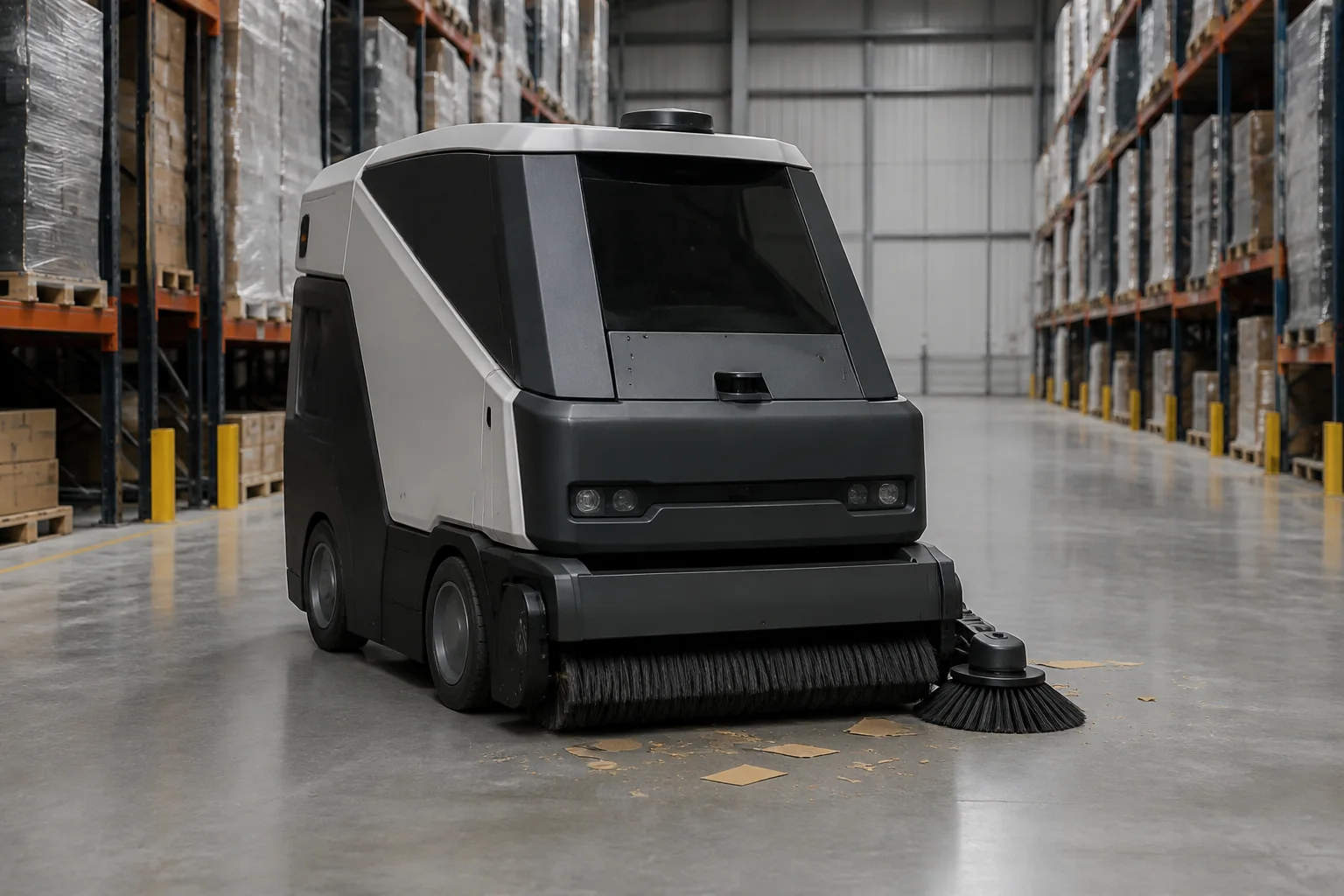
The answer depends on debris, floor finish, traffic and cleaning frequency. A hybrid platform is not automatically better if added complexity lowers reliability or makes service harder.
Which facilities are most ready for commercial cleaning robots?
Facilities with repeatable open-floor routes, measurable labor pressure, trained operators and local service support are usually more credible than highly variable sites.
Which technical claims create the greatest purchasing risk?
Runtime, coverage, navigation and obstacle avoidance can look strong in controlled demos. Test them during real traffic, layout changes, interruptions and daily maintenance.
Where can Chinese suppliers still differentiate?
Strong suppliers can combine hardware iteration with deployment tools, fleet software, parts systems and service preparation. Price alone does not create a scalable platform.
What separates a pilot from a scalable deployment?
A scalable deployment has repeatable setup, trained operators, documented service, measurable outcomes and economics that survive downtime and support.
What should buyers verify before selecting a platform?
Verify facility value, repeatable site performance, supplier control of critical systems and local service economics after deployment.
How should buyers compare suppliers without public factory lists?
Compare deployment evidence, safety testing, system control, software capability, parts and service readiness against the target facility—not a generic ranking.
Make the Opportunity Specific
Turn a Facility Opportunity Into a Deployment Brief
Define the target facility, cleaning workflow, operating window, route to market, service model and evidence that must be proven.
Related Intelligence
Research the category before choosing a supplier
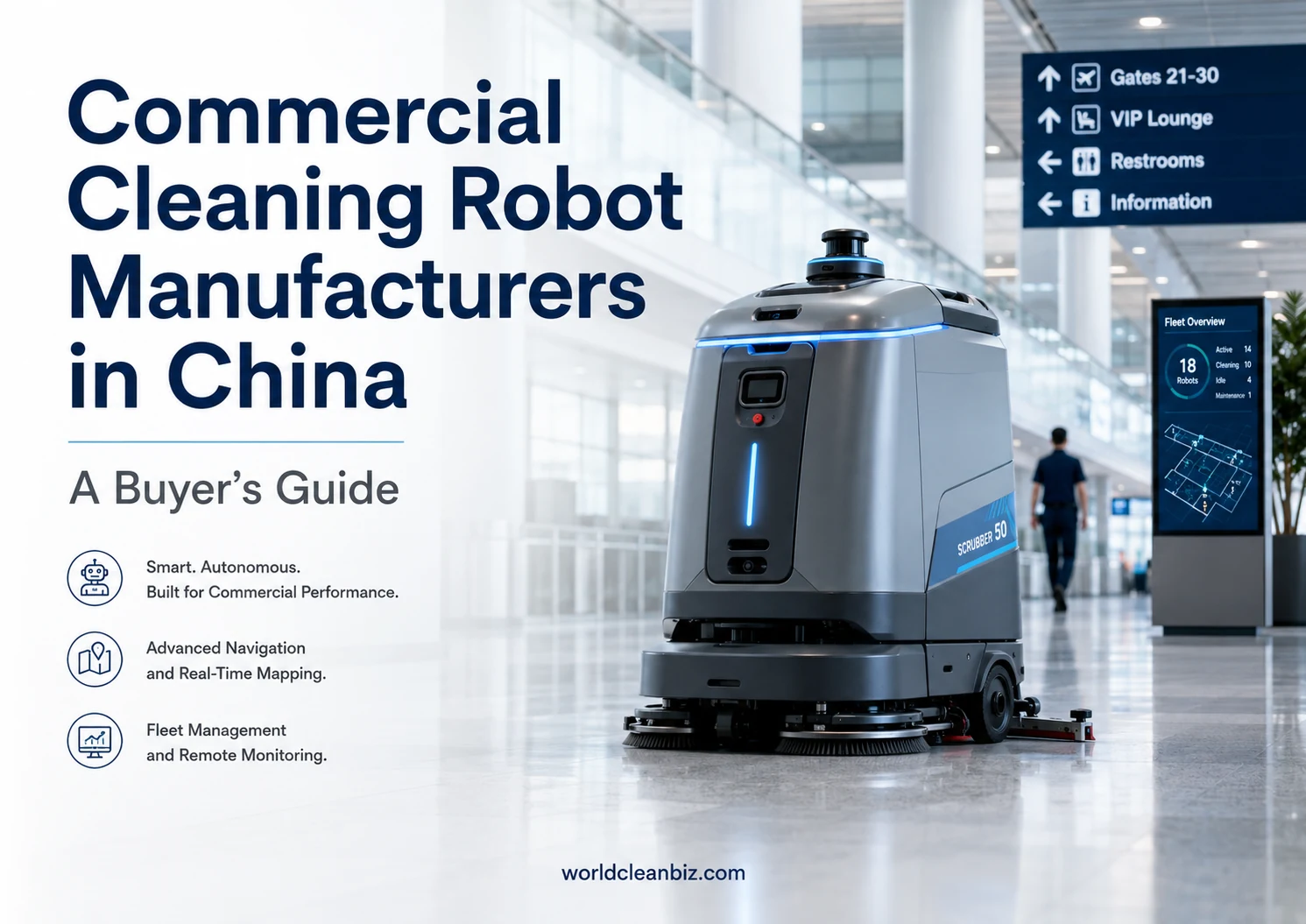
Commercial Cleaning Robot Manufacturers in China: A Buyer’s Guide
A practical buyer guide to evaluating commercial cleaning robot and robotic floor scrubber manufacturers in China, including supplier types, product capabilities, sourcing models, and risks.
Read the analysis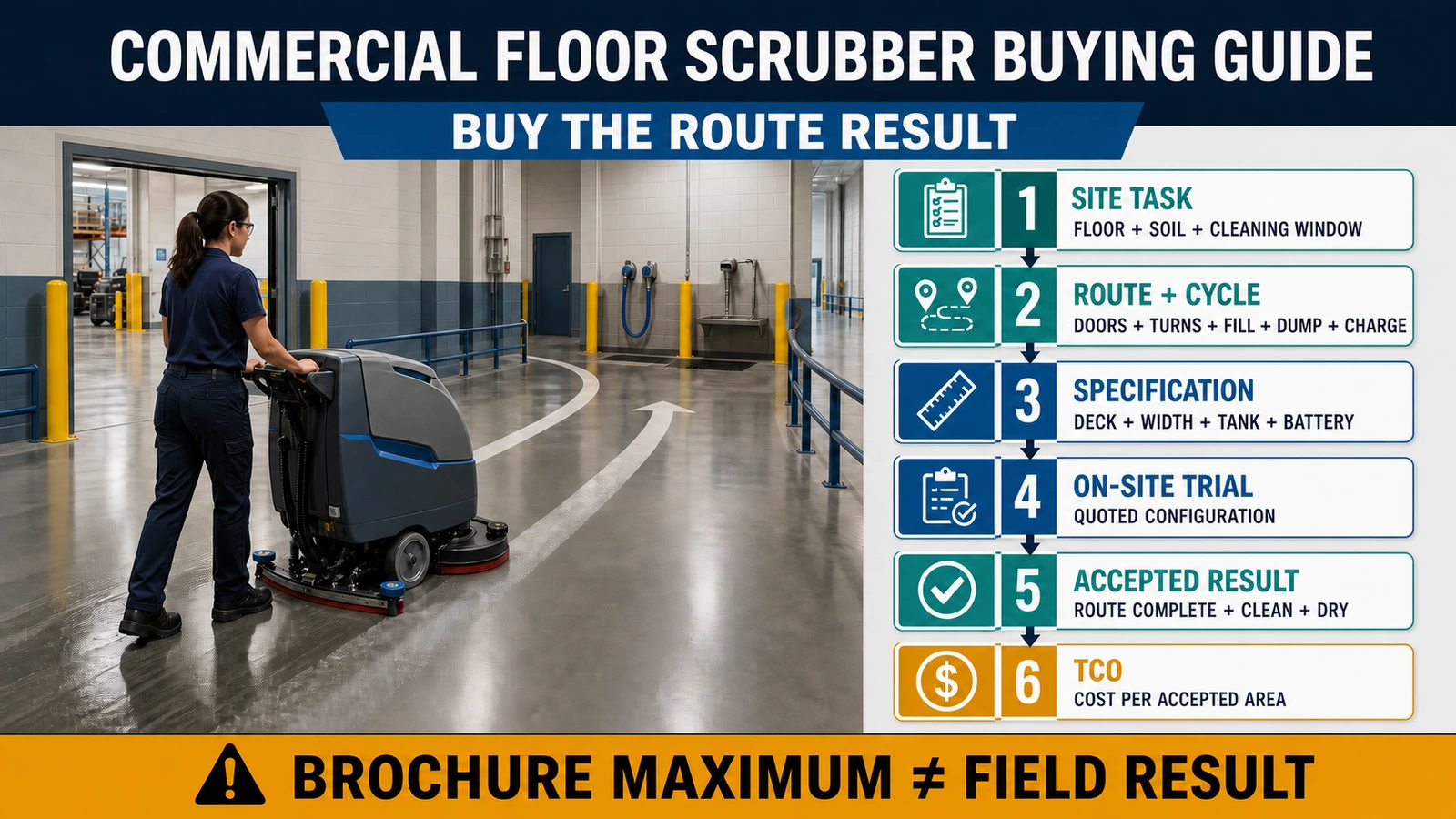
Commercial Floor Scrubber Buying Guide: Deck, Tank, Battery, Productivity and TCO
Choose a commercial floor scrubber by route, deck, working width, tanks, battery runtime, real productivity, serviceability, on-site trial and TCO.
Read the analysis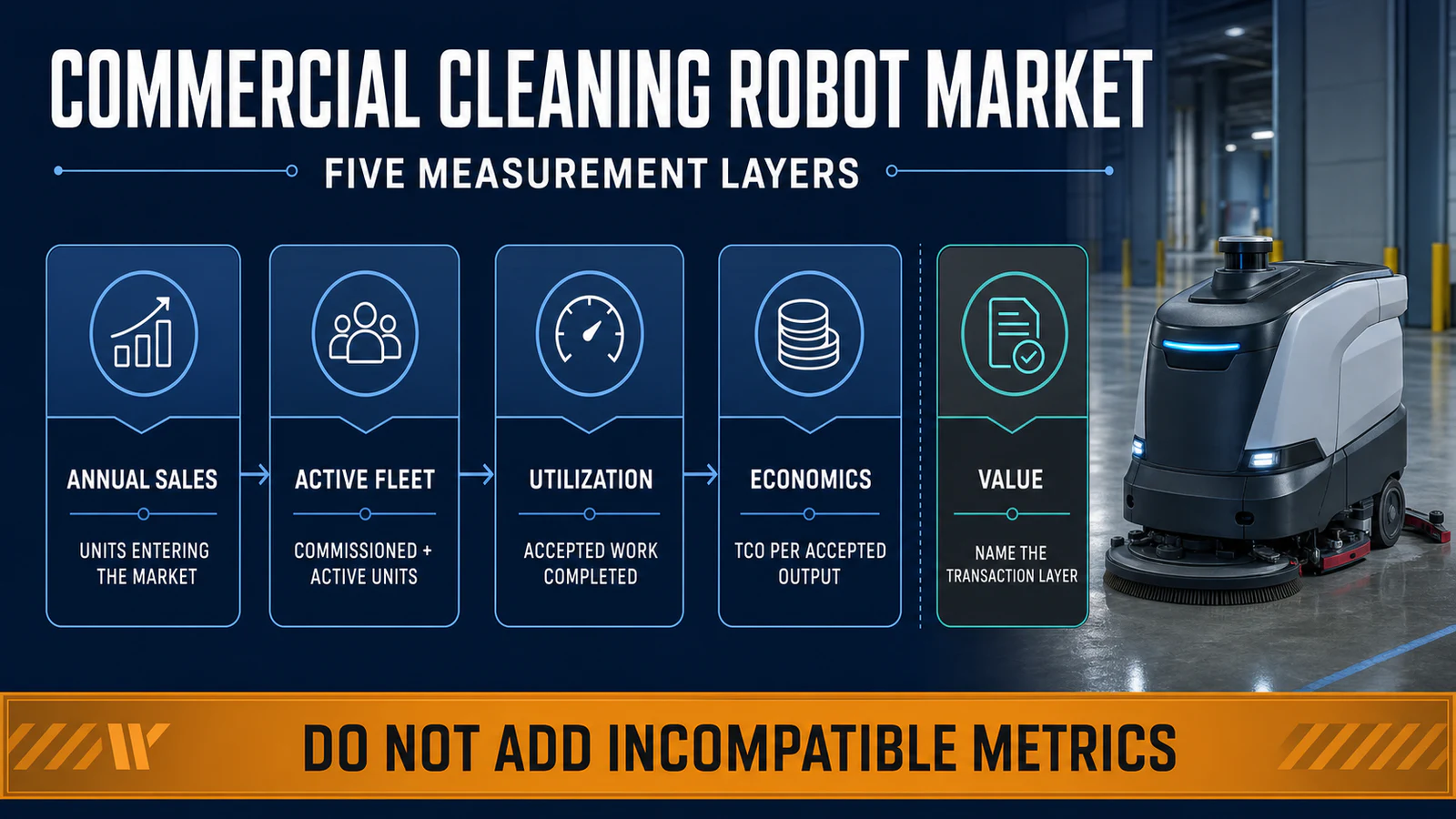
Commercial Cleaning Robot Market: How to Measure Size, TCO and Adoption
Measure the commercial cleaning robot market by unit sales, active fleets, utilization and TCO—and learn why published market-size estimates differ.
Read the analysis