ECOVACS / Window robots
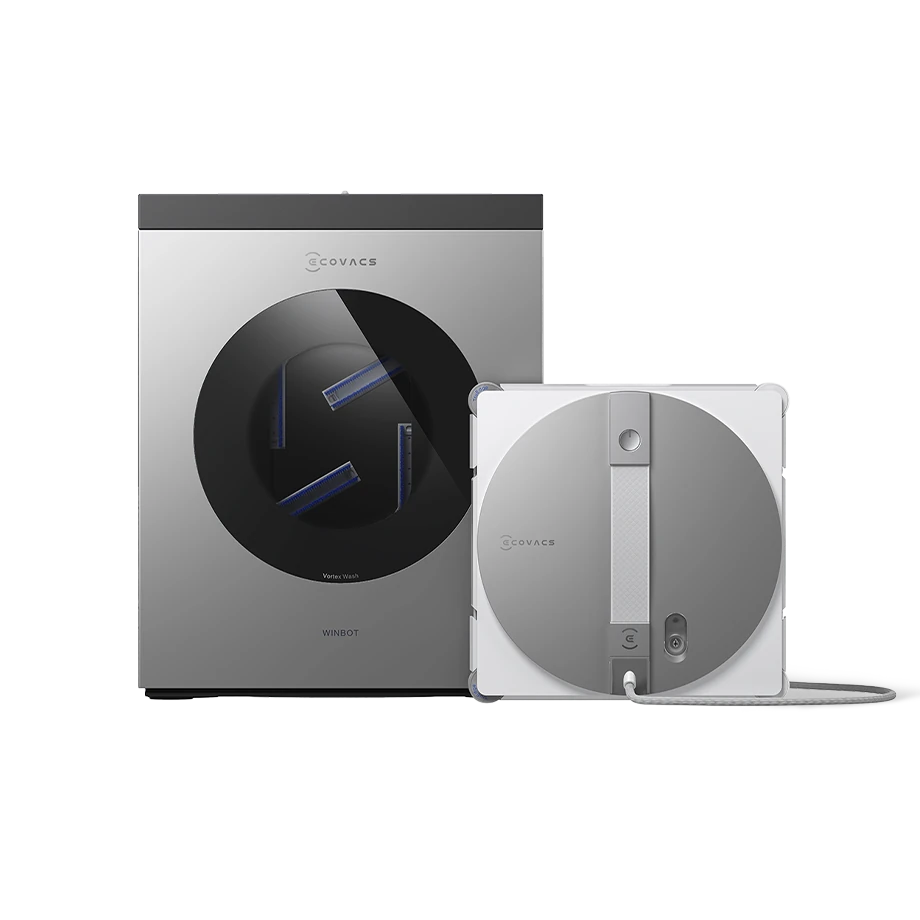
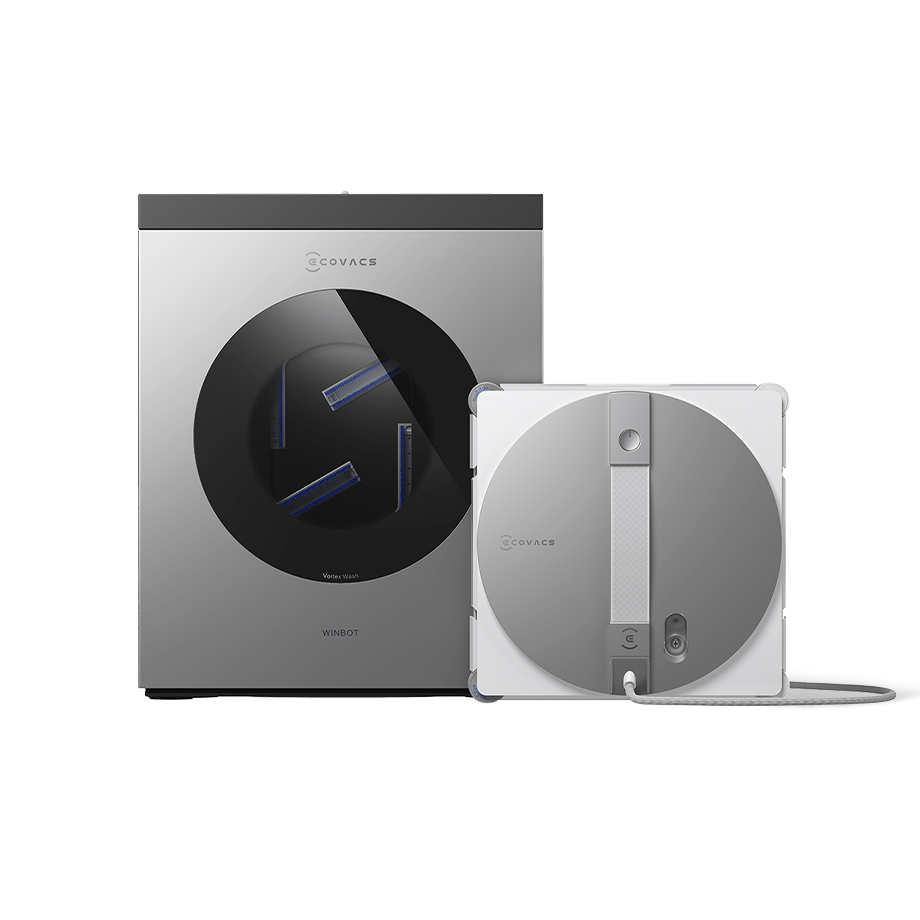
ECOVACS WINBOT W3 OMNI
A household window robot with a Vortex Wash pad-cleaning station, WIN-SLAM 5.0 navigation and both plugged-in and station-battery operation.
Sources checked Sep 6, 2026 · Announced Jan 6, 2026
Shown at CES in January 2026; the US commercial launch followed in March. Launch source ↗
- Pad washing
- Vortex Wash station
- Station-powered runtime
- Up to 130 minutes
- Robot dimensions
- 270 × 270 × 76 mm
- Station weight
- About 10 kg
Worth considering for
Where it makes sense
Consider W3 when washing pads repeatedly is the part of window cleaning you most want to reduce. Check how often you will move its station and whether every pane can be attached to and retrieved safely.
Before you commit
When to look elsewhere
Unattended cleaning, unsuitable or inaccessible glazing, commercial facades or homes without practical space for the larger washing station.
Beyond the headline number
Specifications, with context
Values below are manufacturer claims for the stated reference market. WCB has not independently bench-tested this model. Check the official specifications and conditions ↗
| Specification | Official claim | What it means for you |
|---|---|---|
| Navigation | WIN-SLAM 5.0 | Manufacturer route-planning system; assess your pane geometry. Source ↗ |
| Pad washing | Vortex Wash station | Remove the pad assembly and load it into the wash compartment yourself. Source ↗ |
| Standard pad-wash claim | About 1 minute | Washing stage only; transfers and drying take additional time. Source ↗ |
| Robot dimensions | 270 × 270 × 76 mm | Body size; allow clearance around handles and obstacles. Source ↗ |
| Station dimensions | 344 × 226 × 430 mm | Leave room to operate the handle and wash compartment. Source ↗ |
| Robot liquid tank | 80 ml | Separate from the station’s clean-water tank. Source ↗ |
| Station clean-water tank | 1.2 L | Water for washing pads; empty and rinse after the task. Source ↗ |
| Station-powered runtime | Up to 130 minutes | Manufacturer battery-mode claim; robot remains connected by cable. Source ↗ |
| Charging at rest | About 3 hours | Charging while cleaning is substantially slower. Source ↗ |
| Compound cable | 5.5 m | Power and safety functions; station position limits practical reach. Source ↗ |
| Station weight | About 10 kg | Separate from the robot; consider carrying and storage. Source ↗ |
| Advertised suction | Up to 10,000 Pa | Peak protection claim, not a measured cleaning score. Source ↗ |
| Moving suction reference | 3,300 ± 100 Pa | US specification table distinguishes moving operation from the headline figure. Source ↗ |
| Minimum material thickness | 3 mm glass / 4 mm mirror | Use undamaged, smooth surfaces and follow the manual’s restrictions. Source ↗ |
| US electrical input | 110–120 V, 50–60 Hz | AMR manual model WG858-07; verify the regional power label. Source ↗ |
| Operating conditions | 0–40°C; calm, dry exterior weather | Household use only; secure the tether and remain present. Source ↗ |
What this model is
WINBOT W3 OMNI is a household window-cleaning robot paired with a station that can wash its wiping pad. That station is the main reason to investigate the model. If your current routine involves removing a dirty cloth, rinsing it and returning to the next pane repeatedly, automated washing may address a real inconvenience.
This guide follows the US model and AMR owner’s manual. It is based on manufacturer sources rather than a WCB hands-on test. The word automatic describes parts of the workflow: someone must still prepare the equipment, attach the robot to suitable glass, retrieve it and move it between separate windows.
What matters in daily use
The pad moves into the washer by hand
The station does not collect the robot from the window. The owner removes the pad assembly and places it into the wash compartment, then reinstalls it after washing. Assess whether those actions are easy at your chosen working height. The short advertised washing cycle is one stage within a longer routine that includes transfer, water handling and storage.
Station placement determines practical reach
A larger station can be acceptable beside broad glass doors but awkward in a small bedroom or on a route involving stairs. Check the space for opening the compartment and operating the handle, as well as the cable path to the farthest corner. A headline maximum pane size does not guarantee coverage from every station location.
Cleaning and attachment are different performance questions
The US specification page distinguishes its advertised suction figure from the lower moving-operation reference. Neither number tells you whether a dried mark will disappear in one pass. Inspect the glass after it dries and examine edge residue separately from the centre. Keep the attachment and tether instructions as requirements rather than treating a suction claim as a substitute.
Where it fits — and where to look elsewhere
Several large, suitable household panes: W3 is worth assessing if repeated cloth washing slows the job. Try the complete sequence across more than one pane, including moving the station and loading the pad. A successful demonstration on one easy window does not show how convenient the whole-home routine will be.
Occasional window cleaning with modest dirt: compare W2S PRO OMNI. A station without a washing compartment may be enough if hand-rinsing a pad is infrequent. Include carrying and storage in the comparison, rather than assuming every extra station function will save time in your home.
Difficult glazing or commercial work: check suitability before selecting any robot. The cited manual excludes commercial and industrial use and describes restrictions for damaged, uneven and obstructed glass. A product marketed for household exterior windows is not automatically suitable for a building facade or a pane that cannot be reached safely for attachment and retrieval.
Versions and market differences
This profile uses the plain US W3 OMNI offer. Other entries add solution or accessories, and their similar prices can obscure what is actually included. Match the selected package to the local manual and electrical label. The AMR input rating should not be assumed to match a machine sold for a different power supply.
WINBOT W3 OMNI, W2S PRO OMNI and W2 PRO OMNI have different pad-care arrangements despite sharing OMNI branding. W3’s robot liquid tank is also distinct from the larger clean-water tank used by the station to wash pads. Keep those capacities separate when estimating cleaning coverage or comparing refills.
Maintenance and ownership
The official instructions require supervision, secure tethering and a clear area below the robot. For permitted exterior work, conditions must be calm and dry. Inspect the glazing, cable and attachment arrangement before starting, and keep a secure grip when removing the robot. App control does not make an inaccessible placement safe or eliminate the need to stay present.
After a session, remove the damp pad and allow it to dry fully before storage. Empty and rinse the station’s water tanks, then deal with residual moisture in the cleaning compartment as directed. The station’s own cleaning function can reduce manual scrubbing, but leaving dirty water behind undermines the next session’s starting condition.
Use the support library to check pad installation and compatible replacements. Budget for worn pads and approved cleaning liquid, and keep enough drying space for the pieces you remove. The station’s carrying weight matters if it will move between floors frequently. Compare the full routine with a smaller station before deciding how much automatic pad washing is worth.
WCB buying view
W3 OMNI is a focused upgrade for owners whose window-cleaning bottleneck is pad care. Its value depends on suitable panes, convenient station placement and a manageable transfer routine. Evaluate a full set of windows, then compare the remaining work with a less elaborate WINBOT. The strongest purchase case is a clear reduction in repeated washing effort without creating a more awkward carrying and storage task.
The package behind the price
Price, market & availability
Launch prices are historical. Store snapshots are dated reference points, not live offers; taxes, discounts, stock and included accessories vary.
United States · USD
USD 699.99
Official-store snapshot · Sep 6, 2026
Plain US W3 OMNI listing. Accessory and solution bundles are separate offers; check the exact contents and current availability.
Check official price source ↗United States · USD
USD 39.99
Replacement pad snapshot · Sep 6, 2026
W3 OMNI wiping-pad accessory on the official support page. Confirm pack contents and compatibility.
Check official price source ↗Questions about ECOVACS WINBOT W3 OMNI
Does W3 OMNI wash its pad automatically?
Its station automates the washing stage. The manual still requires you to detach the pad assembly, place it in the wash compartment, select a wash and reinstall it. The robot does not leave the glass and dock itself.
Can I leave it running while I go out?
No. The US manual says not to leave it unattended and requires secure tethering. Keep the area below clear and follow the complete attachment and removal instructions. Remote controls do not remove supervision.
Does battery operation make it cordless?
No. The station battery supplies the robot through the compound power-and-safety cable. Battery mode reduces reliance on a nearby outlet but does not remove the cable or the anchoring requirements.
Why are both 10,000 Pa and 3,300 Pa listed?
The US page advertises 10,000 Pa in its protection description and separately lists 3,300 ± 100 Pa during movement. These describe different conditions and should not be merged into one continuous cleaning-power claim.
Can it clean every frameless or decorated window?
No. The manual excludes broken, uneven, gapped, curved and sticker-covered surfaces and sets material-thickness and obstruction requirements. Frameless capability is not approval for every glass installation.
What work remains after a cleaning session?
Retrieve the robot, remove and dry the pad, empty and rinse the station tanks, and wipe or air-dry residual water after compartment cleaning. Self-cleaning reduces scrubbing but does not remove all maintenance.
Is it suitable for commercial high-rise facade cleaning?
The cited AMR manual specifies household use only, including permitted exterior windows, and excludes commercial or industrial use. It is not a substitute for a professional facade-cleaning system.
Manuals, setup & demonstrations
Pad-transfer steps, household-use restrictions, anchoring, electrical input and dimensions.
Official demonstrations of the station, pad assembly and routine cleaning.
Current package, protection claims and separate moving-suction specification.
Build your shortlist
Compare models. Understand the tradeoffs.
Manufacturer specifications for the stated reference markets. Rows compare features and workflows, not results from a shared WCB test. Different runtime modes and storage locations are not interchangeable.
| Decision point | ECOVACS WINBOT W3 OMNI ↗United States | ECOVACS WINBOT W2S PRO OMNI ↗United States | ECOVACS WINBOT W2 PRO OMNI ↗United States |
|---|---|---|---|
| Pad care | Vortex Wash; owner transfers pad | Manual pad washing | Manual pad washing |
| Navigation | WIN-SLAM 5.0 | WIN-SLAM 4.0 | WIN-SLAM 4.0 |
| Robot liquid tank | 80 ml | 120 ml | 60 ml |
| Battery-mode claim | Up to 130 minutes | Up to 110 minutes | Up to 110 minutes |
| Station purpose | Pad washer, power and storage | Power, cable management and storage | Power, cable management and storage |
WCB interpretation: W3 adds pad washing, while W2S PRO OMNI offers a larger onboard liquid tank. The station’s role and the remaining manual work are more useful distinctions than a simple higher-number ranking.
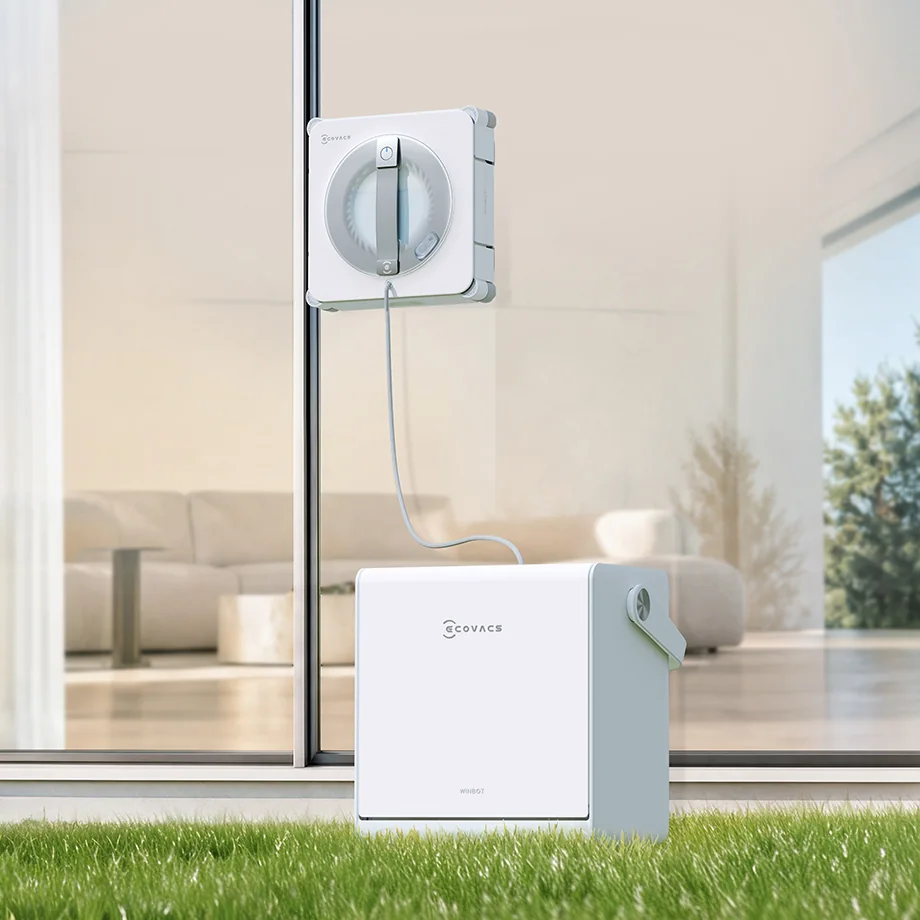
ECOVACS WINBOT W2S PRO OMNI
A household window robot with TruEdge 2.0 edge brushes, a 120 ml liquid tank and a portable battery-and-storage station.
View model →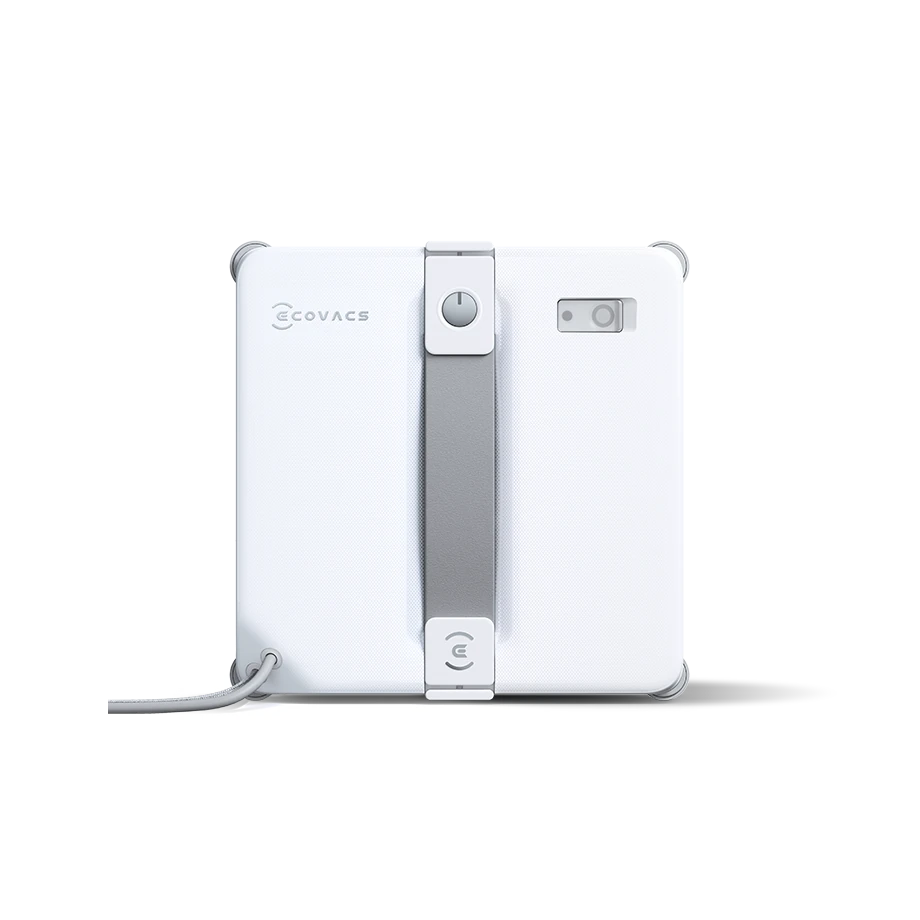
ECOVACS WINBOT mini 2
A compact, mains-powered window robot with corner brushes and a 25 × 25 cm minimum pane specification. Its internal battery provides power-loss protection, not cordless window cleaning.
View model →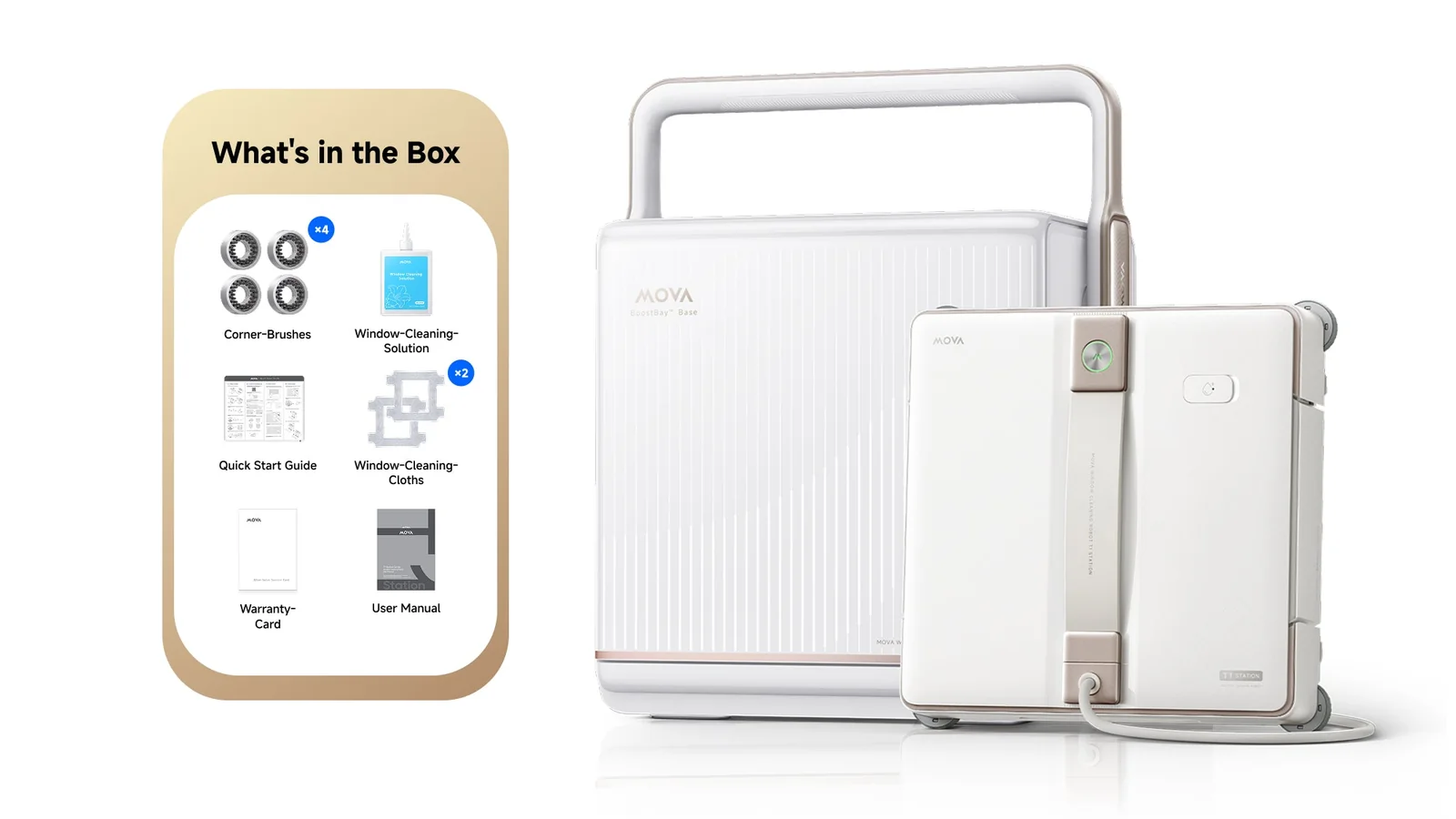
MOVA T1 Station
A window robot with a portable battery station, four rotating corner brushes and warm-water spray. Its roughly 110-minute total includes about 80 minutes of cleaning and at least 30 minutes of safety reserve.
View model →Trace every specification
Official sources & support
Checked Sep 6, 2026 · United States · specified model
Editorial interpretation by World Clean Biz. Specifications, availability and service terms may change; confirm the exact regional SKU before ordering.