- Fisher & Paykel Appliances is owned within Haier's global appliance group, following Haier's completed acquisition at the end of 2012.
- The company remains a distinct New Zealand-headquartered, design-led appliance business with Fisher & Paykel and DCS products, rather than becoming a relabeled Haier brand.
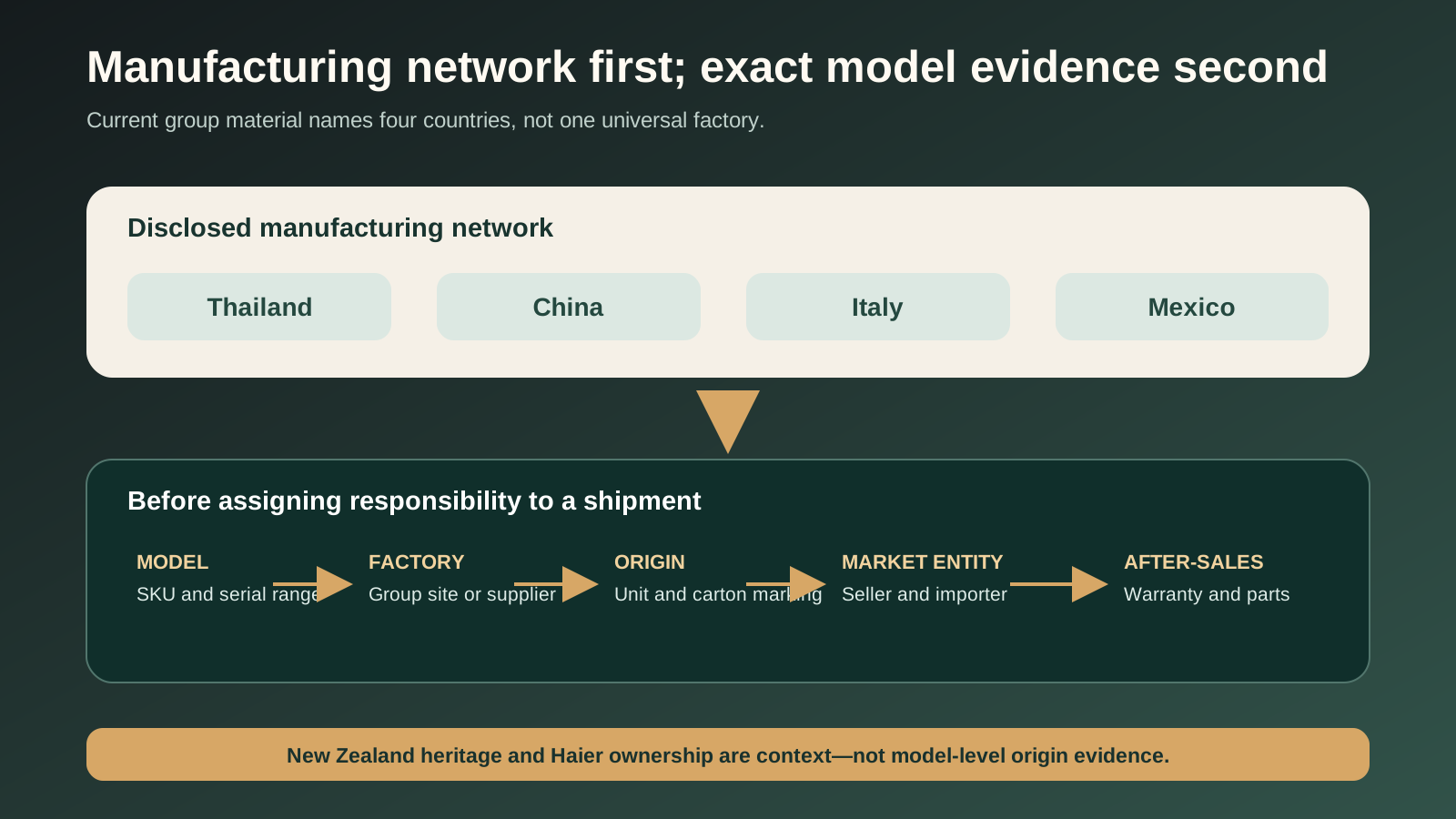
- Its disclosed manufacturing network spans Thailand, China, Italy and Mexico in current group materials, but the responsible factory, seller and warranty provider remain model- and market-specific.
In this article 13 sections
Fisher & Paykel Appliances is owned within Haier's global home-appliance group. Haier completed the acquisition at the end of 2012, eight years after Fisher & Paykel had acquired the U.S. cooking specialist Dynamic Cooking Systems, or DCS.
Ownership did not erase the New Zealand company or turn its appliances into rebadged Haier products. Fisher & Paykel remains headquartered in Auckland, retains its own design-led brand, operates through regional companies and manages products across refrigeration, cooking, dishwashing and laundry. Haier provides the corporate ownership and scale; the exact product, factory, seller and warranty still belong to narrower operating layers.
Fisher & Paykel at a Glance
| Question | Evidence-based answer | Important boundary |
|---|---|---|
| Who owns Fisher & Paykel Appliances? | It is part of Haier's appliance group following the 2012 acquisition | Haier Group, Haier Smart Home and operating subsidiaries are different layers |
| Is it still a New Zealand company? | It remains New Zealand-headquartered with roots dating to 1934 | Heritage and headquarters do not determine every model's origin |
| What is the principal operating name? | Fisher & Paykel Appliances Limited | Regional websites, sales and warranties can name local companies |
| Does Fisher & Paykel own DCS? | Yes. It acquired Dynamic Cooking Systems in 2004 | DCS remains a distinct cooking and outdoor-appliance proposition |
| Where does it manufacture? | Current Haier material names Thailand, China, Italy and Mexico | Factory assignment must be checked by model and production period |
| Is every product made by Fisher & Paykel itself? | No universal claim is justified | Company materials say appliances can be made by the group or on its behalf by suppliers |
How Did Haier Acquire Fisher & Paykel?
Fisher & Paykel began in New Zealand in 1934 as an appliance importing business. Import restrictions pushed the company into local assembly, and it developed a reputation for flexible manufacturing and product engineering. Its history includes refrigeration, cooking and laundry innovations such as plastic refrigerator liners, SmartDrive washing technology and drawer-based appliances.
Haier and Fisher & Paykel first built a strategic relationship before the full acquisition. Haier's completion announcement records that Fisher & Paykel became a wholly owned part of Haier at the end of 2012. Fisher & Paykel's own current history summarizes the change more plainly: eight years after acquiring DCS, it became part of Haier Group and began using the wider group's capabilities and scale to take the brand further internationally.
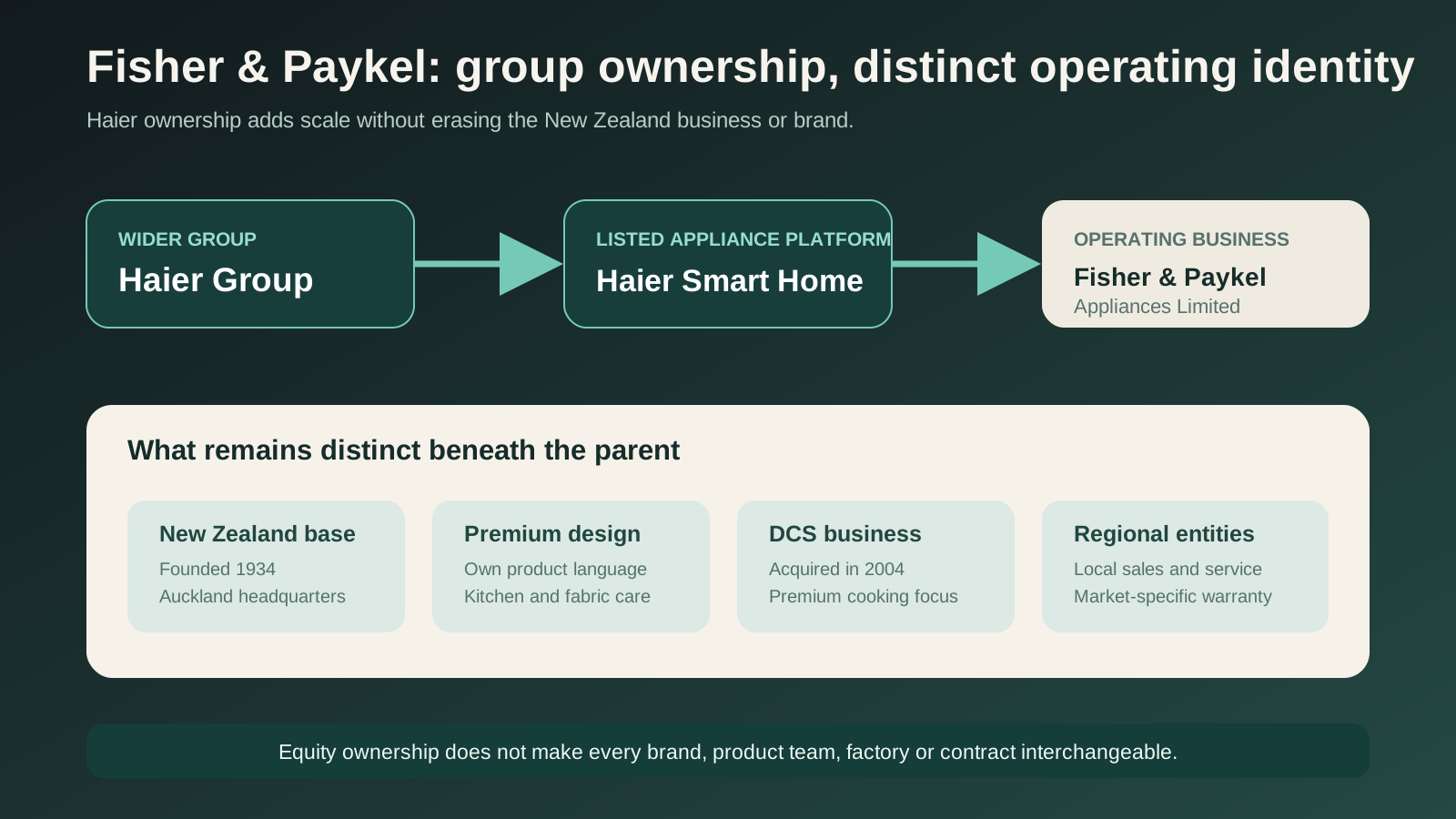
The corporate chain should be described carefully. Haier Group is the wider group, while listed Haier Smart Home Co., Ltd. reports Fisher & Paykel within its global appliance portfolio. Corporate filings also identify Fisher & Paykel holding and operating companies beneath that platform. A supplier contract, however, may name Fisher & Paykel Appliances Limited or a country-specific subsidiary rather than either Chinese parent.
The Haier appliance portfolio guide provides the group-level view. This article focuses on the distinct Fisher & Paykel business.
Is Fisher & Paykel Still Independent?
It is not independently owned, but it remains operationally and commercially distinct.
Fisher & Paykel has its own brand vision, design philosophy, leadership team, product development, manufacturing, distribution and customer-service functions. Its official story calls it a human-centred, design-led appliance brand operating globally. The company continues to use the Fisher & Paykel Appliances name in contracts, terms, product documents and corporate policies.
This distinction is common in appliance groups. A parent can own the equity while the acquired business retains a separate market identity and operating organization. That allows Haier Smart Home to coordinate capital, technology and global scale without making a Fisher & Paykel refrigerator identical to a Haier-branded refrigerator.
For business partners, “Haier-owned” is therefore useful background but not a substitute for identifying:
- the Fisher & Paykel company issuing the request;
- the brand and product program;
- the responsible development and manufacturing team;
- the country and channel covered by the agreement; and
- the company accepting warranty or compliance responsibility.
What Brands and Products Does Fisher & Paykel Operate?
The core Fisher & Paykel range covers refrigeration, cooking, ventilation, dishwashing and fabric care. Its positioning is premium and design-led, with integrated kitchens, flexible cooking systems, DishDrawer products and coordinated appliance suites playing central roles.
The company also owns DCS, acquired in 2004. DCS originated in the United States and specializes in premium indoor and outdoor cooking products. The brand relationship is relevant to buyers because a DCS grill or cooking program can follow a different product team, market route and service structure from a Fisher & Paykel laundry product.
Fisher & Paykel's official corporate statement has also described regional distribution of Haier-branded products in Australia and New Zealand and selected third-party brand arrangements. Distribution does not automatically equal worldwide ownership. Suppliers should not place every brand sold by a Fisher & Paykel entity inside the company's owned portfolio.
Where Are Fisher & Paykel Appliances Made?
Fisher & Paykel is New Zealand-origin and New Zealand-headquartered, but its production network is international. Haier's current profile of the business states that it manufactures in Thailand, China, Italy and Mexico and operates across 50 countries.
A Fisher & Paykel corporate statement for its appliance group similarly identifies manufacturing sites in Thailand, Mexico and China and explains that the group sells globally, with particular focus on New Zealand, Australia, North America and Europe. Italy also appears in the current group manufacturing description, reflecting the company's cooking and European operating history.
These countries describe the network, not a permanent origin label for every appliance. Refrigerators, ovens, dishwashers, washing machines and outdoor-cooking products require different tooling and factories. Production can move between models or generations, and a group can also use approved suppliers.
Fisher & Paykel's own supply-chain statement makes the boundary explicit: appliances sold by the business can be made by the group or on its behalf by suppliers. Therefore, neither “made in New Zealand” nor “made by Haier in China” is a reliable catalogue-wide answer.
Are Any Fisher & Paykel Appliances Still Made in New Zealand?
New Zealand remains central to the company's headquarters, design heritage, engineering and corporate identity. Current public manufacturing descriptions, however, emphasize the international production network rather than presenting New Zealand as a universal final-assembly location.
Buyers should not rely on an older model, historical factory reference or country-of-origin assumption. Check the rating plate and carton for the exact product. If origin affects tariffs, public procurement or marketing claims, obtain a current supplier declaration tied to the model and production batch.
The same discipline applies in reverse. A product made in Thailand or Mexico is not therefore a generic contract-manufactured appliance. It may still be designed, specified and quality-controlled within Fisher & Paykel's product system.
What Does Haier Ownership Change for Suppliers?
Haier ownership can give Fisher & Paykel access to a larger appliance platform, component network, technology base and international distribution system. Fisher & Paykel's own history says the relationship uses Haier's capabilities and scale to bring the brand to more markets.
The opportunity is especially relevant to suppliers that cross cleaning and home-appliance categories. Fisher & Paykel buys for laundry and dishwashing—two large cleaning systems—alongside refrigeration and cooking. Retailers carrying premium major appliances may also source vacuums, floor care and small appliances from other brands in the Haier Smart Home portfolio.
But a group introduction is not global approval. A component qualified for a Haier-branded platform does not automatically become approved for Fisher & Paykel, and a Fisher & Paykel relationship does not create rights to use Haier, GE Appliances or Candy names. Engineering requirements, finish standards, testing, tooling and supplier agreements remain program-specific.
How Do Regional Companies and Warranties Differ?
Fisher & Paykel uses regional legal companies and service networks. The entity named in New Zealand terms is not necessarily the same entity operating a European website or providing a North American warranty.
Official warranty information also shows why product and market matter. North American coverage, local consumer law, additional motor or sealed-system terms and authorized-service routes can differ from those in Australia, New Zealand or Europe. A global parent-company chart cannot answer who must repair one appliance in one country.
For a distributor or project buyer, collect the local sales terms before purchase. Confirm who invoices the goods, who imports them, who holds the compliance file, which service agent is authorized and whether parts will remain available for the intended product life.
What Buyers and Suppliers Should Verify
| Document or check | What it should establish |
|---|---|
| Contracting entity | Exact Fisher & Paykel company, regional subsidiary or authorized distributor |
| Brand authorization | Fisher & Paykel, DCS or another brand, with product-class and territory scope |
| Model label | SKU, electrical rating, manufacturer information and serial traceability |
| Country-of-origin evidence | Origin for the model and production batch rather than historic brand nationality |
| Factory declaration | Site making the model and whether it is group-owned or an approved supplier |
| Compliance documents | Responsible signatory, standards, importer and exact covered models |
| Warranty terms | Local provider, parts, labor, exclusions and authorized service process |
| Product change control | Notice requirements for factory, component, software or specification changes |
| Parts and service plan | Availability of pumps, motors, filters, boards, seals and other repair parts |
For premium built-in products, installation responsibility is also material. Cabinet dimensions, utilities, ventilation and commissioning can affect whether a defect belongs to the product, installer or site.
Frequently Asked Questions
Who owns Fisher & Paykel today?
Fisher & Paykel Appliances is part of Haier's global appliance group. Haier completed the acquisition at the end of 2012.
Is Fisher & Paykel owned by Haier Smart Home?
Yes at the listed appliance-platform level. Haier Smart Home reports Fisher & Paykel within its global brand portfolio, while operating contracts can name Fisher & Paykel companies below that parent.
Is Fisher & Paykel still a New Zealand brand?
Yes. It was founded in New Zealand, remains headquartered in Auckland and retains a distinct New Zealand design and corporate identity, although it is Haier-owned.
Where are Fisher & Paykel appliances made?
Current Haier group material names manufacturing in Thailand, China, Italy and Mexico. The exact factory and country of origin must be checked for each model.
Does Fisher & Paykel own DCS?
Yes. Fisher & Paykel acquired Dynamic Cooking Systems in 2004. DCS remains a distinct premium cooking and outdoor-appliance brand.
Are Fisher & Paykel products just rebranded Haier appliances?
No such catalogue-wide claim is supported. The business maintains its own design, product and operating functions, though group platforms or supply resources can be shared where appropriate.
Does Fisher & Paykel make every appliance itself?
No universal claim should be made. Company material says products can be made by the group or on its behalf by suppliers, so exact model documentation is required.
Final Answer
Fisher & Paykel Appliances is owned within Haier's global home-appliance group following the acquisition completed at the end of 2012. It remains a distinct New Zealand-headquartered company and premium brand, with its own history, design organization, product range and regional operations. It also owns DCS, the U.S.-origin premium cooking business acquired in 2004.
Current group information identifies manufacturing in Thailand, China, Italy and Mexico, but that network does not assign one origin or factory to every product. Buyers and suppliers should verify the exact Fisher & Paykel or DCS model, contracting company, plant, importer, compliance file and local warranty provider instead of treating Haier ownership or New Zealand heritage as a complete product-level answer.
Official and Primary Sources
- Fisher & Paykel company history
- Fisher & Paykel company overview
- Haier's current Fisher & Paykel business profile
- Haier completes the Fisher & Paykel acquisition
- Fisher & Paykel Appliances group structure and manufacturing statement
- Fisher & Paykel North American warranty information
- Fisher & Paykel regional privacy and company identity notice
Related World Clean Biz Articles
- Who Owns Haier Appliances? Haier Smart Home, GE Appliances, Candy and Fisher & Paykel Explained
- Who Owns GE Appliances? Haier, U.S. Manufacturing and the Brand Portfolio Explained
- Who Makes LG Appliances? LG Electronics, Manufacturing Network and Home Appliance Business Explained
- Who Makes Samsung Appliances? Samsung Electronics, Global Manufacturing and Bespoke AI Explained
- Who Owns Hoover? TTI, Haier, Candy and the Regional Brand Split Explained