Key Points
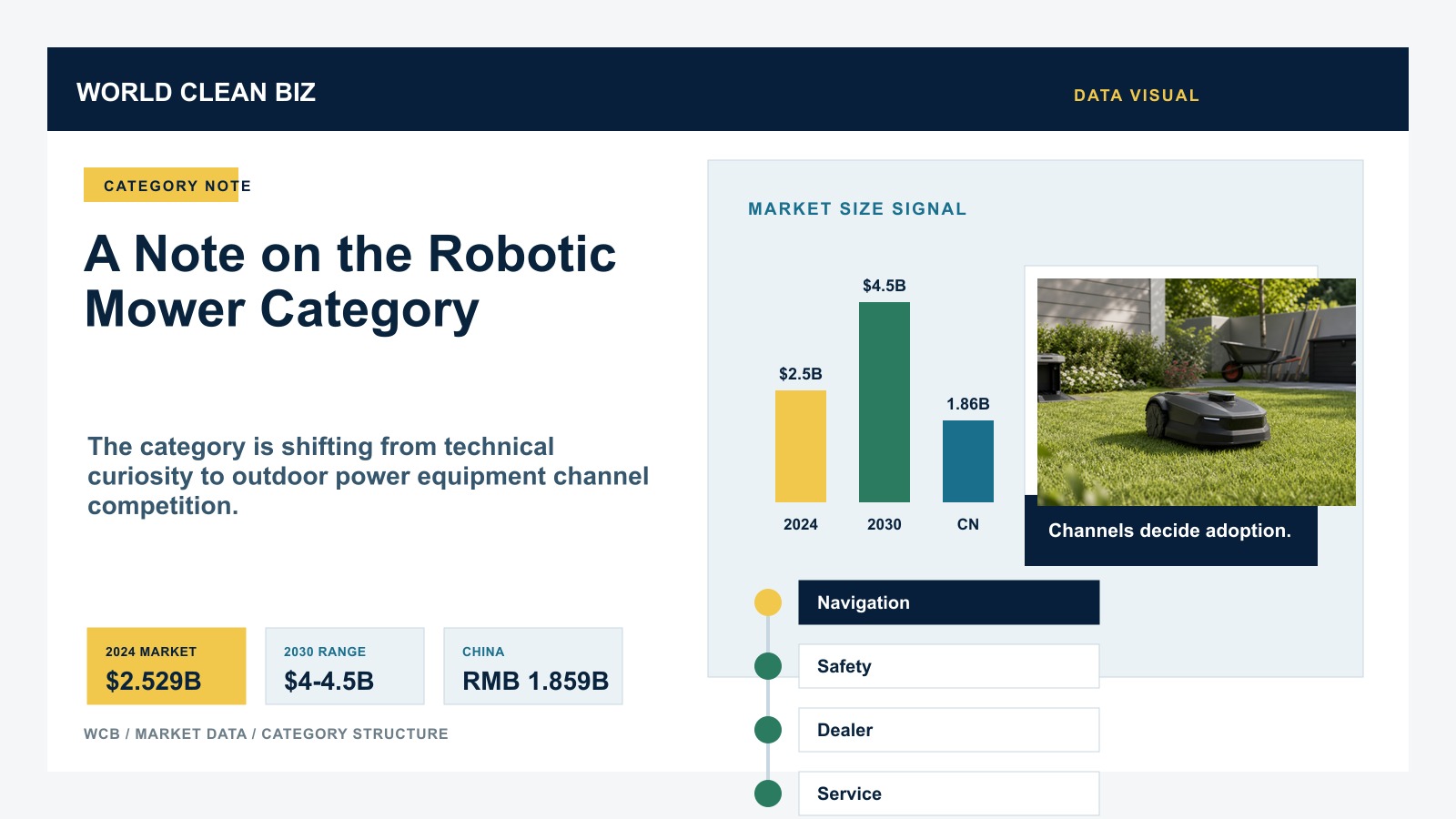
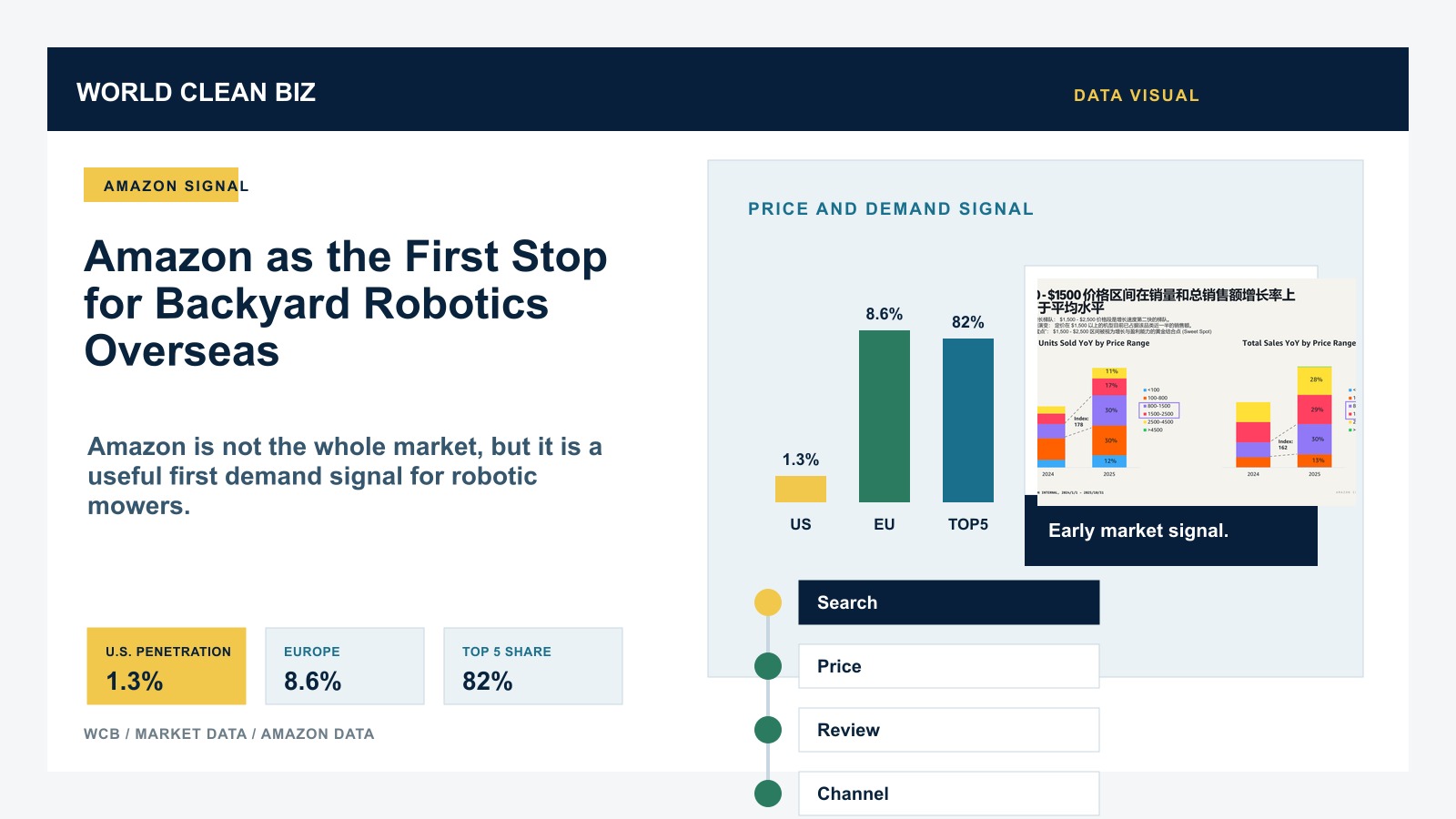
- Boundary-free navigation is pushing robotic mowers from early adopters toward broader outdoor power equipment channels.
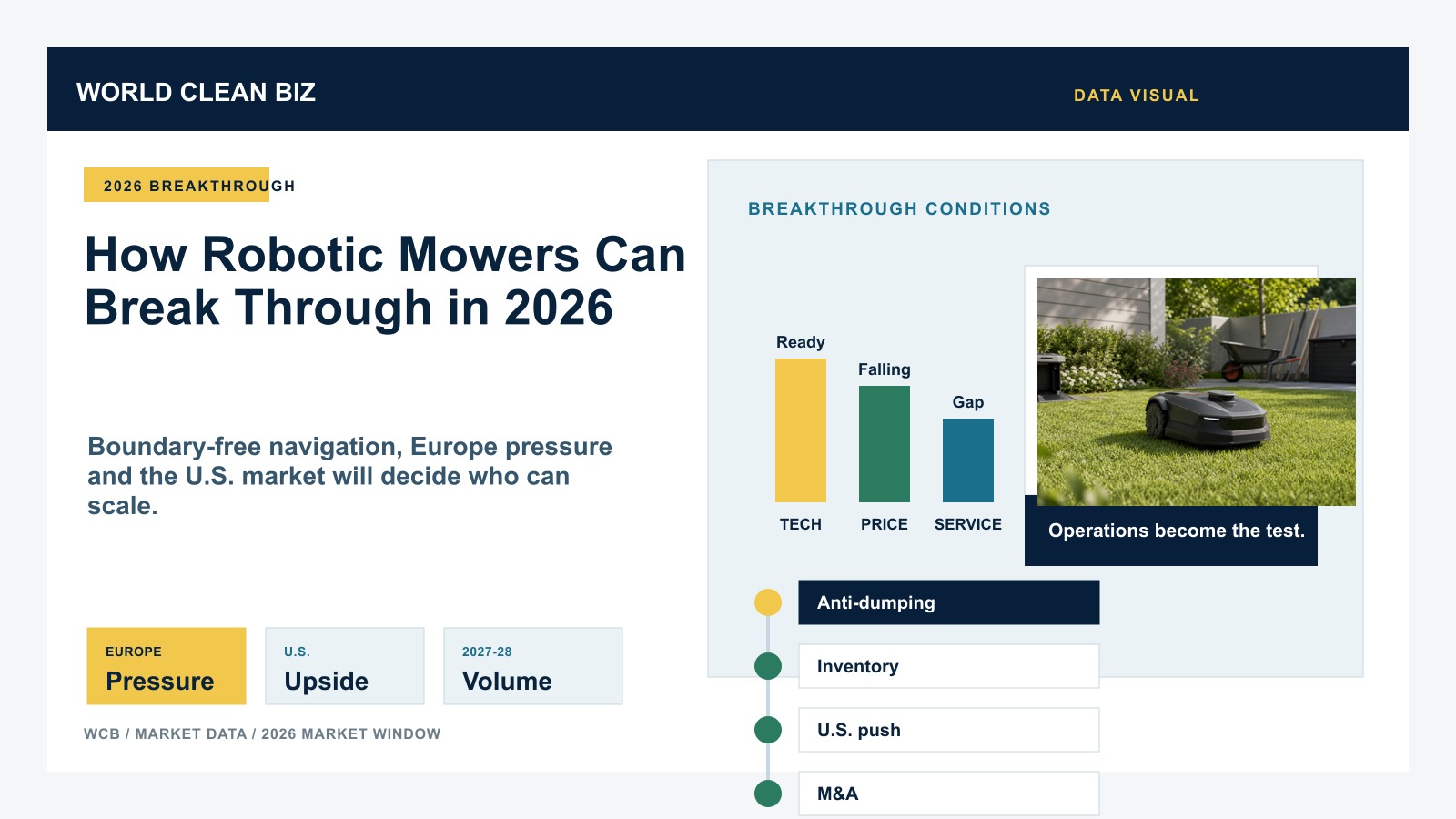
- European regulatory and competitive pressure may reshape which brands can scale in 2026.
- Chinese robotics companies need balanced product, channel and service capability rather than only aggressive pricing.
Last Year's Black Swan for Lawn Mowing Robots: Anti-Dumping Investigation Initiated by Husqvarna in Europe
Breaking the Status Quo in 2026
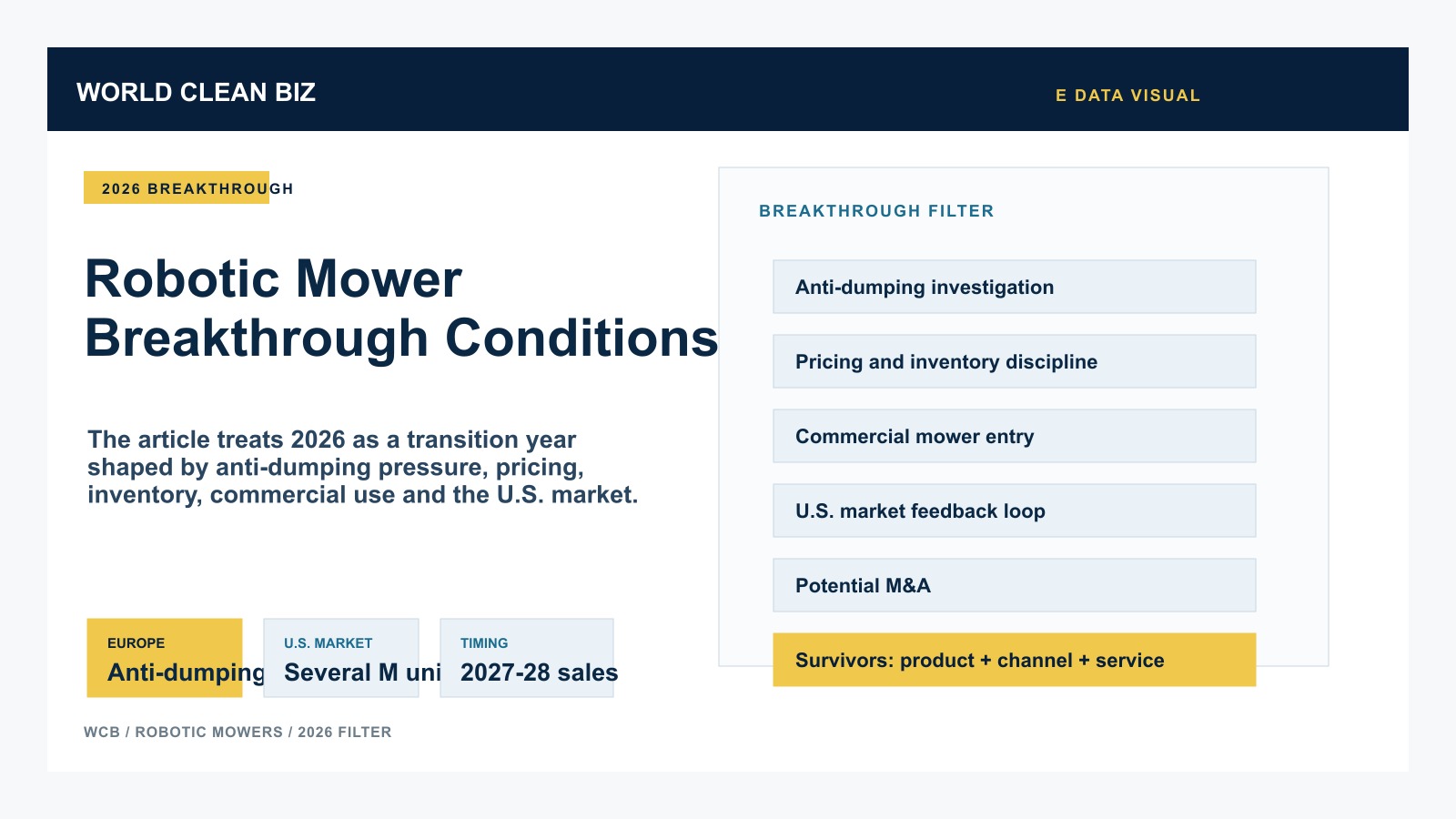
1. Anti-Dumping Investigation
- Current Phase
- Approximate Tariff Rate
- Possible Trends
- Potential Impacts (price retroactivity, elimination of small and medium-sized startups)
2. Pricing and Inventory
- Further Price Decline
- Increased Inventory Levels
- Impact of Anti-Dumping Measures (Companies are hesitant to reduce prices arbitrarily)
3. Commercial Lawn Mowing Robots
- Market Entry by Major Companies
- Limited Market Capacity, Dominated by a Few Leading Firms
4. The U.S. Market
The U.S. market represents an immense opportunity with significant potential for growth and the absence of local brands. Estimated market size could reach several million units. In 2026, companies will focus on promoting their products in the U.S., gathering consumer feedback to adjust strategies. Significant sales are expected to start around 2027-28.
5. Potential Mergers and Acquisitions
As anti-dumping measures continue, small and medium-sized enterprises have little chance of survival and may be forced out of the market. There is a possibility that some mergers and acquisitions will occur.
If your team is evaluating this category for a new program, explore World Clean Biz robotic lawn mower sourcing support for product and supplier assessment.