Where the Next Robotic Mower Opportunities Are Forming
Choose the Market Opportunity Before You Choose the Factory
Robotic mowers are separating into distinct product platforms—from mass-market vision models to RTK, slope specialists and professional large-area machines. The opportunity depends on which customer, channel and ownership problem the product is built to solve.
For brands, importers, distributors and retailers deciding where to compete in robotic mowers—and which Chinese product platform can support that position.
The Decisions Buyers Are Facing
Built for Buyers Deciding Where to Play in Robotic Mowers
Add a product that opens a new customer or price position
Find a platform with a visible reason to win beyond specifications
Replace a weak supplier or one-season product before scaling
Compare the Opportunity
Six Product Platforms. Six Different Market Opportunities.
Each direction targets a different customer, channel and reason to buy. Final supplier models and claims require verification.
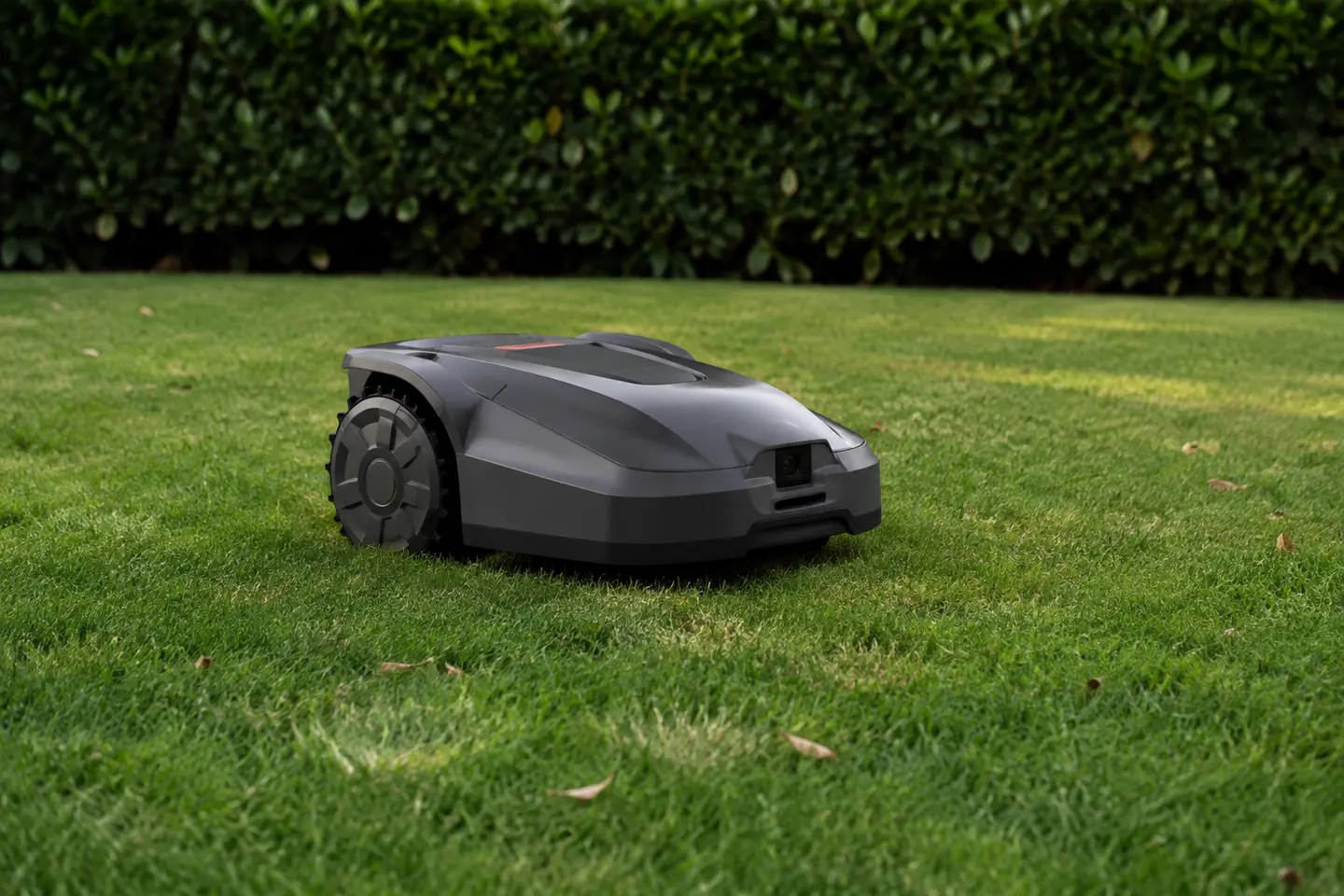 RM-01
RM-01Product 1 of 6
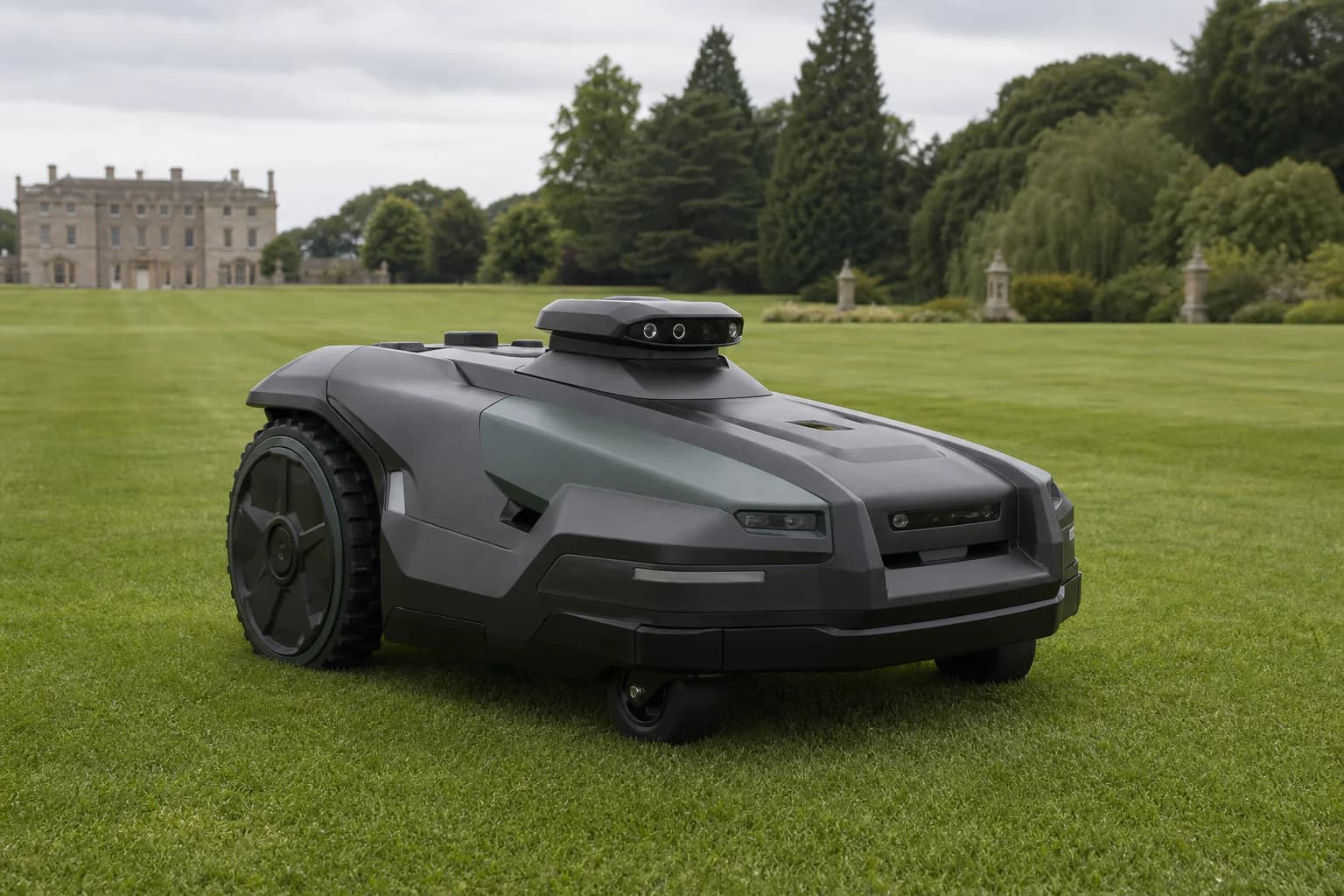
RM-01 · Camera-led navigation for mass adoption
Mass-Market Vision
Market opportunity
An installation-light platform for smaller lawns, first-time robotic mower buyers and channels that cannot depend on professional setup.
Why it can win
Removing the boundary-wire visit can open robotic mowing beyond early adopters and premium dealer channels.
Critical proof points
Prove edge cutting, obstacle recognition, changing-light performance and consumer-led setup in ordinary gardens.
Swipe to compare more product directions →
Six-Platform Opportunity Landscape
Where the Six Product Platforms Compete
Different robotic mower platforms create value through different customers, channels and ownership models.
Specialist and professional useBroad residential adoption
RM-01Mass-Market Vision
RM-02RTK Step-Up
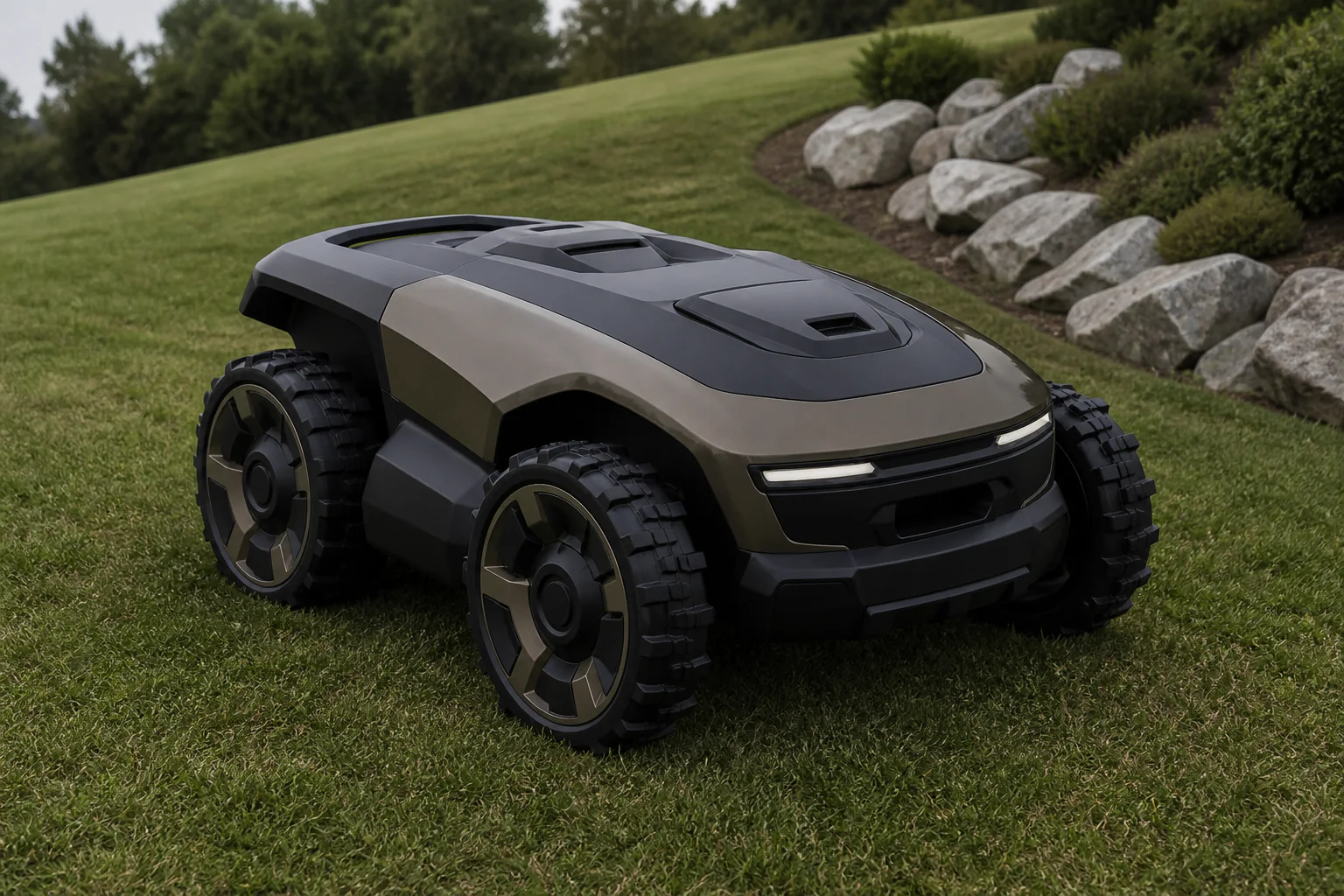
RM-03AWD Terrain
RM-04Proven Value
RM-05Large-Area Service
RM-06Retail Starter
Accessible entryPremium product and service value
RM-01 and RM-06 focus on broad residential adoption and accessible entry. RM-02 moves toward premium residential value. RM-03 focuses on specialist terrain. RM-04 offers an accessible proven platform. RM-05 focuses on professional large-area use.
Platform × Channel Fit
Which Channels Fit Each Product Platform?
Channel fit depends on setup burden, customer education, service capability and the clarity of the product's reason to buy.
World Clean Biz editorial assessmentStrong fitConditional fit— Not a natural primary route
Swipe to compare channels →
| Product platform | Retail | Ecommerce | Specialist dealer | Private label | Professional / project sales |
|---|---|---|---|---|---|
| RM-01Mass-Market Vision | Strong fit | Strong fit | Conditional fit | Conditional fit | — |
| RM-02RTK Step-Up | Conditional fit | Conditional fit | Strong fit | Conditional fit | Conditional fit |
| RM-03AWD Terrain | Conditional fit | Conditional fit | Strong fit | — | Conditional fit |
| RM-04Proven Value | Strong fit | Conditional fit | Conditional fit | Strong fit | — |
| RM-05Large-Area Service | — | — | Strong fit | — | Strong fit |
| RM-06Retail Starter | Strong fit | Strong fit | — | Strong fit | — |
Opportunity Conditions
Three Conditions That Decide Whether the Opportunity Can Scale
 01
01A clear customer problem
Installation friction, difficult terrain or large-area labor must give the buyer an obvious reason to switch.
 02
02Repeatable field performance
The platform has to work across the edges, slopes, signals and recovery conditions buyers actually face.
 03
03Channel economics after the sale
Setup, software, returns, parts and service cannot consume the margin that made the quotation attractive.

Industry judgment behind the product decision
A platform can look convincing long before it becomes a viable business
Denny reviews whether the opportunity, product evidence, supplier capability and execution model reinforce one another strongly enough to justify the next investment—not whether the quotation looks attractive.
- Founder, World Clean Biz
- Organizer, WCB Expo
- Inside the cleaning industry since 2006
Commercial Go / No-Go
Four Decisions Before You Back a Platform
Move forward only when the opportunity, product evidence, supplier capability and after-sale economics reinforce one another.
- 01Opportunity
Is the customer problem valuable?
- Reason to switch
- Addressable use case
- Channel relevance
- 02Platform
Does field performance prove it?
- Navigation recovery
- Terrain behavior
- Ownership experience
- 03Supplier
Can capability survive scale?
- Technology ownership
- Test depth
- Software and parts
- 04Economics
Does margin survive after the sale?
- Price and margin
- Returns and service
- Quality and compliance
Industry Opportunity Questions
The Product Decisions Buyers Are Debating Now
These are not generic sourcing questions. They are the commercial and technical choices that shape where robotic mower growth can come from next.
Which robotic mower segment offers the strongest opportunity for new market entrants?
The most accessible opening is often not the most technically ambitious machine. Installation-light products for smaller lawns and focused retail use cases can reach buyers that dealer-installed premium products do not. A new entrant still needs a sharp position: mass adoption, difficult terrain, large-area service or value—not a generic mower aimed at every lawn.
Is the European market still led by premium products, or is it moving toward value models?
Premium products remain important because reliability, installation and dealer support carry real value. The expansion opportunity is broader: simpler boundary-free products and proven value platforms can address households that rejected earlier prices or installation requirements. Value will grow only where lower price does not create higher returns, weak apps or unsustainable service cost.
Can vision-based robotic mowers replace boundary-wire products?
Vision can remove one of the category's largest adoption barriers, but it will not replace boundary wire in every environment. Smaller structured lawns are a strong opportunity when edges, obstacles and changing light are handled consistently. Boundary wire can remain commercially relevant where predictable operation and mature cost matter more than installation convenience.
When does RTK create real customer value rather than functioning as a marketing feature?
RTK creates value when it enables faster setup, reliable zone control and efficient coverage of medium or large open lawns. The feature becomes weak when trees, buildings, antenna placement or map recovery make ownership complicated. Buyers should evaluate the complete navigation system and installation journey, not the presence of RTK alone.
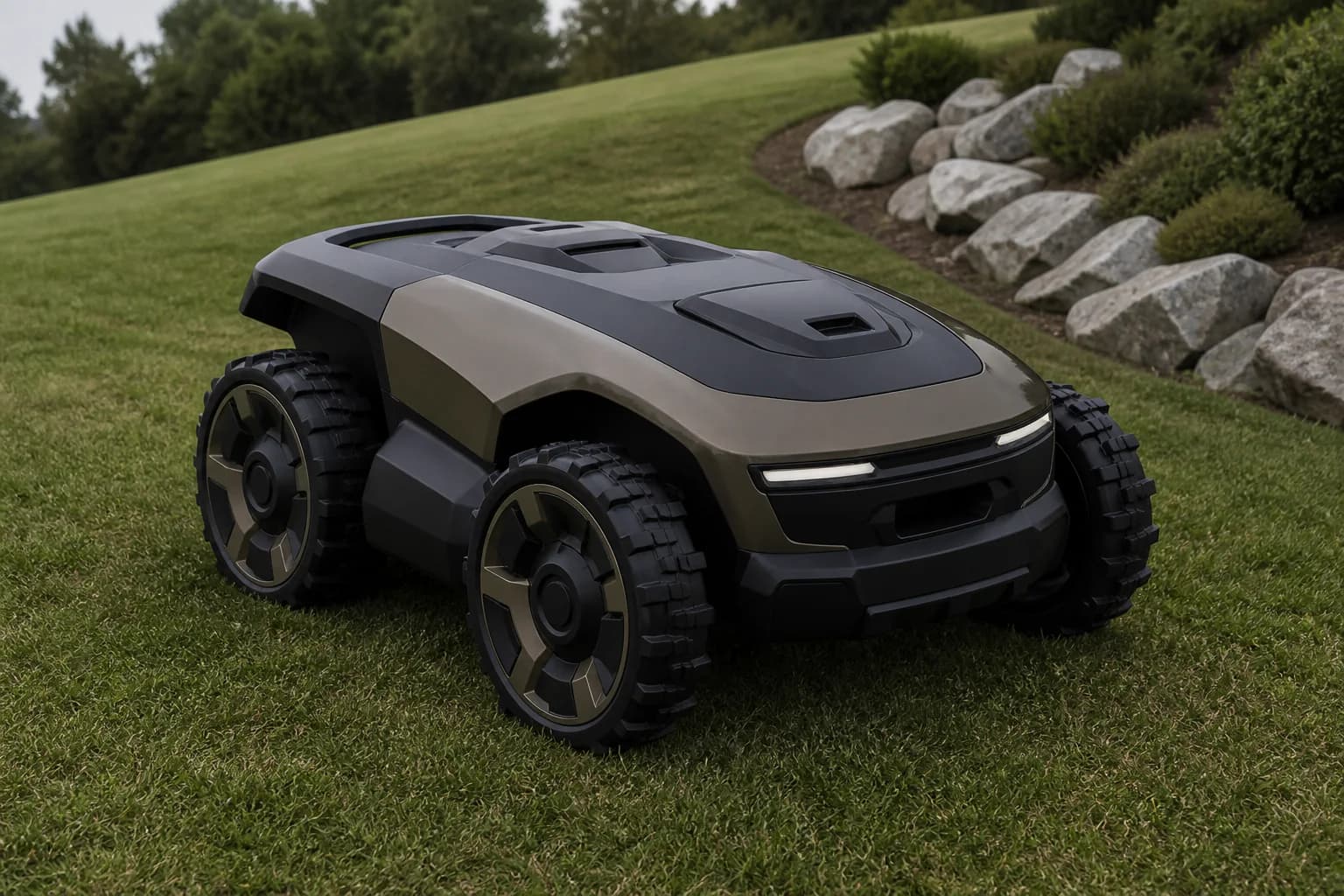
Is there a meaningful market for AWD and slope-capable robotic mowers?
Yes—when terrain capability solves a clearly underserved problem and the customer will pay for it. Sloped and uneven gardens give dealers a visible reason to recommend a specialist product. The opportunity depends on proving safe usable slope performance, turf protection and drivetrain durability rather than publishing an impressive maximum-angle claim.
Which product direction is most suitable for ecommerce and mass retail?
A compact, installation-light platform is easier to merchandise and explain, but simplicity must continue after delivery. Ecommerce and mass retail require resilient packaging, consumer-led setup, low support demand and return economics that protect channel margin. A technically advanced product with a difficult first-use experience is often a poor retail product.
Where can Chinese robotic mower suppliers still differentiate from established European brands?
The strongest openings are faster platform iteration, broader product portfolios, integration of new navigation approaches and adaptation to emerging channel needs. Cost alone is not durable differentiation. Buyers should look for suppliers that can turn manufacturing speed into stable software, repeatable field performance, parts support and a product position competitors cannot copy immediately.
Which technical claims create the greatest sourcing risk?
Maximum area, slope capability, obstacle avoidance and boundary-free navigation can all look stronger in specifications than in ordinary gardens. The risk is greatest where performance depends on signal conditions, lighting, lawn edges, moisture or software recovery. Claims should be converted into repeatable target-market test scenarios before they become packaging promises.
What separates a scalable robotic mower platform from a one-season product?
A scalable platform has a stable navigation architecture, controlled quality, software ownership, serviceable components and a supplier roadmap that supports more than one launch. A one-season product can still look competitive at sample stage but becomes difficult to sustain when returns, updates, spare parts and model changes begin to accumulate.
What should buyers verify before committing to a product platform?
Verify that the customer problem is valuable, field performance proves the product promise, the supplier controls the required technology, and the channel economics still work after setup, returns and service. If any one of those four conditions is weak, a lower quotation or impressive demonstration is not enough reason to commit.
Make the Opportunity Specific
Turn a Market Opportunity Into a Product Brief
Define the customer, lawn environment, channel, price position and reason the product should win. That is the starting point for identifying the platform, supplier capability and evidence worth pursuing.
Related Intelligence
Research the category before choosing a supplier
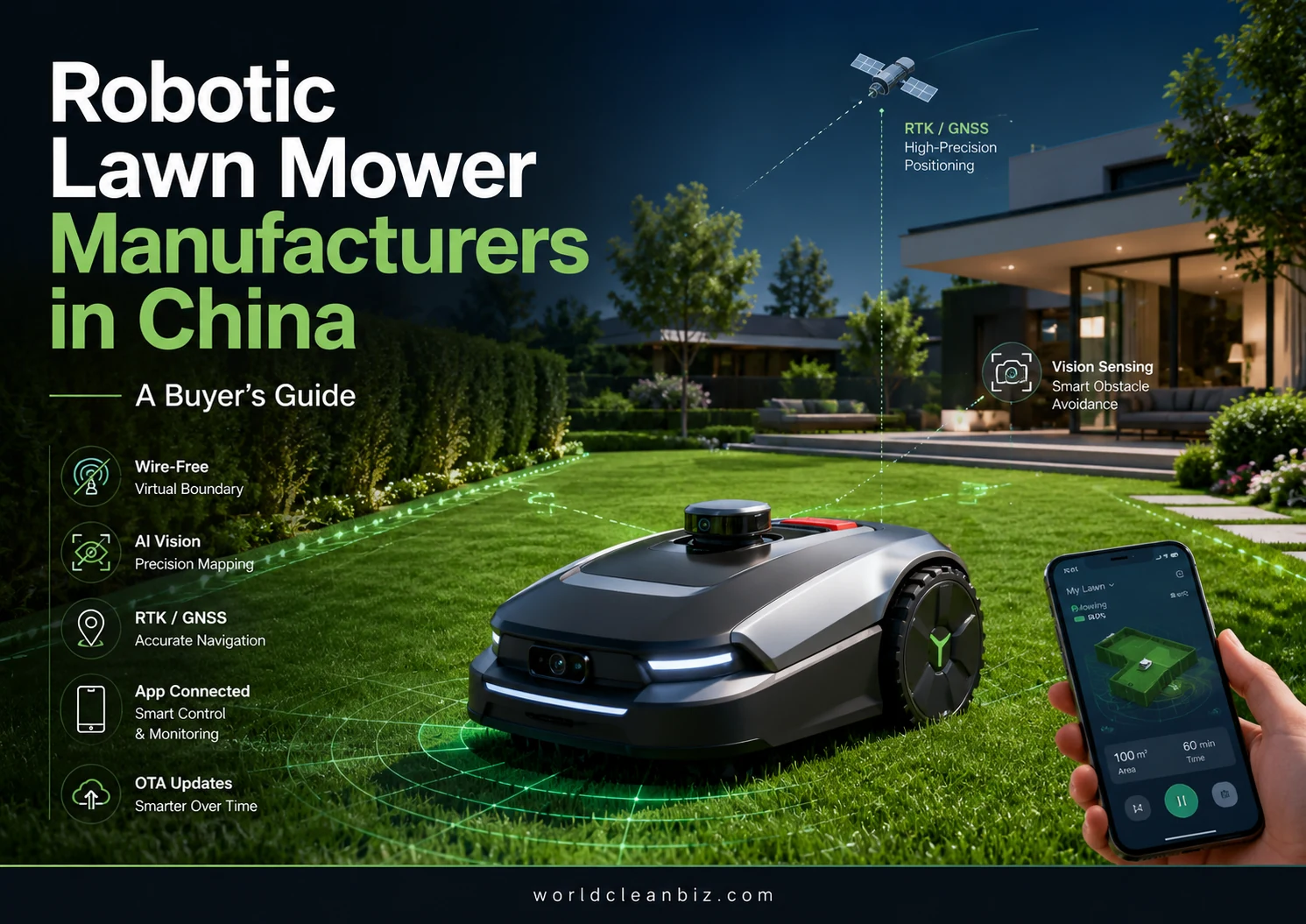
Robotic Lawn Mower Manufacturers in China: A Buyer’s Guide
A practical buyer guide to evaluating robotic lawn mower manufacturers and suppliers in China, including supplier types, product capabilities, sourcing models, and risks.
Read the analysis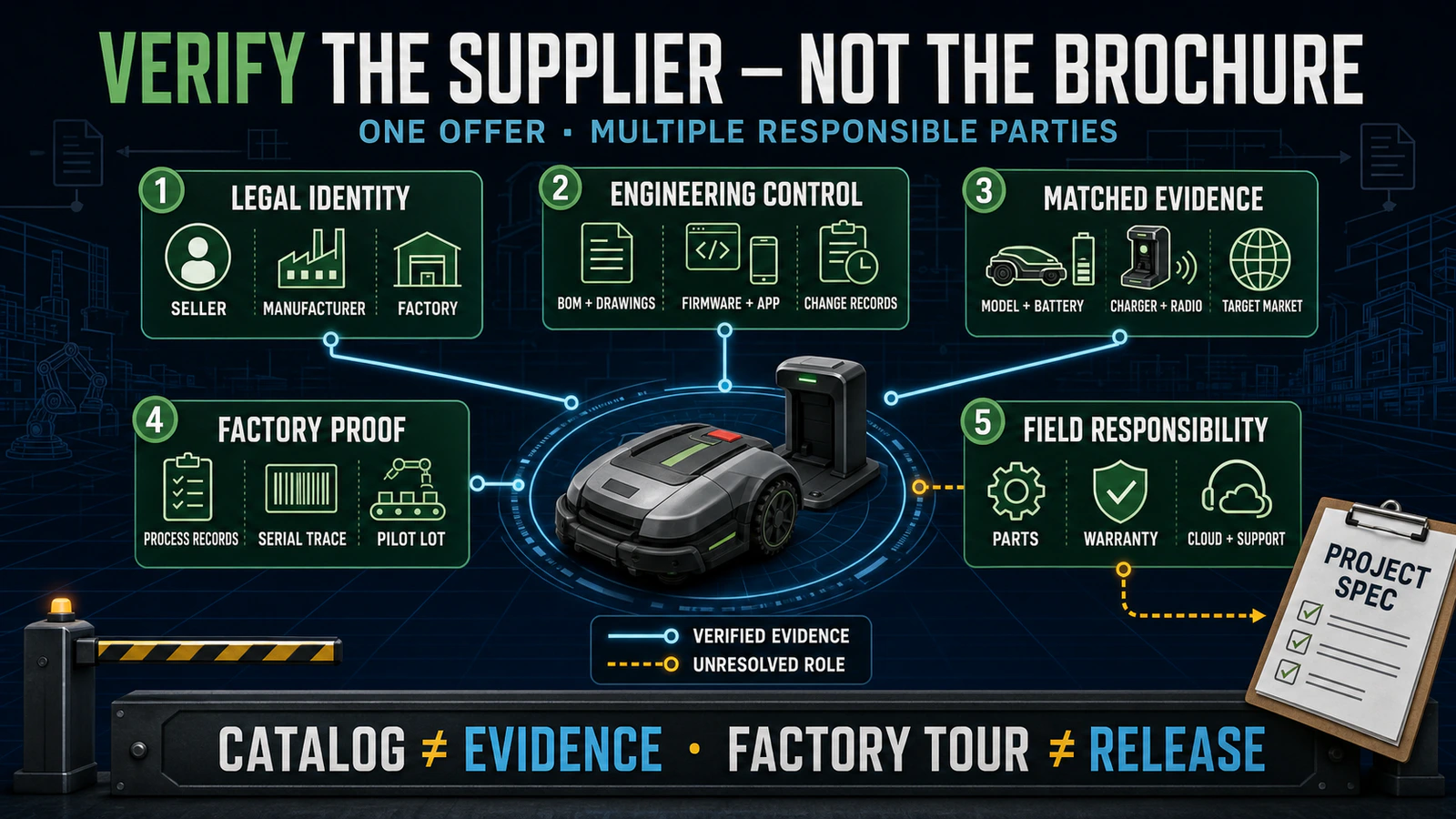
Commercial Robot Mower Supplier Evaluation: RFQ & Audit Guide
Use this factory-audit and RFQ guide to evaluate commercial robot mower suppliers by identity, engineering, compliance, samples, software and warranty.
Read the analysis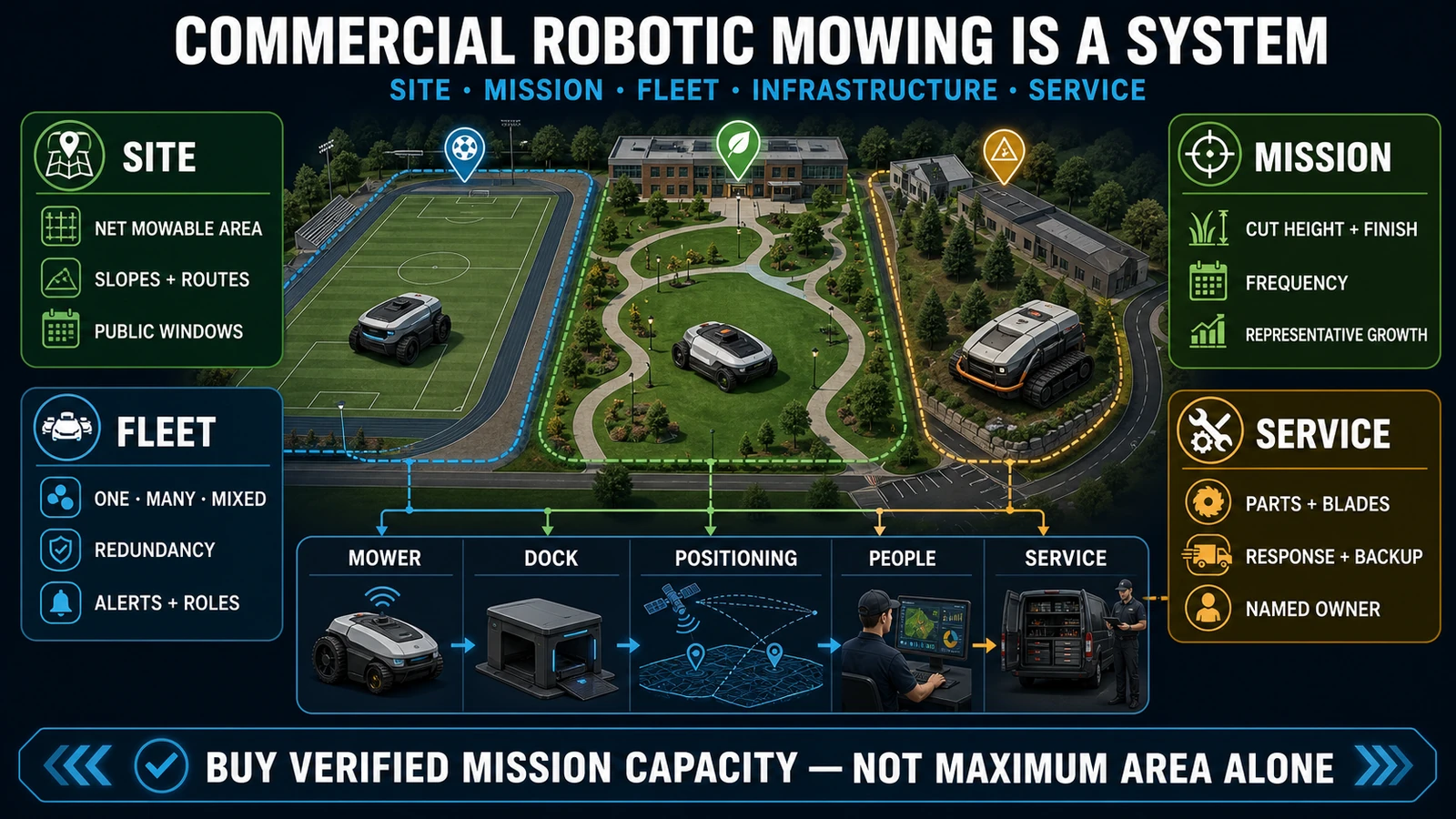
Commercial Robotic Lawn Mowers: Fleet, ROI and Site Planning
Evaluate commercial robotic lawn mowers by verified site capacity, fleet design, labor, TCO, service, cybersecurity and commissioning.
Read the analysis