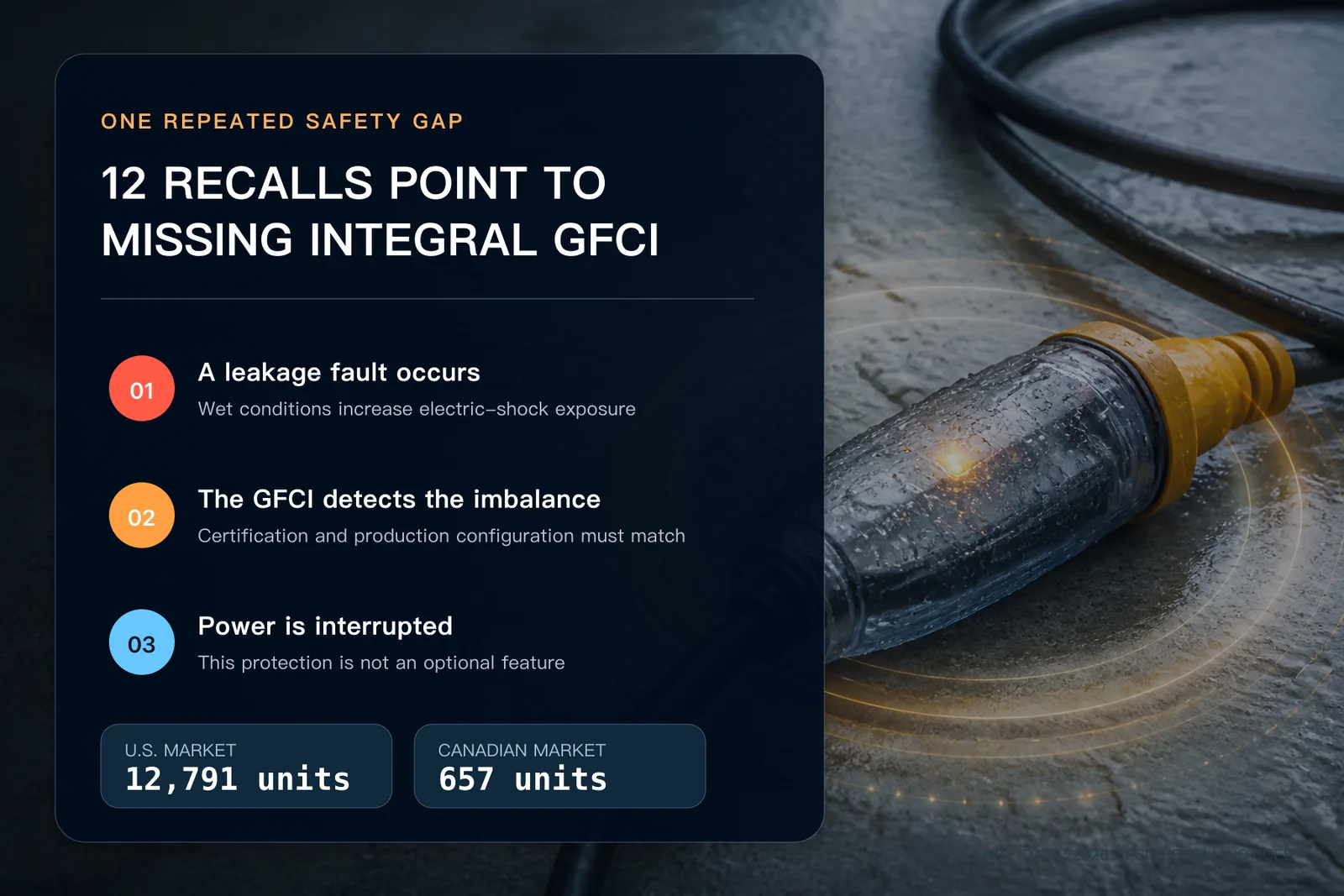
- Twelve 2026 CPSC recalls covering Chinese-made electric pressure washers shared the same central defect: missing integral GFCI protection; later notices also identified inadequate power-cord length.
- Most of the recalled names were cross-border e-commerce brands whose product-engineering and compliance control were weaker than those of established pressure-washer companies.
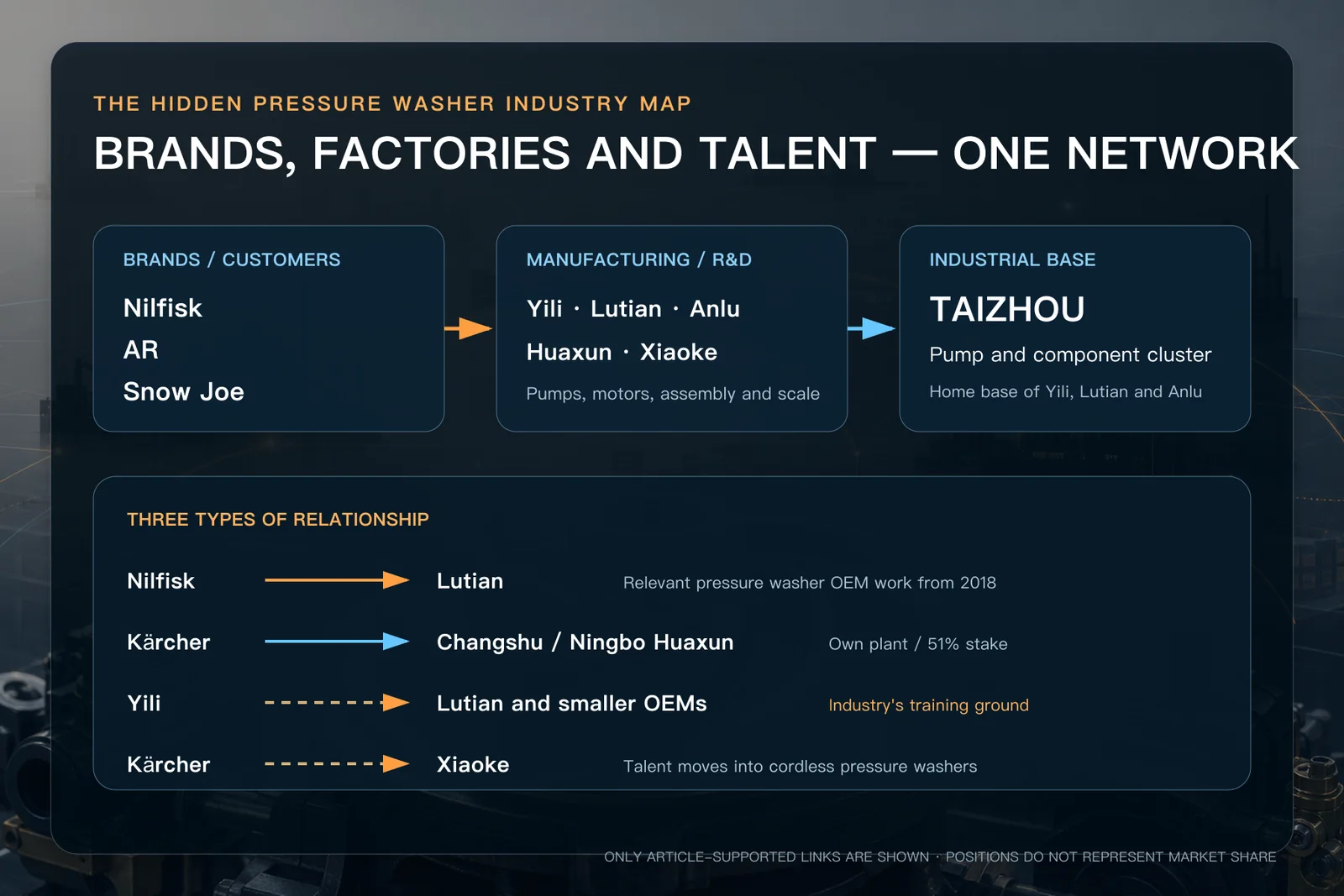
- Behind the storefront brands sits a concentrated manufacturing network shaped by Taizhou's pump cluster, major OEMs such as Yili and Lutian, and talent moving out of Yili and Kärcher.
In this article 4 sections
In 2026, the U.S. Consumer Product Safety Commission published 12 recalls involving electric pressure washers. Together, the notices covered approximately 12,791 units in the United States, plus 657 sold in Canada.
The recalled names included BAYOTAK, Agiiman, COMMOWNER, Workbless, YERYORK and Steelite. There was also SEN-QII. Its seller refused to agree to a recall acceptable to the CPSC, so the agency issued a public warning telling consumers to stop using the product immediately.
The brand names looked unrelated. The products had almost the same problem: they lacked an integral ground-fault circuit interrupter, or GFCI.
An electric pressure washer combines water and electricity, usually in a driveway, garage or another wet outdoor environment. If the cord, plug, switch or motor develops a leakage fault, current can find a path through standing water, the machine housing or the user. The GFCI is there to detect that abnormal current and interrupt the power.
It is not an optional feature added to strengthen a product listing. It is basic electrical protection.
Some later recalls also identified an inadequate-length power cord. A short cord can encourage the user to connect an ordinary extension cord outdoors, adding another risk in wet conditions.
I paid particular attention to this group of recalls because most of the affected names were cross-border e-commerce brands.
They were sold mainly through online channels such as Amazon, Walmart.com and Temu. The names change quickly, but the companies behind them are usually not traditional cleaning-equipment businesses with decades of engineering and after-sales experience.
In the customers I have dealt with, the difference between a cross-border e-commerce brand and an established pressure-washer brand is obvious.
Traditional brands also push hard on price. Sometimes they push extremely hard. But they normally define clear requirements for product safety and quality. They do not stop at whether the machine turns on or reaches a headline pressure figure. They examine the cord, plug, switch, pump, motor, insulation structure and safety-critical components.
Certification is not simply a document in a folder. A serious brand asks which model the certificate covers, which components were tested, whether suppliers may be changed during production and whether an engineering change triggers new validation.
Many cross-border e-commerce teams are built around product selection, marketplace operations, advertising and traffic. Their understanding of engineering, regulation and quality systems can be much weaker.
When they approach a factory, they often ask first about price, appearance, delivery time and the specifications that will appear on the listing. Only then comes the question: “Do you have certification?” If the factory can provide a document that looks suitable, the product may be listed quickly.
The brand may not have the people to verify whether the production unit still matches the tested sample, whether a critical component has been substituted, or whether the certificate genuinely covers the model now being sold.
Their product requirements are usually weaker than those of established companies such as Kärcher, Nilfisk or Annovi Reverberi. That difference eventually appears in the configuration and consistency of the finished machine.
I spent several years working at Yili, so I know this industry from inside the supply chain.
Open a pressure washer and the pump is the most important component. It largely determines whether pressure remains stable, how long the machine lasts and how much noise it produces.
One of China's most important pump clusters is in Taizhou, Zhejiang. Around it are motor companies, aluminium die casters, plastics suppliers, machining companies and component specialists. A pressure-washer factory can find much of the required supply chain nearby.
Yili, Lutian and Anlu all grew out of this Taizhou industrial base.
Yili later shifted much of its operating and production focus to Shanghai and Jiashan, Zhejiang. But much of its early pump know-how, supplier base and manufacturing talent came from Taizhou.
During the years I worked there, Yili was the largest pressure-washer contract manufacturer in the industry. It had dealt with or supplied most of the leading customers, including Nilfisk, Annovi Reverberi—better known in this market as AR—and Snow Joe.
Those customers controlled the brand and sales channel. Yili handled product development and manufacturing. A customer defined the positioning, target price and technical standard; Yili developed the pump, structure, tooling, testing and mass-production process.
Customer requirements varied widely. Established brands set specific standards for pump life, motor temperature rise, cords, plugs and safety components. Some kept engineers and quality staff closely involved with the factory. Serving those customers helped the manufacturer build its own engineering and quality systems.
As Yili's orders grew, so did its organisation. Engineers, buyers, salespeople and production managers learned the complete process from pressure-washer development to mass production.
Yili is the Whampoa Military Academy of the pressure-washer industry—the place where a large part of the industry's management and technical talent was trained.
Many founders, factory managers, engineers and sales leaders at smaller Chinese OEMs once worked at Yili. Some joined competitors, some started their own businesses, and some moved to Lutian.
Lutian had previously been more focused on commercial cleaning equipment and general-purpose power machinery. As people from Yili joined, it strengthened household pressure-washer development, industrial design and overseas customer service. Its consumer business grew rapidly.
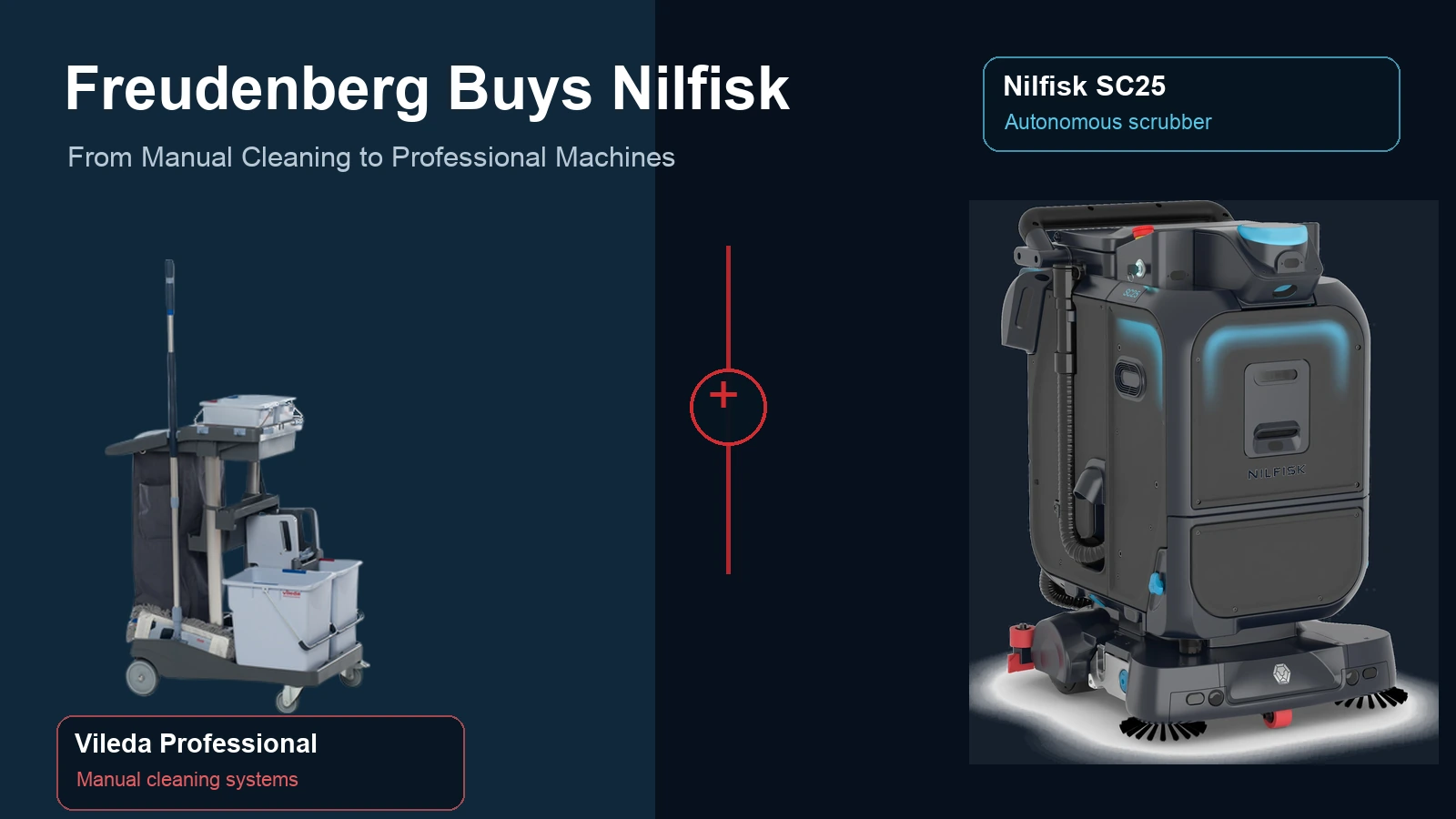
Around 2018, Nilfisk closed its pressure-washer manufacturing operation in Suzhou and searched for a new manufacturing partner in China. The relevant OEM work later went to Lutian.
A customer like Nilfisk brings more than volume. It brings established expectations for testing, component control, engineering changes and traceability. To keep such a customer, the factory's own engineering and quality systems have to improve.
While Nilfisk converted its Suzhou production to an OEM model, Kärcher continued to keep much of its pressure-washer production in its own Changshu plant.
Kärcher controlled more of the manufacturing process internally, from product development and tooling to pumps, assembly and testing.
Outside Changshu, it also added capacity through Ningbo Huaxun Clean Machinery. Kärcher's group company register lists a 51% interest in the Ningbo pressure-washer manufacturer.
Huaxun already produced household, commercial and cordless pressure washers. Through the investment, Kärcher could add Huaxun's existing engineering and manufacturing capabilities to its wider production network.
Talent also moved out of Kärcher and into new companies.
The founder of Xiaoke Cleaning, Mr Yu, came from Kärcher. When I met him in 2019, he had only recently left the company and was building cordless pressure washers.
Cordless tools were expanding quickly at the time. The conventional pressure washer, tied to mains power and a connected water supply, was being redesigned as a battery-powered product able to draw water from a bucket. It could not match a conventional corded machine for pressure, but it was portable and well suited to vehicle, garden and outdoor cleaning.
Cordless washers soon became popular in cross-border e-commerce, and Xiaoke developed into an important ODM and OEM in that segment.
People trained at Yili moved into Lutian and smaller manufacturers. People trained at Kärcher founded companies such as Xiaoke. Global brands continued to place manufacturing work into Chinese factories. That is how the industry's brands, factories and people became connected.
The same factory can build to the standards of Nilfisk or AR and can also develop a product for a newly created marketplace brand.
The final machine changes with the customer's specification: the pump, motor, power cord and safety components it approves; the tests it requires; and whether parts may be changed after production begins.
When a cross-border brand focuses only on purchase price, pressure figures and delivery time, the factory will build a proposal around those priorities. If the brand cannot distinguish a negotiable cost from a safety requirement that must not be touched, the result can look like this recall cluster.
The cost saved by removing GFCI protection is small. Once a recall begins, the inventory, marketplace account and brand reputation all pay for it.
FAQ
Why were these electric pressure washers recalled?
The 12 recalled product groups lacked integral GFCI protection. Several later notices also cited an inadequate-length power cord that could encourage extension-cord use. In a wet operating environment, those defects create serious shock and electrocution hazards.
Were the recalled products made by established pressure-washer brands?
Most were sold under cross-border e-commerce names rather than long-established cleaning-equipment brands. The recall notice still applies to the exact product, seller and responsible company named by the CPSC; it should not be expanded to every online brand or every Chinese pressure-washer factory.
Who manufactures pressure washers for global brands?
The answer varies by brand, model and period. Yili has supplied customers including Nilfisk, AR and Snow Joe. Lutian took on relevant Nilfisk pressure-washer OEM work after the Suzhou factory closure. Kärcher retained its Changshu plant and held a 51% interest in Ningbo Huaxun. Model-level labels and documents remain necessary for current sourcing decisions.
Why is Taizhou important to the pressure-washer industry?
Taizhou has a dense pump, motor, casting, plastics, machining and component supply base. Yili, Lutian and Anlu all grew from that ecosystem, making the region an important source of manufacturing capability and industry talent.
Final Answer
The recalls did not expose a lack of Chinese manufacturing capability. They exposed what happens when a brand's product definition and compliance control are weaker than the supply chain it uses. A logo can be created quickly; the ability to set a safety floor and carry responsibility cannot.
Official Sources
- U.S. CPSC recalls and product safety warnings
- Workbless pressure washer recall, August 20, 2026
- Patoolio Direct pressure washer recall, April 16, 2026
- Fengrong Tool pressure washer recall, April 16, 2026
- CPSC warning for SEN-QII pressure washers, April 2, 2026
- Yili prospectus filing
- Lutian Machinery prospectus filing
- Kärcher group company register listing Ningbo Huaxun