- Kärcher’s strength comes from long-term specialization in cleaning rather than short-cycle consumer electronics logic.
- Its professional cleaning base gives the brand technology depth and channel resilience.
- For Chinese appliance brands, Kärcher shows the value of category focus, service capability and global channel patience.
In this article 4 sections
The Concept of "Hidden Champions": Who Are the Global Top Companies?
American management guru Herman Simon authored a book titled *Hidden Champions: Who Are the Global Top Companies*. In it, he introduced the concept of "hidden champions," which subsequently gained widespread recognition and popularity worldwide.
Standards for Invisible Champions
In the book, the author outlines the criteria for invisible champions:
- A market share of either first or second place globally, or leading in Europe, or at least holding a prominent position in the market.
- Annual sales not exceeding $1 billion (with only about 4.4% of companies having annual sales over this threshold).
- Relatively unknown and low on public awareness.
The book also summarizes key lessons from these champions:
- Setting clear and ambitious goals
- Narrowing the market focus to meet customer needs and achieve high-tech standards
- Combining a narrow market focus with global targets
- Building close relationships with customers, ensuring direct contact
- Continuously innovating in products and processing technologies
- Creating distinct competitive advantages in products and services
- Relying on self-reliance to maintain core company capabilities
- Prioritizing more jobs over more leaders, emphasizing the potential of employees
The book provides numerous examples, including Kärcher from Germany.
Kärcher: A Case Study
Kärcher is based in Wenden, a small town in Baden-Württemberg, Germany, approximately 20 kilometers southwest of Stuttgart. With a population of just over 20,000, the company has grown steadily since its founding in 1937. In fiscal year 2015, Kärcher achieved sales of €2.22 billion (approximately RMB 16.54 billion), selling 12.87 million machines and capturing 70% of the global market share.
Kärcher initially focused on producing heating technology products. In 1950, it developed Europe's first hot water pressure washer, entering the cleaning industry. From 1974 onwards, Kärcher intensified its focus on high-pressure cleaning equipment. Although the company later diversified into indoor and garden cleaning for non-professional end consumers, high-pressure cleaning equipment and services remained at the core of its business.
Kärcher was founded by Alfred Kärcher in 1935 as a water treatment company. In 1950, it began producing high-pressure cleaning tools, inventing Europe's first hot water pressure washer (DS 350 steam jet cleaner) that year. In 1959, at the age of 58, Alfred Kärcher passed away, and his wife Irene Kärcher took over the company for the next three decades.
In 1974, after exploring diversification, Kärcher refocused on high-pressure cleaning equipment, changing its product color from blue to the now-famous Kärcher yellow. In 1984, Kärcher entered the consumer market with its first portable high-pressure cleaner.
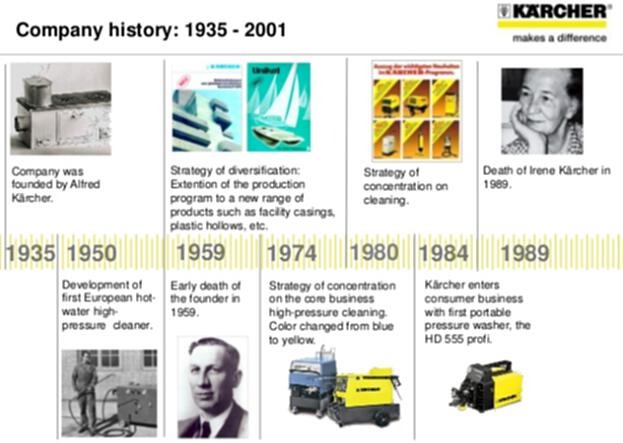
In 2001, the company began its water treatment business and expanded into landscaping in 2009. By 2013, Kärcher had changed the color of its professional cleaning products from yellow to gray, marking a shift in brand identity. To date, the company offers over 3,000 product models.
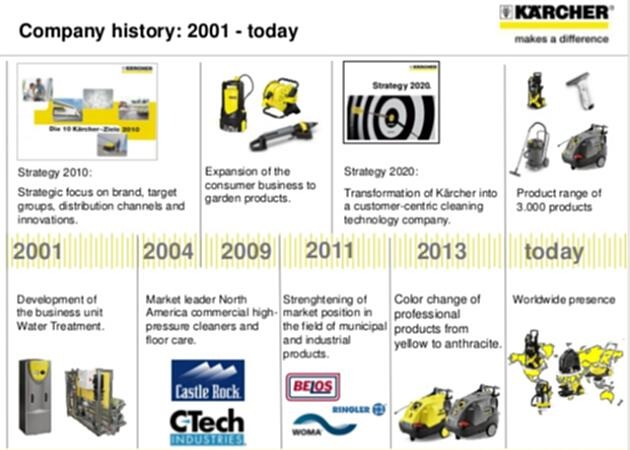
To date, Kärcher remains the undisputed king in the high-pressure washer sector.
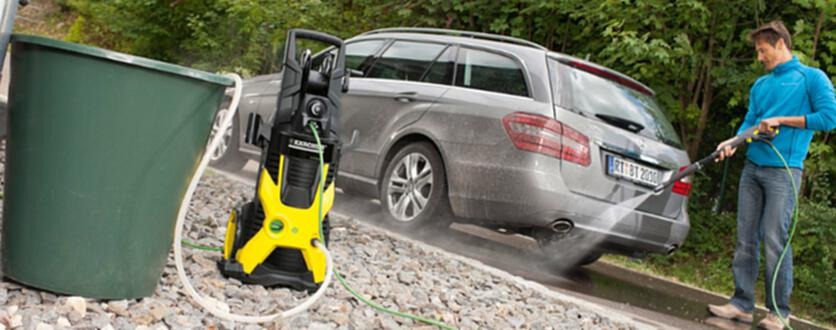
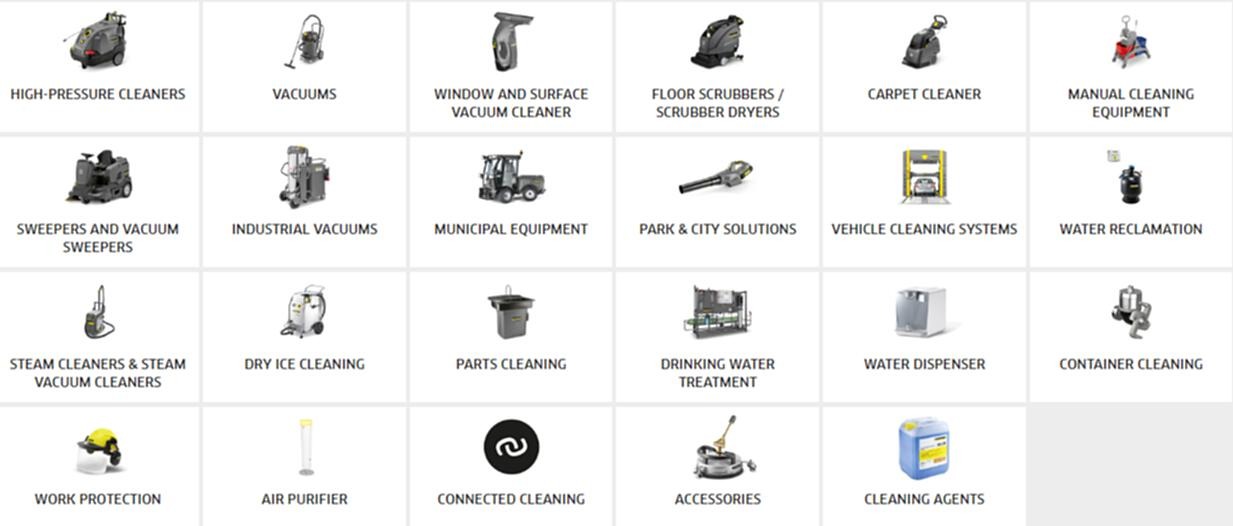
Currently, the product lines are divided into two categories: personal home use and professional products.
Home-use products include high-pressure washers, vacuum cleaners, robot vacuums, steam cleaning devices, and more. Notably, Kärcher introduced a feature several years ago where the debris from the robot vacuum is automatically sucked back to the charging base station. This feature was later adopted by iRobot's new models. Another product, Window Vacs, also saw many imitations in factories a few years ago. Currently, Kärcher’s core business remains focused on high-pressure washers.
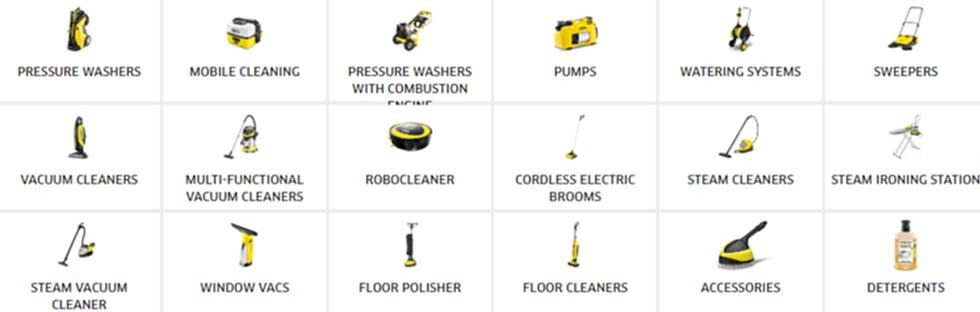
Professional products include various commercial vacuum cleaners, washers, and cleaning equipment.
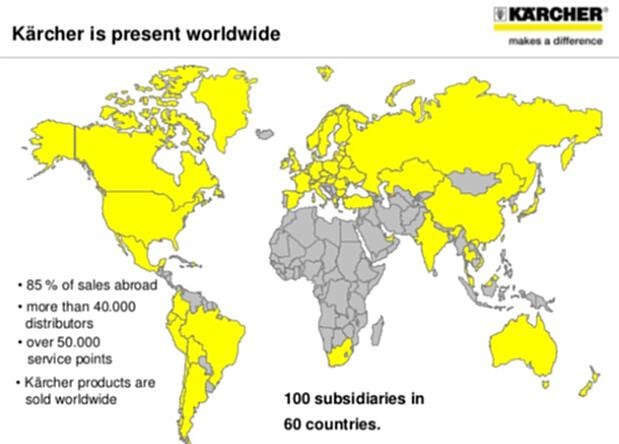
To date, Kärcher has sold products to over 140 countries worldwide, with 85% of its sales currently generated by overseas markets. In the 1990s, Kärcher entered the Chinese market, establishing a sales subsidiary in Shanghai and setting up a production company in Changshu, Jiangsu Province.
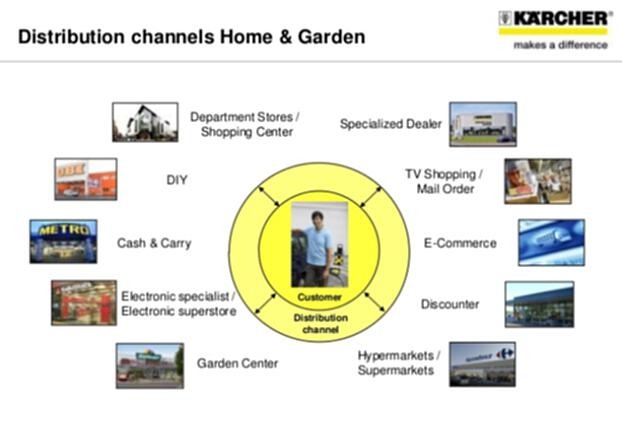
Kärcher essentially covers a wide range of channels, including DIY stores, department stores, TV shopping, supermarkets, and e-commerce platforms.
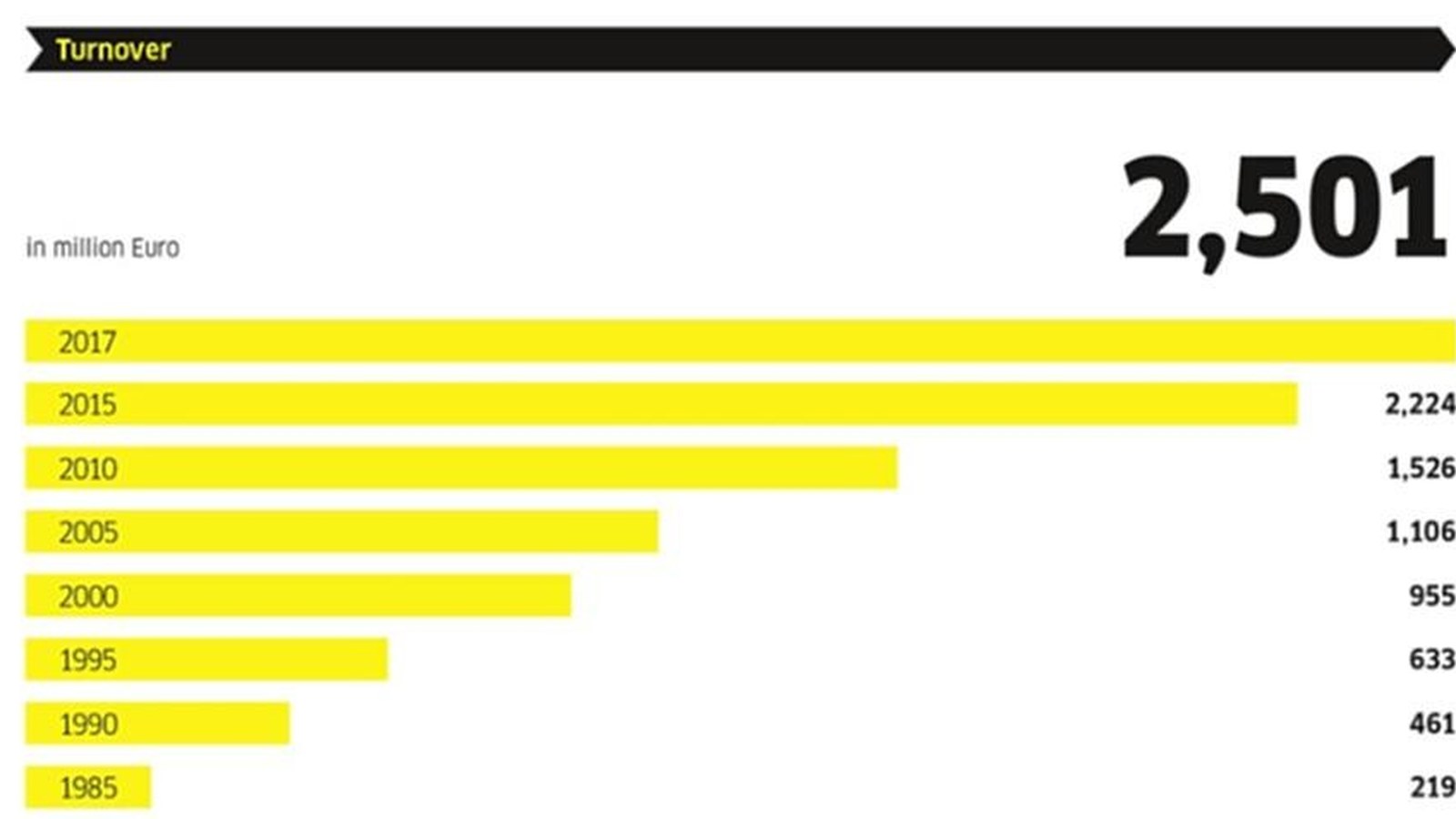
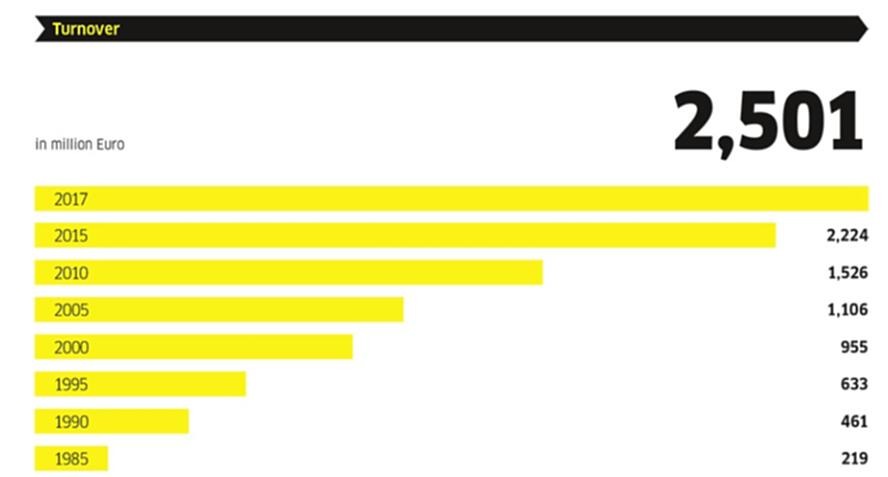
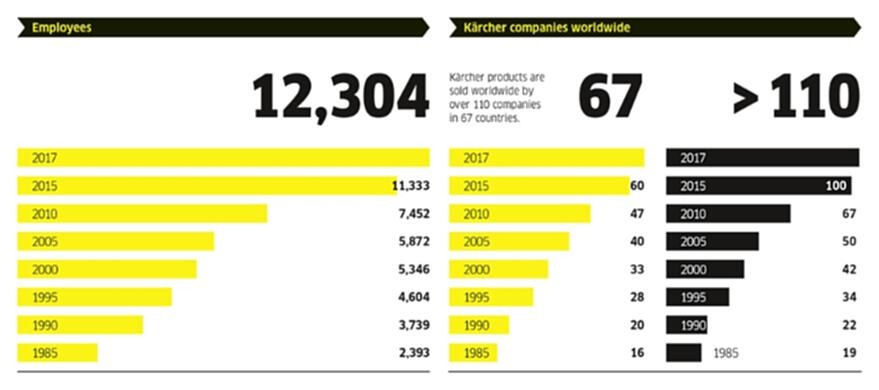
By 2017, Kärcher's sales reached €2.5 billion. As shown in the graph below, Kärcher's revenue has grown from €200 million in 1985 to its current level of €2.5 billion.
Since the establishment of its first subsidiary in France by Kärcher in 1962, the company has expanded to over 110 branches across 67 countries worldwide. With a workforce of more than 12,304 employees, including over 900 research and development engineers, Kärcher invests 6% of its annual sales into R&D each year.
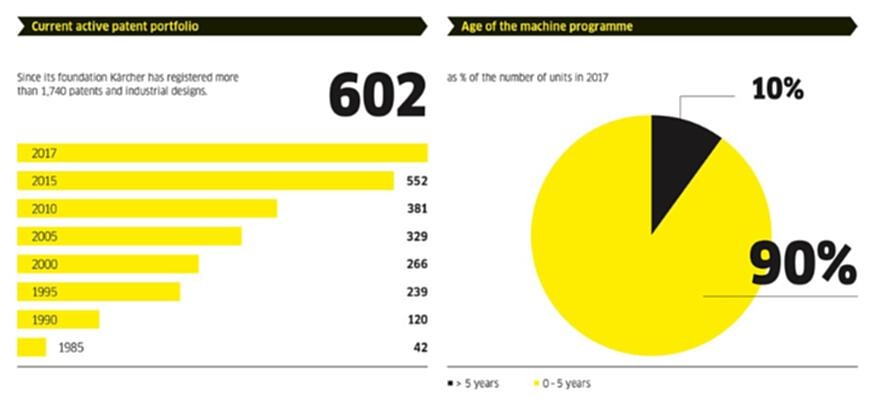
Kärcher holds over 1,740 patents and is constantly innovating in its products. An interesting data point is that 90% of Kärcher's product lineup is less than five years old.
Interesting Marketing Strategy by Kärcher
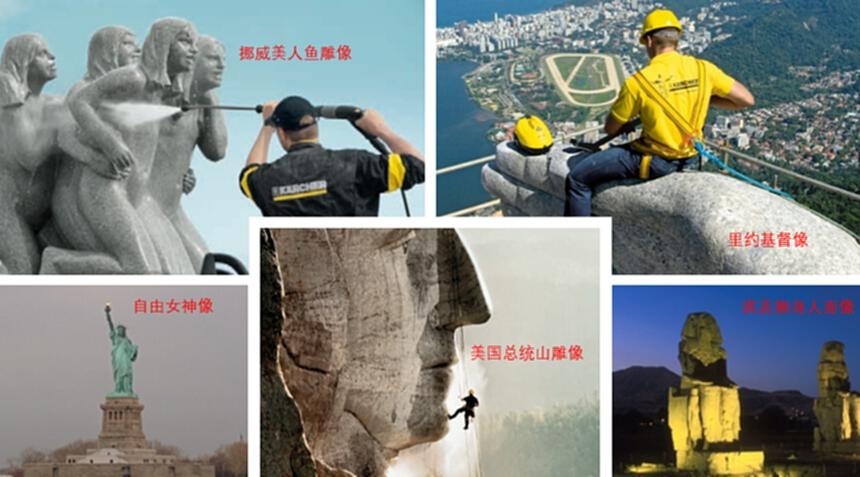
Kärcher has adopted an interesting marketing strategy by cleaning some of the world's most famous landmarks. Notable examples include the Great Sphinx in Egypt, Christ the Redeemer in Rio de Janeiro, and the Statue of Liberty. These cleanings have garnered significant attention and publicity for the company.
Currently, while Kärcher's pressure washers remain the strongest in the market, they face significant competition from several formidable players:
- Nilfisk
- Annovi Reverberi (AR)
- Stihl
- Briggs&Stratton
- Bosch
- TTI
- Generac
- Stanley
- Makita
- FNA Group
- Lavorwash
- Sun Joe
Notably, Nilfisk from Denmark and AR from Italy are the largest competitors in the pressure washer segment.
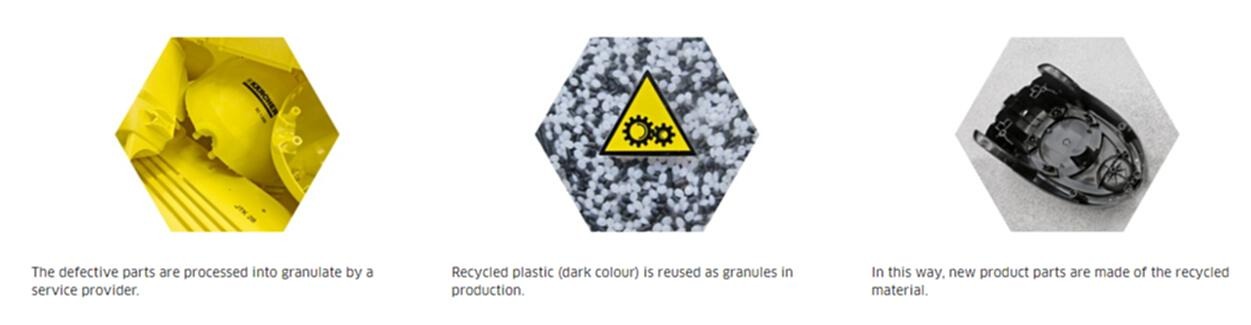
Additionally, a host of Chinese contract manufacturers (Yili, Anlu, Luotian) are chasing Kärcher in the mid-to-low-end market. These companies have put considerable pressure on Kärcher, to the extent that Kärcher has begun using recycled materials—though the official reason given is environmental protection.
But sometimes disruptive threats can come from unknown adversaries.
Battery-powered tool giant Positec launched a handheld high-pressure washer powered by lithium batteries, which reportedly sold in the tens of thousands that year.
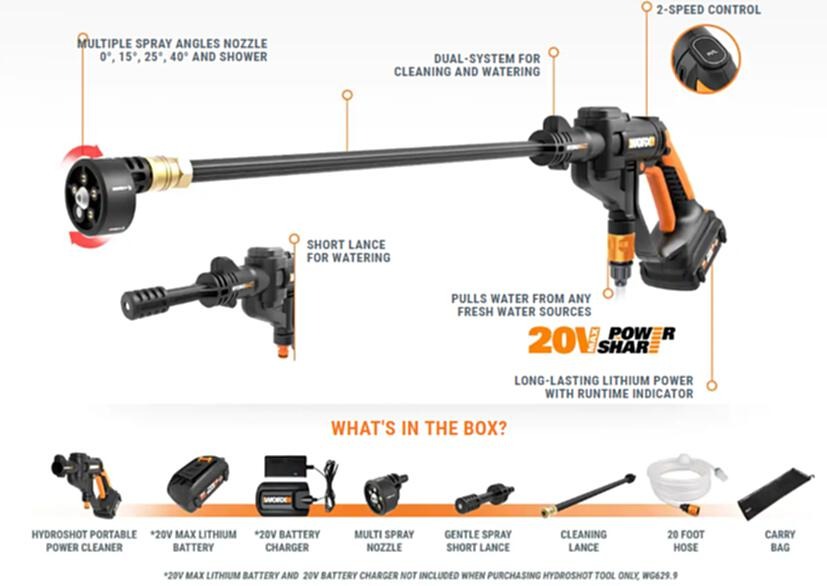
Cordless pressure washers have become a popular choice for new entrants in the market. Previously, Kingclean had attempted to develop high-pressure washers but met with limited success. This time around, they have launched a cordless lithium-ion handheld pressure washer aimed at re-entering this segment. To my knowledge, several other companies are also developing cordless handheld pressure washers, but Kärcher currently does not offer such products in this category. In the competition for cordless pressure washers, Kärcher is not holding a significant advantage.
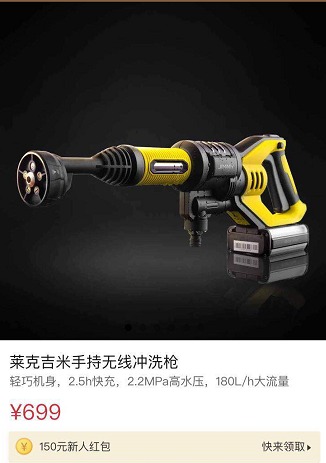
Will cordless pressure washers replace corded models—a question facing Kärcher—is a concern that seems inevitable given the trend toward wireless devices in power tools and vacuum cleaners. Once fully wireless technology is adopted, Kärcher's technical advantages in corded high-pressure washers will be minimal.
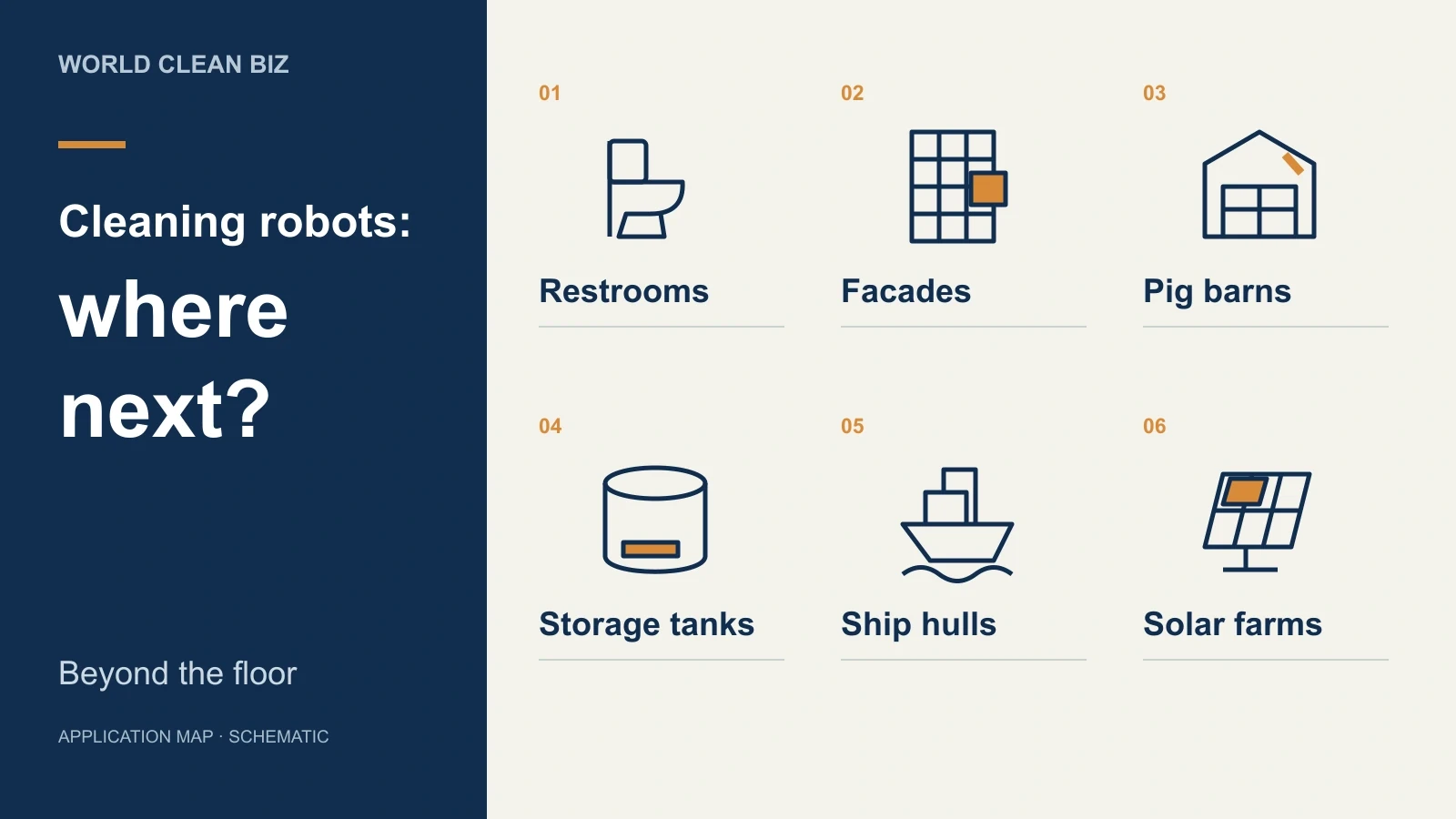
For the automation side of professional cleaning, compare the six commercial cleaning robot opportunities by facility, platform, supplier capability, and after-sales model.