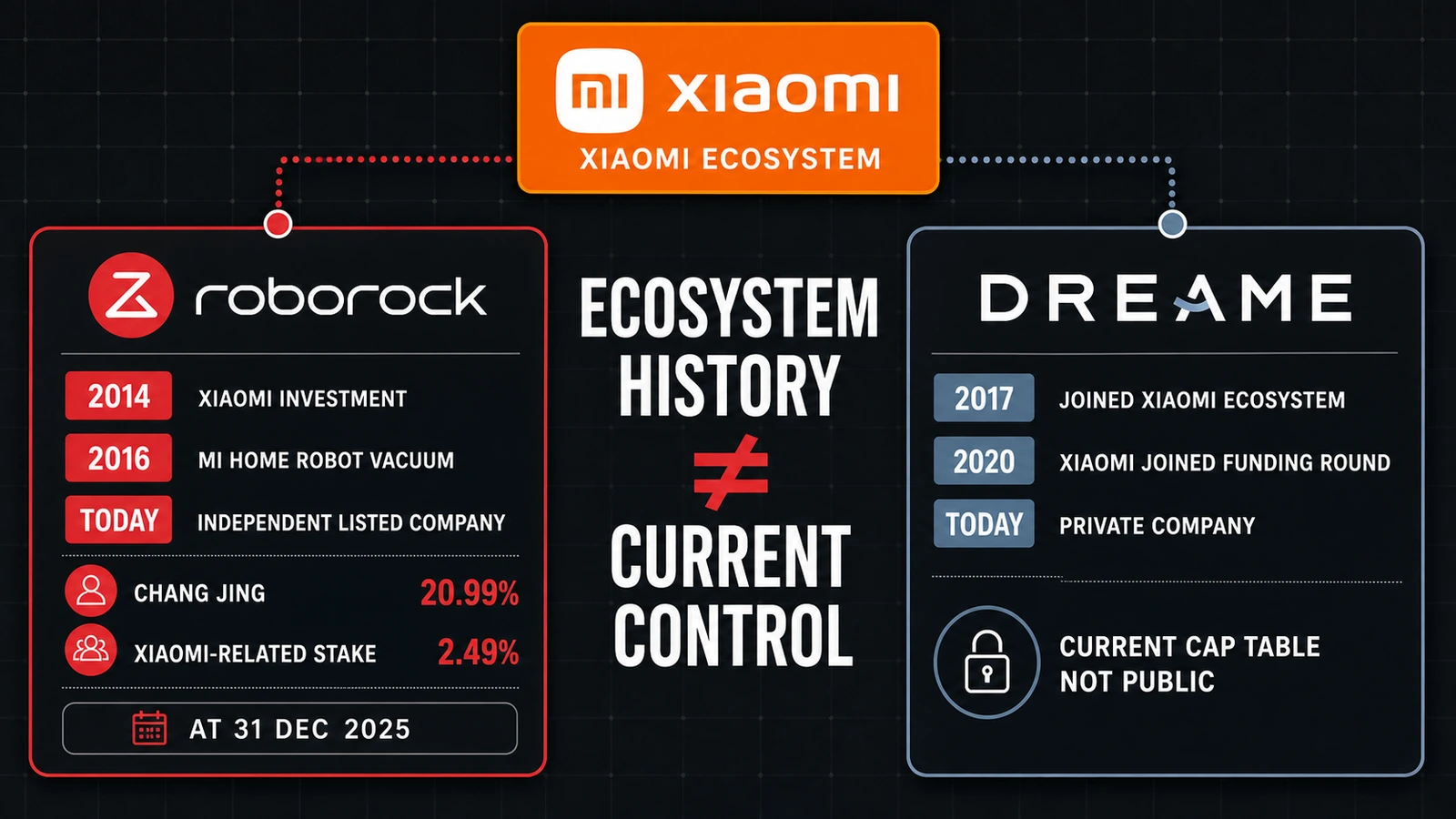
- Roborock is not a Xiaomi subsidiary: Chang Jing was its controlling shareholder and actual controller with 20.99% at 31 December 2025.
- Xiaomi remained an indirect minority investor in Roborock through Tianjin Jinmi, which held 2.49% at the same reporting date.
- Dreame has a documented Xiaomi ecosystem and investment history, but its current private-company ownership is not publicly disclosed like Roborock's.
In this article 9 sections
No. Roborock is not a Xiaomi subsidiary, although Xiaomi invested in the company early and still had an indirect minority interest at the end of 2025. Roborock is a separately listed company controlled by its founder, Chang Jing. Dreame is also not presented by public evidence as a Xiaomi-owned brand. It joined the Xiaomi ecosystem and Xiaomi participated in earlier funding, but Dreame is a private company and its current complete shareholding structure is not publicly available.
The confusion comes from treating investment, ecosystem membership, Xiaomi-branded products and company control as if they were the same relationship. They are not.
Roborock, Dreame and Xiaomi at a Glance
| Question | Roborock | Dreame |
|---|---|---|
| Company origin | Established in July 2014 | Current About page says founded in 2017; an older brand story traces the business to 2015 |
| Xiaomi relationship | Received Xiaomi investment and joined the ecosystem in September 2014 | Says it joined the Xiaomi Ecological Chain at the end of 2017 |
| Early product connection | Developed the Mi Home Robotic Vacuum Cleaner launched in 2016 | Built products within the Xiaomi ecosystem; Xiaomi and Shunwei were described as existing shareholders in a 2020 funding announcement |
| Current legal status | Public company listed on Shanghai's STAR Market | Privately held company |
| Current control evidence | Chang Jing was controlling shareholder and actual controller with 20.99% at 31 December 2025 | No public listed-company-style current ownership table |
| Xiaomi ownership evidence | Xiaomi-controlled Tianjin Jinmi held 2.49% at 31 December 2025 | Historical investment is documented; current percentage and control are not publicly established |
| Practical conclusion | Independent listed company with a minority Xiaomi-related shareholder | Independent operating brand with Xiaomi ecosystem history; not proven to be a Xiaomi subsidiary |
This table shows why a yes-or-no answer needs one qualification. Xiaomi does not control Roborock, but it would also be inaccurate to say Xiaomi has no ownership interest at all. For Dreame, the available public evidence is less complete, so the responsible answer is about what can be proven rather than what is often repeated online.
How Roborock Entered the Xiaomi Ecosystem
Roborock's official history says the company was established in July 2014. It received investment from Xiaomi in September of that year and became a member enterprise of the Xiaomi ecological chain.
The product history explains why many consumers still connect the two names so closely. Roborock's first product was not sold under the Roborock brand. The Mi Home Robotic Vacuum Cleaner launched in September 2016 as a Xiaomi ecosystem product. In September 2017, the company launched its second product using the Roborock name.
That sequence created three different layers of identity:
- Roborock was a separate company receiving investment.
- It developed an early product sold under Xiaomi's Mi Home identity.
- It later built Roborock as its own consumer brand.
Roborock's IPO prospectus provides the commercial detail behind that ecosystem relationship. Xiaomi-related sales, product development arrangements and revenue-sharing mechanisms were important to the early business. The same document also explains that Roborock independently developed and maintained the sales channels for its own-brand products, apart from specified Xiaomi platforms and channels.
In other words, Xiaomi helped create the commercial environment in which Roborock grew. That does not make every Roborock-branded product a Xiaomi product or every Roborock business decision a Xiaomi decision.
Who Owns Roborock Today?
Roborock is owned by the shareholders of Beijing Roborock Technology Co., Ltd., a public company listed on Shanghai's STAR Market under stock code 688169. It was listed on 17 February 2020.
The clearest current answer comes from the company's 2025 annual report. At 31 December 2025:
- Chang Jing held 54,377,411 shares, or 20.99%.
- The annual report identified Chang Jing as the controlling shareholder and actual controller.
- Tianjin Jinmi Investment Partnership held 6,449,654 shares, or 2.49%.
Tianjin Jinmi is relevant because a Xiaomi Communications bond prospectus lists it as a wholly owned subsidiary used for industry investment. This means Xiaomi still had an indirect minority economic interest in Roborock at the annual-report date.
But a 2.49% stake is not the same as control. Roborock's IPO prospectus recorded that Tianjin Jinmi, Shunwei and other major shareholders did not seek control, while recognizing Chang Jing as the controlling shareholder and actual controller. The 2025 annual report retained that control classification.
The most precise answer is therefore:
Roborock is not owned or controlled by Xiaomi as a subsidiary. It is a separately listed company controlled by Chang Jing, while Xiaomi remained an indirect minority shareholder through Tianjin Jinmi at 31 December 2025.
How Dreame Entered the Xiaomi Ecosystem
Dreame's history is less straightforward because its own pages use two starting dates. The current Dreame About page says the company was founded in 2017 and identifies Yu Hao as its founder. It describes 2015 as the year the founding team began work on high-speed digital motors. An older Dreame Global brand story says the company was established in 2015 and joined the Xiaomi Ecological Chain at the end of 2017.
For company-background research, the safest interpretation is that 2015 marks the beginning of the team's technology and entrepreneurial work, while 2017 is the date used by Dreame's current About page for the company itself. The difference should be disclosed rather than hidden.
Dreame's Xiaomi relationship included more than a loose marketing association. In a 2020 Series B+ funding announcement, Dreame said Xiaomi Corporation and Shunwei Capital participated as existing shareholders. The same announcement said Dreame had joined the Xiaomi Technology Ecosystem at the end of 2017.
That confirms a historical investment and ecosystem relationship. It does not provide a current cap table, current voting rights or evidence that Xiaomi controls Dreame today.
Who Owns Dreame Today?
Dreame is a private company founded by Yu Hao. Unlike Roborock, it does not publish a public annual report with a complete list of major shareholders, voting rights and an official controlling-shareholder determination.
Public financing announcements can identify investors at a particular time. They cannot safely be combined into a current ownership table unless later share transfers, new funding rounds, employee equity and changes in voting arrangements are also known. Company sales, valuation and fundraising totals are not substitutes for that information.
This creates an important wording distinction:
- It is supported to say Xiaomi was an investor and Dreame joined the Xiaomi ecosystem.
- It is not supported to say Dreame is a Xiaomi subsidiary or that Xiaomi owns the Dreame brand.
- It is also not responsible to state Xiaomi's exact current Dreame percentage when no equivalent current disclosure has been located.
So, who owns Dreame? Its private shareholders do, with Yu Hao publicly identified as founder. The full current ownership structure is not disclosed to the same standard as that of a listed company.
What Does “Xiaomi Ecosystem Company” Actually Mean?
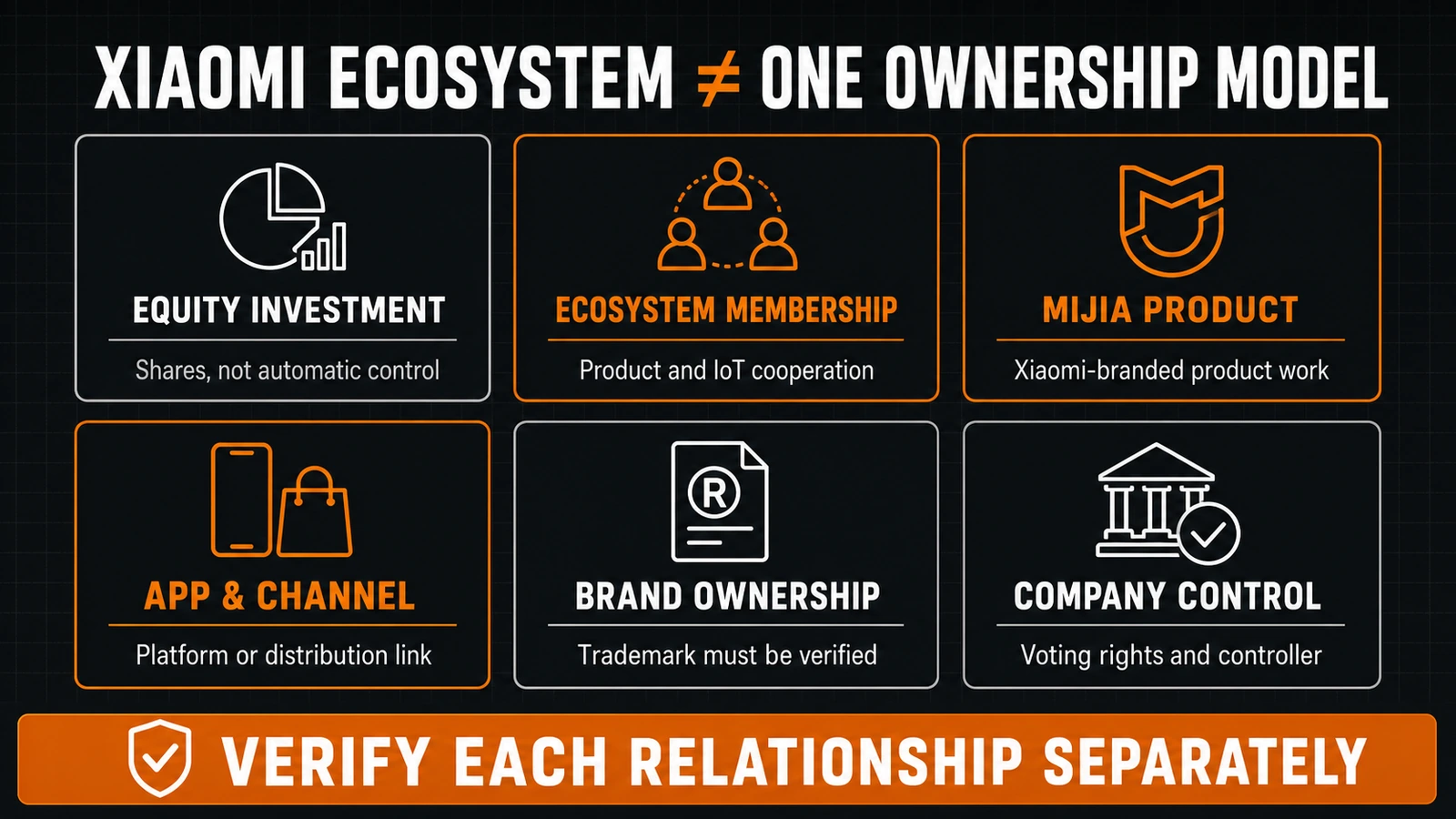
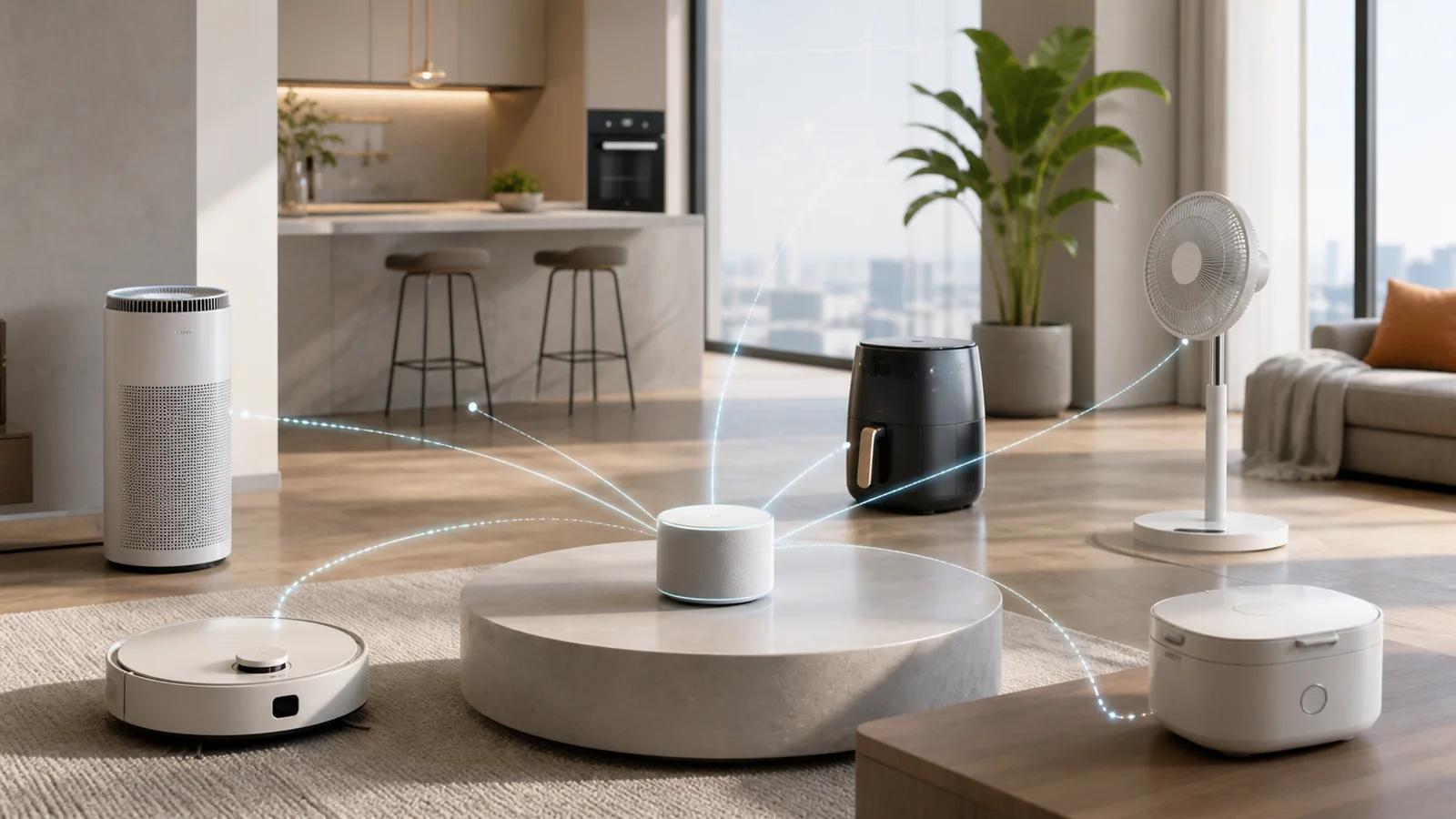
“Xiaomi ecosystem” is a useful business description, but it is not a single legal ownership category. A 2026 Xiaomi Communications bond prospectus filed with the Shanghai Stock Exchange describes ecosystem companies as businesses that cooperate with Xiaomi to jointly design and develop certain IoT and lifestyle products, or cooperate in providing internet services to Xiaomi users.
In practice, several relationships may exist at the same time:
| Relationship | What it means | What it does not prove |
|---|---|---|
| Equity investment | Xiaomi or an investment vehicle owns shares | Majority ownership or operating control |
| Ecosystem membership | The company collaborates within Xiaomi's product and IoT system | Subsidiary status |
| Xiaomi / Mijia product cooperation | A manufacturer develops or supplies a Xiaomi-branded product | Xiaomi ownership of the manufacturer's own brand |
| App and channel integration | Products use Xiaomi Home or sell through Xiaomi channels | Common corporate ownership |
| Supply-chain cooperation | Companies share manufacturing, sourcing or technology resources | Brand control |
| Brand ownership | A legal entity owns or licenses the trademark | Control of every company making compatible products |
This is why app compatibility is weak ownership evidence. A product appearing in Xiaomi Home can show a technology or platform relationship. It does not by itself answer who owns the manufacturer, its trademarks or its overseas sales organization.
Why This Distinction Matters to Buyers and Distributors
For a consumer, the confusion may only affect how a product is described. For an importer, distributor or retailer, it can affect due diligence.
The relevant questions are operational:
- Which legal entity signs the distribution agreement?
- Which entity owns or licenses the trademark in the target country?
- Who appears on product certifications and regulatory filings?
- Is the product sold under Xiaomi, Mijia, Roborock or Dreame branding?
- Which company controls the app, cloud service and customer data for that model?
- Who provides spare parts, warranty reimbursement and technical support?
- Is the regional authorization issued by the brand owner, a local subsidiary or an intermediary?
Two products may share an app or an ecosystem history while having different contract, warranty and data-service counterparties. A distributor should therefore verify the exact company and product, not rely on “part of Xiaomi” as a general assurance.
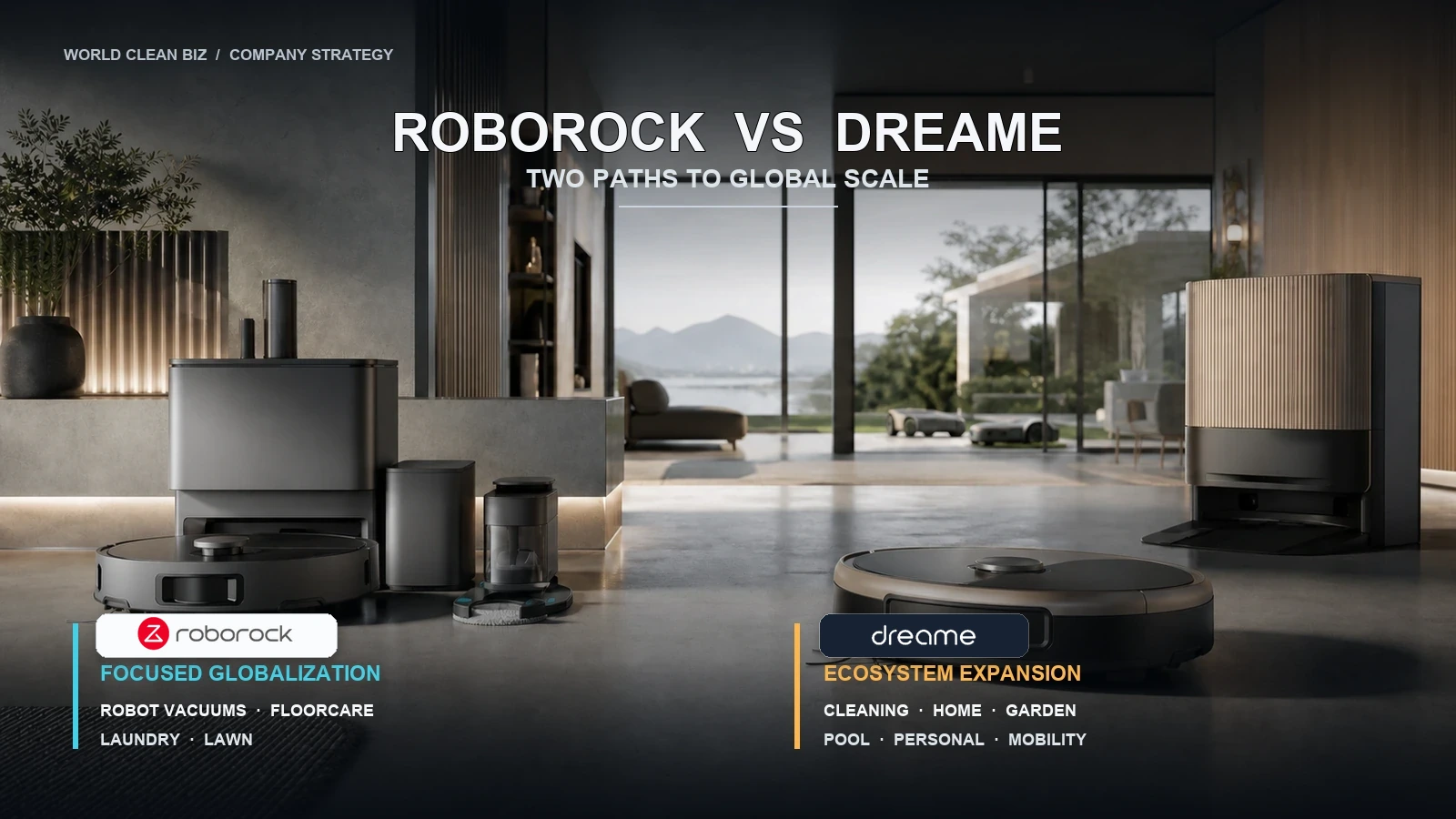
The distinction also improves company analysis. Our separate Roborock vs Dreame strategy comparison examines the companies as competing global businesses. Treating both as Xiaomi brands would hide the independent product, channel and capital decisions that now shape that competition.
Frequently Asked Questions
Is Roborock owned by Xiaomi?
Roborock is not a Xiaomi subsidiary and Xiaomi does not control the company. Xiaomi invested in Roborock early. Through Tianjin Jinmi, a Xiaomi-controlled investment entity, it held an indirect 2.49% minority stake at 31 December 2025. Chang Jing was Roborock's controlling shareholder and actual controller with 20.99%.
Who owns Roborock?
Roborock is a public company owned by its shareholders. At 31 December 2025, Chang Jing was the controlling shareholder and actual controller, holding 20.99%. Other shareholders included public funds, market investors and Tianjin Jinmi.
Is Dreame owned by Xiaomi?
Public evidence confirms that Dreame joined the Xiaomi ecosystem and that Xiaomi participated as an existing shareholder in a 2020 funding round. It does not establish that Dreame is a Xiaomi-controlled subsidiary or that Xiaomi owns the Dreame brand.
Who owns Dreame?
Dreame is privately held and was founded by Yu Hao. Its complete current shareholder structure is not publicly disclosed like that of a listed company, so a precise current ownership percentage for Yu Hao, Xiaomi or other investors should not be inferred from old financing reports.
Are Roborock and Dreame the same company?
No. They are separate companies and competing brands. Both have Xiaomi ecosystem histories, but they have different founders, organizations, product portfolios and ownership disclosures.
Does Xiaomi manufacture Roborock or Dreame products?
Not as a general rule. Ecosystem products may be designed, manufactured or supplied by partner companies and sold under Xiaomi or Mijia branding. The responsible manufacturer and brand owner must be checked for the specific model.
Does use of the Xiaomi Home app mean Xiaomi owns the brand?
No. App integration shows platform compatibility or a commercial relationship. It does not establish corporate control, trademark ownership or responsibility for every product sold under the partner's own brand.
Final Answer
Roborock and Dreame both benefited from Xiaomi's ecosystem, investment network and early product opportunities. Neither should be reduced to “a Xiaomi brand.”
Roborock provides the clearer case because its public filings identify Chang Jing as controlling shareholder and actual controller, while a Xiaomi-controlled investment vehicle held a minority 2.49% stake at the end of 2025. Dreame's historical Xiaomi investment and ecosystem relationship are documented, but its current private-company ownership is not disclosed with comparable precision.
For industry research, the rule is simple: trace the legal company, reporting date, shareholding, trademark and contract counterparty separately. An ecosystem relationship can be commercially important without being ownership.
 Roborock