- FLEX built its reputation in grinding and surface preparation before Chervon acquired it in 2013.
- The U.S. 24V launch and the relocation of Steinheim production to Nanjing changed the brand's business.
- Galli's appointments suggest an effort to build a much larger professional-tool business; the Milwaukee comparison is the author's assessment.
In 1922, Hermann Ackermann and Hermann Schmitt founded a company near Stuttgart, Germany, to make handheld grinding equipment driven through a flexible shaft. That bendable shaft gave the brand its name: FLEX.
More than three decades later, the company introduced the DL 9 high-speed angle grinder. As the machines spread through workshops and construction sites, FLEX became an everyday German term for an angle grinder. It was not until 1996 that the company formally replaced its founders' names with FLEX. Its customers had already settled on the name.
FLEX continued to develop around grinding and surface preparation. Automotive detailers used its machines to restore paintwork, metalworkers to finish welds, and renovators to smooth walls and ceilings.
In 1997, it introduced the Giraffe long-neck wall and ceiling sander in Europe. The extended shaft brought the sanding head up to higher surfaces, reducing the need for workers to climb and reposition themselves. Later versions improved weight, handling and dust extraction, making it one of FLEX's defining products in renovation. FLEX company history
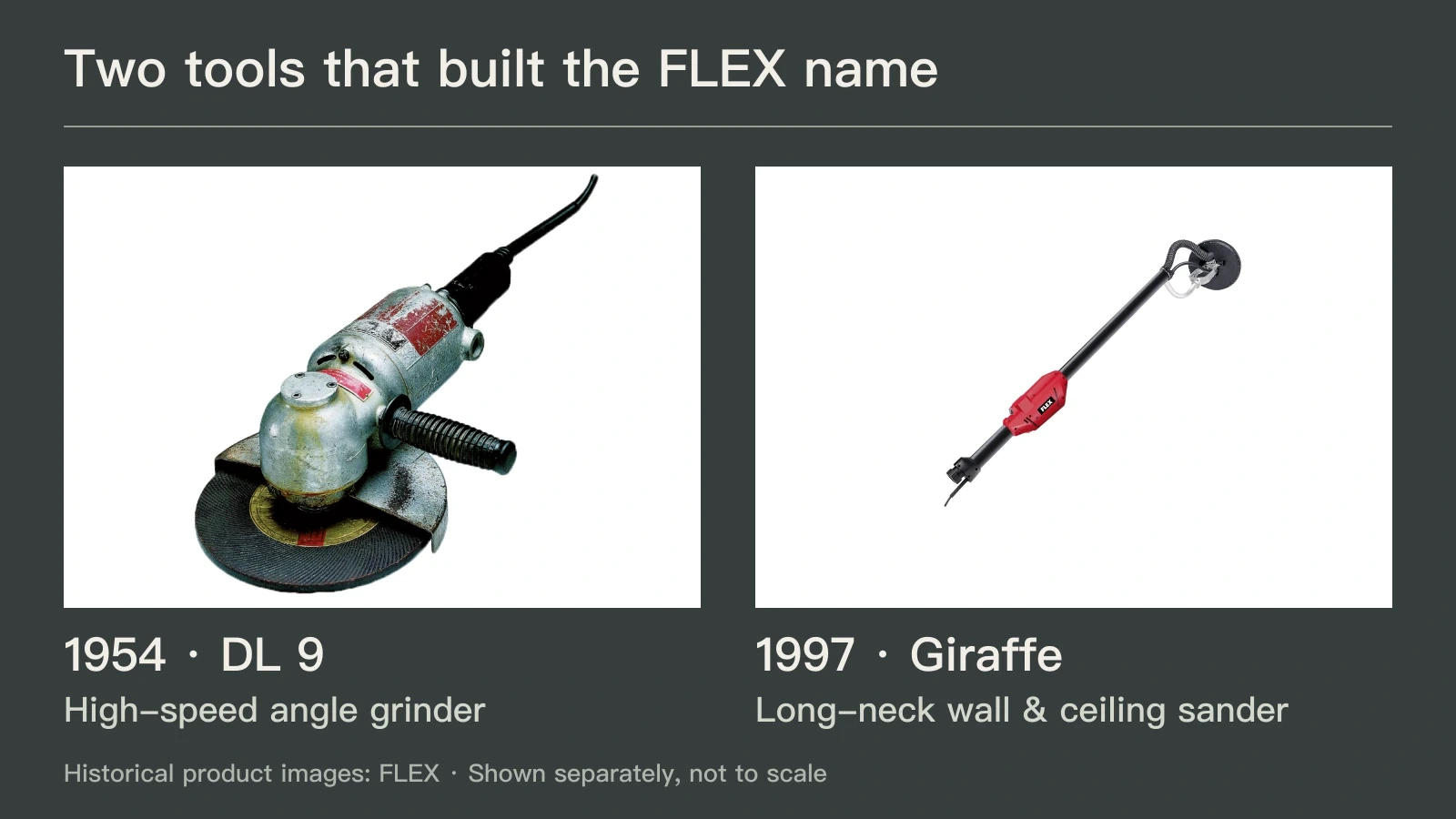
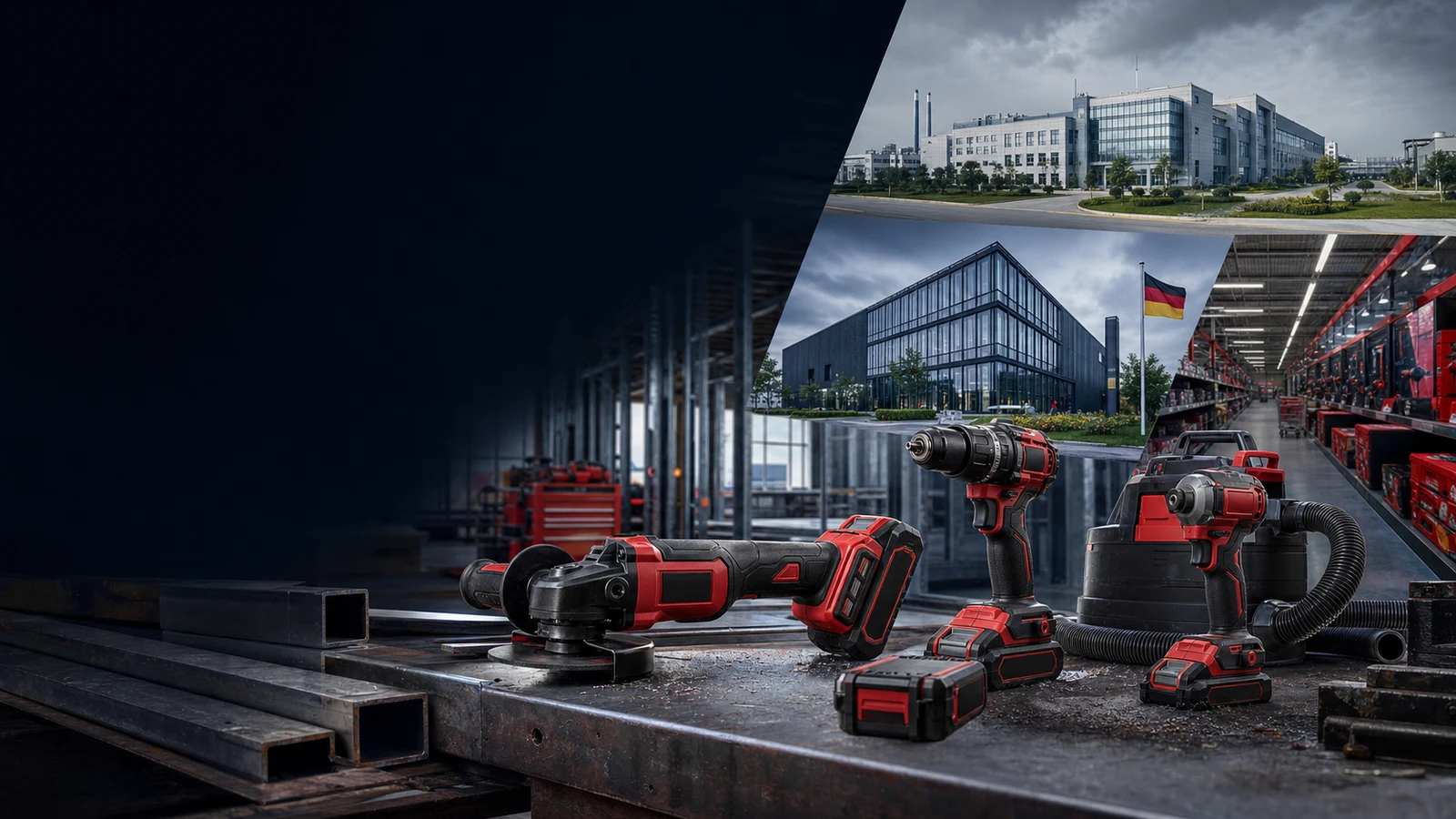
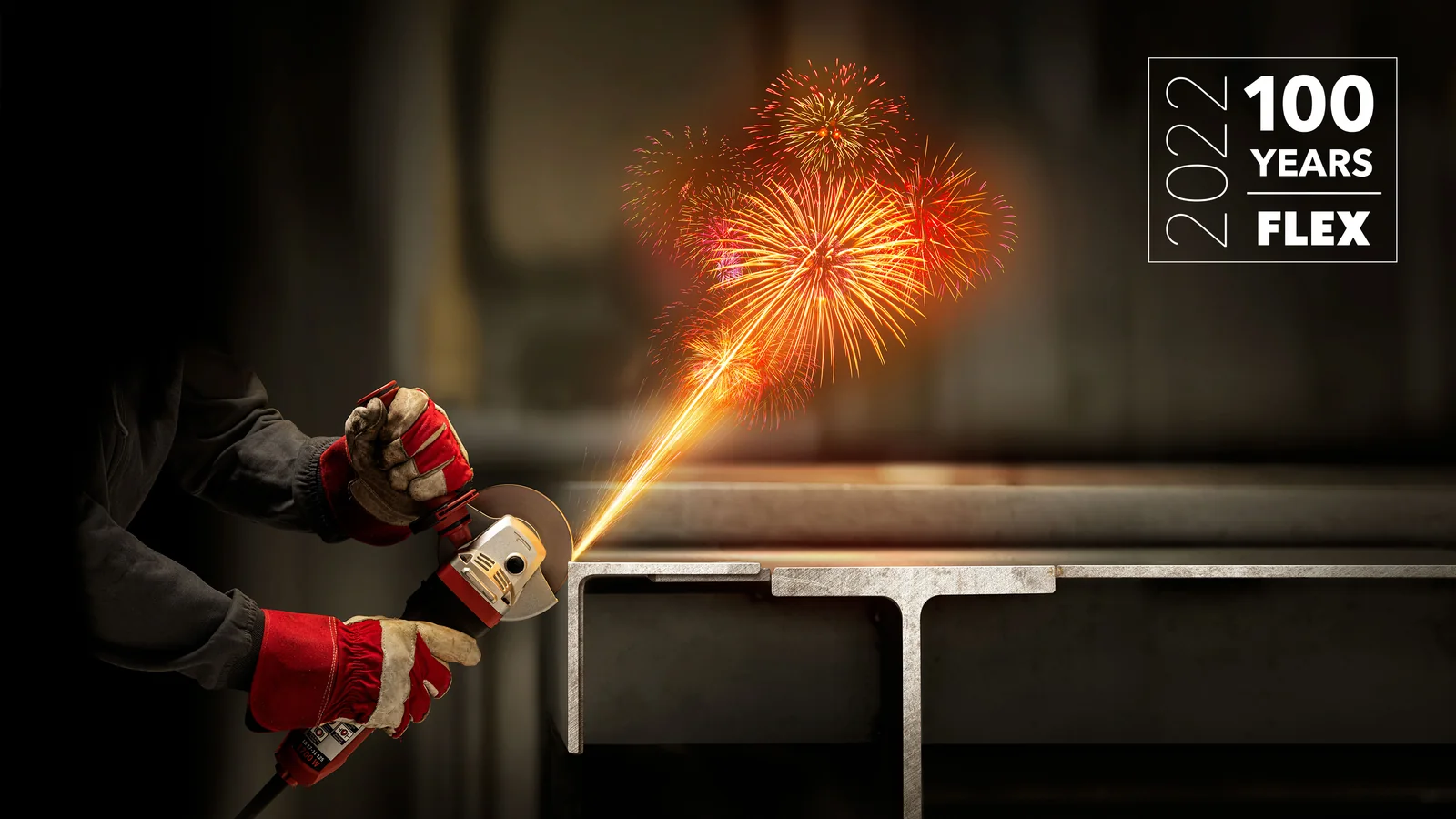
*Historical product photographs: FLEX. The images are presented separately and are not a scale comparison. Cover: FLEX's official 2022 centenary artwork, with stylized sparks; it is not a documentary photograph of a 2026 event.*
These machines earned FLEX a following among professional users, but they did not insulate the company from changes in ownership. Before Chervon acquired it, FLEX had passed through several owners. Financial investors under pressure from debt and cash flow cut investment and employee benefits. European dealers still valued the brand. The company needed an owner willing to keep investing.
The buyer that eventually emerged was a Chinese company already making products for it.
In 2005, Chervon became FLEX's exclusive contract manufacturer in China. The relationship began with orders and manufacturing. Eight years later, the supplier bought its customer. CEIBS case account
On September 30, 2013, Chervon announced its acquisition of all shares in FLEX. The company then had more than 250 employees, with sales focused on Europe and North America. Chervon said it would retain and develop the headquarters and production site in Steinheim, Germany, continuing to draw on the existing management, engineering and workforce. Acquisition announcement
Chervon knew how to make the machines. FLEX had something it would have taken Chervon much longer to establish: a name professional users remembered, and dealer relationships built over many years.
After the acquisition, new professional tools entered Europe under the FLEX name. In 2015, FLEX introduced a new generation of battery-powered tools, later extending cordless technology to polishing. People working around a car no longer had to keep moving a power cord out of the way.
The German brand's range kept growing. In 2021, Chervon decided to take it further.
That March, Chervon and Lowe's announced the U.S. launch of the FLEX 24V cordless platform, with plans to introduce more than 100 compatible tools over the following years. Drills, impact drivers and reciprocating saws were now at the front of the lineup. FLEX organized an online head-to-head demonstration against major competitors and offered a limited lifetime warranty promotion for qualifying purchases registered that year. Lowe's launch announcement
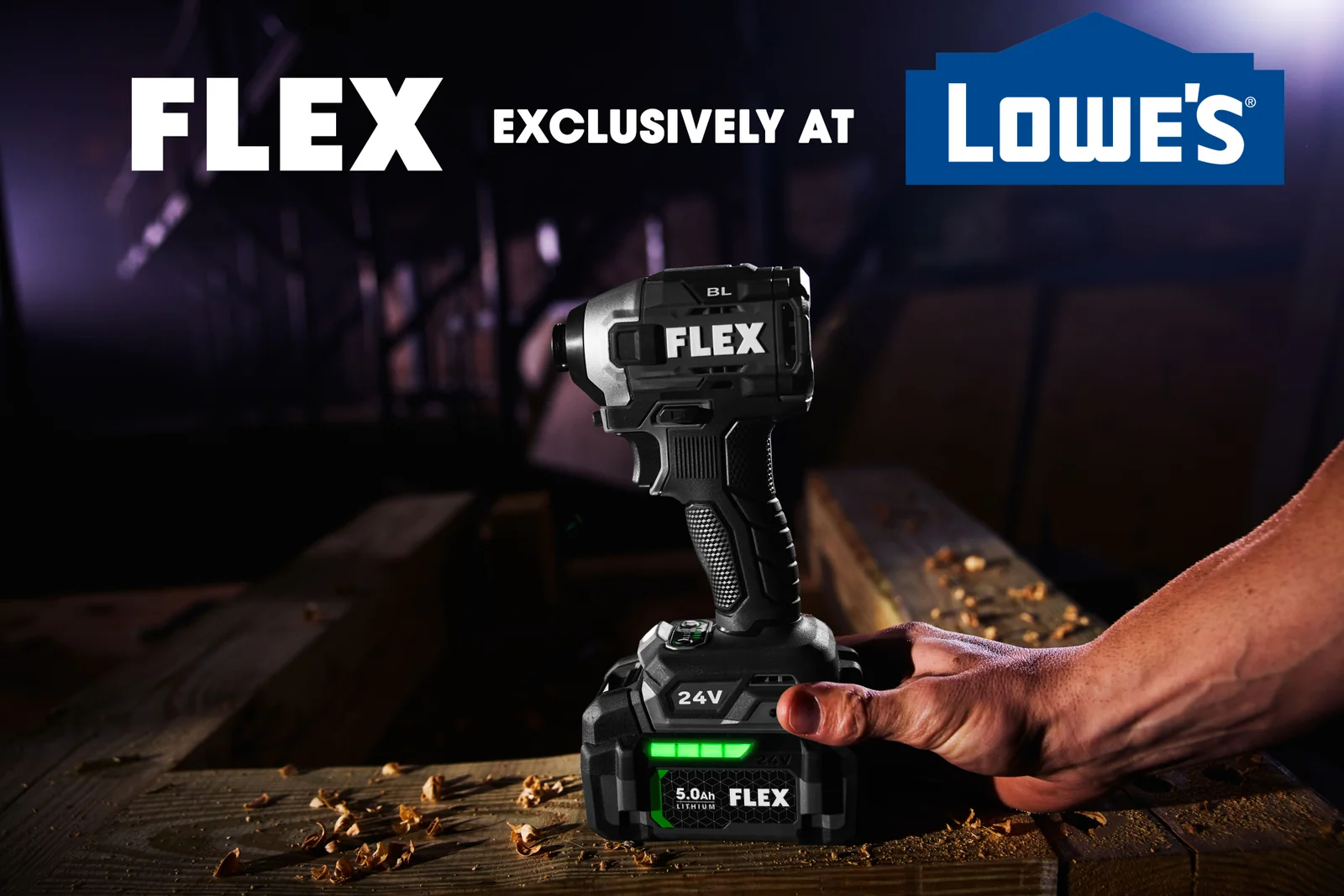
*A FLEX 24V impact driver in the March 2021 launch material. Source: FLEX / Lowe's. The retail exclusivity message belongs to that historical launch and does not establish current channel terms.*
In Germany, FLEX had once persuaded people to use its name for a type of tool. In the broader U.S. cordless market, it had to win users over again.
A tradesperson's vehicle already carried another brand's batteries, chargers and machines. Adding a FLEX drill often meant adding another set of equipment. For dealers, a new brand also required inventory, demonstrations and repair support.
FLEX kept expanding its range. In 2024, its business grew by more than 50%, with products reaching further into nailers and benchtop tools. The following year, however, brought a major change to the German brand's production base. Chervon 2024 results
In January 2025, Chervon announced plans to move production from the Steinheim factory to China, retaining the German site as a European product and sales center. The relocation of that production to Nanjing was completed during the year. January business update, Chervon 2025 annual report
Twelve years earlier, Chervon had taken over with a pledge to retain and develop German production. Twelve years later, that production moved to its new owner's home city.
FLEX still carried its German name and history, but the manufacturing system behind it had changed. Its sales approach was shifting, too: Chervon said it would place greater emphasis on professional dealers and develop business around specific trades.
A few months later, Joseph Galli Jr. arrived.
In the power-tool industry, Galli's name is closely associated with the growth of DEWALT and Milwaukee. He began his career at Black & Decker and eventually became president of its worldwide power tools and accessories business. In 1992, he led the launch of DEWALT's heavy-duty professional power-tool range, helping turn the brand into a major force in Black & Decker's pursuit of professional users.
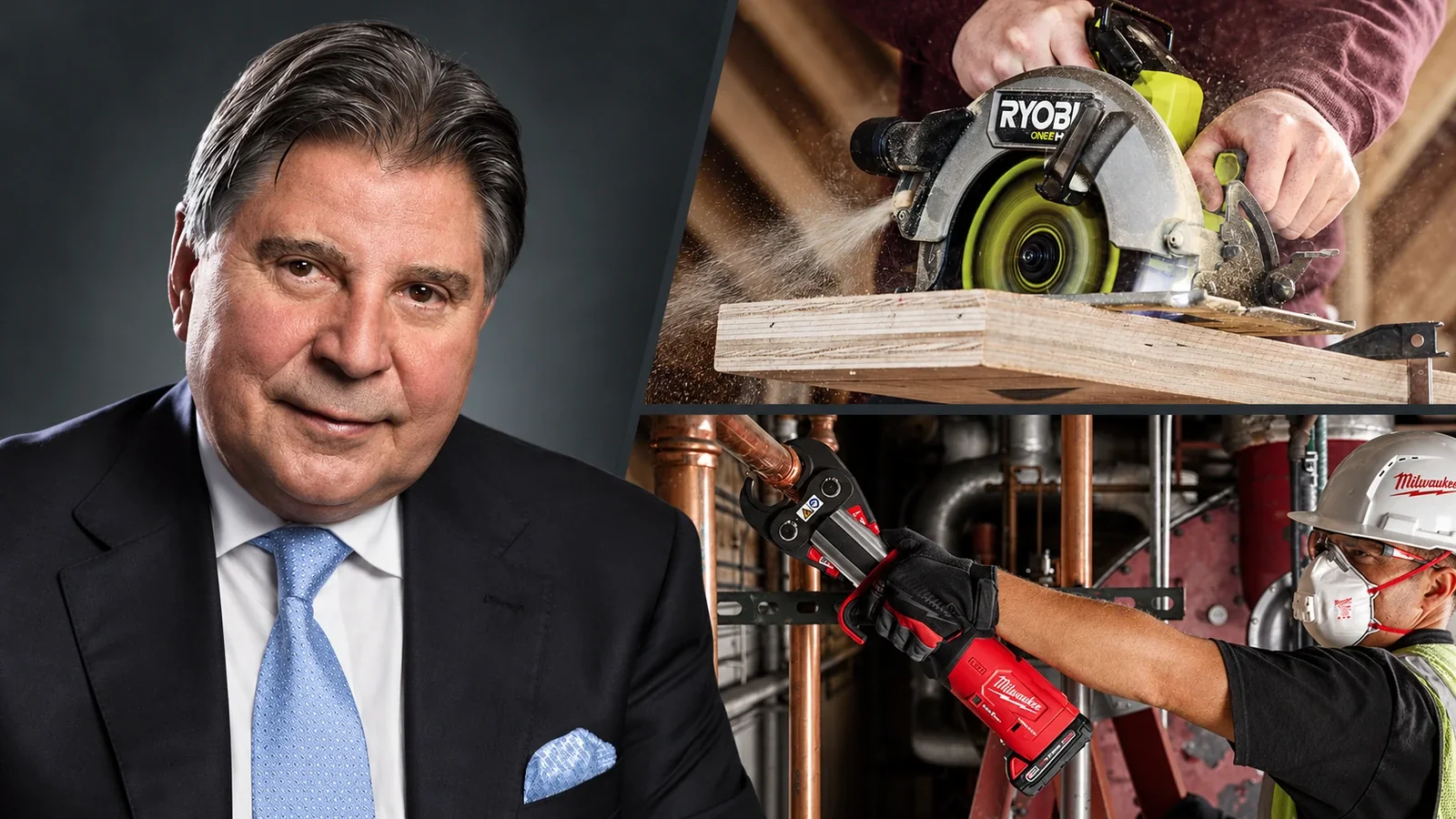
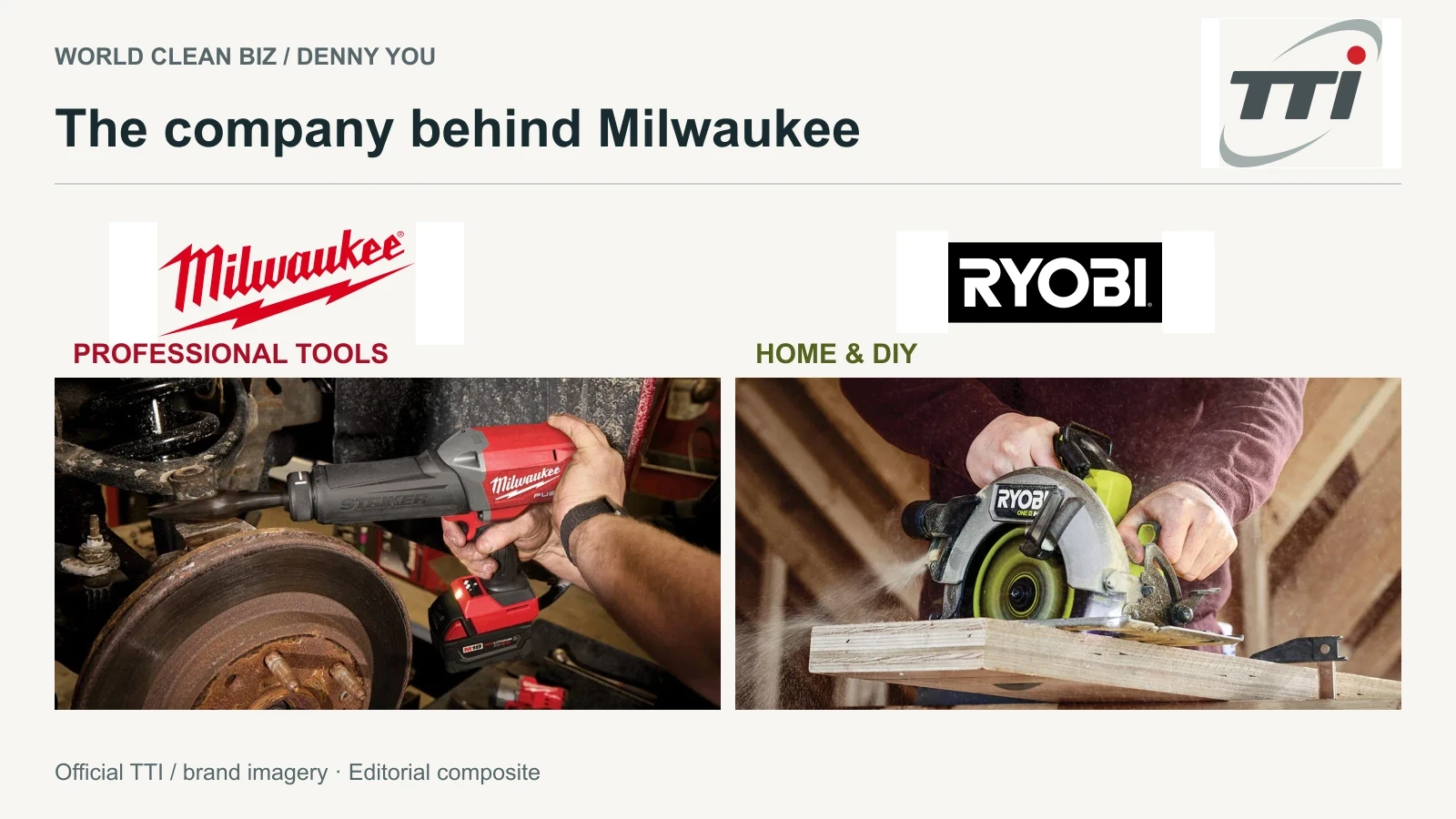
At Milwaukee, he experienced another old brand's reinvention. Founded in 1924, Milwaukee was acquired by TTI in 2005. Galli joined the following year and served as group CEO from 2008 to 2024, helping drive Milwaukee's development of products for plumbers, electricians and other trades. Its M12 and M18 cordless systems expanded the range of tools users could buy while retaining batteries within the same platform. Over more than a decade, a heritage brand known for drills and reciprocating saws became one of the leaders in professional tools. By 2025, Milwaukee's annual sales had reached about US$10.7 billion, accounting for 70% of TTI's revenue. Galli's career, Milwaukee's development, TTI's 2025 results presentation, slide 18
When FLEX entered the U.S. 24V cordless market in 2021, Galli was still TTI's CEO. Many of the users FLEX needed to win had already grown accustomed to the brands he and his teams had spent years building.
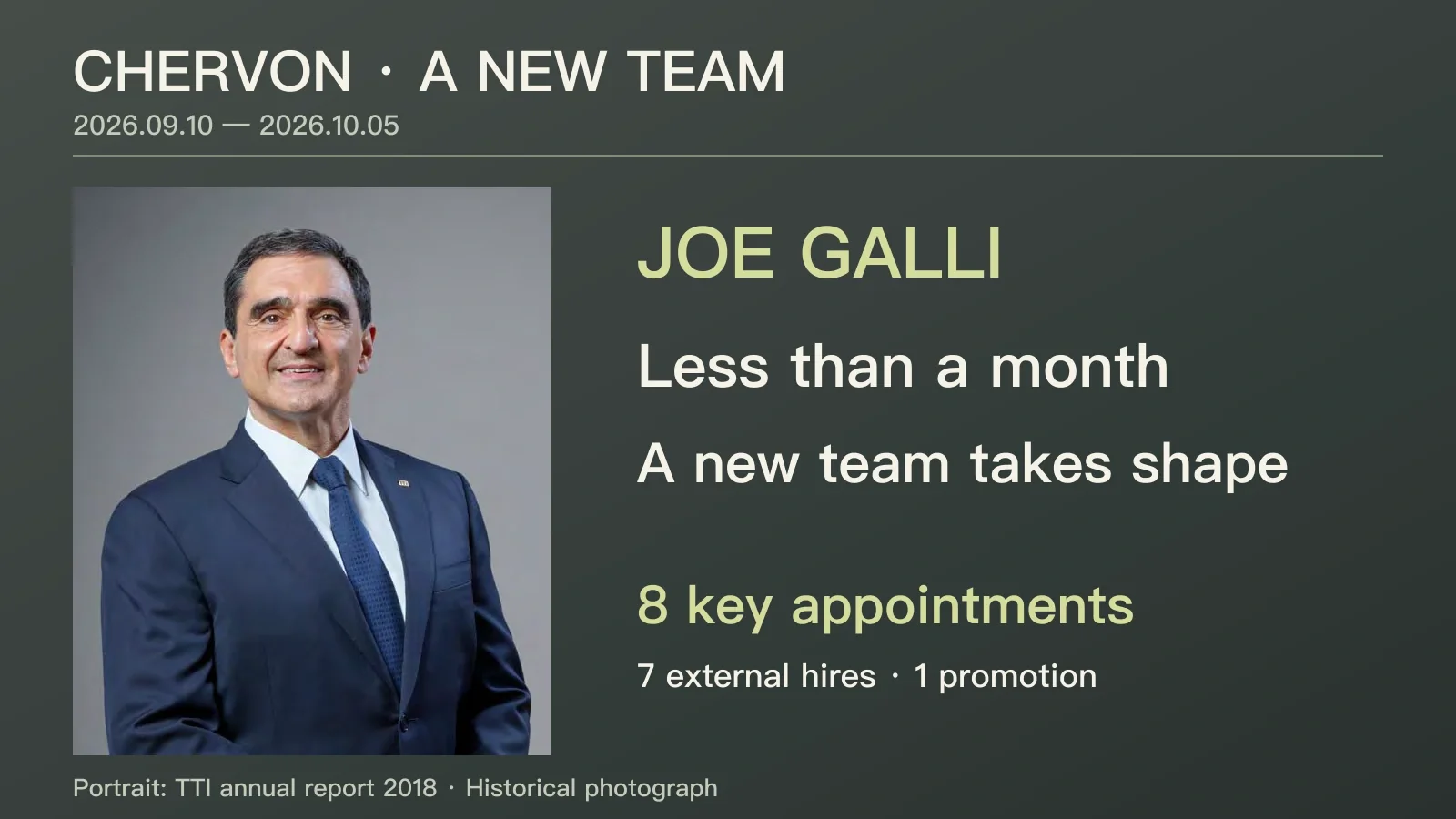
On September 10, 2026, he succeeded Longquan Pan as Chervon's CEO. Pan remained chairman. Within less than a month, Chervon announced eight key appointments across product development, sales, recruitment and professional-user research.
Among them was Kevin Gee, promoted to vice president of FLEX professional product development, reporting directly to Galli. A former director of professional-tool product management at Milwaukee, Gee had already joined Chervon earlier in 2026. He would now build and lead FLEX's professional-tool product development team. Gee's appointment
Matthew DeFeo took responsibility for sales, training and recruiting. He had helped launch DEWALT's professional business early in his career and later helped build TTI's sales organization. Jeffrey Campbell took over industrial and commercial sales, bringing professional-channel experience from Porter-Cable, Irwin, Lenox and other companies. DeFeo's appointment, Campbell's appointment
Trevor Bithrey, who had worked for DEWALT and Milwaukee in Canada, became responsible for Canadian professional end-user marketing and research. His appointment also disclosed a newly formed global end-user research and jobsite marketing team reporting directly to Galli. Bithrey's appointment
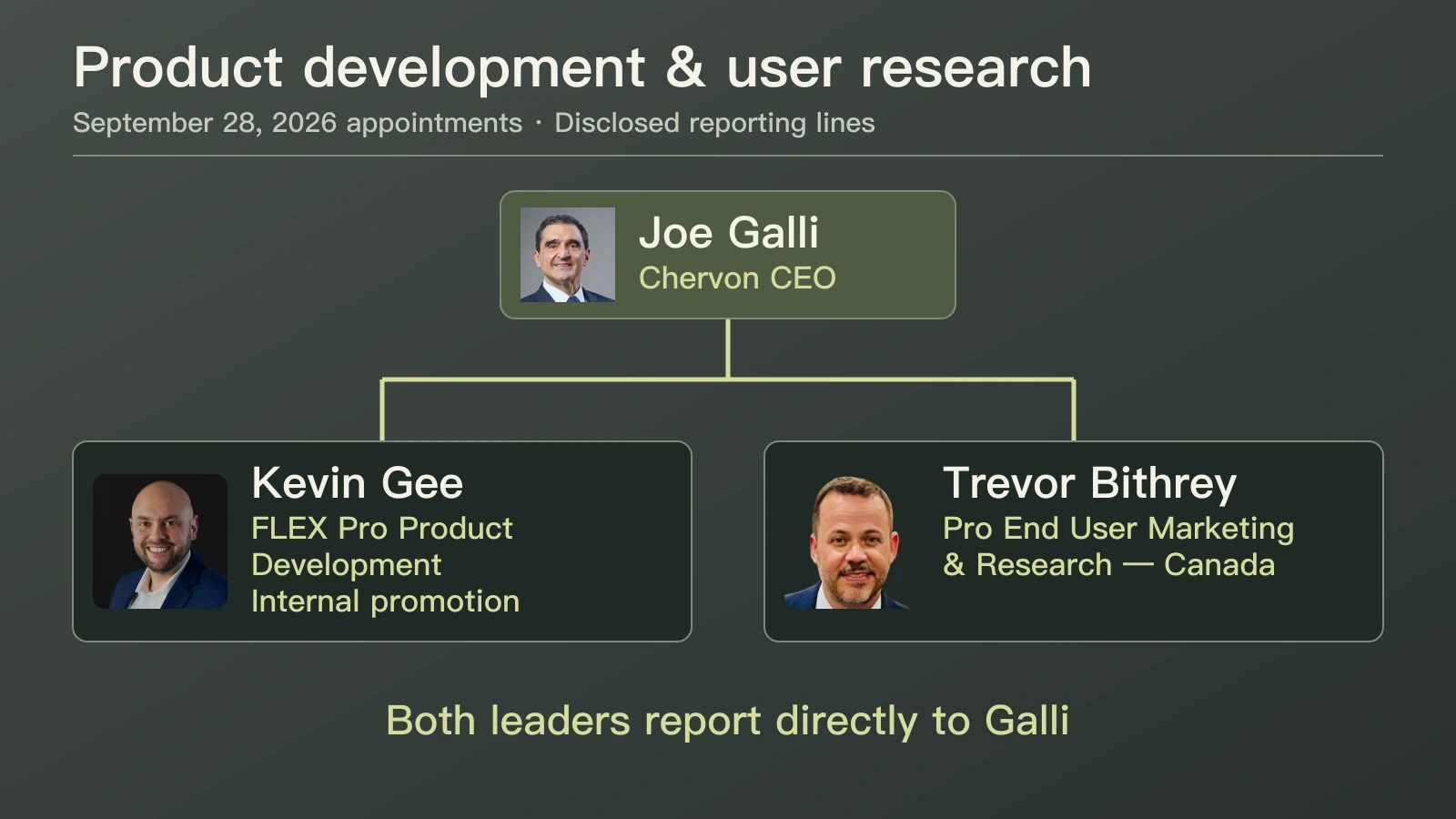
*Selected September 28 appointments. Gee's position is specific to FLEX; Bithrey's Canadian responsibility is at Chervon. Galli's portrait comes from TTI's 2018 annual report; the other portraits accompany the 2026 appointment coverage. This is an editorial diagram, not a group photograph.*
Only Gee's role among these appointments explicitly belongs to FLEX; the others are group-level positions. But their experience in product development, professional distribution and user research gives FLEX capabilities it can draw on as it expands. More on Galli's first appointments at Chervon
My assessment is that Galli is trying to make FLEX into Chervon's Milwaukee. The company has not announced such a goal. But the people he has brought in, and the work they have been assigned, point in that direction.
There is still room to compete. In the first half of 2026, TTI's Professional business, which includes Milwaukee and other brands, grew revenue by 9.7% in U.S. dollars. Automotive service and other fields still have work that can shift from pneumatic tools to cordless equipment, while tradespeople are looking for machines that let limited crews accomplish more. TTI's 2026 interim results
FLEX may not need to start with the customers who know it least. An automotive detailing shop that already buys FLEX polishers also needs lighting to inspect paintwork, vacuum equipment to clean interiors, and a continuing supply of polishing pads and compounds. Renovators using a Giraffe also have to mix materials, finish edges and clean up dust. Many of those needs already have matching products in FLEX's catalog.
In my view, Europe offers an opportunity to build further around these familiar users. The North American 24V platform needs a few professional tools with clear uses and compelling advantages, enough to persuade someone who already uses another brand to buy a first FLEX tool.
The people who once helped competitors expand are returning to customers they know. This time, they have to persuade them to make room for FLEX.
 FLEX
 Milwaukee