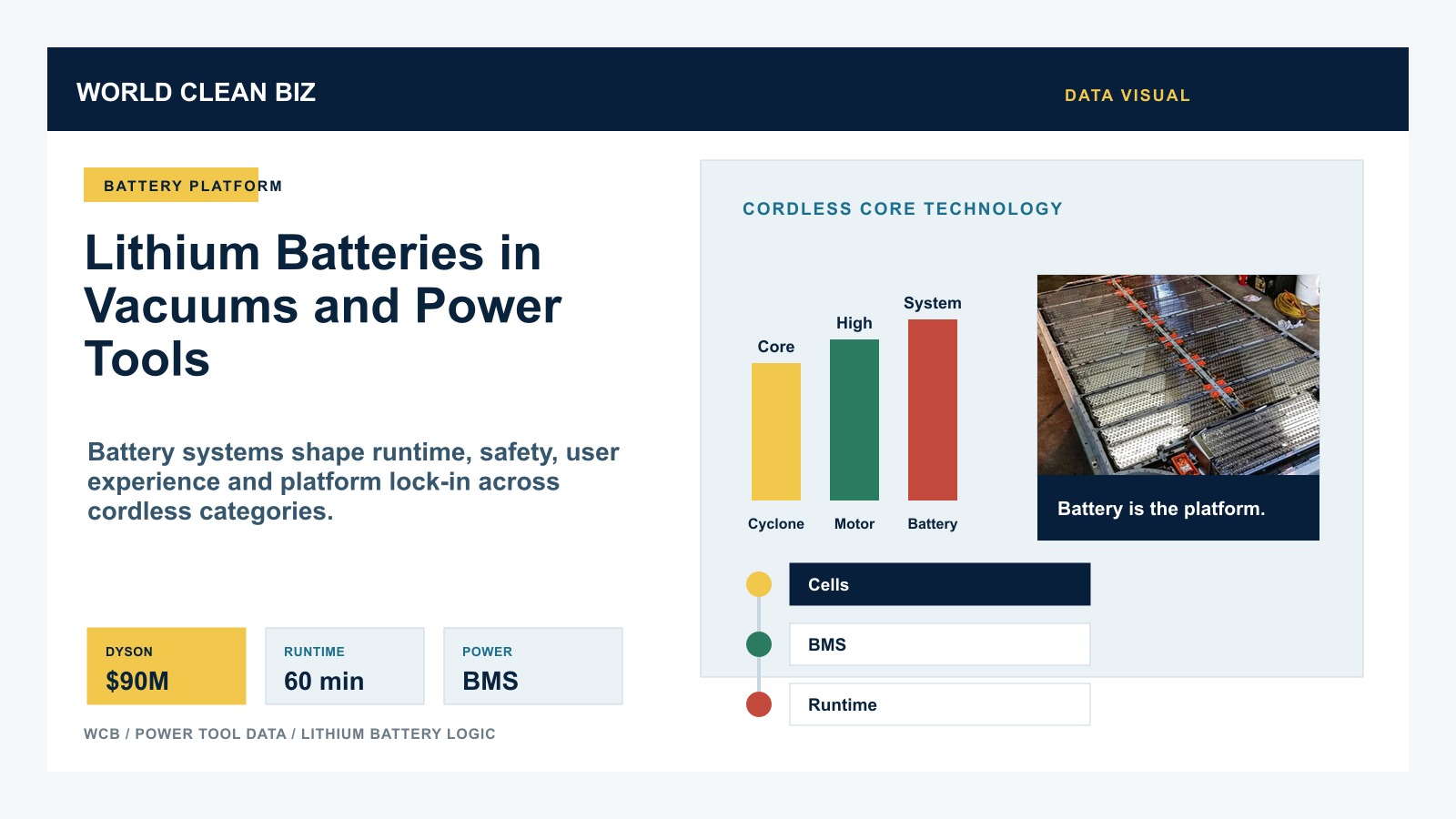
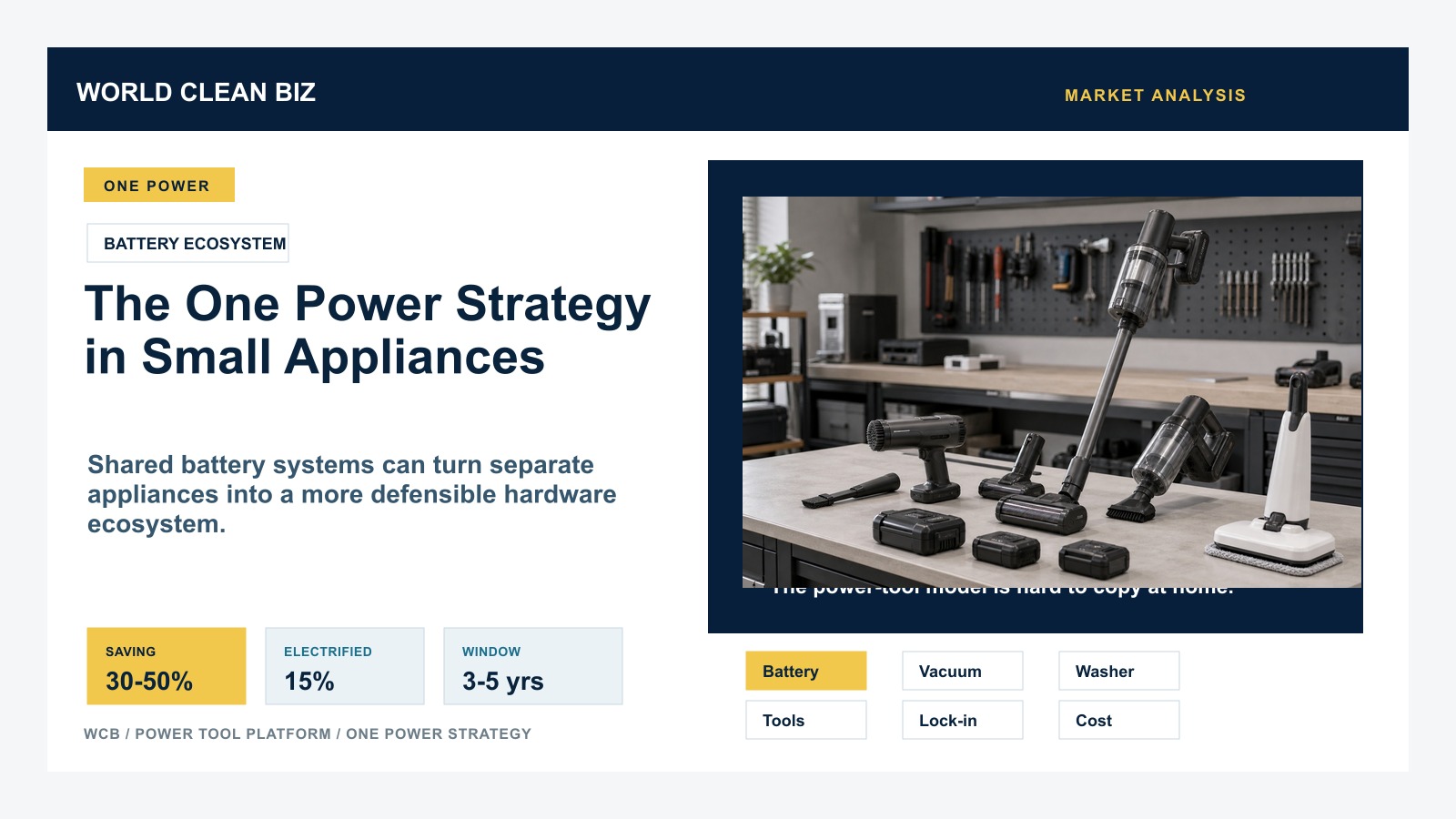
- A QR code does not automatically mean a battery passport; passports mainly cover EV, LMT and industrial batteries over 2 kWh.
- For phones, appliances and most handheld tools, replaceability and long-term spare-battery supply are usually the more immediate issues.
- The regulation extends brand responsibility beyond the sales period into repair, parts, supply-chain data and end-of-life handling.
In this article 8 sections
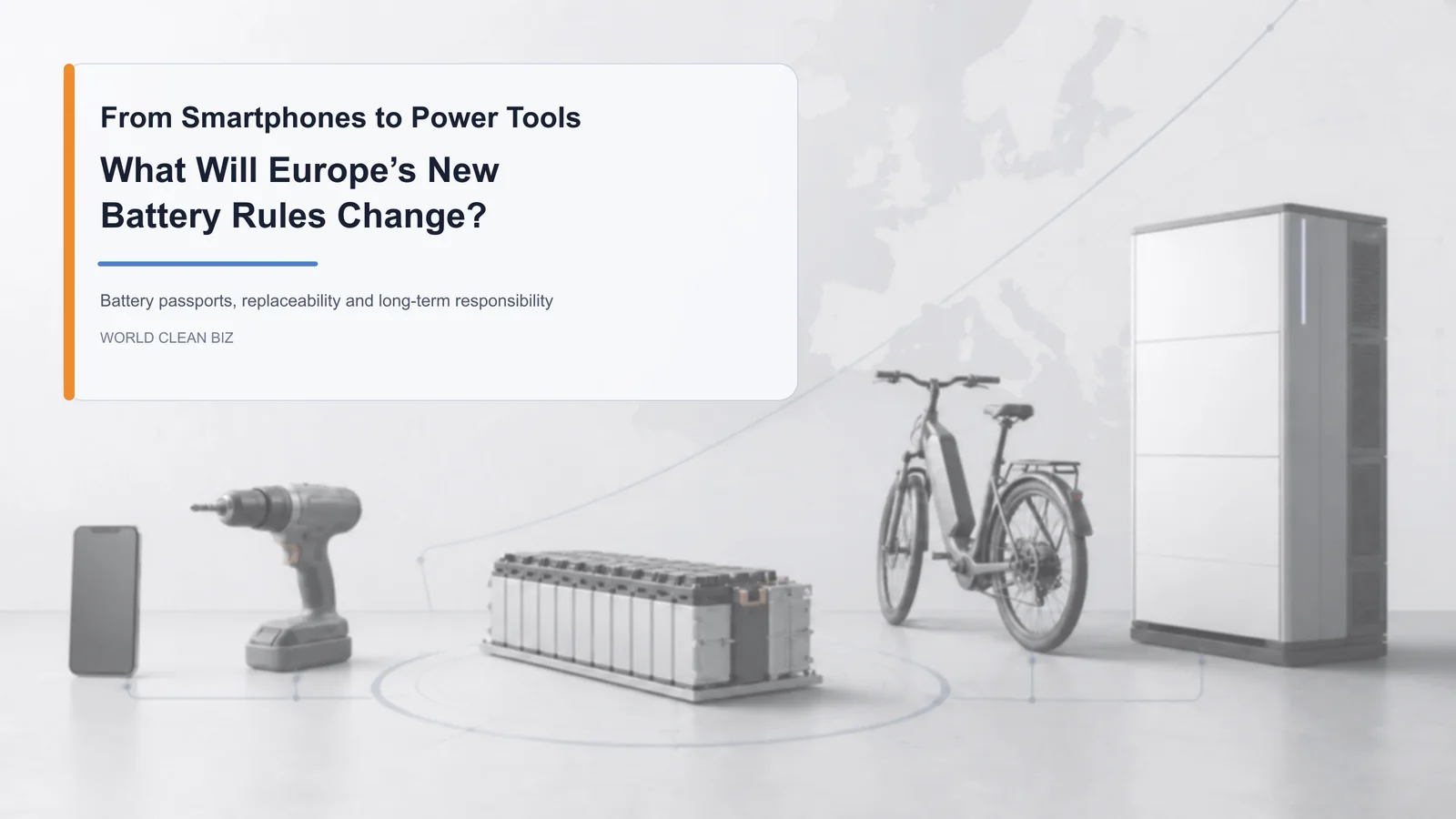
A smartphone may still work after two or three years, yet its battery lasts only half a day. A cordless drill may remain mechanically sound even though the original replacement pack has disappeared. An e-bike battery may have a fault in only part of the pack, but the repair still means replacing the whole unit.
These are familiar problems. For years, a failed battery has often shortened the life of an otherwise usable product. Europe’s new battery rules are intended to change that relationship.
Many companies have focused on the “battery passport” and assumed that every product containing a lithium battery will need one from 2027. That is not how the regulation works. Smartphones, power tools, e-bikes and home energy-storage systems face different obligations. Some need a digital battery passport. For many everyday products, the more immediate issue is whether the battery can be replaced at all.
Do Not Give Every Battery a “Passport”
A battery passport is best understood as a digital record that follows an individual battery.
It can record who made the battery, where and when it was produced, its chemistry and capacity, the critical raw materials it contains, and information relevant to repair, reuse and recycling. Some information is public. More detailed data is available only to regulators, service providers or other authorised parties.
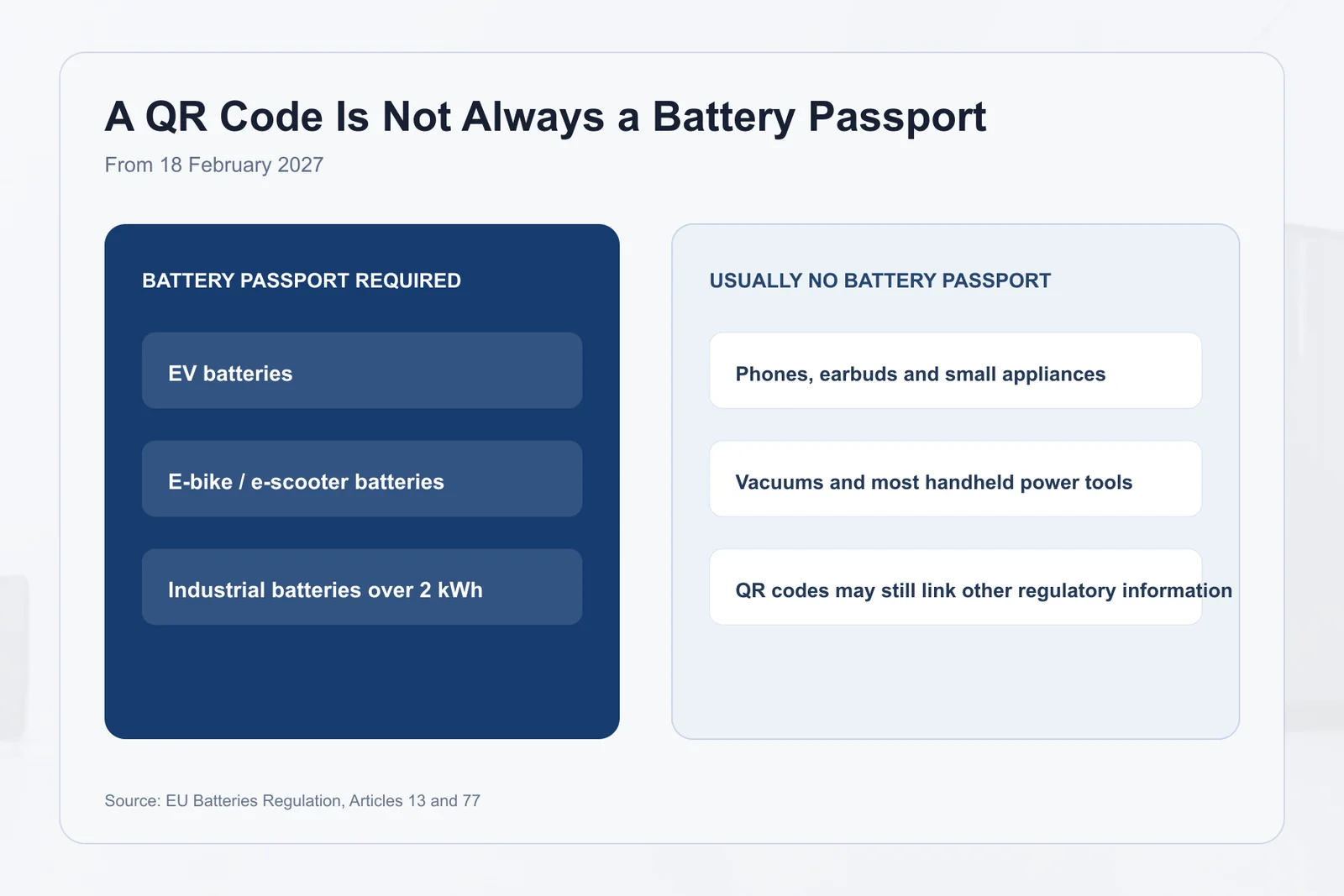
From 18 February 2027, the passport requirement mainly covers three groups: electric-vehicle batteries, light means of transport batteries used in products such as e-bikes and e-scooters, and industrial batteries with a capacity above 2 kWh. Stationary home-energy-storage batteries are treated as industrial batteries, so many home storage systems also fall within the passport scope under the EU Batteries Regulation.
The batteries in phones, earbuds, vacuum cleaners and most handheld power tools are normally portable batteries. They generally do not require a full Article 77 battery passport.
The confusion comes from the QR-code requirement. From February 2027, other batteries will also begin carrying QR codes, but a QR code is only an information entry point. It may connect to labels, conformity information, waste-handling instructions or other regulatory records. It does not automatically connect to a battery passport. The distinction is set out in Articles 13 and 77.
For batteries that do need passports, this is much more than printing a code. The European Commission’s 2026 preparatory guidance lists 71 data points, including manufacturing location and date, weight, capacity, chemistry and material information. It also distinguishes which data are expected in February 2027, which are conditional and which still depend on later implementation rules. The guidance is preparatory rather than a binding interpretation, but it shows the scale of the data work ahead. See the Commission’s battery-passport guidance.
If an energy-storage company can identify only the battery-pack model but cannot connect an individual pack to a cell batch, supplier and manufacturing location, buying passport software will not solve the problem. A QR code can be generated in minutes. The supply-chain records behind it may take years to organise.
For Most Consumer Products, the Immediate Question Is Replaceability
Phones, earbuds, vacuum cleaners and power tools usually do not need battery passports, but they face a rule with a much wider effect. From 18 February 2027, products incorporating portable batteries must generally allow the battery to be removed and replaced during the product’s lifetime.
“Removable” does not mean that a technician can force the product open with a heat gun and solvent. The user should generally be able to complete the work with ordinary commercially available tools. If a specialised tool is necessary, it must be supplied free with the product. The process cannot depend on proprietary tools, heat or solvents.
A compatible replacement battery must also preserve the product’s function, performance and safety. Brands cannot use software locks, parts pairing or deliberate feature degradation simply to prevent a compatible battery from working. Replacement batteries must remain available for at least five years after the last unit of the product model is placed on the market, and removal and safety instructions must remain accessible.
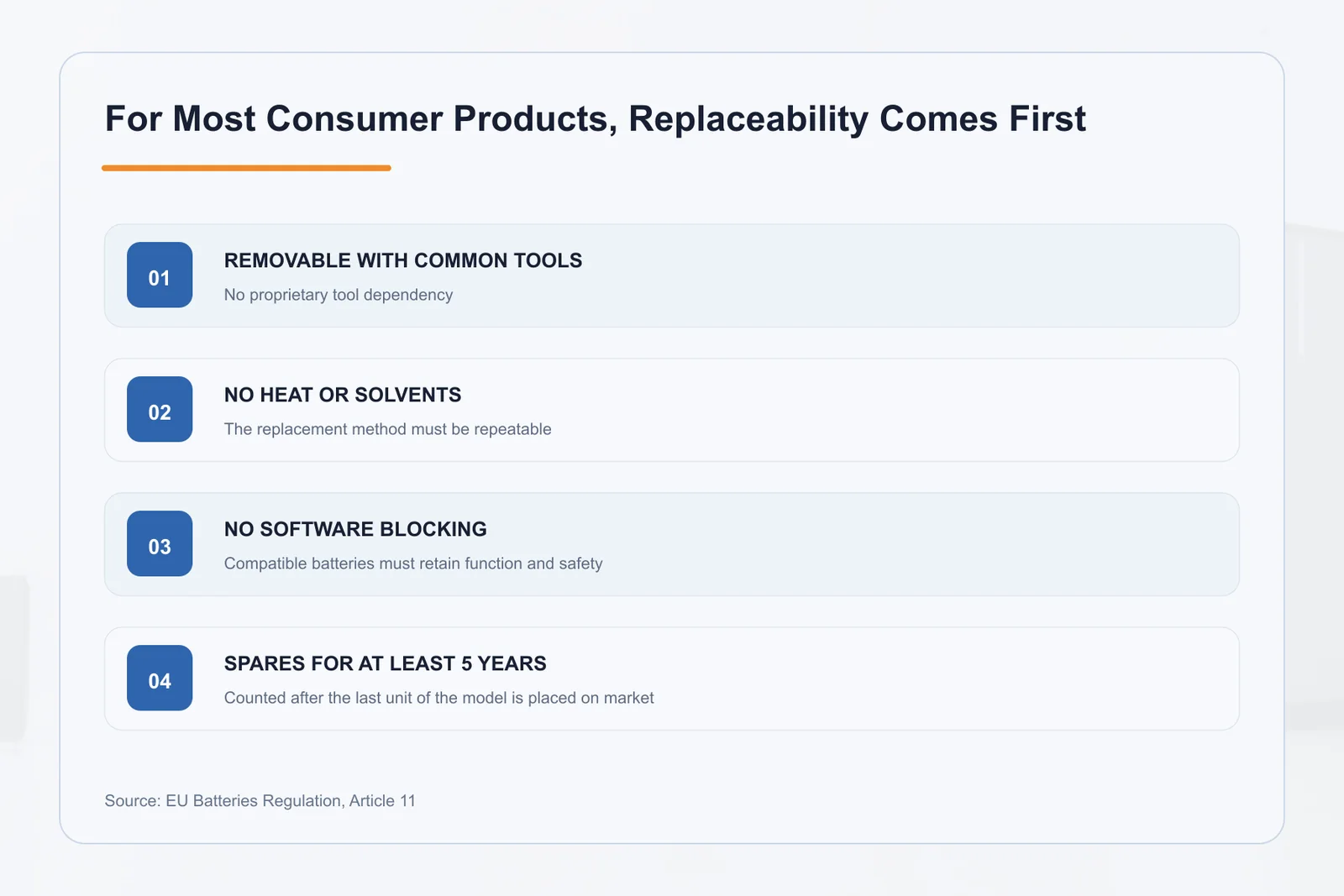
This does not mean that every product must return to a hand-opened battery door. Phones, tablets and products with particular water or safety constraints may also be subject to product-specific rules. The exact route—replacement by the end user or by an independent professional—depends on the product design and the applicable legislation.
Smartphones and tablets already face more specific EU ecodesign rules. Requirements applying from June 2025 include batteries that retain at least 80% of their initial capacity after 800 charging cycles, as well as extended access to certain spare parts. For some parts, availability continues for seven years after sales end. The Commission summarises those requirements on its smartphones and tablets page.
The practical objective is not simply to bring back the removable phone cover. It is to prevent a battery from ending the life of a device too early. The battery must either last longer or be replaceable through a realistic repair route. After three or four years, the owner should still have a reasonable way to restore the product’s runtime.
Wet-use products create a harder boundary. Toothbrushes, water flossers, shavers and floor washers are regularly exposed to water, and end-user battery removal can compromise sealing and electrical safety. The rules allow some batteries to be replaced by an independent professional instead, but an IP rating alone does not create an automatic exemption.
The manufacturer must consider how the product is actually used, whether user removal would compromise safety, and whether current design technology can preserve both safety and replaceability. A floor washer may qualify for a professional-replacement route because of its construction. A dry cordless vacuum does not automatically qualify because it occasionally encounters moisture. In many cases, the exception changes who replaces the battery; it does not allow a product to have no repair route at all.
Battery Platforms Are Becoming More Valuable
Power tools adopted removable packs much earlier than phones and small appliances. One pack may power a drill, grinder, blower, mower or cleaning tool. The user is buying more than one machine; the user is gradually building a product system around the battery.
That model now has a compliance advantage. The more tools a platform supports, the more stable replacement-pack demand becomes and the easier it is to justify long-term supply. This is one reason European tool brands are building battery alliances across professional tools, landscaping and cleaning equipment.
Yet a removable pack is not the end of the obligation. Replacement batteries still need to remain available. Installation must be safe. Instructions must be clear. Software must not unnecessarily block a compatible pack.
The pressure may be greatest for cross-border e-commerce brands built around short product cycles. A model sells well, the brand orders more units, and then the listing disappears when demand falls. The supplier changes, while the original tooling, controller and battery pack go out of production. Five years later, the brand may no longer be able to source the battery, and the original factory may not restart a line for a small service order.
Traditional brands often develop several product generations around one battery platform. Many marketplace brands still calculate cost one product at a time. Europe’s rules extend the management period beyond the last sale: battery specifications, supplier records, service instructions and spare inventory must remain available after the listing has disappeared.
Larger Batteries Carry Broader Lifecycle Duties
E-bike and e-scooter batteries go further. As LMT batteries, they need a battery passport and must also support removal and replacement by independent professionals. Brands need a service system that can diagnose the pack, identify replaceable components and maintain useful information after repair.
This could reduce the practice of discarding an entire pack because one part has failed. It also pushes light-electric-vehicle brands towards more formal diagnostics, parts supply and service networks.
Home storage and large industrial batteries carry an even broader data burden. They have long service lives and may later enter repurposing, second-life or recycling channels. The passport is intended to help authorised parties understand where the battery came from, what it contains, what happened during use and where it goes next.
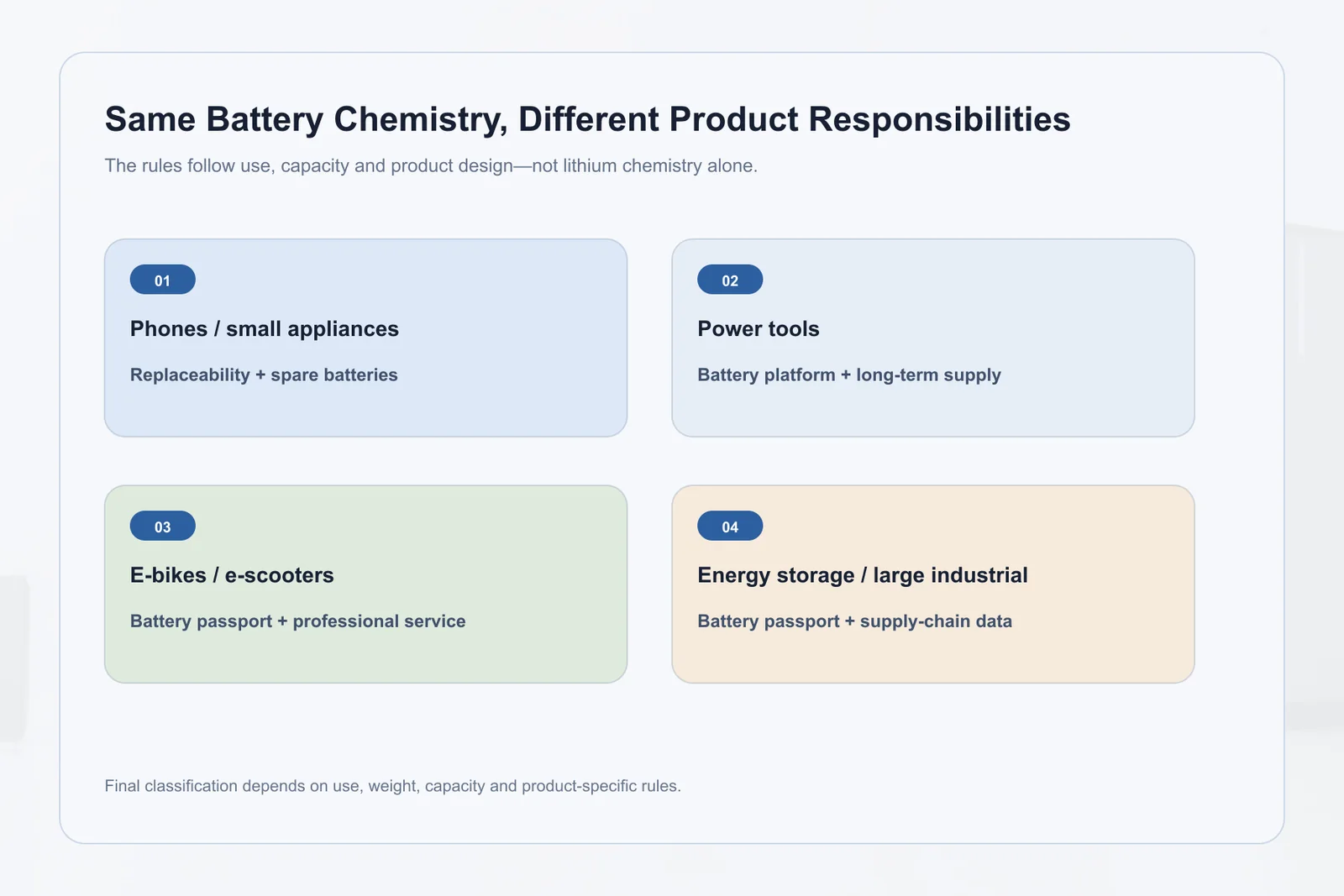
Having wheels does not automatically make a product an LMT. Robotic lawn mowers, delivery robots and robotic pool cleaners still need product-specific classification based on intended use and battery design. Similar lithium-ion chemistry can sit inside a phone, drill, e-bike or storage cabinet while creating very different regulatory responsibilities.
What Companies Should Do First
The preparation sequence is straightforward. First list the battery-powered products sold into Europe and determine the battery category, weight, capacity and intended use. Then decide whether the battery needs a passport, whether it must be replaceable by the user or an independent professional, how long the replacement pack must remain available, and whether the supply chain can provide the required records.
Energy-storage and transport companies need to connect cell, module, pack and lifecycle data. Consumer-electronics and appliance companies need to examine product architecture. Power-tool brands need to maintain battery platforms and spare supply. Fast-moving marketplace brands need a plan for service after a listing is discontinued.
Only after those questions are answered should a company choose its QR-code or battery-passport system. The code is one of the easiest parts. Incorrect classification, a sealed product with no valid repair route, missing spare batteries or incomplete supply-chain data are the problems more likely to disrupt European market access.
Common Questions
Does every lithium battery sold in Europe need a battery passport?
No. From February 2027, the passport mainly covers EV batteries, LMT batteries and industrial batteries above 2 kWh. Many portable batteries need QR-linked information but not a full passport.
Will every phone need a hand-removable battery?
Not necessarily. The rules focus on durability and a realistic replacement route. The exact requirement depends on the battery regulation together with the product-specific smartphone and tablet rules.
Does a waterproof product automatically qualify for an exception?
No. The manufacturer must show that user removal would compromise safety and that the product’s actual wet-use conditions justify a professional replacement route.
Are power tools already compliant because their packs are removable?
Not automatically. Brands must still consider safe replacement, instructions, software behaviour and long-term availability of compatible batteries.
Final Answer
Europe’s battery rules are not adding only a new label. They are extending responsibility beyond the sale. Years later, can the owner still buy the battery and replace it safely? If the battery needs repair, reuse or recycling, can the company still explain where it came from and what happened to it? Those are the questions the new framework is designed to answer.
Official Sources
- Regulation (EU) 2023/1542 on batteries and waste batteries
- European Commission guidance on the digital battery passport
- European Commission guidance on removability and replaceability
- EU ecodesign and energy-labelling rules for smartphones and tablets
*The European Commission’s 2026 guidance reflects the Commission’s interpretation and is not legally equivalent to the regulation itself. Product classification still depends on intended use, design, weight, capacity and applicable product-specific legislation.*