- Little Green and SpotClean are overlapping BISSELL family names, not two globally fixed engineering platforms; compare the complete model number.
- A basic Little Green favors lighter, lower-cost spot cleanup, while 5.7-amp Pro platforms emphasize tank capacity and reach; HydroSteam and cordless models solve different jobs.
- Hose flushing, dirty-tank sealing, tool angle, parts availability and drying discipline determine long-term performance and odor control.
In this article 14 sections
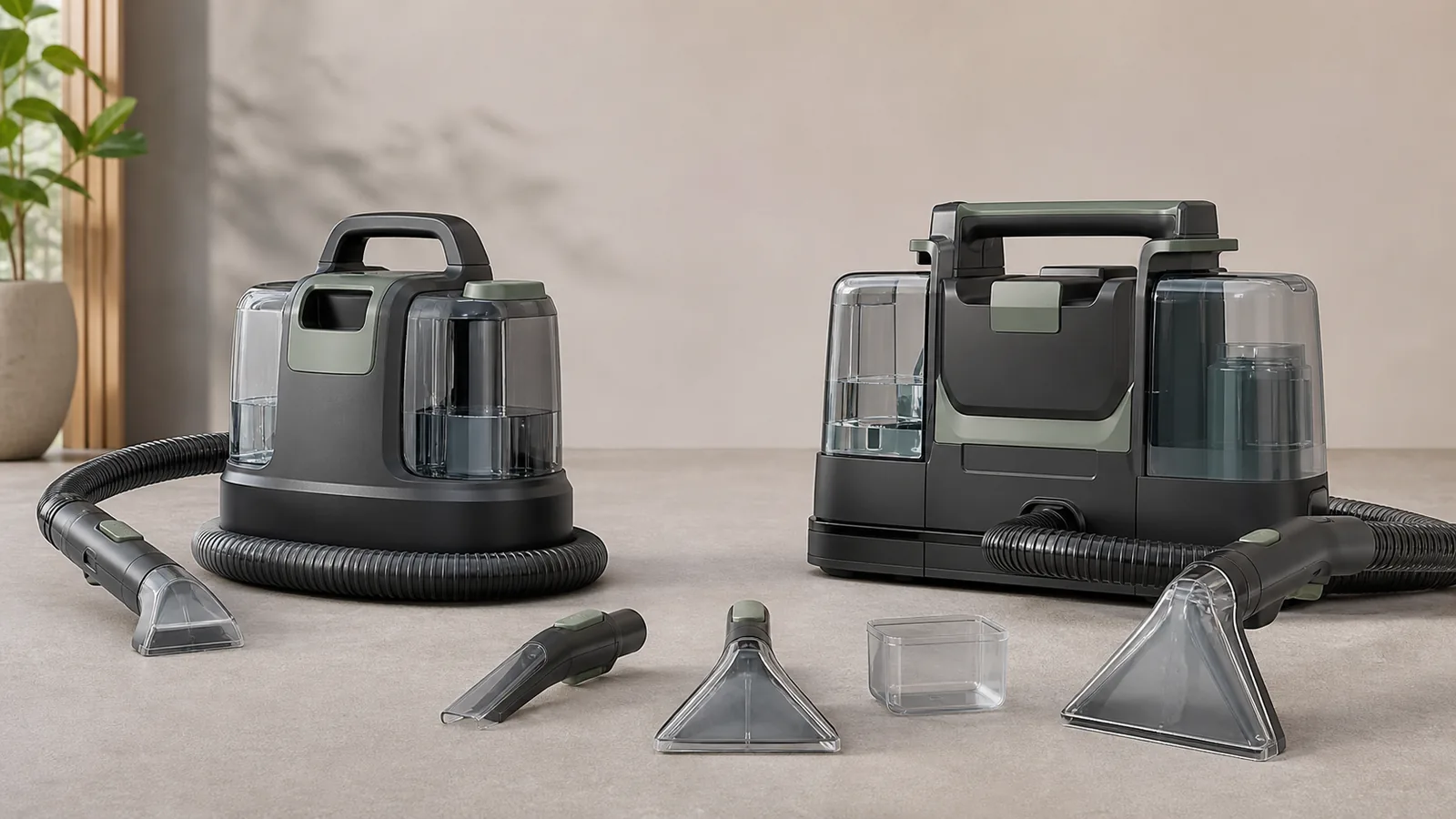
Choose the classic Little Green when you want a lighter, simpler machine for occasional spills, upholstery and car interiors. Choose a SpotClean Pro or Pet Pro when longer reach, a larger tank and a higher-output corded platform matter. Choose Little Green HydroSteam for oily or sticky stains that benefit from real steam, and Little Green Cordless only when freedom from the power cord matters more than continuous duty.
The important warning is that Little Green and SpotClean are not two permanently separate technologies. BISSELL uses both names across regions and price tiers. Some international manuals even place “SpotClean” and “Little Green” on the same document, while the US market includes a Little Green Pro whose published size, amperage, hose and tank specifications closely resemble SpotClean Pro.
Compare the complete model number, market and included tool set—not the family name alone.
Little Green vs SpotClean: Quick Comparison
| Current example | Power | Clean tank | Hose / cord | Weight | Best role |
|---|---|---|---|---|---|
| Little Green 1400B | 3 A corded | 48 oz | about 4–4.5 ft / 15 ft | 9.65 lb | lighter household spots and auto upholstery |
| SpotClean Pro 3624 | 5.7 A corded | 3/4 gal | 5 ft / 22 ft | 13.25 lb | larger jobs, stairs and longer reach |
| SpotClean Pet Pro 2458 | 5.7 A corded | 3/4 gal | 4 ft / 22 ft | 13.25 lb | pet stains and isolated-mess tool |
| Little Green Pro 2505 | 5.7 A corded | 3/4 gal | 5 ft / 22 ft | 13 lb | proof that “Little Green” also includes Pro hardware |
| Little Green HydroSteam 3618 | 120 V corded | 64 oz | 4.8 ft / 15 ft | 13 lb | oily/sticky messes, steam refresh and multi-surface work |
| Little Green Cordless 3682 | rechargeable | 33.8 oz | 4 ft / no cord | 7.2 lb | quick remote cleanups and vehicles |
Specifications are from current BISSELL US pages checked in July 2026. Bundles, similar models and retailer suffixes can change the tools, formula, color and warranty.
Why the Model Names Are Confusing
“Little Green” began as a recognizable portable-cleaner identity in North America. “SpotClean” became another major BISSELL portable-cleaner family and is especially visible across international markets. Today, the names overlap.
Three rules prevent most buying mistakes:
- Use the model number. A 1400B is not a 2505, even though both say Little Green.
- Use the country site. Voltage, plug, warranty, formula and accessories differ by market.
- Use the complete bundle. A Pet, Pro, ProHeat, HydroSteam, Max or cordless suffix can change the machine or only the included tools; verify which.
Retailers should not merge reviews or replacement parts merely because two products look similar. A tank, hose or stain tool that fits one platform may not seal or spray correctly on another.
Suction: Recovery Matters More Than a Motor Label
BISSELL describes SpotClean Pro as a high-power portable spot cleaner and publishes a 5.7-amp rating. The classic Little Green 1400B is rated at 3 amps. That suggests different electrical input and duty roles, but amperage alone is not a measured water-recovery score.
Effective extraction depends on:
- vacuum airflow and sealed suction;
- tool lip contact with the fabric;
- hose restriction and length;
- dirty-tank lid, gasket and float condition;
- foam and debris in the recovery path;
- number of dry passes;
- fabric density and cushion depth.
A larger motor cannot compensate for a poorly seated dirty tank or a tool held too flat. BISSELL support instructs users to tilt the tool so the suction channel contacts the surface. The company also identifies full tanks, stuck floats, debris under the tank and hose blockage as causes of low recovery.
For comparison testing, measure solution applied and liquid recovered under the same fabric, stain, dwell time and number of passes. Do not rank “strong suction” marketing phrases from different pages.
Tanks, Hose Reach and Cleaning Radius
The classic Little Green’s 48-ounce clean tank suits targeted messes. SpotClean Pro’s 3/4-gallon clean tank reduces refills during stair, sectional-sofa or vehicle work. HydroSteam’s 64-ounce clean tank and separate 51-ounce dirty tank support its multi-mode role.
Capacity has trade-offs:
- a larger filled machine is heavier to carry;
- a large tank can encourage users to store leftover formula;
- dirty water left in a bigger tank develops odor;
- tank shape and lid access affect how completely residue can be removed.
Hose and cord reach are equally important. SpotClean Pro 3624 publishes a 5-foot hose and 22-foot cord. Little Green 1400B publishes a shorter hose and 15-foot cord. That difference is noticeable on staircases and large vehicles.
Inspect how the hose wraps around the body. Tight bends near the machine can fatigue the hose, while residual liquid trapped in low loops can drip after storage.
Tools: Match the Mess, Not the Marketing Name
Common BISSELL portable-cleaner tools include:
- 3-inch or 4-inch Tough Stain Tool for focused spray, scrubbing and recovery;
- wider stair tool for tread coverage;
- spraying crevice tool for seams and narrow vehicle areas;
- Stain Trapper Tool that isolates unpleasant liquid from the main hose and tank path;
- HydroRinse tool for flushing the hose;
- multi-surface or grout tool on compatible HydroSteam packages.
The Stain Trapper can be valuable for pet accidents because it contains recovered material in the attachment. It also creates another small vessel and seal to clean. A wide stair tool improves coverage but can lose contact on curved upholstery or narrow bolsters.
For automotive retail, a narrow transparent nozzle, workable hose radius and readily replaceable tool matter more than the number of accessories in the carton.
Pet Messes, Cars and Upholstery
Both families can clean carpet spots, stairs, suitable upholstery and auto interiors. Always read the fabric cleaning code. BISSELL says its SpotClean Pet Pro is suitable for upholstery marked W or WS; test an inconspicuous area for color transfer and texture change.
Use extraction discipline:
- remove solids without pushing them deeper;
- pre-treat only with compatible chemistry;
- apply controlled solution;
- agitate with the appropriate tool;
- make slow recovery passes;
- finish with additional dry passes;
- ventilate until the substrate is fully dry.
Avoid saturating foam cushions, headliners, electrical seat controls and glued fabrics. A portable extractor removes liquid from the surface, but it does not prove the inner cushion is dry.
For urine or vomit, odor control depends on reaching the contaminated depth without spreading it. The machine, hose and tool then require immediate cleaning.
Heat, ProHeat and HydroSteam Are Not the Same
The names are often misunderstood.
- A standard Little Green or SpotClean typically uses hot tap water within manual limits; it does not create steam.
- BISSELL explains that ProHeat/Heatwave technology maintains water temperature during cleaning.
- Little Green HydroSteam 3618 has a flow-through heater and combines steam with solution.
HydroSteam provides SteamWash, Steam and Wash modes. BISSELL positions SteamWash for oily and sticky stains and Steam mode for refreshing selected materials and hard surfaces. The company’s faster-dry and improved-cleaning claims are tied to stated modes and test conditions, not every fabric or stain.
Steam adds capability and risk. Confirm that the surface tolerates heat, keep away from skin, and follow cooling instructions before servicing tools or tanks. It is not automatically the best choice for delicate upholstery, adhesives or unknown dyes.
Cordless vs Corded
Little Green Cordless 3682 weighs about 7.2 pounds and is designed for grab-and-go cleaning. BISSELL states a roughly four-hour charge and publishes runtime under a specified usage assumption. It cannot clean while connected to the charger.
Choose cordless for:
- vehicles parked away from an outlet;
- fresh, small spills;
- outdoor furniture approved for water cleaning;
- users who value lighter carry weight.
Choose corded for:
- repeated stair or sofa sections;
- larger pet accidents;
- detailing work with extended recovery passes;
- situations where battery ageing and recharge time would interrupt service.
Runtime is not the same as productive extraction time. Trigger use, suction load, battery mode and recovery technique all affect the number of stains completed.
Leaks, Odor and Maintenance
Portable spot cleaners move dirty organic liquid through a corrugated hose. Maintenance is part of the product, not an optional extra.
After each use:
- recover as much liquid as possible;
- hold the hose up briefly while the machine is running so residual water reaches the dirty tank;
- flush the hose using the approved HydroRinse tool or model-specific method;
- remove and rinse the tool and clear its spray ports;
- empty and rinse the dirty tank and lid;
- wipe the tank seat, gasket and intake area;
- let parts and hose dry before closed storage;
- keep the machine away from freezing conditions.
Common leak or suction complaints start with residual hose water, an improperly seated lid, damaged hose, debris at a gasket, a full tank or a stuck float. Diagnose these before assuming the motor has failed.
Do not store mixed solution for long periods. Chemistry can settle, odor can develop, and the wrong concentration can increase foaming or residue.
Parts and Warranty
Check the model-specific parts page before purchase. Useful spare categories include:
- clean and dirty tanks;
- tank lids and seals;
- hose assembly;
- stain tools and nozzles;
- cord wraps and clips;
- compatible formulas.
BISSELL’s current HydroSteam 3618 parts page lists tanks, a hose assembly, mode dial and multiple tools. Availability for older or retailer-exclusive models varies.
Warranty also varies by machine. Current US listings show a two-year limited warranty for Little Green Cordless and Little Green Pro, while HydroSteam 3618 lists three years. Use the warranty guide attached to the exact model and purchase market. Household warranty terms should not be assumed to cover professional detailing, rental or commercial duty.
Which One Should You Buy?
Choose classic Little Green if:
- the work is occasional and localized;
- lower carry weight and a compact body matter;
- 48 ounces and a shorter reach are sufficient;
- replacement tools for model 1400B are locally available.
Choose SpotClean Pro or Pet Pro if:
- you clean stairs, sectionals or multiple vehicle seats;
- 3/4-gallon capacity and longer cord/hose reach matter;
- a wider stair tool or Stain Trapper matches the task;
- continuous corded operation is required.
Choose Little Green HydroSteam if:
- oily, sticky or multi-surface messes justify steam;
- the user will follow mode and surface restrictions;
- the extra cost and maintenance of the heated platform are acceptable.
Choose Little Green Cordless if:
- outlet access is the main problem;
- jobs are small enough for one charge;
- lighter transport matters more than continuous duty.
Retail and OEM Lessons
Retailers should organize the shelf by job rather than color:
- entry corded spot cleaner;
- high-capacity Pro extractor;
- pet-mess package with isolation tool;
- steam-capable premium model;
- cordless quick-response model;
- replacement tool, hose-cleaning and formula kit.
Label the exact model number and tank/hose specifications. Show users how to make dry recovery passes and clean the hose; this can reduce odor, leak and “low suction” returns.
For private-label development, the critical engineering choices include pump pressure, recovery airflow, tank sealing, float shutoff, hose fatigue, nozzle geometry, chemical compatibility and service parts. See our spot cleaner OEM and ODM guide and portable carpet cleaner buying guide. For another brand-level comparison, read BISSELL Little Green vs Hoover CleanSlate.
FAQ
Is SpotClean more powerful than Little Green?
Some SpotClean Pro models use a higher-rated corded platform than classic Little Green 1400B. But Little Green Pro can share similar published capacity, reach and amperage. Compare model numbers, not names.
Are Little Green and SpotClean the same machine?
Not universally. The family names overlap and may share platforms or manuals in some markets, but tanks, hoses, motors, tools and warranties vary by model.
Does Little Green heat the water?
Standard models generally use hot tap water as instructed. ProHeat/Heatwave maintains temperature. HydroSteam has a flow-through heater that produces steam. These are different systems.
Which is better for car detailing?
Classic Little Green is easier to carry; SpotClean Pro provides more reach and capacity; cordless helps where there is no outlet. Tool width, hose flexibility and the ability to clean and replace the hose are decisive.
Why does my spot cleaner smell?
Organic residue can remain in the hose, tool, dirty tank or seals. Flush the hose, wash the tool and tank, dry all components and avoid storing wastewater or mixed formula.
Why is water leaking after use?
Residual hose water, a damaged hose, poorly seated tank lid, dirty gasket or tool connection can leak. Hold the hose up while the machine is still running, then inspect and clean model-specific seals.
Can I use any cleaning formula?
Use only formulas approved for the exact portable cleaner. Incorrect chemistry can foam, leave residue, damage materials or affect warranty coverage.
Bottom Line
Little Green versus SpotClean is a model-number problem disguised as a brand-family comparison. Start with the job, then compare recovery platform, tank size, hose radius, tools, heat method and cleaning routine. A correctly maintained classic machine can outperform a neglected Pro model—and a well-chosen tool can matter more than the name printed on the housing.