- Amazon data can reveal early overseas demand for backyard robots.
- Robotic mower and pool cleaner brands use marketplace traction to test positioning and pricing.
- Long-term success still requires offline channels, service capability and product reliability.
Analysis of Lawn Robot Export to Overseas Markets Based on Amazon Data
In March this year, during the Shenzhen Cleaning Exhibition I hosted, an Amazon team presented a sharing session on exporting lawn robots overseas. This article primarily relies on data from the PPT used in that presentation, combined with my observations on cleaning appliances, lawn mowers, and the export of lawn robots.
The penetration, price-band, brand-concentration and state-level figures below are attributed to that March 2026 presentation. World Clean Biz has preserved the figures as event reporting but has not independently reproduced Amazon's underlying marketplace dataset. Current brand channel pages are used separately to verify that Amazon remains an authorized route to market; they do not validate the historical presentation figures.
Firstly, it is important to clarify the scope. Amazon is not the entirety of the lawn robot export channels and cannot represent the complete overseas market. However, it serves as a crucial reference point. For a category still in its early stages, data from Amazon can directly reflect aspects such as overseas consumer searches, purchases, price acceptance, regional differences, and user feedback. Compared to macro predictions, these data points are closer to real transaction scenarios.
Therefore, this article does not discuss the operational techniques of Amazon or evaluate brand strategies from a platform perspective. The more critical question is: What stage has lawn robot export reached according to Amazon's data? How should Chinese brands understand this stage?
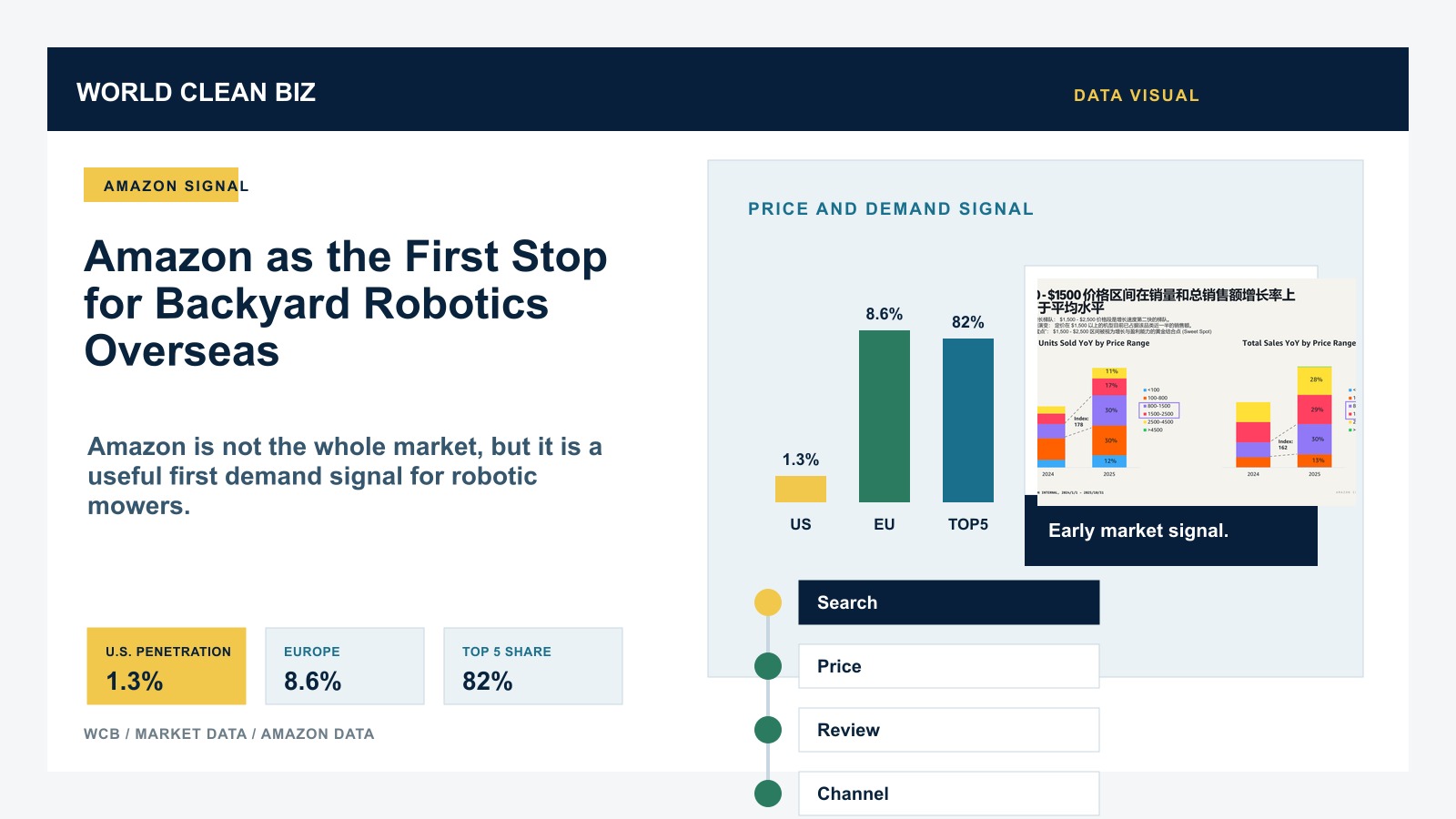
One of the most basic sets of data in the Amazon materials shows that the penetration rate of lawn robots in the U.S. market is approximately 1.3%, while it is around 8.6% in Europe. When these figures are considered together, a clear conclusion can be drawn: lawn robots are no longer an entirely unverified demand, but the U.S. market remains in its early stages.
The higher penetration rate in Europe indicates that consumer education for lawn robots has already been completed in certain markets. The 1.3% penetration rate in the U.S. suggests that there is still significant market potential, but user awareness is far from mature. For Chinese brands, low penetration rates are not simply "great opportunities." They also imply high costs associated with market education, building user trust, and post-sales validation.
Backyard robots are not replacing a single product. They are replacing traditional lawn mowers, manual lawn care, gardening services, and the habit of users maintaining their own lawns on weekends. For a new category to be accepted, it must prove that it is easier, more stable, and more manageable after purchase than the old solutions. That process will not happen automatically just because technical specifications improve.
Price data further illustrates that garden robots do not follow the typical logic of low-cost small appliances. Amazon data shows that the price range from $800 to $1,500 is growing rapidly, with the segment between $1,500 and $2,500 considered a relatively balanced area for both growth and profitability. Additionally, models priced above $1,500 already contribute nearly half of the sales in this category, while the number of brands in the premium segment above $2,500 remains relatively limited.
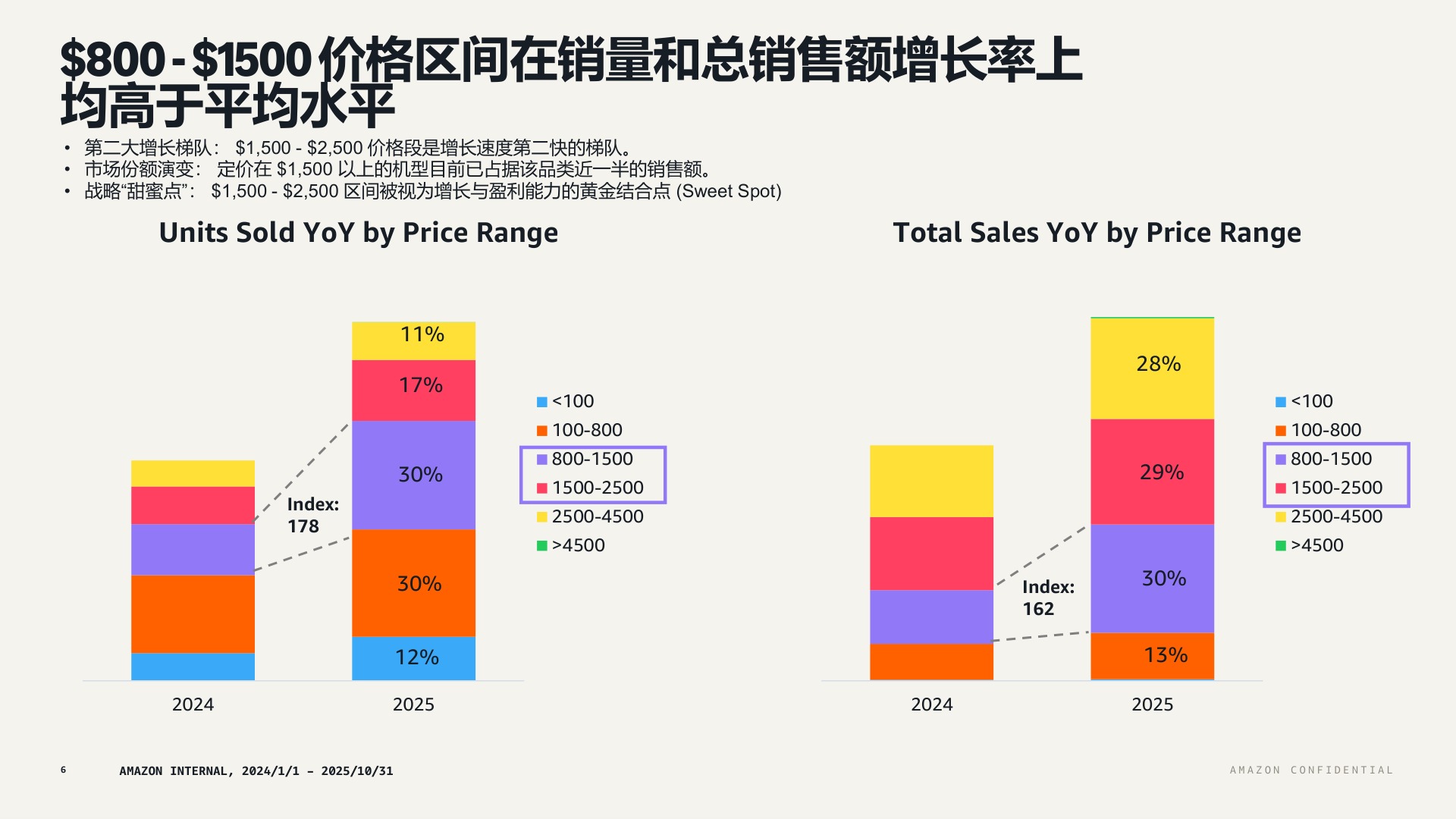
This data indicates that consumers purchasing garden robots are not solely focused on price. Product stability, installation difficulty, safety, theft prevention, after-sales service, spare parts supply, and long-term usage costs all factor into their purchase decisions. Lower prices do not necessarily translate to higher conversion rates; instead, they may raise doubts about reliability.
For high-ticket, long-cycle outdoor products with complex scenarios, what users truly want to confirm is whether the machine suits their lawn and can operate stably over a long period, as well as whether there will be support when issues arise.
Therefore, Chinese brands cannot simply replicate the "low-price volume grab" strategy used by some small appliances in the past. The 800–1,500 USD price range is suitable for scaling up, while the 1,500–2,500 USD segment is better suited for validating mid-to-high-end product capabilities and brand trust.
Above the 2,500 USD mark in the premium market, there are opportunities as well, but local service quality, channel capabilities, and brand image requirements are higher.
Amazon data also shows that the top five brands of lawn mowing robots account for 82% of sales revenue and 73% of sales volume. This indicates that on Amazon's shelves, leading brands have established a certain advantage, making it less of a fully fragmented long-tail market.
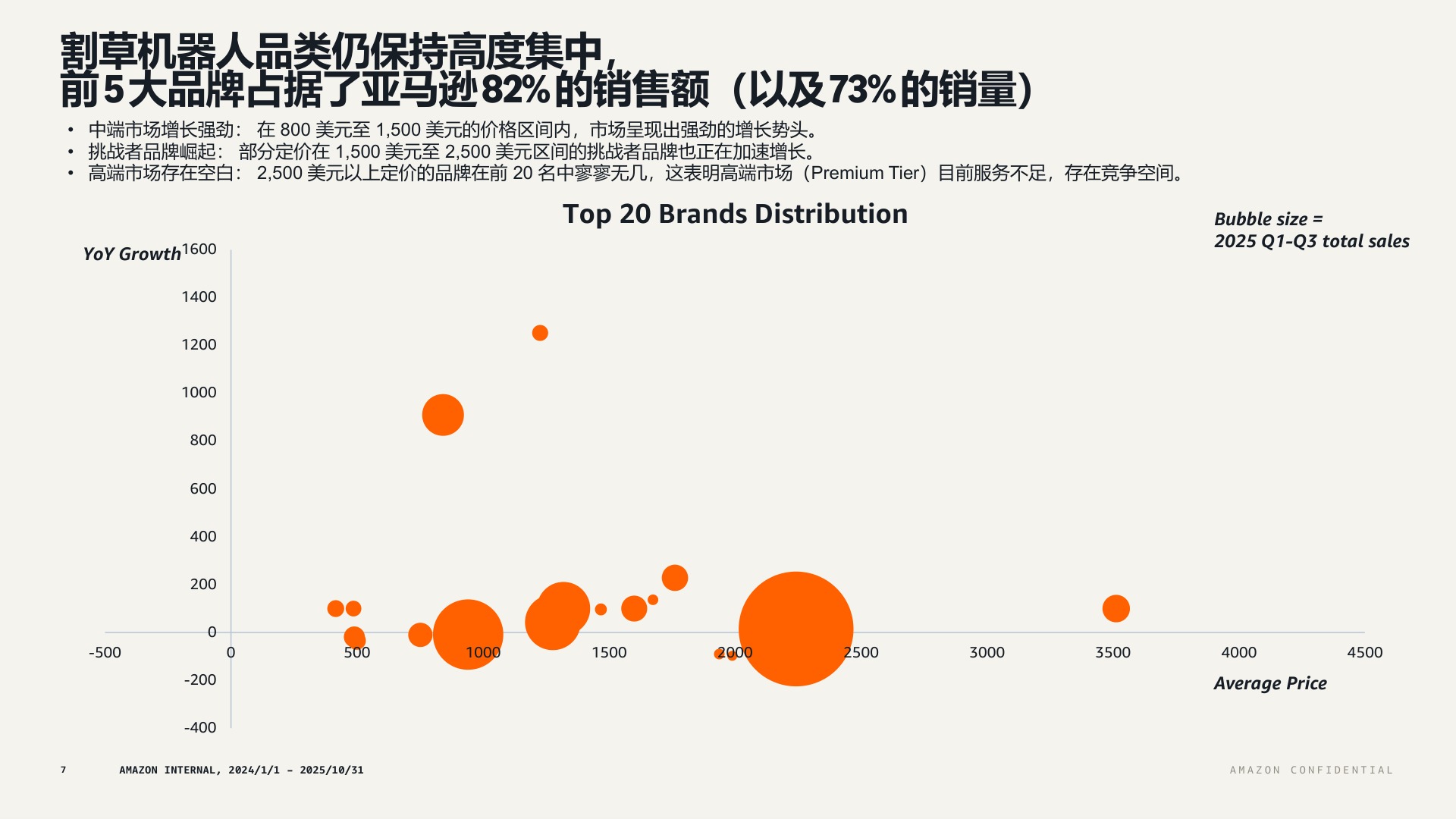
But this does not mean that the category is mature. From penetration rates, regional differences, and price band structures, consumers are still forming their understanding of robotic mowers, applicable scenarios, core purchase criteria, and brand recognition. In other words, while there has been concentration at the shelf level, the mental model for the category remains largely undefined.
This state presents challenges for newcomers. Established brands have accumulated evaluations, advertising investments, and shelf positions, raising entry barriers. However, opportunities still exist because category standards are not yet fully solidified. New product forms, price bands, installation methods, and service models could still influence consumer choices.
The U.S. market needs to be understood regionally. According to Amazon data, the top 10 states in the U.S. account for nearly half of the sales volume and revenue from robotic mowers. Key states include Texas, Florida, North Carolina, Pennsylvania, Ohio, Georgia, Virginia, Washington, New York, and Illinois. Among these, growth is more pronounced in Georgia, Virginia, North Carolina, Tennessee, and Texas.
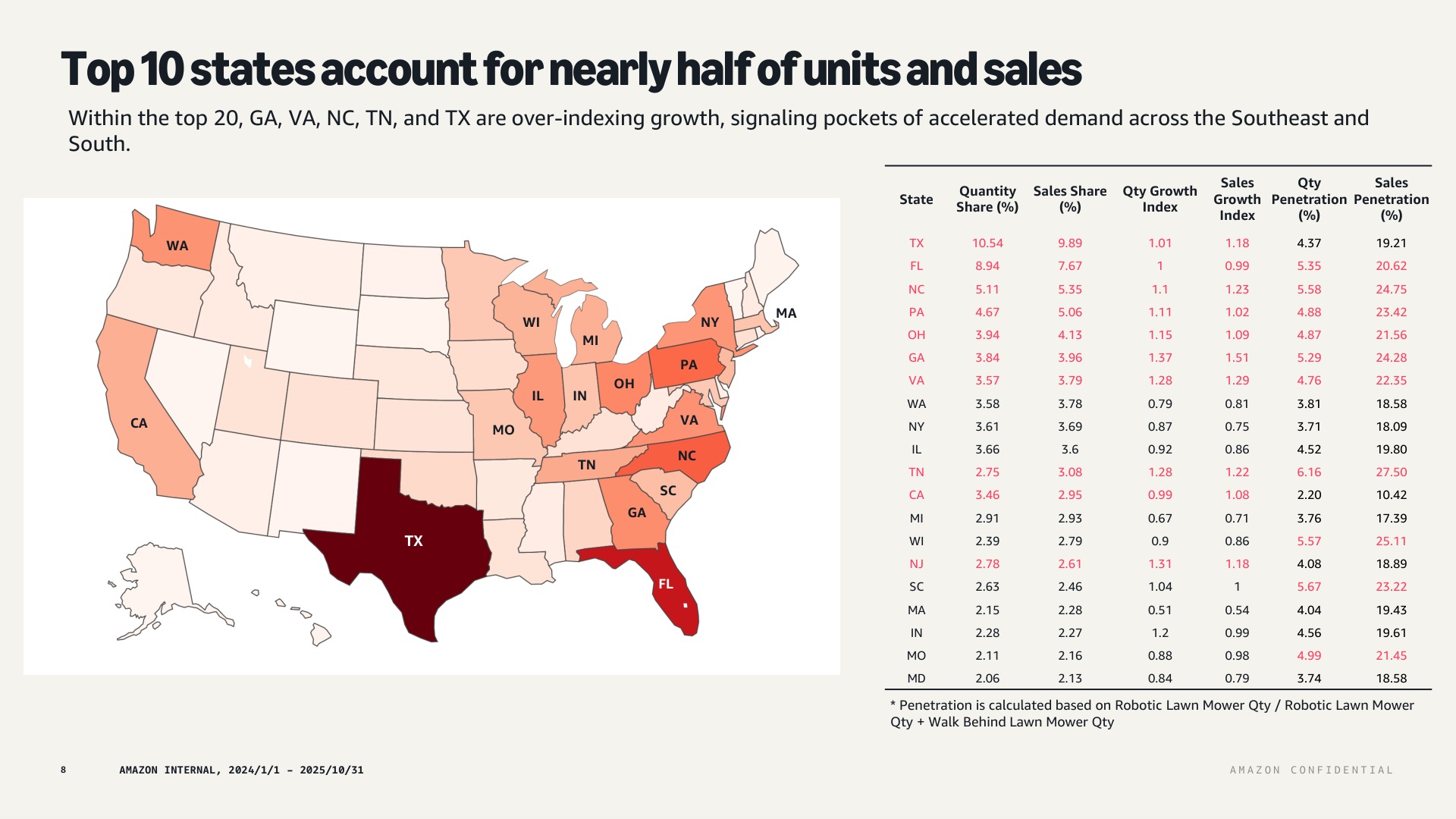
This indicates that the U.S. robotic mower market cannot be summarized by a national average. Factors such as lawn size, climate conditions, mowing season length, labor costs, household income, house structure, and yard maintenance habits all influence product demand. The southern and southeastern regions of the United States have longer mowing seasons and higher lawn maintenance frequencies, making them potentially suitable for early market penetration. The Texas market is sizable with clear foundational demand. High-income areas are more appropriate for narratives around smart home and premium products. In contrast, the northeastern market features more complex yard structures and terrain, imposing higher requirements on product adaptability.
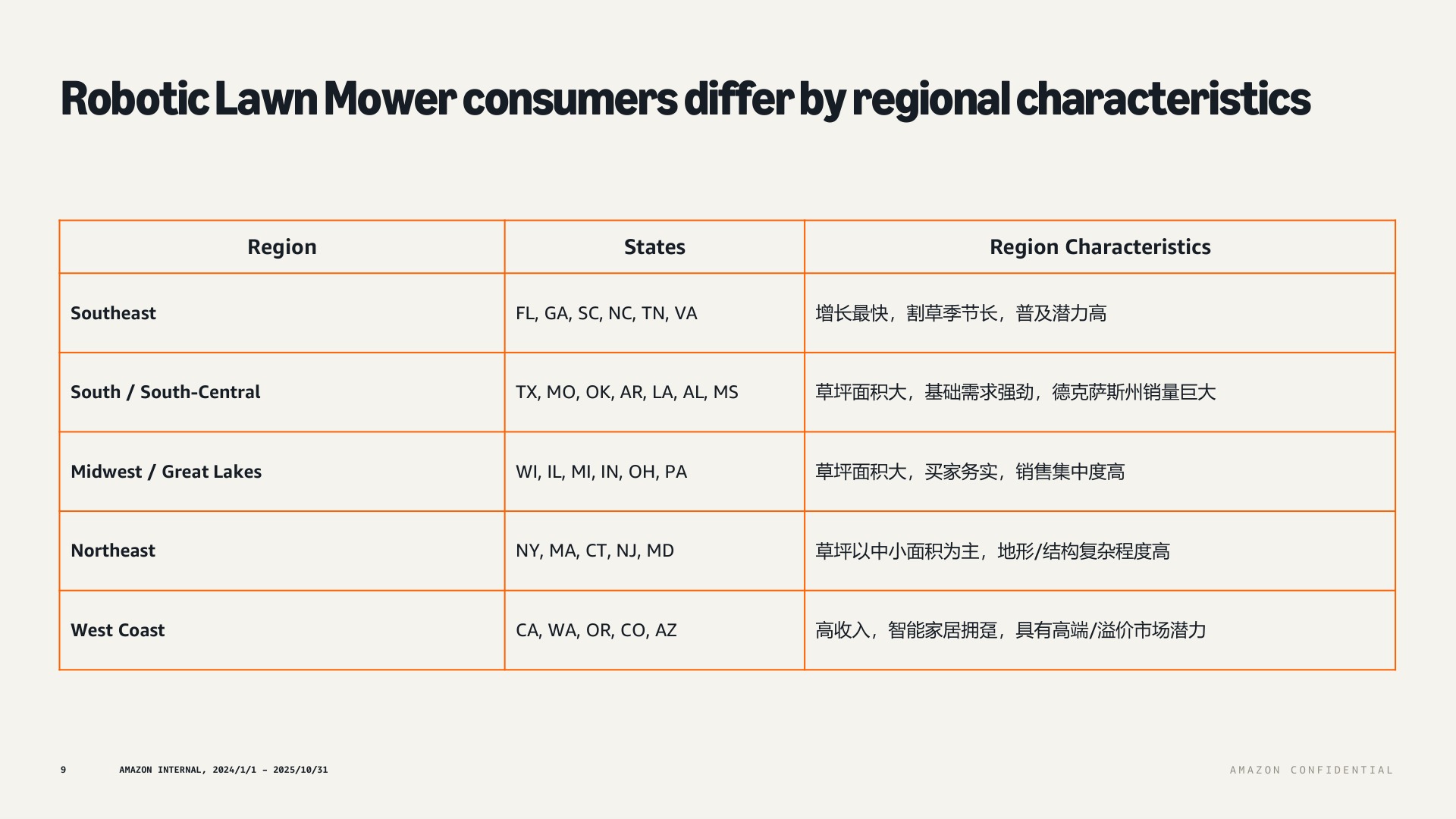
Therefore, outdoor robotic lawnmowers going global should not merely focus on the "large U.S. market." More accurately, the U.S. is a market composed of multiple distinct outdoor scenarios. Brands should initially determine which states, terrains, and user groups are most suitable for early entry rather than aiming for nationwide expansion right from the start.
This also highlights one of the most critical aspects in the competition for outdoor robotic lawnmowers: its core lies not just in improving parameters but in reducing user uncertainty.
Outdoor robotic lawnmowers and pool cleaners are more complex compared to many indoor cleaning products. While robot vacuums primarily operate in indoor, enclosed environments with relatively limited risk if the experience is unsatisfactory, robotic mowers and pool cleaners face challenges such as outdoor settings, water bodies, lawns, slopes, weather conditions, children, pets, and security issues. This makes users more cautious in their decisions.
When consumers purchase outdoor robotic lawnmowers or pool cleaners, they are concerned not only about positioning accuracy, battery life, coverage area, and algorithm capabilities. They also consider whether the lawn is suitable for the robot, if there's a need to bury cables, how complex the installation process is, whether the machine will run out of bounds, potential damage to flower beds or lawns, handling during rain, blade safety, timely after-sales service, and availability of spare parts.
From an industry perspective, the competition in outdoor robotic lawnmowers revolves around managing uncertainties. Brands need to transform complex technical features into understandable usage outcomes for consumers and clearly inform them about which scenarios are suitable for their products, which are not, how to install them, how to maintain them, and how to address issues that arise.
This presents higher requirements for Chinese brands. Many outbound products have succeeded by relying on parameters, pricing, and e-commerce efficiency alone. However, outdoor robotic lawnmowers require a more complete trust chain. Especially in the mid-to-high-end price range, content, services, reviews, and local support significantly impact conversion rates.
Amazon's documentation also mentions DSP, AMC, AI recommendations, Prime Video, Twitch, Fire TV, Alexa, and other advertising and traffic tools. These references are valuable because outdoor robotic lawnmowers belong to a category with high unit prices, low purchase frequency, and strong educational attributes, making them dependent not just on in-site search ads.
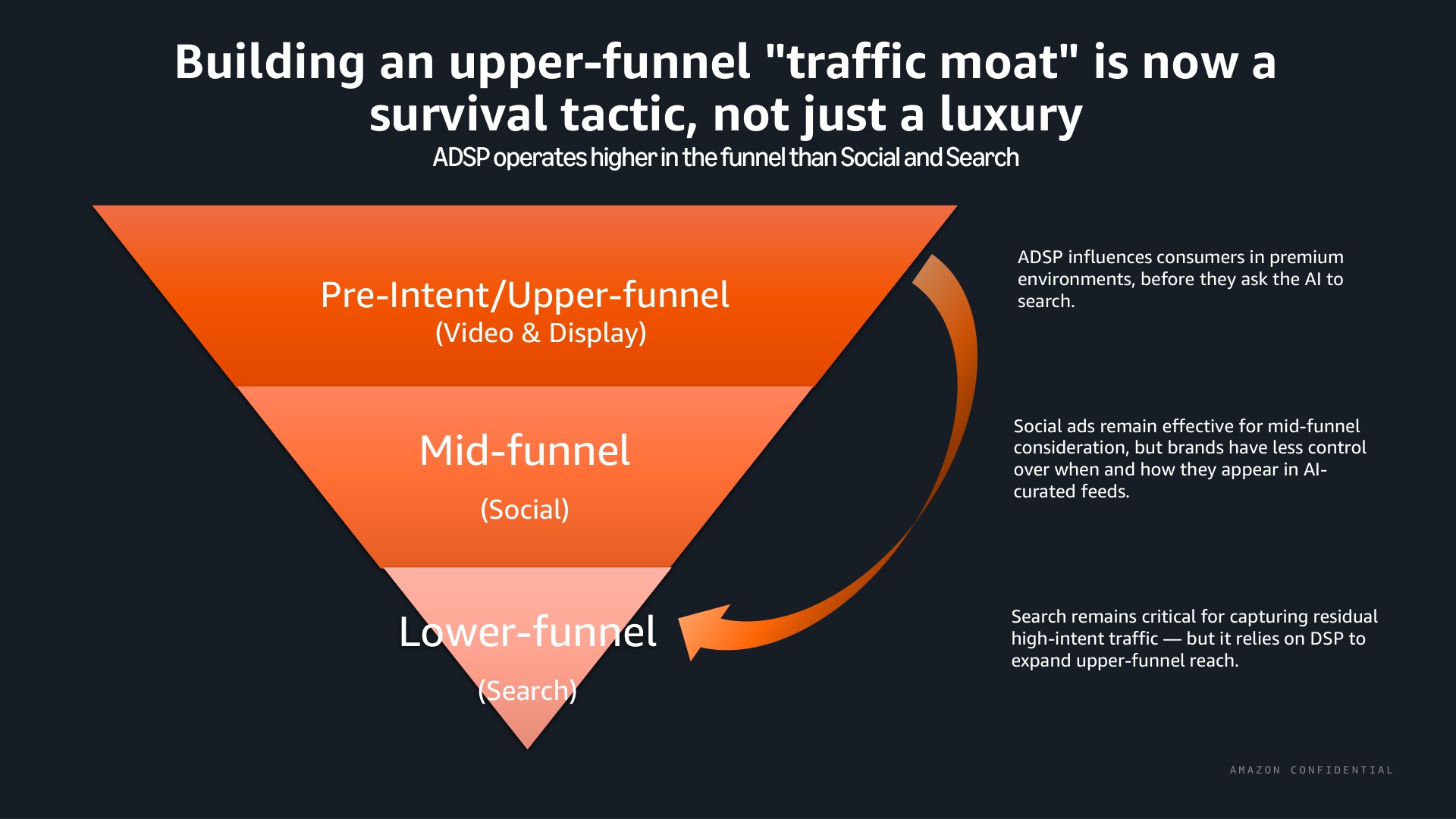
If users have already searched for "robot lawn mower," it indicates a relatively clear demand. However, many potential customers may still be at the stage of dealing with lawn-maintenance pain points, smart-home interest, outdoor-living content, or product review content. For these users, brands need to establish awareness earlier.
Nevertheless, these insights come from Amazon's advertising system and inherently carry the platform's perspective. They can serve as references for understanding user touchpoints but cannot directly equate to a comprehensive market strategy. Lawn care robot brands still need to build capabilities beyond the platform, including official website content, installation tutorials, video reviews, dealer networks, local services, after-sales support networks, spare parts supply, and user communities.
Amazon can help with brand transactions and provide some market feedback, but it cannot replace a complete brand and service ecosystem.
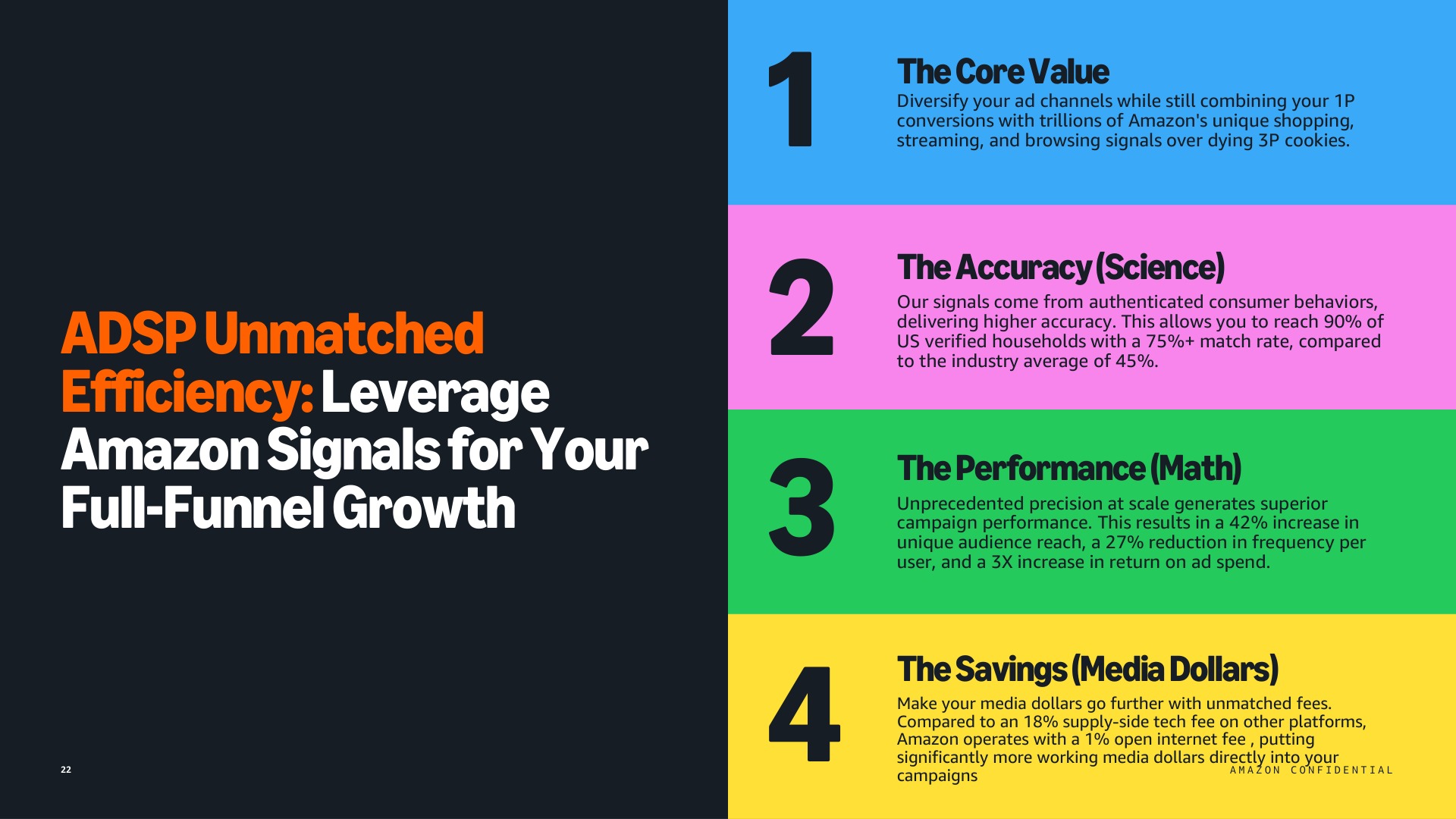
For Chinese brands, Amazon's true value extends beyond sales figures; it is a market validation platform. Brands can observe keyword searches, price band conversions, regional sales volumes, customer reviews, reasons for returns, Q&A content, and competitor dynamics. These insights can be used to reverse-engineer product definitions: which features truly matter to users, which selling points are merely brand-centric, which installation issues impact ratings, which accessory needs are often overlooked, and which price bands balance transactional success with profitability.
In the early stages of a category, such feedback is crucial. Since robotic lawn mowers have not yet fully established standard answers, product forms, user education methods, service models, and channel combinations need continuous refinement through real market testing.
Therefore, Amazon should not be merely seen as a sales platform. For new categories like robotic lawn mowers, it acts more like a high-density feedback channel. The ability of brands to leverage this feedback for iterative improvements in products, content, and services may prove more valuable than short-term advertising efficiency.
By synthesizing these data points, several clear signals have emerged regarding the overseas market for robotic lawn mowers: penetration rates remain low in the U.S., mid-to-high-end price bands are already seeing significant sales, regional demand varies significantly, leading brands are beginning to consolidate, and there is still substantial room for improvement in user education and service systems.
This indicates that robotic lawn mowers have moved beyond being a concept category but have not yet reached full maturity. For Chinese brands, the key competitive focus during this phase is not merely selling products but establishing a system of capabilities that support long-term product usage.
These capabilities include product stability, scenario adaptability, content education, installation guidance, after-sales service, accessory supply, channel management, and user feedback mechanisms. In overseas markets, relying solely on e-commerce pages struggles to sustain high-ticket, complex-scenario product growth over the long term.
From this perspective, while Amazon can serve as the first step for robotic lawn mowers going global, brands should not limit themselves to it alone. While Amazon data helps companies understand who their users are, where the market lies, how price bands work, and where issues lie; ultimately, what determines a brand's long-term success is its product, service, and organizational capabilities.
Robotic lawn mowers represent an emerging category still in formation. Amazon provides direct data and early market feedback. However, true industry opportunities do not lie in creating a short-term hit but in integrating product, channel, and service capabilities to participate in the gradual maturation of this category in overseas markets.
Buyers translating these market signals into a product program can use World Clean Biz robotic lawn mower sourcing support to assess direction, suppliers and execution risk.
Sources and evidence boundary
- Amazon presentation on lawn-robot exports at the Shenzhen Cleaning Exhibition hosted by World Clean Biz, March 2026 — event slides and World Clean Biz field notes; not publicly available.
- Aiper authorized sales channels — confirms Amazon among Aiper's authorized digital sellers in multiple regions.
- Segway Navimow channel directory — identifies Amazon alongside Home Depot and Walmart as online partners in the United States.
- Mammotion DOA policy — distinguishes the official website, Amazon official store, ecommerce retailers and dealer channels for after-sales handling.
Marketplace rankings, prices and availability change continuously. Buyers should verify the current seller, warranty coverage, return route and local service entity before treating a marketplace listing as an authorized channel.