Where the Next Vacuum Cleaner Opportunities Are Forming
Choose the Market Opportunity Before You Choose the Factory
Vacuum cleaners are separating into distinct platforms—from accessible cordless sticks and premium docked systems to pet uprights, compact handhelds, canisters and light-commercial backpack machines. The opportunity depends on the cleaning problem, customer and channel the platform is built to serve.
For brands, importers, distributors and retailers deciding where to compete in vacuum cleaners—and which product platform can support that position.
The Decisions Buyers Are Facing
Built for Buyers Deciding Where to Play in Vacuum Cleaners
Add a product for a new user, surface or price position
Build a visible reason to win beyond a suction claim
Replace a weak supplier or short-lived product before scaling
Compare the Opportunity
Six Product Platforms. Six Different Market Opportunities.
Each direction targets a different customer, channel and reason to buy. Final supplier models and claims require verification.
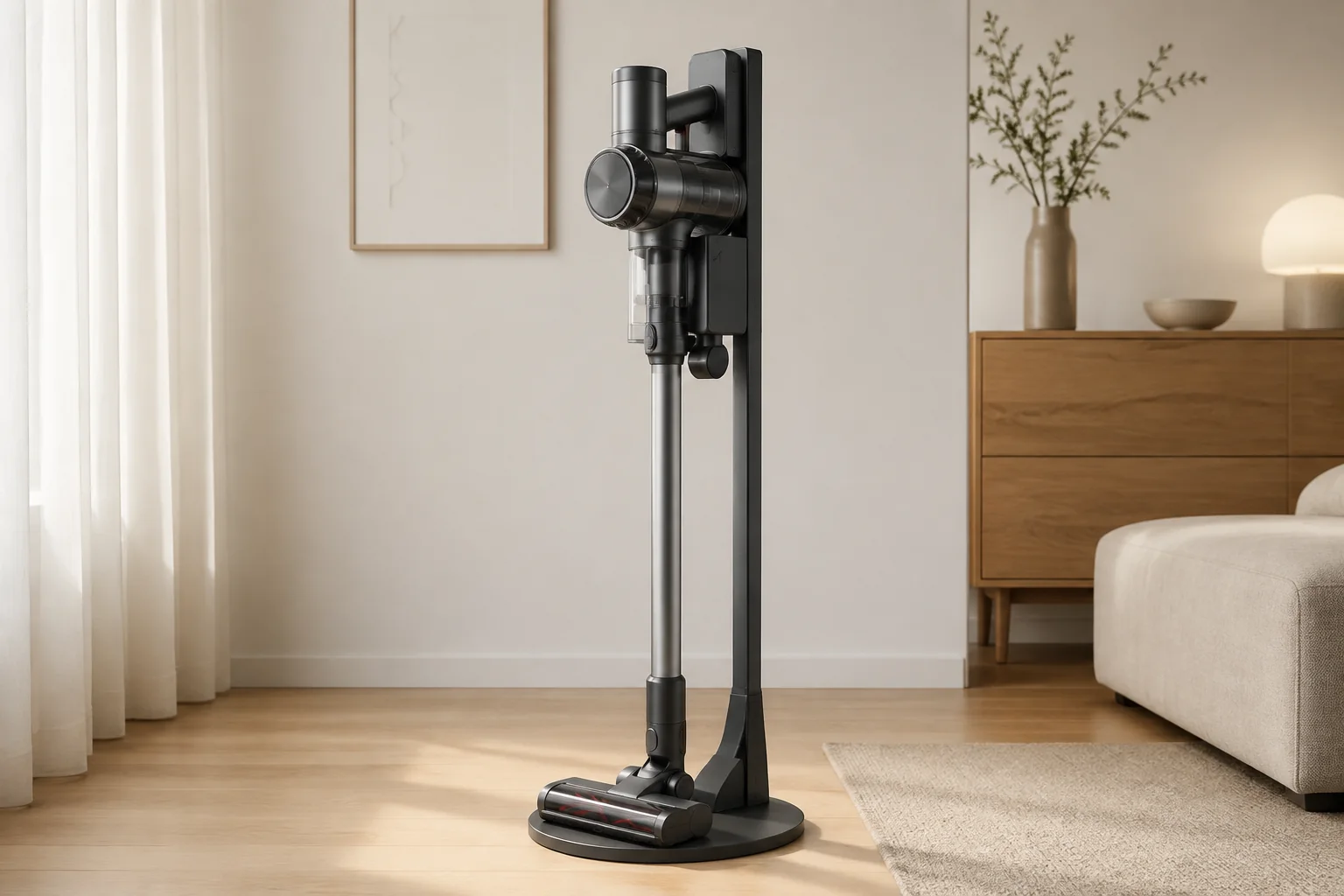
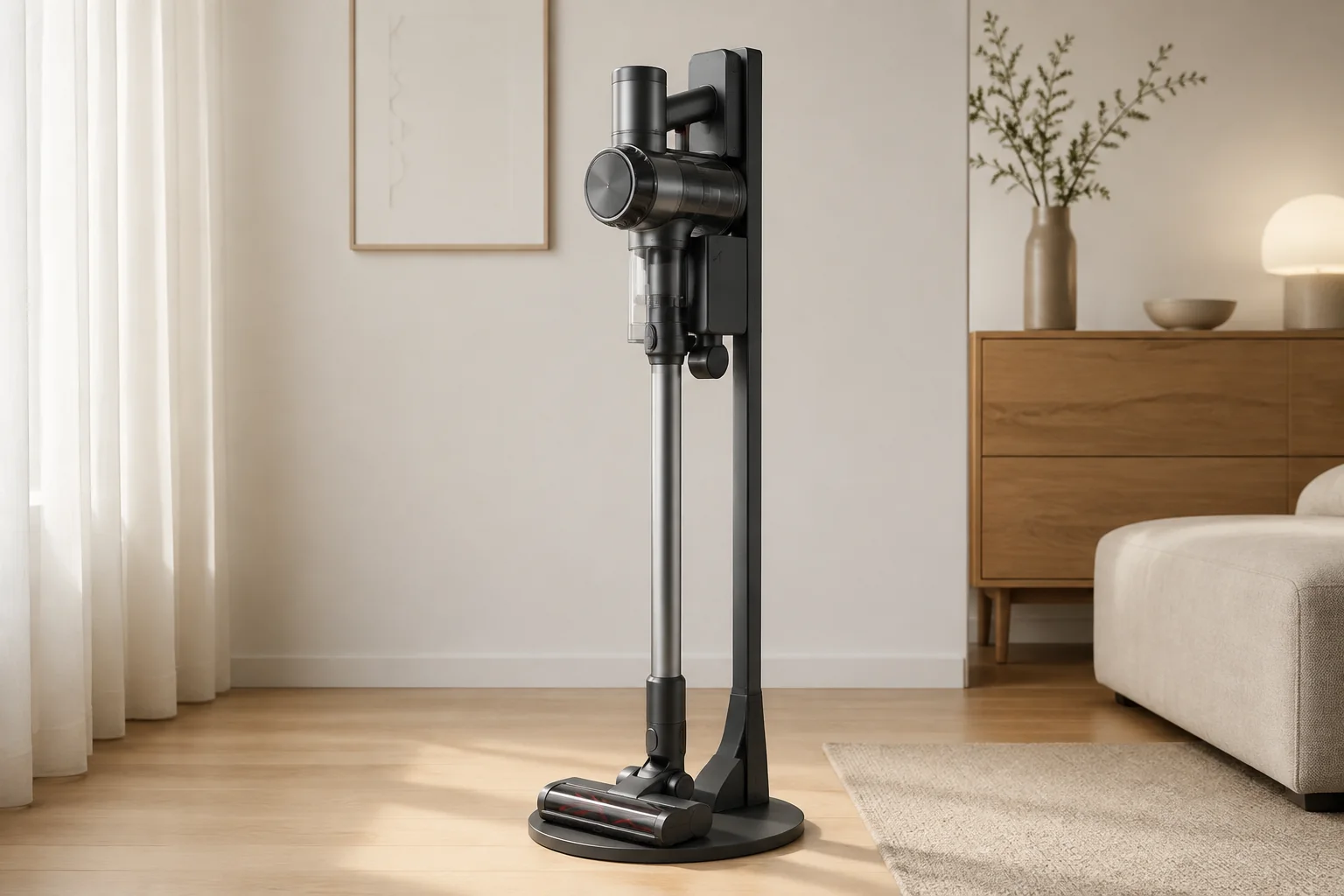
VC-01Product 1 of 6
VC-01 · Accessible cordless stick architecture
Retail Cordless Starter
Market opportunity
An approachable first cordless platform for everyday cleaning and broad retail adoption.
Why it can win
A clear everyday-cleaning promise can open the category without the complexity and price of a flagship system.
Critical proof points
Verify pickup, usable runtime, balance, noise, bin emptying and return economics in ordinary homes.
Swipe to compare more product directions →
Six-Platform Opportunity Landscape
Where the Six Product Platforms Compete
Different vacuum platforms create value through different cleaning problems, ownership expectations and channels.
Specialist and professional useBroad residential adoption
VC-01Retail Cordless Starter
VC-02Premium Whole-Home Platform
VC-03Pet & Carpet Specialist
VC-04Compact Handheld Platform
VC-05Canister Value Platform
VC-06Light-Commercial Backpack
Accessible entryPremium product and service value
Platform × Channel Fit
Which Channels Fit Each Product Platform?
Fit depends on the cleaning story, customer education, ownership friction and service capability after the sale.
World Clean Biz editorial assessmentStrong fitConditional fit— Not a natural primary route
| Product platform | Retail | Ecommerce | Specialist dealer | Private label | Professional / project sales |
|---|---|---|---|---|---|
| VC-01Retail Cordless Starter | Strong fit | Strong fit | Conditional fit | Strong fit | — |
| VC-02Premium Whole-Home Platform | Conditional fit | Strong fit | Strong fit | Conditional fit | — |
| VC-03Pet & Carpet Specialist | Strong fit | Strong fit | Strong fit | Conditional fit | — |
| VC-04Compact Handheld Platform | Conditional fit | Strong fit | Conditional fit | Strong fit | — |
| VC-05Canister Value Platform | Strong fit | Conditional fit | Strong fit | Strong fit | — |
| VC-06Light-Commercial Backpack | — | Conditional fit | Strong fit | — | Strong fit |
Opportunity Conditions
Three Conditions That Decide Whether the Opportunity Can Scale
 01
01A clear cleaning problem
The platform must solve a visible issue in surfaces, debris, pets, reach, speed or professional workflow.
 02
02Repeatable real-home performance
Pickup, filtration, battery or corded duty, brush behaviour and handling must work in the conditions the customer actually has.
 03
03Channel economics after the sale
Returns, batteries, filters, accessories, warranty and service cannot consume the margin that made the quotation attractive.

Industry judgment behind the product decision
A strong specification is not yet a sustainable vacuum cleaner business
Denny reviews whether market opportunity, cleaning evidence, supplier capability and execution economics reinforce one another strongly enough to justify the next investment—not whether the sample looks impressive.
- Founder, World Clean Biz
- Organizer, WCB Expo
- Inside the cleaning industry since 2006
Commercial Go / No-Go
Four Decisions Before You Back a Platform
Move forward only when the opportunity, performance evidence, supplier capability and after-sale economics reinforce one another.
- 01Opportunity
Is the cleaning problem valuable?
- Reason to switch
- Addressable user
- Channel relevance
- 02Platform
Does real-use performance prove it?
- Pickup and filtration
- Runtime or duty cycle
- Ownership experience
- 03Supplier
Can capability survive scale?
- Critical-system control
- Test depth
- Parts and service
- 04Economics
Does margin survive after the sale?
- Price and margin
- Returns and warranty
- Consumables and compliance
Industry Opportunity Questions
The Product Decisions Buyers Are Debating Now
These commercial and technical choices shape where vacuum cleaner growth can come from next.
Which vacuum cleaner direction is most credible for a new entrant?
Start with one customer problem and one channel. An accessible cordless stick, compact handheld or focused pet platform can be more credible than a generic flagship built around maximum specifications.
Is the market moving entirely toward cordless products?
Cordless continues to expand, but canisters, uprights and professional machines remain relevant where duty cycle, carpet performance, filtration, familiar ownership or service economics matter more than mobility.
Which performance claims create the greatest sourcing risk?
Suction, runtime and filtration claims can look strong in isolation. Buyers should test pickup under load, battery and thermal behaviour, sealed-system performance, brush interaction and usable performance over a complete cleaning cycle.
Which product platforms fit ecommerce and mass retail?
The strongest platforms have an instantly understood use case, resilient packaging, consumer-led setup, low maintenance friction and return economics that protect channel margin.
When does a premium dock create real customer value?
A dock creates value when it reliably improves storage, charging, dust disposal and accessory management. It becomes a liability when added complexity raises cost, footprint, noise or service demand without reducing real ownership work.
Where can Chinese vacuum cleaner suppliers still differentiate?
The opportunity is in combining motor, battery and manufacturing depth with better ergonomics, accessories, filtration, industrial design and after-sales preparation. Cost alone is not durable differentiation.
What separates a scalable platform from a one-season product?
A scalable platform combines repeatable cleaning, controlled components, serviceable architecture, stable consumables and a supplier roadmap that can support warranty and model evolution.
What should buyers verify before choosing a vacuum platform?
Verify the customer problem, cleaning evidence, supplier control of critical systems and economics after batteries, filters, accessories, returns and service.
How should buyers compare suppliers without a public factory list?
Compare engineering control, testing depth, production consistency, parts and service readiness against the selected product direction. A generic supplier ranking cannot replace platform-specific evidence.
Make the Opportunity Specific
Turn a Market Opportunity Into a Product Brief
Define the target customer, cleaning environment, sales channel, price position, reason to win and technical evidence that must be verified.
Related Intelligence
Research the category before choosing a supplier
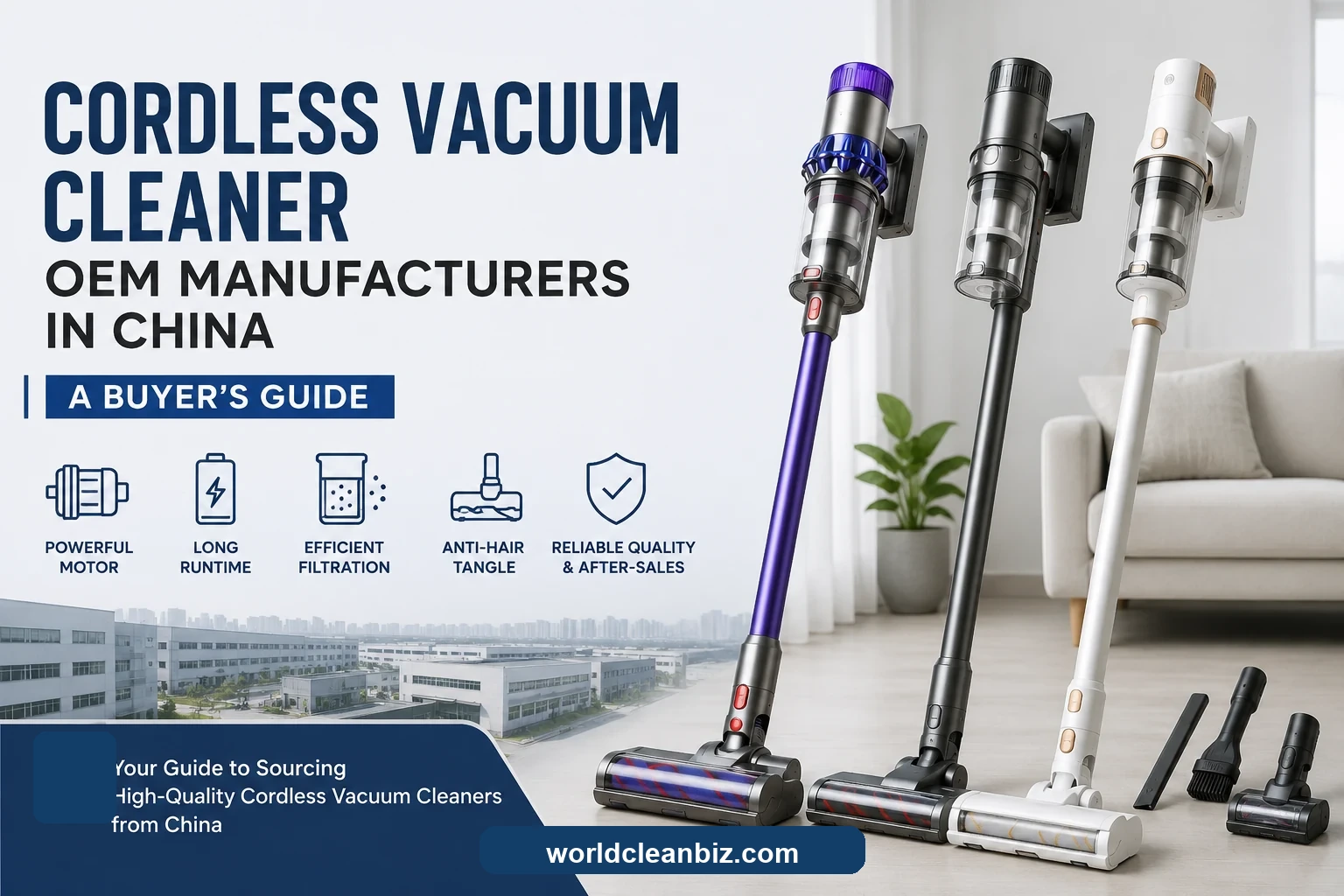
Cordless Vacuum Cleaner OEM Manufacturers in China: A Buyer’s Guide
A practical buyer guide to evaluating cordless vacuum cleaner OEM and ODM manufacturers in China, including supplier types, product capabilities, sourcing models, and risks.
Read the analysis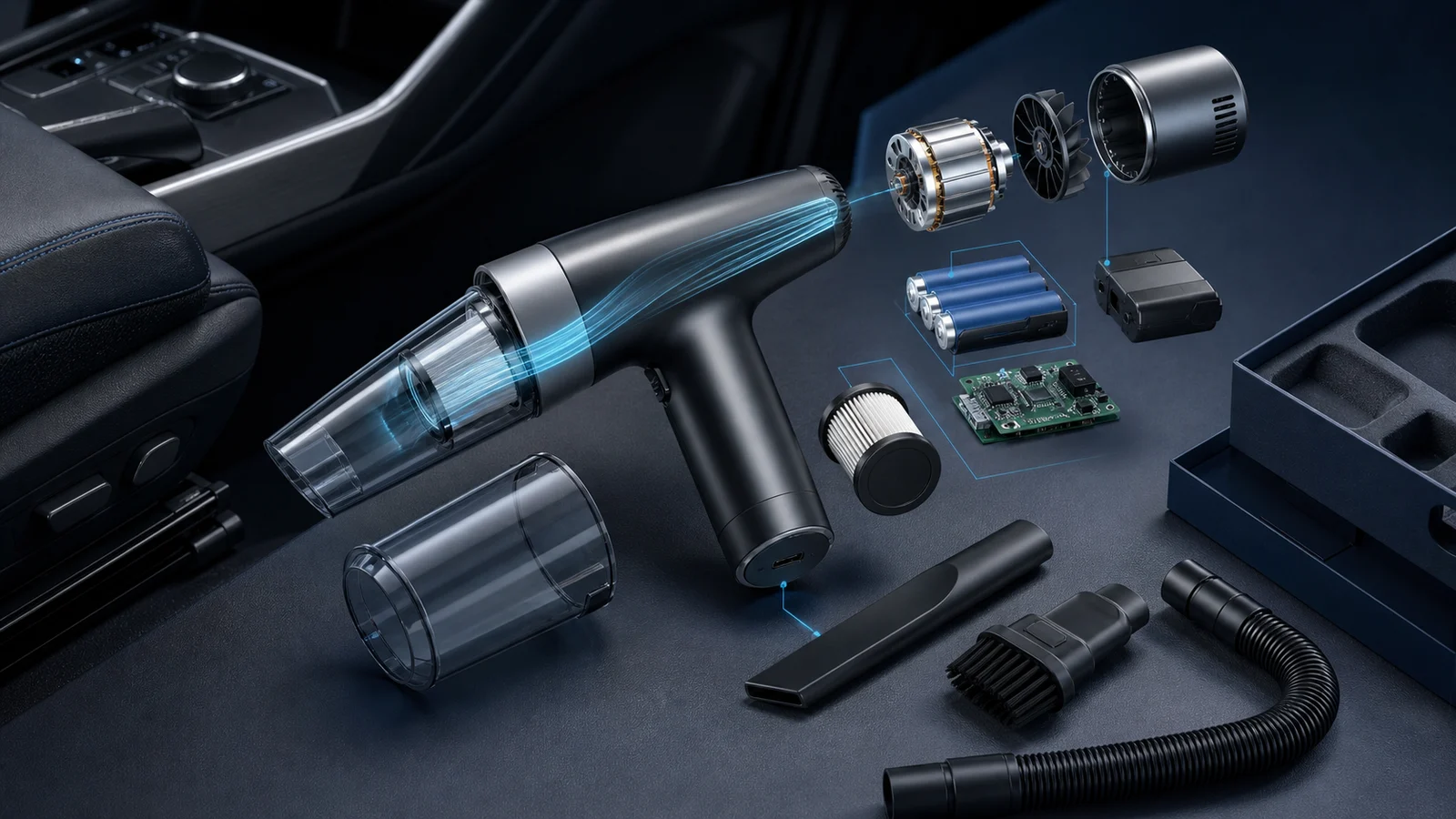
Car Vacuum Cleaner OEM/ODM Guide: Motors, Batteries, Accessories and Supplier Audit
A buyer’s guide to car vacuum OEM and ODM projects, covering architecture, performance, batteries, USB-C, accessories, tests, cost drivers and supplier audits.
Read the analysis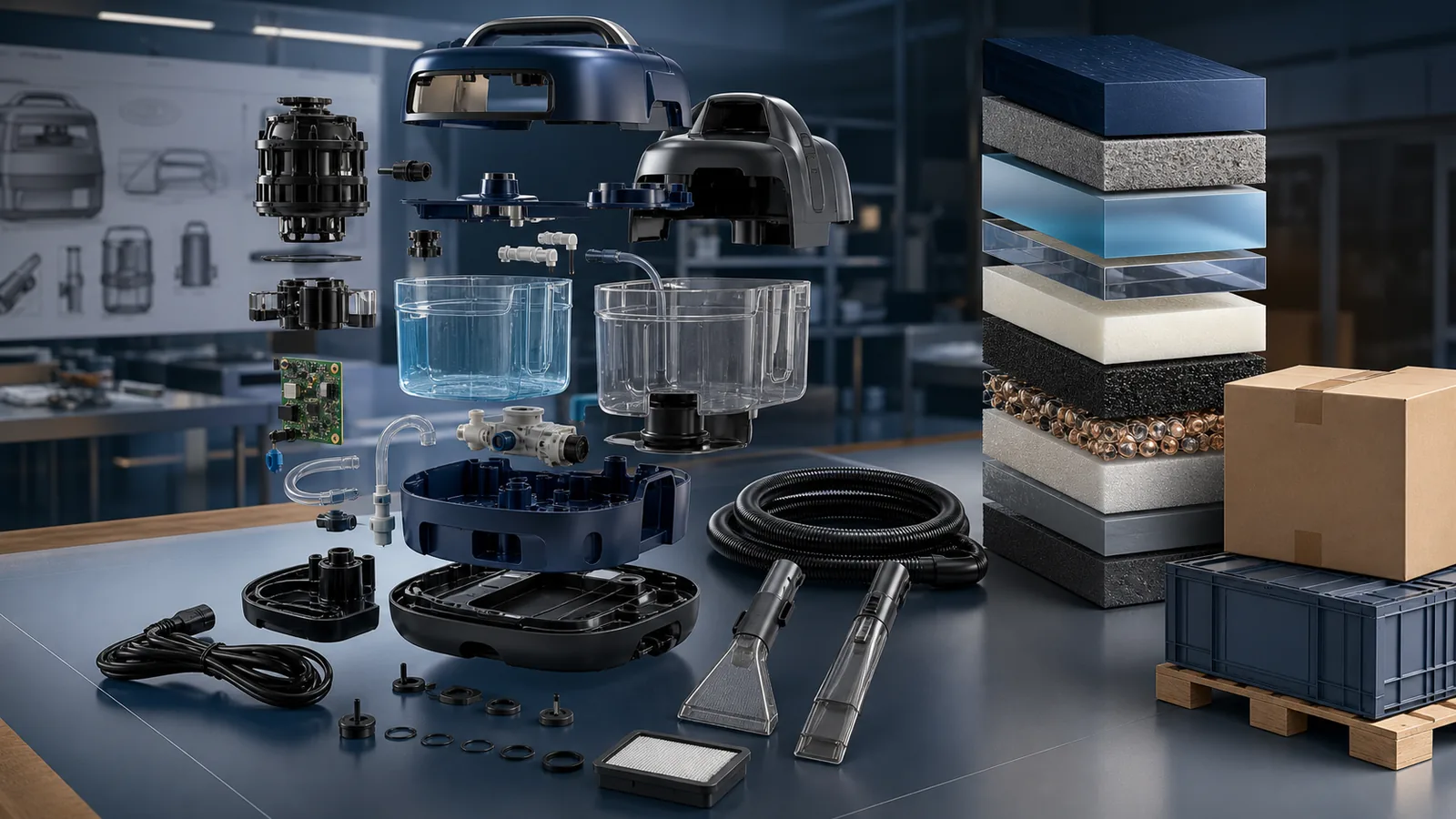
Spot Cleaner Manufacturing Cost: Motor, Pump, Tooling, Compliance and Landed Cost
Build a spot cleaner manufacturing budget covering motor, pump, tanks, hose, tooling, PCBA, chemistry, certification, MOQ, packaging, freight and landed cost.
Read the analysis