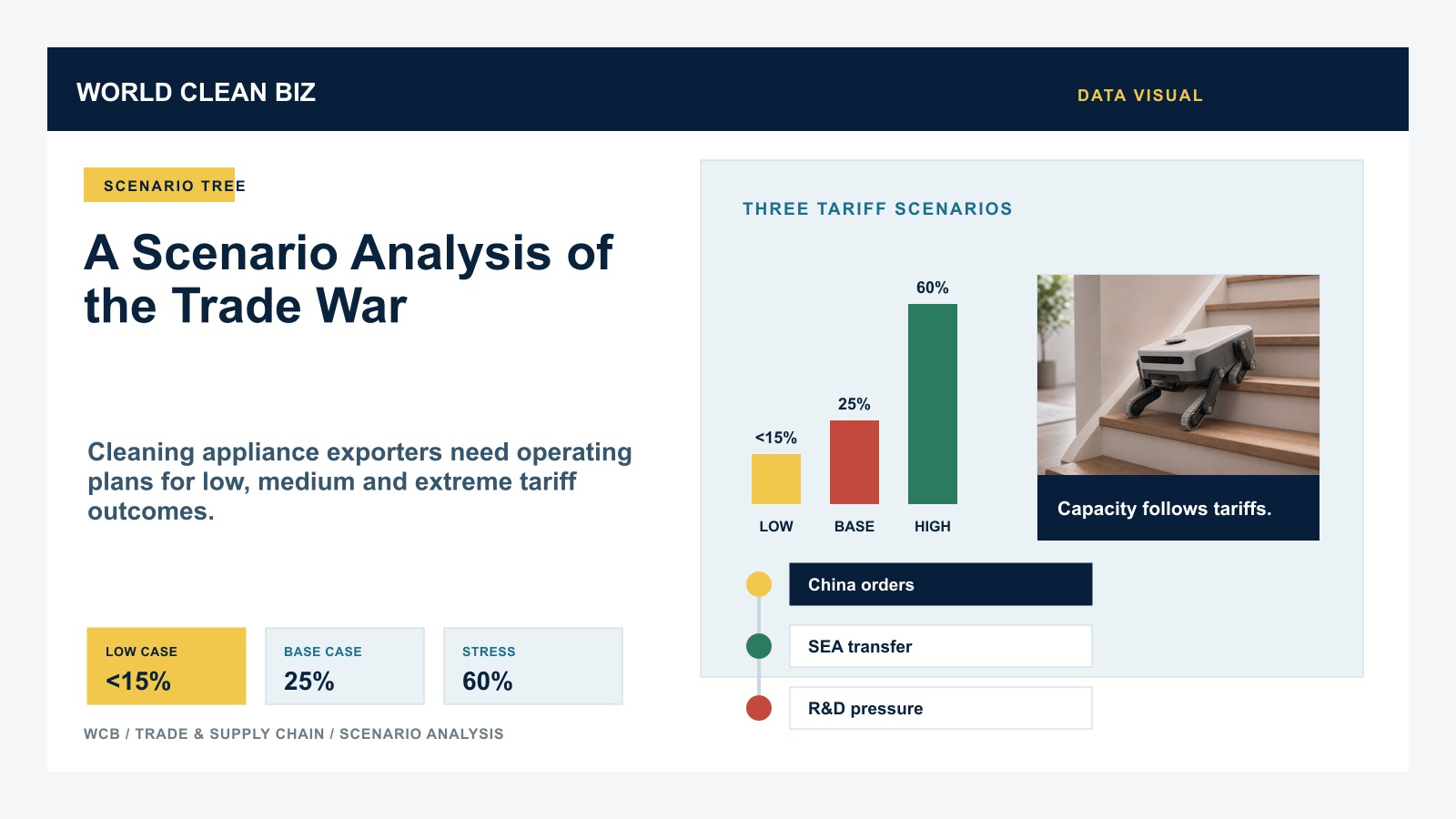
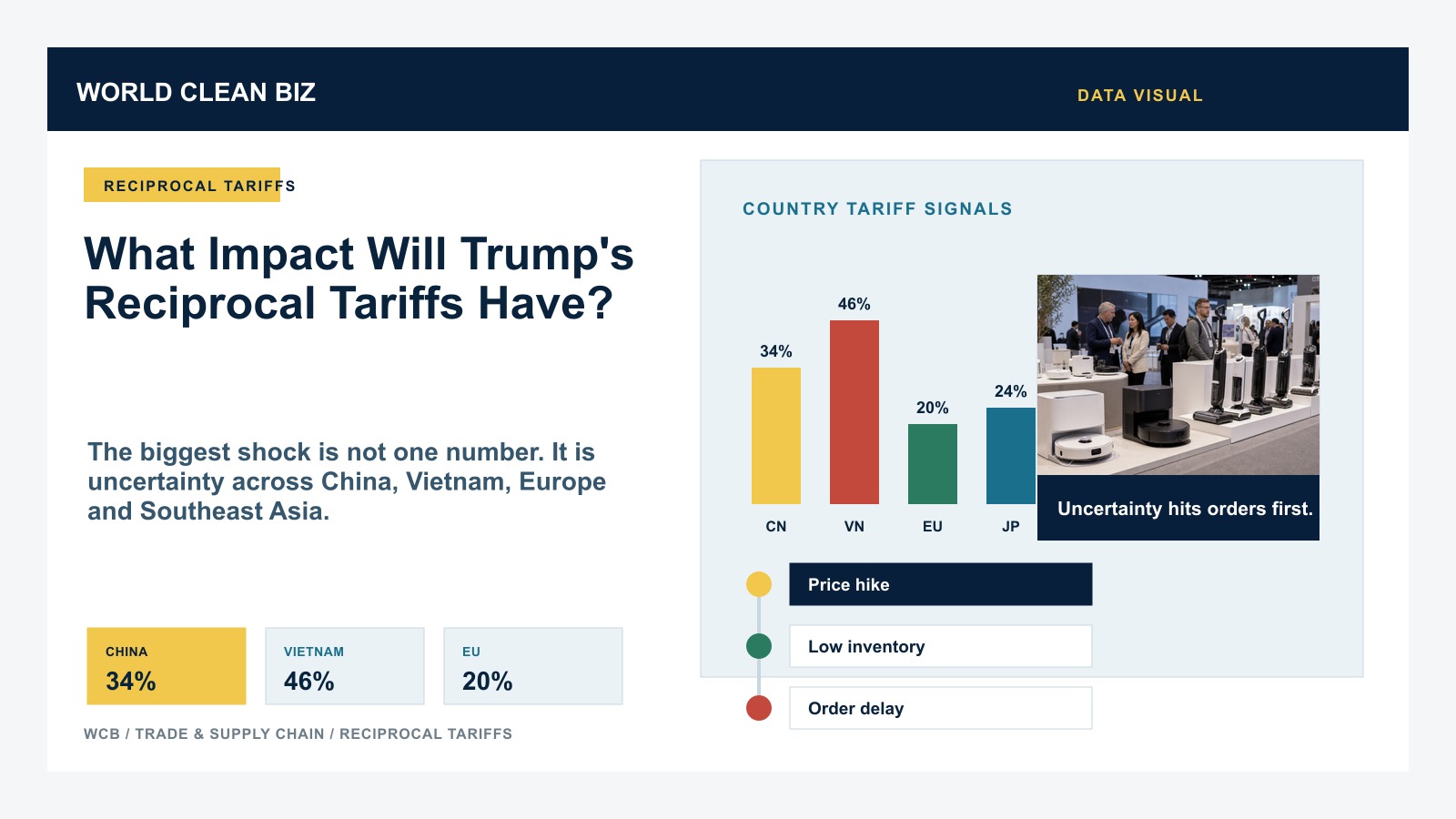
- Tariffs can benefit companies with non-China production capacity or stronger pricing power.
- Pure export OEMs face more pressure when customers demand lower landed costs.
- The vacuum cleaner industry shows how trade policy can reshape supplier selection.
Hard Floor Washer and Robot Vacuum Industry in the Shadow of Trade War
Before there was no data or news, I wrote an article titled "The Vacuum Cleaner Industry under a Trade War," discussing a possibility that some production lines of vacuum cleaners might shift to Southeast Asia.
Although iRobot, Bissell, and SharkNinja strongly opposed the 10% tariff on the vacuum cleaner industry during the Section 301 hearing, the tax has become a reality. The once speculative idea of industry transfer is gradually becoming possible.
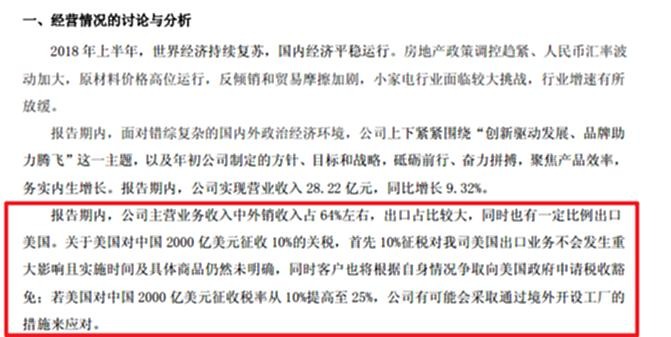
Kingclean Electrical noted in its mid-year report for 2018 that the trade war posed risks to the company and mentioned setting up factories overseas as a potential response. In previous years, Kingclean had considered building a factory in Romania but did not follow through with it. Recent information suggests that Kingclean is currently exploring Vietnam and has been in contact with some downstream manufacturers, hoping they will join them there.
Summary of Recent Rumors
TTI, Bissell, and Shark are reportedly in contact with overseas manufacturing bases.
Kingclean, Ningbo De昌, Fojia, TEK, and other companies are said to be studying the possibility of relocating their operations.
Downstream suppliers are still on the fence about whether they should follow suit.
It appears that a partial transfer within the vacuum cleaner industry is inevitable (rumors suggest 20-30%). If this happens, Kingclean, a listed company, may be the first to establish a factory abroad.
Current Vacuum Cleaner Manufacturing Bases Outside China
Germany: Miele and SEBO have manufacturing plants in Germany.
France: Rowenta has some assembly plants in France.
Turkey: Turkey is home to many European companies' bases, including Acelik, Europe's largest TV manufacturer.
Eastern Europe (Romania, Hungary): Electrolux, Miele, and Kingclean had plans to build factories in Romania.
Vietnam: Vietnam mainly hosts Korean enterprises such as LG and Samsung. Local manufacturing and supply chains are dominated by these companies.
Malaysia, Singapore: Malaysia and Singapore are Dyson's main contract manufacturing bases. The issue is that Dyson has exclusive agreements with these manufacturers.
Mexico: Bissell and Panasonic once had factories in Mexico due to their proximity to the U.S.
Brazil: Electrolux relied on its Brazilian production base to dominate a significant share of the local small appliance market.
From an analysis of labor costs, transportation costs, and production efficiency:
The most likely candidate to take over industry transfer is Vietnam and Malaysia.
If relocation were to occur, numerous issues would need addressing:
- How much will direct shipping costs from China to Vietnam and then to the U.S. increase? A whole machine needs to be disassembled into two containers of parts, significantly increasing transportation costs.
- Due to supply chain gaps, how much more expensive will local component procurement become compared to domestic sourcing?
- What additional management and personnel dispatch costs would arise in these regions?
- Will the local workforce meet North American customer demands for productivity?
- Are there enough skilled workers locally?
- How stable are U.S. tariff policies? If factories invest significant resources to relocate to Southeast Asia, only to see tariffs reduced or eliminated by the Trump administration, what then?
Other Detailed Issues Abound
Solving these issues alone would take at least half a year to a year. The future state of Sino-U.S. relations is unpredictable.
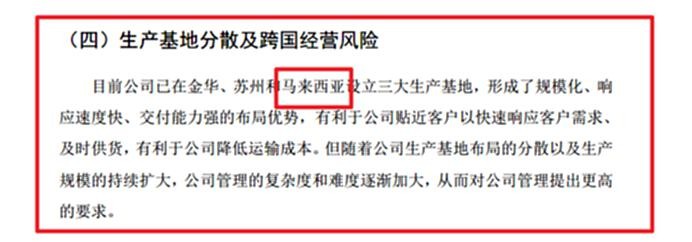
If the vacuum cleaner industry indeed shifts to Southeast Asia, the biggest beneficiary could be Chun Guang Technology, a newly listed company based in Jinhua that manufactures vacuum cleaner hoses and is a supplier to Dyson. In 2015, it established a "CGH" factory in Malaysia specifically for producing hoses and accessories for Dyson.
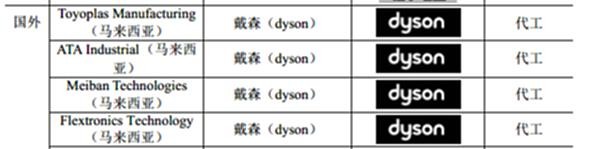
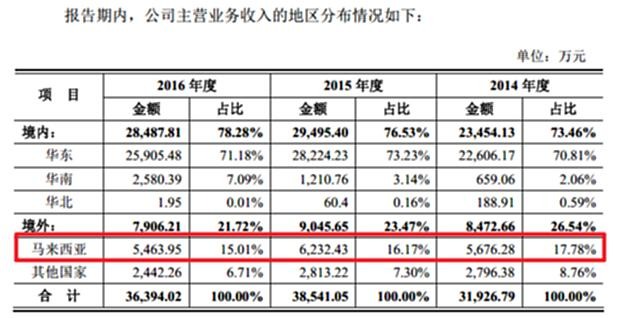
From the prospectus, it can be seen that the value of goods sold to Dyson in 2016 alone was 54.63 million yuan.
Additionally, although Chun Guang initially established itself through vacuum cleaner hoses, the company has begun to significantly expand its range of other vacuum cleaner accessories in line with the trend towards cordless vacuums. According to the prospectus, a substantial portion of the raised funds will be allocated to reducing costs and enhancing the "Vacuum Cleaner Accessories Production Project."
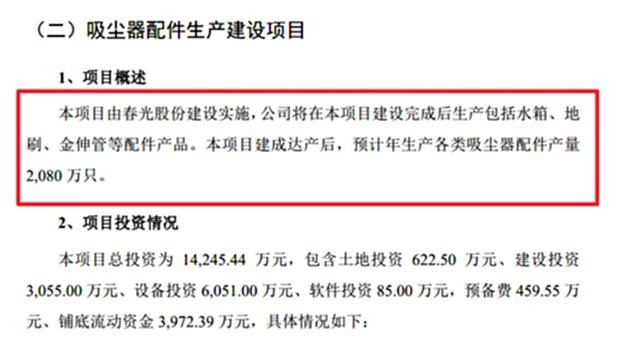
Once the industry giants truly shift their operations to Southeast Asia, Chun Guang Technology can leverage its advantage from the Malaysian factory and its long-standing business relationships with these clients to secure a significant portion of the transferred component orders.