- SharkNinja’s strength is not one product, but repeatable category expansion across appliances.
- Chinese appliance brands need stronger product definition and marketing systems, not only manufacturing efficiency.
- The company offers a useful benchmark for turning supplier capability into consumer-brand operating discipline.
What Should We Do Next?
For years, I have been pondering this question: how to improve the success rate of new product development so that a certain minimum sales volume can be achieved after mass production. I asked some friends from large companies about their development processes. Essentially, they are all similar; even large companies struggle with products that don't sell well.
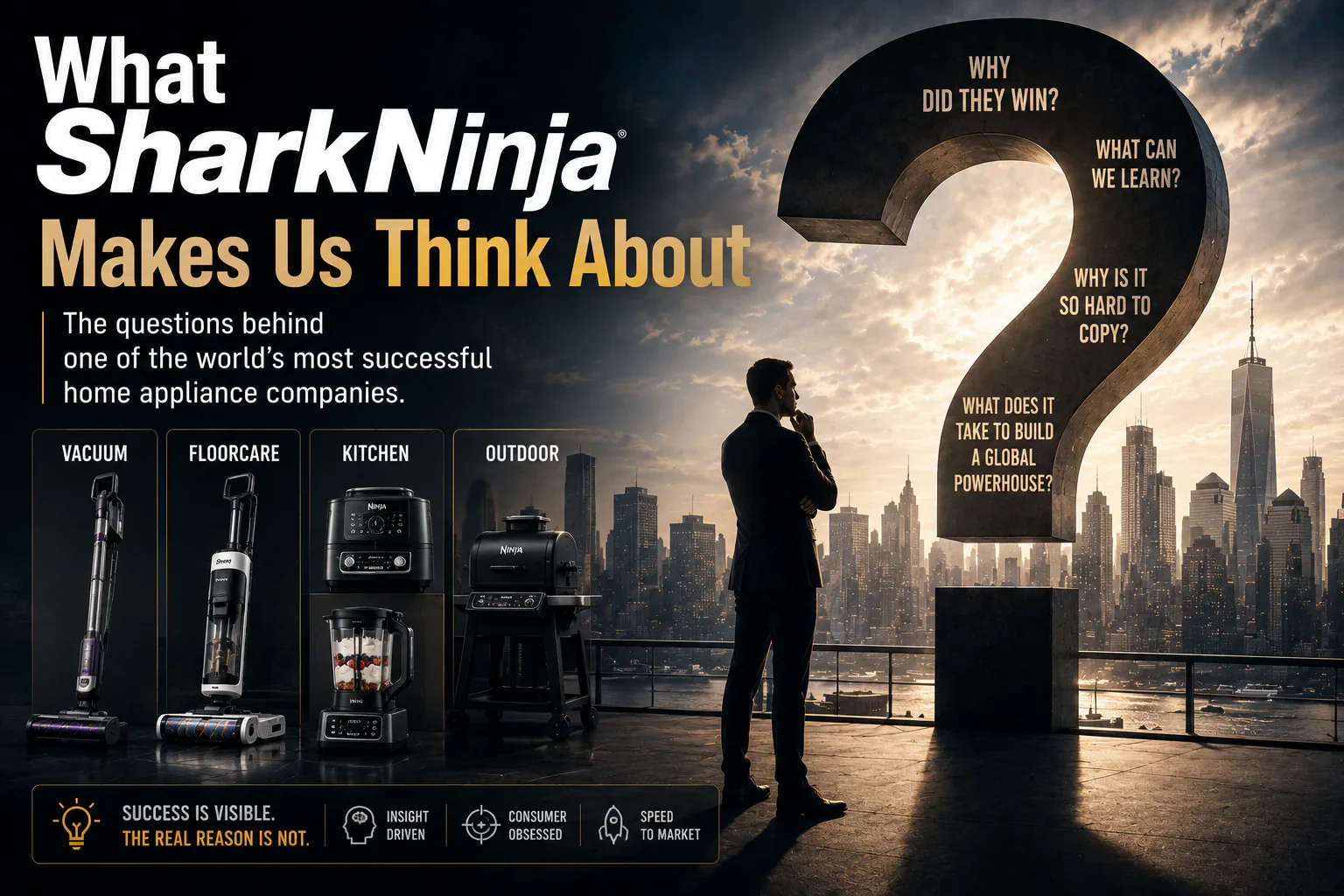
Everyone knows that SharkNinja (Europro, EP) is one of the fastest-growing companies in the vacuum cleaner industry over the past decade. In just ten years, its market share rose from 1% to nearly 30%. As a newcomer, lacking the brand influence of Hoover or Bissell and not having Dyson's special technology, how could it defeat these industry giants? It must have some unique strategies.
Last year, I spent time researching SharkNinja. Here are my personal insights on EP’s approach:
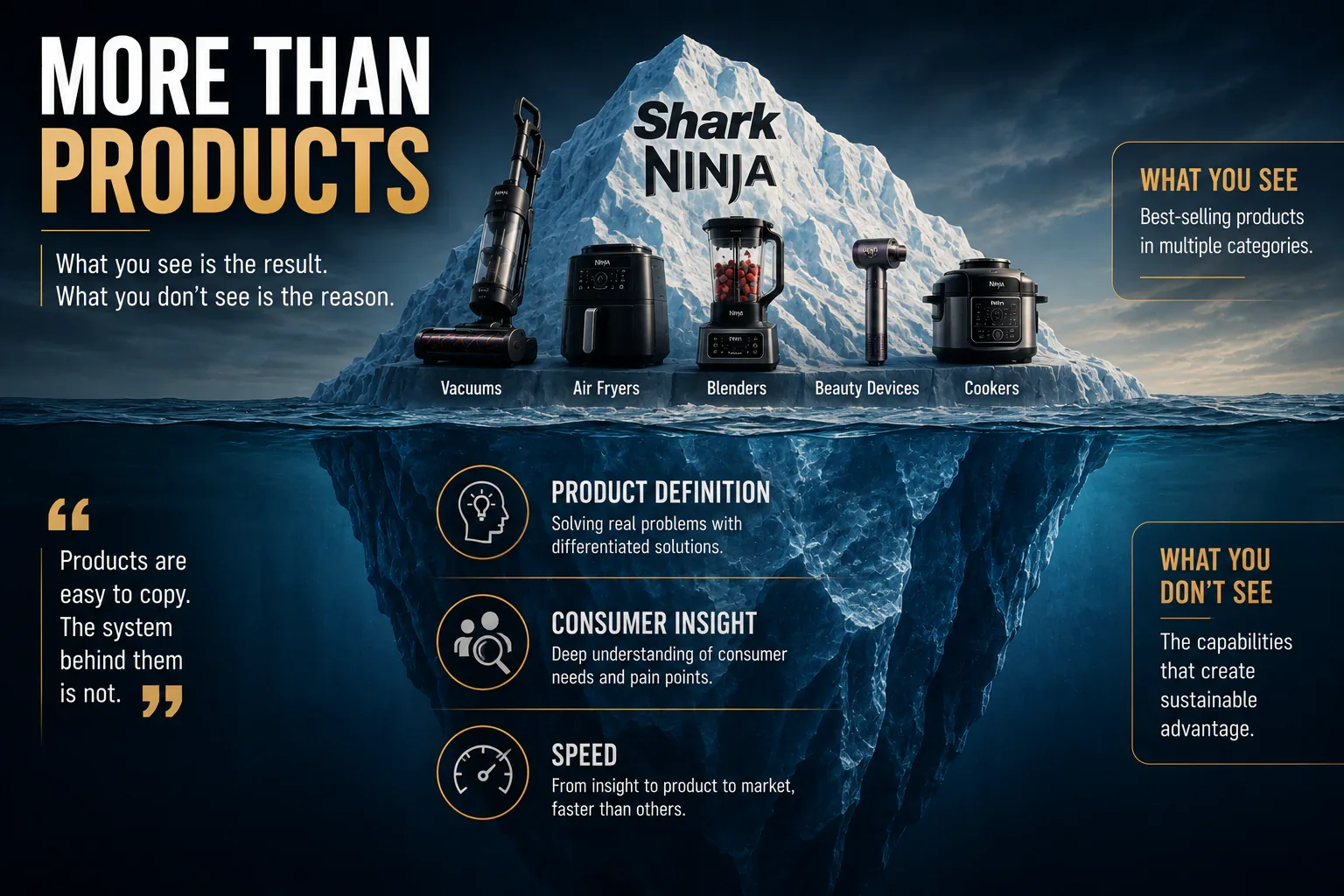
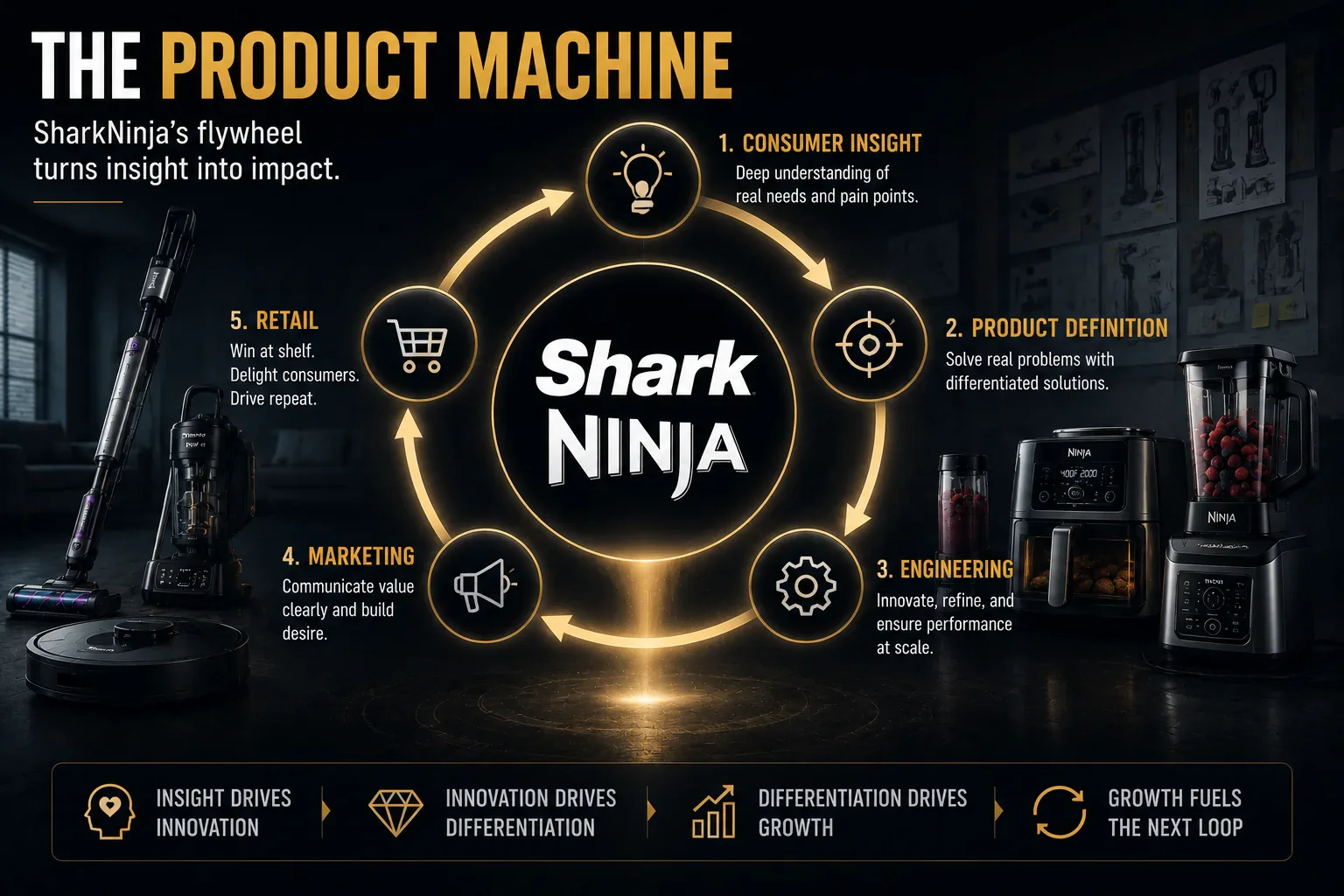
- Detailed Market Research: EP personnel spend a lot of time conducting market research to identify pain points and weaknesses in competitors.
- Product Positioning and Choosing Competitors: Although EP heavily positions itself against Dyson in advertising, its true competitors are Bissell and Hoover. By associating themselves with Dyson, they positioned Dyson as their competitor and attracted customers from Bissell and Hoover.
- Front-loaded sales planning: Once the product positioning is clear, EP works out pricing, configurations, and order quantities with their clients (channels, retail stores) before the product is developed. This avoids the problem of starting to consider sales issues only after the product has been made.
- Extreme Response Speed: After agreeing on delivery schedules with customers, they spare no effort to meet these deadlines. For new products, this is extremely difficult; many projects we have worked on did not follow the schedule. I often saw EP and their manufacturers working late into the night to meet project deadlines. For Mark from Shark, the result was everything.
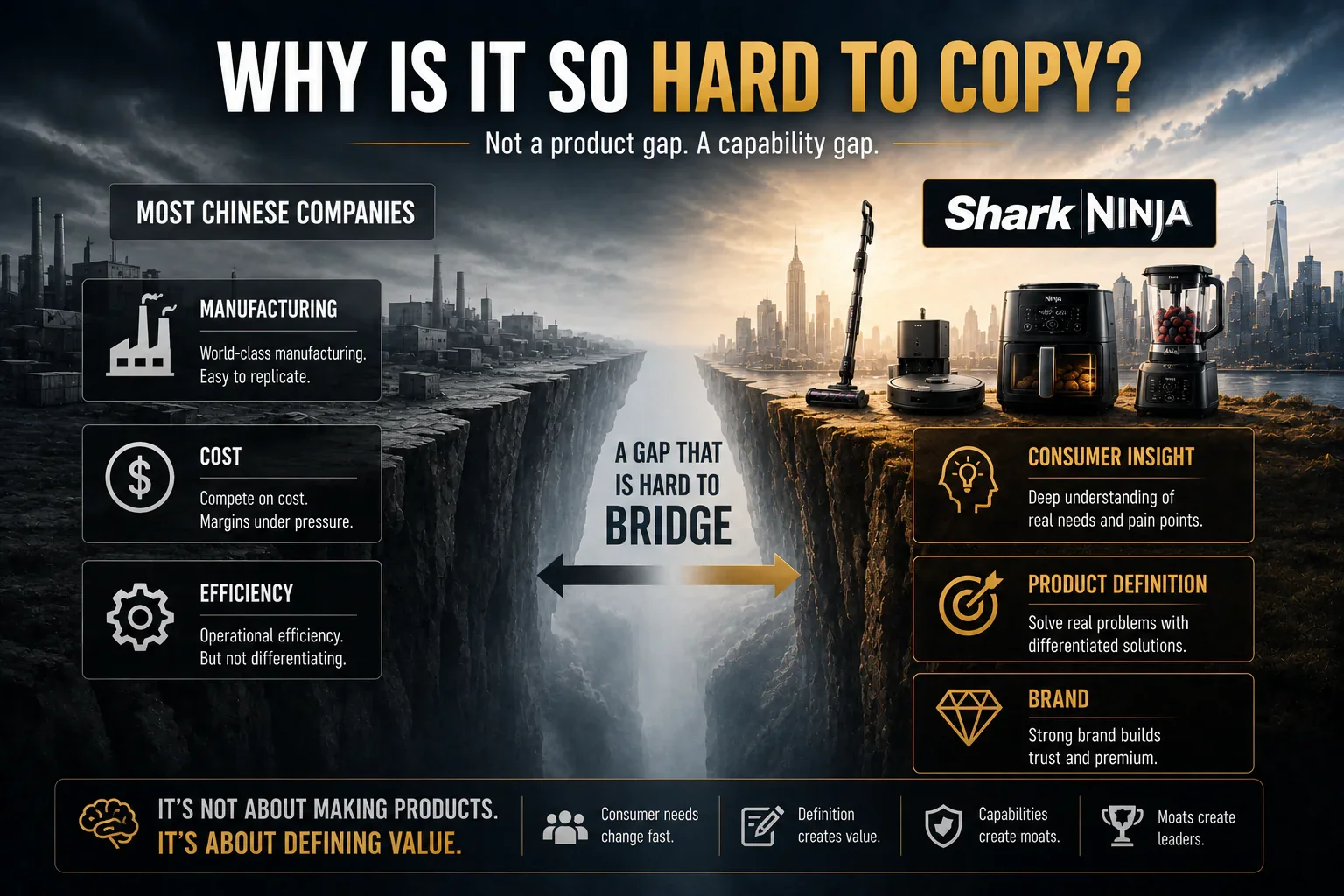
Individually, each of these points may seem unremarkable, as many of EP's competitors can do them too. But why has EP been able to grow so rapidly? This is something we in the industry should deeply reflect on.
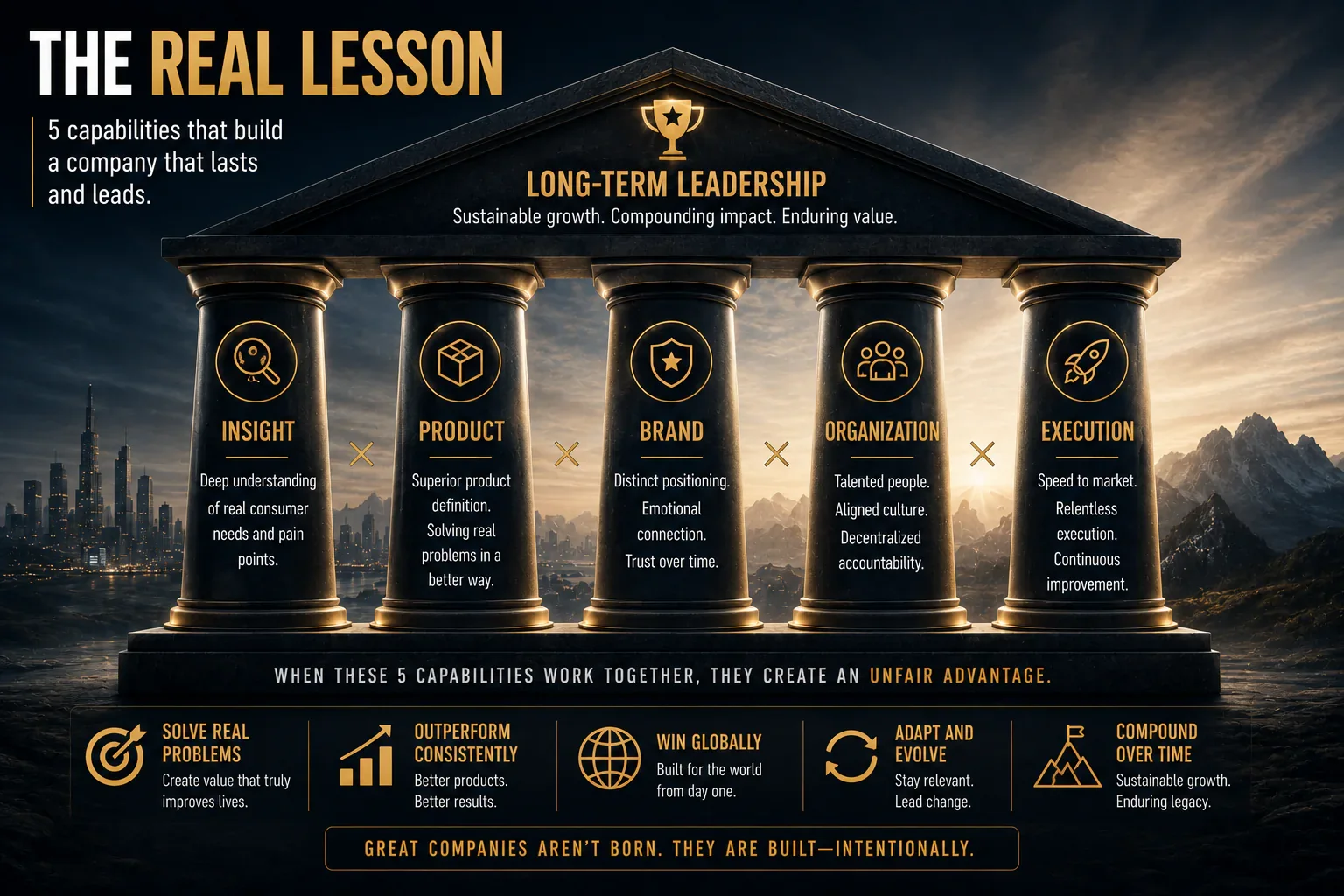
The most important thing for us is to learn from EP’s rise. Personally, I believe that adopting their comprehensive approach—market research, choosing the right competitor (product positioning), front-loaded sales planning, and extreme response speed—is crucial.
My ideal product development process would be as follows:
During the product research phase, I can set a market position for a specific brand or market (e.g., 80% price, 120% functionality) and select some functional points to implement. With a complete prototype in hand, I can approach potential clients in the industry for discussions. If a significant portion of these clients are interested, we can proceed with mass production. Once the decision is made to go ahead, it must be launched and brought to market as quickly as possible. If most client feedback is negative, then whether or not to proceed with mass production is worth reconsidering.
In this scenario, the worst-case scenario would be a loss of initial development costs (less than 100,000 RMB), but this cost is still worthwhile compared to the million-dollar mold investment.
For individual entrepreneurs in the industry, they can collaborate with me on product development. I can find potential clients early and involve them in the process. If funding is lacking, we can bring in manufacturers to invest in molds together. In this way, both the entrepreneur and the manufacturer can share in the benefits of a successful product launch while also sharing the risk of project failure.
For individual entrepreneurs, the biggest benefit is an increased ability to bear risks. With 500,000 RMB, they could only develop one project before; now, with that same amount, they can develop five projects. This raises their chances from one life to five lives. Additionally, clients are involved in product development early on, rather than seeking them out after mass production, which significantly increases the success rate of product development.
For potential clients, good products are always scarce. By participating in a product's early development and providing suggestions that align with market trends, later promotion and sales become easier.
For manufacturers, the direct benefit is receiving processing orders and profiting from the product development process. A small manufacturer might develop only 2-3 new products per year due to limited R&D capabilities. However, adopting this collaborative model could allow them to develop up to 10 new products annually (depending on funding).
Furthermore, there's a possibility of introducing purely financial investors who have funds but do not want to be involved in the project. We can directly participate in project dividends through these investments.
Once this process is established, I will focus heavily on product marketing and promotion, continuously bringing in traffic for the projects. I have already identified some experts and plan to take our marketing efforts to new heights next year.
That brings us to my personal positioning.
Scattered as these points may be, I hope you will feel free to reach out with any ideas for collaboration in the future. The era of forming new alliances to weather the storm has arrived.