- 2018 exposed the limits of relying only on OEM export growth.
- Chinese vacuum companies were beginning to face both brand and technology transitions.
- The 2019 outlook depended on channels, tariffs and product-category upgrades.
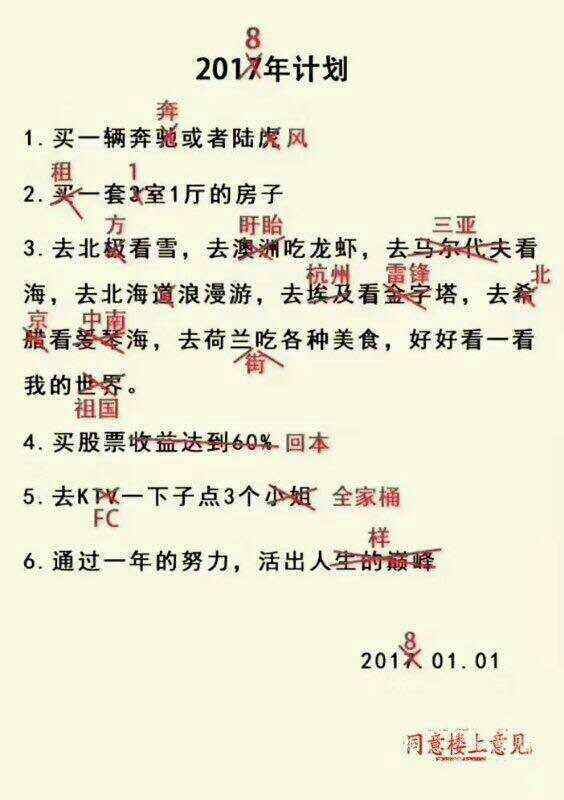
Soon enough, 2018 is coming to an end. How much of the plans made at the beginning of 2018 have been realized?
In 2018, the vacuum cleaner industry underwent significant changes, more than I have experienced in over a decade. Here is a brief summary and review of key developments:
1. Joyoung's Acquisition of SharkNinja Led to Order Shifts for Kingclean
SharkNinja's annual procurement volume in the vacuum cleaner market reached several million units, with Kingclean alone receiving nearly 1 billion yuan worth of orders. Following Joyoung's acquisition of SharkNinja, it began shifting orders to non-competing factories. Aiper Intelligent was the biggest beneficiary; during peak periods, Shark reportedly shipped tens of thousands of units per month. The acquisition changed the industry landscape, providing new opportunities for some marginalized enterprises.
2. Airtek (AerTek) in Shenzhen Ceased Operations
Shenzhen AerTek was a significant contract manufacturer in the vacuum cleaner industry, producing several million units annually and working with major companies like Electrolux, SEB, and TTI. Due to certain special circumstances, AerTek abruptly closed its factory within a short period. Guangdong Xinbao Electrical Appliances, Suzhou Chunju Electrical Appliances, and Suzhou Aipu Electrical Appliances took over some of AerTek's key clients.
3. TTI Cut Its Suzhou Office and Transferred Cordless Vacuum Cleaner Orders to Its Own Dafen Factory
TTI cut its Suzhou office staff and transferred cordless vacuum cleaner orders to its own factory in Dafen, Guangdong Province. This indicates that the Guangdong region will become another center for the vacuum cleaner industry during the era of cordless vacuums.
4. The Sino-US Trade War Prompted Industry Leaders to Move Operations to Southeast Asia
The major drama in 2018's second half was the Sino-US trade war, which had a direct impact on the vacuum cleaner industry. Companies like Kingclean, Fujia, Dechuan, and Guangdong Xinbao that have dealings with North American clients began setting up factories in Southeast Asia. Among them, Jinhua Chunguang, as a supplier to Dyson, already had factories in Southeast Asia and was preparing to build new ones in Vietnam to take over transferred orders.
With the three-month ceasefire period for the Sino-US trade war now over, how tariffs will be set after this period could significantly affect companies that have already moved their operations to Southeast Asia. If tariffs rise to 25%, it is likely that Southeast Asia will snatch a large portion of China's vacuum cleaner manufacturing orders.
If tariffs remain stable at 10%, what would the industry landscape look like?
5. The Vacuum Cleaner Market Shifts Towards Cordless Devices (South Korean Market), with Some Markets Seeing Explosive Growth
In October 2017 and April 2018, customers from South Korea crowded the vacuum cleaner booths at trade shows. The most popular term in South Korea was "Chyson," a combination of China and Dyson. The popularity of Chyson products led to a rapid transition of the South Korean market towards cordless vacuum cleaners within a short period. This marked the first wave of explosive growth for the cordless market, providing valuable reference samples.
2019 will be a critical year in the industry; companies that lead in cordless vacuum cleaners are likely to secure a strong foothold in the market over the next few years.
6. iRobot Sued Multiple Competitors
iRobot filed lawsuits against several domestic and international competitors, significantly impacting the robot vacuum cleaner industry. Companies like MSI, which had intentions of entering the robot vacuum market, were forced to exit due to this lawsuit. Other domestic companies such as Dreame and Yinxing also paid a price before reaching settlements with iRobot. Through these lawsuits, iRobot successfully prevented some potential competitors from entering the U.S. market.
7. Xiaomi Ecosystem Companies Entered the Cordless Vacuum Cleaner Market
In any industry, Xiaomi ecosystem companies cannot be ignored. Roborock, part of Xiaomi's ecosystem, gained significant market share in the robot vacuum cleaner sector and posed a considerable threat to industry giants like Ecovacs. Rumors suggest that Roborock's robot vacuum sales are approaching those of Ecovacs.
In another rapidly growing vacuum cleaner brand, the cordless segment, Xiaomi has laid out multiple ecosystem companies. Roborock has been secretly developing a Dyson-style cordless vacuum cleaner. In May, Wuxi Roidmi also launched a cordless handheld model, which received considerable praise for its high aesthetic appeal; however, at 1699 yuan, the pricing left a questionable impression of "Xiaomi." SWDK, invested in by Jay Chou, has also released some products, and it remains to be seen what impact the Jay Chou incident will have on SWDK's future.
Kingclean took advantage of this situation to release a brushless cordless vacuum cleaner priced at 999 yuan on Xiaomi Youpin. For major brands, this was the first time that high-efficiency motor-powered cordless vacuums were available for less than three digits.
In December, Roborock released its cordless vacuum cleaner through the Xiaomi ecosystem, marking what is currently the highest configuration with a crowdfunding price of 799 yuan. This pricing is very "Xiaomi," stripping away the industry's bottom line; it was successfully funded in just three days with over 15,000 units sold.
For the vacuum cleaner industry, this time, the wolf has truly arrived, and not just one but several strong ones. After Roborock's products hit the market, Xiaomi's ecosystem now boasts 2-3 powerful competitors in cordless vacuums. This is certainly not good news for traditional brands.
Related Articles:
#### 8. Implementation and Abolition of EU Energy Efficiency Regulations
In September 2018, the European Union implemented the second phase of energy efficiency regulations. According to these new standards, products sold in the EU cannot exceed 900W, with additional requirements for power consumption and noise levels. However, Dyson has long opposed the EU's energy efficiency standards, arguing that they were dominated by German companies and did not meet everyday usage needs.
In November, the European Court of Justice declared that some energy efficiency standards did not align with practical use, thus abolishing the old standards. This victory for Dyson marked the first round in their battle against the regulations. For vacuum cleaner manufacturers, this abolition and subsequent revision added extra costs without improving product quality. The event accelerated the adoption of cordless vacuums in Europe, as these devices do not require energy efficiency certification.
#### 9. Dyson Launches V10 Vacuum Cleaner and Announces End to Corded Models
As a leader/innovator in the vacuum cleaner industry, Dyson's every move significantly impacts the sector. Without Dyson, the vacuum cleaner market might have faced price wars. In March 2018, Dyson launched the V10 vacuum cleaner, equipped with more powerful digital motors and innovative features, once again shaking up the market. Simultaneously, Dyson announced it would no longer develop corded models, signaling the dawn of the cordless era.
Every action by Dyson influences the entire vacuum cleaner industry. A joke goes that "if Dyson doesn't release a new product, domestic manufacturers don't know whom to emulate." If Dyson continues to launch new products (like V11 and V12) in 2019, the good times for the industry will continue. However, if Dyson stops innovating, the industry could revert to price wars.
#### 10. Midea Acquires Eureka; Haier Buys Italian Candy Group
In 2018, Midea made significant moves by acquiring Eureka and establishing a dedicated cleaning appliance division. This demonstrated Midea's commitment to the vacuum cleaner market. Currently, acquiring brands like Eureka has had a negative impact on Midea's contract manufacturing business. If Midea had acquired SharkNinja instead, how would the industry landscape look now?
Haier acquired Italy's Candy Group, primarily for its large appliance business. However, given Haier's massive sales volume exceeding 10 billion yuan, any significant move by the company can significantly impact the vacuum cleaner market. It remains to be seen whether Haier will further capture a share of the vacuum cleaner market.
#### 11. Multiple Vacuum Cleaner Companies Go Public
In May 2018, Ecovacs took advantage of the smart robot trend and listed on the Shanghai Stock Exchange. Leveraging its superior performance in robotic vacuums, Ecovacs became the first company in the sector.
In July 2018, Jinhua Chun Guang Rubber Plastic Technology Co., Ltd. (stock symbol: Chun Guang Science & Technology, stock code: 603657) listed on the Shanghai Stock Exchange. Chun Guang is the largest supplier of vacuum cleaner hoses in China and also supplies Dyson.
Note:
Starting December 31, I will be leaving my original company. If you have any thoughts or ideas about the cleaning appliance industry, feel free to reach out to me for discussions. If you have some good products, I can help recommend them to certain clients. You are welcome to add me on WeChat at dennyyou1234 for continuous communication.