- The lawsuit highlighted issues with product safety standards in handheld vacuums.
- Companies increased focus on regulatory compliance post-lawsuit.
- Innovations in safety features became key differentiators for brands.
In 2018, Dyson voluntarily withdrew an appeal against SharkNinja in a case that had been brought to the courts. In the previous ruling, Judge Robert M. Dow supported SharkNinja's argument that it did not infringe on Dyson's appearance patent.
This lawsuit may be one of the most significant design cases in the history of the vacuum cleaner industry and has implications for the entire sector.
Let us briefly revisit two lawsuits from 2010. At that time, Dyson sued Vax in the UK over a vacuum cleaner called Mach Zen, which was part of TTI Group, and also sued Dirt Devil (also under TTI) in France regarding the same model. Both models were alleged to infringe on Dyson's design patent for its DC02 vacuum cleaner from 15 years prior. The UK court rejected Dyson’s lawsuit, while the French court sided with Dyson.
Above is a comparison of the exterior designs of two models.
Those familiar with the vacuum cleaner industry know that Dyson frequently files lawsuits over design patent infringement, and defending such lawsuits can incur significant legal fees. Even if one wins the case, the costs remain substantial.
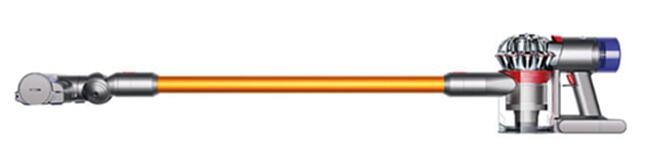
Due to Dyson's reinvention of the cordless vacuum cleaner, which disrupted the traditional design concepts of such devices, Dyson holds numerous patents in this area. Currently, some of its domestic patents include:
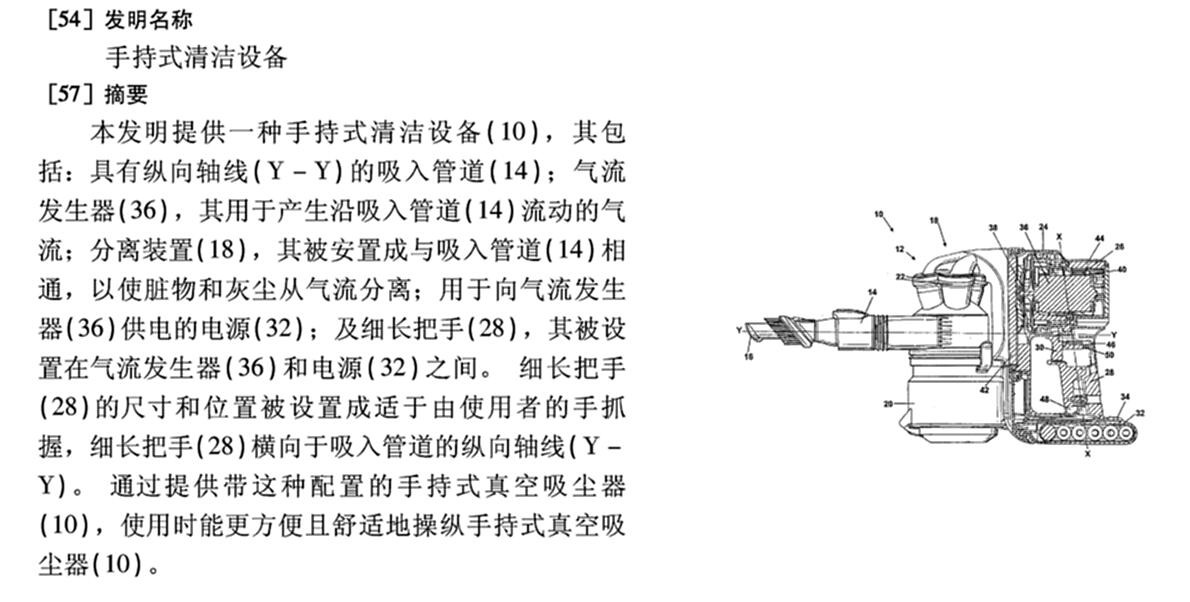
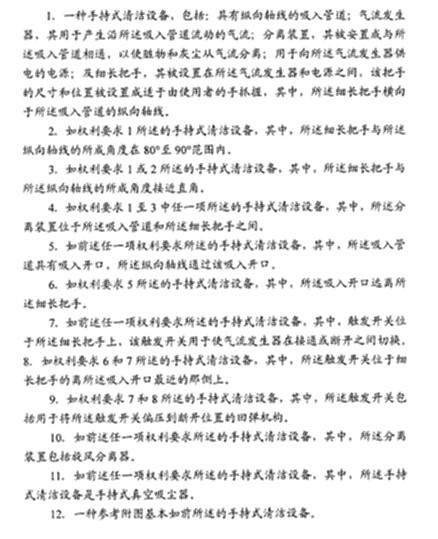
After a period of patent awareness, many companies have learned to avoid the following areas with obvious patents:
- Dust cup and power source placement
- Motor and power source positioning
- Handle angle
From Dyson's lawsuit against Eubi in 2015, these points were accepted by the court as valid patents.
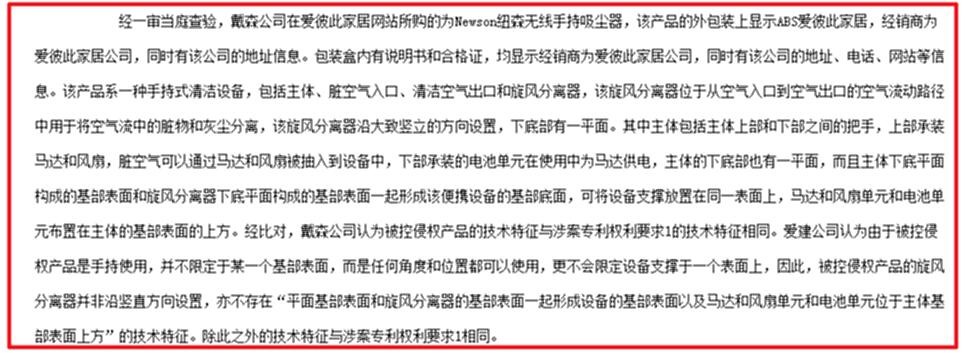
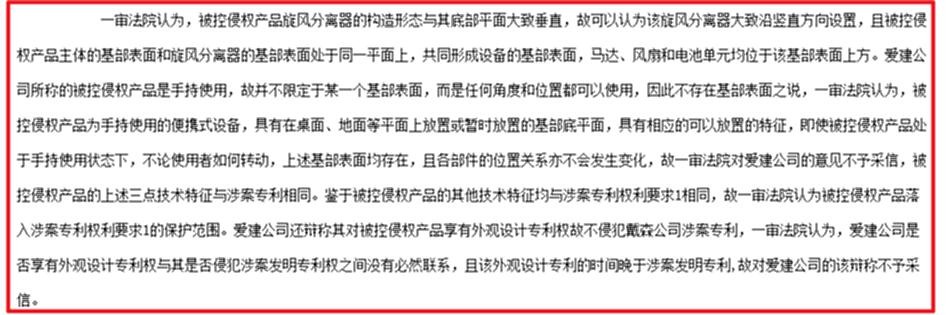
However, it is important to note that Dyson's patent refers to a "power source," which many have interpreted as a battery. This interpretation is incorrect.
In its lawsuit against Sogee in 2015, Dyson stated that the term "power source" does not exclusively refer to direct current (DC) power; alternating current (AC) power is also included within this scope.
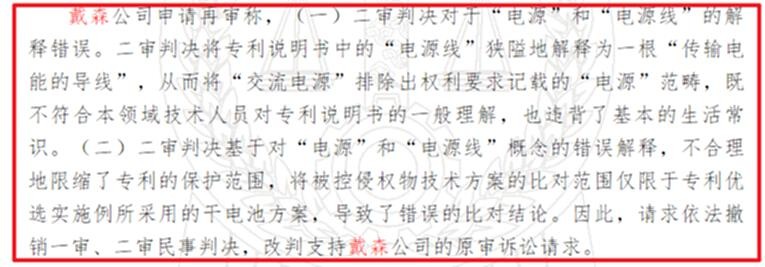
In the Supreme Court's ruling on November 13, 2017, it was determined that in Dyson's patent, the power source refers only to a direct current (DC) power source, and power cords are not included.
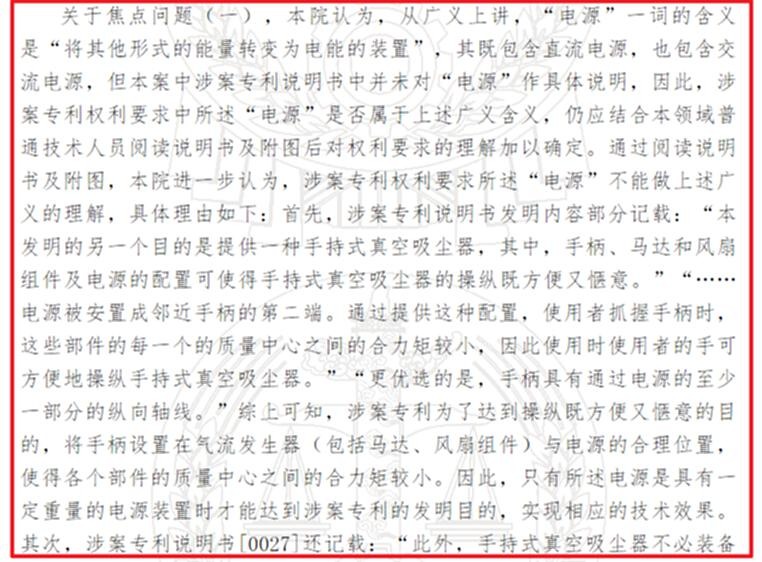
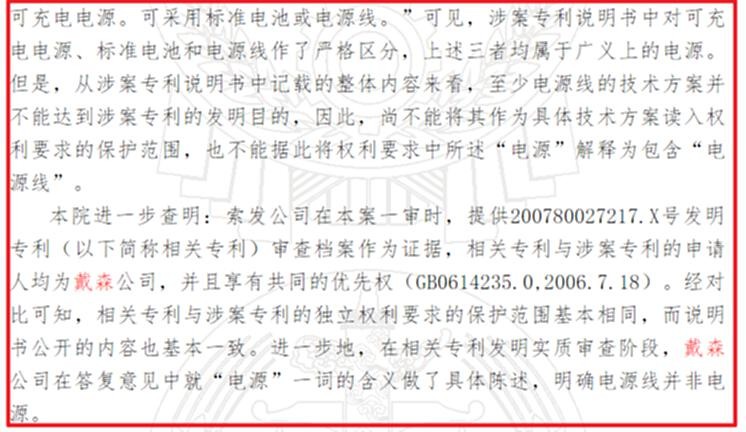
It is clear that Dyson's defeat in the patent case hinges on Dyson's own specific statements during the substantive examination phase of the patent, where it clarified that the power cord was not a source of power. However, this ruling applies only to the domestic market; I have been informed by friends abroad that in Dyson's patents outside of China, "power" does include alternating current, meaning that the power cord is indeed included.
Now back to the main topic of this article.
On February 4, 2014, Dyson filed a patent infringement lawsuit against SharkNinja Corporation for its Rocket HV320 model in the United States (patent numbers D577,163, D668,010, and D668,823). (A comparison diagram is provided below)
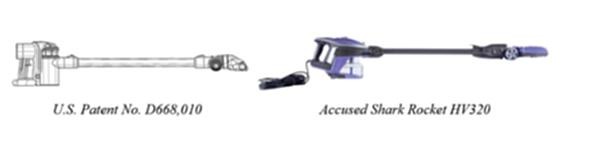
Dyson is seeking $200 million in damages, making this one of only three design-infringement lawsuits with a damage claim exceeding $100 million in U.S. history.
In March 2018, Judge Robert M. Dow ruled that "even under the most favorable interpretation for Dyson, reviewing undisputed facts, the overall appearance of Shark's Rocket model is significantly different from Dyson’s patent," and thus found that Shark's Rocket does not infringe on Dyson's patent. The judge also rejected Dyson's theory that "overall similarity" could be used to support a design patent infringement claim.
The following image was submitted by Dyson's expert to demonstrate the concept of "overall similarity."
This case, though not widely known, has significant implications for the industry. If Dyson's "overall appearance" theory is supported by the judge and Dyson wins against Shark, it can be anticipated that Dyson will use this theory to sue other vacuum cleaner brands. This could potentially place a large portion of cordless vacuums in infringement disputes.
As the era of cordless vacuums has arrived, how companies handle their relationship with Dyson's patent designs is becoming crucial.