- SPOGA+GAFA (Cologne, 22–24 June 2026) put Chinese robotic mower companies in front of Europe's garden and outdoor-power-equipment dealers, a tougher audience than CES or IFA.
- Wire-free mowing is no longer a differentiator; new products now compete on all-wheel drive, large and commercial lawns, multi-sensor navigation and full product ranges.
- Chinese supply now reaches Europe as a whole industry, from mower brands and tool companies to vision and component suppliers. The real results will show in dealer deals and the 2027 spring season.
In this article 5 sections
Part of the WCB topic:EU Anti-Dumping Case on Chinese Robotic Mowers
*This analysis was first written in Chinese in June 2026, after the show.*
What Chinese robotic mower companies took away from SPOGA+GAFA 2026 was more than a few booth photos and a list of exhibitors.
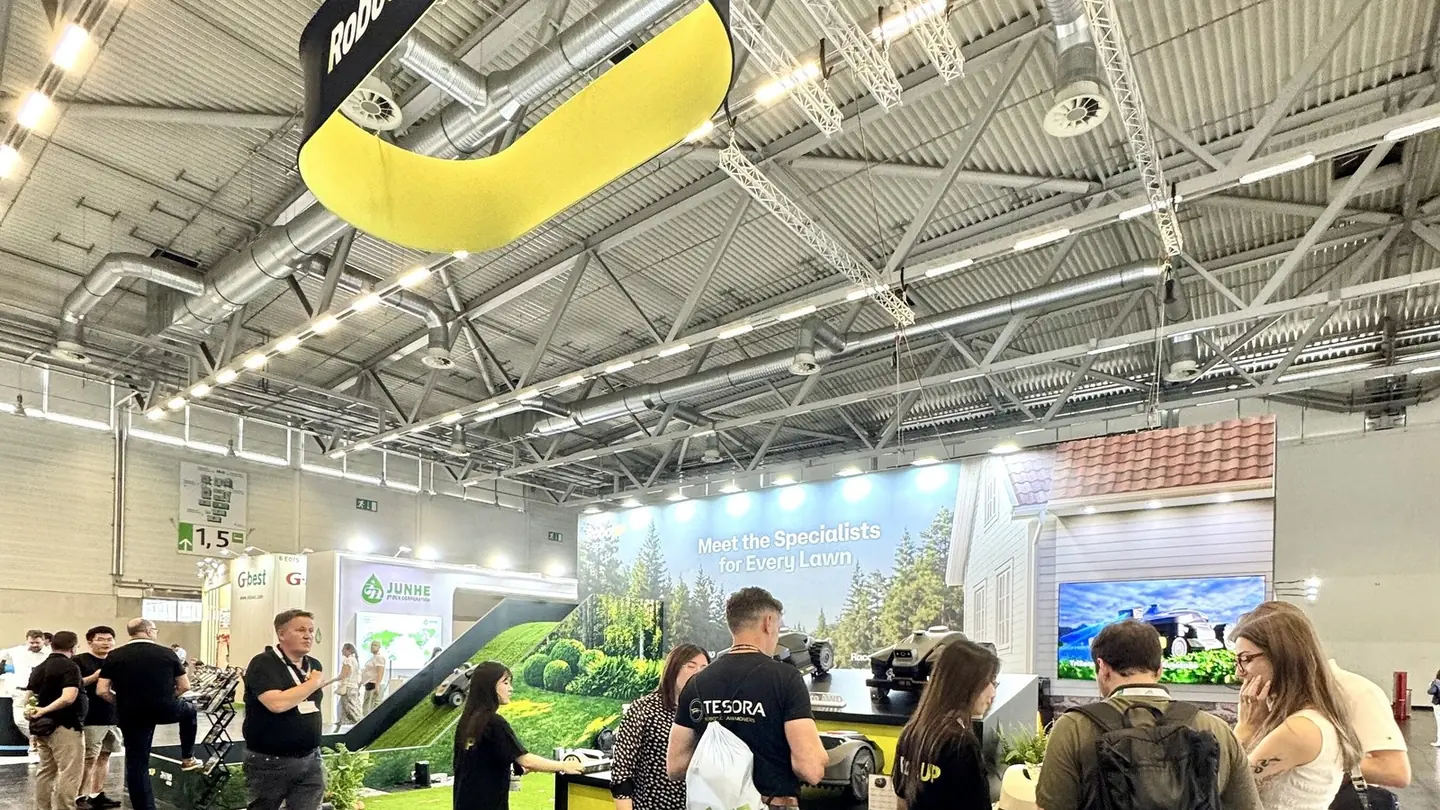
The garden fair, held in Cologne from 22 to 24 June, was the first time so many Chinese yard-robot companies stood together in front of Europe's garden and outdoor-power-equipment (OPE) channel. CES is a technology show and IFA a consumer-electronics stage. SPOGA+GAFA sits closer to garden retail, outdoor living, dealers, professional buyers and physical stores.
So I did not judge the show by booth size, specifications or how often a slogan mentioned embodied intelligence. The questions have changed. A few years ago the industry asked whether a mower could work without a boundary wire, using RTK, vision and LiDAR. Those still matter, but the harder tests now are whether a product copes with complicated gardens, whether dealers will stock it, whether owners can actually use it, and who handles problems when something goes wrong.
Chinese robotic mowers have moved from exporting products to exporting channels and whole operating systems.
*RoboUP's stand at SPOGA+GAFA 2026 in Cologne. Image: RoboUP.*
Cologne is a channel exam
A robotic mower is not a typical small appliance. A robot vacuum's problems mostly happen indoors, where a poor experience carries limited risk. A mower works outdoors for years among slopes, rain, mud, shade, flower beds, pets, children, boundaries and theft. It is hard to close the sale with a product page and a few review videos.
Europe adopted robotic mowers earlier and has mature garden and OPE channels. At a show like SPOGA+GAFA, dealers are really judging whether a company is a reliable supplier, whether its range will sell, and whether selling it will create service headaches. At CES a brand can talk about technology, AI and the future. In Cologne dealers ask about price bands, spare parts, installation training, returns, peak-season supply and who carries the responsibility.
That is why the show was an entry ticket, not a scorecard. The scores come afterwards.
What the new products say
The clearest change is that wire-free operation is no longer the story. It has become a baseline that more and more brands offer. Competition has moved to difficult terrain, commercial use, large lawns, sensor fusion and product ranges.
All-wheel drive is now a headline feature. RoboUP, which exhibited in Cologne, built its Rhino Pro AWD for large, complex and steep lawns, and several brands promote AWD, 4WD or all-terrain capability. Real gardens are not as flat as exhibition halls. Wire-free solves installation; all-terrain capability addresses daily use.
Chinese brands are entering large and commercial lawns. Mammotion has moved into commercial mowing with its Maston series, and MOVA unveiled riding lawn mowers alongside its robots. Commercial mowing is not a scaled-up home product, though. It demands continuous operation, easy maintenance, spare parts, safety systems, long service life and a service network. Home mowers test whether consumers will try the product; commercial mowers test whether customers will treat it as a production tool.
Sensor fusion is spreading. RTK, LiDAR, vision and inertial navigation are being combined rather than chosen between. Orbbec, a 3D vision supplier, used the show to present four vision solutions for robotic mowers: stereo VSLAM, LiDAR plus vision, vision plus RTK, and monocular vision. Users will not care which approach a mower uses; they care whether it gets lost, collides, leaves strips uncut or fails under trees.
Product forms have not converged. Unlike robot vacuums, which settled into a round robot and a dock, gardens are too varied for one shape. Small-garden robots, all-terrain 4WD machines, heavy commercial units, smart riding mowers and multi-task yard platforms are likely to coexist.
Brands are building ranges. A single hit matters early, but dealers need product lines that cover small and large gardens, difficult terrain and commercial sites.
Who is at the table, and what they need to prove
Coverage of the show highlighted Dreame, MOVA, Segway Navimow, Roborock and Ecovacs, and companies including DCK, RoboUP, Orbbec, GOKO and Lawnova announced their own appearances. Around them sits a much wider group of Chinese mower, tool and component companies chasing the same European dealers. Rating them one by one would turn into a directory. What matters is the type of company and the capability it brings.
Leading mower brands such as Segway Navimow, Mammotion, Dreame and MOVA, Ecovacs, Roborock, Sunseeker and Yarbo no longer need to prove they can build a mower. They need to prove channels and service. Navimow brings Segway-Ninebot's overseas channels, compliance and consumer-hardware operations. Mammotion brings start-up speed and a strong LUBA reputation, but scale will test its service, firmware and global support. Dreame and MOVA can attack the premium and mass markets at once. For Ecovacs, the question is whether GOAT becomes a real second growth curve. Roborock's entry signals that the category is going mainstream, though it arrived later than the leaders. Sunseeker works more like an OPE company than a cleaning-robot spin-off, which may suit Europe. Yarbo's multi-task yard platform has the biggest ambition and the hardest path.
OPE and tool companies such as DCK, Daye (AL-KO), Yard Force, Rokibot and Yardcare may have less algorithmic buzz, but they understand garden channels. DCK showed its smart mower inside a range built on 20V and 58V battery platforms, alongside a zero-turn riding mower. Dealers see a full shelf, not an isolated robot. As mowers move into real channels, products that are reliable, repairable, available and easy to train on matter as much as algorithms.
Newer technology players still have a window, but the storytelling premium is shrinking. Dealers now ask about volume production, steady supply, user reviews, return rates, service and funding. A successful crowdfunding campaign is not the end of the job in a category that needs constant updates and support.
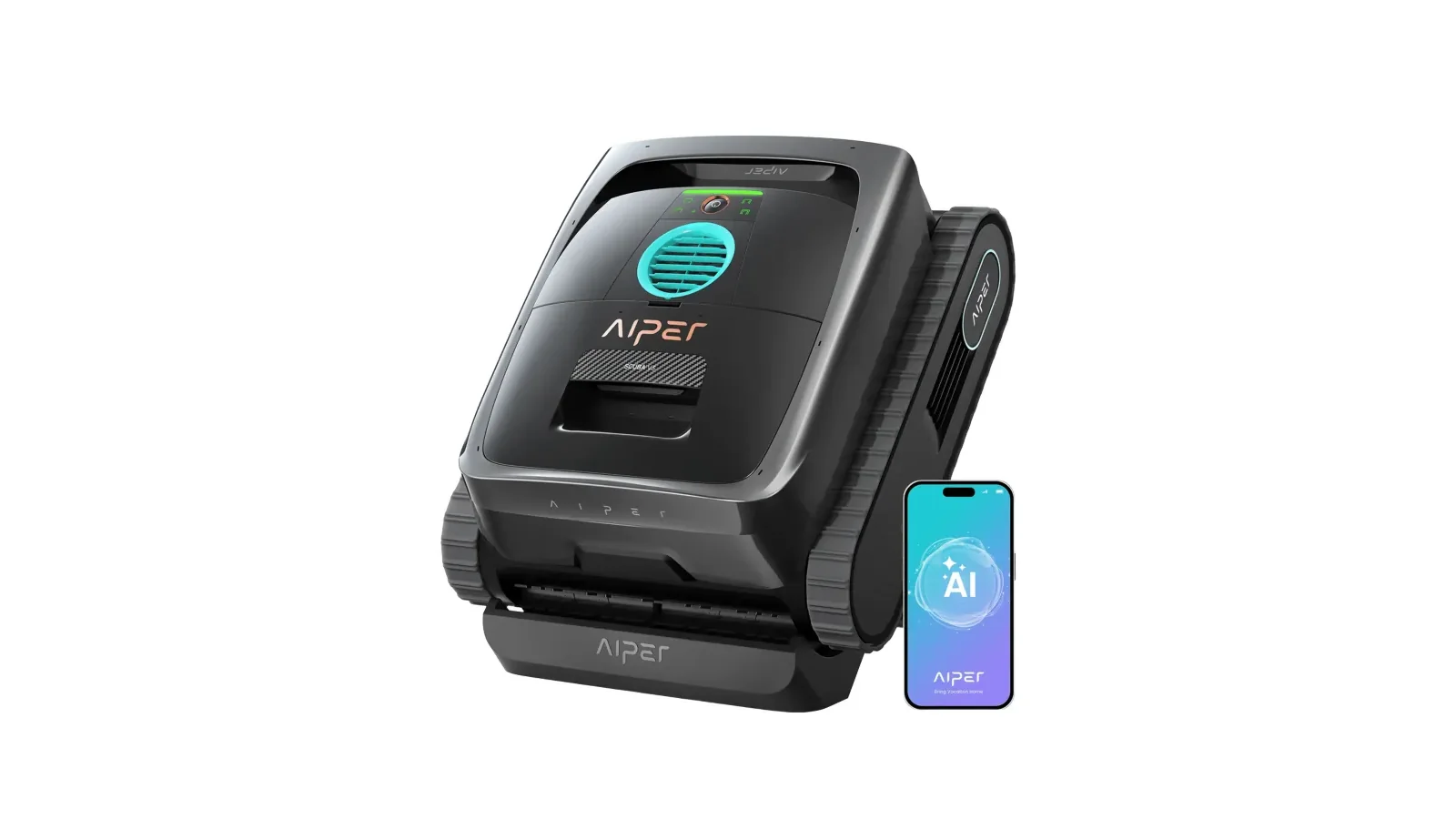
Adjacent categories and suppliers show how wide outdoor home robotics has become. Pool-robot makers such as Aiper and WYBOT look at lawns because gardens, pools, patios and driveways belong to the same household and often the same dealer. Suppliers such as TOPBAND and Orbbec show that controllers, battery management, brushless motors, vision modules and LiDAR are becoming a market of their own.
After the show: demand has to confirm supply
A trade show demonstrates supply. Amazon, Prime Day and dealer sell-through confirm demand.
Our earlier analysis of Amazon as the first stop for backyard robots found robotic mower penetration of roughly 1.3% in the US against about 8.6% in Europe, with the top five brands holding 82% of category sales value. The US is still early; Europe is more mature; and leading brands are already concentrating. Higher price bands are also growing, which means this category cannot be treated as a cheap small appliance. Buyers will pay more when a product removes uncertainty.
From here, four tests decide who stays:
- Product. Does AWD help in real gardens, are LiDAR and RTK stable, can commercial units work long shifts, and is the smart riding mower more than a concept?
- Channel. Will European dealers stock and train, and can brands convert on Amazon and in peak promotions?
- Service. Installation failure rates, returns, spare parts, firmware updates and support for existing owners will decide dealer confidence.
- Brand. Will owners remember a brand or only technical terms, and can it build trust above USD 1,500?
Three judgements
First, Chinese robotic mowers have shifted from single products going abroad to a whole industry going abroad. European dealers now face complete Chinese supply: mower brands, tool companies, pool-robot makers, component suppliers, vision specialists and start-ups.
Second, wire-free is no longer scarce. What is scarce is stability in complicated gardens, dealer trust and service capability. Owners will judge a mower by whether it saves them effort on their own lawn, not by the terms on its poster.
Third, 2026 is preparation for the 2027 spring season. A busy show does not decide winners. Real channels, real users, real reviews and real service will show who holds Europe, who opens the US, and who proves itself both on Amazon and in physical stores.
A robotic mower is not simply an outdoor robot vacuum. It is heavier, more complex, more dependent on channels and service, and a tougher test of a company's long-term capability. The companies that stay will be those that turn complicated outdoor conditions into something an ordinary household can rely on for years.