- Global sales of robot vacuums are estimated at around 20 million units annually, with significant regional variations.
- High-tech barriers and government support make robot vacuums a lucrative investment opportunity in China.
- Future growth depends on overcoming limited usage scenarios, reducing prices, and enhancing functionality.
How High Is the Ceiling for Robot Vacuums?
Market Volumes of Leading Companies
Early Perspectives
Current Status
Future Trends
In recent years, due to the popularity of cleaning appliances, many investment firms and securities analysts have sought my advice on various topics. Whenever it comes to robot vacuums, a common question is often asked: "When will the market penetration rate for robot vacuums reach similar levels as washing machines or refrigerators in households?"
Currently, global sales of robot vacuums are estimated at around 20 million units. In China, this number ranges between 4.6 to 4.8 million units; the United States has a comparable figure, slightly lower at approximately 4.4 to 4.6 million units. The Russian market is estimated at about 150 to 180 thousand units. Western Europe follows with around 3.5 to 3.8 million units in total. The Asian market (excluding China) accounts for roughly 2.5 to 2.7 million units. The remaining markets, including the Middle East, South America, and Africa, combined are estimated at about 3 million units.
According to data from leading brands in 2023, iRobot's sales reached $891 million (approximately RMB 6.3 billion), with an estimated production of around 3 million units; Roborock recorded a revenue of RMB 8.6 billion and sold approximately 2.59 million units; Ecovacs reported sales of RMB 7.6 billion, selling about 2.595 million units. Xiaomi is estimated to have sold over 100 thousand units, with Dreame (excluding Xiaomi's manufacturing) also around the same figure. Other brands managed to sell a few hundred thousand units at most.
From 2020 to 2021, when robot vacuums were experiencing explosive growth, investors were actively seeking out potential targets, finding that robot vacuums were an almost perfect investment opportunity.
Firstly, robot vacuums are inherently high-tech products with significant software and algorithmic barriers. The Chinese government has been heavily supporting hard science and technology projects, making robot vacuums a key area of focus.
Secondly, the rapid growth of the market was evident; in 2020, Roborock successfully went public just five years after its founding, reaching a valuation of over RMB 10 billion. It became known as the "King of Robot Vacuums." With Roborock as a benchmark, other robot vacuum companies were easily valued at several multiples.
Thirdly, the current market penetration and sales volume for robot vacuums are still relatively low. At that time, global sales numbers for robot vacuums were around 20 million units, similar to today's figures. Given the millions of units sold annually by other household appliances, there is a potential growth rate of 5-6 times.
These factors contributed to the explosive growth of the robot vacuum industry in 2020 and beyond, with substantial funding pouring into brand owners and manufacturers, creating a scene reminiscent of the early days of internet companies.
However, after one or two years, it became clear that as time progressed, competition within the industry intensified, margins narrowed, and investments increased. Ultimately, the expected market capacity did not increase; in fact, with major players entering the fray, space for emerging brands has become increasingly limited.
I have discussed these competitive factors in previous articles. Here, I will briefly explain why the market capacity for robot vacuums has not significantly expanded over recent years, remaining around 20 million units globally for many years.
Several key reasons:
- Limited usage scenarios: For homes with areas under 90 square meters, using a robot vacuum is extremely challenging due to various obstacles and corners where it can get stuck.
- High prices: At that time, most robot vacuums with laser guidance cost over RMB 2,000, while random versions were priced around RMB 1,000. In contrast, traditional vacuum cleaners could be purchased for as little as RMB 3-500. Therefore, to achieve greater market growth, the price of robot vacuums needs to become more affordable.
- Limited functionality: From 2020 onwards, most robot vacuums were limited to dust collection; at best, they could add a mopping function. There was little improvement in user experience.
Thus, when friends came seeking advice on this topic, I generally provided negative answers, which reflected their disappointment. The industry's development over the following years largely followed my predictions.
However, with the advancement of the industry, some trends have emerged that might lead to robot vacuums becoming a household staple like washing machines in the future.
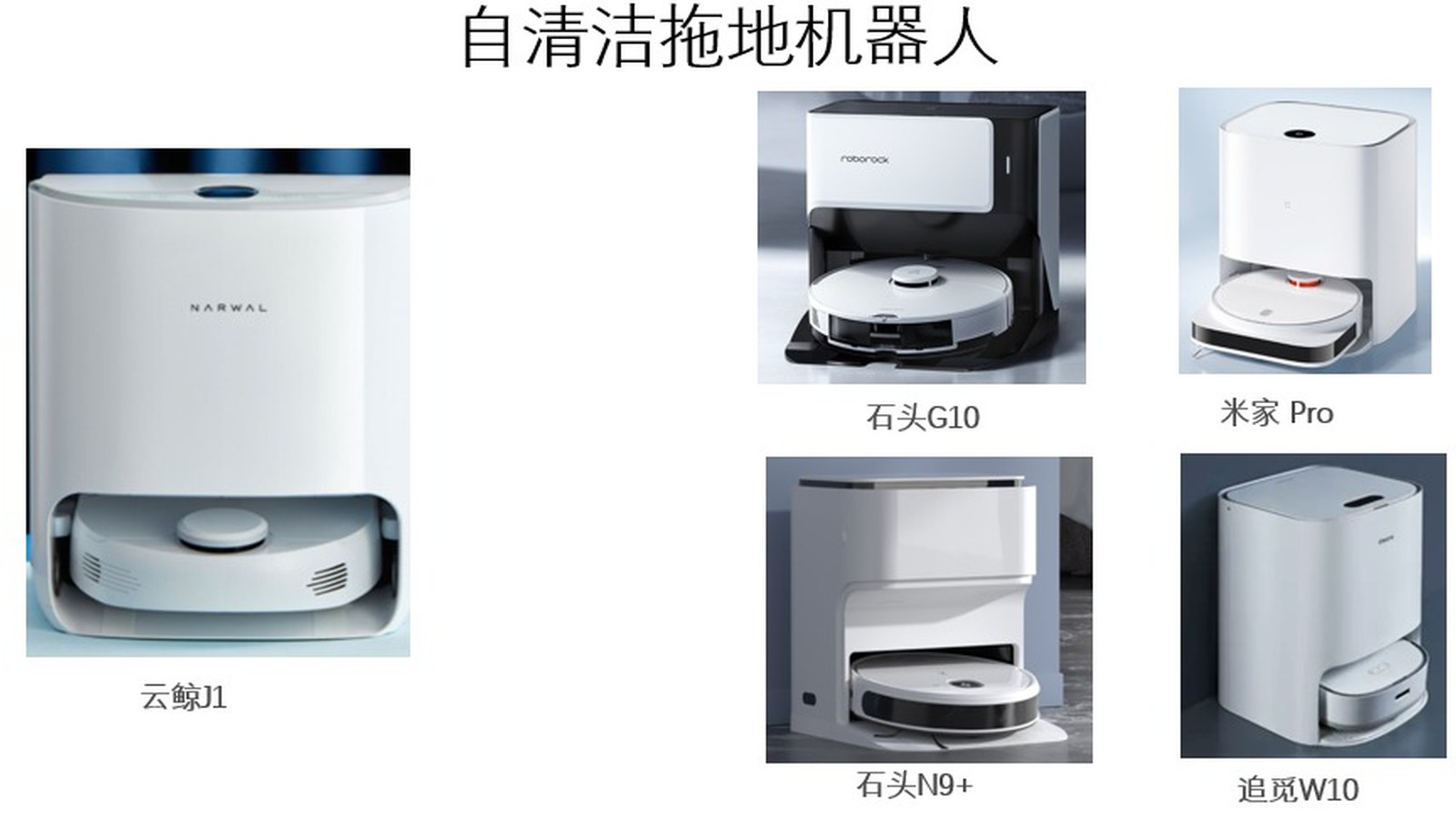
Since Narwal launched its self-cleaning robot vacuum and Ecovacs introduced the X1 base station robot vacuum, the Chinese market has shown an interesting phenomenon: "stable sales with increased prices." The total number of robot vacuum units sold in China has not significantly increased, but the amount has roughly doubled. The core reason is that a large number of consumers have purchased all-in-one base station models. Similarly, overseas markets followed this path and experienced explosive growth in 2023-24. In recent years, companies selling all-in-one base station robot vacuums have seen exceptionally high profits.
When Narwal first released its water-connected model, I was not optimistic because it required very long pipes that could damage the home's original decor, providing little additional convenience to consumers. However, with all brands entering this market, consumer perception seems to have changed.
Now, posts featuring floor-cleaning robots with water supply and drainage are ubiquitous on Xiaohongshu. As a seasoned industry professional, I frequently receive inquiries from friends about which brands of robot vacuums to purchase and how to properly install the necessary water supply and drainage systems.
And as technology advances, most of the friends who have purchased robot vacuums with self-cleaning capabilities are very satisfied with them.
So, I personally estimate that the penetration rate for the global robot vacuum industry may soon reach 20 million to 30 million units or even higher. However, whether it can catch up with washing machines in the future depends on several variables:
- Price: Regardless of how advanced the technology is, price remains a core factor. While high-end washing machines can cost tens of thousands of dollars, basic models starting at just a few hundred dollars meet the needs of different households. Currently, it's challenging for all-in-one base stations to drop below 2500 RMB (approximately $360 overseas). If general-purpose base station robot vacuums can retail for around 1200-1500 RMB, I believe sales numbers would significantly increase. The relationship between price and quantity is reciprocal; it might take 3 to 5 years before prices meet market expectations. To reach annual sales of 4-50 million units globally, this could potentially require 8 to 10 years.
- Threshold: Currently, the threshold for all-in-one base stations remains relatively high. A single mold can cost tens of millions of RMB, and there is a significant gap in core algorithms between leading brands and ODM manufacturers. This requires stronger third-party companies to enter the market and level the playing field on this front. In my view, AI large models present a good opportunity. Start-up AI companies could train their models using large model computing power, thereby surpassing several current leading companies in algorithm development and achieving algorithm equality.

- Is the all-in-one base station the ultimate form of a robot vacuum? It's too early to say for sure. Recently, Midea released a machine that integrates a robot vacuum with a washing machine—the Colmo Dual Wash Station. The price is quite attractive at 16,998 yuan. This product combines the water supply system of the robot vacuum with the washing machine, reducing space usage. However, personally, I believe this product's sales volume will likely be limited because few people replace both a washing machine and a robot vacuum simultaneously. Additionally, there are concerns about what to do if the machine breaks down; how would subsequent after-sales service be handled?
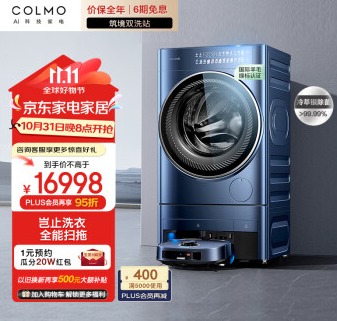
So, Roborock previously released a molecular sieve washing machine. At the time, I judged that Roborock was likely to develop products combining these two technologies. However, after waiting for several years, Roborock has yet to release any new product in this form, which has left some users feeling disappointed.