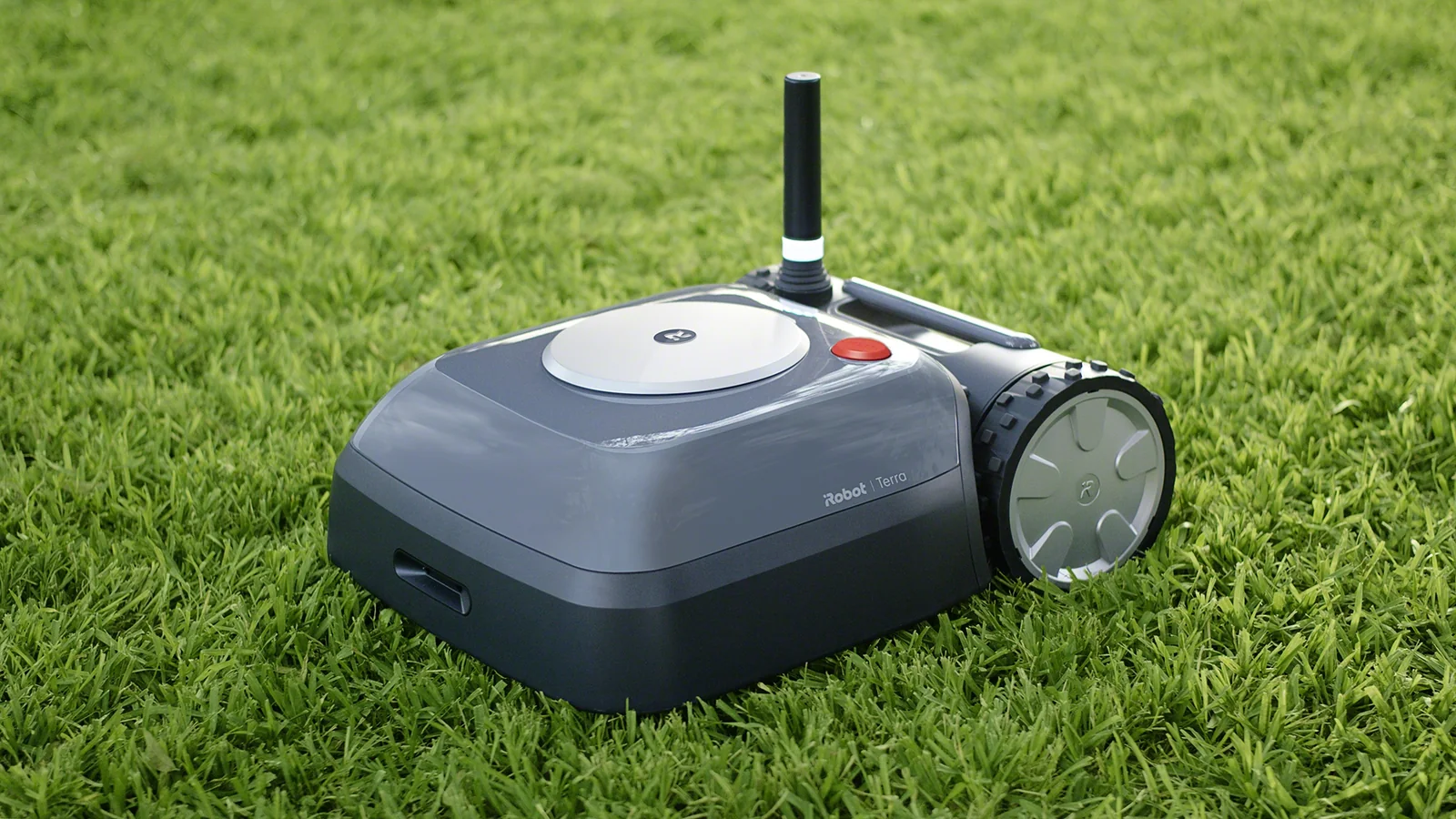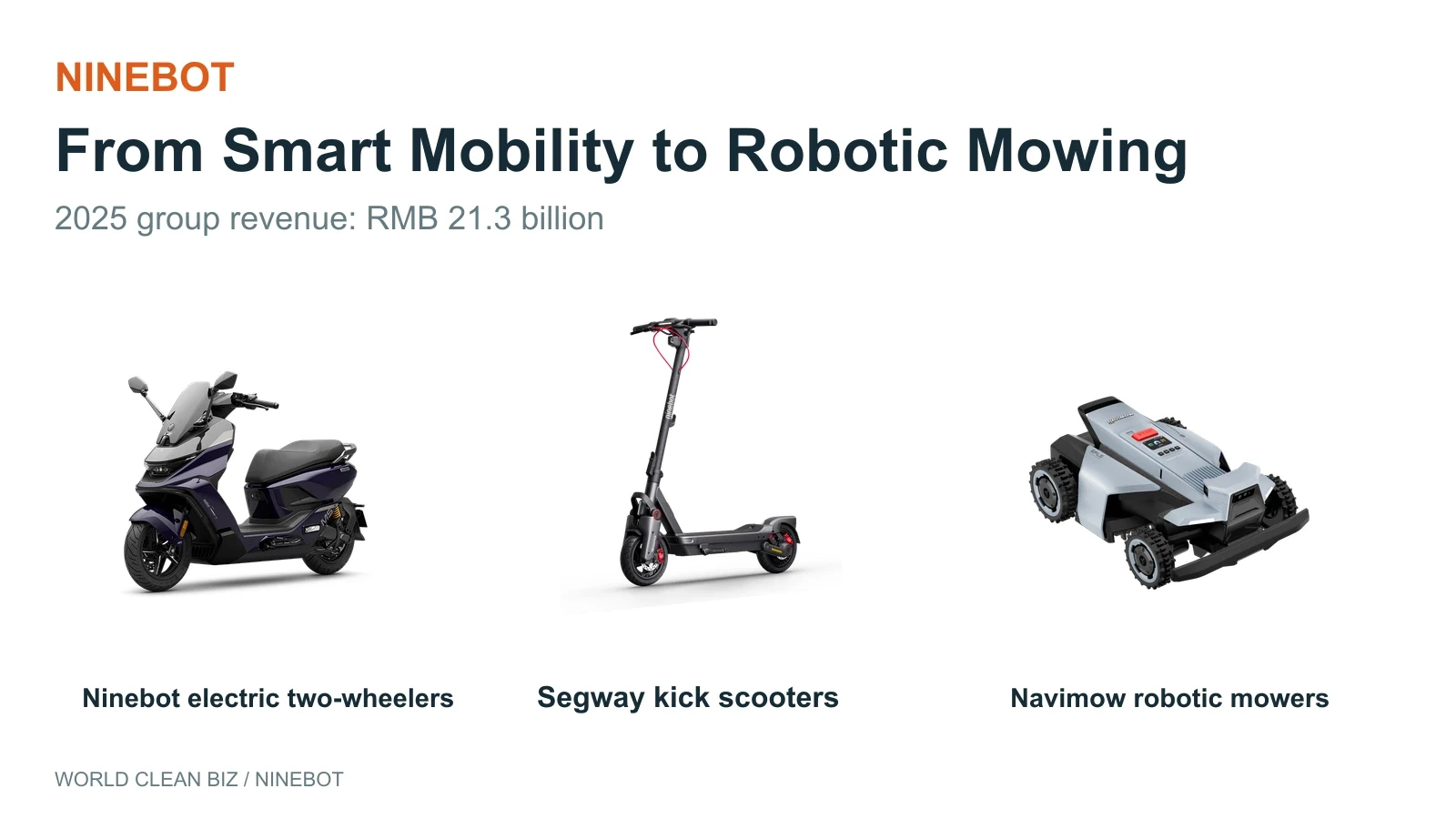
- Electric two-wheelers generated more than half of Ninebot's approximately RMB 21.3 billion revenue in 2025.
- Willand's H1 2026 revenue exceeded its full-year 2025 revenue; these are different-length periods, not a year-on-year comparison.
- Engineering and distribution experience support Navimow, but reliability across a mowing season and local service remain essential.
Ninebot generated RMB 21.3 billion in revenue in 2025, up nearly 50%. Electric two-wheelers contributed approximately RMB 11.9 billion, making them the company's largest business.
For the cleaning and outdoor robotics industries, another set of figures deserves closer attention. In the first half of 2026, Ninebot's Willand subsidiary group, the business behind Navimow, recorded approximately RMB 2.54 billion in revenue. That exceeded its approximately RMB 1.98 billion for the whole of 2025. Ninebot's H1 2026 report
A company many Chinese consumers know as an electric two-wheeler brand is building another substantial business on European and American lawns.
Ninebot's vehicles on Chinese streets, Segway kick scooters overseas and Navimow robotic mowers appear to serve different markets. What connects them is more than a decade of engineering experience in mobile products, and the ability to turn that experience into consumer businesses.
Gao Lufeng and Wang Ye founded Ninebot in Beijing in 2012. Its first products were self-balancing vehicles. With a person standing on board, the machine had to keep sensing its position and adjusting the motors to remain upright.
Building these vehicles required a team that understood mechanical design, motor control and software together. As Ninebot entered other markets, the motion-control experience it had accumulated went into new products.
In 2015, the company, then only a few years old, acquired Segway in the United States. Segway had pioneered self-balancing transport and brought an established brand, patents and overseas distribution. The acquisition gave Ninebot a faster route into international markets.
Ninebot subsequently expanded into electric kick scooters and go-karts. In 2020, it listed Chinese depositary receipts on the Shanghai Stock Exchange's STAR Market. Between its founding and listing, the company gradually developed the structure visible today: the Ninebot brand is more prominent in China, while Segway provides access to markets overseas.
Gao serves as chairman and Wang as CEO. The company the two founders lead has moved well beyond its original self-balancing vehicle business.
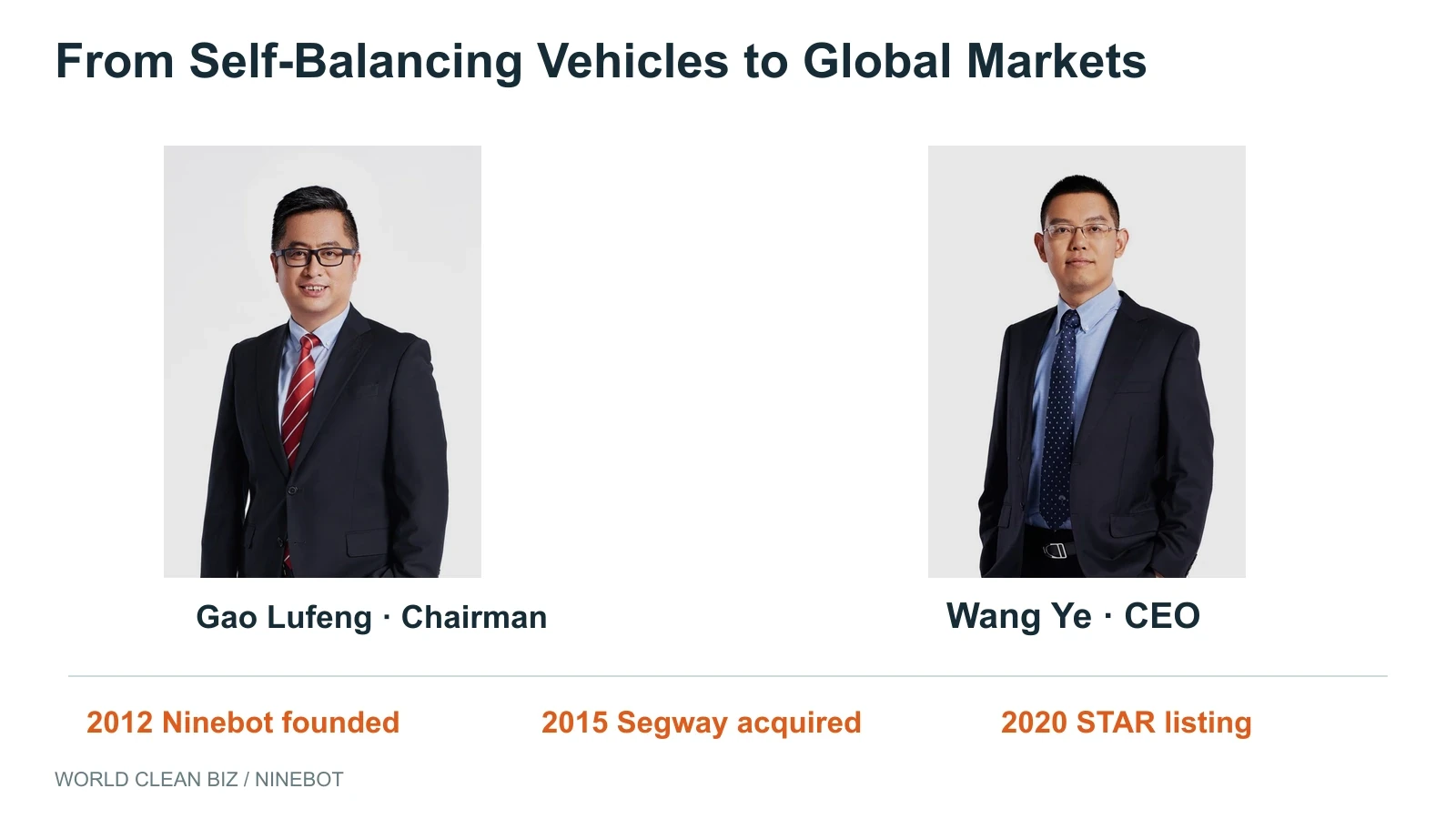
*Portraits: Ninebot. Gao Lufeng, chairman, left; Wang Ye, CEO, right. The 2020 listing was through Chinese depositary receipts.*
When Ninebot entered China's electric two-wheeler market in 2019, there was no shortage of brands. Manufacturing and retail networks were already well established. Simply being able to build another vehicle would have given a newcomer little reason to win customers.
Ninebot approached the market through connected features. Phone connectivity, proximity unlocking and vehicle location began changing how consumers used their vehicles. After the sale, owners stayed connected through an app, and the software could continue to receive updates.
Those features still needed stores to turn interest into sales. Consumers might discover Ninebot online, but test rides and repairs had to happen nearby. The company expanded its physical network while building brand recognition. By the end of 2025, its domestic store network exceeded 10,000 locations.
That year, Ninebot sold more than 4.09 million electric two-wheelers. Approximately RMB 11.9 billion in revenue meant a category it had entered only in 2019 now accounted for more than half of group sales. Ninebot's 2025 annual report
This experience matters when considering its subsequent move into robotic mowing. Ninebot had already demonstrated that it could enter a market with established competitors and build a large business through product development and distribution.
Electric kick scooters overseas gave it a different kind of experience.
Ninebot supplies both individual consumers and shared-mobility operators. Consumers buy a tool for everyday travel. Operators buy an asset that must withstand frequent use and ongoing maintenance. How long a vehicle lasts after delivery, and how easily it can be repaired, affect whether a customer places another order.
Serving these customers over time gave Ninebot experience in volume delivery and overseas after-sales support. The Segway brand also reached more retailers, creating a foundation for further product expansion.
E-bikes and all-terrain vehicles took the company further into overseas outdoor markets. These products need specialist dealers to handle assembly, test rides and repairs; e-commerce alone is insufficient. As the portfolio expanded, Ninebot's distribution relationships extended beyond mass retail into specialist outdoor channels.
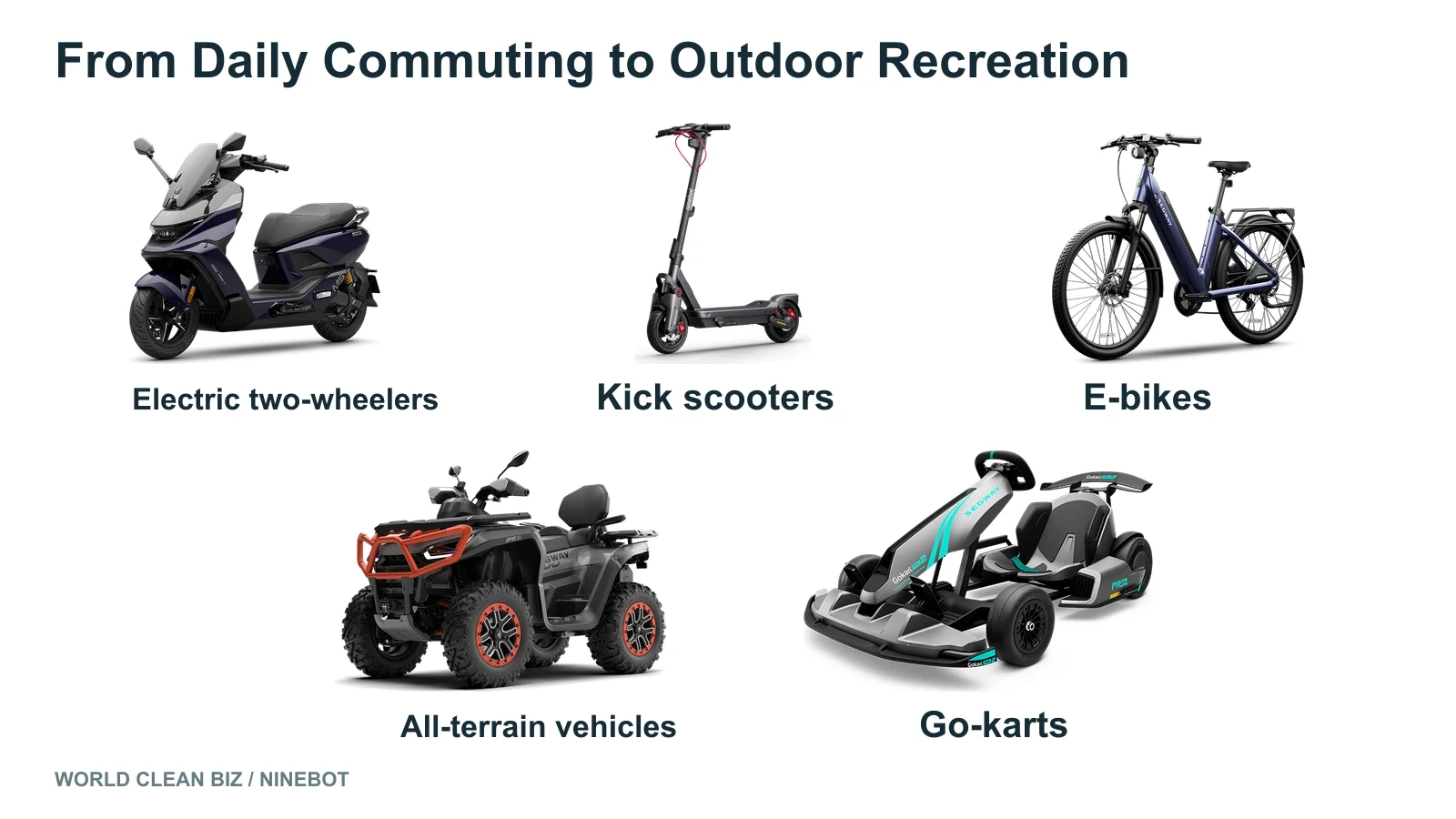
*Official Ninebot and Segway product images. The portfolio includes different powertrains; the ATV shown is not an electric vehicle.*
More products also required more development spending. In 2025, Ninebot invested approximately RMB 1.25 billion in R&D and employed more than 2,400 R&D personnel. Its major manufacturing base in Changzhou, Jiangsu, supports businesses including short-distance mobility, electric two-wheelers and all-terrain vehicles.
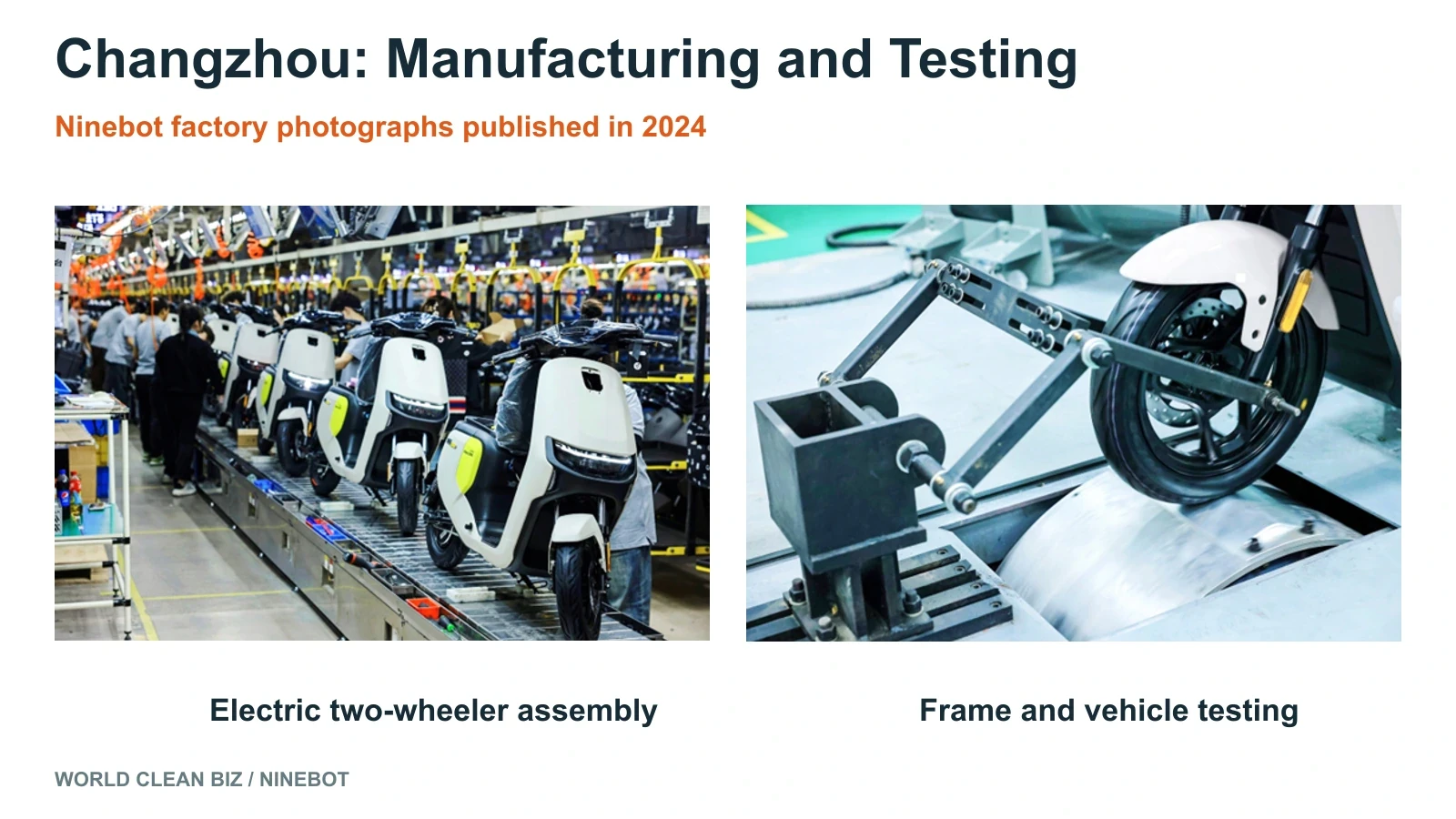
*Source: Ninebot's 2024 Changzhou factory report. Historical electric two-wheeler manufacturing photographs, not a Navimow production line.*
Motor control, positioning and software capabilities can be reused across categories. But moving a machine from an urban road onto a lawn still requires substantial new work. Wet grass, slopes and tree cover are not problems that were already solved in the self-balancing vehicle era.
In 2021, Ninebot established Willand to focus on intelligent robotic mowing, selling to consumers under the Navimow brand.
Willand CEO Ren Guanjiao has a robotics R&D background. He joined Ninebot in 2015 and worked on self-balancing vehicles and delivery robots. The team later turned to lawns in Europe and North America, choosing installation as its point of entry.
At the time, many robotic mowers required a boundary wire around the lawn. Customers had to arrange installation after buying the machine, and changes to a garden could require changes to the wiring. That made a robotic mower harder to bring home and start using than an ordinary appliance.
Navimow used positioning, perception and mapping to establish virtual boundaries, reducing dependence on buried wires. This changed the process of getting started and reduced the installation work dealers had to handle.
The early H series established the wire-free approach. The i series then reached more small gardens, while the X series moved toward larger areas and more complex terrain. One technical approach developed into a range of choices for different lawns.
By 2026, Navimow had adopted several technical approaches. Satellite positioning combined with vision suits some gardens; LiDAR offers an option for other environments. Difficult slopes demand better traction, while larger lawns require greater working efficiency.
For dealers, the value of the range is that they no longer have to offer the same machine to every customer. Different garden conditions can be matched with different models, expanding the customers they can serve.
Willand's revenue growth has made this business increasingly important within Ninebot.
The subsidiary group generated approximately RMB 1.98 billion in 2025 and RMB 2.54 billion in the first half of 2026. Six months of sales surpassed the previous twelve months. Although that is not a year-on-year growth rate, it demonstrates the pace of expansion.
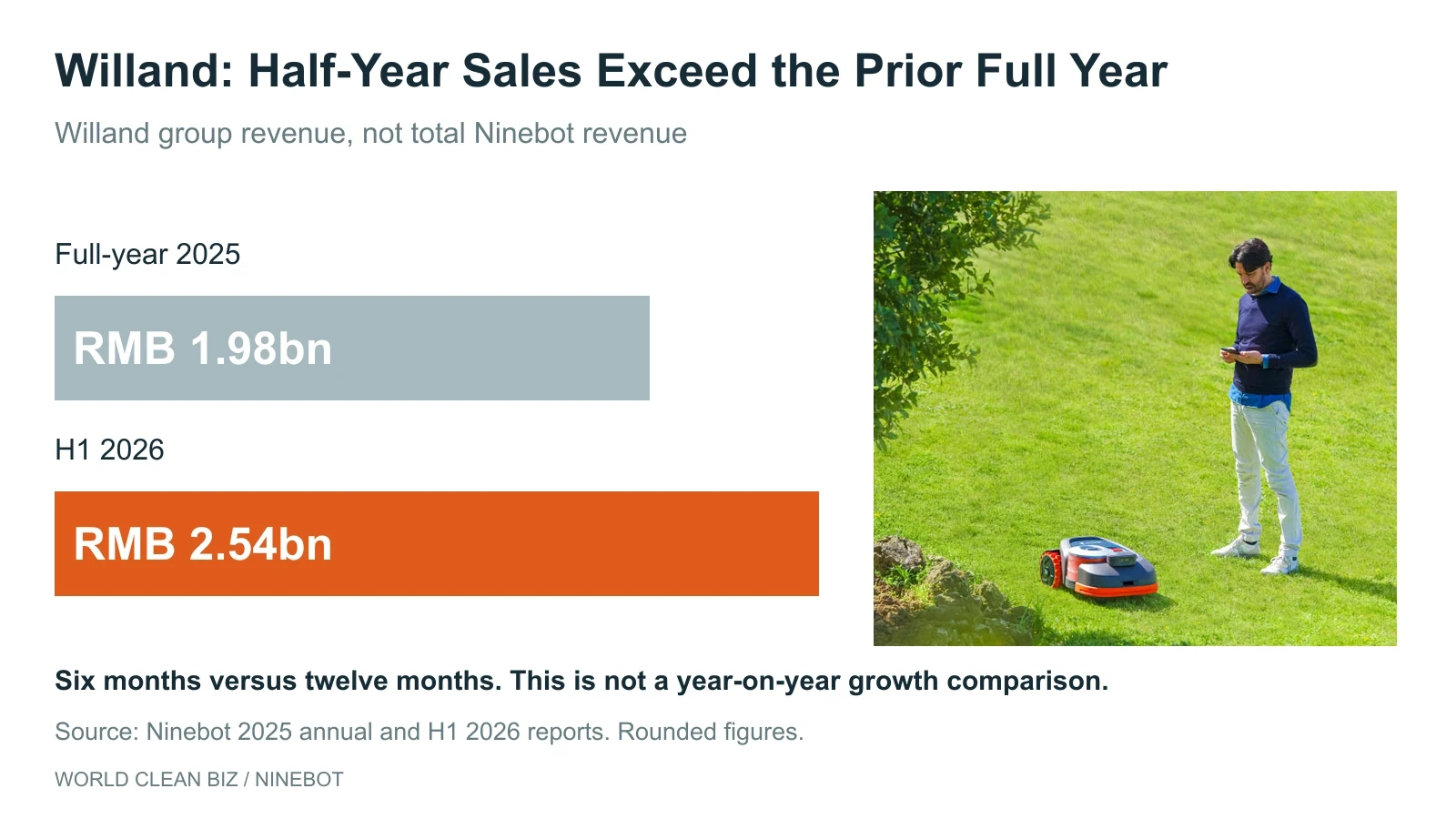
*Sources: Ninebot's 2025 annual and H1 2026 reports; photo: Navimow. The bars compare periods of different lengths, not year-on-year growth. Willand group comprises the subsidiary and its subsidiaries, rather than the whole Ninebot group.*
Willand is a controlled subsidiary, and its revenue is already consolidated into Ninebot's accounts. It must not be added to group revenue again. It has dedicated product and operating teams while drawing on some of the technology and manufacturing resources Ninebot has built.
This structure gives the mower business room to develop without requiring it to establish every capability from scratch, as a new startup would.
As the residential market expanded, Navimow also entered commercial lawn maintenance. Terranox targets larger areas and longer working hours, while NavimowFleet provides centralized management of multiple machines.
A landscaping company buying several robots needs to know where they are working, whether jobs have been completed and which machine needs maintenance. Software and service beyond the machine become more important in commercial use. Ninebot's experience supplying shared-mobility operators offers lessons it can draw on, although mowing performance still has to be proven on the lawn. NavimowFleet
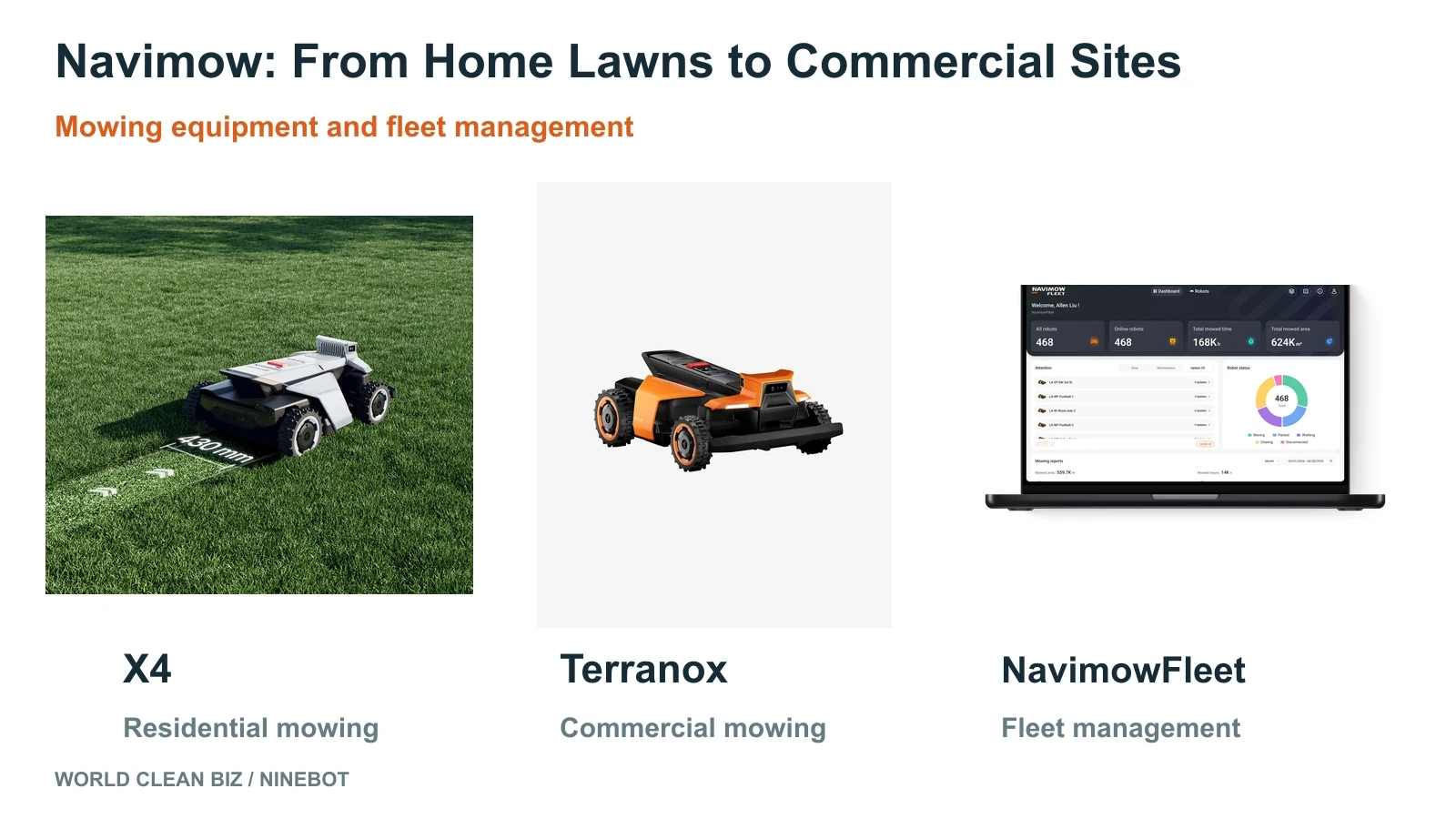
*Official Navimow images: X4, Terranox and NavimowFleet. The interface illustrates commercial fleet management, not compatibility with every residential model.*
At IFA in Berlin in 2026, Navimow showed the H5 Pro, scheduled for launch in early 2027, taking another step toward addressing the edges robotic mowers leave behind.
A machine may handle most of the center of a lawn while still leaving the perimeter for someone to finish manually. H5 Pro uses an extendable mowing mechanism intended to bring the cutting disc closer to areas the body cannot otherwise reach. Combined with four-wheel drive and multiple positioning sensors, the aim is to improve operation in complex gardens. Navimow's official IFA preview
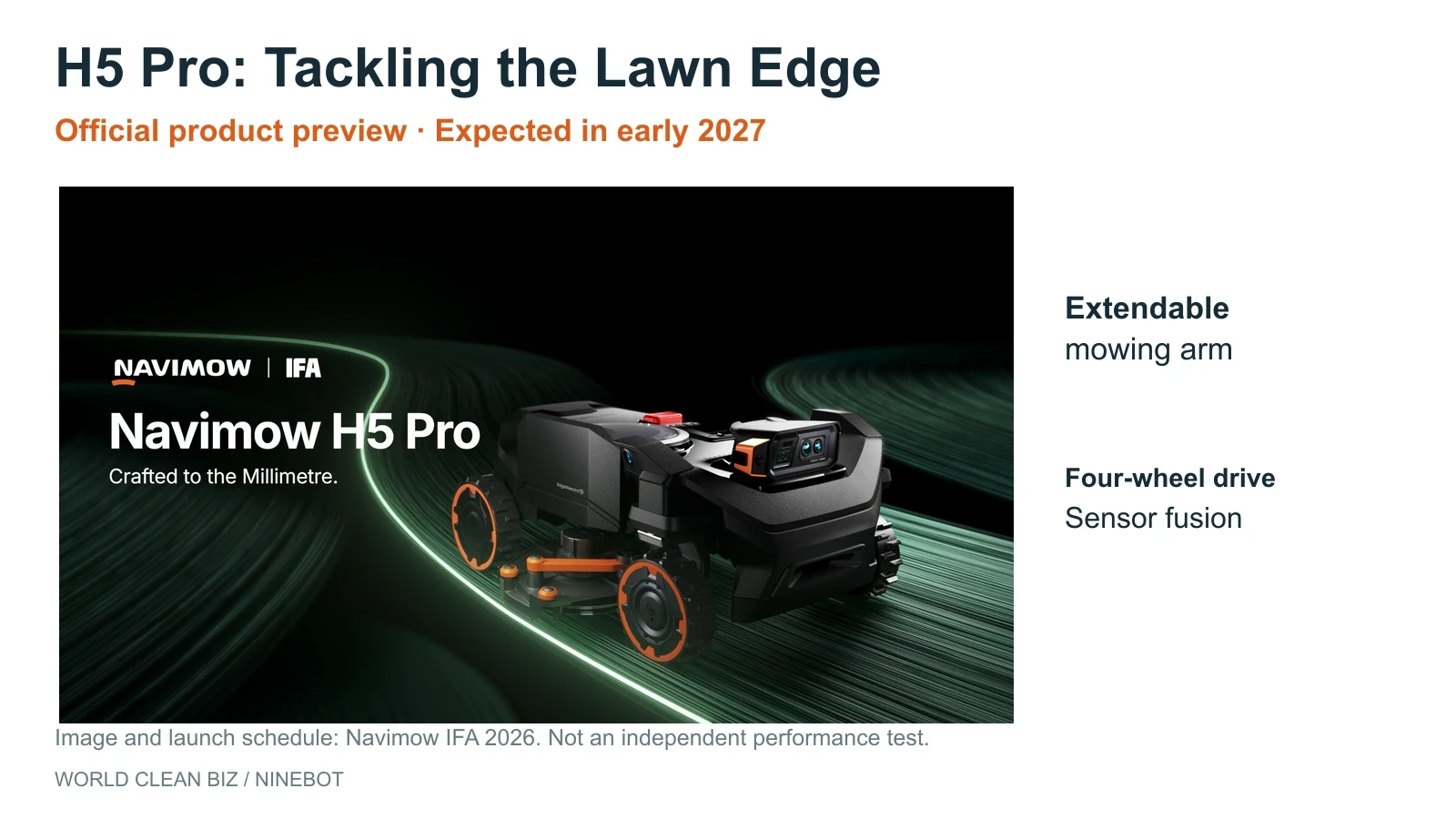
*Official Navimow promotional image and announced launch schedule. These are manufacturer-described features, not independent performance-test results.*
For users, leaving less grass to finish by hand has a more immediate benefit than adding a few rarely used functions. The next stage of competition in robotic mowing will increasingly turn on these details of everyday use.
Fast product launches do not establish that outdoor performance is mature. A machine has to work through a full mowing season to expose problems under different weather and lawn conditions. As sales rise, demand for after-sales support rises with them.
This will test whether Willand can deepen its overseas distribution and service network. Retailers help products reach consumers, while specialist dealers take on model selection and repairs. Local service becomes even more important as machines move into more complicated gardens and commercial work.
In my view, Ninebot's advantage in robotic mowing comes from having gone through the transition from development to volume sales several times. It understands the investment and distribution required after a product has been built to keep a business growing.
Electric two-wheelers have already given Ninebot substantial operating scale, while Willand is becoming another source of growth. The question now is whether the company can extend the advantages it built in smart mobility into a robotics market that requires sustained unattended operation.
For Chinese suppliers, this also means customers' requirements are expanding. As a group moves from vehicles into gardens, existing suppliers have opportunities to enter new categories, while new suppliers may gain access to a larger purchasing organization through a single project. Keeping pace with a customer's new product development matters more than simply holding on to orders already in production.
The first WCB International Cleaning Appliances Expo will take place in Suzhou on November 18–20, 2026, with close to 200 cleaning-industry exhibitors expected, alongside industry forums and buyer–supplier meetings.
We want to bring brands, appliance manufacturers and component suppliers together to discuss these emerging product opportunities. To exhibit or visit, contact Denny You.