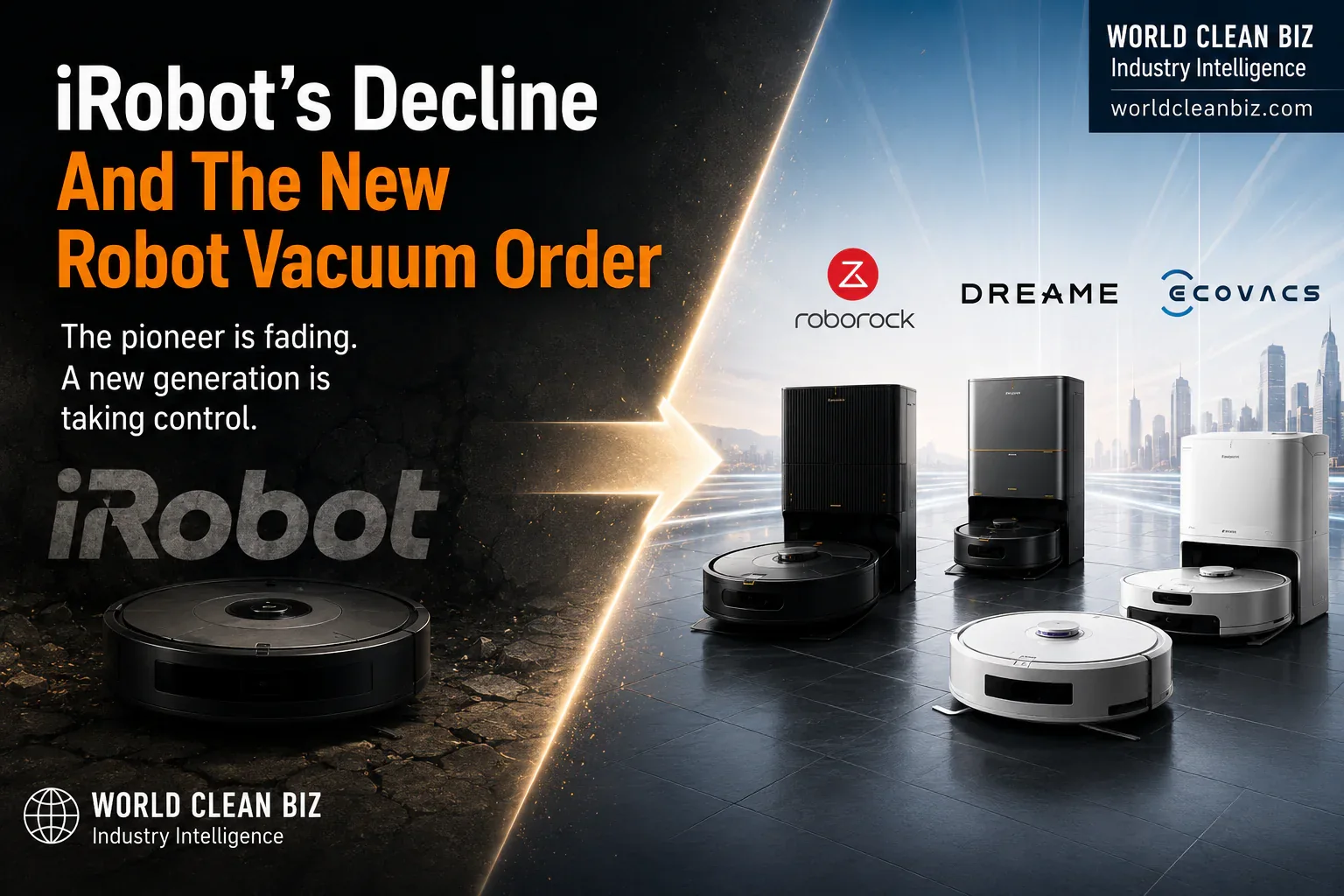
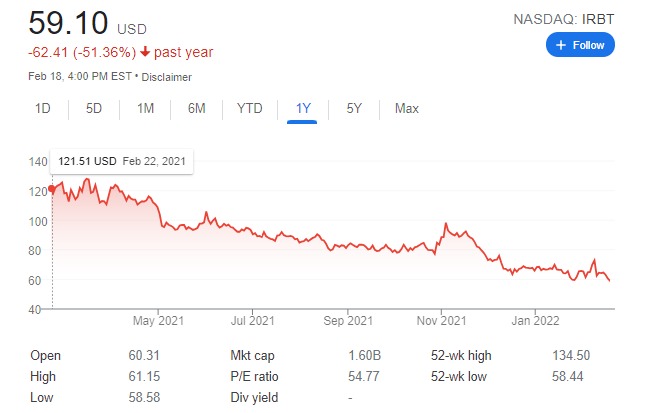
- iRobot still has brand heritage, but its product and cost structure face stronger pressure.
- Chinese robot vacuum brands have changed the pace of category innovation.
- The company’s future depends on whether it can regain product relevance and financial stability.
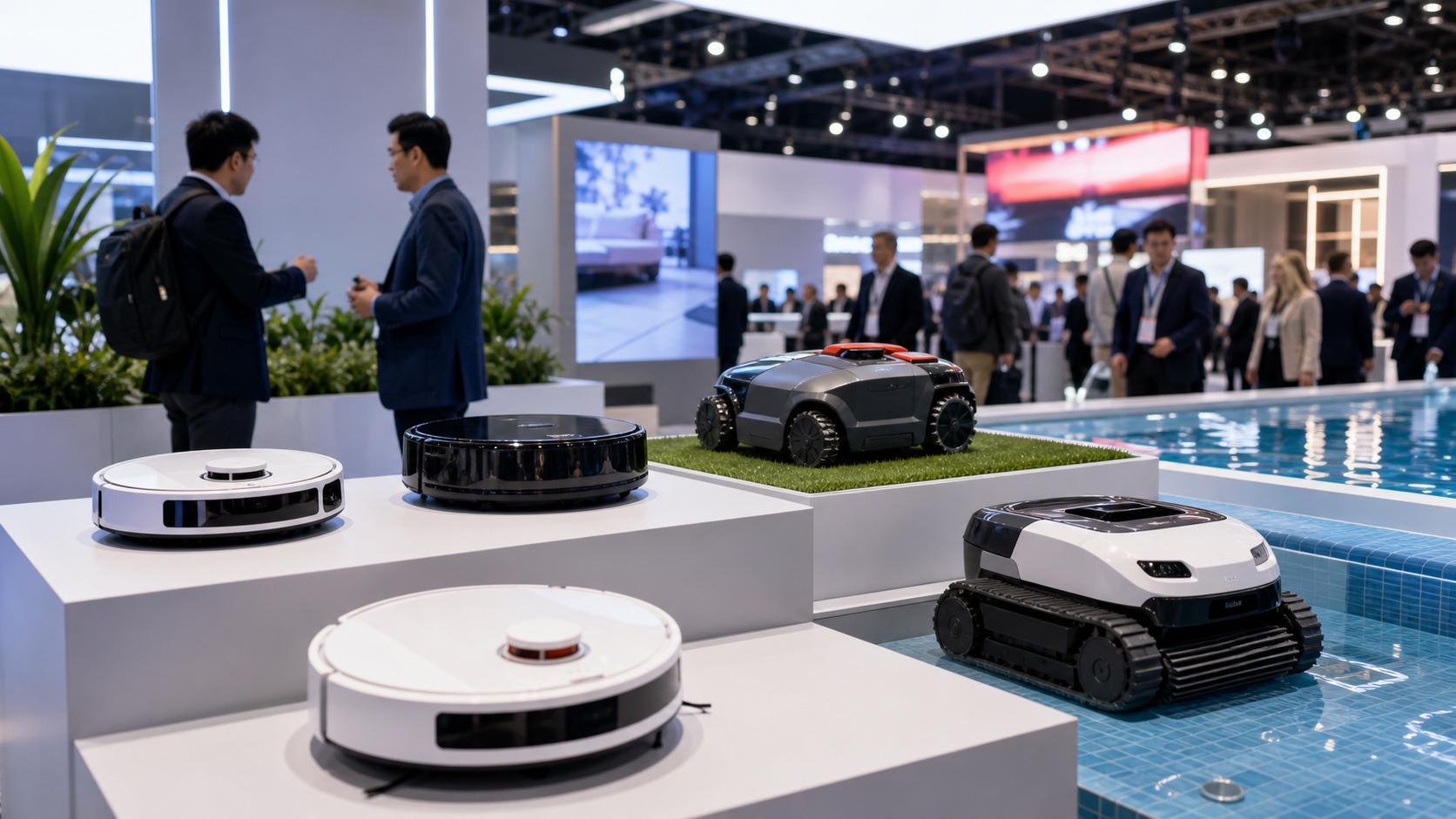
At the AWE in March, iRobot's booth showcased numerous products, and they heavily invested to have Zhang Bicheng as a spokesperson.
Recently, some employees from iRobot’s China region received notifications that if they sign an agreement for termination of employment, they would receive N+1 compensation. Some long-term employees could even get compensation amounts in the hundreds of thousands. Compared to last year's 2N compensation for laid-off employees, this year's offer is slightly less generous but still quite favorable.
All these signs suggest that Picea is initiating an integration process to revitalize iRobot, a once globally leading brand in robot vacuums.
On the other hand, professional investor channels have also reported some information: Picea is in talks with potential buyers to sell iRobot to another brand. Among those rumored to be involved are SharkNinja, an American publicly traded company, and several other foreign companies.
These two sets of information seem contradictory.
I also verified the relevant details from some investment channels here, compiling a summary for your reference:
- The acquisition of iRobot by Picea is quite sudden. It has reportedly prompted inquiries from U.S. senators regarding core issues such as: Why can a Chinese company acquire an American firm? How can we ensure that data from millions of American households does not flow to China? Does this involve any national security concerns in the United States?
Given the current state of Sino-U.S. relations, all matters related to national security are easily magnified or minimized. Previously, TikTok faced continuous regulatory pressure due to the backdrop of U.S.-China tensions. If this issue is formally pursued, it could prevent the acquisition from being completed. Additionally, Amazon's failed acquisition of iRobot due to antitrust concerns exacerbated its financial losses and hastened its sale process.
The inherent uncertainty of this transaction is a key reason why many Chinese companies are hesitant to make such acquisitions. I spoke with several leading enterprises, who all agreed that the risk was entirely uncontrollable; even if the acquisition were completed, there would likely be retrospective accountability over the next few years. This is a ticking bomb whose explosion time no one can predict.
All Chinese companies face this risk, which explains why domestic leading enterprises are not making moves.
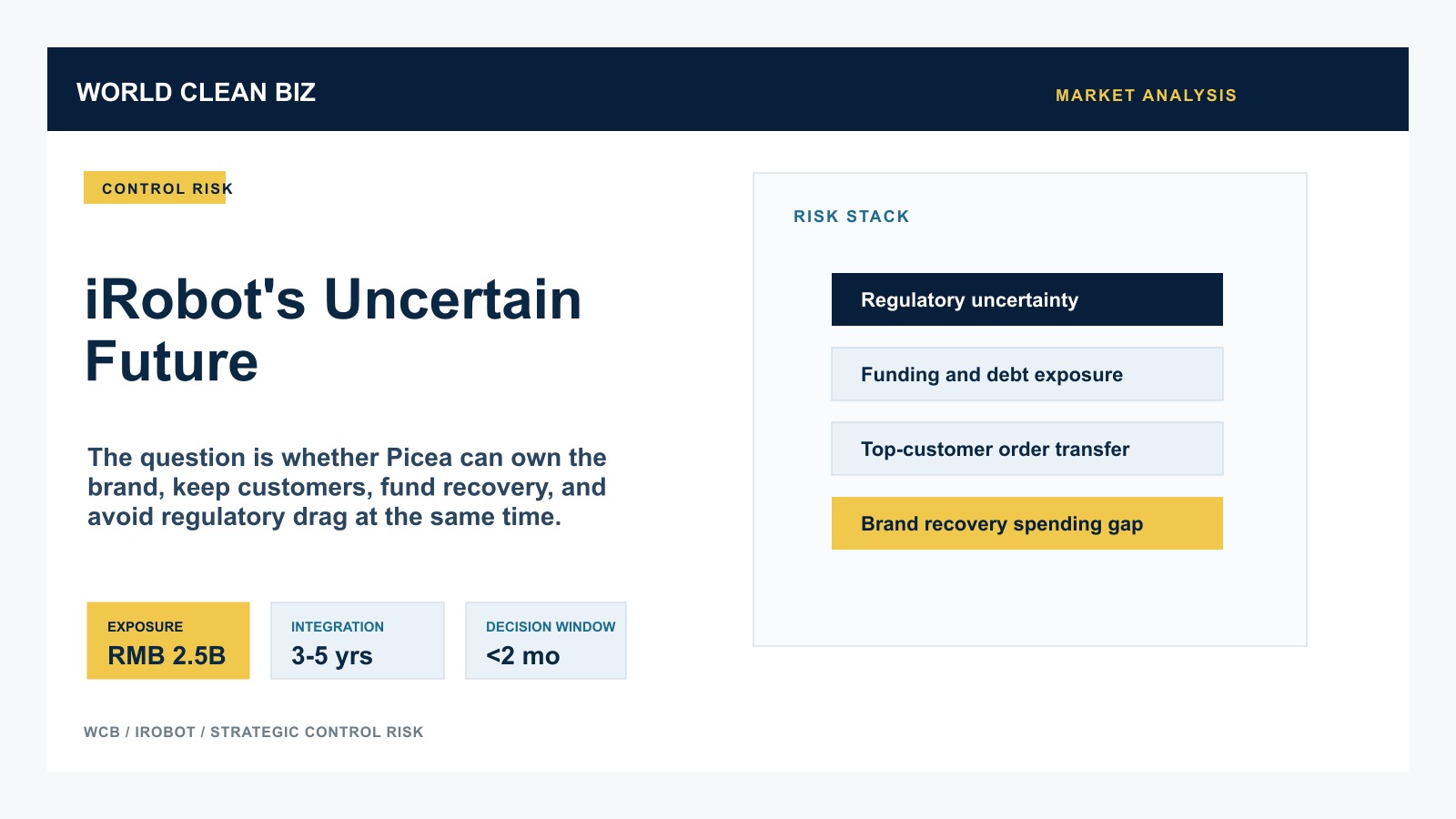
- The funding sources for Picea's acquisition of iRobot. By 2025, Picea’s annual sales are expected to remain below RMB 3 billion. Assuming a net profit margin of around 5%, the annual net profit would be approximately RMB 150 million. Adding in the outstanding receivables from iRobot and other related debts, the total exposure is about RMB 2.5 billion. After discounting the debt portion, it likely amounts to over RMB 1 billion. Therefore, it's probable that Picea has partnered with other funds to complete this acquisition, similar to how Ninebot’s CEO joined forces with Denvo Capital in acquiring SharkNinja.
- The biggest challenge when acquiring a foreign company is team and business integration. Based on past cases, a full integration cycle typically takes 3-5 years. For instance, Haier took over four years to fully integrate the Italian Candy Group into its system; similarly, after Ninebot’s CEO acquired SharkNinja, no significant synergies were achieved between the two companies. If Picea aims to transform iRobot's global operations into a more efficient model akin to Chinese enterprises, it would require at least three years. However, facing comprehensive encirclement from domestic giants like Dreame, Roborock, and Ecovacs, time is precisely what iRobot lacks.
- Another major decision Picea faces is whether to focus on building its own brand or continue as a contract manufacturer. Market rumors suggest that by 2025, Picea’s sales reached around RMB 5 billion, with iRobot-related orders accounting for nearly RMB 2 billion, and combined orders from leading brands like Roborock and Xiaomi totaling between RMB 1.5 billion and RMB 2 billion. The remaining orders from other clients amounted to approximately RMB 1-1.5 billion.
Currently, Picea is facing a critical dilemma: if it decides to focus on its own brand and revitalize iRobot, the existing top-brand customers would likely transfer their projects to other contract manufacturers. Rumors indicate that these top brands have already begun negotiations with alternative suppliers. For these top brands, the logic is straightforward: if iRobot exits the market entirely, they could gain at least several billion yuan in increased market share in 2026; if iRobot is revitalized by Picea and their orders support this acquisition, it would be akin to using their own money to nurture a competitor.
Therefore, for these top brands, canceling orders with Picea would be the optimal choice. Regardless of how Picea responds subsequently, they can still gain greater benefits. If these key customers withdraw their orders, Picea’s remaining small and medium-sized customer orders amount to approximately RMB 1.5 billion. Adding in iRobot's orders, overall sales and profits are likely to decline significantly, potentially undermining its position as the leading contract manufacturer of robot vacuums.
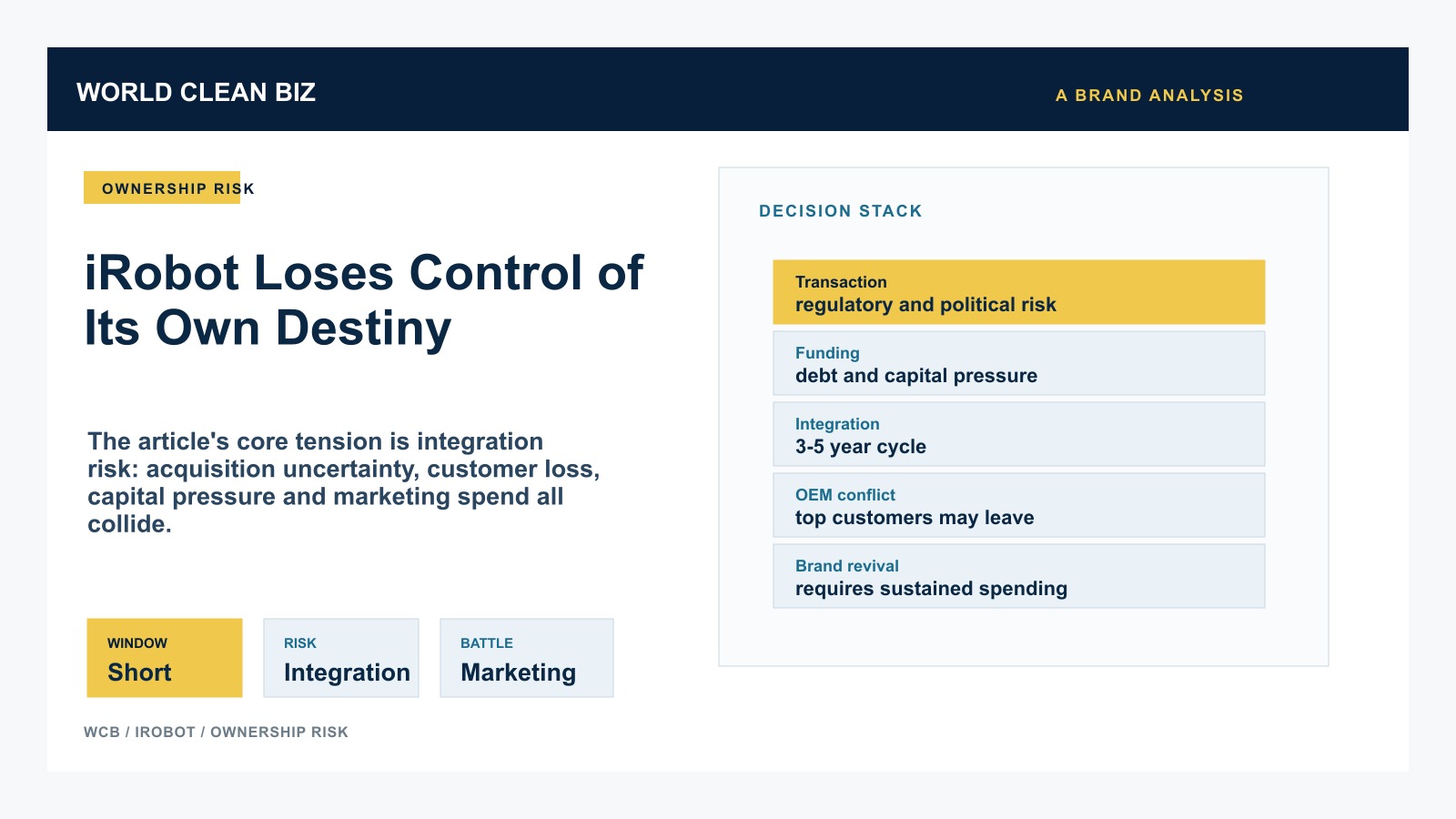
- Even if all previous points proceed smoothly—smooth acquisition, successful internal integration, and adequate funding—the biggest question remains: how much marketing expenditure is Picea willing to invest in the iRobot brand?
Currently, Dreame has reached a revenue scale of approximately 30 billion yuan per year. This year, it not only sponsored the Spring Festival Gala but also hosted its own brand concert and took over the core exhibition hall at AWE. Everyone can see that Dreame's marketing investment will only increase this year and such a branding battle is likely to unfold globally. Additionally, as industry leaders Roborock and Ecovacs are highly probable to follow Dreame's investment pace to ensure they do not fall behind.
The intense competition among the top three players will make it difficult for second-tier brands to see significant returns on their marketing efforts. In this market environment, without sufficient marketing expenses, brand sales are unlikely to achieve growth. As a primarily contract manufacturing company, Picea has difficulty allocating enough funds to join this industry-wide spending spree. Without sustained marketing support, the sales of iRobot will also be hard to break through.
The time window for Picea to make decisions is likely to be no more than two months. Once leading customers and other contract manufacturers have agreed on collaborations and project transfers, even if Picea offers more favorable terms, it will find it challenging to reclaim the contract manufacturing orders from these top clients.
This should also explain why there are market rumors suggesting that Picea is considering selling iRobot. Whether or not the sale goes through, this once global leader in robot vacuum cleaners has already lost control of its own destiny.