- Picea acquired 100% of iRobot in January 2026, but Roomba Electro Plus was probably already in development before the ownership change.
- Supply-chain information indicates that Guangdong Xinbao designed and manufactures Electro Plus, extending an iRobot supplier relationship that predates Picea's takeover.
- The launch broadens Roomba beyond robots, but iRobot still trails Dreame, Tineco and SharkNinja in floor-washer product depth and iteration experience.
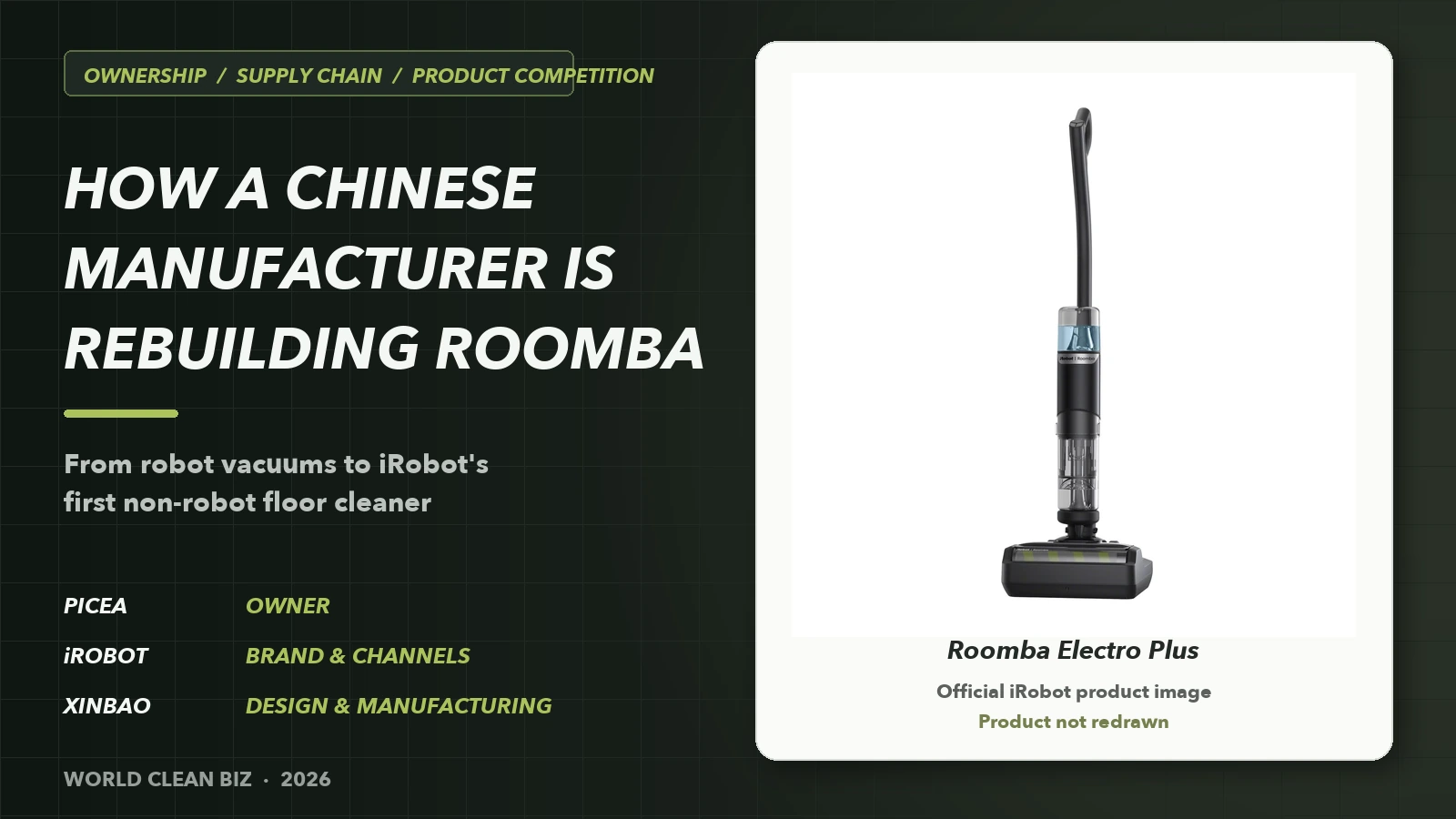
On July 7, 2026, iRobot launched six cleaning products.
Five were Roomba robot vacuums. The other one had to be pushed around by hand.
The Roomba Electro Plus is a cordless floor washer priced at about RMB 2,900 ($399.99) that vacuums, washes and sanitizes in one pass. It adjusts suction, water flow and roller speed as the floor gets dirtier, turns tap water into a disinfecting solution, and returns to a dock that washes, sanitizes and dries the roller with heat.
Less than six months earlier, iRobot had changed hands.
On January 23, Shenzhen-based Picea Robotics and its wholly owned Hong Kong subsidiary completed a prepackaged Chapter 11 restructuring and took 100% ownership of iRobot. The American company that once defined the robot vacuum was now owned by its Chinese contract manufacturer.
From what I have learned from the supply chain, Electro Plus was designed and is manufactured by Guangdong Xinbao Electrical Appliances. Xinbao also made the H1 handheld vacuum and air purifiers that iRobot sold before the takeover. The relationship between the two companies goes back further than Picea's acquisition.
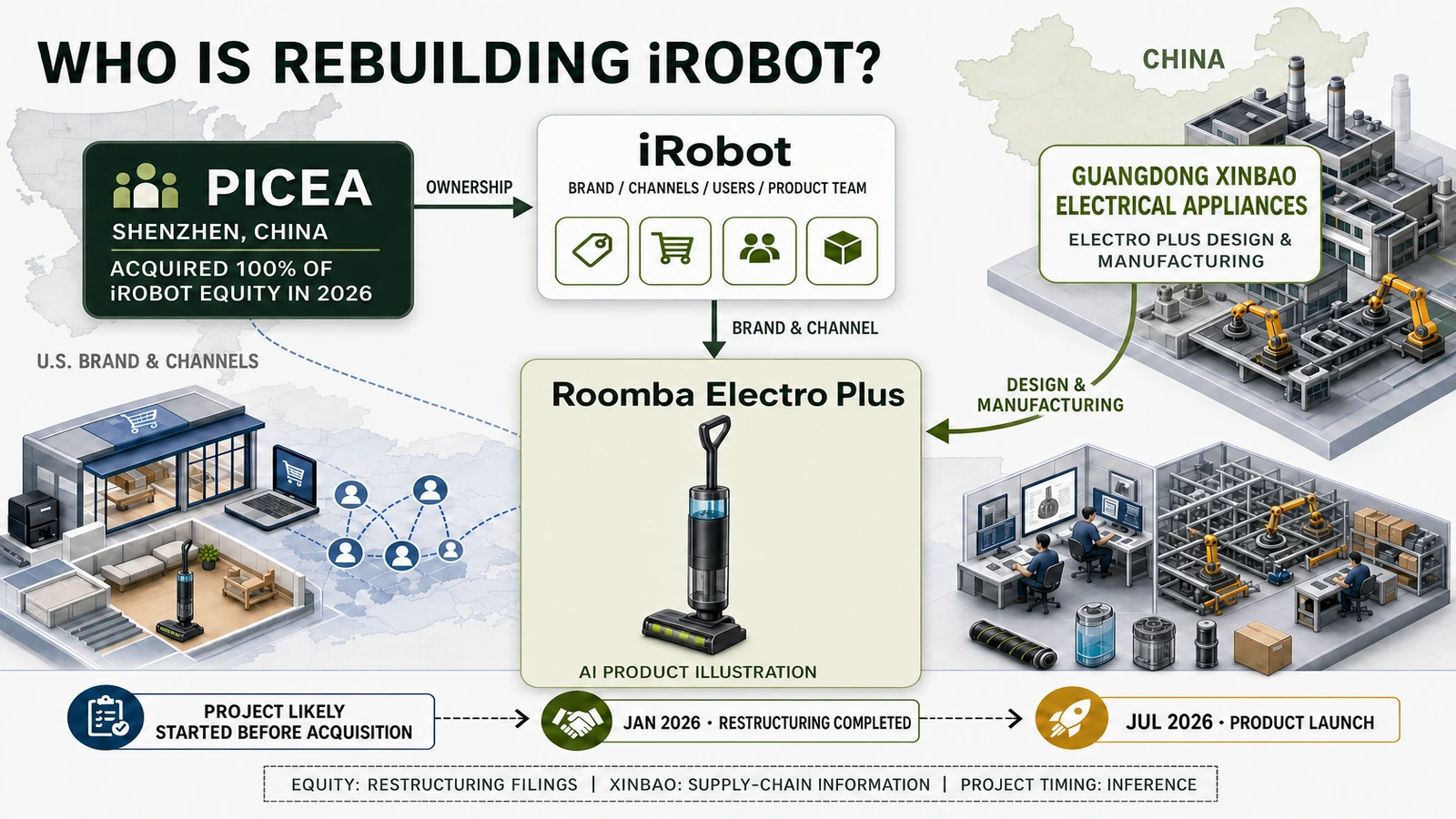
Judging by a normal product development timeline, Electro Plus was probably already underway before the deal. Xinbao still had to finish the design, tooling, testing and production preparation. That work could not have started from scratch only after Picea took ownership in January. By the time Picea took over iRobot, the product was already in development. The new ownership structure then carried it through to production and launch.
iRobot had tried to move beyond robot vacuums before.
In 2021, it launched the H1 handheld vacuum for furniture and corners that Roomba could not reach. The same year, iRobot acquired Swiss air purifier company Aeris, hoping to sell more home health products through its retail network and existing customer base.
Neither business grew large enough to change iRobot's revenue mix. Roomba still carried almost all of the brand's recognition.
Meanwhile, the rulebook for robot vacuums kept changing.
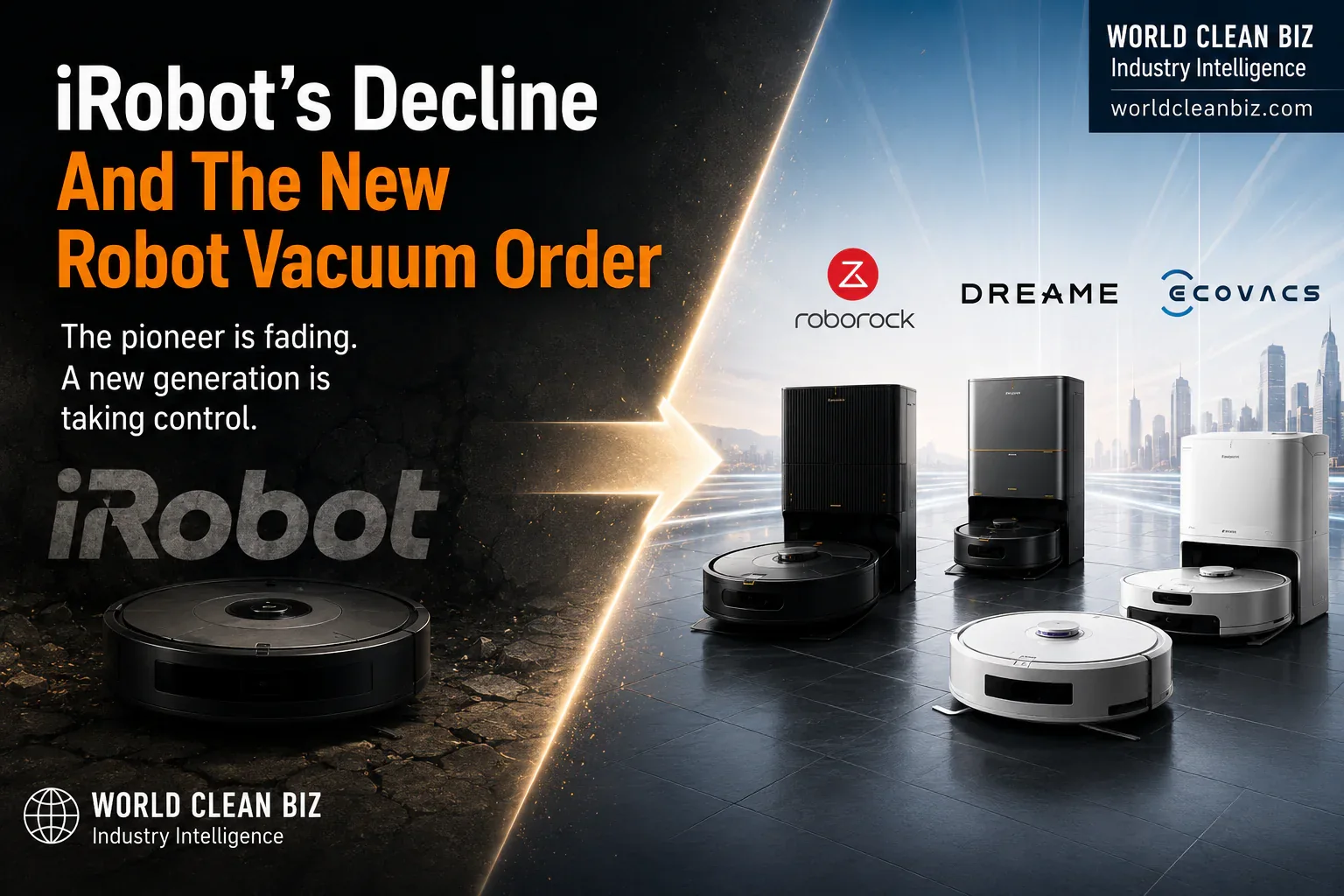
iRobot introduced the first Roomba in 2002. Over the next two decades, the category moved from random navigation to LiDAR mapping, vacuuming and mopping in one machine, automatic emptying, automatic mop washing and all-in-one docks. Chinese companies such as Roborock, Ecovacs and Dreame learned to iterate faster. Roomba increasingly found itself following product routes set by others.
Amazon agreed to buy iRobot in 2022, but the deal collapsed in 2024. Revenue kept falling. Cash became tight. Debt was coming due, and manufacturing bills went unpaid. Picea had long been iRobot's main contract manufacturer, leaving the two companies deeply tied to each other.
In 2025, Picea subsidiary Santrum took over iRobot's secured loan. iRobot also owed Picea a large amount for manufacturing, much of it already overdue. The company entered a prepackaged Chapter 11 restructuring in December. A month later, its old shares were cancelled and Picea received all the equity in the reorganized company.
Picea used to build robot vacuums for iRobot. It now has to decide which programs are still worth funding, which categories should be made in its own factories, and which products should stay with other suppliers.
A few years ago, it developed and manufactured a dual-roller floor washer for Haier. At the time, floor washers were taking off in China, and dual rollers were one of the product routes brands used to challenge Tineco. Picea built a team, opened an office in Suzhou and hired people for the project.
With the product and its channel reach, Haier secured a solid position in the floor washer market for a time. Picea's floor washer business did not continue to expand. When the project failed to develop as expected, the company stopped investing and returned to its main business of robot vacuums.
When Electro Plus entered development, iRobot again chose Xinbao's solution. After taking over iRobot, Picea did not pull the program back into its own factory.
Floor washers and robot vacuums both clean floors, but the overlap ends quickly. Water systems, rollers, dirty-water recovery, edge cleaning, self-cleaning and ergonomics belong to a different product discipline. Xinbao had already made vacuums and air purifiers for iRobot and had experience developing cleaning appliances. Keeping the existing supplier saved iRobot from rebuilding a team and a production line, and got the product to market sooner.
Picea is still a robot vacuum manufacturer. It is now also managing iRobot's products and orders across other suppliers, including Xinbao.
The overseas floor washer market is entering a high-volume growth phase in 2026. Based on industry channel and order information, both Dreame and Tineco are expected to reach the million-unit level in overseas floor washer sales this year. After years of consumer education and supply-chain iteration in China, the category is entering more overseas retail channels.
Roomba can handle routine daily cleaning. A floor washer deals with spills and the deeper clean that still needs a person behind the machine. Put both under the same brand, and iRobot has more to sell to the same households and more products to move through the retail network it already has.
Electro Plus comes with the features now expected of a mainstream floor washer: electrolyzed-water sanitization, dirt sensing, anti-tangle cleaning, and a dock that washes and dries the roller with heat. Its price of about RMB 2,900 ($399.99) also puts it squarely in the mainstream overseas price band.
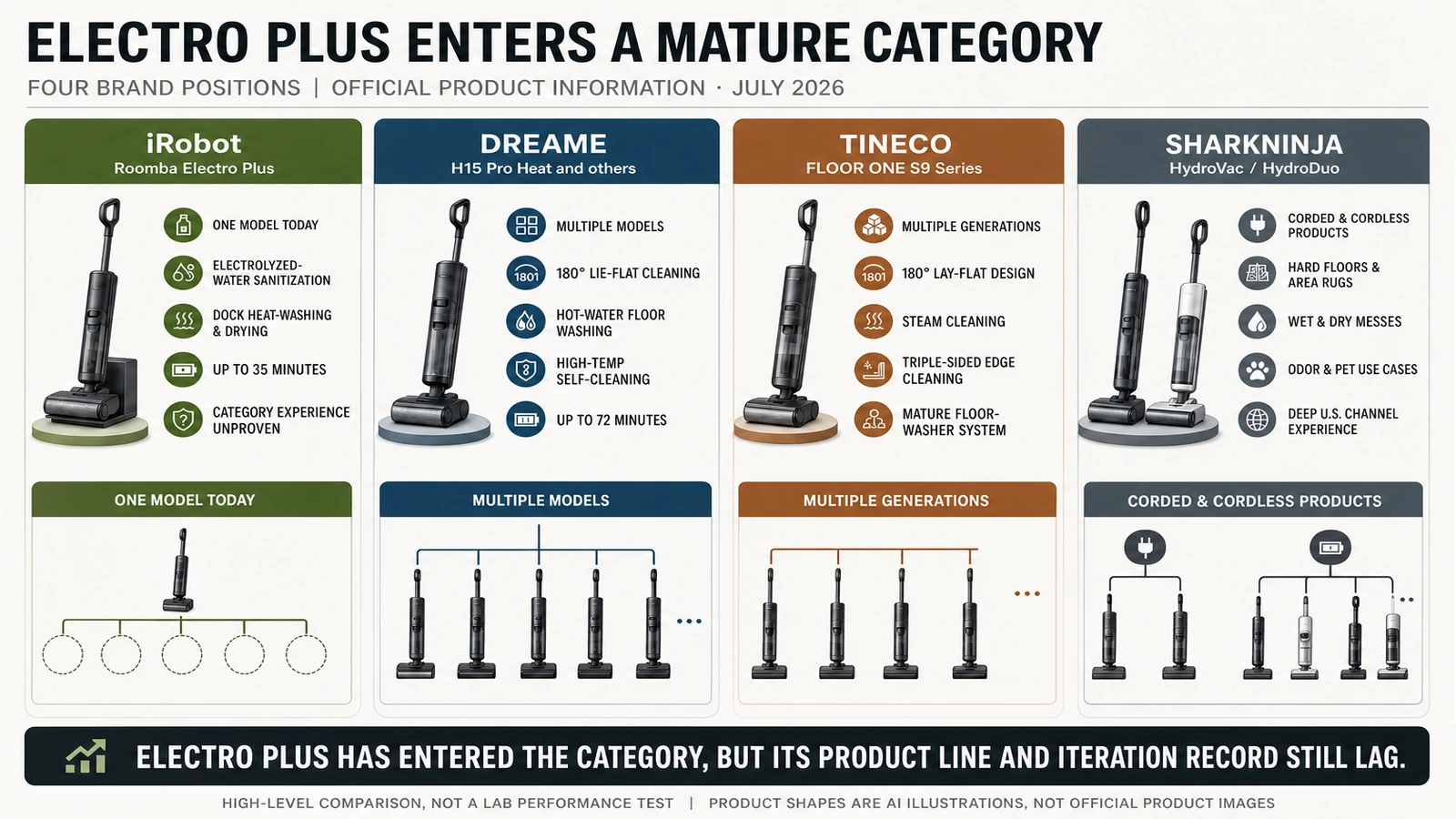
Dreame and Tineco have already pushed floor washers into 180-degree lie-flat cleaning, multi-sided edge cleaning, hot-water or steam cleaning, longer runtimes and several price bands. SharkNinja has an even broader floor care lineup in the United States, spanning cordless vacuums, floor washers, carpet cleaners and upholstery cleaners, with products continually developed around dry debris, wet messes, stubborn stains and homes with pets. Its understanding of American users, retailers and cleaning scenarios is also far more complete than iRobot's today.
For now, electrolyzed-water sanitization is the only relatively clear selling point Electro Plus has established. In product design, cleaning scenarios, model coverage and iteration experience, it trails not only Dreame and Tineco but also SharkNinja, iRobot's longtime rival in the American market. Roomba is a familiar name in North America, but what reaches the shelf is still a floor washer without an obvious product advantage. It will be very difficult for Electro Plus to catch brands that have already completed several rounds of iteration in the short term.
Consumers will compare it directly with Tineco, Dreame and Shark. The Roomba name can win attention. Cleaning performance, reliability, consumable costs and after-sales service will decide whether people buy it.
The H1 vacuum and Aeris air purifier went through much the same test. iRobot had the brand and the channels, but neither line became a new pillar of growth. Electro Plus first has to prove that the Roomba name can stretch to a handheld floor washer. A broader product family can come later.
The iRobot that Picea took over still has its American headquarters, engineering and product teams, global retail relationships, existing users, patents and software systems. Picea knows the robot vacuum supply chain. Companies such as Xinbao can provide mature solutions in adjacent categories. Electro Plus shows how that combination can work: products developed and made through China's supply chain, then sold overseas through iRobot's brand and channels.
Many of the products iRobot launched in 2026 were probably started before the acquisition. The next Roomba technology platform, whether Electro Plus grows into a full range, and whether Picea can turn Chinese supply-chain speed into better iRobot products will only become clear with the products that come next.
Picea has iRobot moving again. Whether it can rebuild a real product edge and revive the brand that once led the world in robot vacuums will remain one of the most closely watched stories in the cleaning appliance industry over the next few years.