- Freudenberg’s acquisition of Nilfisk creates a cleaning products and equipment group with about RMB 18.2 billion (€2.349 billion) in combined 2025 revenue.
- Vileda Professional and Vermop bring manual cleaning, while Nilfisk adds professional machines, automation and a Chinese manufacturing base.
- Kärcher remains larger and more integrated; Freudenberg still has to connect its brands, channels and service capabilities into one operating system.
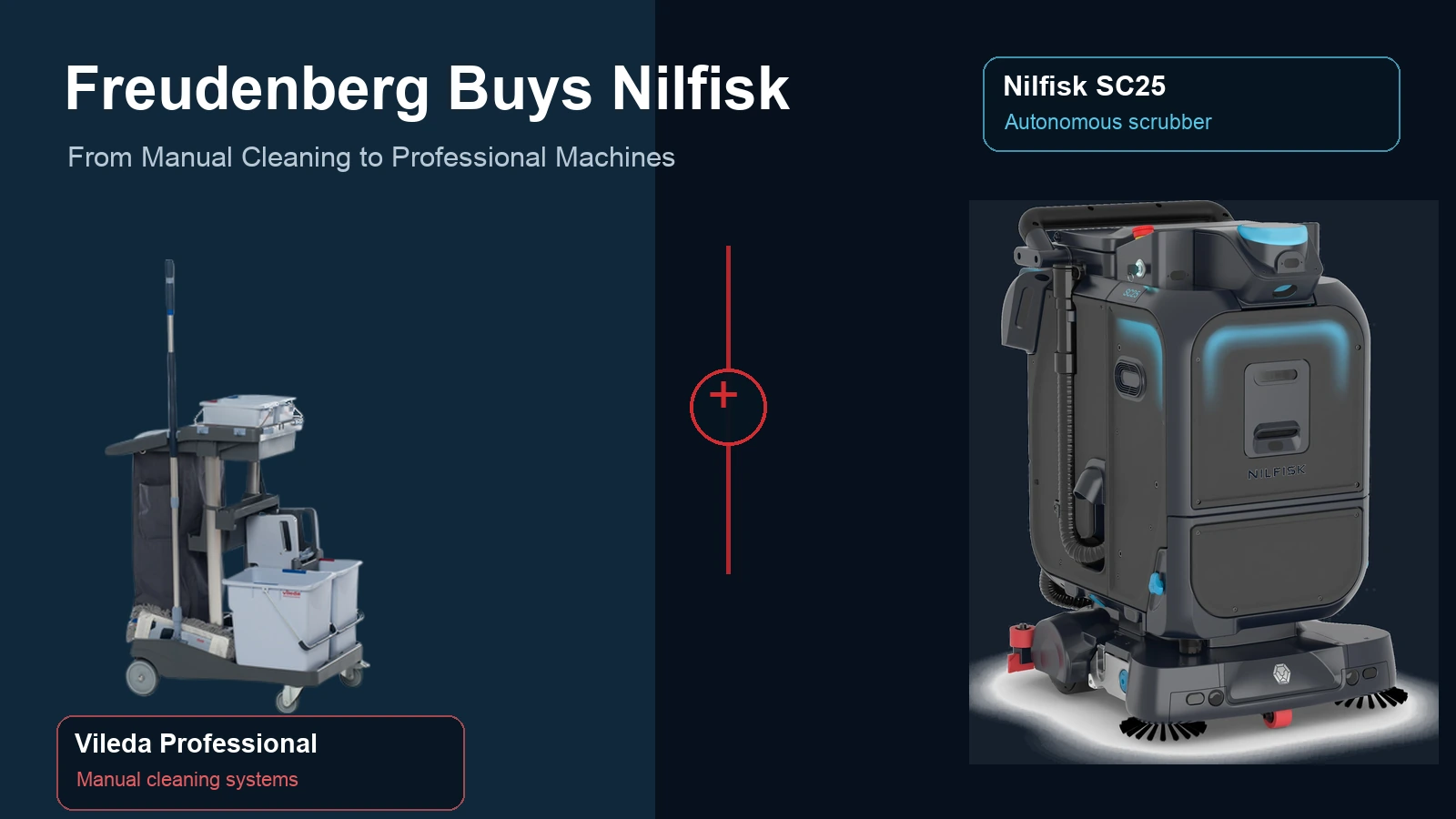
In April 2026, Freudenberg Group, the German company best known in cleaning for its Vileda mops, bought Nilfisk, a business with 120 years of history.
Freudenberg Home and Cleaning Solutions acquired more than 90% of Nilfisk’s shares and then began the compulsory acquisition of the remaining shares and the delisting process. Based on the two companies’ 2025 revenue, the deal creates a cleaning products and equipment group with about RMB 18.2 billion (€2.349 billion) in revenue and roughly 8,400 employees.
Within the wider Freudenberg Group, Nilfisk is still only one new business. Freudenberg generated about RMB 90.7 billion (€11.7319 billion) in revenue in 2025 across automotive components, materials, medical and other industrial businesses. It has the capital and the time to keep restructuring a slow-growing professional equipment company away from the public market.
Nilfisk’s board began reviewing strategic options in the spring of 2025 and later ran a competitive sale process. Freudenberg ultimately offered DKK 140 per share in cash, a 35.9% premium to the pre-announcement share price, valuing Nilfisk’s equity at about RMB 3.9 billion (DKK 3.798 billion).
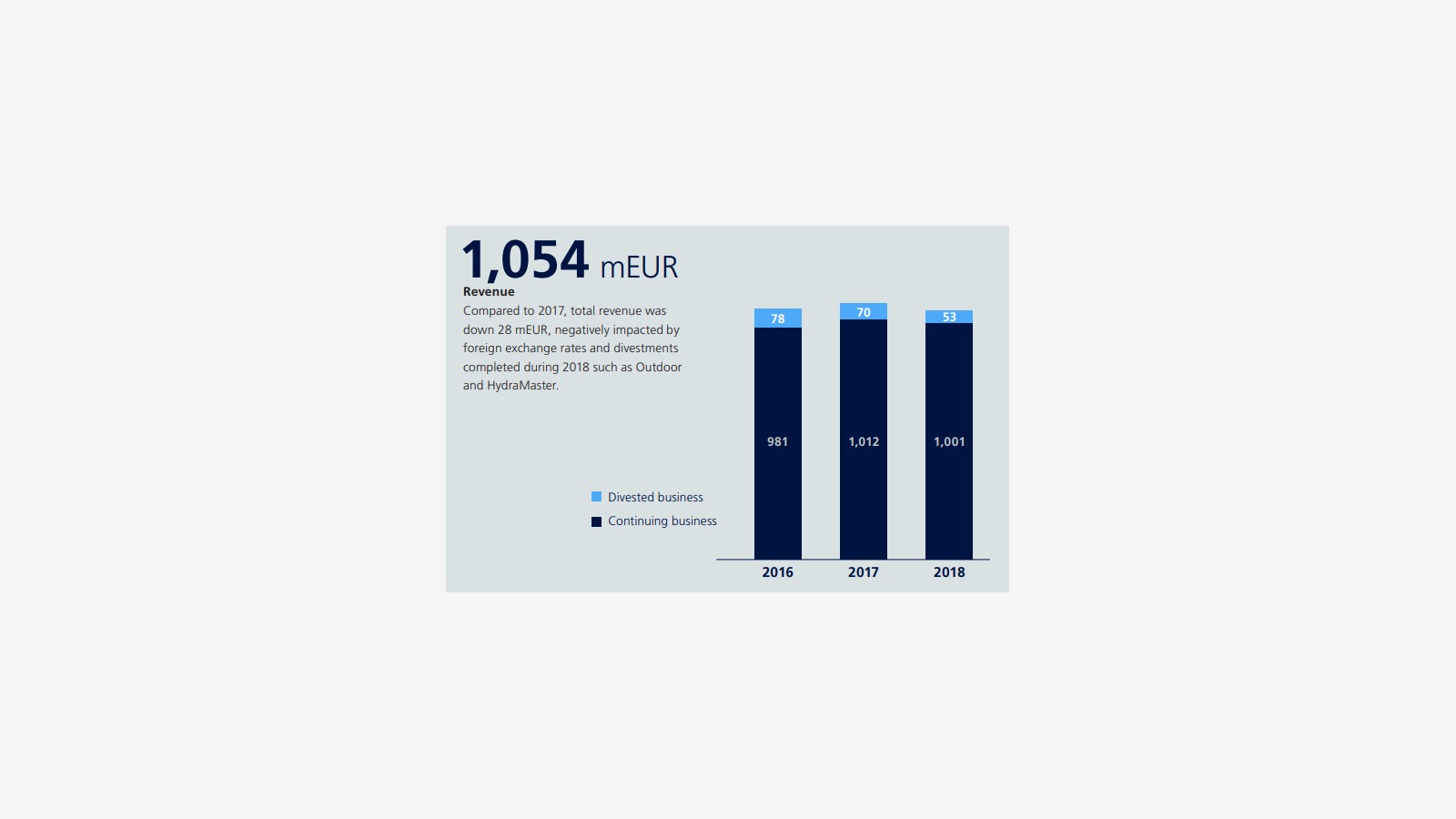
The board unanimously recommended that shareholders accept. Nilfisk was not in operational collapse. Revenue in 2025 was about RMB 7.7 billion (€996.3 million), its EBITDA margin before special items was still 13.0%, and organic growth was only 0.2%. Free cash flow had turned negative, while production and cost restructuring continued. Nine years after Nilfisk went public, its major shareholders chose an industrial owner able to hold the company for the long term.
When the deal closed, Nilfisk described it as “a new phase.” CEO Jon Sintorn said Freudenberg would bring scale, stability and a long-term perspective. Nilfisk will continue operating as a standalone brand. Neither company has announced a timetable for integrating sales and products or set quantified targets.
Nilfisk was not Freudenberg’s entry into professional cleaning.
Vermop was founded in 1927, initially as a mop-sewing business. After the Second World War, the founding family restarted production in Wertheim, Germany, and later expanded into professional cleaning tools, trolleys and digital management. The company remained under third-generation family ownership until Freudenberg acquired it in 2023.
Two years later, Freudenberg began harmonizing Vermop with Vileda Professional. Most Vermop professional cleaning systems are gradually moving under the Vileda Professional brand, while Vermop retains its machines and software. Before that brand integration was finished, Freudenberg moved again and bought the much larger Nilfisk.
Nilfisk’s history began in Copenhagen in 1906. In 1910, the company launched the C1, which it describes as Europe’s first electric vacuum cleaner. From the 1950s, Nilfisk expanded into industrial vacuuming and floor-cleaning equipment. It acquired the US professional cleaning equipment company Advance in 1994 and Dongguan-based Viper in 2007, gradually becoming one of the major companies in the global professional cleaning equipment market.
Viper also brought Nilfisk into China’s manufacturing system. In 2018, Nilfisk closed its Suzhou manufacturing site and moved professional equipment production to Dongguan, while outsourcing some consumer and private-label products to third-party suppliers. Nilfisk thus built a mixed manufacturing model in China, combining its own factory with external sourcing.
The Dongguan plant has tooling, injection-molding and motor-manufacturing capabilities. Nilfisk reported that the site produced more than 300,000 machines in 2022. After several years of global capacity consolidation, Dongguan remains one of Nilfisk’s five production sites. Dongguan and Suzhou both carry R&D responsibilities, while Shanghai handles distribution.
The Dongguan plant and the Pearl River Delta supply chain behind it are easily overlooked assets in this deal. Freudenberg has acquired an established Chinese development and manufacturing base for professional cleaning equipment. Vermop’s development and production remain primarily in Germany, while Nilfisk connects European professional equipment expertise with Chinese manufacturing.
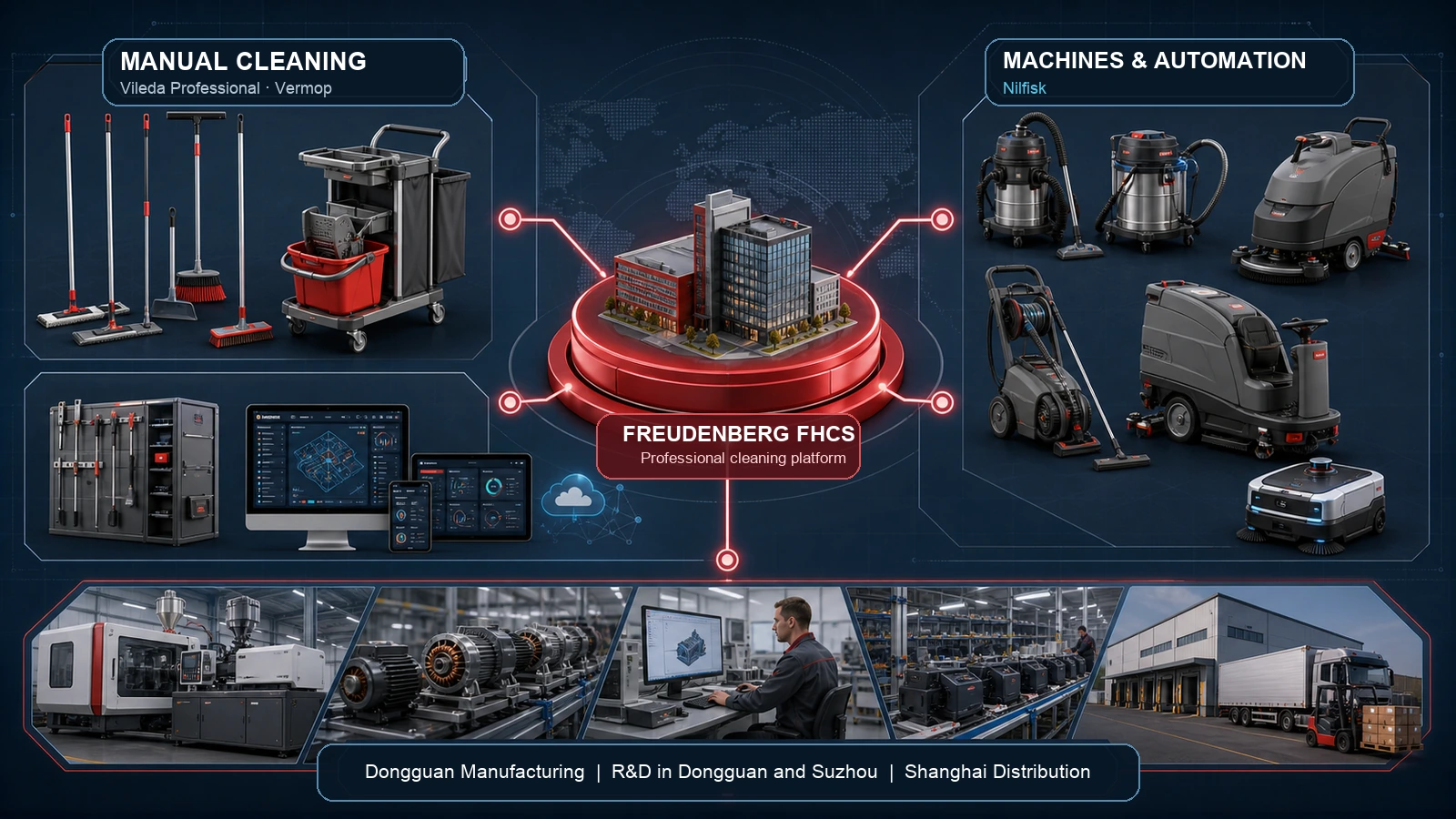
Put Vileda Professional, Vermop and Nilfisk together, and Freudenberg’s direction becomes clear: it now covers tools used by cleaning staff as well as machines that are gradually replacing manual work, giving it access to a larger share of spending from the same facility managers, contract cleaners and industrial customers.
Its main opponent from here is Kärcher.
Nilfisk was already one of Kärcher’s longstanding competitors in industrial vacuums, floor scrubbers and pressure washers. In industrial vacuuming, both companies serve hazardous-dust, continuous-duty and central vacuum applications, including customers in food, pharmaceuticals and metalworking. After the acquisition, that competition extends from professional equipment into manual cleaning and broader cleaning systems.
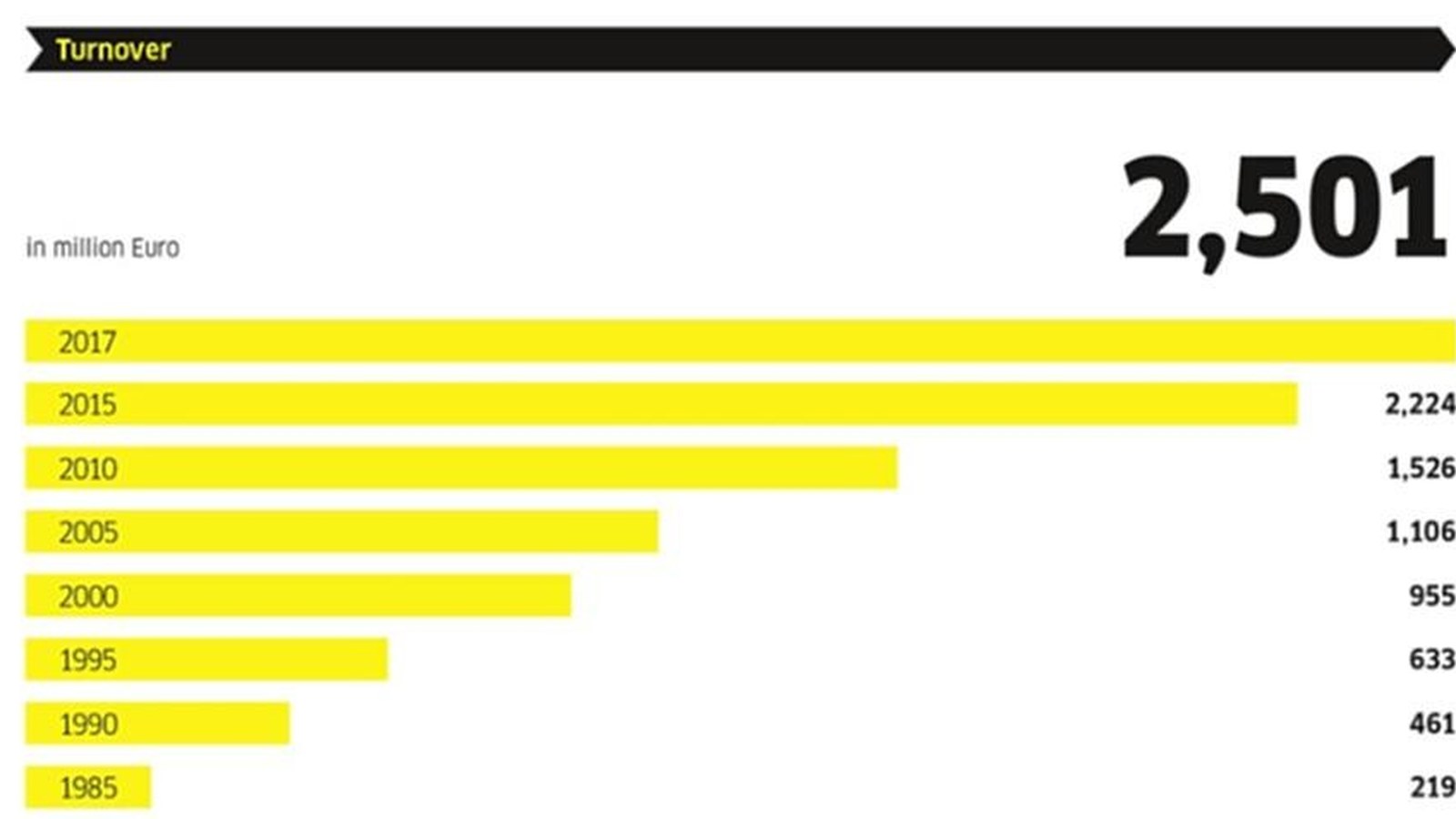
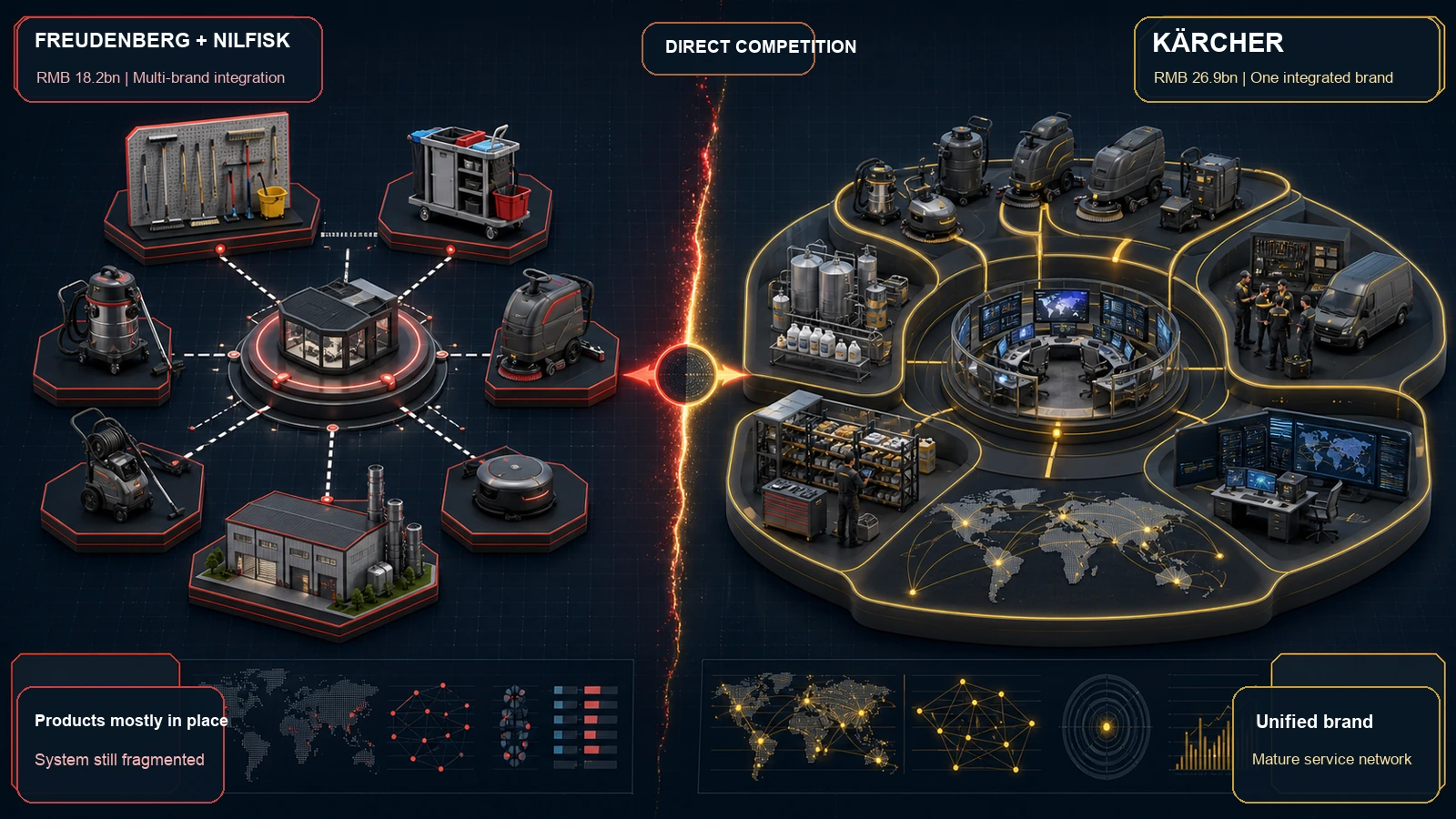
Kärcher remains larger. It generated about RMB 26.9 billion (€3.483 billion) in revenue in 2025, employed 17,000 people and already had a global sales and service network. The combined FHCS business is roughly 67% of Kärcher’s size by revenue and has about half as many employees.
The product gap, however, has narrowed substantially. Nilfisk covers industrial vacuuming, floor-cleaning equipment and pressure washing, while Vileda Professional and Vermop add manual cleaning tools. Freudenberg now owns most of the products it needs to compete directly with Kärcher.
The remaining gap is how those products work as one business. Kärcher sells machines, detergents and service under one brand and has built a network of more than 50,000 service points. Freudenberg’s Vileda Professional, Vermop, Nilfisk, Advance and Viper businesses still have their own products and channels, and cleaning chemicals remain a missing piece. Putting the brands inside one group does not automatically create one system.
Automation presents the same problem. Nilfisk has launched the SC25, developed with Singapore-based LionsBot, while Kärcher has built its KIRA cleaning robot range. Tennant sold its 10,000th autonomous scrubber in 2025. Whether Nilfisk can accelerate robot development away from the public market will directly affect Freudenberg’s distance from both companies.
The deal will also change the position of mid-sized professional cleaning companies. Large customers have traditionally bought mops, trolleys and floor scrubbers from different suppliers. More groups will now put those products into one sales and service system. Companies built around a single tool or equipment category will become more dependent on regional channels and specialist applications.
When Chinese commercial cleaning robot companies enter Europe and the US, they will no longer be competing with just one machine from a traditional equipment company. Nilfisk already has R&D and manufacturing in China, while Freudenberg adds an established route into European manual cleaning. To win large projects, robot companies will need channels and after-sales capability as much as product performance.
Freudenberg has bought most of the assets it needs to challenge Kärcher. Vileda Professional and Vermop provide access to manual cleaning, Nilfisk brings professional equipment, and Dongguan provides a Chinese manufacturing base. The outcome of the deal will depend on whether Freudenberg can connect the customers and service networks behind those brands.
Kärcher spent decades building that system. Freudenberg has only just put the pieces on the same table.