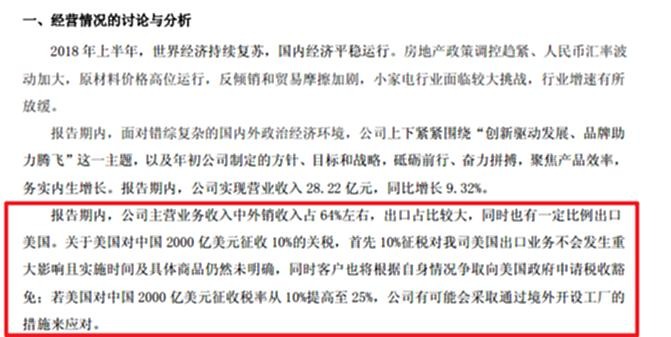
- The 2019 tariff escalation forced vacuum cleaner companies to reassess U.S.-China supply-chain exposure.
- Major brands and suppliers faced different pressures depending on manufacturing footprint, customer structure and export dependence.
- The article treats trade friction as an early signal of a broader manufacturing and sourcing realignment.
Trump sent several tweets that caused the Chinese stock market to fall for several days.
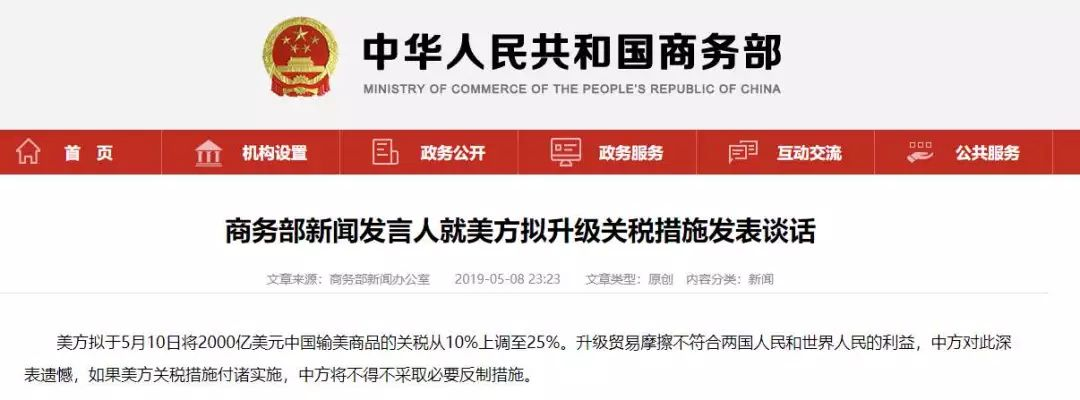
Then today the Ministry of Commerce issued a statement
A spokesman for the Ministry of Commerce stated that the United States plans to raise tariffs on US$200 billion of Chinese goods exported to the United States from 10% to 25% on May 10. Escalating trade friction is not in the interests of the people of the two countries and the people of the world. China deeply regrets this. If the US tariff measures are implemented, China will have to take necessary countermeasures.
>
>According to arrangements, Liu He, member of the Political Bureau of the CPC Central Committee, Vice Premier of the State Council, and Chinese leader of the China-US Comprehensive Economic Dialogue, will visit the United States from May 9 to 10 to conduct the 11th round of consultations with the United States on economic and trade issues.
At present, no one can predict what direction the friction will take in the end. We can only wait for the official announcement on Friday.
In the vacuum cleaner industry, what are the trends of the major giants?
Bissell: reached a cooperation agreement with VS Industry, an important foundry of Dyson, starting from the transfer of one product OEM from Flextronics. It is reported that VS is no longer producing vacuum cleaner for Dyson, and AirWrap and other products are still in production.
Shark: We have led some partners to inspect it. No models have been transferred yet.
iRobot: It has begun to transfer the production of some models to Vietnam. It can be seen from iRobot's annual report that the focus in 2019 is to prevent problems caused by trade frictions. The frictions that lasted for several months have caused iRobot losses of millions of dollars.
TTI: TTI had an early global layout and had factories in Vietnam for a long time. However, the site in Vietnam was not large enough to cope with this industrial transfer.
Here you can see the speeches of the three companies Bissell, iRobot, and Shark at the 301 hearing.
The situation of several major machine manufacturer giants arriving in Southeast Asia:
Lake: We previously prepared to invest tens of millions to build a factory in Vietnam to cope with this time, but it was temporarily shelved because the situation eased. According to multiple sources, Lake has sold the site in Vietnam.
Ecovacs: It is understood that Ecovacs has not taken any action in this regard. A very important factor should be that Ecovacs has very few OEM orders, so it has not considered going to Southeast Asia to compete for OEM orders. However, the North American market is also an important market for Ecovacs/Tineco's own brand sales. I wonder if they will go to Southeast Asia for this reason?
EUP: It is understood that EUP did not take any action last year, but now the major customer Bissell has begun cooperation with VS. If it does not go, will VS take advantage of it?
Ningbo Dechang: As TTI's main foundry, Dechang responded the fastest last year and also bought some sites.
Ningbo Fujia: As the main supplier of Shark, Fujia also bought a piece of land in Vietnam last year. Later, I heard that this matter had changed again.
Guangdong Xinbao: Xinbao Electric has also cooperated with factories in Indonesia to deal with this trade friction.
Accessory Factory:
Chunguang Technology: The largest hose manufacturer in the vacuum cleaner industry, Jinhua Chunguang Technology has cooperated with Dyson in Malaysia many years ago. Because of its cooperation with Dyson, it has become the largest hose supplier in the vacuum cleaner industry and has successfully been listed on the market. Since it has been deployed in Southeast Asia for a long time, Chunguang Technology will be the biggest beneficiary of trade frictions.
Jingguang Plastic: Another hose company in Jinhua, Jingguang Plastic, also established a factory in Vietnam very early and is expected to benefit from it.
Samsung: Samsung’s lithium battery factory is in Malaysia, and lithium batteries are a very important part of current cordless vacuum cleaners and account for a large proportion in the original factory certification. It is expected that Samsung will also benefit from this trade friction.
Other parts manufacturers in the industry have also followed the complete machine manufacturers/customers in the past for inspections. However, since the complete machine customers have not yet moved, no parts factory has yet put into production.
Below are several articles I have written about this incident before for your reference.