- A few days ago, I found a report on the future market growth of robot vacuum from Roborock's Hong Kong stock prospectus.
- The global number of robot vacuums in 2024 was 20.6 million units, with sales of US$9.3 billion.
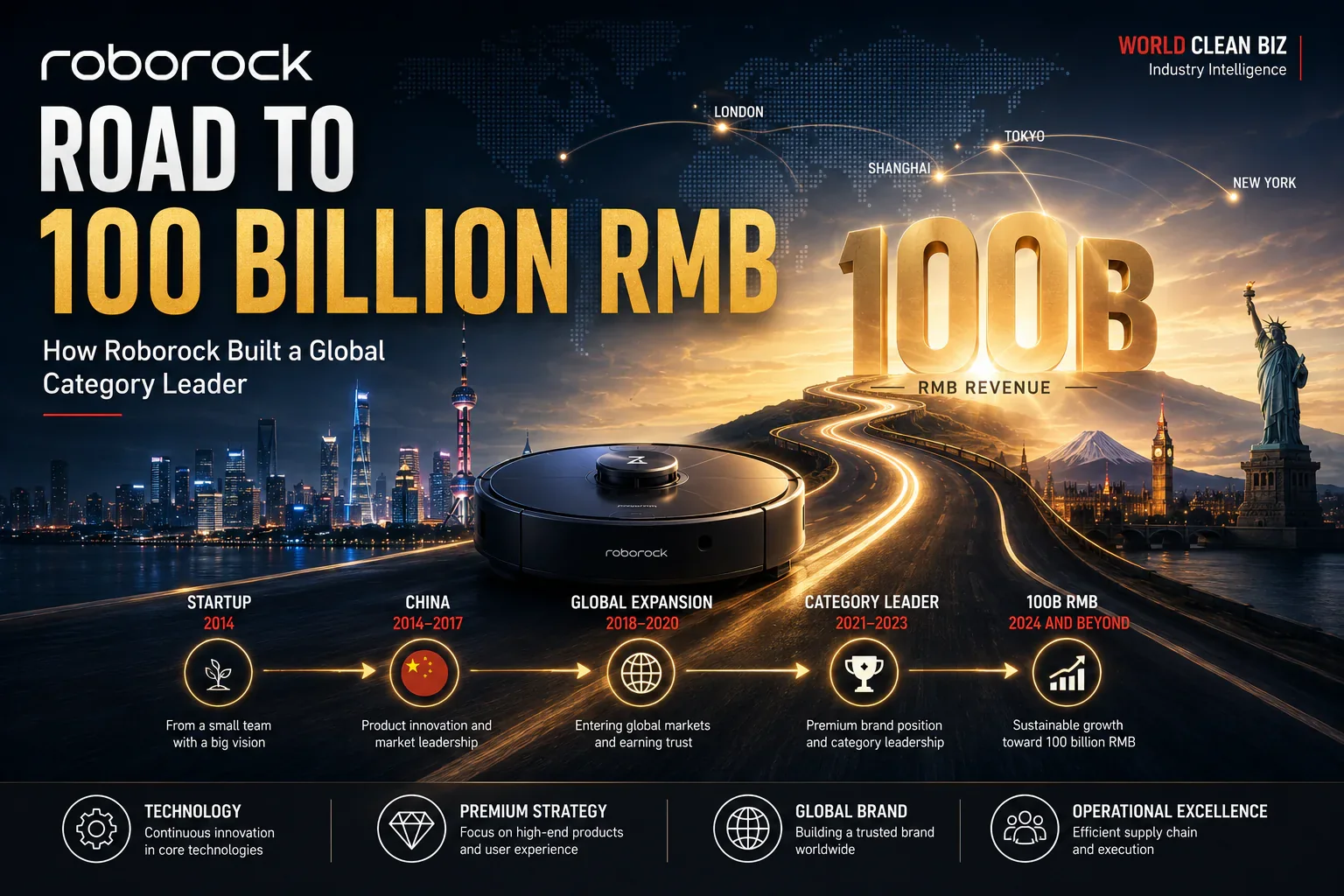
- Roborock's sales in 24 were 11.9 billion RMB, and by 2029 the goal is to reach more than 70 billion RMB, an increase of nearly 6 times.
A few days ago, I found a report on the future market growth of robot vacuum from Roborock's Hong Kong stock prospectus.
The global number of robot vacuums in 2024 was 20.6 million units, with sales of US$9.3 billion. By 2029, it is expected to be 43.2 million units, with sales of US$25.2 billion.
Roborock's sales in 24 were 11.9 billion RMB, and by 2029 the goal is to reach more than 70 billion RMB, an increase of nearly 6 times. Such a large market share is bound to attract everyone's attention. So here we combine the entry of DJI, and let's discuss the pattern of the robot vacuum industry in the near future and in the future.
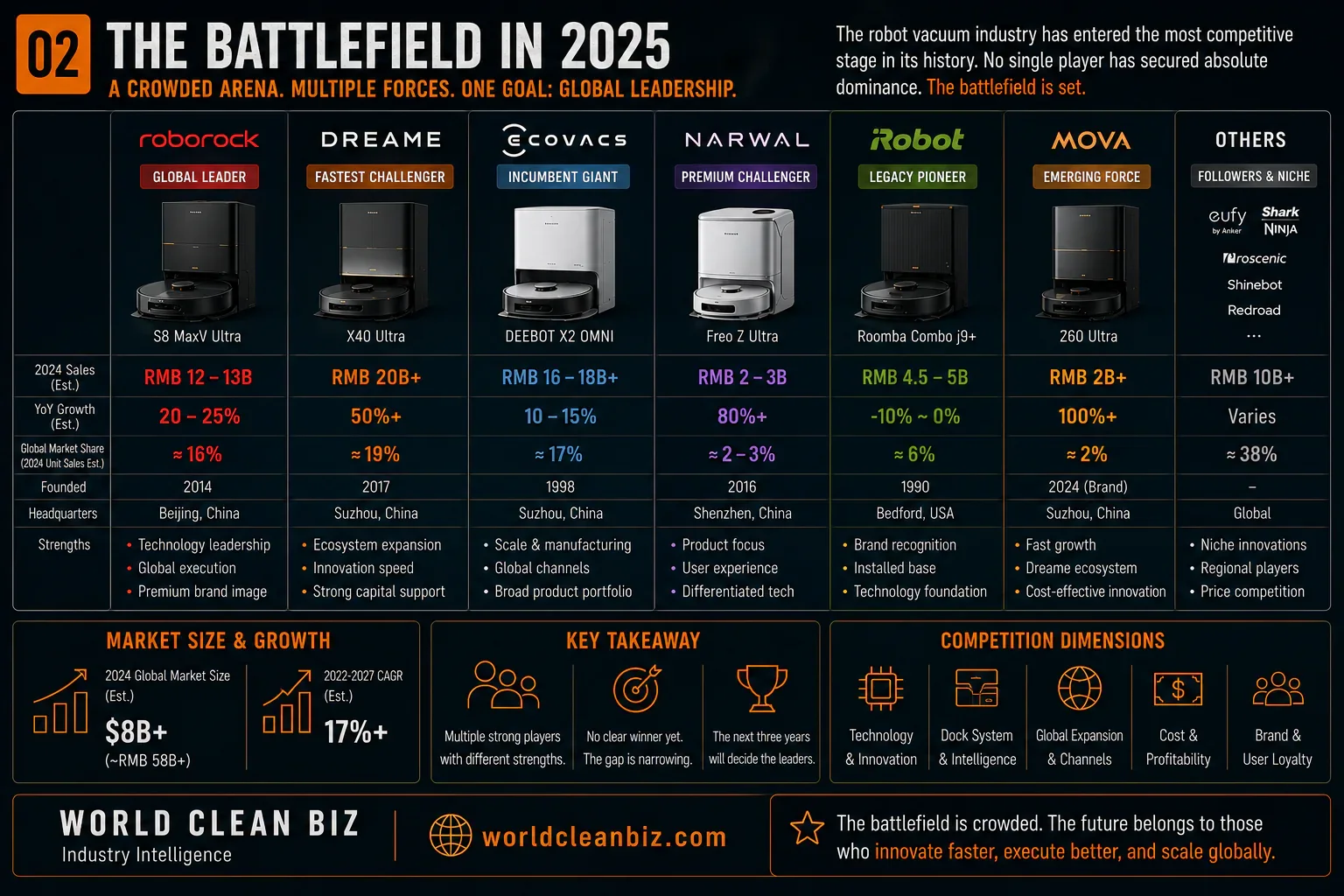
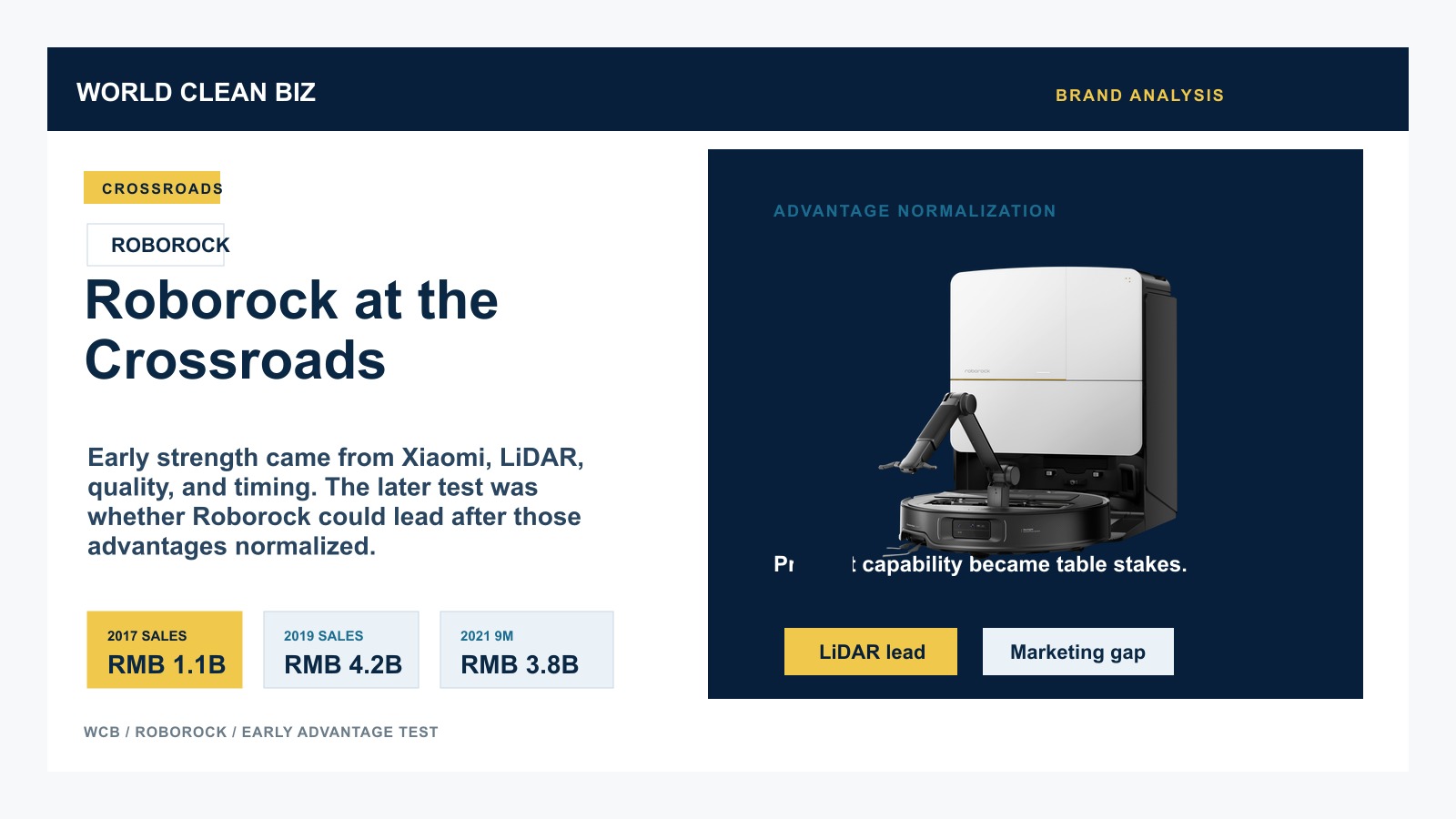
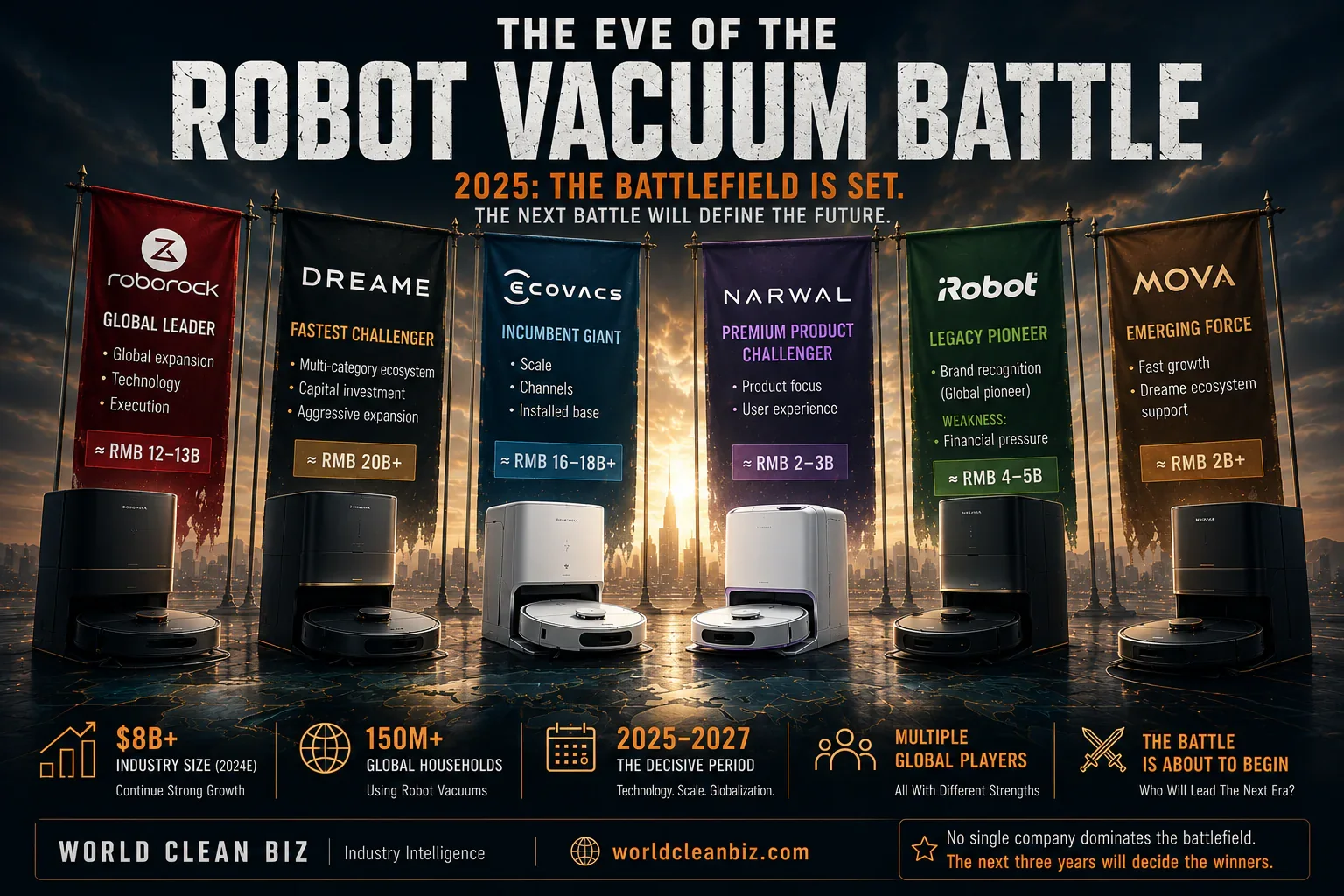
The first is Roborock. Roborock's 24-year sales are 11.9 billion RMB, including 3.5 million robot vacuums, 10.89 billion sales, 619,000 hard floor washers and washing machines, and 1.07 billion RMB. Currently, in terms of robot vacuum alone, Roborock should be the first in the world. From the overall situation, Roborock should have relatively strong combat effectiveness, a young and stable team, high human efficiency, and a very high annual compound growth rate.
The current shortcoming of Roborock is that it has not yet found a second growth curve. Although robot vacuum is very powerful, it has not opened up a big gap with other competitors. Technically, the top leaders should be similar. Hard floor washers are also growing rapidly, but it will be difficult to reach the current industry status of robot vacuum in the future. I personally think that the washing machines that were mainly promoted before may be updated regularly every year without making any big investment.
So what is the second growth curve of Roborock? I think it will be garden robots. At present, lawn mower robots and swimming pool robots have proven the market capacity, so the next step is investment and talent. According to various sources, Roborock's lawn mower robots should be shipped this year, with a quantity of tens of thousands units, and the goal next year is to reach 200,000 units. Swimming pool robots are also expected to be on the market next year. I think Roborock has the ability to challenge other garden robots and become the leader of the industry.
---------------
Next is Ecovacs. Ecovacs’ total revenue in 2024: 16.542 billion yuan, of which Ecovacs products have global shipments of 2.95 million units and sales: 8.082 billion yuan;
Tineco brand (mainly hard floor washer), global shipments: 4.14 million units, sales: 8.061 billion yuan.
Ecovacs has quickly come out of the failure in 2023, and both brands have achieved good growth in 2024. In terms of robot vacuum, it is less than Roborock. Ecovacs's goal in 2025 should be to achieve double tens of billions of sales, which should not be difficult to achieve.
The current advantage of Ecovacs is that the team has come out of 23 years of failure, and the new robot vacuum products have also been recognized in the market. Under the leadership of Mr. Qian, the new team has stabilized its position.
As the volume of hard floor washers continues to grow overseas, the growth of the Tineco brand overseas can be expected. This is also good news for the Ecovacs Group. I have always said that I was not optimistic about the woks, but it is said that more than 100,000 units can be sold overseas a year, which is already a good result for woks in this price range.
At present, Ecovacs is developing its own lawn mower robots and sells tens of thousands of units a year. Now it is also catching up with Nine, Kumar, etc. It will take some time for the newly invested swimming pool robot company to achieve results.
The strengths and weaknesses of Ecovacs in terms of robot vacuum and hard floor washer are also very clear. If you want sales at the level of 30-50 billion, lawn mower robots and swimming pool robots are also must-win points. Competitors in this area are also not good. Does Ecovacs have enough general-level talents to lead lawn mowers, swimming pool robots and other giants to compete.
---------------
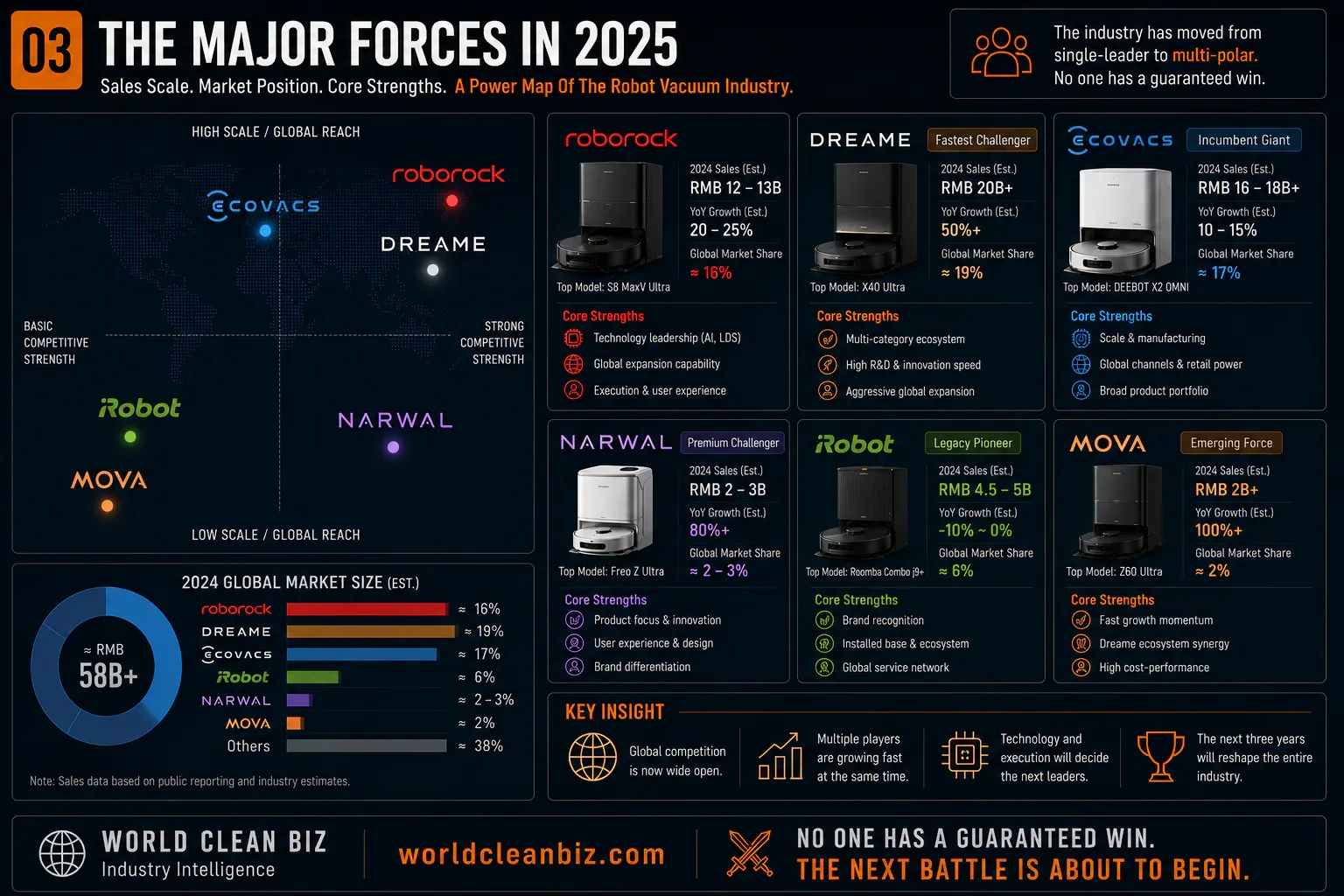
Next is Dreame. Dreame has been a phenomenal company in the industry over the years. It should have made more than 10 billion in 24 years, most of which are cleaning appliances. I have written in previous articles that although Dreame is not listed, the profit margins of listed companies Roborock and Ecovacs depend on Dreame. Once Dreame starts a price war and increases marketing investment, everyone will be forced to follow suit and dilute their net profits.
At present, Dreame is also growing rapidly in the field of robot vacuum. The lawn mower robot was launched last year and is said to have reached more than 100,000 units. It is said that it will hit 200,000 units this year. The reason why the entire cleaning appliances are so popular is also because of Dreame, but the employees in the entire industry also want to thank Dreame. Without Dreame, the current salary in the industry may not be as high as it is now.
Dreame's fundamentals in cleaning appliances are still good, with obvious advantages and disadvantages. It has grown from scratch to more than 10 billion in 2019, creating many miracles. However, the physical world has laws, and rapid growth is actually not the norm. What Dreame needs to do is to accept the external environment of non-growth. Only by accepting the environment of non-growth can we usher in the next wave of outbreaks.
---------------
Narwal. Some time ago, I made a video called Resurrected Narwal. I started paying attention to Narwal when it first started crowdfunding and wrote many articles. Their team also experienced many ups and downs, which was not easy. Last year, they should have achieved almost 3 billion, breaking even. , this achievement is already very rare for the company Narwal. You must know that the current leaders are listed companies Roborock and Ecovacs, and in the middle there is Dreame, which is desperately burning money. I think it is very rare that Narwal can survive and grow under the attack of these giants.
To be honest, Narwal has made a huge contribution to the entire robot vacuum industry. Without the product of self-cleaning mopping robots for clean water tanks and sewage, the robot vacuum industry would not be as prosperous as it is now.
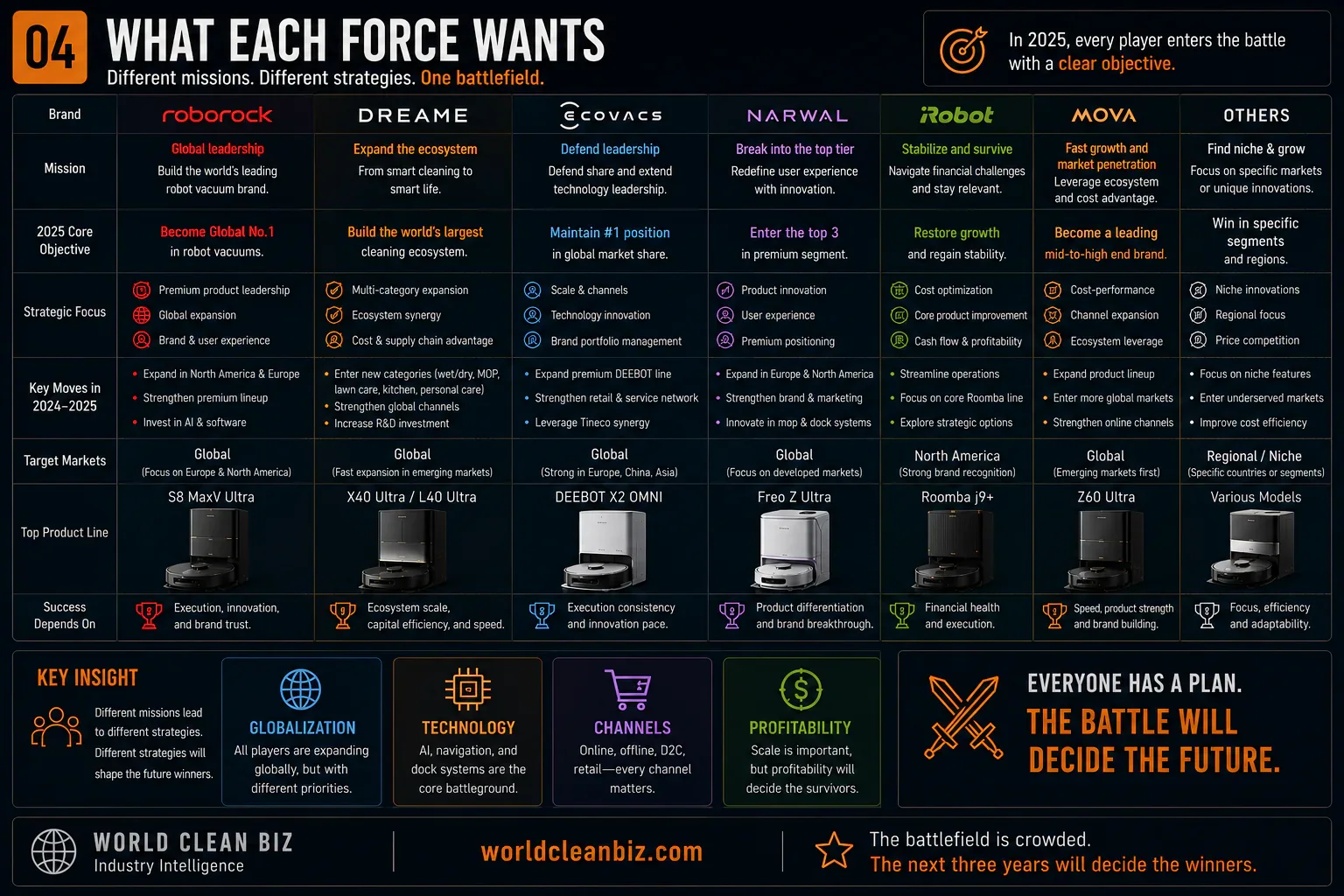
A team that has not experienced the test of life and death is incomplete. Starting last year, Narwal began to keep up with the pace of the industry in terms of robot vacuum and hard floor washer, and even did better than others in some places. Overseas markets that had been absent before have slowly begun to grow. Now Narwal should be said to be on the road of rapid growth. What we need to do now is to stabilize these basics and achieve overall sales of about 5 billion.
The shortcoming of Narwal is that compared with the leading companies in the industry, it is still relatively fragile, and its fundamentals are not stable enough. It is currently suitable for shabby development. I have also heard that Narwal is preparing for an IPO. I wish Narwal all the best.
---------------
Xiaomi. Xiaomi Technology's robot vacuum should currently be at the level of 1-2 million units a year. In the early years, the Roborock, Dreame and Picearobot vacuum businesses all relied on Xiaomi's channels and supply chains to grow. However, as these companies grew, these companies gradually separated from Xiaomi. This is not just a problem with the robot vacuum, but a problem with the entire Xiaomi ecological chain. The good ecological chain companies in the early years basically broke away from Xiaomi.
Therefore, how Xiaomi’s ecological chain department handles its relationship with ecological chain companies determines the future development of Xiaomi’s core business.
I think Xiaomi will develop robots in the future The business model of vacuum may refer to large appliances, which are all produced in self-built factories. Now Xiaomi's large appliances are developing very well and will be ranked third in the country in the future (preceded by Haier and Midea). A few days ago, I saw Xiaomi recruiting a large number of people in Suzhou, which may also indicate that Xiaomi is determined to establish its own base in the center of the industry, rather than in Beijing as before. Relying on the self-built factories with Shunzao, the next step may be to compete with Roborock, DreamEcovacs, etc.
The advantage of Xiaomi's robot vacuum business lies in its channels. Xiaomi's global channels are very strong. It can rely on its mobile phone business to get cooperation that others cannot get. Moreover, Xiaomi has a good brand reputation overseas and has a high degree of consumer trust.
The shortcoming of Xiaomi's robot vacuum is that it relied too much on the R&D capabilities of companies such as Roborock, Dreame and Picea. If it builds its own factory in the future, it may take some time to make up for these lessons. Once Xiaomi fills in these basic shortcomings, the power of global channels will be terrifying.
---------------
DJI innovation
DJI is a company admired by everyone in the technology industry. It sells more than 70 billion in the drone market a year, accounting for 70% of the market share of the consumer drone market. And no one challenges DJI's market position in drones. DJI's robot vacuum has been rumored since 4 years ago, and the first product will finally be released on August 6.
Judging from the first product, it may be quite impressive for other companies, but for DJI, the product strength can only be said to be okay. This product currently has no advantage for leading companies. News from the supply chain is that DJI places orders for 200,000 units a year, and the first order is more than 10,000 units.
Judging from the current product alone, it may be difficult to shake the position of the leading company, but if it continues to iterate for 2-3 years, there should still be opportunities. The only question at the moment is how determined DJI is to invest in the robot vacuum project? If DJI thinks that the robot vacuum business is likely to reinvent DJI in the next five years, then DJI's investment and determination should make all practitioners worried and scared.
---------------
AnkerEufy
AnkerEufy has always been a big player in overseas robot vacuum products, sometimes selling more than 1 million units a year. Some time ago, I sorted out Anker's entire cleaning appliance product line. You can watch this video when you have time. In the early years, Anker's largest shipments were cheaper models. In recent years, domestic robot vacuums have evolved too fast, and Anker has not kept up. Its situation overseas is somewhat similar to that of IRobot, and its market share has also declined.
Since last year, Anker's robot vacuum products have also re-launched some new products, which are more radical from the perspective of product development. They have made all the products that we can think of but dare not make. From this point of view, Anker's determination should be quite high.
As for the domestic market, Anker is probably unlikely to enter it. It is already at a hell level and it will lose money if it enters.
In the overseas market, currently, domestic giants are constantly going overseas, and then awesome companies like DJI have also come to an end. Overseas channels may be even more awesome. How Anker responds to these situations and makes choices will also be what everyone pays attention to in the future.
---------------
Midea and Haier
Both Midea and Haier are major appliance giants, with sales of hundreds of billions a year. Many friends who don't know this industry often said that if Haier, Midea and others come in, no one else will have anything to do. But the reality is not like this.
Fang Hongbo of Midea has also talked about this problem before, because the technology of the robot vacuum industry has changed too fast in recent years, and it takes a certain amount of time for an elephant like MideaHaier to move from perception to decision-making. If we wait until the product technology is stable, and the prices and channels are competitive, the advantages of companies like MideaHaier will come out.
So the best strategy for Midea and Haier now is to stay at the poker table and wait until the technology is stable. I think this node should be between 27 and 29. By 29, the product technology route of the entire industry should be unified, and the market capacity will greatly increase (robot vacuum to 40 million units). At this time, the product is no longer the advantage, but the channel. Currently, the two companies with the strongest channels in the world are Midea and Haier. At that time, they may create a new growth curve in addition to the original major appliance business.
---------------
iRobot and Picea
Before 2019, IRobot was the industry leader and the only representative, while Picea was still unknown before 2019. Picea relied on LiDAR navigation technology to cooperate with large companies such as Xiaomi, while IRobot stuck to visual navigation, causing its market share to be continuously eroded. Now IRobot's market value is only more than 100 million US dollars, and there are constant rumors of being acquired.
But no one expected that the two companies would now be combined. Due to cost issues, IRobot's products are now manufactured by Picea, and some products are selected directly from Picea. This makes IRobot's price in the market somewhat competitive.
Picea is said to be producing 6 million units this year. In terms of robot The vacuum OEM industry should also be ahead of others by a cliff. The self-owned brand 3i products previously launched in China were a bit too radical, and their sales were not particularly good. It is said that they can sell several thousand units a year. Now it is said that Picea will represent iRobot in the domestic brand, and then it will launch two products in the country, an all-round base station with a disk scrubbing capacity of more than 2,000, and an all-round base station with a crawler type scrubbing capacity of more than 4,000 units.
It seems that Picea will also imitate the path of Xinbao's acquisition of Mofei, trying it domestically first, and if it succeeds later, it will acquire licenses from other countries. If it were not for political factors, Picea would indeed be a good choice to acquire Irobot. IRobot's own channels, patents, and brands play a great role in Picea. Picea's product development and supply chain capabilities are also scarce for IRobot. If the two are really combined, it should still have a certain impact on the leading companies.
Therefore, due to political factors, the possibility of a combination between the two parties is relatively low. But we have not seen any black swans in these years. Who knows if there will be some curved way to save the country? Everything is possible.
---------------
Other entrants
At present, other companies entering the robot vacuum market are simply looking for death, but there is a type of company that has opportunities. That is lawn mower robot and swimming pool robot companies. The talent structure and sales strategy of sweeping/lawn mowing/pool robots are very similar. In addition, the ceiling of lawn mowing and swimming pool robots is relatively obvious. After reaching a certain size, these companies will definitely look for a new growth curve.
Similarly, robot vacuum companies are also constantly entering the field of lawn mowing and swimming pool robots. The boundaries between these parties are very few.
I personally think there are several companies that may make a difference in the robot vacuum industry:
Mammotion. Mammotion is a subsidiary of Songling Robot. Currently, robot vacuum shipments are very strong. It is said that 400,000-500,000 units will be shipped this year. This number should be exaggerated. There are rumors that Songling is already laying out robot vacuums for home use, but I don’t know whether it will be attributed to Mammotion or something else.
Nine. Nine was also a Xiaomi eco-chain enterprise in its early years. It thrived with its two-wheeled vehicles in its early years. In 2024, Nine's sales were 14.196 billion yuan, including 7.211 billion yuan for electric two-wheelers, 3.381 billion yuan for balance bikes and scooters, 976 million yuan for all-terrain vehicles, and 895 million yuan for robot business. I have seen an interview with Wang Ye, the founder of Nine, and he talked about how Nine's business grew from a It started as a robot company, and just happened to be engaged in the balance car business. Then because the balance car business had many restrictions in terms of regulations, it started to enter electric two-wheeled vehicles. They will not be absent in the future of embodied intelligence. Nine is now the first echelon of boundless lawn mowing robots. In 2024, it will not be more than 100,000 units, and it is said that the target is about 250,000 units in 25. Nine has entered the robot The vacuum business should also be a matter of time.
Aiper Intelligent is very strong in swimming pool robots. It is said that it is now the second largest swimming pool robot brand in the world. And it has recently received a lot of financing. In terms of swimming pool robots, the product line covers everything from the highest to the lowest. Now it has also begun to release lawn mowing robot products. Facing Ecovacs, Roborock, Dreame, etc. continue to enter the field of swimming pool robots, offense is the best defense, and it is only a matter of time before Aiper enters the robot vacuum.
Beatbot Innovation. Beatbot Innovation, founded by Wang Shengle, the original co-founder of Dreame, released the Beatbot swimming pool robot last year and sold 500 million in its first year, ranking first among high-end swimming pool robots. It later received several hundred million in financing and is now gaining momentum. If the future trends are to merge with each other, then it should be a matter of time before Beatbot enters the robot vacuum.
Due to time constraints, there are still some players who I will not do a detailed and in-depth analysis here. If you are interested, you can join me for discussion.