- Battery capability can affect both robot vacuum performance and manufacturing cost.
- Upstream investment may improve supply stability, but it also increases capital and execution risk.
- Ecovacs’ move reflects a broader shift from product assembly toward platform control.
Recently, I came across a news report stating that Ecovacs invested 1.2 billion RMB in a lithium battery project.
According to the TMT Blue Whale channel on December 30th, Suzhou Ta Ding Intelligent Technology Co., Ltd., a wholly-owned subsidiary of Ecovacs Robot Co., Ltd. (hereinafter referred to as "Ta Ding Intelligent Technology"), is investing in a 2GWH polymer lithium-ion battery production project (hereinafter referred to as the "Project") (the final name of the project will be determined by government project approval).
The total investment amount for the project is approximately 1.2 billion RMB, including land fees, factory construction, building installation and other engineering costs, fixed assets, working capital, etc.
According to the announcement, this investment aims to meet the growing demand for lithium-ion batteries in smart home appliances, smart homes, and smart robots. The implementation of this project ensures the role of lithium-ion batteries throughout the supply chain and effectively controls production costs, promoting Ecovacs' business development and enhancing its overall competitiveness.
When I first read about it, I was quite surprised. Based on the shipment volume, the number of 18650 cylindrical cells used by Ecovacs' robot vacuum cleaners and hard floor washers in a year should be around 5-6 million units. If they were to produce these themselves, theoretically, they could save several tens of millions of RMB annually.
However, the lithium battery industry is currently experiencing rapid growth with numerous major players entering the market. The investment amounts are in the billions. While Ecovacs is a significant player in the cleaning appliance sector, if it enters the lithium battery industry, it would be considered a newcomer. An investment of 1.2 billion RMB into this industry would only make Ecovacs a small player with little impact. They have no advantage in raw material procurement and are unlikely to surpass current market players in terms of technology and quality.
What is the true intention behind Ecovacs' investment?
After discussing with some friends, I gained an understanding of Ecovacs' true intentions.
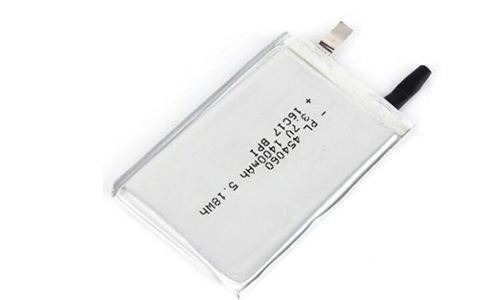
Firstly, the lithium battery factory that Ecovacs is investing in is not a conventional 18650 cylindrical lithium-ion batteries but polymer lithium-ion batteries, commonly known as soft-pack lithium-ion batteries.
Lithium polymer batteries, also known as high molecular lithium batteries, are a type of chemical battery. Compared to previous types of batteries, they feature high energy density, miniaturization, and lightweight characteristics.
Lithium polymer batteries have an ultra-thin characteristic that allows them to be tailored for various product needs, enabling the creation of batteries with different shapes and capacities. Theoretically, their minimum thickness can reach 0.5mm.
In our articles from two years ago, we highlighted several advantages of soft-pack lithium batteries:
- High energy density
- Lightweight
- Diverse shape options
- Higher costs compared to cylindrical batteries
Currently, soft-pack lithium batteries are primarily used on a large scale in the laptop computer, iPad, and mobile phone industries. These industries have a notable characteristic: it is quite normal for individual products to sell over ten million units. However, in our cleaning appliance industry, an individual product selling one million units would be considered a super hit; most products selling 30-40 thousand units are already doing very well. Even for industry giants like Ecovacs (Tineco), their sales figures might not meet the order thresholds of soft-pack lithium battery suppliers when compared to the mobile phone industry.
Due to the diverse shapes of each product, this limitation restricts the use of soft-pack lithium batteries in small household appliances.
In 2020, Roborock released its first vacuum cleaner using a soft-pack lithium battery. However, no other players have followed suit so far. The reasons are simple: the cost is too high, and it does not bring any additional benefits.
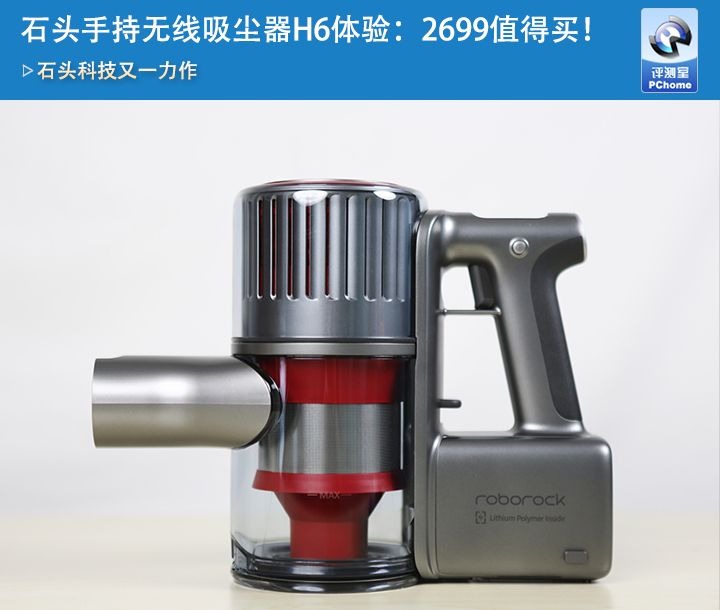
Transition from Soft Pack Lithium-Ion Batteries to Hard Floor Washers
I had previously discussed with friends from the soft pack lithium-ion battery supplier, ATL. While theoretically, soft pack batteries can be shaped in various forms, this is all contingent on order volume. For each unique shape, they need to modify their production lines, which could cost several million dollars. This explains why the industry has remained cautious for these years.
With the rise of smart home appliances over recent years, the trend towards intelligent and lithium-ion powered devices is inevitable. Among them, the transition from traditional power sources to lithium-ion in cleaning appliances was the first wave, with kitchen appliances following suit.
The current 18650 lithium-ion batteries have cost advantages, making cordless vacuum cleaners more affordable. However, they also come with significant drawbacks:
- Explosion Risk: Cylindrical lithium-ion batteries pose an explosion risk, which can be a major crisis for home appliances that often interact closely with users. Although the risk is now very low, any occurrence could still be catastrophic for companies. Polymer batteries, on the other hand, offer much higher safety levels.
- Shape Limitation: Cylindrical lithium-ion batteries are easier and more efficient to produce in large-scale manufacturing. However, for small appliances where design often determines sales, soft pack lithium-ion batteries have a clear advantage due to their flexibility in shape.
- Platformization of Batteries: For electric tool manufacturers, the platformization of lithium-ion batteries is a key focus. Many players entering the cleaning appliance market are doing so by adopting this platform approach. While this idea makes sense, it's not feasible now. It can be concluded that cylindrical lithium-ion batteries will not become the foundation for small appliances; soft pack lithium-ion batteries have greater potential.
Why didn't Ecovacs build a battery factory in previous years but is doing so now?
The reason is simple: Tineco's hard floor washer has been extremely profitable since 2020, and it currently dominates the cleaning appliance market. The money earned should not be solely invested in financial products; instead, it should be reinvested into core technology research and development for greater future potential. Given that hard floor washers typically retail above RMB 3,000, this leaves room for soft pack lithium-ion batteries.
2GWh is approximately equivalent to 12 million cells or about 20 million packs. Ecovacs currently should be able to consume around 50% of its own products by 2023, with the capacity expected to reach 80%. Ecovacs plans to start production at a 0.5GWh level in late 2022; 1GWh in mid-2023, and 2GWh by year-end 2023. The goal is to complete the transition of cells around 2023.
On a larger scale, since most soft pack lithium-ion battery companies are currently focused on computers and mobile phones, they have not yet had the opportunity to pay attention to the home appliance industry. Even if they eventually do focus on this area, they will lack significant clients to enter the market. From this perspective, Aiper Intelligent Technology could potentially grow into a small but influential company with a market value of several billion yuan and become a core player in the home appliance lithium-ion battery industry.
During my research, I gained even more respect for Ecovacs. Such large-scale investments are not trivial for any company, and their exploration benefits the entire industry.
Similar to the development of soft pack lithium-ion batteries, it can be anticipated that foreign companies will initially fail to understand, then dismiss, and finally struggle to catch up in the short term, medium term, and long term. This presents an opportunity for domestic brands to surpass their international counterparts.
Tineco's ambitions extend beyond cleaning appliances; "white technology" might indeed outshine "black technology."