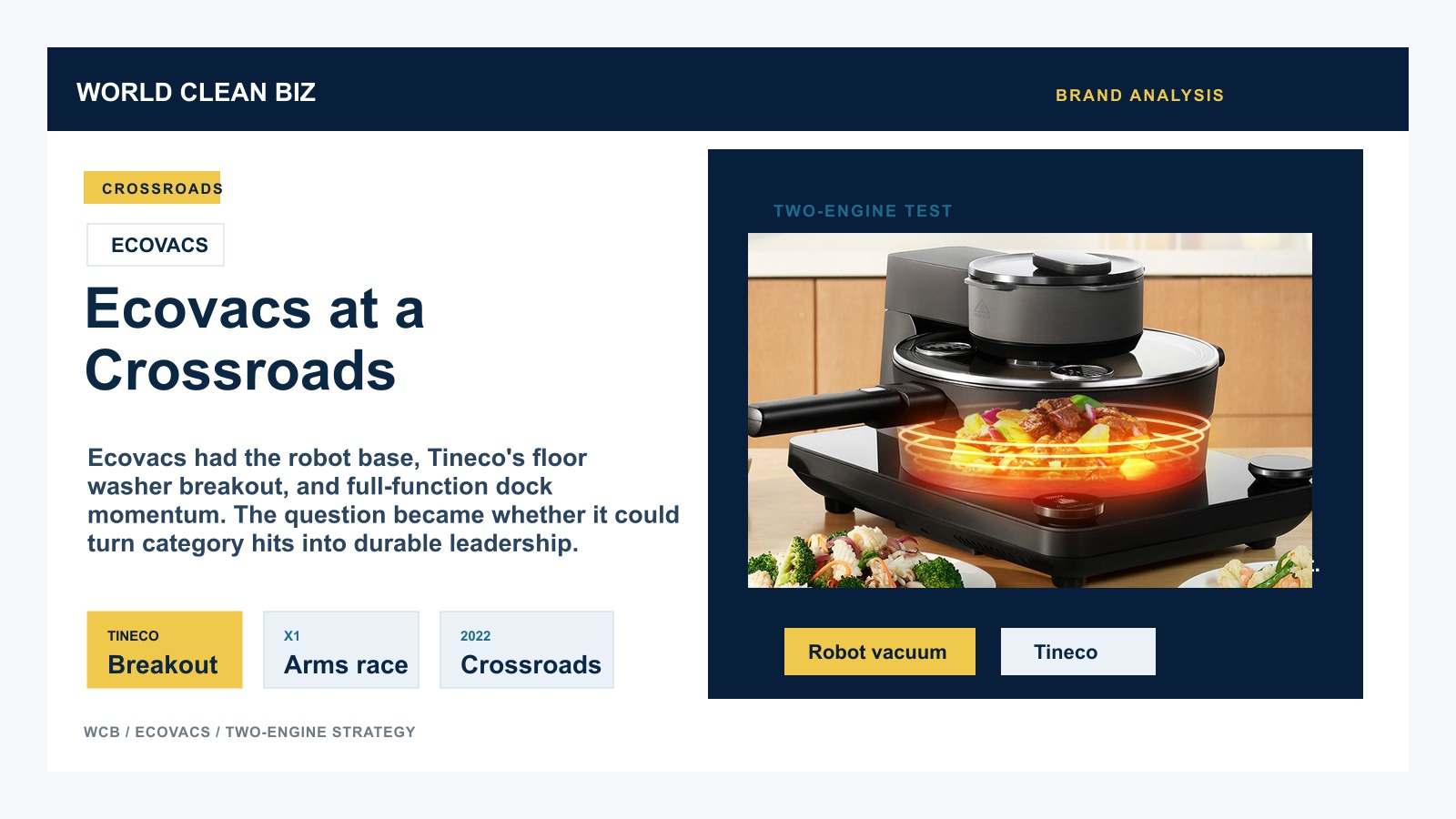
- Ecovacs reduced its ODM business by 89.1%, focusing on high-end products to boost global market share.
- The Tineco brand saw a 134.4% increase in revenue, marking significant domestic and international growth.
- R&D expenditure grew by 35.2%, enhancing Ecovacs' competitive edge through advanced technology development.
On April 28, Ecovacs Robotics released its annual report for 2019. A quick review of the report provides insights into some of Ecovacs' strategies and opportunities in the cleaning appliance industry.
In 2019, Ecovacs Company's total revenue reached RMB 5.31 billion, a decrease of 6.7% compared to the full year of 2018. The net profit attributable to shareholders of the listed company was RMB 121 million, down 75.1% from the same period in 2018. After deducting non-recurring gains and losses, the net profit attributable to shareholders of the listed company was RMB 101 million, a decrease of 78.4% compared to 2018. During the reporting period, sales revenue from service robots under the Coovac brand accounted for 68.0% of total revenue, reaching RMB 3.61 billion, an increase of 4.3% year-on-year. The Tineco brand achieved a sales revenue of RMB 273 million, accounting for 5.1% of the total revenue, with a year-over-year growth rate of 134.4%. Combined, the company's own-brand business from Coovac and Tineco accounted for 73.1% of Ecovacs' annual revenue in 2019, up 10.3 percentage points from 62.8% in 2018, further improving the overall gross margin of the company. Additionally, during the reporting period, the global market share of robot vacuums continued to rise. In China, the company's market share based on both online and offline retail sales reached as high as 46.9% and 71.3%, respectively, marking a significant increase from 2018 and further consolidating its leadership position in the market.
Key Portion of Ecovacs' Annual Report: Strategic Direction and Industry Impact
In 2019, the company underwent strategic adjustments based on a comprehensive analysis of future industry trends, technological evolution, and consumer demand changes. Guided by long-term value, the company proactively made several strategic moves at the beginning of the year, including exiting its original service robot ODM business, withdrawing from the domestic low-end robotic vacuum market, increasing R&D investment to drive the development of next-generation robotic vacuums, and launching a smart home appliance brand "Tineco."
After one year of effort, significant progress was made in these strategic adjustments:
- Exit Service Robot ODM Business: Following the exit from service robot ODM business, revenue from this segment decreased by RMB 361 million, or 89.1%, compared to the previous year, accounting for only 1.2% of the company's total service robot revenue, down from 10.5% in the previous year.
- Withdrawal from Domestic Low-End Robotic Vacuum Market: Revenue from low-end random products under the Ecovacs brand decreased by RMB 538 million, or 53.8%, compared to the previous year. The proportion of revenue from low-end random products in domestic robotic vacuum sales has fallen below 10%. Meanwhile, the company's global planning-class robotic vacuum revenue reached RMB 2.03 billion, growing by 89.0% year-over-year, with an increase of 114.1% for LDS products.
- Tineco Brand: The Tineco brand achieved significant growth in both domestic and international markets, with a reported revenue of RMB 273 million, up 134.4% from the previous year.
- R&D Investment: During the reporting period, R&D expenditure increased by 35.2%, accounting for 5.22% of sales revenue, up 1.62 percentage points from the previous year's 3.60%. Significant progress was made in new optical modules, software algorithms, and novel robot structures, laying a foundation for competitive home and commercial robots in 2020. The number of R&D personnel increased by 98 to reach 12.4% growth year-over-year, with an increase in R&D staff salaries of RMB 62.89 million, or 47.2%.
Analysis of Ecovacs' Strategic Moves
1. Exit Service Robot ODM Business
With the increasing recognition and market share of Ecovacs in the robot vacuum industry, exiting the ODM business is a natural choice. As Ecovacs further invests internationally, its brand competes directly with its ODM suppliers. In such circumstances, customers are likely to switch suppliers either voluntarily or involuntarily. This move benefits Ecovacs as it reinforces its position in the robot vacuum market.
Currently, Ecovacs and Roborock are the only two companies capable of challenging iRobot's dominance abroad. Roborock faces challenges due to a limited product range and reliance on the Xiaomi brand. In contrast, Ecovacs has demonstrated competitive capabilities in terms of product variety, brand recognition, and R&D strength against iRobot. The sole concern might be whether iRobot will use patent litigation as a means to directly challenge Ecovacs.
One reason for iRobot's previous non-action was their lagging patent layout in the domestic market, which they temporarily avoided due to considerations for the Chinese market. However, with declining market share in China, it is possible that iRobot might abandon the domestic market and engage in direct patent battles with Ecovacs on an international stage to prevent further expansion.
We will have to wait and see how this unfolds.
2. Withdrawal from Domestic Low-End Robotic Vacuum Market
The direction of robot vacuums towards higher-end, smarter products is inevitable. Roborock has proven that the market demands quality products through their successful premium strategy, achieving a rapid listing in just a few years—a remarkable feat in the appliance industry. Internally, Ecovacs consistently views Roborock as its primary competitor, driving product development and timing closely.
From sales figures, Ecovacs lost RMB 538 million from low-end market share but gained nearly RMB 1 billion in high-end planning-class products. This strategic shift has been highly successful. As the price of planning-class machines decreases further, this segment could still be reclaimed by Ecovacs.
In the short term, this low-end market is likely to persist for another three years or so. After that period, products in this price range may feature more advanced planning capabilities. So, who will occupy this vacant market when Ecovacs exits it? Currently, most of this market is dominated by ODM factories based in Shenzhen. However, they are outmatched by Xiaomi.
Given that Roborock and Ecovacs have no interest in the low-end market, Xiaomi can directly support an ODM factory to take over this segment.
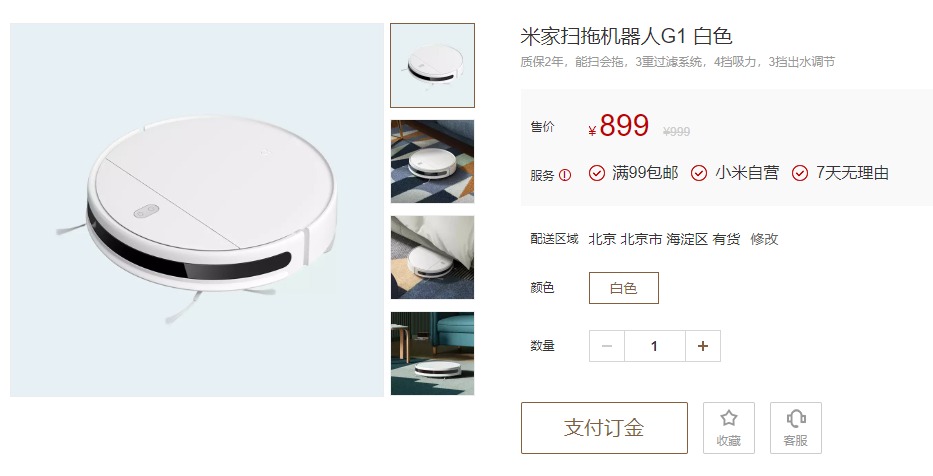
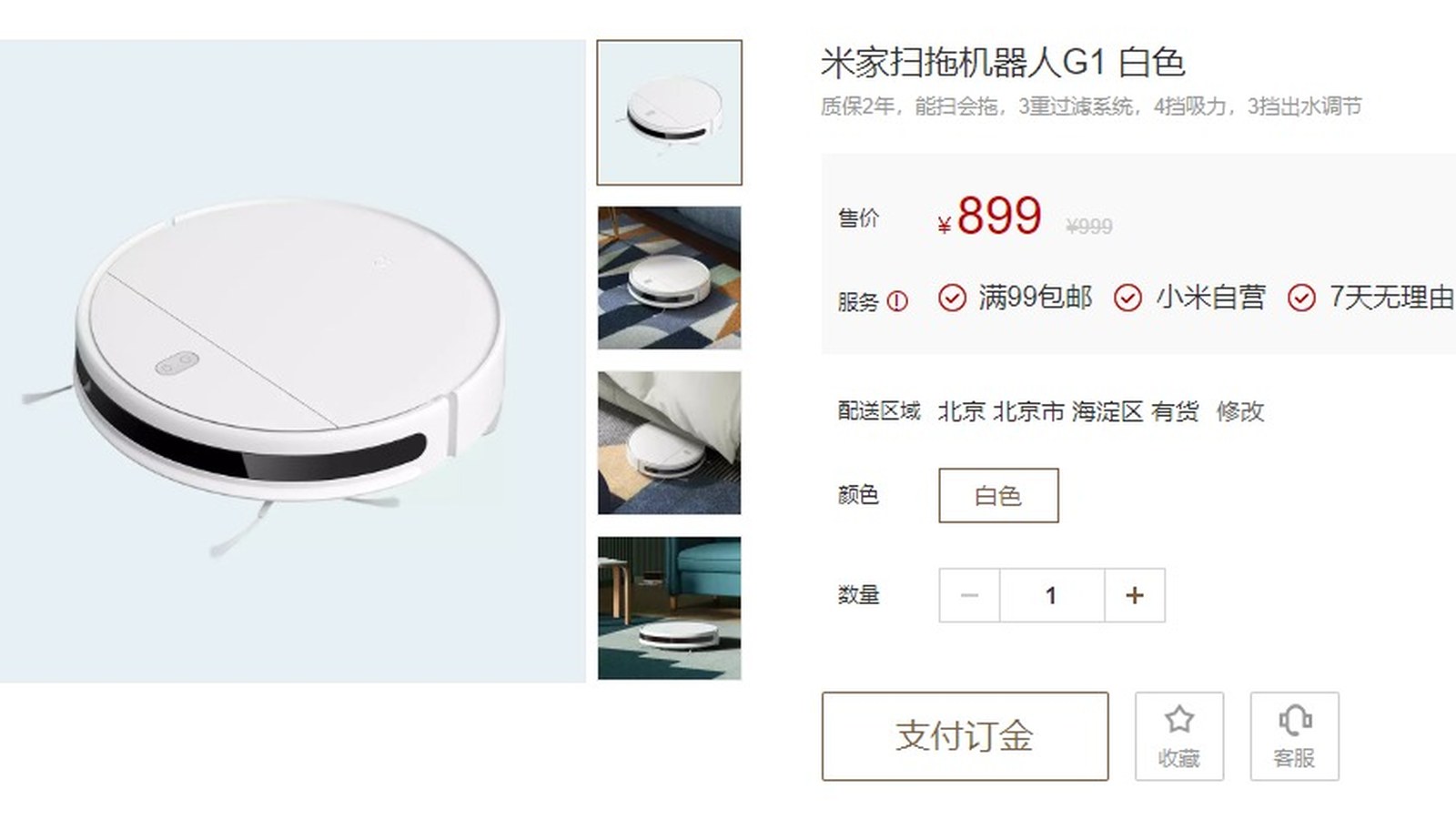
Recently, Xiaomi launched the G1 robot vacuum priced at 899 yuan, which was directly commissioned from the factory Yinxing Intelligent. Given that this price point may still have room for further reduction, it is likely that products in this segment will be dominated by the Xiaomi ecosystem in the future. As a pioneer in the robot vacuum industry, Yinxing Intelligent has contributed significantly to talent development. Will their collaboration with Xiaomi enable them to capture a substantial share of the low-end market through this product?
If G1 can achieve annual sales of 1 million to 1.5 million units, Yinxing's overall global shipments could reach 2-3 million units, making it comparable in terms of shipment volume to Roborock and Ecovacs. With continuous support from the Xiaomi ecosystem, Yinxing's quality is expected to improve further. At that point, they might be capable of attracting customers lost by Ecovacs through ODM/OEM services. Could a new giant in robot vacuum manufacturing emerge?
Will this change the industry landscape? It certainly seems intriguing.
3. The Tineco Brand Achieves Initial Success in International Markets
Kehao Qian, CEO of Ecovacs, invested heavily to build the Tineco brand with the clear intention of replicating the success of the Ecovacs brand in robot vacuums. However, the competitive environment for the Tineco brand is much more challenging compared to when the Ecovacs brand was launched.
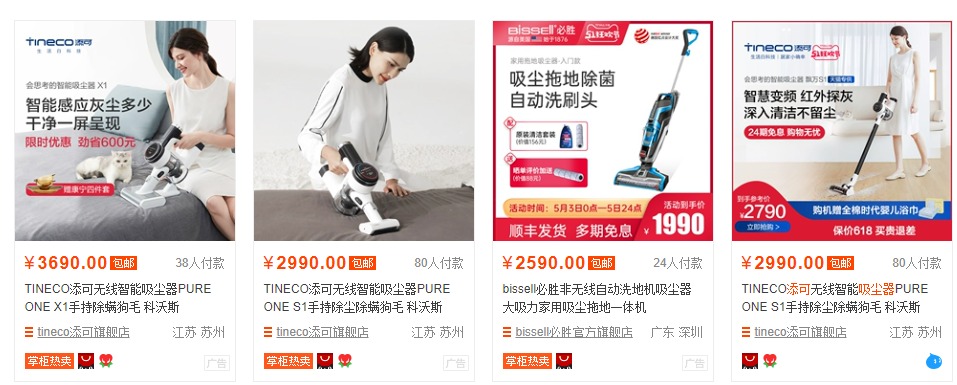
Back then, the market for robot vacuums lacked a dominant player, but now the cordless handheld vacuum cleaner segment faces strong competition from brands like Dyson. The Tineco brand's products do not seem to have any significant advantages in this competitive landscape. From a product perspective, while Dyson has reached some bottlenecks, Tineco's introduction of a vacuum cleaner with dust detection sensors does offer some highlights. However, these features are insufficient to support the entire product line, and the high pricing strategy directly competes with Dyson. Therefore, it is reasonable that sales growth will be challenging.
I have a few observations for your reference:
- The Tineco brand's cordless handheld vacuum cleaner is priced around 2,000 RMB. This price range has the potential to generate both sales and profits. Higher-priced machines would enter Dyson's domain. Given Dyson's substantial advertising investments, it will be challenging for other brands to compete head-on with Dyson.
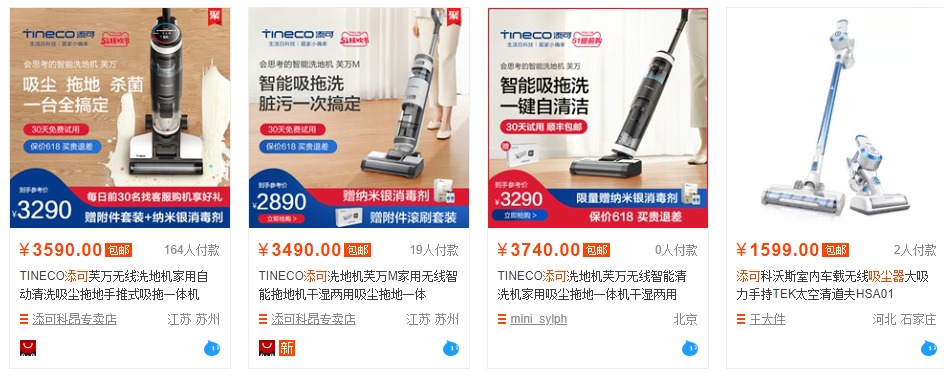
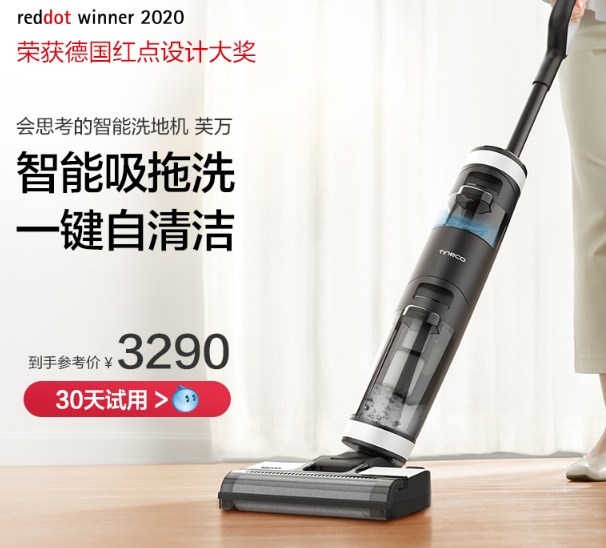
- Breakthrough in Other Categories. Currently, Tineco's hard floor washer appears to be a promising breakthrough product. At present, Dyson does not offer a hard floor washer, and it seems unlikely that Dyson will enter this market anytime soon. The only major brand currently in this category is Bissell. If Tineco can make the hard floor washer more affordable (e.g., priced between 2,500 to 2,999 RMB), it would have the potential to boost both sales and profits. However, if Tineco fails to capture consumer attention in this category, we can expect Xiaomi's lineup to quickly enter the market with a price point of around 1,500 RMB and dominate the space.
The wind is picking up—will it be one of these players?
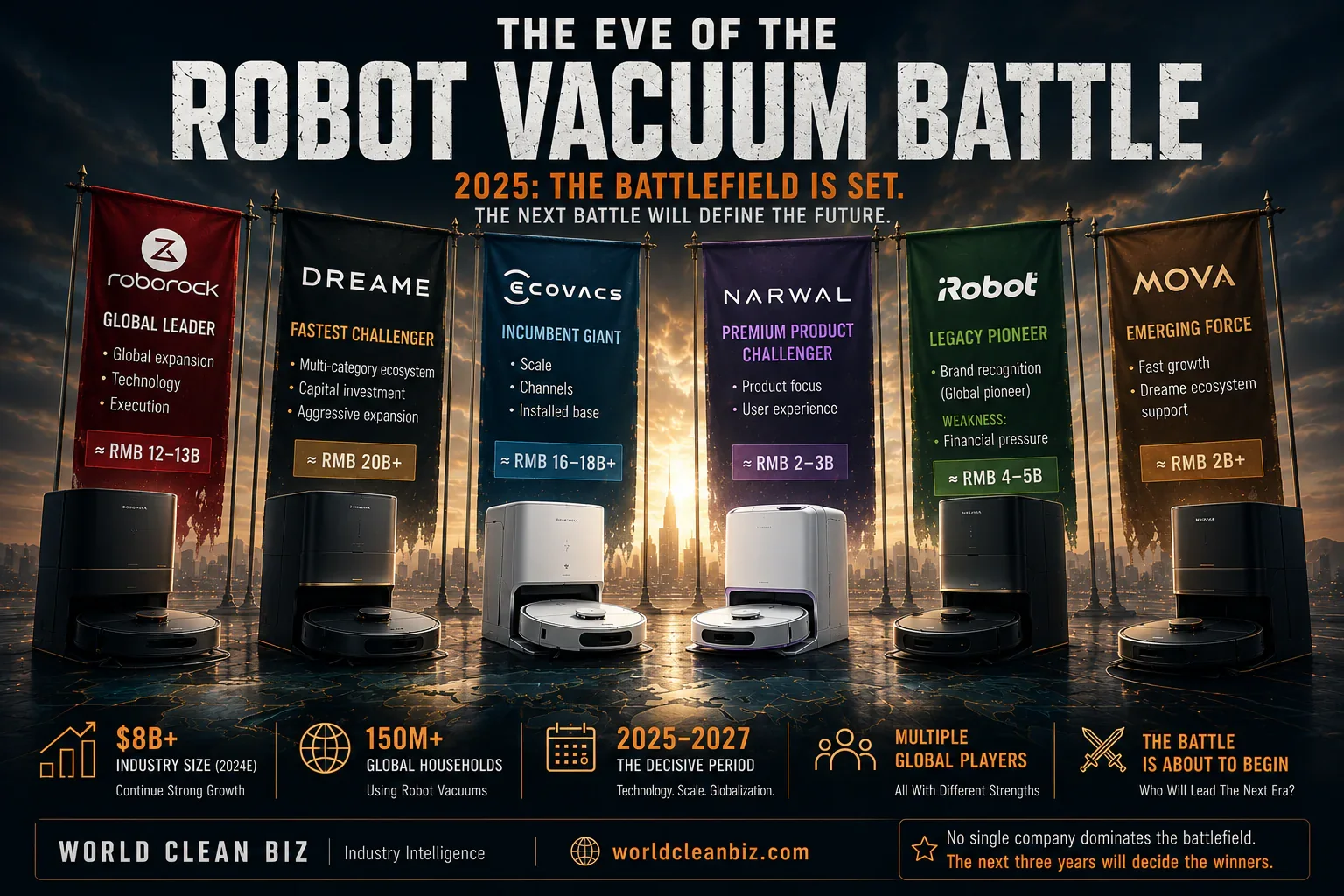
The home cleaning industry is on the cusp of significant change, with various brands vying for a dominant position. Here’s a look at some key players:
- Dreame : Known for its advanced robot vacuums and hard floor washers.
- Tineco : Renowned for its innovative vacuum cleaners and multi-functional cleaning devices.
- Roborock : A leader in smart robot vacuums with a growing range of cleaning solutions.
- Ecovacs : A pioneer in the robotic cleaning market, offering a wide array of products including robot vacuums and hard floor washers.
- Narwal : Known for its intelligent and user-friendly robot vacuums.
- Deerma : Offers a range of cleaning appliances, from vacuum cleaners to air purifiers.
- Uwant : A rising star in the smart home cleaning sector with a focus on innovative designs.
- DJI : While primarily known for drones, DJI has ventured into robotic cleaning solutions.
- Dyson : A global leader in vacuum cleaners and air purifiers, with a strong presence in the robotic cleaning market.
- Bissell : A well-established brand in traditional cleaning tools that is now expanding its offerings to include smart cleaning devices.
As the industry continues to evolve, these brands are all vying for a place at the forefront. Who will emerge as the leader remains to be seen.