- Dyson’s layoffs due to pandemic pressures highlight challenges in maintaining workforce while adapting to new consumer behaviors.
- Exiting electric vehicle projects signals caution when entering unfamiliar markets, emphasizing the risks involved.
- Focusing on user experience rather than specifications can prevent embarrassing comparisons with cheaper alternatives.
In recent days, Mr. Tan from Xiao Dog Vacuum Cleaner posted a message on his WeChat Moments, which reads as follows:
This overall situation gives me a sense of temporal dislocation. Leading brands in the industry are conducting performance evaluations against domestic brands that offer products at half their price, and regardless of the outcome, Dyson does not come out looking particularly well.
To put it another way, if Apple were to commission reviews comparing the latest iPhone with Huawei or Xiaomi devices; or if Tesla were to pit its newest models against BYD or Xiaopeng, the results would be unflattering for the industry leaders regardless of how they fare.
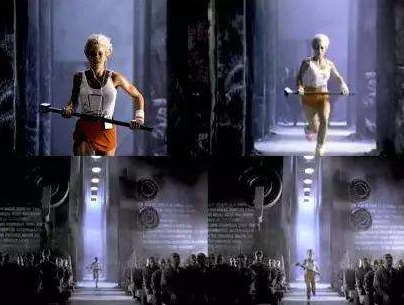
Typically, as industry leaders, companies focus more on "user experience" and "lifestyle" in their product promotions and marketing. For instance, consider Apple's early advertising campaign from 1984:
It portrayed a rebel image through its advertisement.
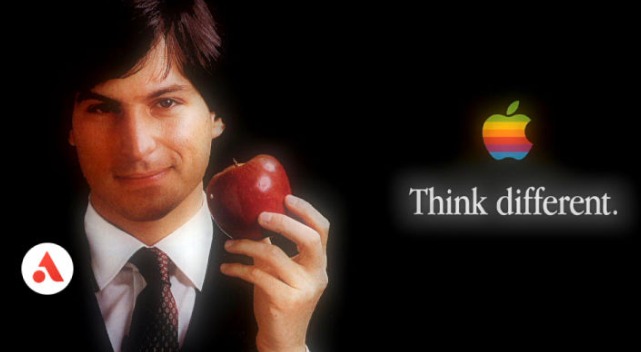
Think Different Series:
This section highlights the innovative and forward-thinking products in our lineup.
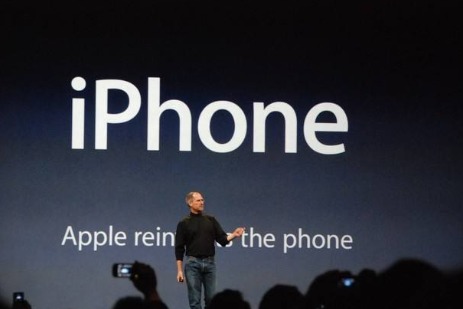
When the first iPhone was released, Apple's advertisement proclaimed, "Apple has reinvented the phone." What left the most impression at the time was the ability to zoom in and out of the screen with just two fingers.
The AirPod series emphasizes the experience after putting on the headphones.

It is clear that the iPhone has never emphasized product specifications; instead, it focuses on user experience and even delves deeper into unperceived consumer needs.
From a broader perspective, brands need to market their entire brand based on user experience. This approach provides more room for premium pricing in products.
On the other hand, simply showcasing specifications can easily lead to competitors surpassing them by stacking features. If this situation arises, it would be an embarrassing moment for leading brands.
If Apple were to one day challenge Xiaomi and Huawei with "if you do not believe it, run a benchmark" (if you don't believe us, let's run a benchmark), that should mark the decline of Apple.

Is Dyson facing issues that have caused such anxiety for the company?
There are several key points in my personal analysis:
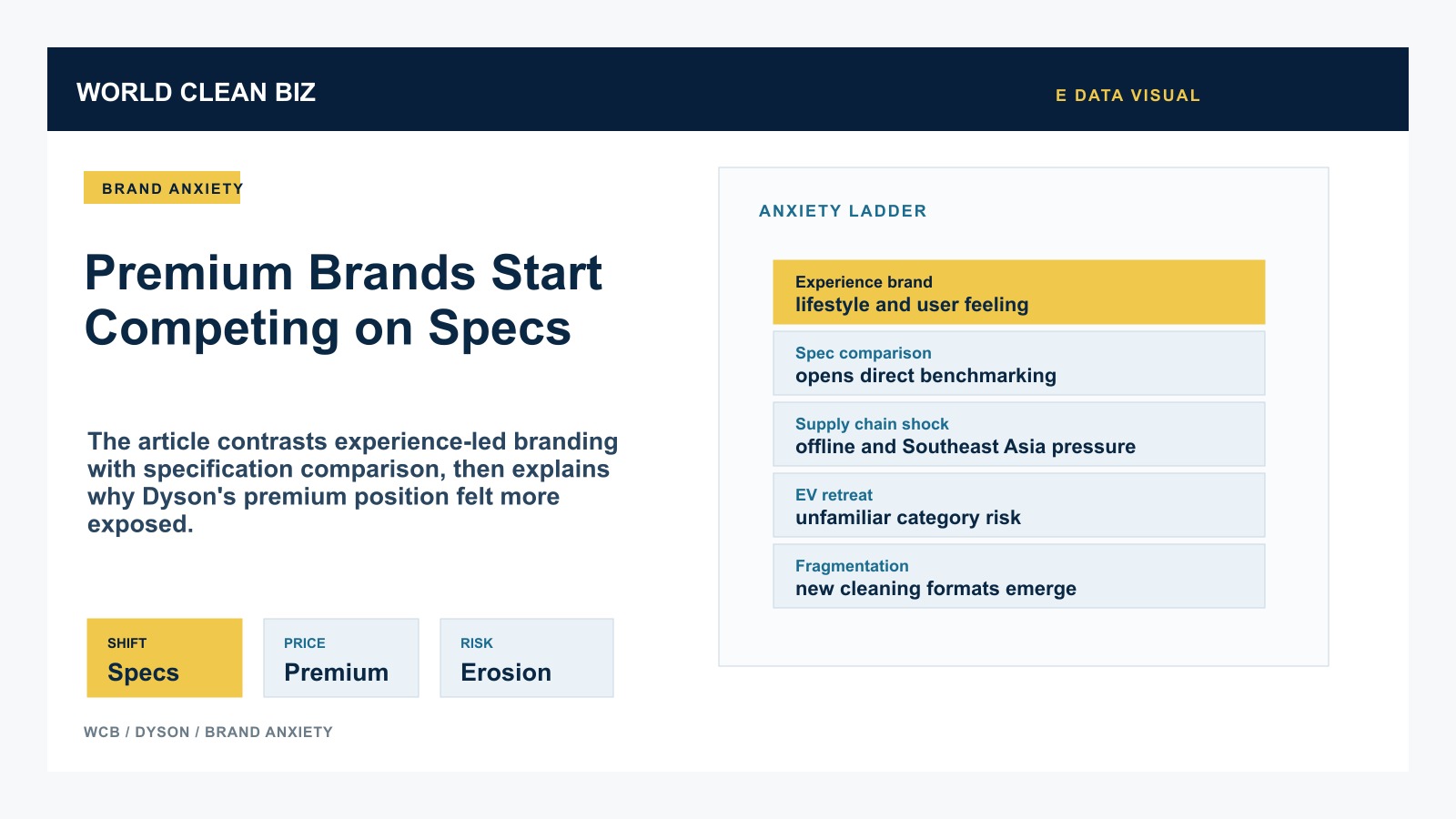
- Due to the impact of the COVID-19 pandemic, Dyson has significantly reduced its workforce.
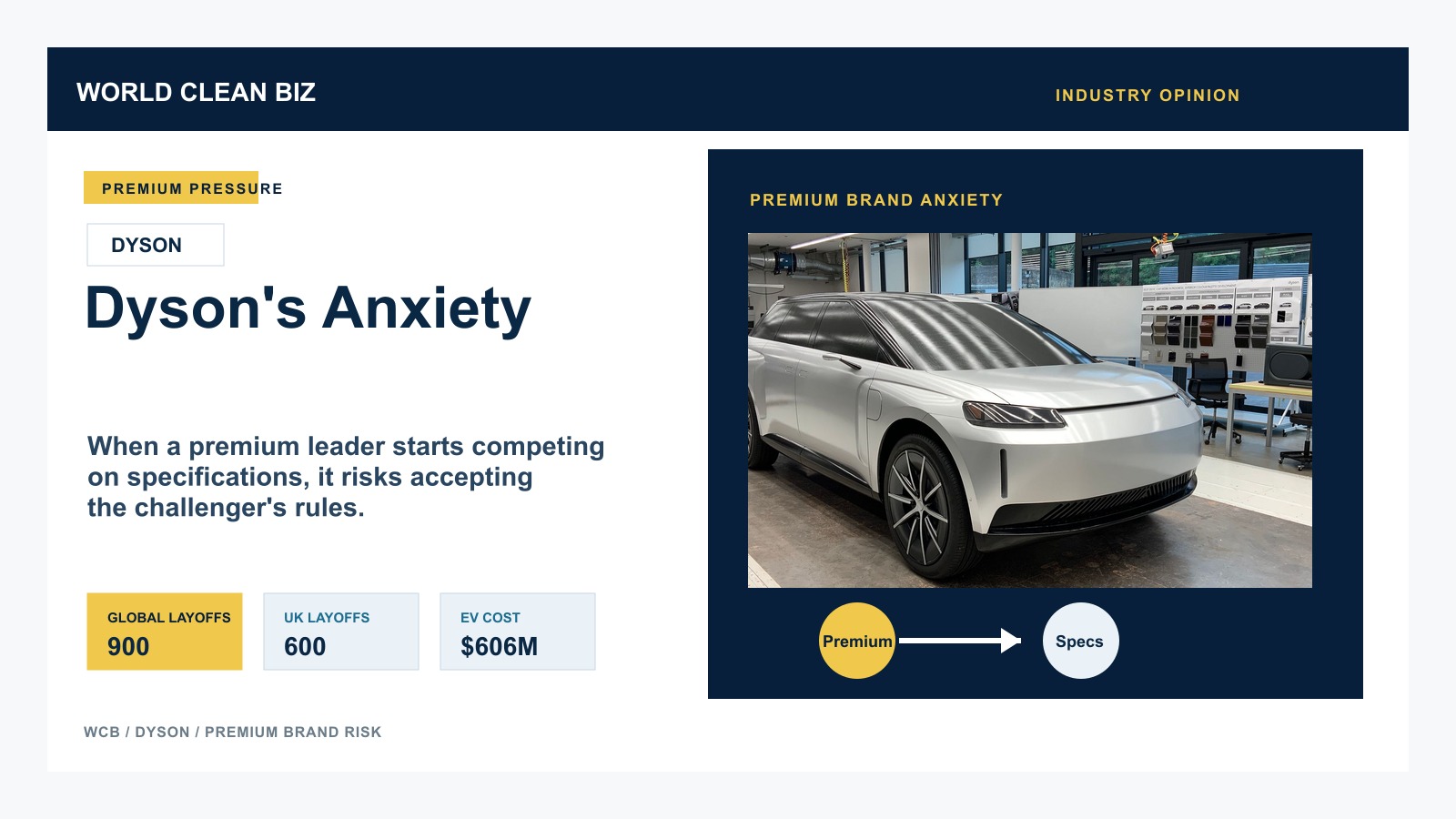
According to reports from the UK media, the renowned British appliance brand Dyson announced global layoffs, with an estimated 900 employees being cut, accounting for about 6% of its total global workforce. In the UK alone, 600 positions were eliminated, representing 15% of the local workforce, primarily affecting retail and customer service roles.
>
A Dyson spokesperson stated that despite the pandemic's impact on the global economy, demand for their household appliances remains strong, particularly for vacuum cleaners and air purifiers. The change in consumer behavior due to the pandemic has altered sales methods and interactions with customers, leading to this difficult decision.
Dyson also noted that during the pandemic, they did not put any employees on unpaid leave or accept public subsidies to preserve any jobs.
As details of the layoffs have yet to be disclosed, it remains unclear whether Dyson made cuts in China as well.
The impact of the pandemic on European businesses has been significant, with many large offline supermarkets closing their stores. Given that Dyson's business is heavily reliant on offline operations, this has had a greater impact on Dyson compared to other companies.
Additionally, due to Dyson’s supply chain being mainly located in Southeast Asia, the impact there was slower than in China during March and April of this year. When Chinese suppliers began resuming work, Southeast Asian supplies were still insufficient.
The pandemic led to a significant increase in orders for vacuum cleaners, air purifiers, and kitchen appliances. However, due to Dyson's supply chain issues, they might have missed out on this opportunity.
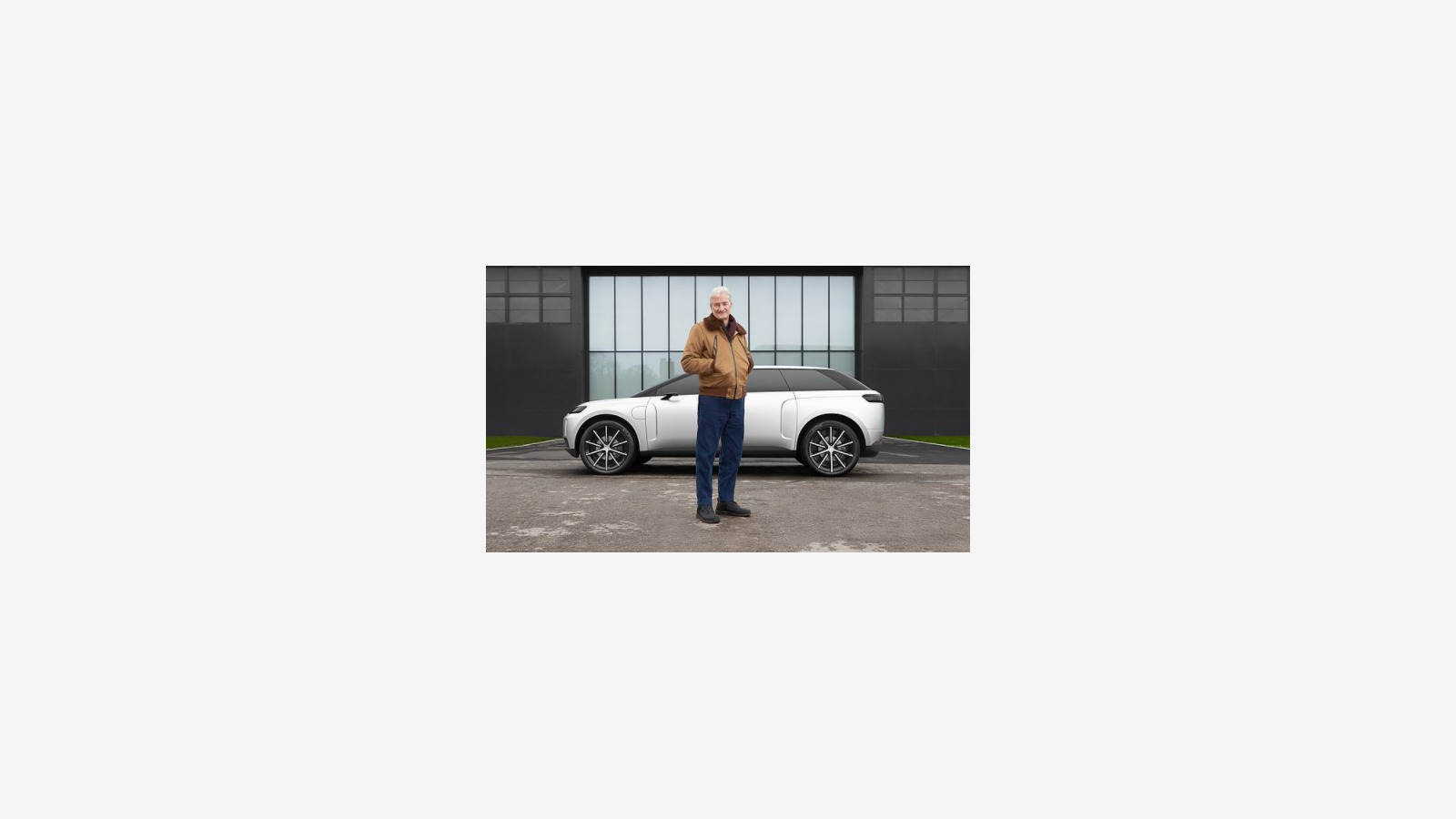
- Dyson has exited its electric vehicle business, having invested $606 million in these ventures.
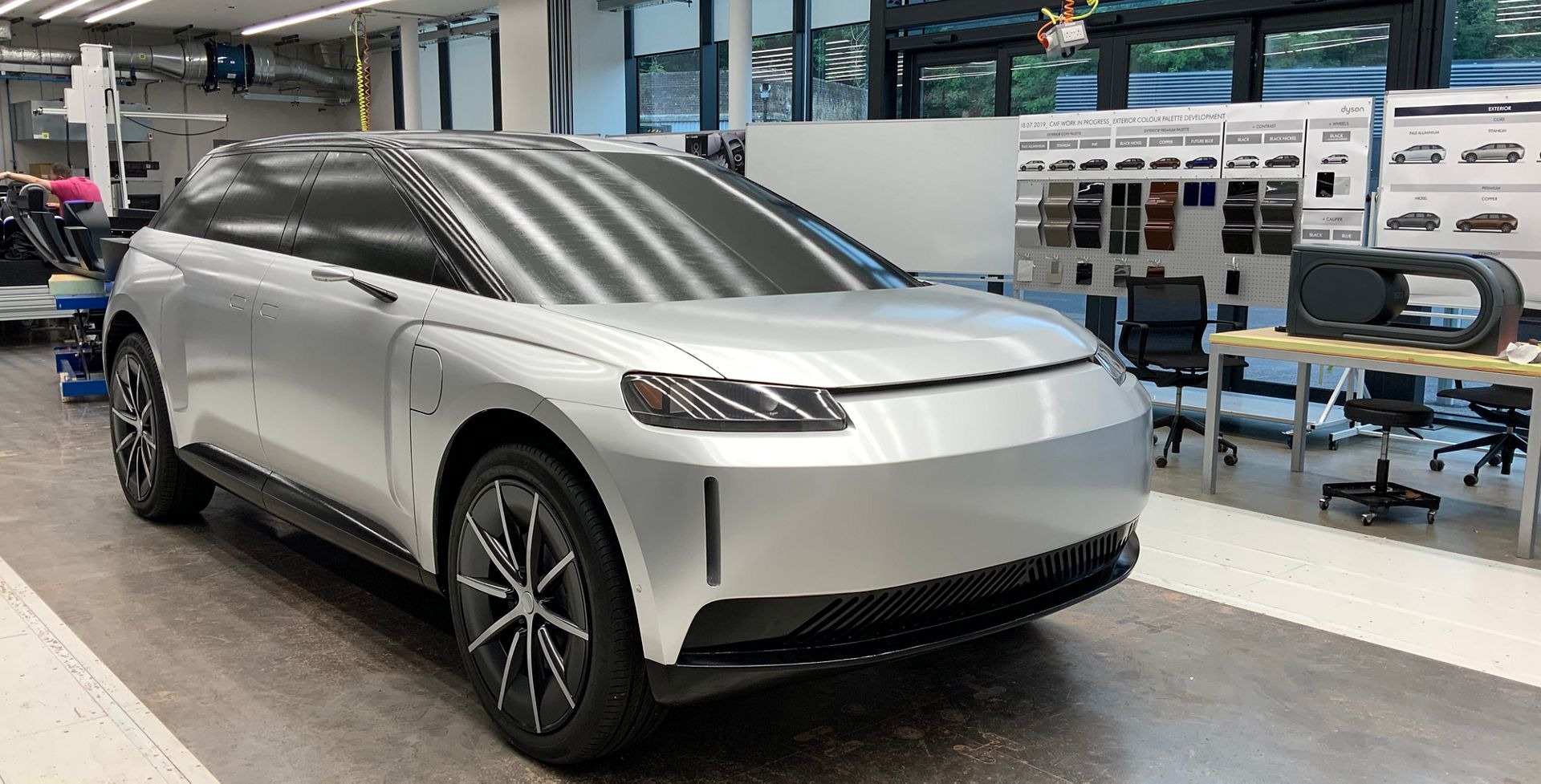
Dyson's Electric Vehicle Plans Canceled: A Cautionary Tale
Due to its significant achievements in appliances, Dyson’s entry into the electric vehicle (EV) market was met with high expectations. However, recently, foreign media reported that Dyson has canceled its EV plans, and the previously planned seven-seater model under the code name "N526" is no longer in development. This suggests that Dyson remains cautious when venturing into new fields.
Dyson's automotive project was first mentioned in 2019, with plans to release its first vehicle in 2021. Company founder James Dyson expressed confidence in the company’s expertise in solid-state batteries and electric motors. At the time, Dyson also planned to build a factory in Singapore for production, which would be part of a $350 million investment.
However, when investments reached $606 million, Dyson halted its EV project. This decision was not due to insufficient technical or financial resources but rather because of the high initial costs and low expected profits, making it difficult to achieve a balanced revenue stream. For commercial reasons, Dyson ultimately decided to exit an unfamiliar field.
When Dyson first announced its entry into the EV market, few people were optimistic about it. Firstly, Dyson had no experience in the automotive industry. Some reports suggested that Dyson had advantages in motors, but this was largely unfounded; the difference between automotive and vacuum cleaner motors is substantial, akin to comparing apples and bicycles.
Regarding solid-state batteries, Dyson's technology still lags behind established manufacturers such as Panasonic, Samsung, ATL, and BYD, which have the capability to mass-produce these batteries. Conversations with several internal Dyson sources revealed that they were also skeptical about the EV project. Thankfully, Dyson made a decisive decision to end its entire EV business.
Dyson's Dominance in Vacuum Cleaners Has Been Further Eroded
Firstly, it is essential to clarify that Dyson has never been a mass-market vacuum cleaner brand. Since inventing the cyclonic vacuum cleaner, Dyson has always been an upscale niche brand. In recent years, Dyson led the trend towards cordless vacuum cleaners. During the early stages of this trend, Dyson's advantages were significant; its motor performance and battery (Sony cells) were among the best in the industry. However, with over four to five years of development in cordless vacuum technology, Dyson’s motor advantage has gradually been matched by Japanese and Chinese manufacturers. Currently, other companies' motors can achieve at least 90% of Dyson's performance.
Regarding Sony batteries, it is merely a cost issue; any company could use them if they wished.
Once domestic brands can match Dyson's technology at 80-90% efficiency but sell for only half the price, Dyson’s market share will inevitably be eroded.
For example, in the smartphone industry, Apple initially dominated with superior hardware. As the industry evolved, Android devices gradually caught up in hardware performance. If Apple had not promptly introduced the App Store to attract developers and build its ecosystem, it is uncertain how much of a market share it would retain today.
In the case of vacuum cleaners or cleaning appliances, the issue lies in their reliance on purely hardware improvements to retain consumer interest. When new products are released, consumers can easily switch without significant sunk costs.
The Cleaning Appliance Industry Is Fragmenting
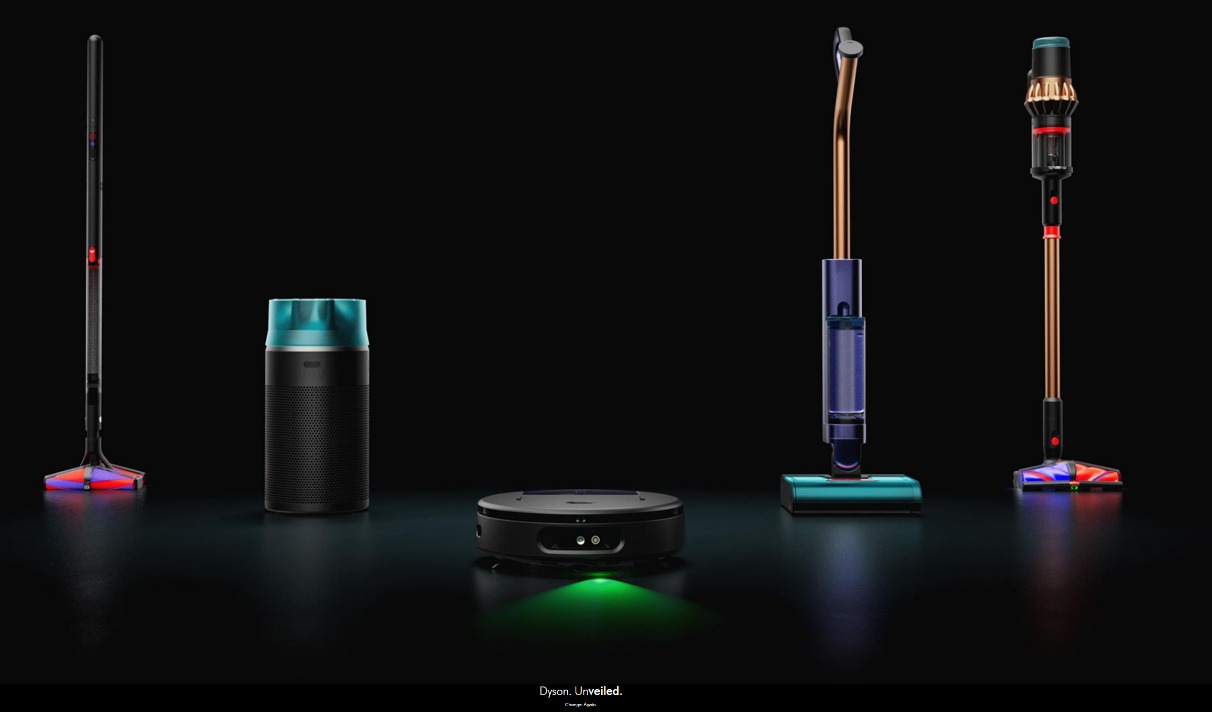
The cleaning appliance industry is now seeing various specialized products emerge. Due to Dyson's initial product planning limitations, it cannot cover all areas:
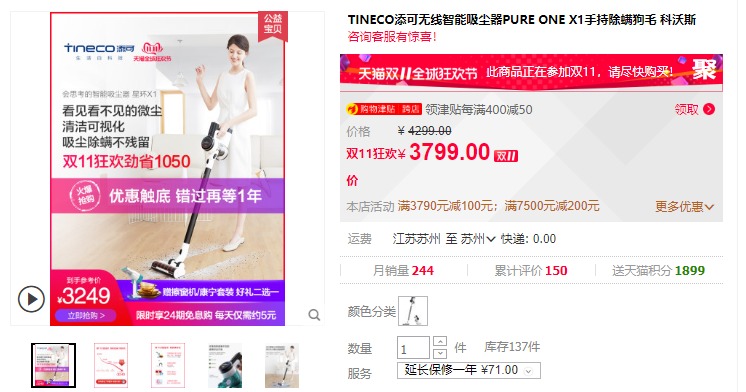
- For example, portable vacuums like the popular Tineco models on Taobao use a 45mm brushless motor, significantly increasing the suction power from 3-4 kPa to 11 kPa. This represents a qualitative leap in usage habits. Dyson's technology path focuses on stronger suction and higher speeds, making it unlikely for them to cover this product line or its subsequent extensions. Even if they could, they would likely be playing catch-up as a follower.
In summary, while Dyson has been a leader in certain areas of cleaning appliances, the industry is becoming more fragmented, presenting new challenges that require innovative and diverse solutions.
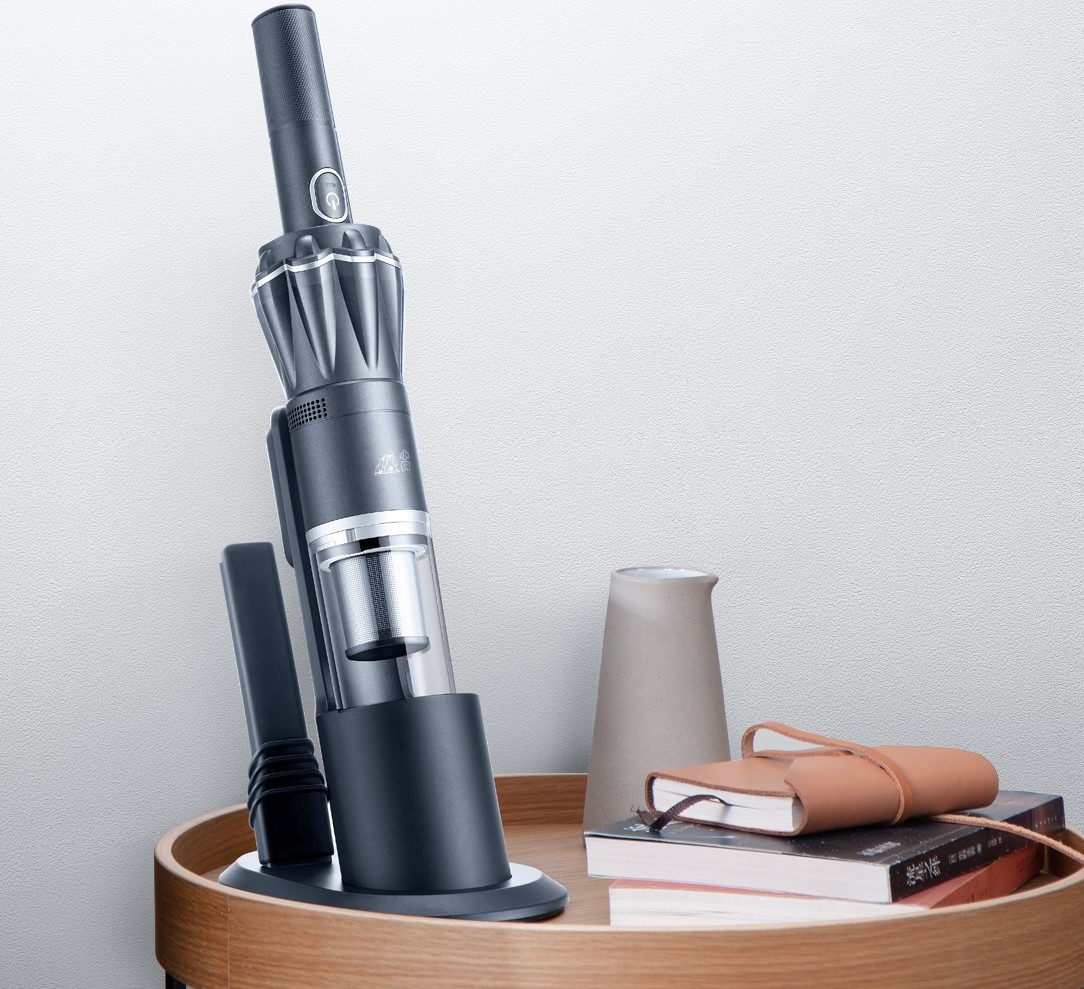
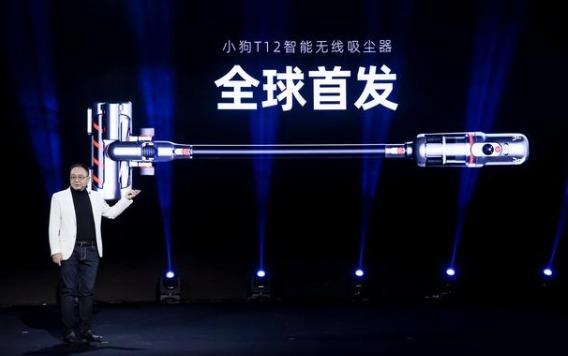
For instance, in flagship models, both Dyson V11 and Trifo T12 opted to incorporate smart features. However, their focuses differed.
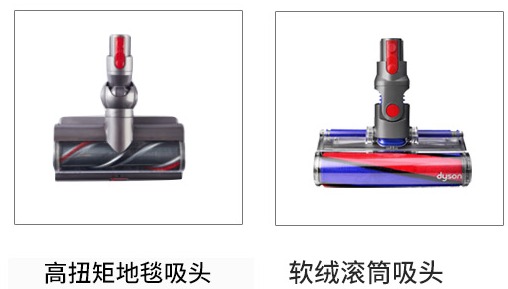
Dyson uses pressure sensors that allow the vacuum cleaner's suction to automatically adjust based on the different pressures exerted on floors and carpets when using a specialized High Torque (high torque) floor brush. This eliminates the need for manual adjustment.
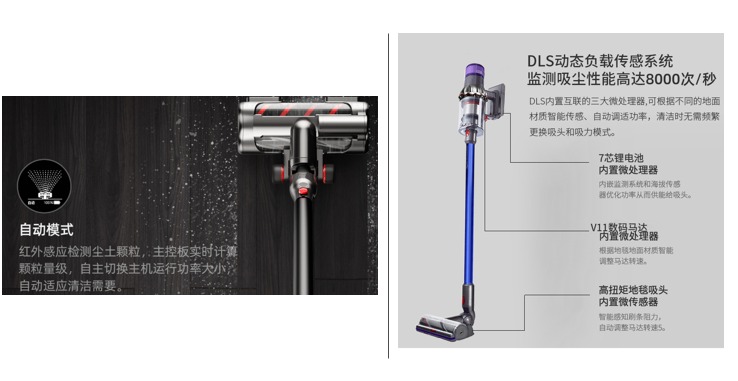
Doggie uses an infrared micro-dust sensor. The sensor detects the amount of dust and automatically switches modes accordingly.
Which Direction is Better
In my previous article, I also mentioned that dust sensors outperform pressure sensors in terms of usage scenarios and cost.
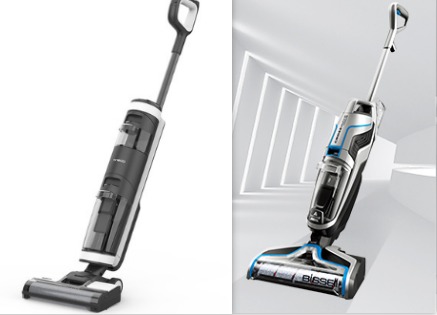
c. For instance, this year's hot product trend—the hard floor washer (Tineco and Bissell)—is a product line outside Dyson's offerings. Dyson's market focus is primarily on the European and American markets, where the preference for mopping habits does not align with Dyson's priorities. Even if Dyson were to reconsider this product line from scratch, it would be challenging to outpace the existing market leaders.
The rise of domestic brands is a well-worn topic. Where do these brands find their opportunities?
- Rapid Feedback and Proactive Market Expansion: Continuously expanding niche market products to meet new demands. For instance, Puppy's portable handheld vacuum (handy vacuum) could become the first vacuum cleaner for single young adults renting apartments if it were extended with an extension pole and a small floor brush.
- Localized Innovation: Foreign companies like Dyson focus their product development on European and American markets, leaving little room for localized innovation. Developing integrated cleaning products that can both suck and mop is more in line with the Chinese market's needs.
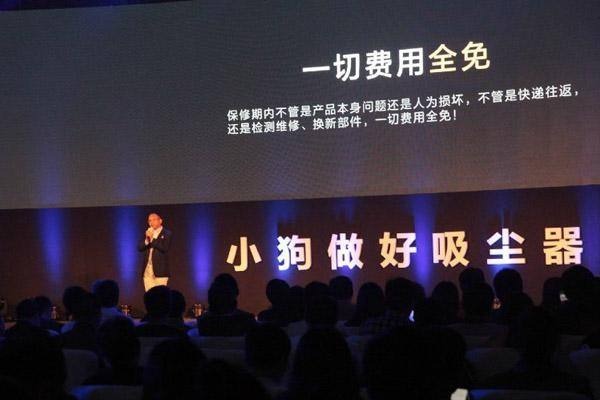
- Superior Service: While foreign brands excel in formalization, they often struggle to adapt to the complexities of the domestic market. Complaints about Dyson service are widespread online, whereas domestic brands like Puppy have refined their customer service responses. For example, central repair services offered by Puppy enhance the online shopping experience for consumers.
Note: The brand names and product terms have been translated as per the rules provided.
Proactive Marketing Strategies
For instance, leveraging live streaming and influencer marketing. Global brands often have a natural aversion to new models, preferring to wait until the dust settles before reaping the benefits. In recent years, the MoFei brand has achieved nearly 2 billion in sales within a short period by adopting high-end small appliance strategies and influencer/KOL approaches. This has also significantly boosted New宝 Appliances' stock price.
This is an opportunity for both international brands like Dyson and local Chinese brands alike.