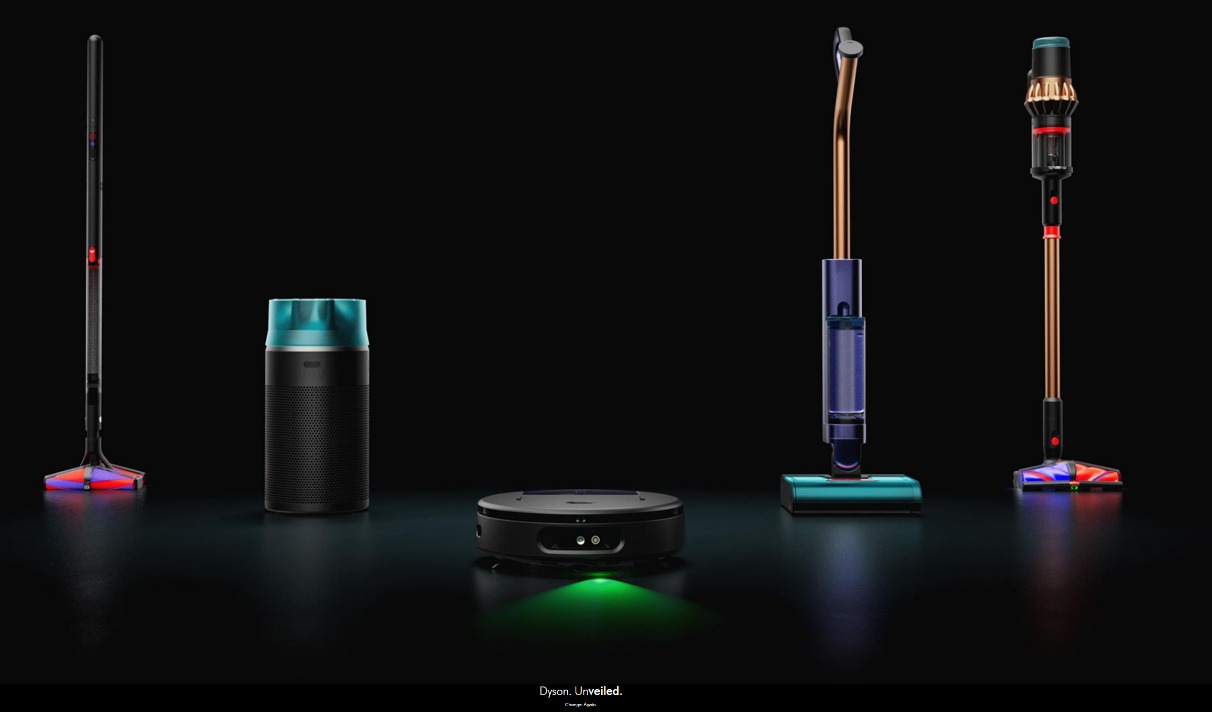
- Dyson’s V16 Piston introduces a powerful motor but lacks practical significance due to limited battery life.
- The PencilVac™ offers innovative design but underperforms in terms of cleaning efficiency despite its premium price.
- Dyson's Spot+Scrub™ Ai, while advanced, faces stiff competition from domestic brands and may struggle with pricing.
Dyson is a British company renowned for its innovative technology, with products ranging from vacuum cleaners and air purifiers to personal care appliances. This time, Dyson did not participate in the IFA exhibition but instead held a new product launch at its store adjacent to the event. Let's take a look at these products and offer our insights.
New Product Releases
- V16 Piston Cordless Vacuum: Equipped with a 900W motor and delivering 315AW suction power, this model features dual conical cleaning heads designed to prevent hair tangles. The dustbin can hold up to 30 days of dirt, and it is compatible with Submarine 2.0 for wet washing and water flow adjustment. The retail price is set at £749.
[Denny's Commentary] The primary change in the V16 Piston appears to be an increase in motor power to 900W and suction capacity to 315AW. Currently, motor performance in cordless vacuums is considered excessive; anything over 300W can't be supported by battery life. Thus, adding a 900W motor is essentially just stacking features, with the highest possible runtime being less than 10 minutes, which lacks practical significance.
The dual conical cleaning heads are primarily designed to prevent hair tangles by bundling them into clumps and pushing them towards the edges. Leading brands have already effectively addressed hair tangling issues through comb structures and hair cutting solutions. If two conical heads are indeed necessary, I suggest orienting the small ends inward so that bundled hairs are drawn into the dustbin rather than dropped onto the floor—similar to how DJI's ROMO roller brush works.
Another feature is the addition of a manual compaction mode for emptying the dustbin, which should be an improvement over previous models. The claimed 30-day capacity refers to larger volumes of non-solid debris like fur, while solid particles offer no real benefit. Therefore, the 30-day dust retention can be disregarded; similar functions are already available from brands such as Dreame and MOVA.
Additionally, there is a Submarine wet/dry cleaning accessory, which is not sold separately but included in a package priced at £150. This accessory acts like a hard floor washer, an idea first proposed by small Chinese component manufacturers four years ago. When connected to the Dyson V16 vacuum cleaner, the motor for suction stops working; it essentially serves as a battery.
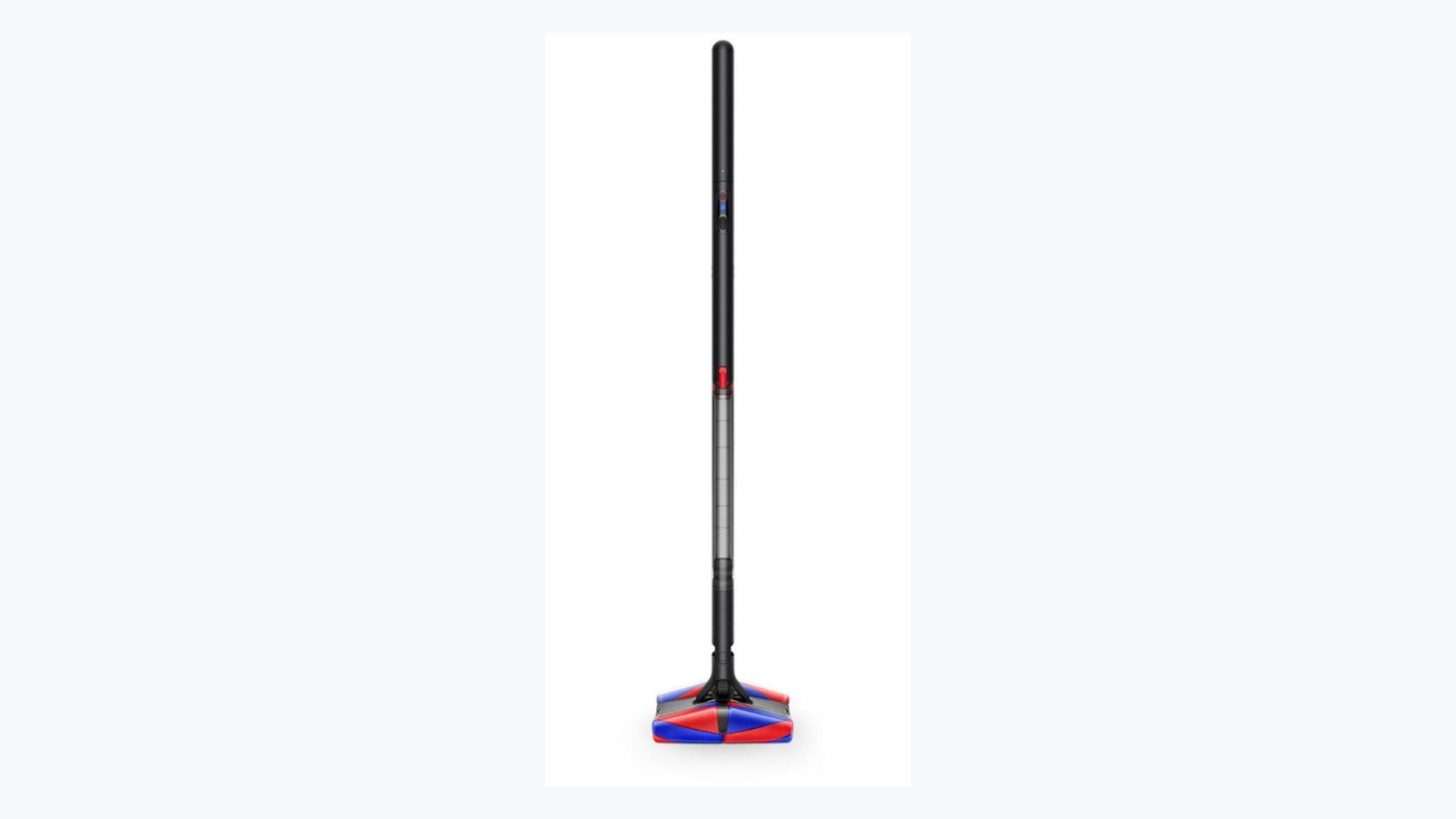
- PencilVac™ Cordless Vacuum: With a diameter of just 38mm, this model is globally the thinnest cordless vacuum available. It features Fluffycones™ dual brush heads to address long hair tangling issues. Expected market entry for Europe and America is in 2026.
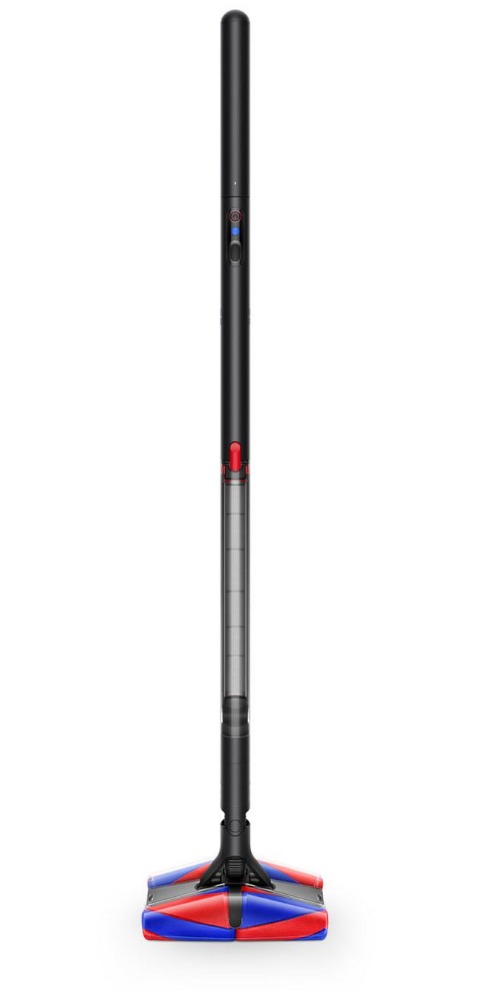
[Denny Review] We have actually used this product, and its standout feature is undoubtedly its design. The dust cup capacity is 0.08L, and the actual performance is rather average. The selling price is set at around 4,000 RMB, which was launched in Japan initially but did not perform well in sales. Discussions with several clients about other markets also showed little optimism.
- Dyson V8 Cyclone: This model offers a 30% increase in suction power compared to the original V8 (reaching 150 AW), and battery life is extended by 50%. It features replaceable batteries, a non-trigger button, and one-touch dust cup release. It was released in the UK on September 17, 2025, with availability already in China.
[Denny Review] This V8 model is Dyson's old product from six years ago; this time, some simple performance improvements have been made. The price remains unchanged, offering enhanced suction and battery life. After adding value without increasing the price, sales might continue to hold steady. Given Dyson’s current pricing pressure, it’s understandable that the older V8 model still has significant market share despite competition from low-cost high-performance Chinese brands.
If Dyson relies on old products for its sales, this is a very dangerous signal.
- Dyson Spot+Scrub™ Ai: This is Dyson's first all-in-one base station robot vacuum cleaner. It features built-in AI algorithms, live water washing, automatic cloth cleaning, and a cyclone dust collector.
[Denny Review] This is Dyson’s re-release of a robotic vacuum after several years, manufactured by Shengkua. From the performance perspective, this model finally aligns with industry leaders in terms of configuration. After reviewing its features, it appears to be an entry-level all-in-one base station model; advanced functions such as hot water cleaning and drying, and mechanical arms are not included. It lags behind domestic leading brands by about three years, and the gap is widening.
The price for Dyson’s 360 Eye robot vacuum was around £1200 previously, so I expect this new model with a base station to be priced between £1500-2000. Currently, other brands’ entry-level all-in-one base stations are trending towards the $4-500 range. If sold at these prices, selling 5-60,000 units annually would be considered successful. Will consumers buy a product that is extremely expensive and underperforms compared to its competitors?
- Dyson Wash G1 Upgrade: This is an innovative model of the wash floor machine, without a suction motor, filter-free, dry-wet dual-use, low-noise, with self-cleaning systems. Expected release in 2026.
[Denny Review] Dyson released its first-generation wash floor machine, Wash G1, four years ago, which lacked a dedicated cleaning motor and relied on the brush to clean. The sales of the original Wash G1 were not particularly impressive, as it received little market attention.
This new upgrade version has similar features; it still lacks a suction motor. After Dyson lost its position in the Chinese market due to the popularity of wash floor machines, it now ranks outside the top ten. Following the success of Tineco and Dreame’s wash floor machines, Dyson attempted to enter this market with several unusual models.
Dyson seems fixated on this technology route, despite the first-generation G1 having poor sales. If Dyson were to adopt mainstream technology, even at a price point of 5000 RMB, it would likely sell well. However, I believe that current wash floor machines are not particularly promising and may need further market lessons before Dyson can recognize reality.
- Dyson HushJet™ Purifier: This is an eye-catching air purifier with a jet-shaped nozzle, noise level of 24dBA, filter life of five years, Wi-Fi connectivity, and voice assistant support. It was released in the US on September 30, 2025, at $349.99.
[Denny Review] This air purifier stands out with its design, which is quite innovative. I believe it will attract many buyers. However, such a purely design-focused product may soon face competition from similar designs within the next six months.
- Dyson Hot+Cool HF1 / Cool CF1: The HF1 combines a fan and heater in one unit, supporting app control and energy-saving mode (expected release in 2026); the CF1 is a desktop bladeless fan with a noise level of 29dB, priced at £249.99.
[Denny Review] These bladeless fans are updated versions of older designs; they currently offer no significant improvements.
- Dyson AirWrap Co-anda 2X: This model features a new motor, doubled air pressure, and a 30% power increase with no heat damage. It includes intelligent six-in-one attachments.
[Denny Review] The hair straightener has been upgraded in performance and comes with various attachments. After Lemfeng brought Dyson’s hair dryer to the price range of £299, it was inevitable that Dyson’s hair care products would decline. When domestic brands offer prices only a tenth of Dyson's, any technological advantage becomes insignificant.
After reviewing Dyson's latest products, we compare them with the new releases from domestic brands such as Dreame, MOVA, Roborock, and Ecovacs.
Dreame has introduced a robot vacuum equipped with a mechanical arm, a cordless steam mop, a combined product of a floor washer and upholstery cleaner, a stair-climbing robot vacuum, a robot vacuum that can change cloths in different zones, and other innovative products.
MOVA also showcased impressive new items, including a stair-climbing robot, a robot vacuum with the ability to change cloths in different zones, and the first robotic lawn mower equipped with a mechanical arm called Next Lawn Master X.
Roborock launched three brand-new robotic lawn mowers, covering all price segments from high-end flagship models to entry-level options.
Compared to Dyson's incremental innovations, domestic brands have been pouring out a plethora of new technologies. The question is: does Dyson lack the technological prowess to innovate further? It seems so; Dyson may no longer possess cutting-edge technology.
Some might argue that Dyson still commands a strong brand presence and enjoys unwavering support from its loyal customer base, regardless of what products it releases. However, in the realm of technology and home appliances, only companies with superior technological capabilities can command pricing power and brand influence. Early on, Dyson was indeed at the forefront of industry innovation, consistently launching groundbreaking products that garnered a dedicated fanbase. It is not appropriate to reverse this order.
If Dyson falls behind technologically while maintaining its high prices, it risks losing its loyal customer base quickly. Currently, their new products are driven by differentiation alone without considering market acceptance. Perhaps Dyson should acknowledge the reality: their technological capabilities have already fallen behind Chinese competitors and the gap is widening.
The world has changed, and the decline of once-revered brands like Dyson is inevitable. In just 3-5 years, the domestic leading brands will dominate the cleaning appliance market. What lies ahead in this new landscape remains uncertain.