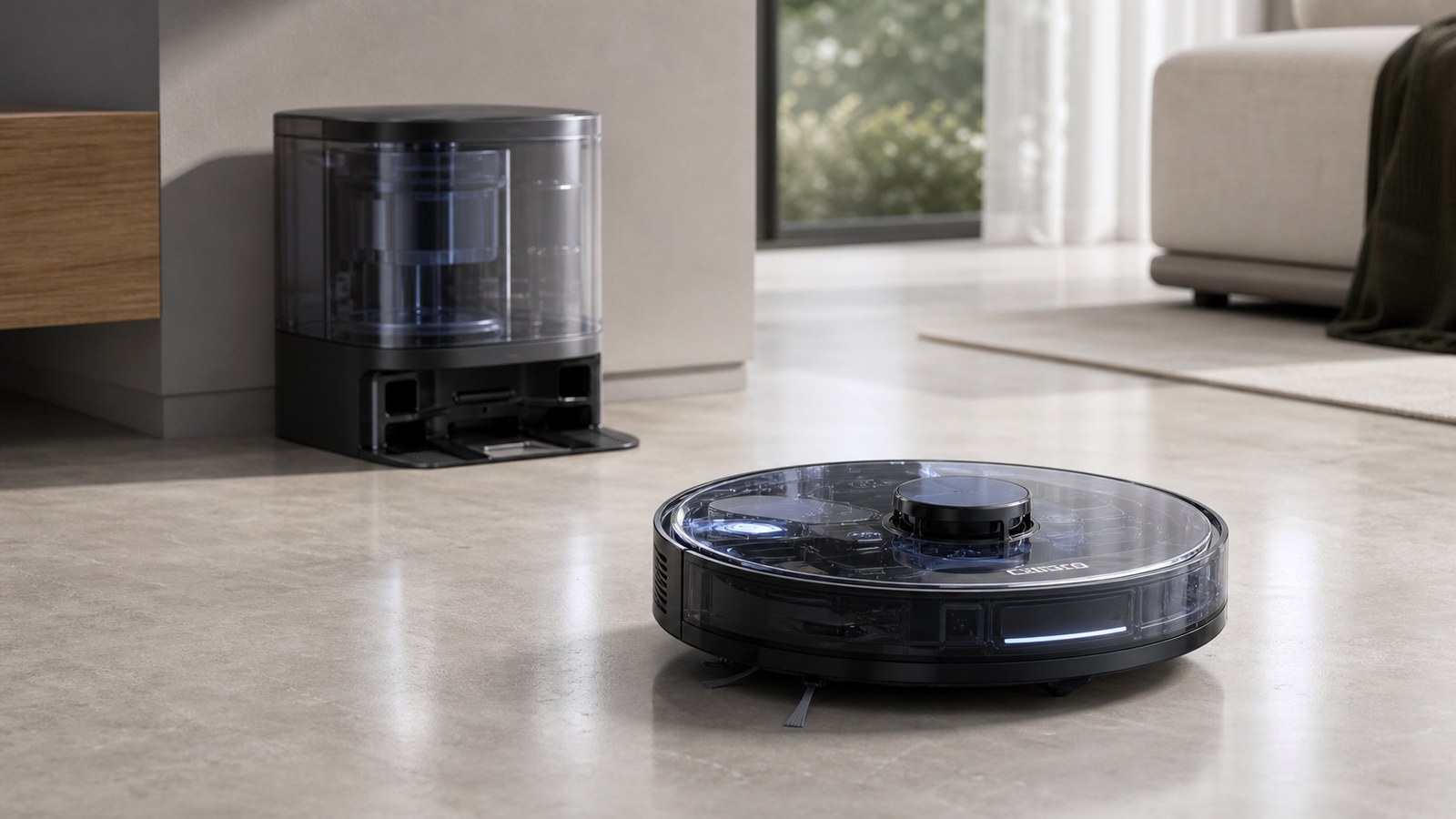
- DJI began looking at robot vacuums while Narwal, Roborock and Ecovacs were already accelerating.
- The longer DJI waits, the more mature all-in-one docks and self-cleaning systems become.
- A late launch must overcome both technical expectations and established consumer habits.
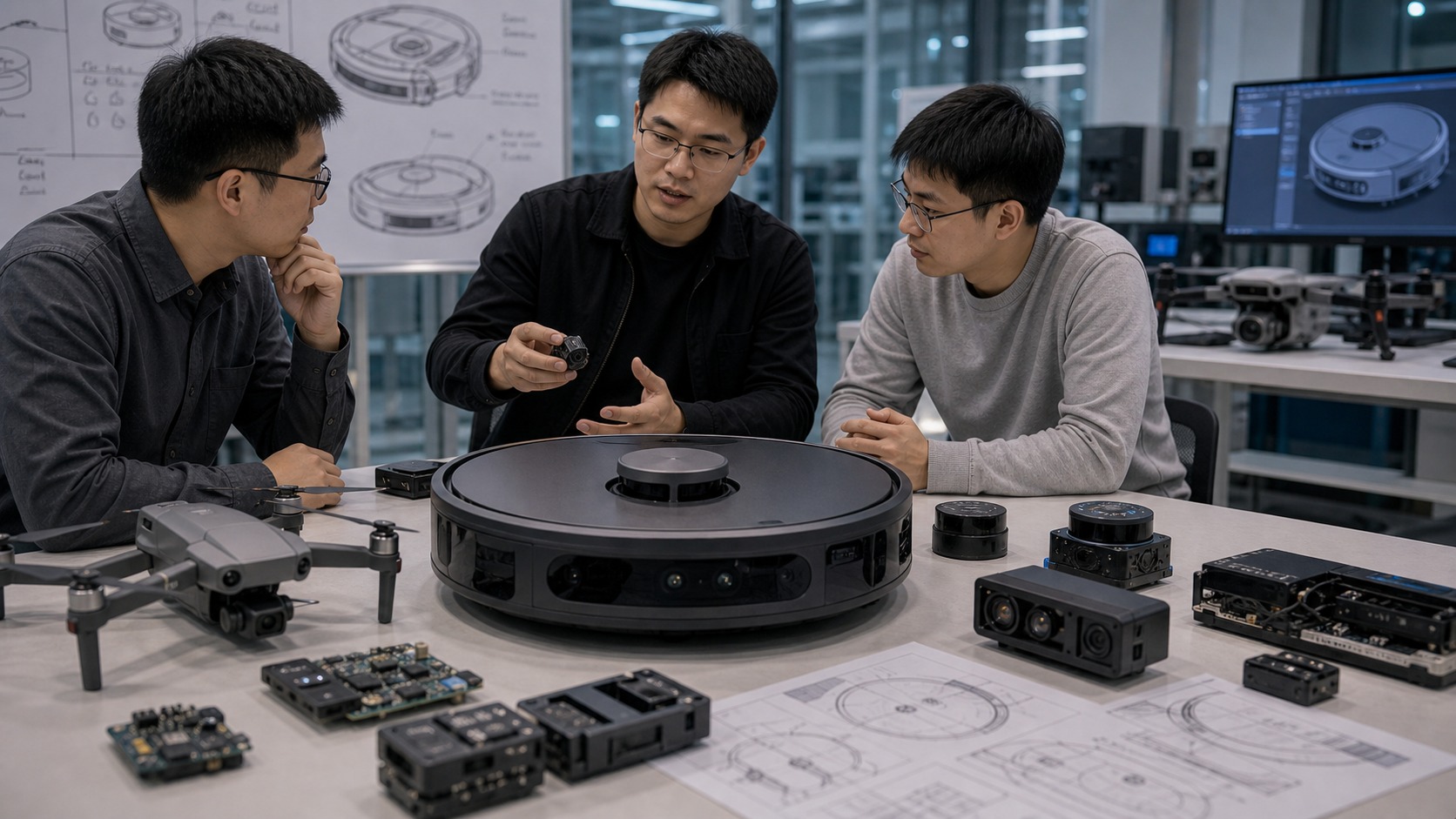
Three years ago, when a component supplier friend informed me that DJI was developing robot vacuums, my initial reaction was: Once this drone giant enters the market, it will undoubtedly bring significant pressure to leading companies like Ecovacs and Roborock. However, three years have passed, and apart from a report by LatePost in late 2024, there has been almost no news about DJI's robot vacuums in the market.
>DJI started developing robot vacuums as early as 2020.
>Over the past four years, the size of the DJI team working on robot vacuums has expanded to approximately 300 people, nearing the scale of some industry startups.
>We understand that DJI has postponed the release of its robot vacuum at least twice. Once was last year, and another was in May this year. A DJI official said that after reviewing the planned products for launch, Wang Tao decided not to sell them but instead go straight to a second generation product, "basically requiring a complete rework."
>An insider close to DJI stated that many of its new projects do not have the opportunity to be launched, and "the risk is also present with robot vacuums," despite DJI's plan to launch such products next year.
>DJI claimed that the information regarding the size of the robot vacuum project team and the role of the founder in the project are factual.
Combining LatePost’s report, we can briefly analyze the current situation of DJI's Robot Vacuum Division:
DJI's robot vacuum project began in 2020, a time when Narwal was achieving sales exceeding 1 billion yuan with its all-in-one mopping and cleaning robot. It is noteworthy that both DJI and Narwal are invested by Professor Li Zexiang, giving DJI an inherent advantage in information acquisition. Although the J1 from Narwal had many issues, it still performed impressively in the market. If DJI could address these issues, a 1 billion yuan sales target might be easily achieved. It is said that Narwal was indeed anxious about DJI's entry into the market.
Here are my speculations:
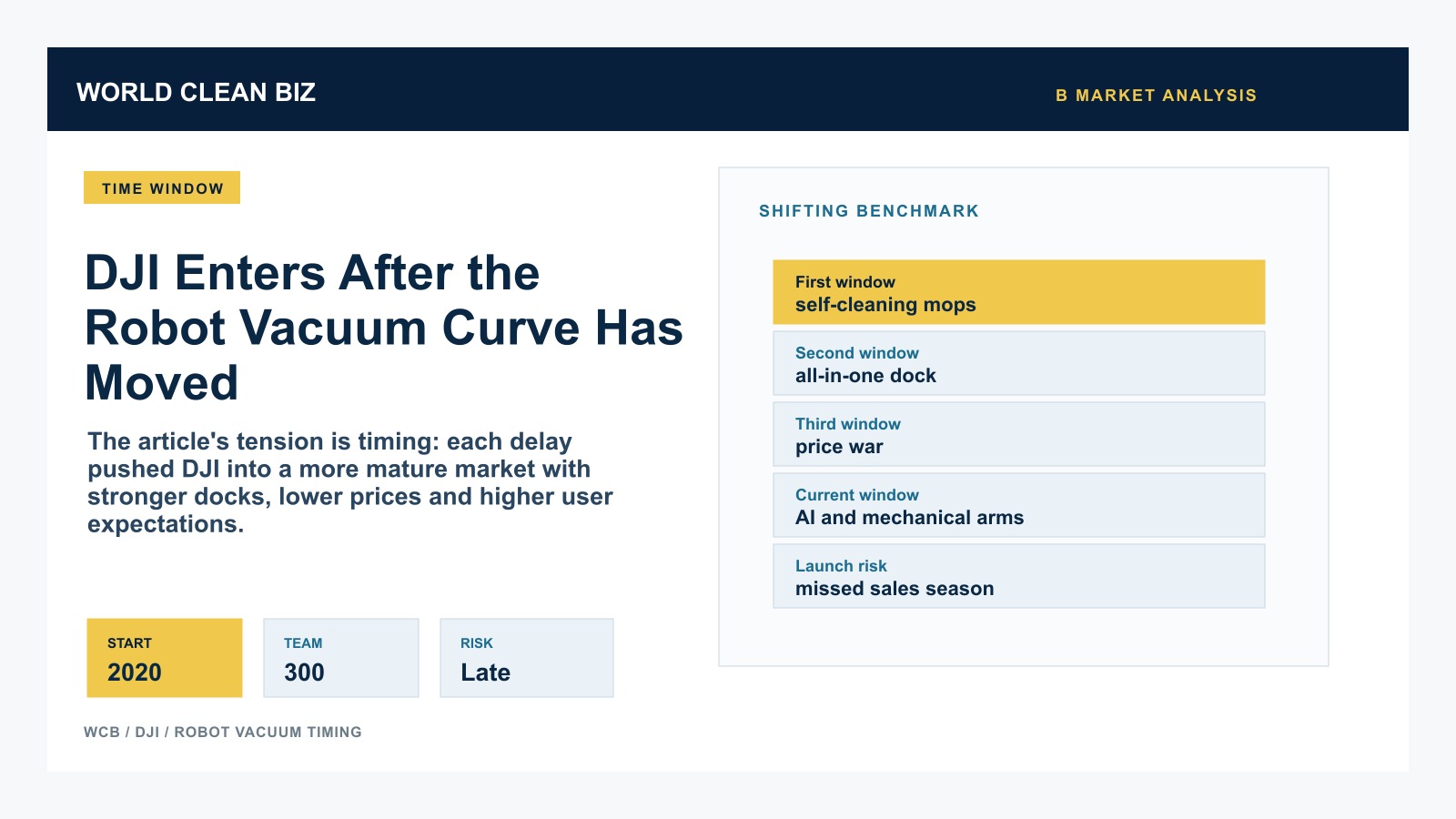
Following conventional development cycles, DJI’s product should have been launched by late 2021. However, Ecovacs’ sudden release of an all-in-one dock product disrupted this plan; it turned out that products similar to Narwal J1 were no longer viable, forcing DJI to start from scratch.
By early 2023, when the new scheme was nearly complete, Roborock slashed the price of a similar product from 5,000 yuan to below 3,000 yuan. This price war caught the industry off guard, and DJI had no choice but to further delay its release plans.
In 2024, competition in the market shifted towards AI and mechanical arm functions. Given that DJI lacked relevant technological reserves, it could only continue to observe from the sidelines. According to LatePost, DJI planned to launch products in 2025, but as of mid-May 2025, if they cannot be launched by August, they might miss the crucial sales window for Singles' Day.
Considering product development speed, the product could have been ready by late 2021. However, Ecovacs’ release of an all-in-one dock robot vacuum in late 2021 was unexpected. The original product’s launch became meaningless, forcing DJI to start from scratch with a new all-in-one dock product, which would likely be available around early 2023. But Roborock released the P10 all-in-one dock at prices below 5,000 yuan in 2023, an unexpected move that swept the entire industry, including DJI, and forced it to delay its first wave of product launches.
Once prices drop, they are unlikely to rise again. The original design would need some adjustments to adapt to market demands. By the time new products come out in 2024, competition has shifted towards AI and mechanical arm functions. Given that DJI lacks significant advantages in these areas, it can only further delay its product launch.
According to LatePost’s report, DJI plans to release this product in 2025. With the current time being mid-May 2025, if there is no launch by August, the product will likely miss the crucial sales window for Singles' Day. Typically, products are launched and pre-promoted from July to August.
Currently, DJI’s robot vacuum team numbers around 300 people. While this scale is reasonable for a startup project, it appears insufficient compared to industry giants. Many wonder: Why can’t a company with annual revenues in the billions provide more support? In fact, the robot vacuum is just one of many innovative projects at DJI, and securing resources within a large corporation is often more challenging than externally.
Based on this objective reality of 300 people, we can boldly speculate about what DJI’s robot vacuum might look like and what advantages it may have:
- First, it must be an all-in-one dock product; otherwise, there would be no chance for success. Water supply and drainage functions should also be standard features. From a product form perspective, current market pain points do not present significant challenges, making breakthrough innovations unlikely.
- In terms of algorithms, DJI excels in flight control algorithms and has even incubated Zuyu Technology, which specializes in automotive navigation. From the perspective of navigation algorithms, we can place DJI on par with Roborock. Even if they are at the same level, consumers may not perceive much difference.
- AI capabilities. Artificial intelligence is currently the hottest trend, potentially offering a breakthrough for DJI. By leveraging AI, object recognition capabilities could be further enhanced to improve precision. While Narwal has done well in this area, can DJI make more innovative moves? I believe it would be satisfactory if they can match Narwal’s efforts.
The current scale of 300 people is reasonable for a startup project but appears inadequate compared to industry giants. Many wonder why a company with annual revenues in the billions cannot provide more support. In fact, the robot vacuum is just one of many innovative projects at DJI, and securing resources within a large corporation is often more challenging than externally.
4. Robotic Arms
Mechanical arms like the G30 Space are unlikely to be released; such products are more about showcasing technology rather than practical sales. If DJI were to release a similar product, it would likely flop in the market. As for robotic arms like those from Dreame, they might still have a chance.
5. Climb and Obstacle Crossing Capabilities
Will there be further improvements in climbing and obstacle crossing capabilities? Although I hope DJI will achieve this, it is quite challenging to implement practically.
6. Motor Performance
Will motor performance be enhanced? Is it possible to develop new motors that are both powerful and compact? DJI has the capability for such innovation; however, given the nature of the robot vacuum project, it might not have the resources to pursue such extensive innovation simultaneously.
7. Pricing
DJI is known for its high cost-effectiveness in drones. For other companies to match this level of performance with similar configurations would require a significant increase in costs. Can DJI enter the market with an ultra-high cost-effectiveness strategy for its robot vacuums? As a startup, DJI has limited influence over supply chains and cannot likely offer products at low prices. I estimate that the price range will be around 3500-4000 RMB.
8. Sales Channels
DJI has an extensive sales network, with products available in airports and shopping malls. However, whether DJI can enter these channels for its robot vacuums is uncertain. Currently, the market for robotic vacuums is highly fragmented across platforms like Douyin, Taobao, offline stores, where domestic companies are engaged in fierce price wars and struggling to make profits.
Given this analysis of product points, by 2025, there will likely be few remaining pain points for DJI to address. If no new pain points arise, what kind of innovation can DJI bring?
Considering the potential flaws in the first product, using the "DJI" brand carries too much risk. Therefore, I believe it is more probable that DJI will release this under a different brand. Possible break-even strategies include:
- Crowdfunding on international platforms like Kickstarter with substantial marketing investment to set a new crowdfunding record.
- Focusing all efforts and resources on overseas markets where the market for all-in-one docks is less competitive and more fragmented, offering some opportunities for growth.
- Avoiding direct competition with domestic giants in the short term. If the product performs well, DJI's international channels should still provide support.
Once the overseas market reaches around 100 million RMB, DJI can then re-enter the domestic market where products are more mature and capable of competing head-to-head against any company.
Regardless of whether it is released domestically or internationally, August would be the latest time for such a product launch. Time is running out for DJI?